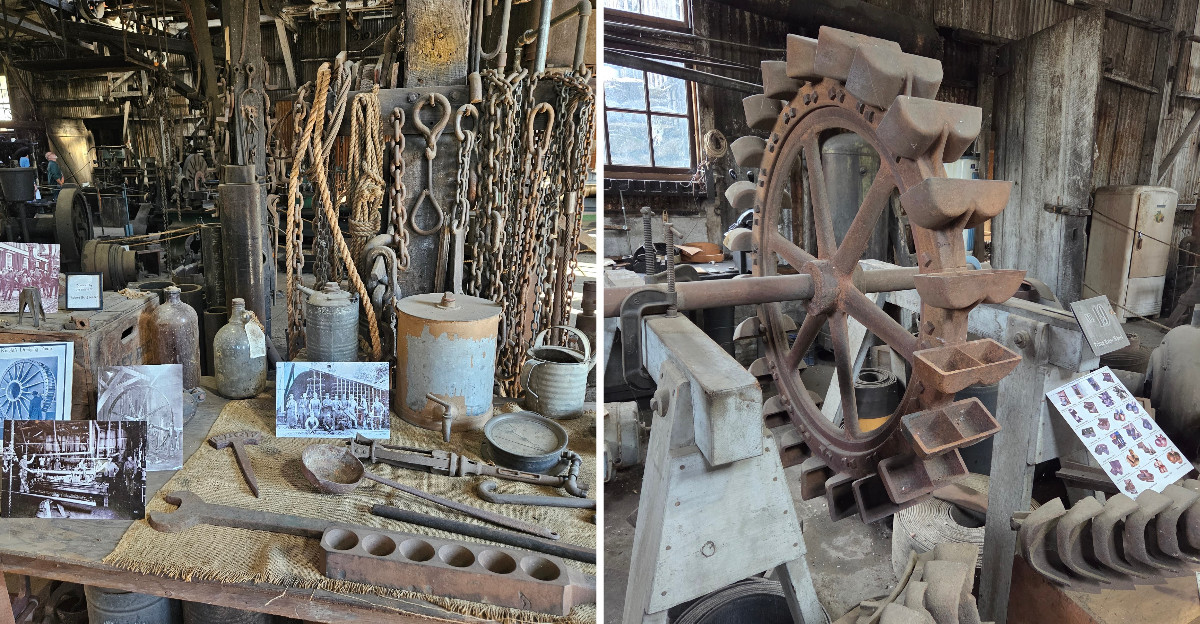
A low steady hum drifted out of a weathered building on a quiet California street, and understanding what was inside took a moment. Leather belts spun overhead, and old iron machines turned without a single electric motor in sight.
Water provided the power, the same way it has since 1873. This is the last water-powered foundry and machine shop in America, and leaving made me wonder why more people do not know about it.
It feels less like a museum and more like a workshop where the workers just stepped out for lunch. The floors are worn, the walls hold the smell of oil and hot metal, and the machinery still moves with a rhythm that feels alive.
Visitors can watch the belts turn and the gears mesh, all driven by the creek outside. History, big machines, and a good story share the same space here.
California keeps this kind of surprise in its rural corners, and it rewards anyone who slows down to look.
A Quiet Street With a Loud Secret
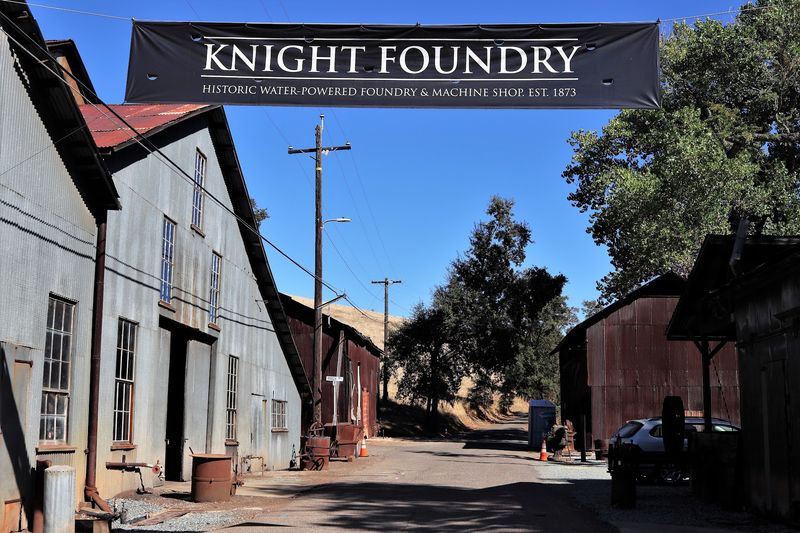
My first glimpse of the place almost fooled me. From the street, Knight Foundry looks like a cluster of plain, rust-colored buildings tucked just off the main drag of Sutter Creek, a small Gold Rush town that already charms visitors with its old storefronts.
Look a little closer and the clues start piling up. Chunky cast iron pieces sit outside, and a few displays share bits of local industrial history even before you buy a ticket.
Some visitors say these outdoor exhibits alone teach a lot about how the town worked.
The real magic waits inside, though. The foundry opened in 1873 and kept running as a working business for 123 years, finally closing its commercial doors in 1996.
That is a long time for any shop, let alone one that never really switched to modern power.
Because it was never fully modernized, almost everything stayed put. Tools, belts, cranes, and patterns remain where workers left them, which is why historians call it one of the best-preserved industrial workplaces in the country.
My advice is simple. Give yourself time to wander downtown Sutter Creek first, then head over and let the contrast sink in, from quiet sidewalks to a building packed with spinning history.
Samuel Knight and His Clever Wheel
Every great workshop starts with somebody who refuses to settle. For this one, that person was Samuel N.
Knight, who arrived in California in 1863 when gold mines and timber camps were hungry for strong, dependable equipment.
Ten years later, he opened his foundry to build and repair heavy gear for the mines and mills of the Mother Lode. He did not stop at fixing things.
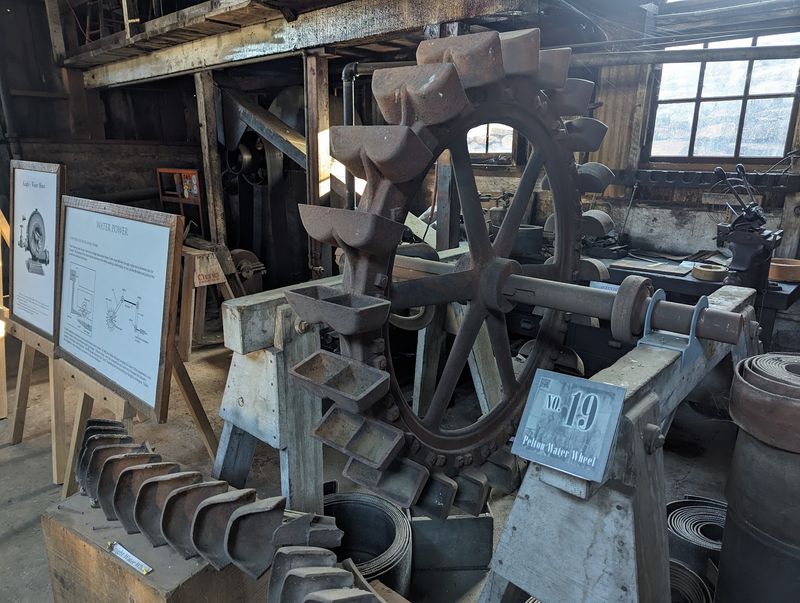
Knight invented and patented a fast, cast iron impulse water turbine that people started calling the Knight Wheel.
Here is the fun part. His design came before the more famous Pelton wheel and helped point the way toward it.
Knight Wheels went on to work in some of the earliest hydroelectric plants in California, Utah, and Oregon.
Think about that for a second. A wheel shaped in a small Gold Country shop helped make electricity for growing towns across the West, and that idea still makes me grin.
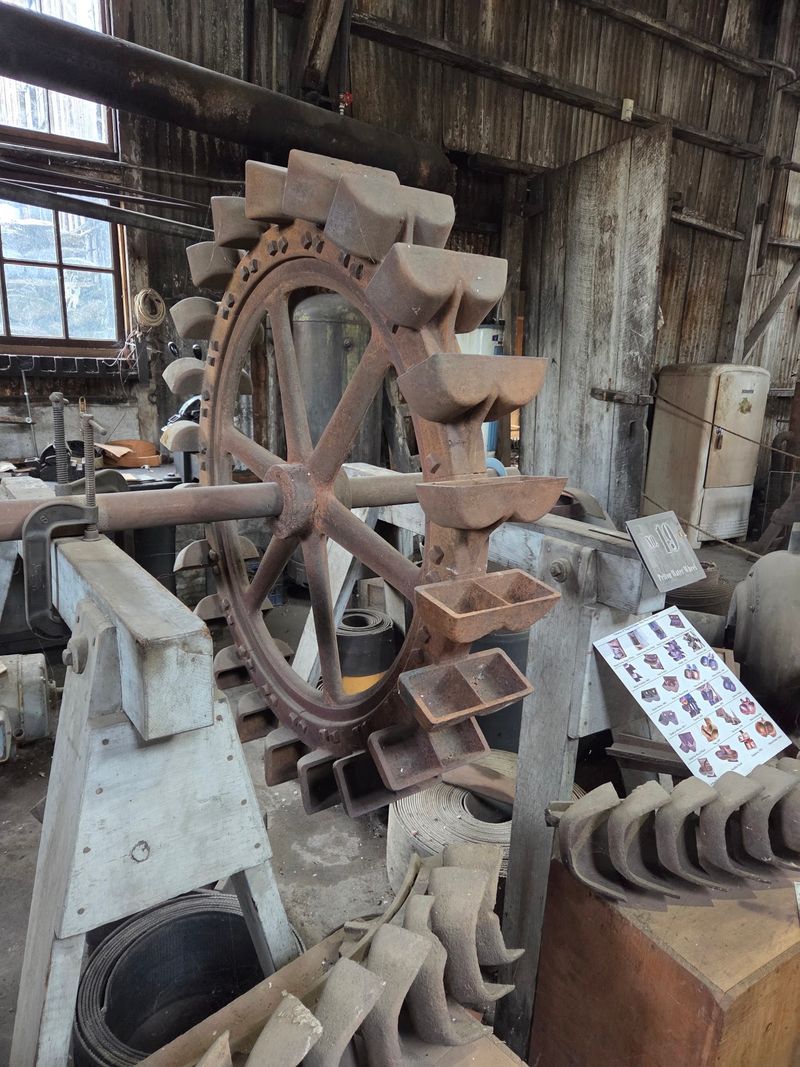
When you visit, ask the docents to point out the wheels and explain how the buckets catch water. Kids especially seem to enjoy learning that a clever spoon-shaped cup could change how a whole region got its power, and adults usually walk away just as impressed.
Following the Water From the Mountains
Honestly, I did not expect plumbing to be the highlight of my trip. Yet the water system here turned out to be the most jaw-dropping part of the whole visit.
The water starts its journey about 45 miles away in the mountains. It travels through flumes and ditches along the Amador Canal, then drops nearly 500 feet into a pipe called an inverted siphon.
By the time it reaches the foundry, it carries roughly 120 pounds of pressure per square inch.
That pressure shoots out as a jet moving around 110 miles per hour. It slams into the buckets of a 42-inch Knight Wheel, makes a quick U-turn, and hands almost all of its energy to the wheel.
The wheel then spins the main line shaft running through the building.
Smaller water motors power other machines on their own. Knight’s early turbine reached about 70 percent efficiency, which was a big deal in its day.
Stand near the water motors during a demonstration and just listen for a minute. The rushing sound, the whir of the shaft, and the slap of belts overhead tell the whole story better than any sign could.
Belts, Lathes, and a Very Old Survivor
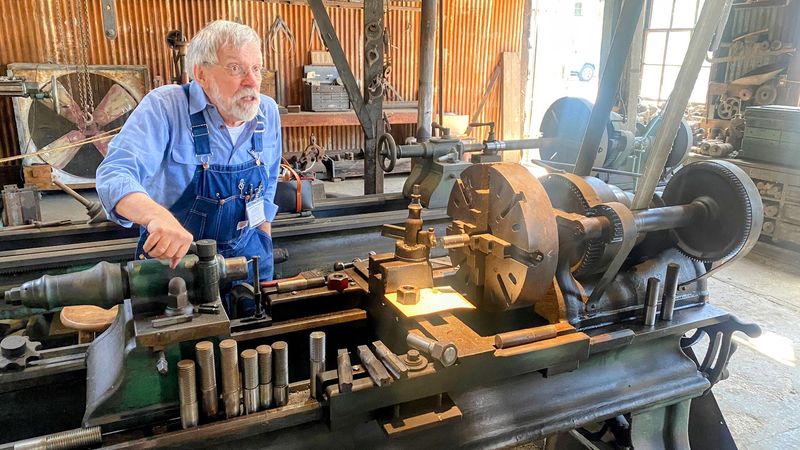
Glance up. That is the best tip I can give anyone stepping onto the shop floor, because the ceiling is alive with spinning shafts, pulleys, and long leather belts.
Those belts drop down to lathes, drill presses, and shapers, many dating back to the late 1800s. When the water is on, each machine can come to life with a simple shift of a belt.
It is noisy in the most wonderful way.
One machine gets extra attention. An 1850 New Haven lathe here is known as the oldest working machine tool in the United States, and it reportedly sailed around Cape Horn during the Gold Rush.
It helped make parts for gold mines and stamp mills.
Visitors also rave about a giant machine nicknamed the Behemoth lathe. Seeing its size up close makes modern tools feel tiny.
Over the years, this shop turned out everything from small pumps to huge mine hoists and even street lights for growing towns. Overhead cranes and hoists still glide along the ceiling, ready to move heavy pieces anywhere in the room.
Bring a camera, but also take a moment to simply watch, because photos never quite catch that steady, rolling motion.
Sparks, Sand, and Skilled Hands
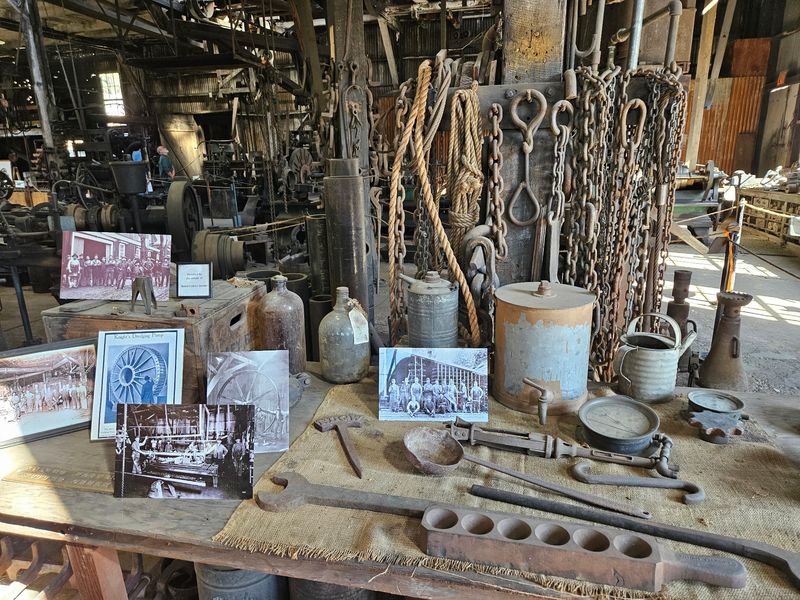
The clang hit me first, sharp and ringing, followed by a wave of warm air from the forge. On demonstration days, volunteers heat metal until it glows and then shape it on the anvil with practiced swings.
Blacksmithing is only part of the show. The foundry also demonstrates sand casting, one of the oldest tricks in metalwork.
Workers pack sand around wooden patterns to make a mold, pour in molten iron, and later break the sand away to reveal a fresh casting.
It is messy and fascinating. One past visitor described how rough castings start in sand molds and then get precision machined into finished parts, all done without electric power or computer design.
That is the heart of this place. These skills were close to disappearing, and the foundry works hard to keep them alive.
If watching is not enough, you are in luck. Classes in blacksmithing and green sand molding are offered, giving curious beginners a chance to try the craft themselves.
Wear closed-toe shoes and clothes you do not mind getting a little dusty, since a foundry is a working space and not a polished gallery.
Volunteers Who Keep the Wheels Turning
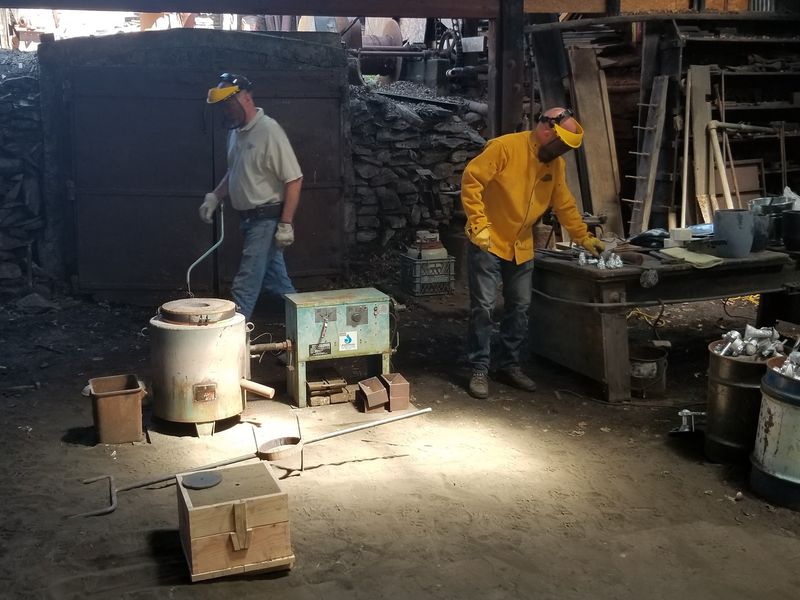
Something I noticed right away was how excited everyone seemed. The guides talk about gears and castings the way some people talk about their favorite sports team.
That energy matters, because the foundry is largely run by volunteers. The Knight Foundry Alliance, a nonprofit group, spent years working to protect and restore the buildings and machines.
In December 2016, the land and buildings were donated to the City of Sutter Creek, opening a fresh chapter.
The goal is not a frozen exhibit. Supporters want a living museum with education, hands-on training, and internships for people eager to learn old trades.
Tours use several guides, which I loved. You get explanations at each station, yet you also have time to wander and poke around without feeling rushed.
Open Saturdays happen on the second and fourth Saturdays of every month, all year. The second Saturday brings docent-led tours with live demonstrations, while the fourth Saturday offers self-guided video tours using your phone or a provided tablet.
Check the website before you go, since schedules can shift. Memberships are available too, and the gift shop sells items actually cast at the foundry plus local history books.
Why the Hum Stays With You
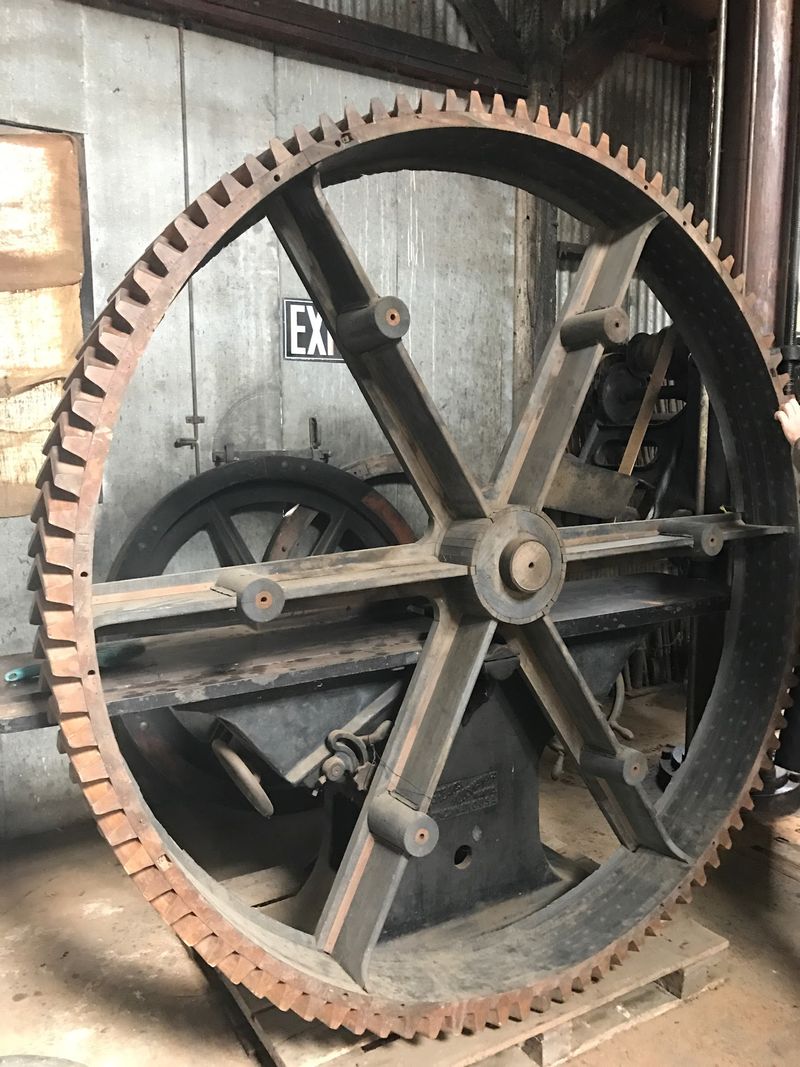
Hours later, driving out of Sutter Creek, I could still hear that steady whir in my head. It is hard to shake a place where water quietly does work most of us assume needs a plug and an outlet.
Knight Foundry earned some big titles along the way. It is a National Historic Mechanical Engineering Landmark, a California Registered Historical Landmark, and listed on the National Register of Historic Places.
Fancy labels aside, the real reward is the feeling. You see how people built mining gear and town equipment using water, muscle, pencils, rulers, and plenty of patience.
Suddenly the stuff around us at home seems a lot less ordinary.
Families do well here, and so do groups of older adults or anyone who likes engineering. Parking nearby can be a little tricky, so arrive with a few extra minutes.
Afterward, stroll through downtown and grab a bite at one of the many spots close by. Let the afternoon wind down slowly, because this is a visit worth thinking about for a while.
Address: 81 Eureka Street, Sutter Creek, CA 95685
