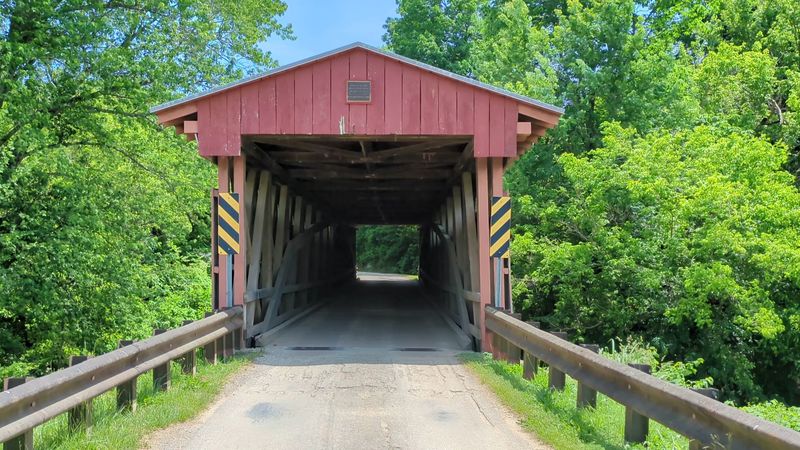
A 101-foot wooden bridge from 1890 still lets you drive straight through it. Your tires hit the floor, and the whole thing answers back with a clackety rumble.
The bridge didn’t even start out where it stands today. Folks picked it up and rebuilt it over a different creek back in 1924.
That’s a lot of effort for a bridge, and I love that somebody thought it was worth saving.
It sits a short hop off I-77 in West Virginia. No tickets, no lines, and no gift shop.
Just old timber, a quiet country road, and a sound you can’t get from concrete.
I believe some roadside stops earn a detour by being honest and simple. How many 135-year-old bridges still ask you to roll down the window and listen?
A Timber Tunnel You Can Still Drive Right Through
Most covered bridges of this age are roped off for photos only. The Historic Sarvis Fork Covered Bridge still carries everyday cars across the Left Fork of Sandy Creek.
It’s also called the Sandyville Covered Bridge, after the small Jackson County community nearby. The bridge carries County Route 21/15, a modest blacktop road a little over a mile northeast of Sandyville.
That makes it a working piece of West Virginia road, not a museum display. Locals use it to get where they’re going, and travelers can follow right along.
The structure is listed on the National Register of Historic Places, an honor it earned in 1981. That listing puts it among the state’s officially recognized historic landmarks.
It’s also one of only two covered bridges left in Jackson County. The other is the Staats Mill Covered Bridge, so this one carries a little extra weight in local history.
What makes it special is how ordinary it feels in the best way. There’s no admission booth and no velvet rope between you and the past.
You just point the car forward and roll on in. The bridge does the rest, and it does it with plenty of noise.
The Clackety Floor That Talks Back
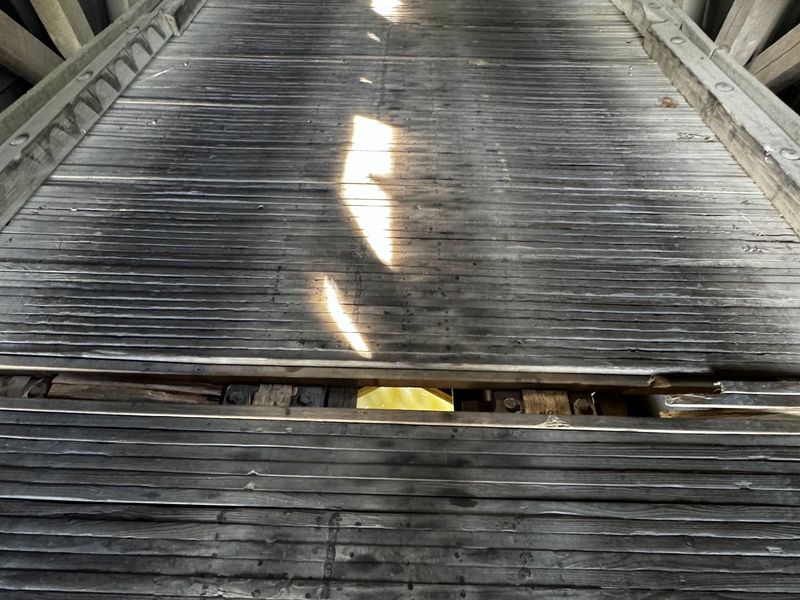
Clack, clack, clack. That’s the soundtrack the moment your tires leave the pavement and meet the old timber decking.
The floor is the star here, and it’s easy to see why. The planks are set with upturned lumber, giving the deck a ridged pattern most drivers have never seen before.
As you roll across, each board seems to take a turn speaking up. The result is a rhythmic rumble that fills the wooden tunnel around you.
Underneath that timber, steel stringers carry the load. That pairing came with the 2000 restoration, which kept the old-time feel while adding modern strength.
So you get the noise of the 1890s with the backbone of today. It’s a pretty clever compromise, if you ask me.
Kids in the back seat will likely want a second pass. Honestly, so might the driver.
One word of caution is worth sharing for two-wheeled travelers. A ridged wooden deck may call for extra care on a bicycle or motorcycle, so take it slow.
For everyone else, just ease off the gas and enjoy the show. A floor this chatty deserves a patient audience.
Built Back When Wagons Ruled The Road
The year was 1889 when work began on this bridge. By 1890, builders R.B.
Cunningham and G.W. Staats had it finished.
Back then, it didn’t cross Sandy Creek at all. It spanned John Carnahan’s Fork, a branch of Mill Creek, serving a very different stretch of Jackson County.
Think about what traffic looked like in 1890 West Virginia. Horses, wagons, and folks on foot made up the daily parade across those planks.
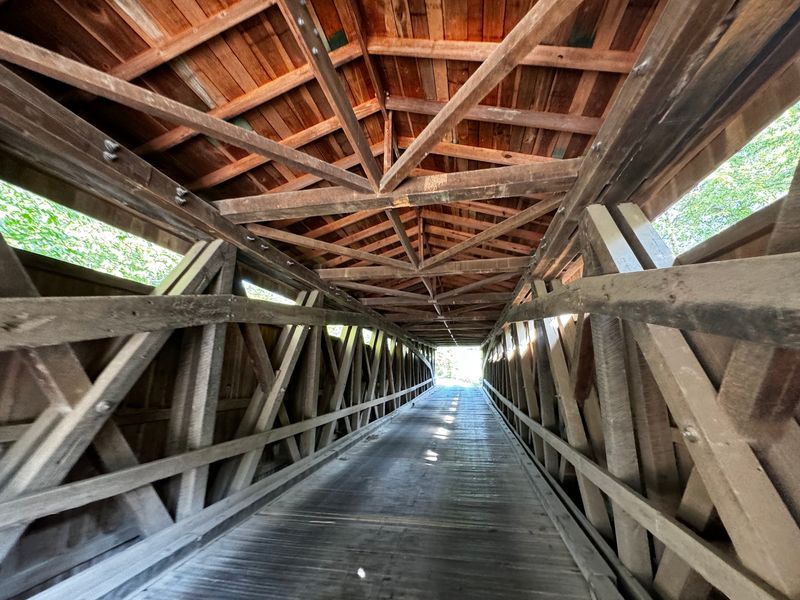
Covered bridges were built with roofs for a practical reason. Keeping rain and snow off the wooden trusses helped the structure last much longer.
That old-fashioned logic clearly worked here. More than a century later, the bridge is still standing and still doing its job.
The Staats name might ring a bell if you know the area. The county’s other surviving covered bridge carries the Staats Mill name.
Bridges like this once tied farms to markets and families to churches across the hollows. They were lifelines long before interstates came along.
Driving across it today connects you to that older rhythm of life. It’s a small trip back to a slower West Virginia, one plank at a time.
The Year The Whole Bridge Changed Addresses
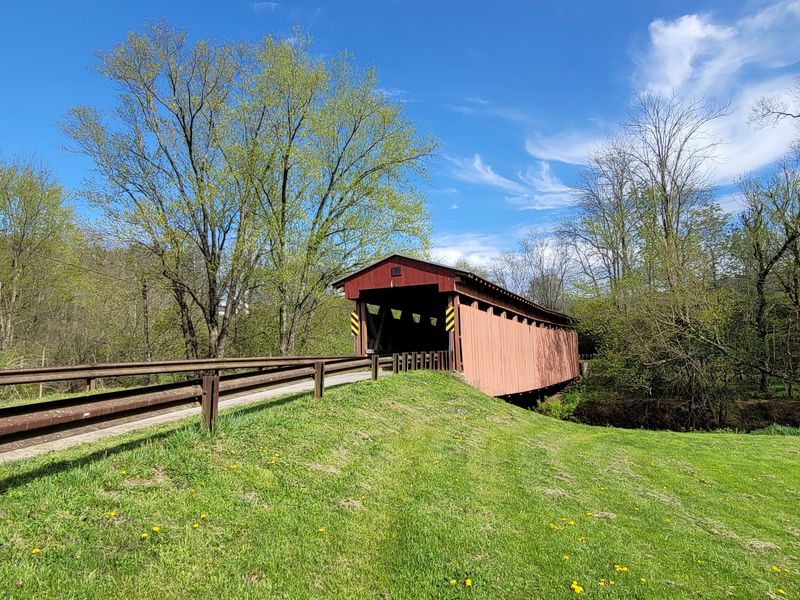
Moving a house is a big deal. Moving an entire covered bridge is something else altogether.
In 1924, that’s exactly what happened here. When a newer, modern bridge took over at the original crossing, the old covered bridge got a second life.
Crews relocated it and rebuilt it over the Left Fork of Sandy Creek. That’s where it has stood ever since, near Sandyville.
I like what that move says about the people of the day. Rather than tearing it down, they found it a new job.
That kind of practical thrift runs deep in rural West Virginia. If something still works, you find a use for it.
The decision has paid off for a full century now. Without that move, the county might have only one covered bridge left instead of two.
It’s a fun detail to share with anyone riding along. Most passengers won’t guess the bridge they’re crossing once lived somewhere else.
So when you hear that floor clatter, remember its travels. This old timber has seen two creeks, two eras, and a whole lot of tires.
Long Truss Bones And Some Very Exact Measurements
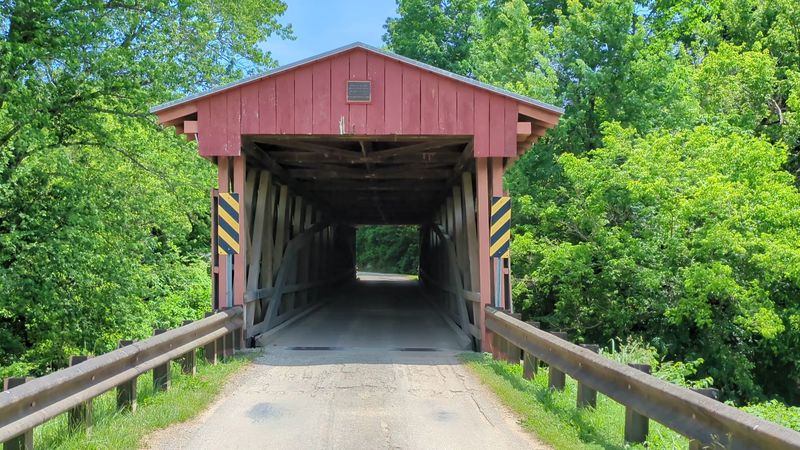
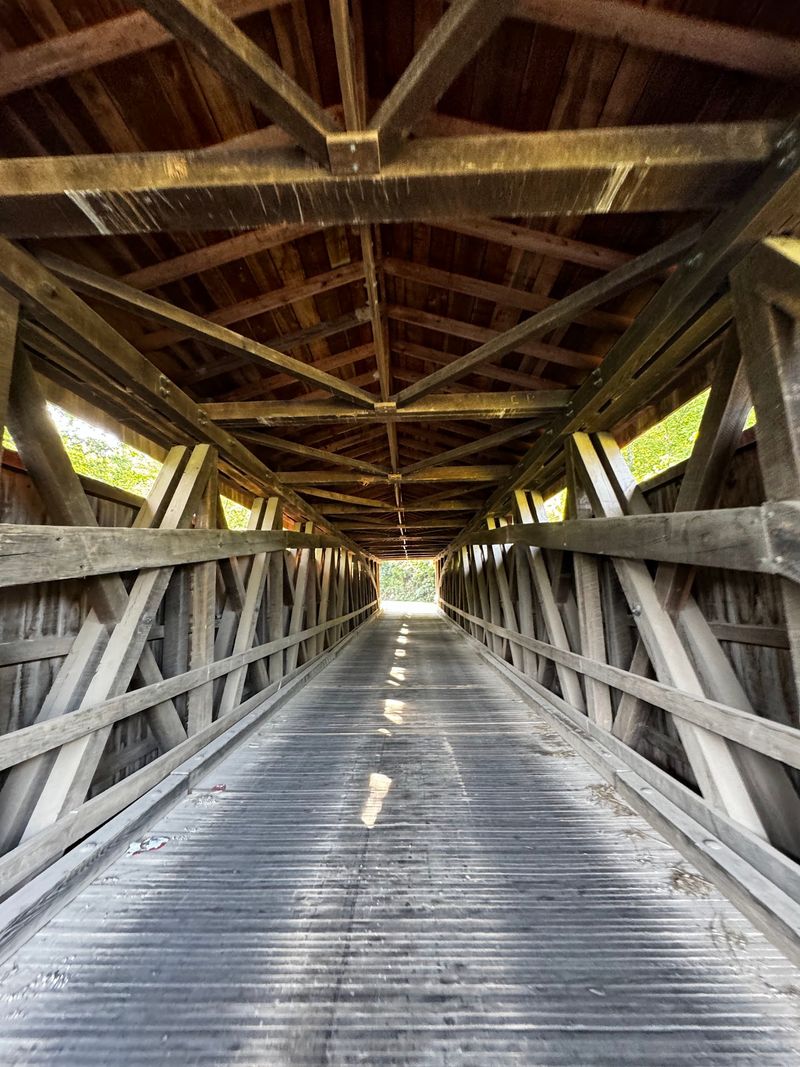
Builders here chose a Long truss design, a respected 19th-century method. It uses a pattern of wooden posts and crossed braces to spread the weight.
The bridge has 13 Long truss panels in total. You can spot that repeating framework along the inside walls as you pass.
Now for the numbers, which are delightfully specific. The bridge measures 101 feet 3 and a half inches long.
It’s 11 feet 8 inches wide, which feels cozy once you’re inside. Two cars won’t be passing each other in here.
Somebody clearly took a tape measure seriously. I can’t imagine rounding that half inch away after all these years.
The support system also includes dual bents underneath. Along with those steel stringers, they help the old span handle modern traffic safely.
For anyone who enjoys how things are put together, this is a real treat. The trusses are right there at eye level, no climbing required.
Take a moment on foot if you can. Seeing the joints and braces up close gives you a new respect for the craftsmen behind it.
A Careful Makeover Finished In 2000
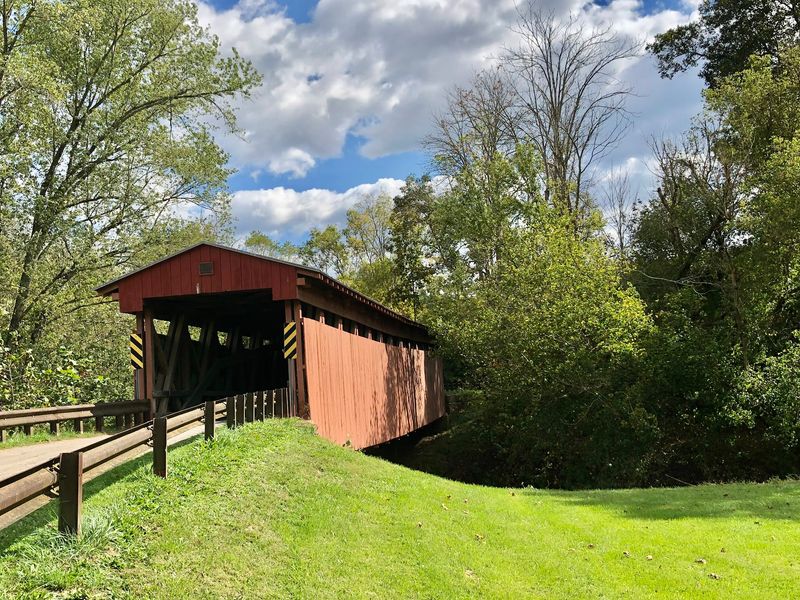
Old doesn’t have to mean rickety. A major restoration wrapped up in 2000 and gave the Historic Sarvis Fork Covered Bridge a sturdy new lease on life.
The work was handled by R.C. Construction Company and Sons of Cutler, Ohio.
The project reportedly cost close to six hundred thousand dollars, according to the West Virginia Division of Highways history of the span.
The goal was to keep the bridge looking like itself. Crews replaced the wooden siding while staying true to its original appearance.
A stainless steel roof went on top for long-term protection. That roof helps guard the timber trusses below from the weather.
The floor got its update too. Timber decking now rests on steel stringers, which is why cars can still cross with confidence.
It’s a smart balance between history and safety. The bridge keeps its old character, and drivers keep their peace of mind.
Restorations like this take patience and a love for the past. Somebody had to care enough to do it right.
Thanks to that effort, the bridge looks well kept today. Its fresh siding and solid bones show the investment paid off.
Nine Feet Of Clearance And A Few Rules Of The Road
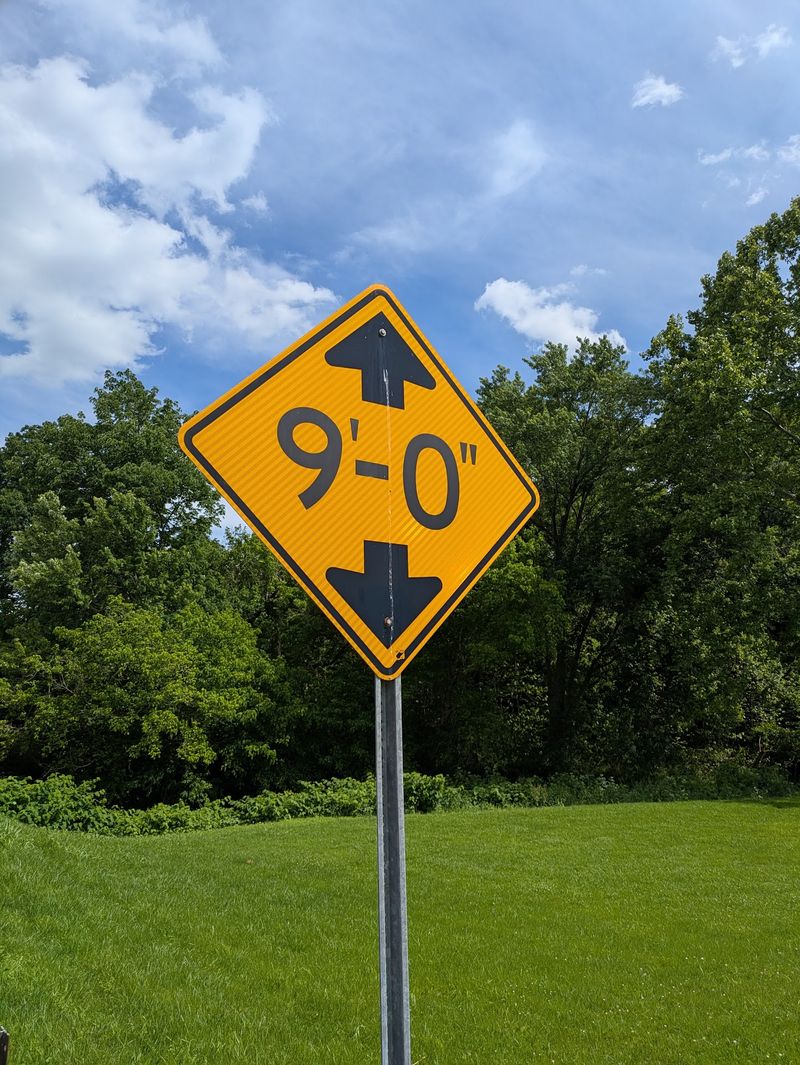
Tall vehicle? Better check before you commit.
Signs along the approach warn that the bridge has about nine feet of clearance.
That matters for vans with roof gear, campers, and larger trucks. If your rig sits higher than that, plan to park and walk through instead.
Thankfully, there’s room nearby to stop and turn around. Walking the bridge is a lovely way to see it anyway.
The width calls for a little courtesy too. At under 12 feet across, it’s a one-car-at-a-time kind of crossing.
Traffic tends to be light out here. Still, glance ahead before you roll in, just in case a neighbor is coming the other way.
Remember this is a working county road. People live nearby and use it, so keep your speed easy and your stop brief.
Motorcyclists and cyclists should take the ridged deck gently. A slow pace makes the crossing more fun and a lot safer.
Follow those simple habits and the visit stays smooth. The bridge has behaved well for over a century, so it’s only fair to return the favor.
Quiet Country Charm On The Left Fork Of Sandy Creek
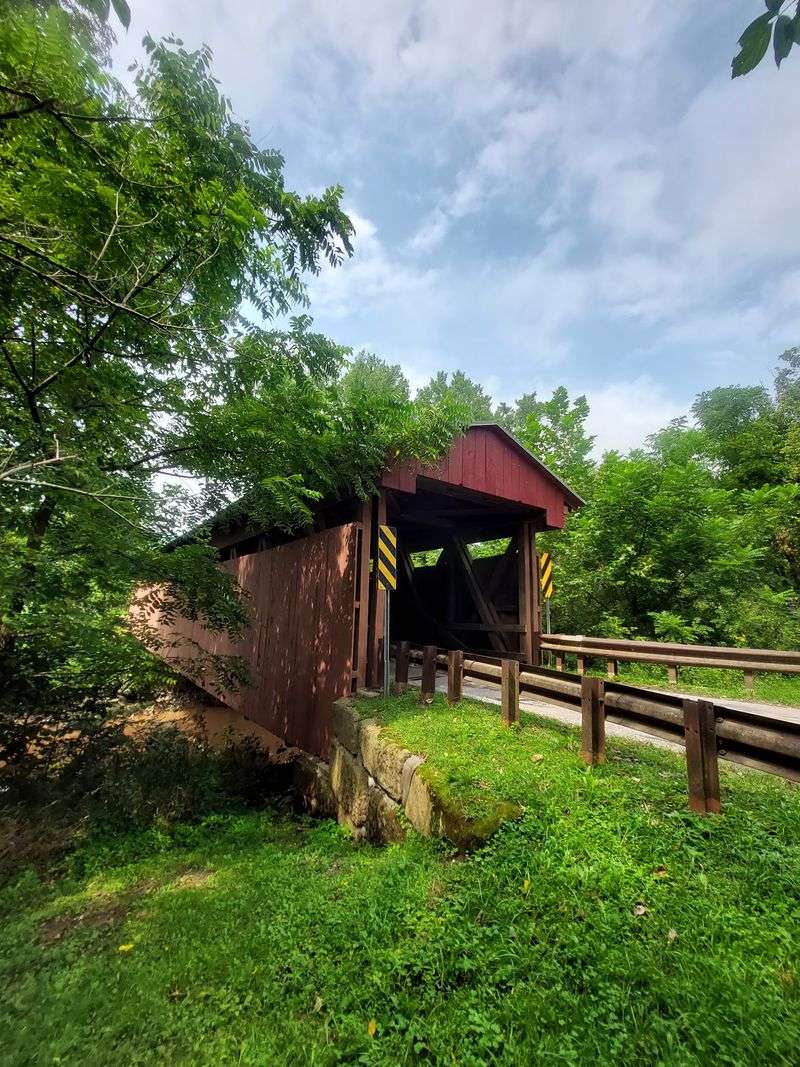
Silence is part of the appeal. The bridge sits in a secluded corner of Jackson County where the loudest sound may be your own tires.
Green hills and a gentle creek frame the old wooden span. It’s the kind of setting that makes you want to linger a few extra minutes.
There’s a small pull-off spot near the bridge for parking. From there, you can stretch your legs and walk back for photos.
Photographers will be happy here. The red siding, the dark opening, and the country backdrop make for an easy frame.
Fall color could make it even prettier, though any season works. Sunshine and old timber pair nicely year-round.
Look for the name sign above the entrance as you walk up. It makes a handy marker for that classic shot.
This spot suits backroad wanderers, history fans, and retirees who love a peaceful drive. Families with curious kids will enjoy the noisy floor too.
Bring a snack and your own patience for slowing down. You won’t find shops or crowds, just a calm piece of West Virginia countryside.
An Easy Detour From I-77 That Feels Miles Away
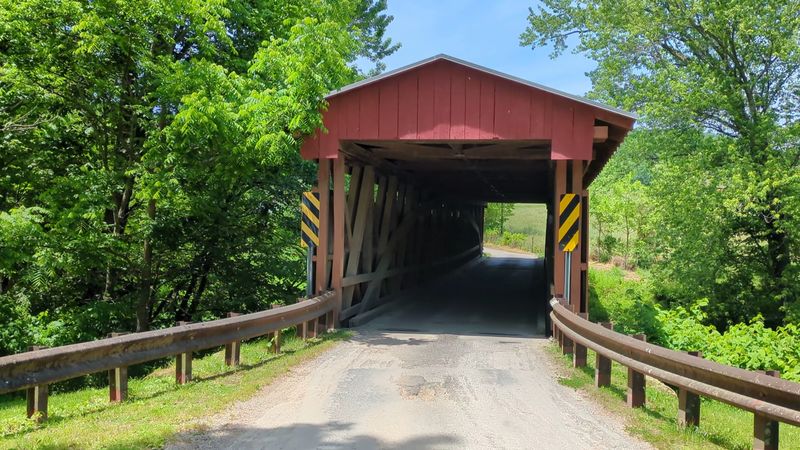
Here’s the best part for road-trippers. You barely have to leave the interstate to find this place.
The bridge sits just off Old US 21, not far from I-77 near the Fairplain area. Many travelers between Ripley and Parkersburg pass close by without realizing it.
For your GPS, use 100 Sarvis Fork Rd, Sandyville, WV 25275. It’s about a block from the main road on a paved blacktop lane.
The turn is easy to manage, and the route is simple to follow. Within minutes, highway noise gives way to farm fields and trees.
If you’re coming from WV Route 21, look for a gravel parking spot. It sits on the left after you cross the bridge.
That setup is handy. Drive through first, enjoy the clatter, then park and walk back for a closer look.
It makes a perfect break on a longer drive through West Virginia. Twenty minutes here can refresh tired eyes better than another gas station stop.
Pair it with the Staats Mill Covered Bridge for a two-bridge afternoon. Jackson County makes it easy to collect both.
No Tickets, No Lines, And No Closing Time
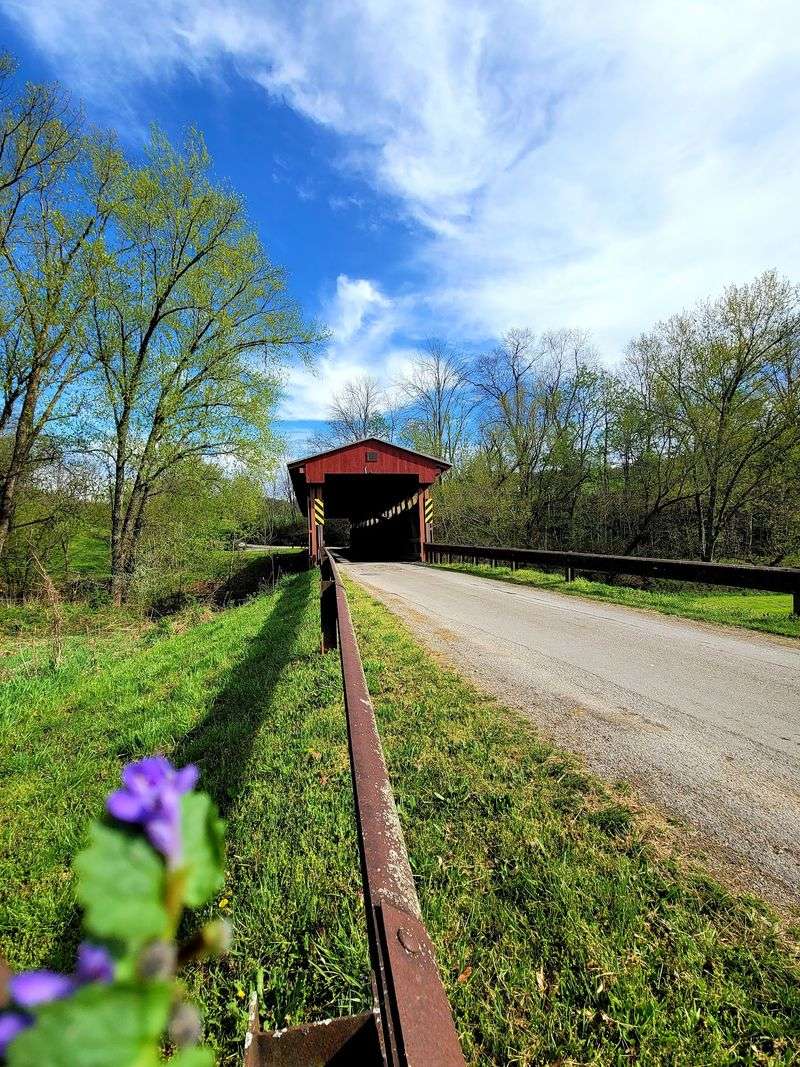
Good news for early birds and night owls alike. The bridge is open 24 hours a day, every day of the week.
There’s no admission fee and no ticket booth. You won’t wait in any line either, which feels like a small luxury these days.
That freedom makes it easy to fit into almost any plan. Swing by at sunrise, during lunch, or on a slow Sunday drive.
Daylight is your friend for photos and for spotting the truss details. The setting is rural, so evening visits will be quite dark.
Plan ahead for a couple of basics. There are no restrooms at the site, so take care of that before you leave town.
Parking is limited to a small pull-off area. It’s fine for a car or two, but don’t expect a big lot.
Bring your own water and snacks if you plan to stay a while. Services aren’t right at the bridge.
Keep the visit respectful of nearby neighbors. A quiet stop helps keep this little landmark welcoming for everyone who comes after you.
Why This Little Bridge Earns A Spot On Your Route
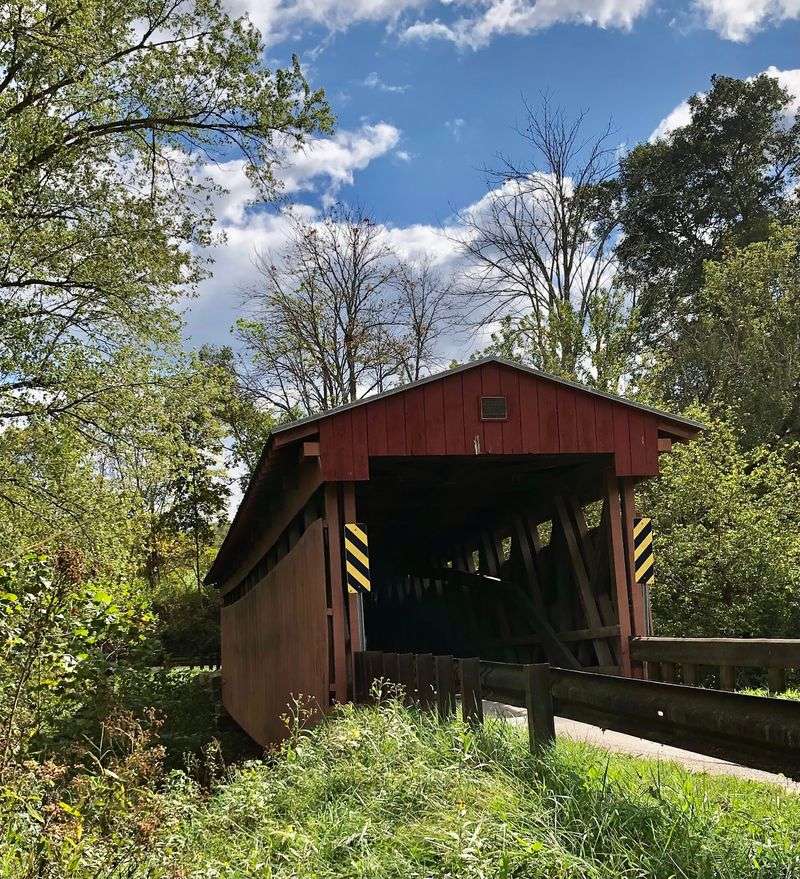
A hundred feet doesn’t sound like much. Yet those hundred feet hold more than a century of Jackson County history.
The Historic Sarvis Fork Covered Bridge has outlasted wagons, survived a move, and earned a careful restoration. Through it all, it kept carrying people across the creek.
I like that it asks so little of you. No fee, no schedule, and no fuss stand between you and a genuine slice of the past.
Small landmarks like this show the pride West Virginia communities take in their heritage. Somebody chose to save it, again and again.
It may not take long to see, and that’s perfectly fine. Some of the best stops are short and sweet.
Roll through slowly and listen to that wooden floor sing. Then park, walk back, and admire the trusses that made it all possible.
If you grew up crossing bridges like this, it may stir a memory or two. If you didn’t, it’s a fine way to start some.
Next time I-77 feels long, take the exit. A clackety little detour is waiting for you.
