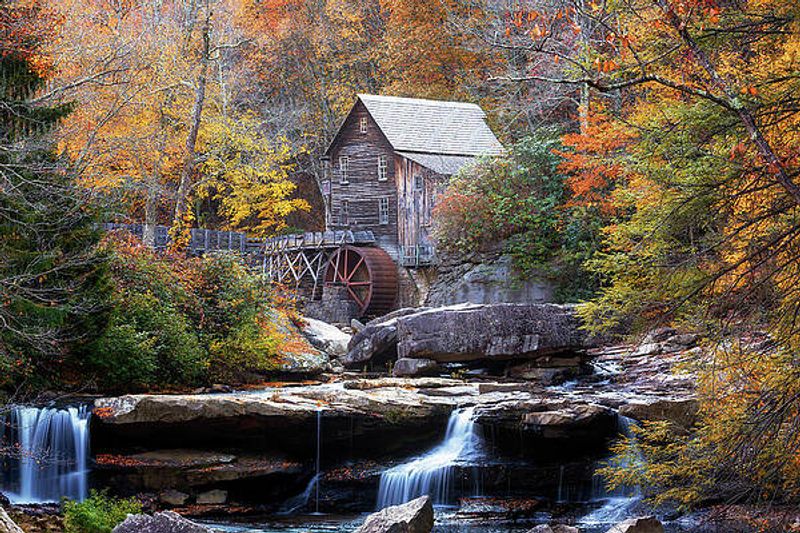
Some places in West Virginia look like they have stood forever, quietly minding their own business beside a rushing creek. I went looking for a pretty picture and a bag of fresh cornmeal, and I came home with a story I could not stop telling.
This old mill is actually a patchwork, built from the bones of several mills that once fed Appalachian families. Once you know its secret, you will never look at that famous water wheel the same way again.
A Mill Tucked Into the Mountain Woods
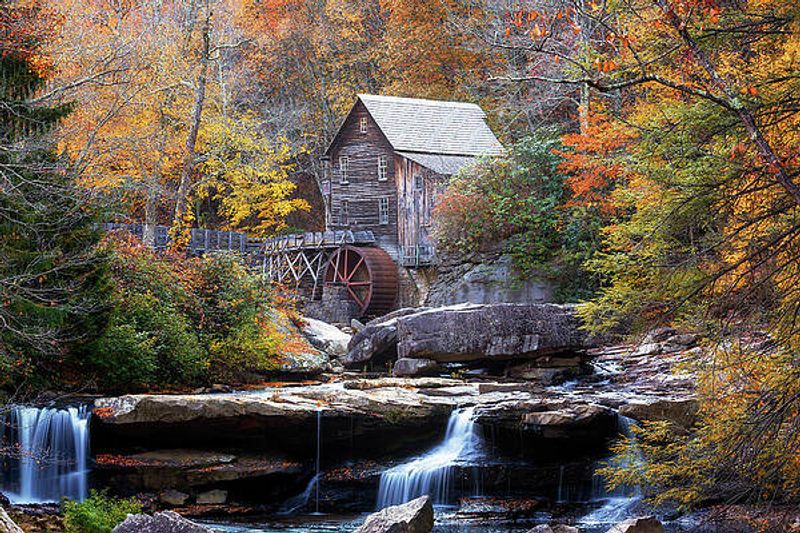
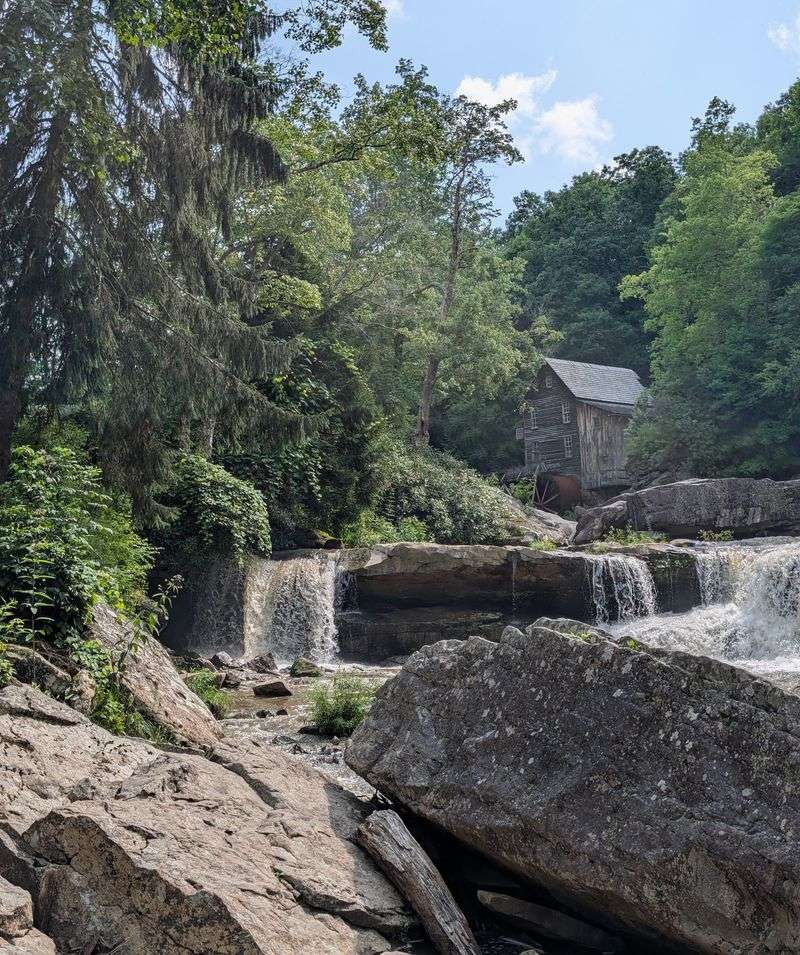
Picture a weathered wooden mill perched over a tumbling creek, its big wheel turning slowly while water spills over the boulders below. That scene is the heart of one of the most cherished state parks in the Mountain State.
Officially known on maps as Glade Creek Grist Mill Falls, the spot is a tourist attraction that blends history, scenery, and a working piece of machinery into one easy stop. Folks come for the photos, stay for the sound of rushing water, and leave with a little more appreciation for how earlier generations lived.
Here is the twist that makes it special. The mill you see today was not built in one piece at one time.
Instead, it was carefully put together in 1976 from salvaged parts of several older mills from around West Virginia.
So when you stand on the bank and admire it, you are really looking at a team effort, a kind of family reunion of mill parts from different counties. Each beam, gear, and paddle carries its own past.
That layered history is what turns a pretty building into a true conversation piece, and it is a big reason so many visitors make the drive.
Cooper’s Mill and the Spot That Came Before
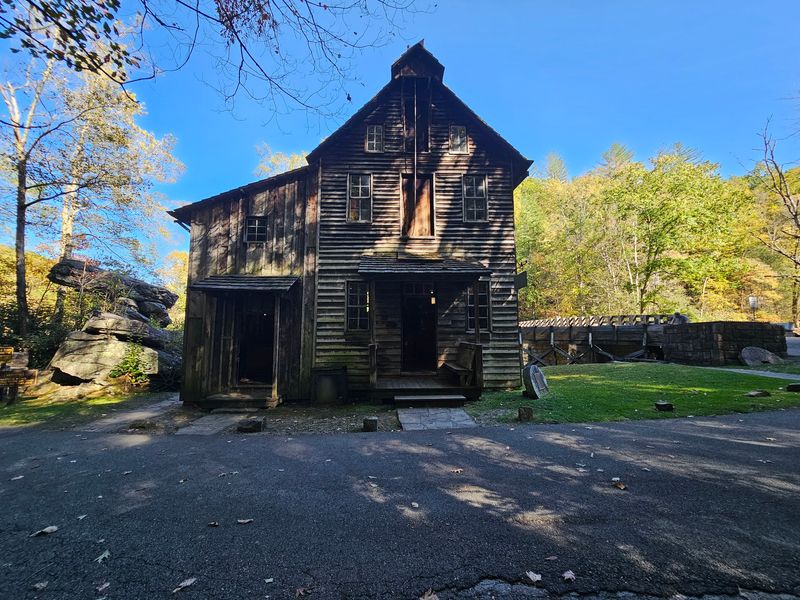
Long before cameras lined up along the creek, another mill already worked these waters. Known as Cooper’s Mill, it reportedly stood near where the park administration building’s parking lot sits today.
For the surrounding community, that mill was more than a building. It was where neighbors brought grain, swapped news, and caught up on life while waiting for their meal to be ground.
Mills like it often served as unofficial gathering places in rural Appalachia.
Sadly, Cooper’s Mill was lost to fire sometime in the 1920s. For decades afterward, the creek ran on without a wheel to turn, and the memory of the old mill lived mostly in family stories.
Then came the 1970s, when Babcock State Park was growing and planners started thinking about how to honor that lost heritage. Rather than build a brand new copy from scratch, they chose a more meaningful path.
They would gather real pieces from real historic mills and assemble something that carried genuine age and character.
That decision gives today’s mill its soul. It stands near the old site as a tribute, quietly reminding visitors that this valley has been grinding grain for generations.
Bones Borrowed From Pocahontas County
Moving a building sounds tricky enough. Now imagine taking apart an old mill board by board, hauling it across the mountains, and setting it back up so it still works.
That is roughly what happened with the main structure of the Glade Creek Grist Mill. Its framework came from the Stony Creek Grist Mill, which originally stood in Pocahontas County and is said to date back to the late 1800s.
Think about the patience that job required. Crews had to understand how the pieces fit together, keep track of every part, and rebuild the frame on new ground beside a different creek.
One wrong step and the whole effort could have fallen apart.
The result, completed in 1976, looks so natural in its setting that many first time visitors assume it has always been there. The rough timbers and simple lines feel right at home among the hemlocks and rocks.
For anyone with roots in Pocahontas County, there is a special pride in knowing a piece of home now stands as one of the most recognized landmarks in the state. It is a little like seeing a hometown friend make good somewhere new.
The Water Wheel That Escaped the Flames
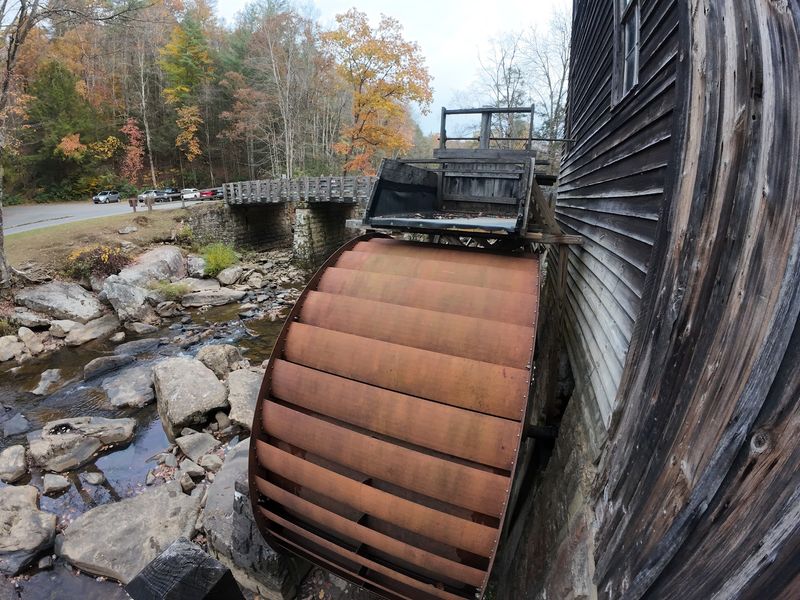
Ask most people what they remember about this mill, and they will point to the wheel. It is big, it is dramatic, and it gives the whole scene its rhythm.
What many do not realize is that the overshot water wheel came from the Spring Run Grist Mill in Grant County. That mill was lost to an accidental fire, but the wheel was rescued and given a second life here.
An overshot wheel works by sending water over the top, where its weight pushes the wheel around. It is an old and clever design that made the most of hilly country and fast streams, which West Virginia has in plenty.
Today, Glade Creek supplies the power, and the wheel still drives the machinery inside. Watching it turn, you get a sense of how much work early millers squeezed out of moving water without a single plug or power line.
There is something hopeful about a wheel that survived a fire only to become the star of the most photographed mill around. It reminds us that good things can be saved and put back to work, even after hard times.
Gears and Parts From Near Seneca Rocks
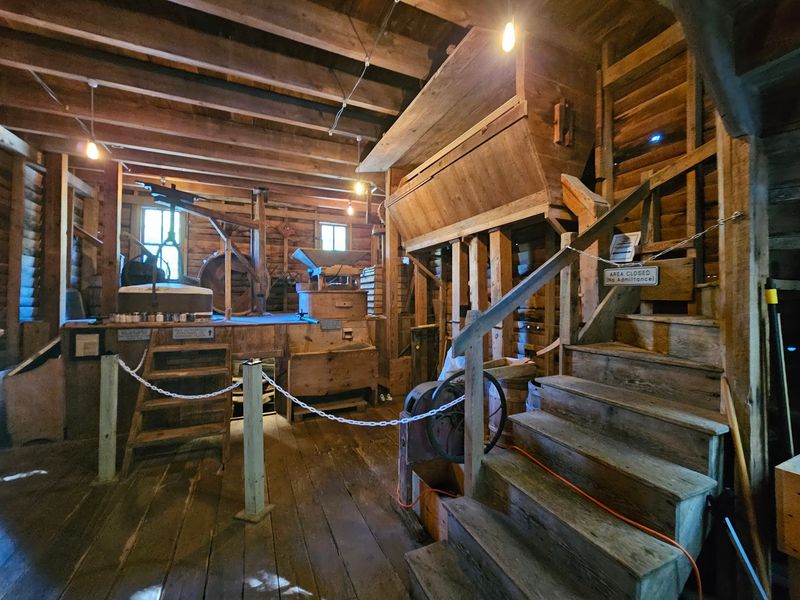
Every good recipe needs a few final ingredients, and the mill was no different. Various other essential parts and machinery reportedly came from the Onego Grist Mill, located near Seneca Rocks in Pendleton County.
Some accounts also mention a Roaring Creek Grist Mill from the same general area as a contributor. The records are not perfectly tidy, which is common with projects pieced together decades ago, but the spirit is clear.
Several old mills donated what they could to bring this one to life.
That mix gives the building a collective memory. Pocahontas, Grant, and Pendleton counties all have a stake in the place, so it stands for far more than a single family business or one small community.
Visitors who peek inside can see the inner workings that turn creek power into ground grain. One guest described how neat it was to see the machines used for making flour and cornmeal and to learn how water powered them.
For mechanically minded folks, the interior might be the real highlight. Shafts, gears, and stones all work together in a way that feels both simple and surprisingly smart once you see it in motion.
Fresh Cornmeal Still Coming Off the Stones
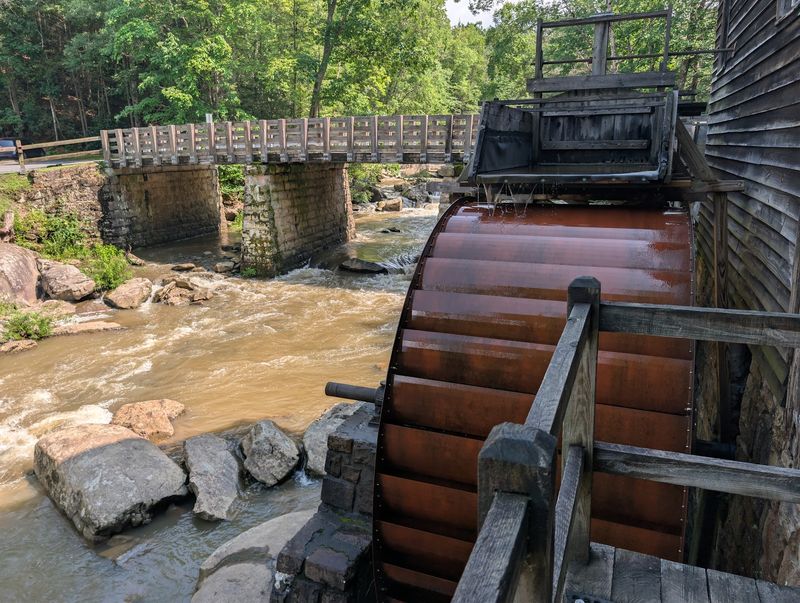
Grandma would approve. The Glade Creek Grist Mill is not just for looks, because it is still a working mill that grinds real grain.
Visitors can watch yellow corn, white corn, prairie wheat, and buckwheat get turned into cornmeal and flour. The process is steady and rhythmic, and it gives you a clear picture of how families once got the makings of their daily bread.
Better yet, freshly ground cornmeal is often available to buy. That means you can take home a little taste of history and turn it into cornbread, fried mush, or buckwheat cakes on a cold morning.
For many West Virginians, those foods bring back memories of church suppers, farm kitchens, and Sunday dinners at a relative’s house. Stone-ground meal has a texture and flavor that store-bought bags rarely match.
Back in the 1800s and early 1900s, mills like this were the heartbeat of rural life, processing the grains that kept households going through long winters. Picking up a sack today feels like a small handshake with those earlier generations.
It is an affordable souvenir, and it is one you will actually use.
Boulders, Falls, and That Famous Photo Angle
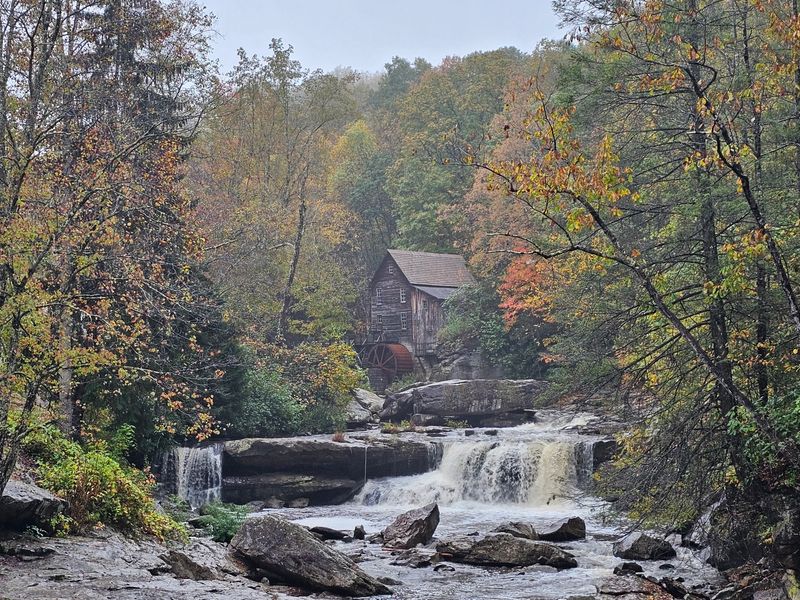
Cameras come out almost the moment people step out of the car. The mill is widely celebrated as the most photographed mill in the United States, and one look explains why.
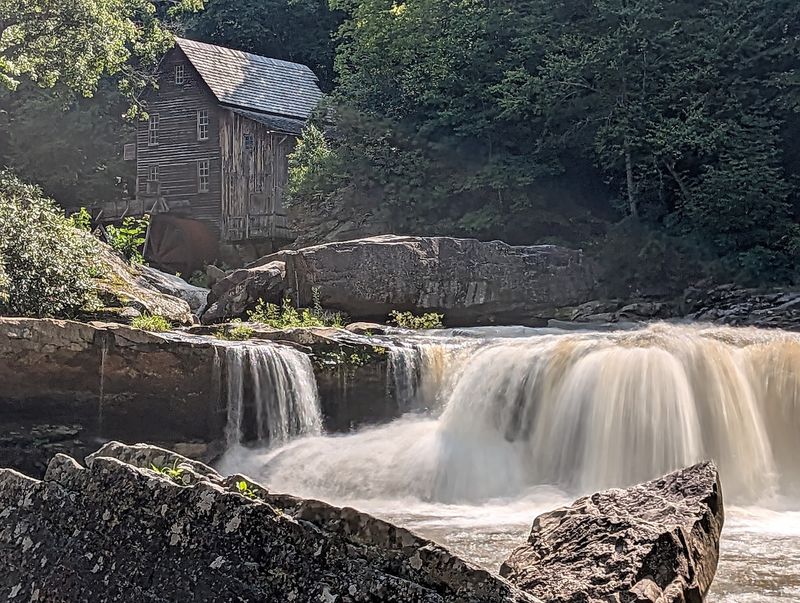
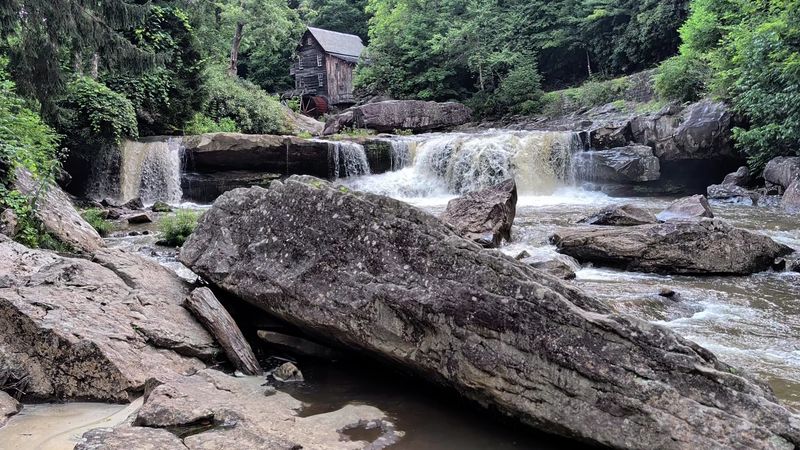
Glade Creek is strewn with big boulders, and the water spills over them in little falls and pools right in front of the mill. That natural foreground frames the building beautifully, whether you shoot with a fancy camera or a phone.
One visitor shared a handy tip. Standing just downstream gives you a very picturesque view of the mill, adding to the peaceful feel of the whole scene.
That spot tends to be a favorite for that classic postcard shot.
Another guest felt photos from the area belonged in a book, and it is easy to see the point. Each season paints the place differently, from spring greens to fiery fall color to snowy winter quiet.
The mill has gained international attention too, drawing visitors from around the globe each year. Still, it feels like a homegrown treasure.
Few things make a West Virginian prouder than seeing a little piece of home show up on calendars far away.
Sunrise Calm and Wildlife Along the Creek
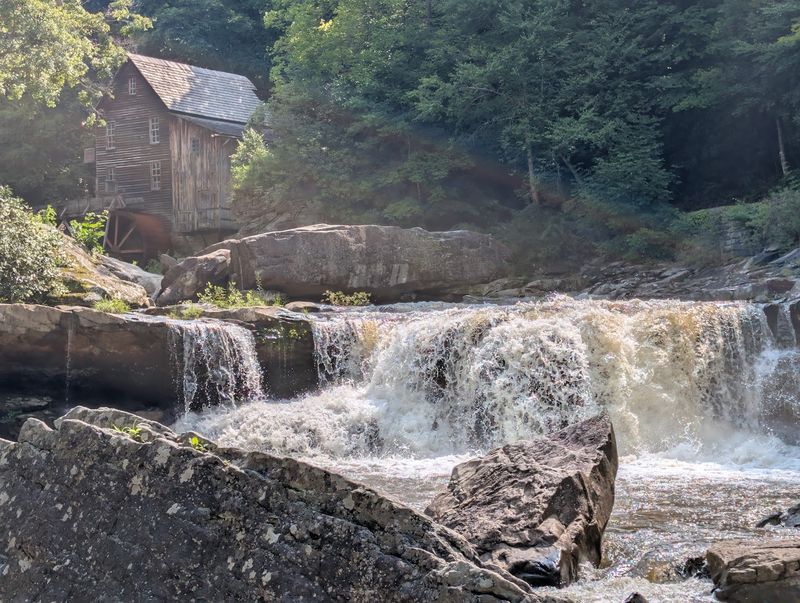
Early birds, take note. One visitor called this a great place to watch the sun come up, and that quiet hour may be the most magical time to visit.
Morning light filters through the trees and catches the spray off the falls. With fewer people around, the sound of moving water seems to fill the whole valley.
Another guest described it as a wonderful, tranquil spot to simply be. That is a rare thing these days.
No schedule, no rush, just a rock to sit on and a creek to watch.
Wildlife adds to the charm. Visitors have mentioned beautiful scenery and wildlife, so keep your eyes open as you wander the banks and nearby paths.
The park itself is not huge around the mill area. One person noted it feels fairly small, which actually works in its favor for a relaxed outing.
You can take in the main sights without a long hike or a full day commitment.
Bring a thermos of coffee, a warm jacket for cooler mornings, and plenty of patience. The best moments here tend to arrive slowly, right along with the light.
A Park Built by Depression-Era Hands
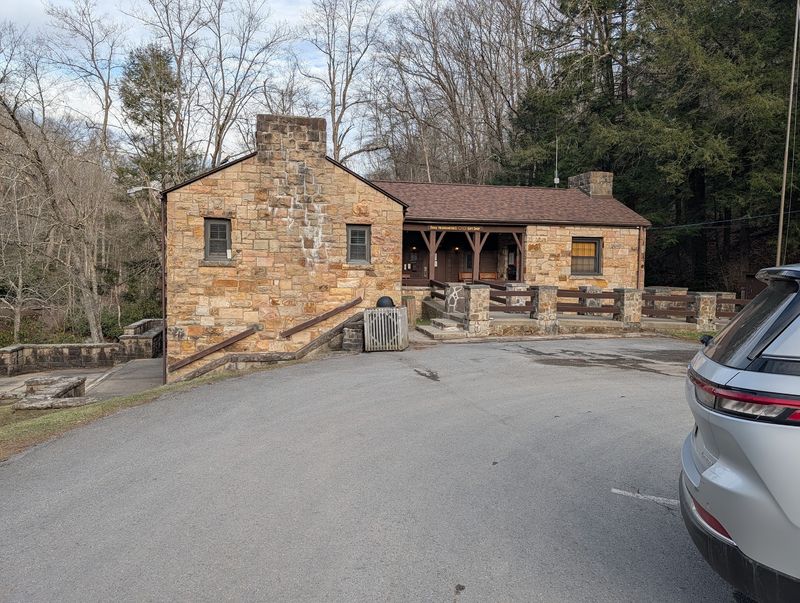
Behind the mill sits a bigger story. Babcock State Park spans more than 4,100 acres of rugged Appalachian scenery, and much of it was developed by the Civilian Conservation Corps during the Great Depression.
Those young workers built roads, trails, and rustic structures that still serve visitors today. Many West Virginia families have a grandfather or great uncle who signed on with the CCC, earning wages during hard years and sending money home.
That heritage pairs naturally with the mill. Both speak to the same values of hard work, making do, and building something that lasts.
It is Appalachian resourcefulness on full display.
Visitors mention the practical comforts too. Guests have pointed out bathrooms, trails, cabins, and camping, which makes it easy to turn a quick stop into a longer stay.
For retirees and families watching their budgets, a state park getaway like this can be a smart choice. You get mountain views, fresh air, and history without the price tag of a fancy resort.
Spend an afternoon on the trails, then circle back to the mill as the light softens. The two experiences fit together nicely.
Gift Shop Finds and the Almost Heaven Swing
Souvenir hunters will feel right at home. The gift shop gets mentioned more than once by visitors, with one saying it has pretty much anything you might need.
It is a handy spot to grab a keepsake, pick up a snack, or browse local items before heading out. Pair that with a bag of fresh cornmeal and you have a West Virginia gift basket in the making.
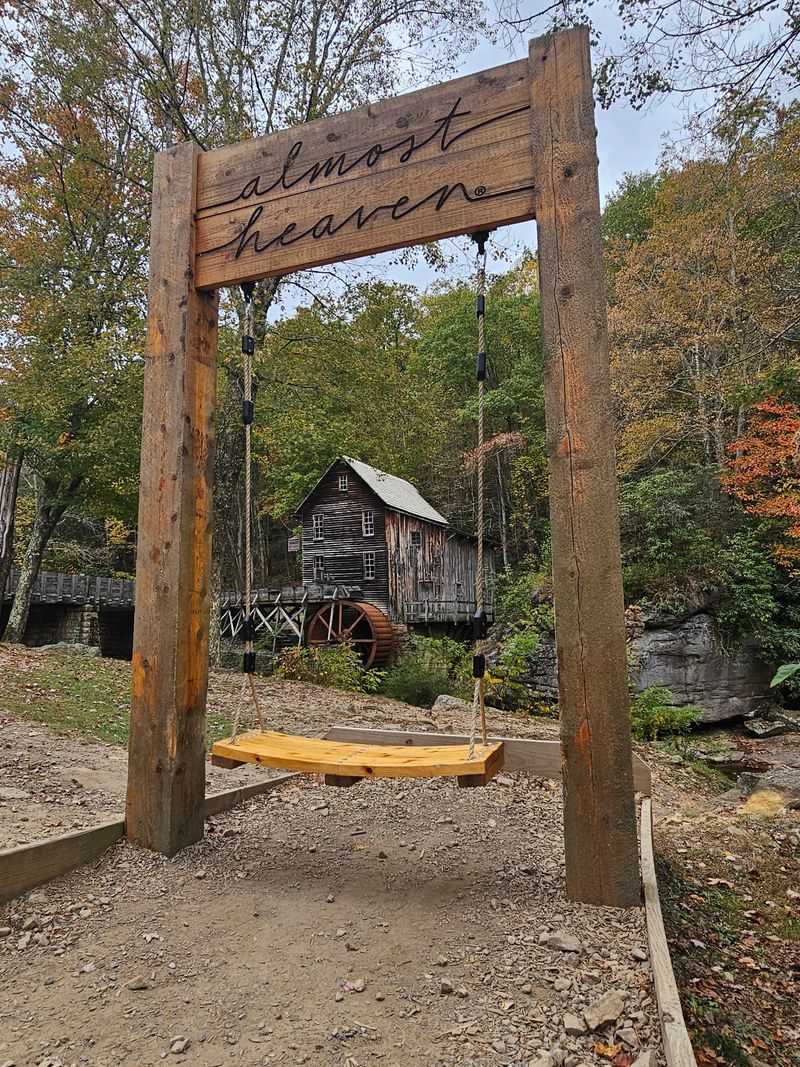
Another treat is the Almost Heaven swing. One guest called it a beautiful addition, and it has become a fun place for photos.
Those swings have popped up at scenic spots around the state, giving travelers a playful way to celebrate the Mountain State spirit.
Grandkids especially love a good swing photo, and grandparents tend to love printing them out for the fridge. It is a simple, sweet way to mark the day.
Between the shop, the swing, and the mill itself, there is enough variety to keep different ages happy. Some will linger over gears and grinding stones.
Others will head straight for the shelves or the swing. Everyone usually ends up back at the creek for one more look.
Planning Notes for Your Trip
Good news for anyone on a fixed income: one visitor noted that entry is free. That makes the mill one of the friendliest outings around for a budget-minded day trip.
The mill sits near the park headquarters, so it is easy to reach once you arrive. You will find it at 486 Babcock State Pk, Clifftop, WV 25831, in the beautiful New River Gorge region of southern West Virginia.
Hours and grinding times can vary by season, so it is wise to check with the park before you go if watching the mill operate is a must. Seasonal schedules are common at historic attractions like this one.
Water levels matter too. One local even mentioned stopping by just to check on the creek, which tells you how much the falls can change.
Spring runoff tends to bring a fuller, louder show, while dry spells may soften the flow.
Wear sturdy shoes for the rocky banks, and take care near the water since boulders can be slick. Bring a camera, a little cash for the gift shop, and maybe a cooler for your cornmeal.
A relaxed pace suits this place best.
Why a Patchwork Mill Feels Like Home
Hundreds of grist mills once dotted West Virginia around the turn of the 20th century. Most are gone now, lost to fire, flood, or simple time.
That is exactly why this one matters so much.
By borrowing pieces from Stony Creek, Spring Run, Onego, and possibly others, the Glade Creek Grist Mill carries the memory of many mills at once. It stands as a living monument to the people who ground grain, fed neighbors, and kept small communities going.
There is a fitting lesson in that. West Virginians have always been good at saving what is useful, fixing what is broken, and turning scraps into something worth keeping.
This mill is that attitude built in wood and stone.
Is it worth the trip? For history lovers, photographers, families, and anyone craving a peaceful morning by the water, the answer leans strongly toward yes.
Free entry and fresh cornmeal only sweeten the deal.
So go see it for yourself, then share your own memories. Did your family ever take grain to a local mill, or snap a photo at Glade Creek years ago?
Those stories keep places like this turning.
