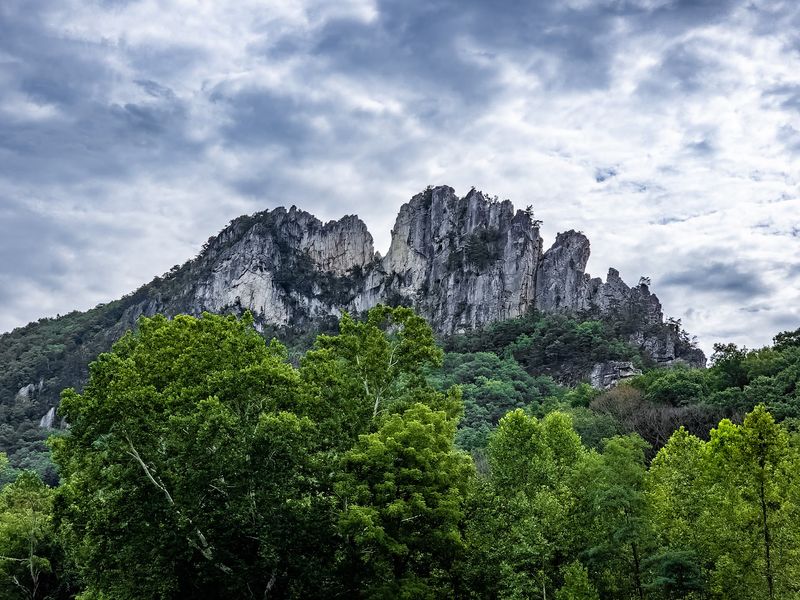
One peak on this rock wall can’t be reached without technical climbing gear. It’s the only summit on the East Coast with that claim, and it sits right here in West Virginia.
The cliffs started as beach sand more than 440 million years ago. Today they rise nearly 900 feet above a quiet river valley, pale and jagged like a stone fin.
Climbers have roped up on this rock since 1935. Army troops trained on it before heading to Italy.
I love that the old iron spikes they hammered in reportedly still dot some routes.
You don’t need a harness to enjoy it, either. A trail climbs most of the way up for regular folks.
So how close would you dare to get to that knife-edge top?
A Quartzite Fin You Can Spot From The Highway
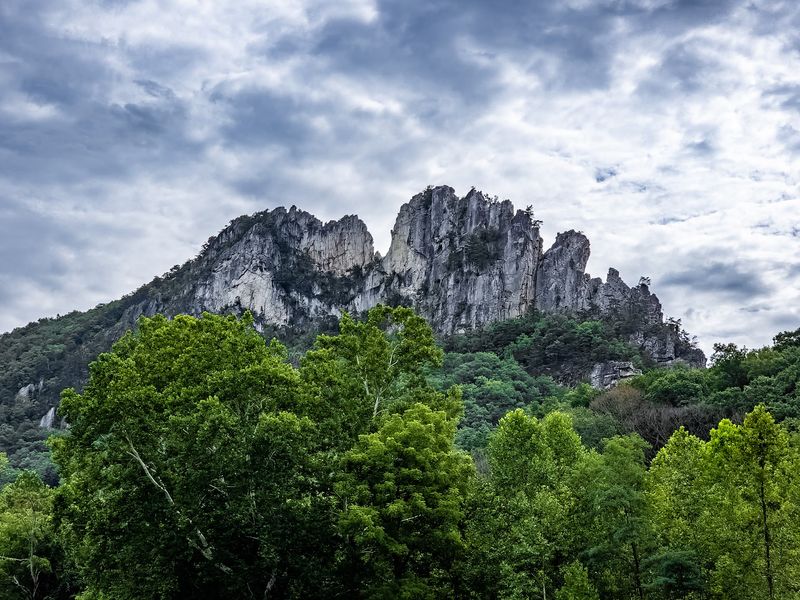
Drivers coming into the valley often do a double take. Seneca Rocks shoots up nearly 900 feet above the North Fork River, sharp and pale against the hills.
The formation sits in Pendleton County, West Virginia, inside the Spruce Knob-Seneca Rocks National Recreation Area. That area belongs to the larger Monongahela National Forest, which gives the whole place a protected, wild feel.
The rock itself is Tuscarora quartzite, a hard sandstone packed with quartz. It weathers into thin, upright layers, so the ridge looks more like a dorsal fin than a mountain.
Folks call it a razorback ridge, and the name fits.
The tiny community at its feet shares the name Seneca Rocks. It used to be called Mouth of Seneca, a nod to where Seneca Creek meets the North Fork South Branch Potomac River.
Three roads meet here too: US 33, WV 28, and WV 55. That makes the crossroads easy to find, even if your phone signal wanders off.
So the setting is simple. One crossroads, one river, and one enormous stone wall that refuses to be ignored.
Honestly, you’ll be craning your neck before you even park the car.
Beach Sand From An Ocean Older Than The Atlantic
Hard to believe, but those cliffs began as sand on a shoreline. More than 440 million years ago, that sand piled up along the ancient Iapetus Ocean.
Iapetus came long before the Atlantic. Over unimaginable stretches of time, the sand pressed down into stone, then hardened into the tough quartzite you see today.
Then the earth started folding. Pressure tilted those layers until they stood nearly on end.
Softer rock around them wore away, leaving the stubborn quartzite standing tall like a stone billboard.
That toughness explains why the ridge is so thin yet still upright. Quartzite resists weather better than most rock in the region.
Rain and frost nibble at it, but slowly.
Things do shift now and then, though. A freestanding pinnacle called the Gendarme once stood between the North and South Peaks.
It toppled in 1987, and longtime West Virginia climbers still talk about it.
I like knowing that a sunny climb here means gripping the remains of an old beach. Next time someone says the mountains are timeless, you can mention the seashore hiding inside them.
It makes for a great fact to share around the campfire later that night.
Sacred Ground Along The Old Seneca Trail
Long before ropes and carabiners, this rock already mattered. Native American tribes, including the Seneca, Shawnee, Delaware, and Cherokee, are said to have held it as spiritually important.
It also served as a landmark on the historic Seneca Trail. A giant white ridge makes a pretty dependable signpost, especially when you’re traveling on foot through thick forest.
Historians believe Native people likely scaled the rocks long before any written record. Nobody can say exactly when, so the story stays a little mysterious.
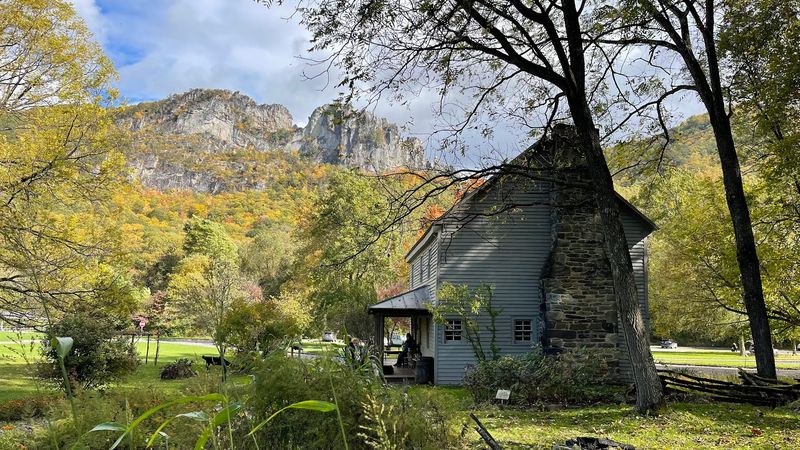
Settlers arrived later and farmed the valley floor. Their story sits right beside the rocks, at the Sites Homestead, which dates to around 1839.
The homestead shows the farming life of early European-American families here. It’s a quiet contrast to the dramatic cliff overhead.
One side whispers about hard work and harvests, while the other shouts about adventure.
Standing between those two stories gives the place real depth. You get a sense of how many generations have looked up at the same jagged skyline.
That kind of history suits this corner of West Virginia, where people tend to remember where they came from.
The 1935 Rope Trick That Started A Climbing Legacy
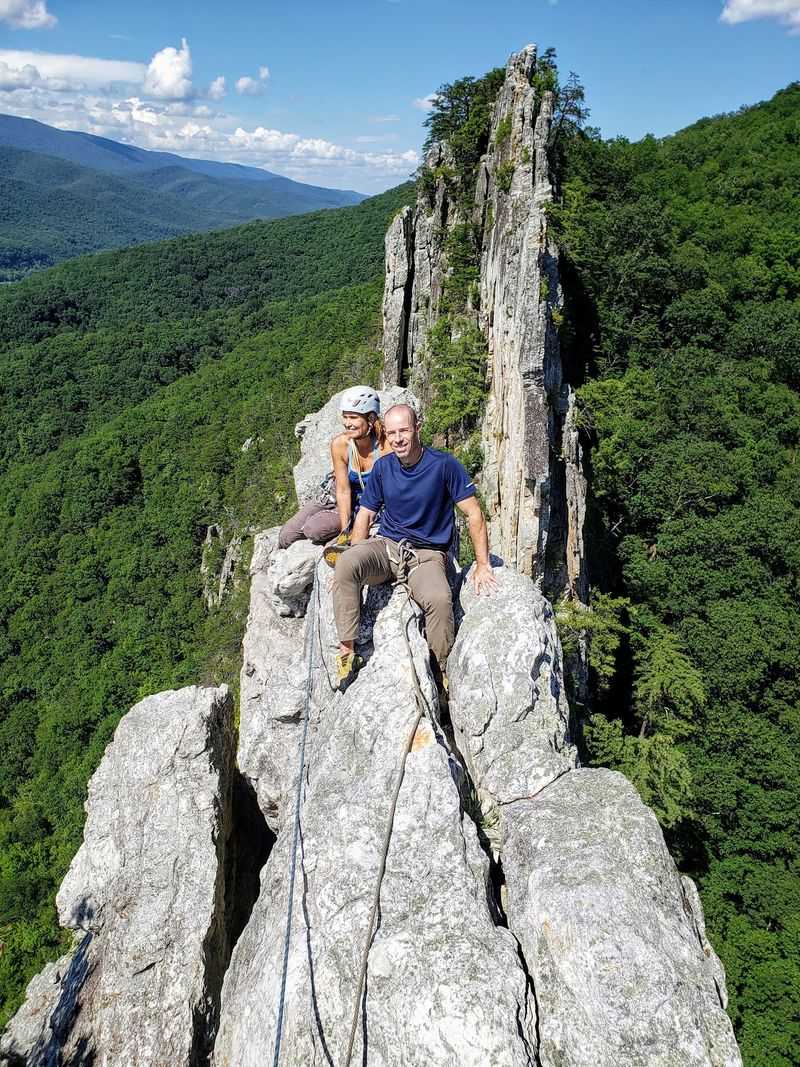
Paul Bradt and Florence Perry made the first documented climb history here in 1935. Their roped descent of the North Peak kicked off the written record.
Then came a surprise. During a 1939 ascent, climbers found an inscription reading D.B.
September 16, 1908. It’s possibly the work of a surveyor named Bittenger.
So someone may have scrambled up decades earlier and left a calling card. That’s the rock climbing version of finding initials carved in a school desk.
Things got serious during 1943 and 1944. The 10th Mountain Division of the U.S.
Army trained here in assault climbing before heading to Italy.
Many soft iron pitons left by those soldiers can still be found on routes today. Climbers clip past pieces of history without leaving the wall.
After that era, the sport took off. Through the 1950s and 1960s, the rock earned a name for tough traditional lead climbing.
Many routes from that time are still climbed today.
Nearly ninety years of stories, all on one ridge. Not bad for a hunk of old beach sand standing in a quiet Pendleton County valley.
More Than 375 Routes And One Very Exclusive Summit
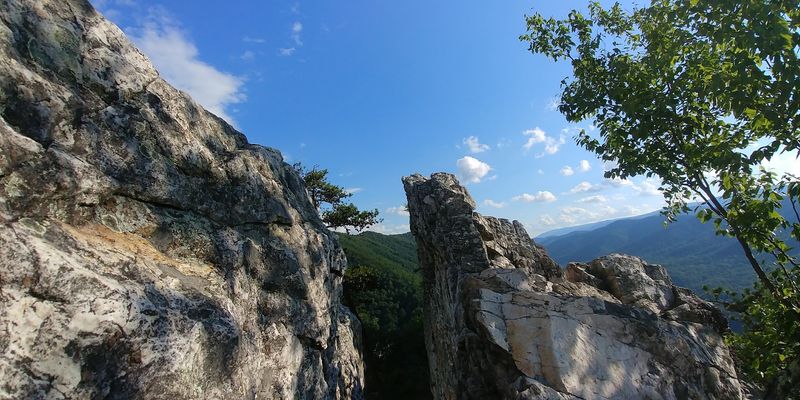
Ask an East Coast climber about Seneca Rocks, and expect a grin. It ranks among the region’s best-known climbing spots, with over 375 mapped routes.
Difficulty runs from 5.0 all the way to 5.14b. Translation: beginners and hardcore experts can both find something to sweat over.
Many routes are multi-pitch traditional climbs. That means climbers place their own protection as they go, then pull it back out.
It takes skill, patience, and steady nerves.
Then there’s the South Peak. It’s the only peak on the East Coast you can’t reach without technical rock climbing skills.
No staircase, no side path, no shortcut.
That fact alone gives the summit serious bragging power. Folks who stand up there earned every inch of the trip.
New to roping up? Two local schools can help: Seneca Rocks Climbing School and Seneca Rocks Mountain Guides.
Both offer guidance for people just starting out or wanting to level up.
Watching climbers inch along that pale wall is entertainment all by itself. Bring binoculars and you’ll understand why West Virginia climbers treat this place like home turf.
Your Legs Will Earn This Overlook The Honest Way
Good news for anyone without a harness. A hiking trail climbs toward the top, and it starts right at the Discovery Center.
The trail runs about 1.3 miles each way, so plan on 2.6 miles round trip. You’ll gain more than 700 feet in elevation along the way.
Yes, your calves will notice. The path winds steadily upward through the forest, with switchbacks to keep the grade manageable.
Take breaks, sip water, and enjoy the shade.
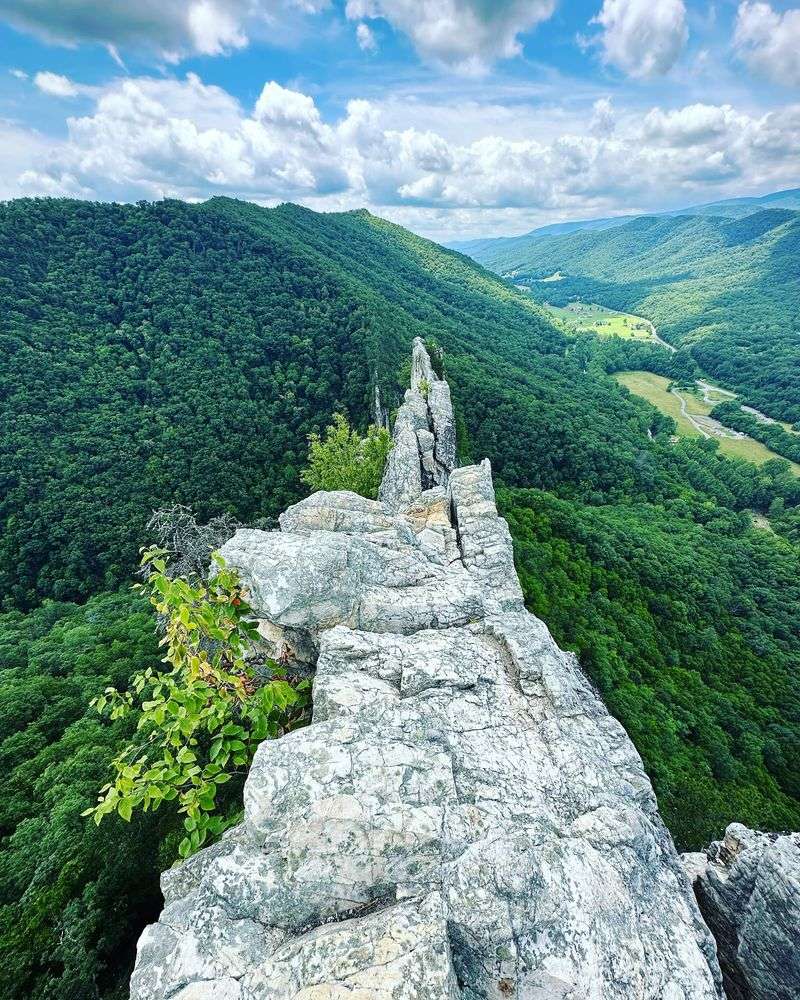
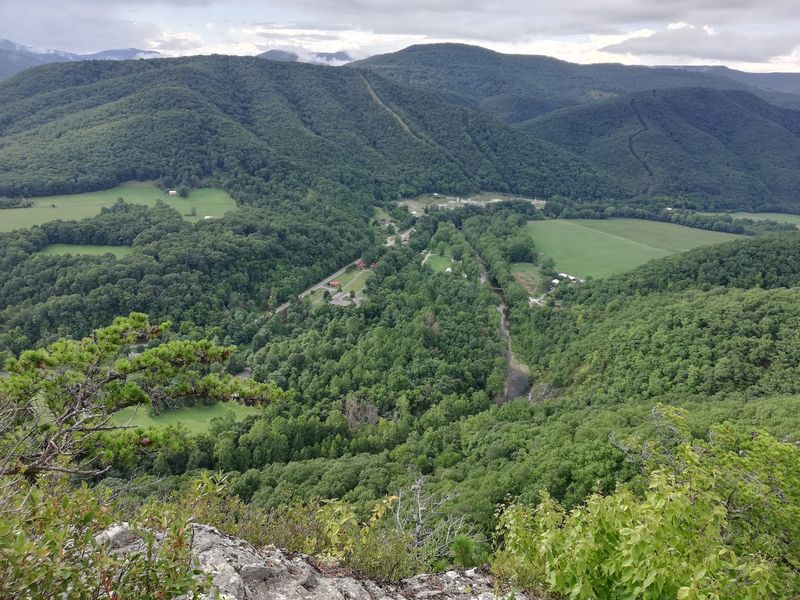
Your reward waits near the summit. An observation platform opens up wide views of the North Fork River valley below.
Farms, ridges, and the winding river spread out in every direction. It’s the kind of view that makes everyone suddenly quiet, then suddenly reach for a camera.
Please stop at the platform, though. The rock beyond it belongs to trained climbers with gear, and the drop is no joke.
The trail and picnic area are open daily from 6 AM to 10 PM. That gives early birds a shot at soft morning light.
Fall color season in West Virginia makes this climb especially tempting.
A Discovery Center That Rose From The Ashes
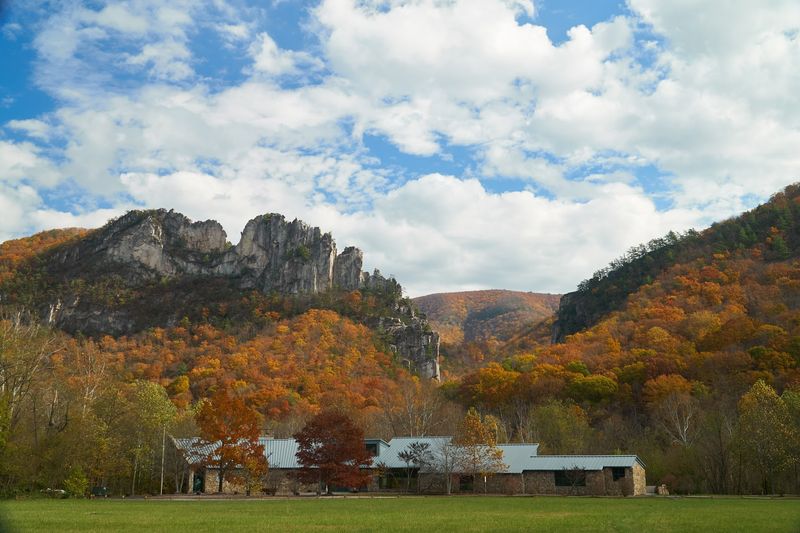
The first visitor center opened here in 1978. Sadly, arson destroyed it in 1992, and the valley went years without one.
The current Seneca Rocks Discovery Center was completed in 1998. It now serves as the main gateway for anyone exploring the rocks.
Inside, exhibits explain the area’s geology, local history, and the growth of rock climbing. You’ll also find interpretive programs, a gift shop, classrooms, and art displays.
It’s a smart first stop before hitting the trail. You’ll look at the cliff differently after learning how it formed and who climbed it first.
The center is open Thursday through Monday, from 9:30 AM to 5:00 PM. Plan around those days if you want the exhibits and shop.
Find it at 13 Roy Gap Road, Seneca Rocks, WV 26884. The trailhead to the summit overlook starts right here too.
The Sites Homestead sits next door, so history fans can wander over easily. Between the exhibits and the farmhouse, families can fill a good hour before ever lacing up for the hike.
Not a bad way to warm up those legs.
River Time, Picnic Grills, And A Chilly Swimming Hole
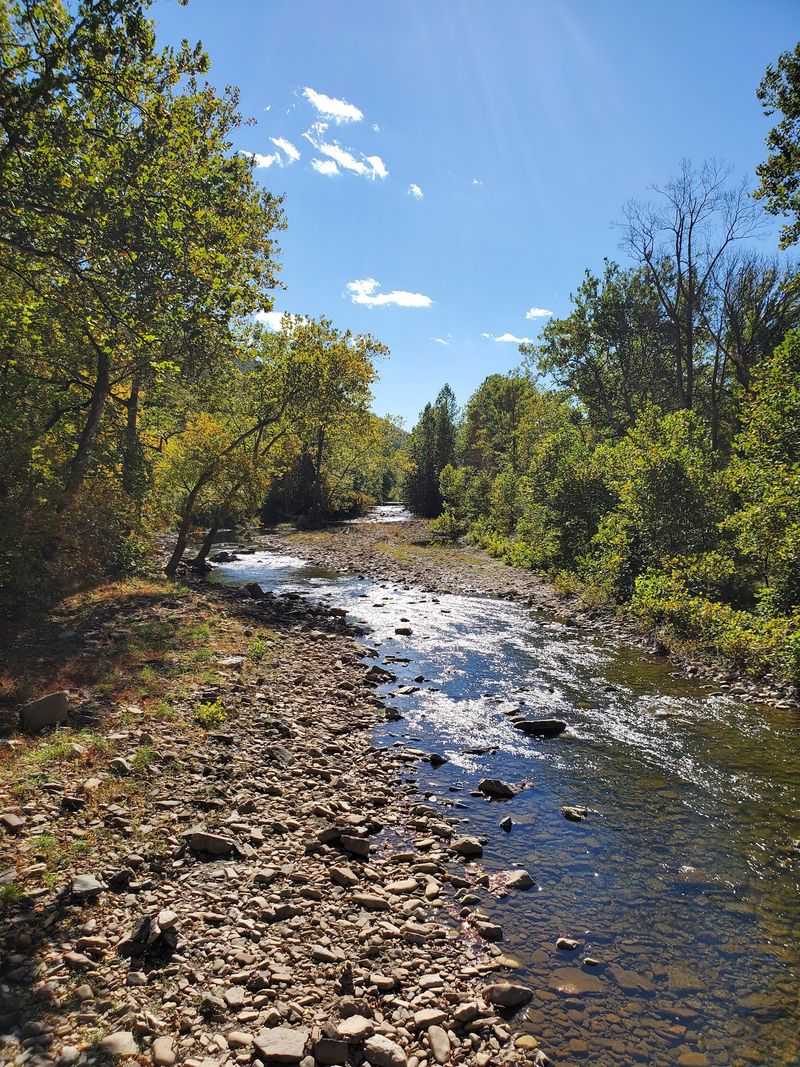
Not every great moment here happens on a cliff. Some of the best ones happen with your feet in the water.
A picnic area sits near the river with tables and barbecue grills. Pack hot dogs, a cooler of sodas, and maybe a pepperoni roll or two for good measure.
Anglers get their own treat. Catch-and-release fishing with artificial lures is allowed along a three-quarter-mile stretch of river near the visitor center.
That makes for a relaxing afternoon while climbers work above you. Cast a line, look up, and enjoy your much lower stress level.
On hot days, a swimming hole at the base of the rocks offers relief. It’s in the Potomac River system, and it’s a fine cooldown after the summit trail.
Summer in West Virginia gets sticky, so that water feels like a gift. Keep an eye on kids and river conditions, especially after heavy rain.
I can’t think of a better recipe for a lazy day. Grill some lunch, wade a little, then watch the cliff glow as the sun moves across it.
Pitching A Tent At Seneca Shadows
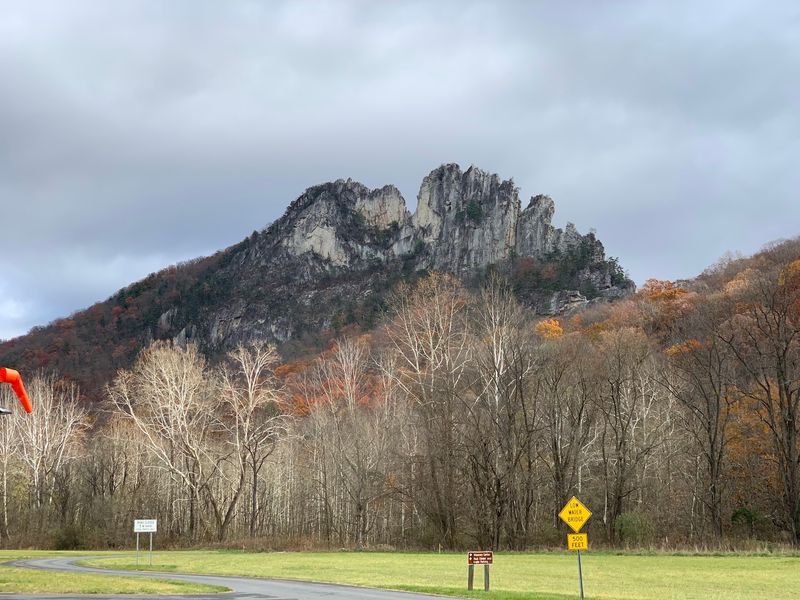
One day rarely feels like enough. Thankfully, Seneca Shadows Campground sits about a mile south of the visitor center on U.S.
Route 33.
It’s a National Forest campground with plenty of options. You’ll find tent sites, trailer sites with electric hookups, and group sites for bigger crews.
Warm showers are part of the deal too. After a sweaty hike or a long climb, that’s practically luxury.
Staying nearby means early access to the trail before the day heats up. It also means evenings spent looking back at the rocks as the light fades.
The campground’s name says it all, really. The ridge looms close enough to feel like part of the scenery around your campfire.
Families like the convenience, and climbers like being close to the routes. Retirees with campers can hook up and settle into an easy pace.
Check availability before you go, especially for busy weekends. Popular West Virginia campgrounds can fill fast when the weather turns pleasant.
A little planning keeps your trip as smooth as the drive along the river.
Caverns, High Peaks, And Telescopes Within Reach
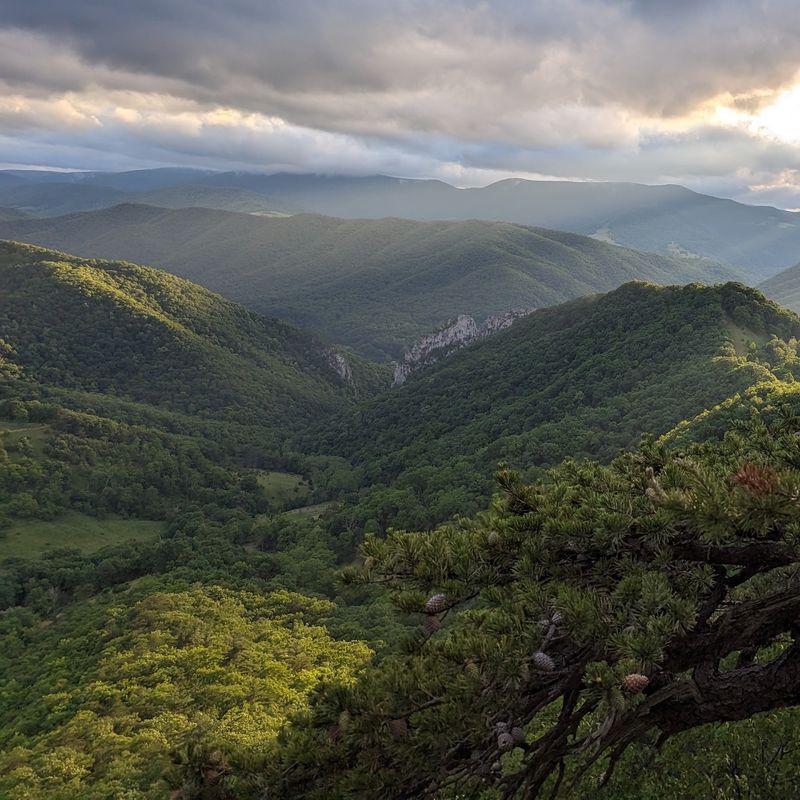
Seneca Rocks makes a handy home base for a bigger mountain road trip. Several standout spots are within driving range.
Spruce Knob, the highest point in West Virginia, belongs to the same national recreation area. Pair the two and you’ve got a true high-country weekend.
Cave lovers have choices too. Seneca Caverns and Smoke Hole Caverns both let you swap sunlight for underground formations.
Train fans can head toward Cass Scenic Railroad for a ride into the past. It’s a fine pick for anyone who loves old steam and timber history.
Blackwater Falls State Park and Canaan Valley offer waterfalls, overlooks, and wide-open scenery. Both make easy add-ons to a longer trip.
Then there’s the National Radio Astronomy Observatory. Giant telescopes listening to space in rural mountains?
That’s a story the grandkids will remember.
Mix and match based on your energy level. Some folks hike hard, while others prefer scenic drives and a comfortable lunch stop.
Either way, this part of the state rewards anyone who keeps exploring past the first stop.
Why This Old Stone Fin Deserves A Spot On Your Calendar
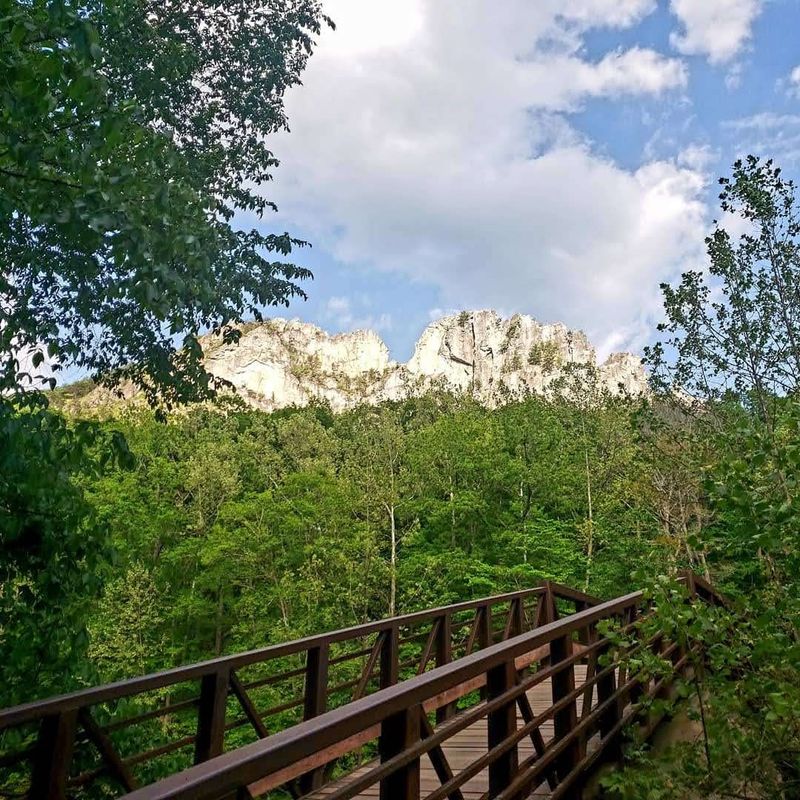
Few places pack this much story into one skyline. Ancient seashore, sacred landmark, Army training wall, and climbing classroom all share the same ridge.
Protection came in 1965. The Spruce Knob-Seneca Rocks National Recreation Area was established on September 28 that year, and the federal government bought the rocks in 1969.
That means the view stays open for everyone. Your grandkids can hike the same trail and see the same jagged peaks.
Climbers will find hundreds of routes and one famously exclusive summit. Hikers get a challenging trail with a rewarding platform at the top.
Families get picnics, river time, and a Discovery Center packed with history. Campers get a forest campground practically in the rock’s shadow.
The trails are open daily, weather permitting. Visit in fall for color, or summer for swimming and longer days.
I believe every West Virginian should stand under this ridge at least once. Look up, think about 1935, and picture those ropes swinging against the stone.
Then decide whether you’re a hiker, a watcher, or the next one tying in.
