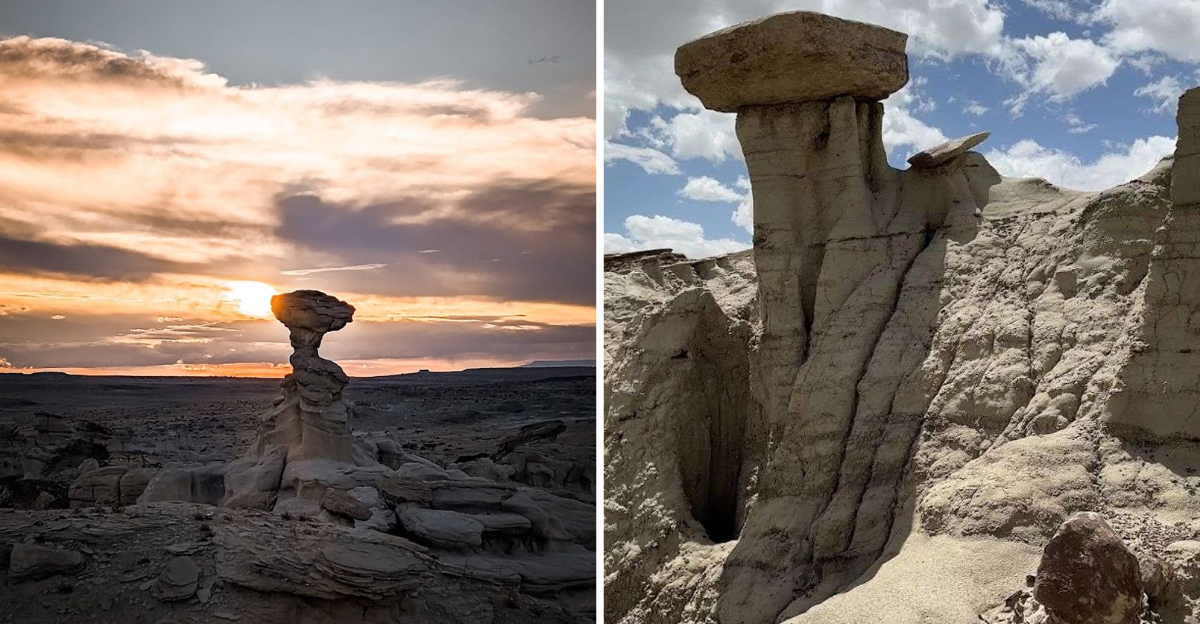
Pale clay hills ripple across the desert like frozen waves, and strange mushroom-shaped rock formations rise from the earth in every direction. New Mexico has a place that made me stop and question whether I had somehow wandered off the planet entirely.
The colors shift from olive green to burnt orange to chalky grey depending on where the light falls, and the silence out there is the kind that actually gets inside you. I walked through those hoodoos on a quiet afternoon, the only sound my own footsteps on the cracked earth, and felt like I had stepped onto another world entirely.
Getting there takes some effort, a long drive on rough roads with no signs or trail markers to guide you, but that remoteness is exactly what makes it feel so untouched. If you have ever wanted to feel like an explorer discovering something completely new, this is the place to do it.
The Badlands That Feel Like a Different World
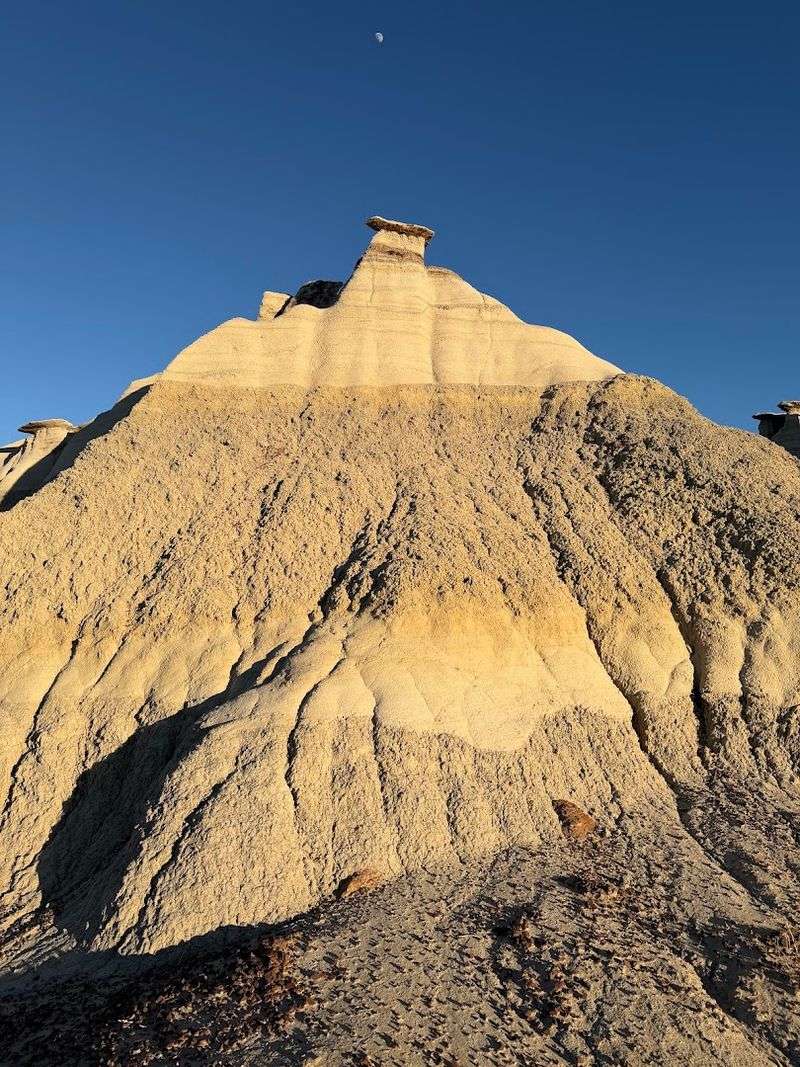
My first real look at the New Mexico’s Ah-Shi-Sle-Pah badlands genuinely caught me off guard. The landscape does not ease you in gently.
It just opens up all at once, rolling hills of eroded clay in shades of olive, grey, and warm brown stretching as far as you can see.
What makes this place so striking is how the colors actually shift throughout the day. Morning light pulls out soft yellows and muted greens.
By midday, the ochre tones burn brighter, and the whole terrain feels like it is glowing from within.
The badlands here formed over millions of years through wind, water, and ice erosion cutting through layers of sandstone, shale, mudstone, and bituminous coal. Each layer tells a different chapter of geological history, and you can read them right there in the hillsides without any special equipment or training.
There are no paved paths, no interpretive signs, and no crowd barriers. You simply walk into the open terrain and explore at your own pace.
That freedom is surprisingly rare in a world where most natural attractions have been packaged and organized for visitors.
Bringing a GPS unit or downloading an offline trail map before you arrive is genuinely important here. Cell service is almost nonexistent.
The formations extend about six miles along the Ah-Shi-Sle-Pah Wash, and getting turned around in the maze of hills is easier than it sounds, even for experienced hikers.
Hoodoos, Mushroom Rocks, and Formations That Defy Logic
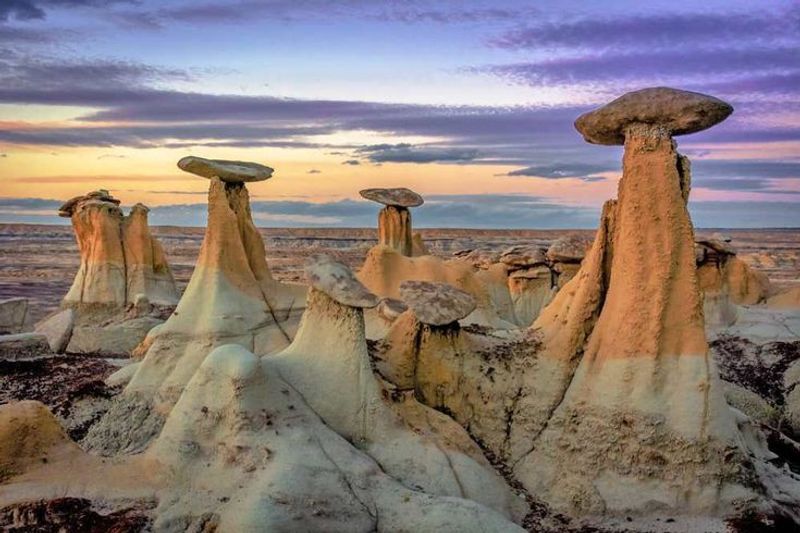
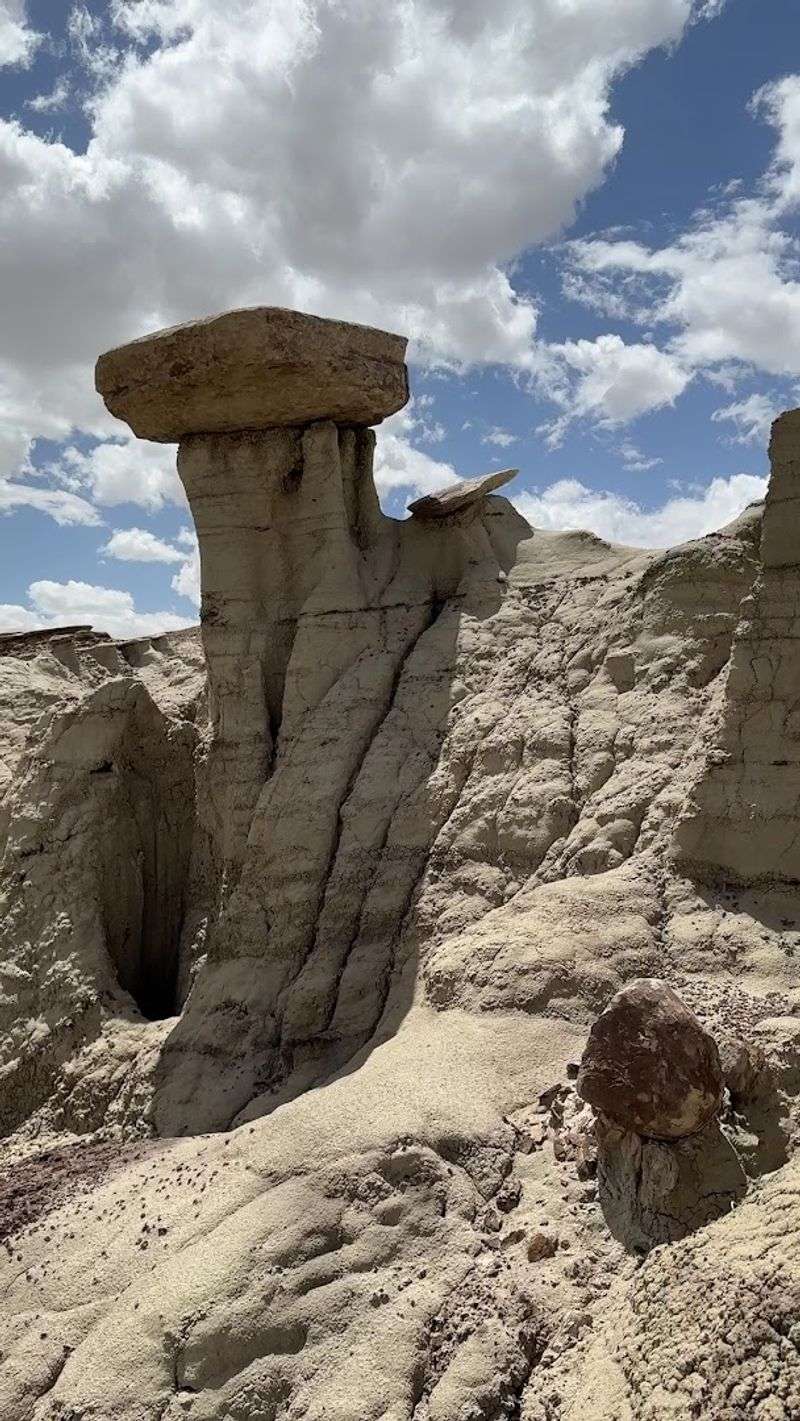
Nothing quite prepares you for the moment the hoodoos come into view. These tall, narrow rock spires capped with wider stone tops look like something a sculptor dreamed up after spending too long in the desert sun.
At Ah-Shi-Sle-Pah, the hoodoos take on all kinds of shapes. Some look like classic fairy chimneys, slender and tapered at the base.
Others fan out into wide, flat mushroom caps balanced on surprisingly thin columns of softer rock beneath them.
The “chocolate mushrooms” are among the most photographed features in the area, and it is easy to see why. Their warm brown caps contrast beautifully against the pale clay ground and the big open sky above.
Every angle offers something different, which makes photographers genuinely happy here.
These formations develop when a harder cap of sandstone or mudstone sits on top of softer material. Wind and rain erode the softer layers faster, leaving the protected column standing tall while everything around it wears away.
It is a slow and patient process that takes thousands of years to produce what you see.
The best time to photograph the hoodoos is during late afternoon when the low-angle light rakes across the formations and casts long dramatic shadows. Colors pop, textures deepen, and the whole landscape feels alive in a way that midday light simply cannot match.
Arriving a couple of hours before sunset gives you plenty of time to explore and still catch that golden hour magic.
Petrified Wood and Fossils Hidden Across the Desert Floor
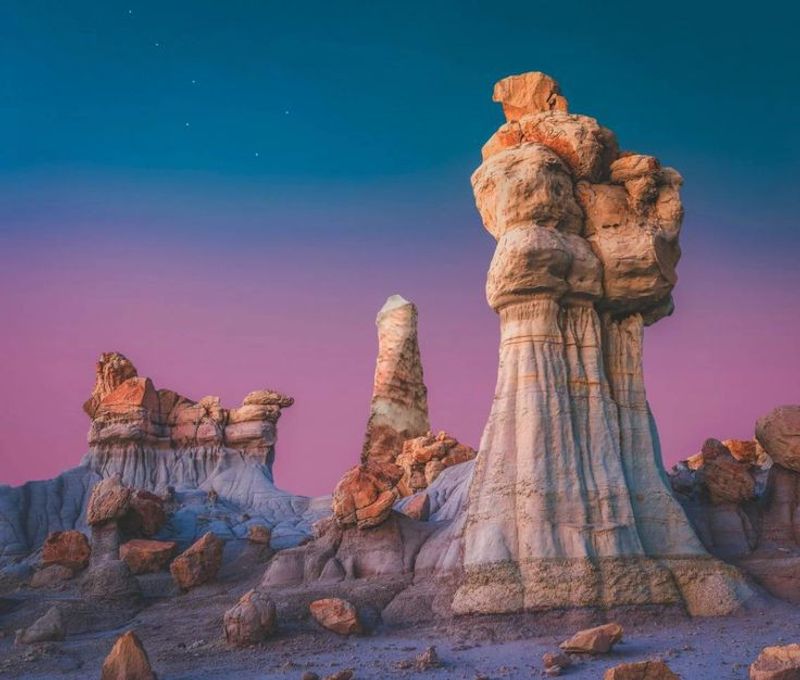
Scattered across the ground at Ah-Shi-Sle-Pah, you will find pieces of petrified wood that have been sitting there for roughly 65 to 75 million years. Some are small fragments that catch the light with an almost glassy sheen.
Others are full upright tree stumps still rooted in the earth, which is a genuinely surreal sight.
The area is also scientifically significant for its late Cretaceous fossils. Dinosaur bones, crocodile remains, and turtle fossils have all been found here, making the ground beneath your feet a kind of open-air museum from a time long before humans existed.
It is worth knowing that fossil collecting without a permit is strictly prohibited by law. The Bureau of Land Management, which oversees this wilderness study area, takes preservation seriously.
The rule is simple: look, photograph, and appreciate, but leave everything exactly where you found it.
Spotting petrified wood is actually quite easy once your eyes adjust to what you are looking for. The wood often shows visible grain patterns and rings, turned to stone but still recognizable as something that was once alive.
The colors range from deep red and purple to pale cream and grey depending on the minerals that replaced the original organic material over time.
Younger visitors especially tend to find this part of the experience exciting. Finding something that old just lying on the surface, untouched and unguarded, feels like a genuine discovery every single time.
Getting There: The Adventure Starts Before You Arrive
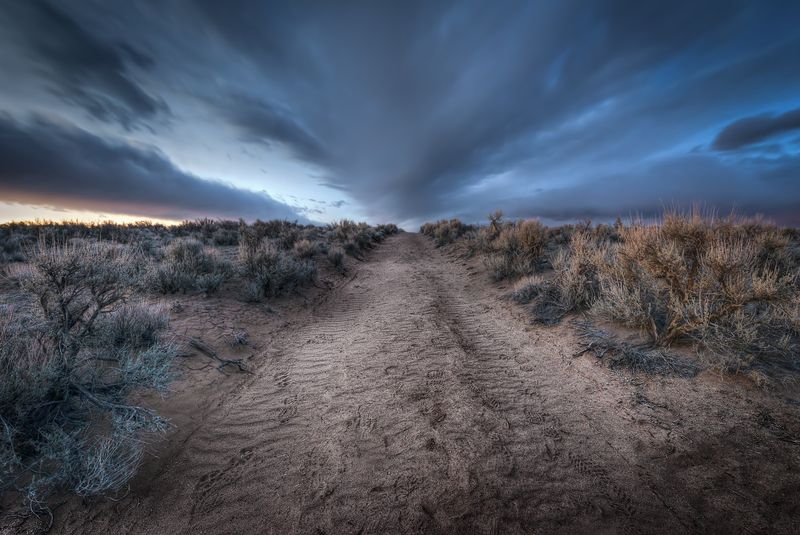
The road to Ah-Shi-Sle-Pah is part of the experience, and not in a comfortable, scenic-byway kind of way. From Farmington, New Mexico, the drive south on US-550 to Nageezi runs about 34 miles, then you turn west onto NM-57 for another 13.5 miles to reach the wilderness boundary.
NM-57 starts out paved, though with plenty of potholes, then transitions to gravel, and eventually becomes a dirt road that can turn completely impassable after rain or snow. High-clearance vehicles are strongly recommended, and several visitors have noted that even a light rain can make the dirt sections genuinely dangerous.
Parking sits alongside NM-57 right at the wilderness boundary. From there, you walk.
There are no shuttles, no visitor centers, and no rangers stationed nearby to point you in the right direction.
Downloading an offline map before you leave cell service range is not optional advice here, it is genuinely necessary. Apps like AllTrails or Maps.me work well for this, and having GPS coordinates saved ahead of time can save a lot of frustration once you are out in the open terrain.
The general GPS coordinates for the area are 36.162545, -107.916446, which gives you a reliable starting point. Plan your drive carefully, check weather forecasts before you go, and give yourself more time than you think you need.
The journey itself sets the tone for everything that follows, and arriving unhurried makes the whole experience significantly better.
Hiking Without Trails: Cross-Country Exploration at Its Finest
There are no marked trails inside Ah-Shi-Sle-Pah, and that is actually one of its greatest qualities. You move through the landscape by reading the terrain, following washes, and making your own route between formations.
It feels genuinely exploratory in a way that trail-following rarely does.
Most of the best features sit within one to two miles of the parking area, which makes the hike approachable even for people who are not experienced backcountry hikers. A typical visit of around two to three hours covers a solid amount of ground without feeling rushed.
That said, the terrain is uneven and the clay ground can be slippery, especially if any moisture has been through recently. Sturdy hiking boots with good ankle support and reliable traction make a noticeable difference out here.
Sandals or casual sneakers are a bad idea in this landscape.
Water is completely unavailable at the site. No potable water, no restrooms, no facilities of any kind.
Bringing more water than you think you need is genuinely important, especially during warmer months when the desert heat builds fast and shade is nearly nonexistent across the open badlands.
The formations extend for about six miles along the Ah-Shi-Sle-Pah Wash, meaning you could easily spend a full day here and still not see everything. Some visitors who have done eight-mile hikes report that they still felt like there was more to discover.
That sense of endlessness is part of what makes this place so memorable.
Photography, Camping, and Respecting This Wild Place
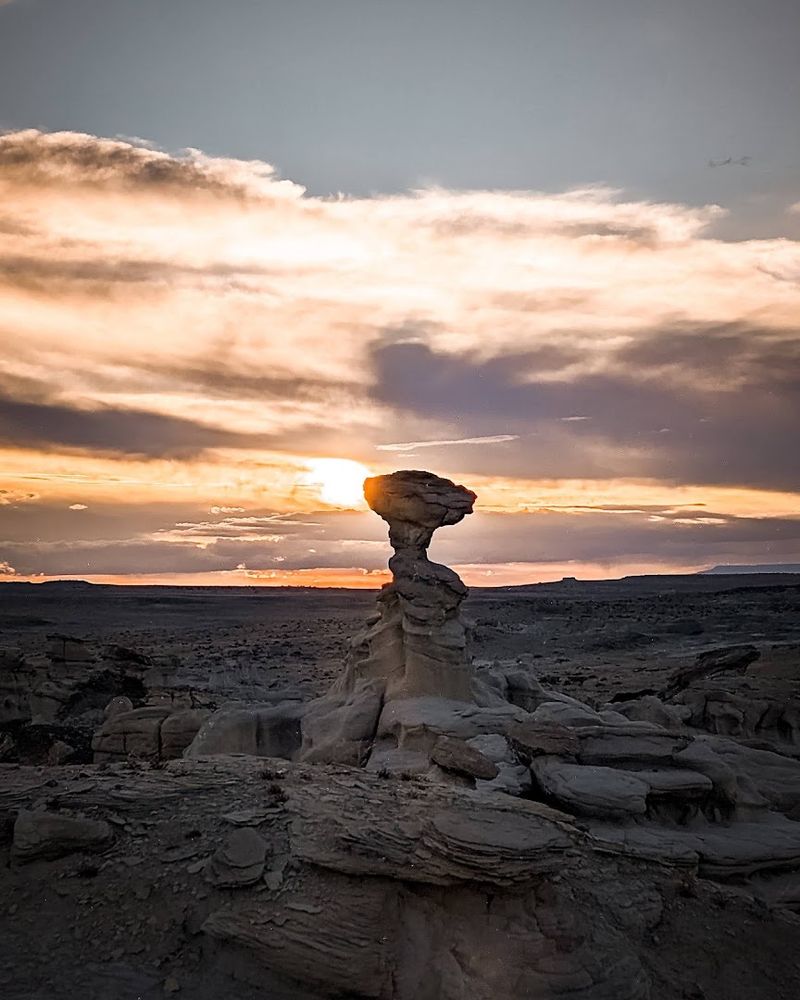
Ah-Shi-Sle-Pah is open year-round and allows primitive camping, which means you can spend the night out there under a sky that, far from any city lights, absolutely delivers on the Milky Way. Visitors who have stayed after dark consistently describe the stargazing as one of the most memorable parts of the whole trip.
Photography here rewards patience and timing. The landscape changes dramatically depending on the season, the time of day, and even cloud cover.
Overcast days actually produce surprisingly rich colors in the clay hills because the diffused light pulls out subtle tones that harsh sunlight tends to wash out.
Drones are prohibited inside the wilderness study area, as are bicycles and all motorized or mechanical equipment. The restrictions exist to protect the fragile environment and preserve the wilderness character that makes this place feel so untouched.
Following those rules is not just a legal requirement, it is genuinely the right thing to do.
Climbing on the hoodoos and geological formations is also prohibited. The rock and clay structures are far more fragile than they look, and even a single person scrambling over a formation can cause irreversible damage.
The best approach is to get close, look carefully, and photograph from the ground.
Pack out everything you bring in. There are no trash facilities anywhere near the site.
Leaving the landscape exactly as you found it ensures that the next person who makes the long drive out here gets the same unspoiled experience that made it worth your trip.
