Eight hundred and twenty-one wooden steps drop down a mountainside to reach what’s left of this old coal operation. Then, of course, you climb every single one of them back up.
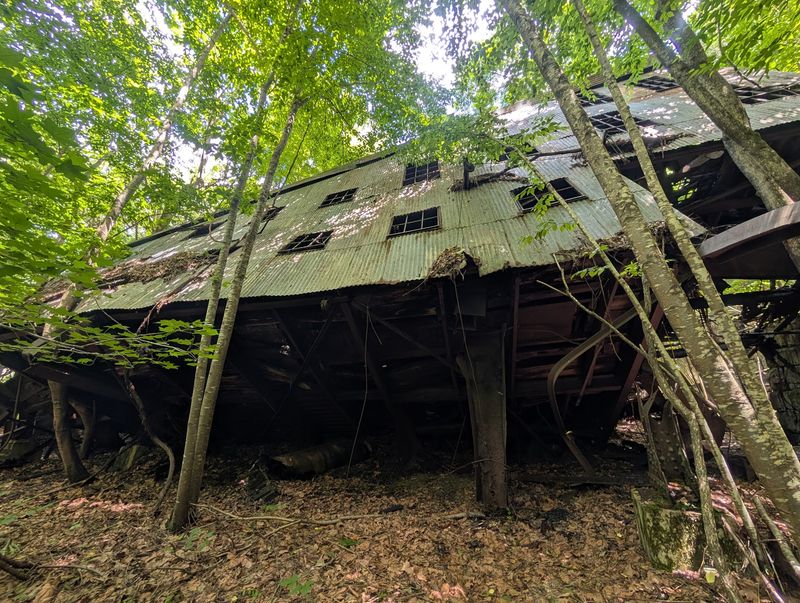
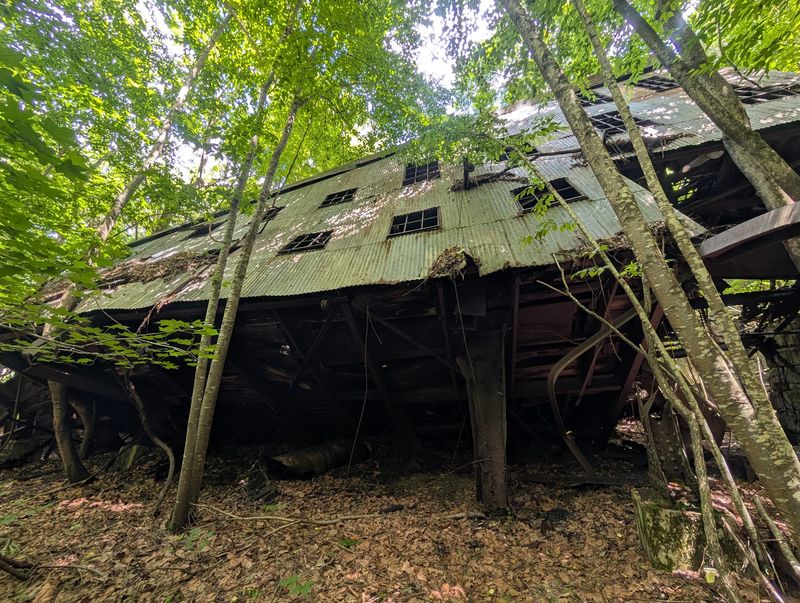
At the bottom, a massive coal structure leans and tips like it got tired of standing. Rows of old coke ovens stretch along the slope.
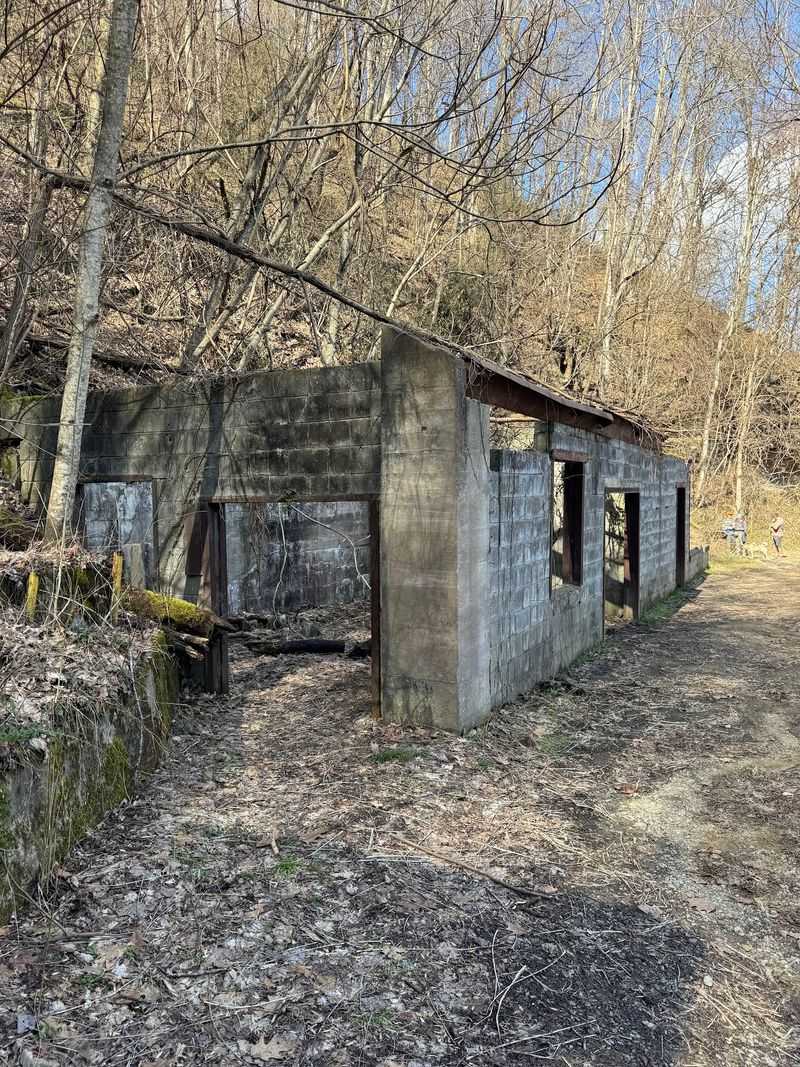
A lamphouse, a powder house, and a mine office still hold their ground near the old entrance.
I can’t imagine raising a family on a slope this steep, yet whole families once did exactly that. Children played, mothers cooked, and fathers headed into the mountain each morning.
This corner of West Virginia was once loud, busy, and full of life.
Today the forest is slowly folding it all back in. So what does a coal town look like after the people leave and the trees move in?
A Coal Camp Clinging To The Side Of The New River Gorge
Kaymoor One Mine sits high on the wall of the New River Gorge near Fayetteville. It belongs to New River Gorge National Park and Preserve, so the ruins are protected as a historic site.
The name covers two levels of one old operation. Up top sits the mine entrance area, and far below lies Kaymoor Bottom, where coal was processed and shipped.
Getting between those two worlds is the whole adventure. A trail leads to the mine level, and a long wooden staircase carries you down the rest of the way.
It’s officially listed as a historical landmark, and the gates never really close. The site is open around the clock, every day of the week.
That doesn’t mean a midnight hike is smart, though. Daylight makes the trail, the stairs, and the ruins far easier to enjoy safely.
Fayetteville is the nearest town, and it makes a handy home base. Plenty of folks pair a visit here with other stops around the gorge.
In West Virginia, few places tell the coal story this directly. You aren’t reading about mining in a museum case.
You’re standing on the mountain where it actually happened.
Where Kaymoor Got Its Start Around 1900
Coal brought people here in the first place. The Low Moor Iron Company of Virginia reportedly opened the mine around 1900 to feed its iron furnaces.
The name itself is a little history lesson. It’s often traced to Abram Kay, tied to the land, combined with the Low Moor company name.
For roughly six decades, Kaymoor kept producing coal. Operations are generally reported to have wound down in 1962.
That’s a long run for a mine on a mountainside this steep. Generations of workers and families came and went in that time.
The coal seam here sat high on the gorge wall. Getting it down to the river and rails took clever engineering and a lot of muscle.
Railroads along the New River made the whole thing possible. Without trains at the bottom, all that coal would have stayed stuck on the hill.
When the mine shut down, the community slowly scattered. Homes emptied, buildings went quiet, and nature started its long cleanup job.
The National Park Service now cares for the site. Interpretive signs along the way help piece together the story for anyone curious enough to make the trip.
Families Built Real Lives On This Steep Mountainside
Mining towns were never just about the mine. Kaymoor was home, with company houses, a school, and the everyday bustle of families.
Housing reportedly stood at both the top and bottom of the operation. Workers and their kin lived close to the jobs that paid the bills.
Like many coal camps of its era, Kaymoor reportedly had separate areas for Black and white families. That divided layout was common in company towns across the region.
Still, everyone shared the same mountain and the same hard work. Neighbors leaned on one another in a place where town was hours away by road.
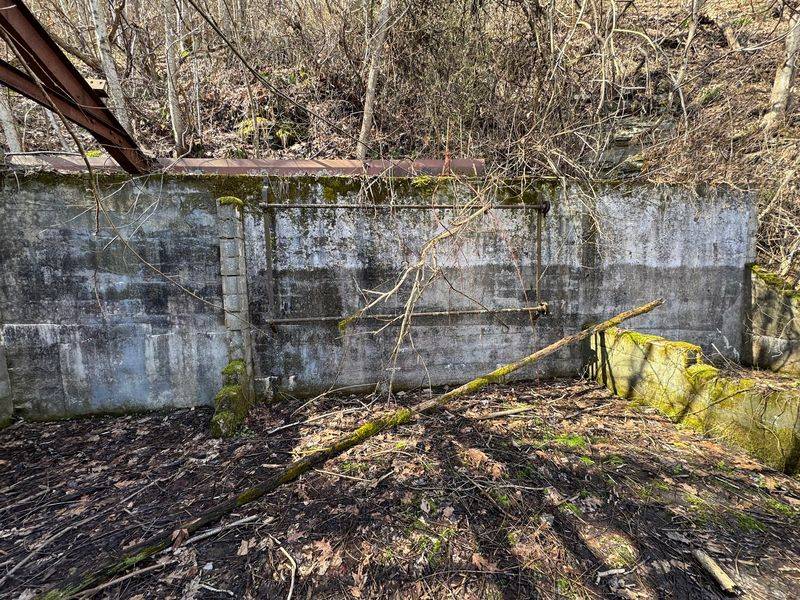
Today, mostly foundations remain where many of those homes once stood. Stone outlines in the woods hint at kitchens, porches, and front steps.
It’s a quiet kind of reminder. Somebody hung laundry here, and somebody else probably got scolded for tracking mud inside.
For older West Virginians, these scenes may feel familiar. Plenty of families can trace grandparents and great-grandparents back to coal camps just like this one.
That personal link gives Kaymoor its pull. It isn’t a stranger’s story so much as a family album left out on the hillside.
The Trail To The Mine Level Warms You Up Fast
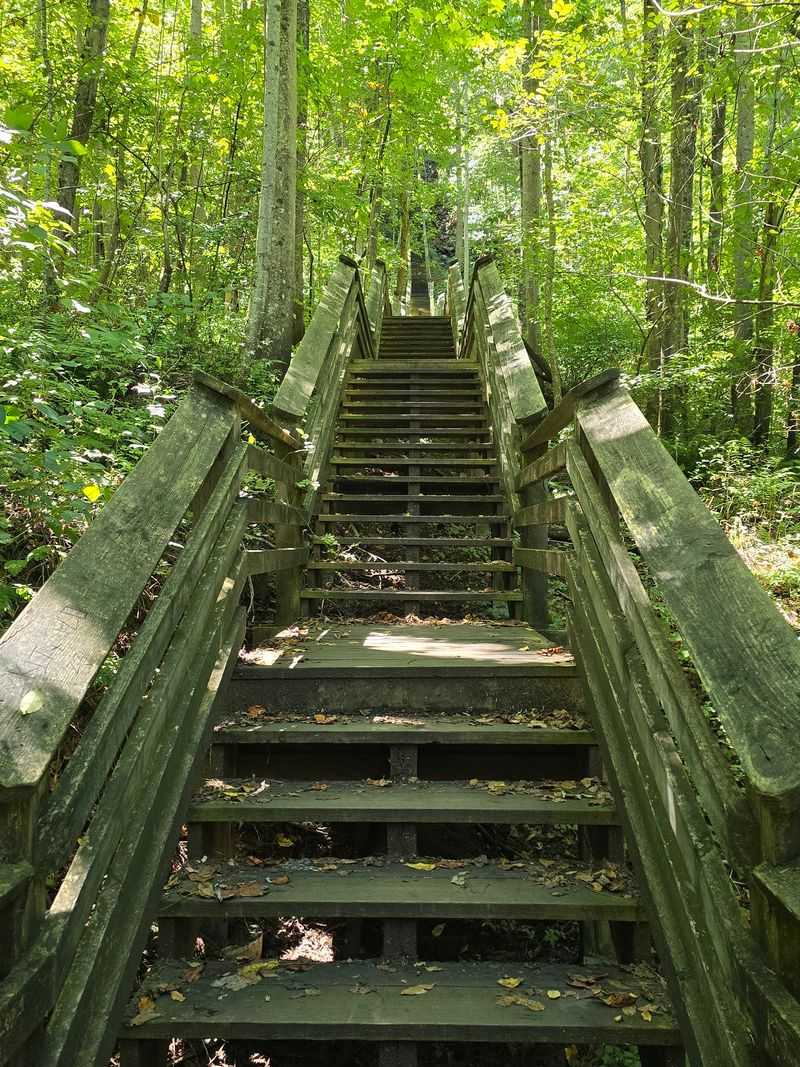
Kaymoor Miners Trail does the first half of the work for you. It leads through the woods from the top of the gorge down to the mine level.
The path is bumpy in places. Exposed tree roots and rocks keep you paying attention with every step.
Fall adds an extra wrinkle. Fresh leaves can cover those roots completely, so the pretty season is also the sneaky season.
Watch for a sharp turn partway along before the stairs begin. Good shoes help a lot, and so does slowing down.
Artifacts appear along the trail and around the site. Bits of old metal and stonework peek out from the brush like the mountain is keeping souvenirs.
Interpretive signs show up along the route too. They explain what you’re looking at, which turns rusty pieces into real stories.
The scenery around the trail is lovely on its own. Thick forest and glimpses of the gorge make the walk feel peaceful before the history kicks in.
Treat this stretch as your warm-up round. Your legs will appreciate it once the main event appears.
Lamphouse, Powder House, And An Office Still Waiting For Workers
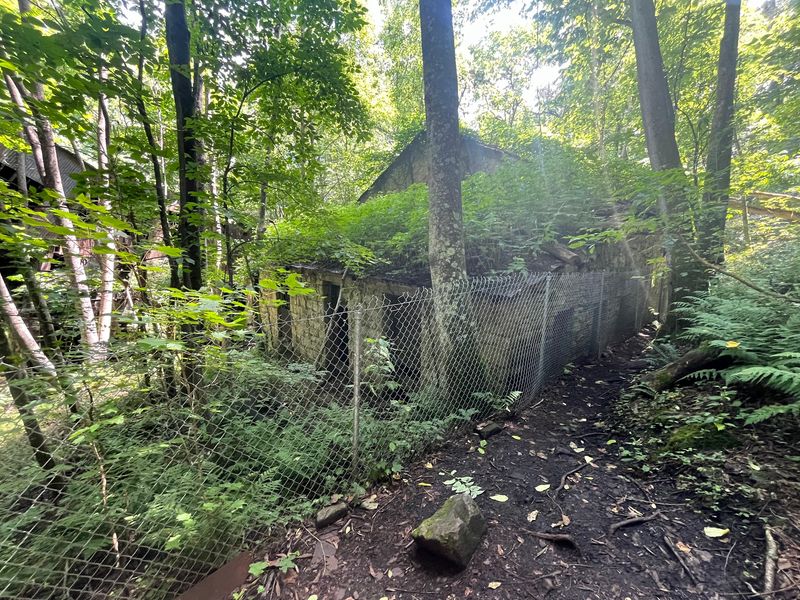
Right near the old mine entrance, a few buildings still stand their ground. The lamphouse, powder house, and office give the mine level its sense of a workday frozen in place.
Each one had a job. Miners picked up lamps before heading underground, and explosives were kept in the powder house.
The office handled the business side of things. Paperwork, pay, and plans all passed through here once upon a time.
Some of these spaces can be peeked into. Floors can be uneven or weak, though, so looking from the doorway is the wise move.
The mine openings themselves are blocked off for safety. You can still see where they lead into the mountain, especially when leaves are down.
Summer foliage can hide some of the details. Late fall through early spring often gives clearer views of the structures.
Other buildings nearby, like a mine car repair shop and a ventilation fan house, sit behind fencing. They’re still worth studying from the outside.
Standing here, you can almost hear shift changes and boots on gravel. Kaymoor One Mine is quiet now, but the layout tells you exactly how busy it used to be.
A Free Blast Of Cool Air From Deep Inside The Mountain
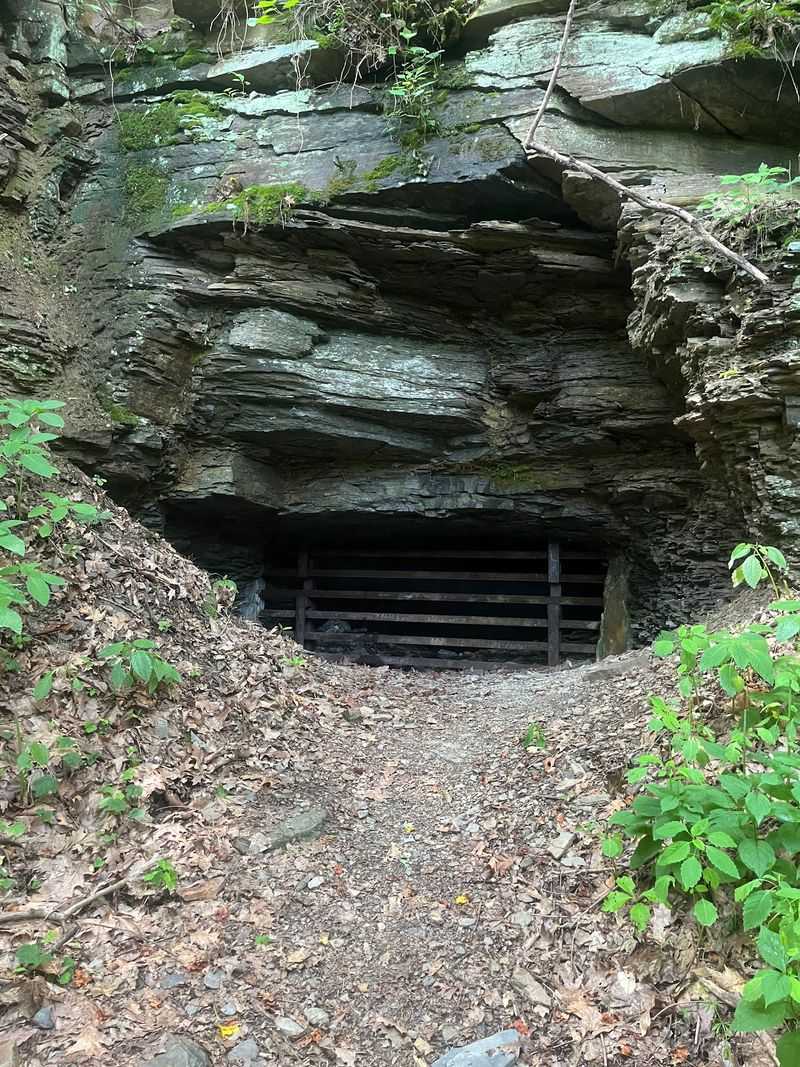
Summer hikers get a surprise bonus near the mine. An old ventilation opening pushes out a stream of cold air from inside the mountain.
On a sticky July afternoon, that’s practically a luxury amenity. Nature built the air conditioning, and coal miners installed the vent.
Underground air stays cool all year. When the outside heats up, the difference becomes very easy to feel.
It’s a fun way to understand how mines worked. Fresh air had to move through the tunnels to keep miners safe and breathing easy.
The ventilation fan house nearby was part of that system. Today it sits fenced off, but its purpose is easy to picture.
Kids especially tend to love a detail like this. Who wouldn’t want to stand in front of a mountain that breathes?
Don’t go wandering into any openings, of course. The cool breeze is the souvenir, not a tunnel tour.
Little moments like this make Kaymoor feel alive rather than just old. History is easier to remember when your arms suddenly get goosebumps in August.
Yes, There Really Are 821 Steps
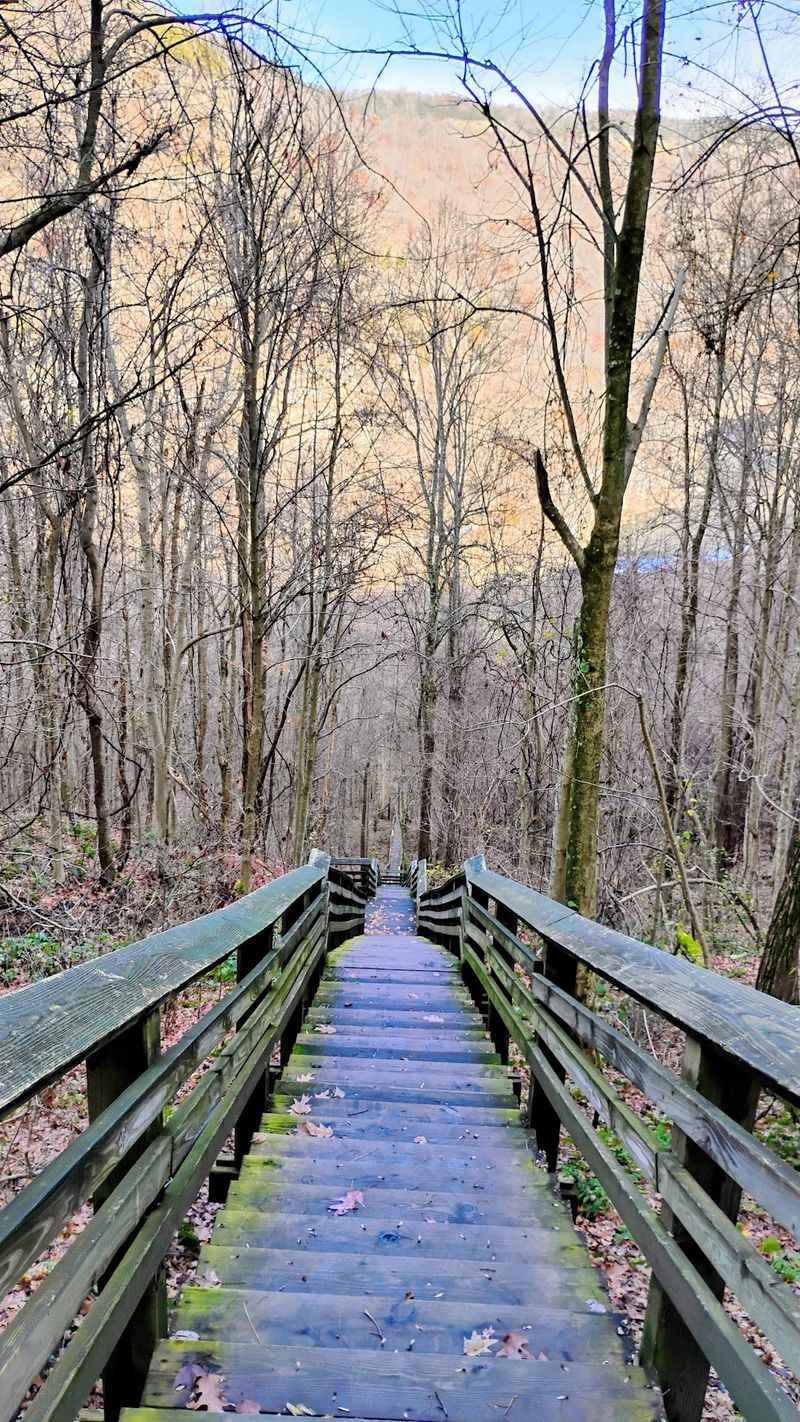
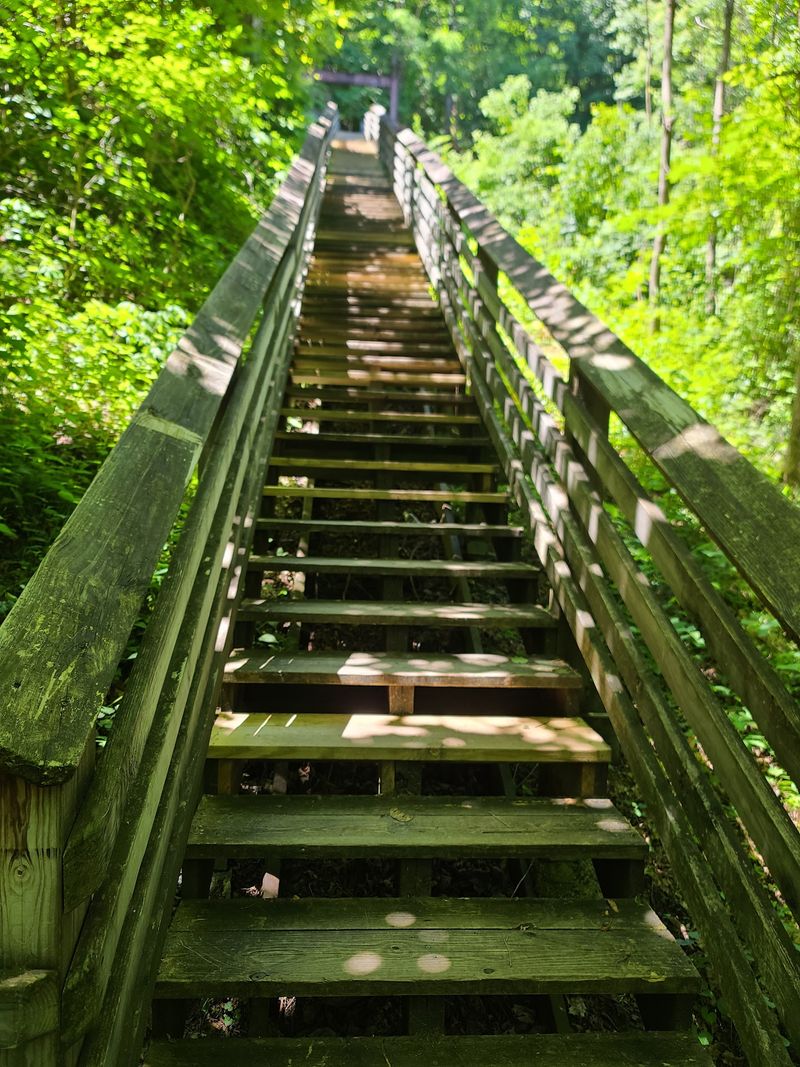
Count them if you like, because the number is famous. The staircase from the mine level down to Kaymoor Bottom has 821 steps.
Going down feels breezy. Your knees will have opinions, but the views and the anticipation keep you moving.
Coming back up is the real story. It’s a serious leg workout, and stopping to rest is completely normal.
Some hikers need around half an hour or more for the climb back. Pace yourself, bring water, and don’t treat it like a race.
Plenty of people jokingly call it a stairway to heaven. By step 600, heaven mostly looks like a bench and a cold drink.
A heavy backpack makes it tougher. Pack light and leave the extra gear in the car.
The stairs are what make this place so memorable. Miners and families once traveled this slope without nice wooden steps at all.
Thinking about that may put your burning calves in perspective. Then again, nobody blames you for grumbling a little on the way up.
Kaymoor Bottom Looks Like A Giant Tipped It Over
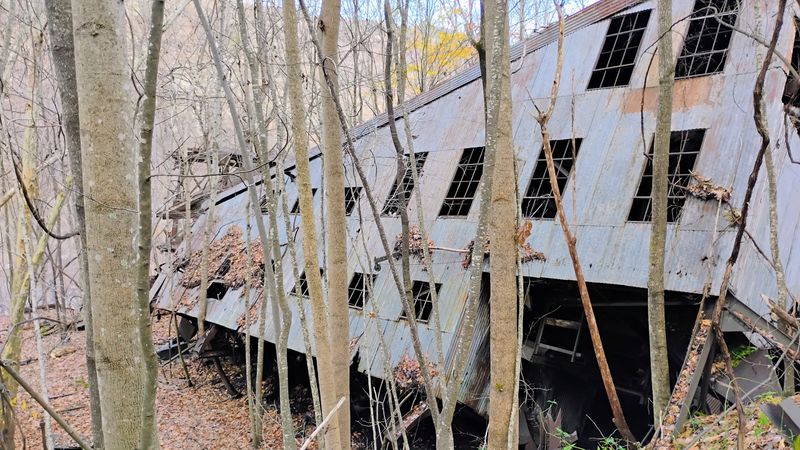
Reaching the bottom pays off in a big, eerie way. The old coal processing structures here lean, twist, and tilt like toys left on a slanted floor.
A massive coal hopper sits flipped on its side. The screening area tips noticeably, with a bridge still hanging on between the pieces.
It’s strange and oddly beautiful at the same time. Rust, brick, and steel slowly blend into the trees around them.
Most of these ruins are fenced off, and for good reason. Holes in the ground, loose metal, and crumbling walls make the inside unsafe.
A footpath circles much of the fence line. That gives you plenty of angles for photos without risking a twisted ankle or worse.
This is where coal from above was once prepared and loaded. Trains along the river carried it out to the wider world.
Some people find it creepy, and some find it fascinating. Most land somewhere in between, which honestly is the perfect mood for a ghost town.
Kaymoor One Mine never feels polished or overly fixed up. That raw, unfinished feeling is exactly why the bottom leaves such a strong impression.
Long Rows Of Coke Ovens Still Line The Slope
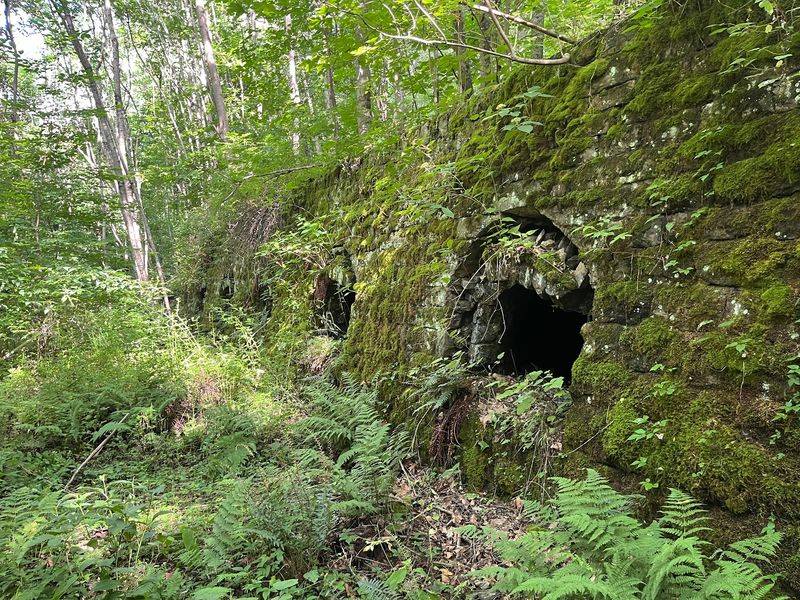
Off to one side of Kaymoor Bottom, history stacks up in neat stone rows. Very long lines of old coke ovens stretch along the hillside.
Coke ovens turned coal into coke, a fuel used to make iron and steel. That connected this mountain directly to furnaces and factories far away.
The ovens look almost like a row of stone doorways. Moss, leaves, and young trees now crowd around the openings.
Seeing so many in a line shows the scale of the work. This was no small-time operation tucked away for a few families.
Nearby, an old clay tile and brick drain is reportedly still moving water. Somebody built that thing to last, and it apparently took the job seriously.
These details reward slow wandering. The longer you look, the more little pieces of engineering pop out of the brush.
Photographers tend to love this part of the site. Repeating arches and soft forest light make for easy, moody pictures.
For anyone with a coal family history, the ovens may hit close to home. They stand as proof of how much hard, hot labor once filled this valley.
Fall Colors Turn The Ruins Into A Postcard
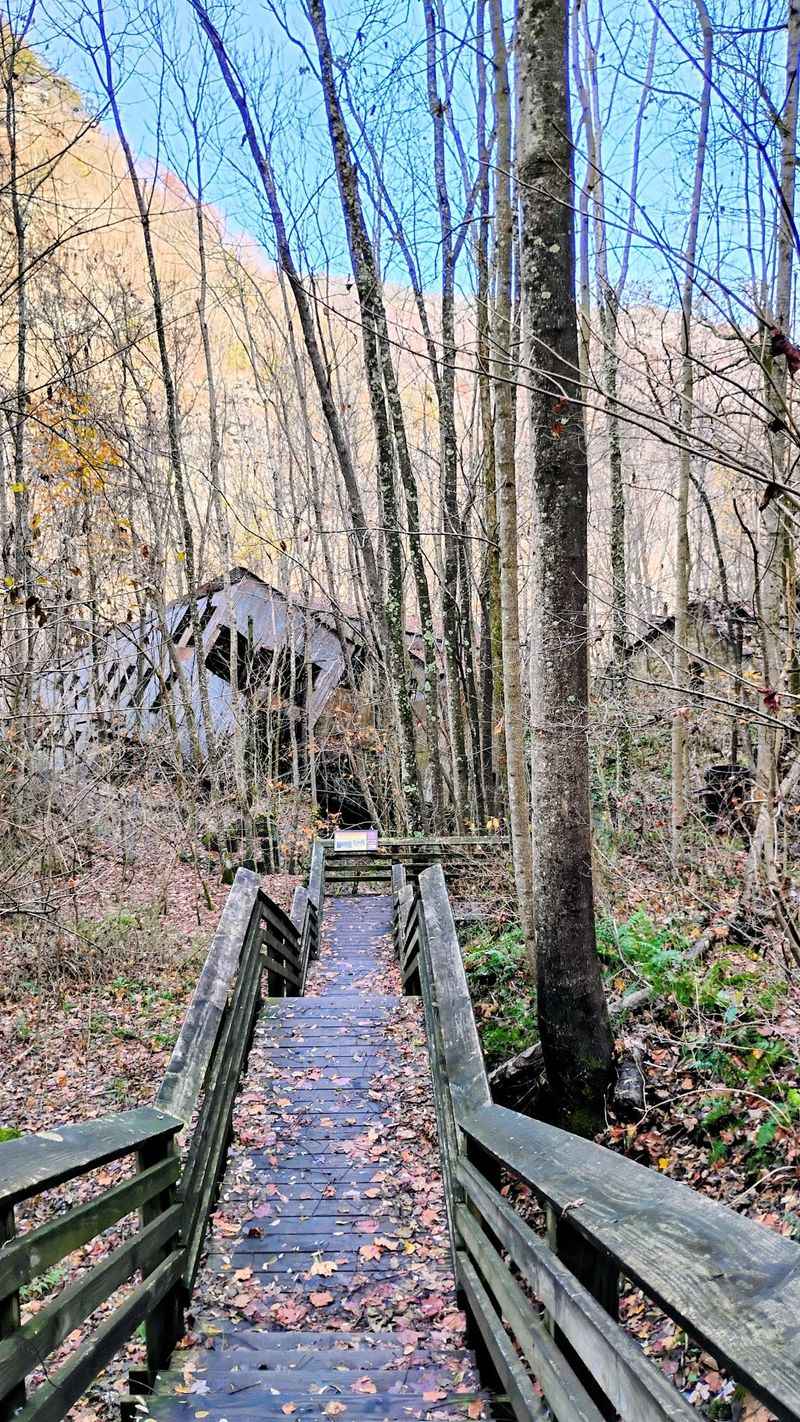
Autumn might be the prettiest time to visit. Orange and red leaves frame the rusting metal and old brick beautifully.
The gorge itself becomes a wall of color. Mountains rise all around, and the ruins pop against the bright trees.
Thinner leaves in late fall also open up views. Mine entrances and structures hidden by summer greenery become easier to spot.
There’s a trade-off, though. Fallen leaves can hide roots and holes on the trail, so careful steps matter more.
Summer brings its own charm. The cool ventilation breeze feels amazing, even if thick foliage blocks some views.
Winter and early spring may offer the clearest look at the old structures. Just check conditions before heading out, because mountain weather can change quickly.
Photographers, history fans, and curious hikers all find something here. Each season seems to show the place in a slightly different light.
If you can only go once, fall is hard to beat. A coal ghost town wrapped in color feels like West Virginia showing off a little.
Plan Ahead Before You Tackle Those Stairs
Mapping your trip is easy enough. Kaymoor One Mine is listed at 877 Kaymoor Miners Trail, Fayetteville, WV 25840.
The site is open 24 hours a day, every day. Daylight visits are still the smartest choice for safe footing.
Fayetteville sits close by, so supplies and meals are easy to grab before or after. Fill up on water and snacks before heading to the trail.
Sturdy shoes are a must. Roots, rocks, wet leaves, and 821 steps aren’t friendly to flip-flops.
Give yourself plenty of time. Between the trail, the mine level, the stairs, and Kaymoor Bottom, rushing takes the fun out of it.
Know your limits honestly. The climb back up is strenuous, and there’s no shortcut once you’re at the bottom.
Respect the fences around the ruins. They protect both the history and the folks who came to see it.
Take your trash with you and leave artifacts where they lie. That way, the next family gets to discover the same pieces of history you did.
Worth Every Burning Step Back To The Top
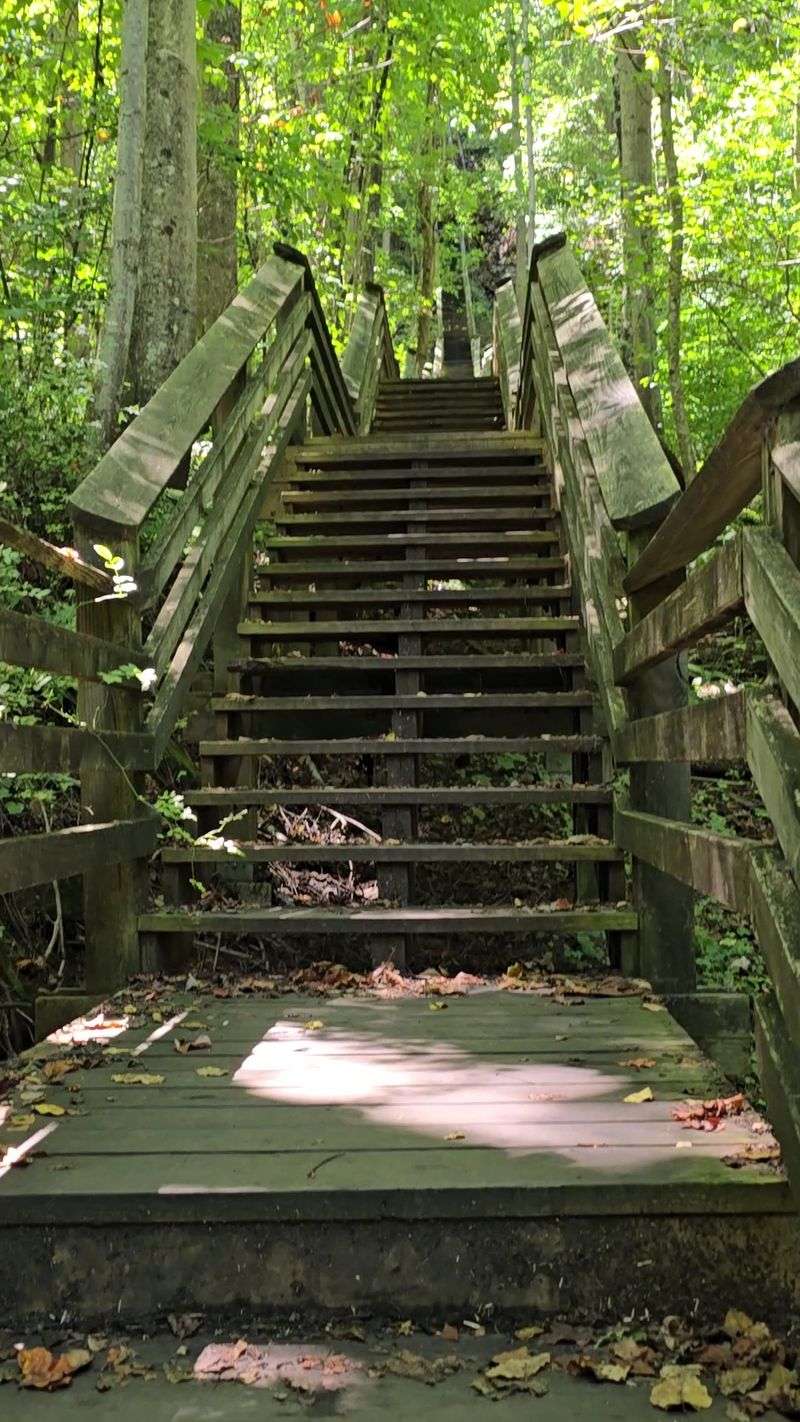
Few places pack this much story into one hike. Kaymoor One Mine gives you history, scenery, and a workout all in a single afternoon.
It feels honest and unpolished. The ruins aren’t dressed up, and that’s exactly what makes them powerful.
History lovers will enjoy the interpretive signs and old buildings. Photographers get rust, stone, and forest light in every direction.
Active families with older kids may love the adventure. Folks with knee or heart trouble might prefer the trail to the mine level and skip the stairs.
Either way, the people who once lived here deserve remembering. They raised families and built a community on a slope most of us struggle just to climb.
For many West Virginians, places like this feel personal. A grandparent’s coal camp story suddenly has a real place to stand beside it.
Leave time to sit quietly at the top afterward. You’ll have earned the rest, and the gorge view is a fine reward.
Did someone in your family live in a coal camp like Kaymoor? Those memories are the best part of keeping this history alive.
