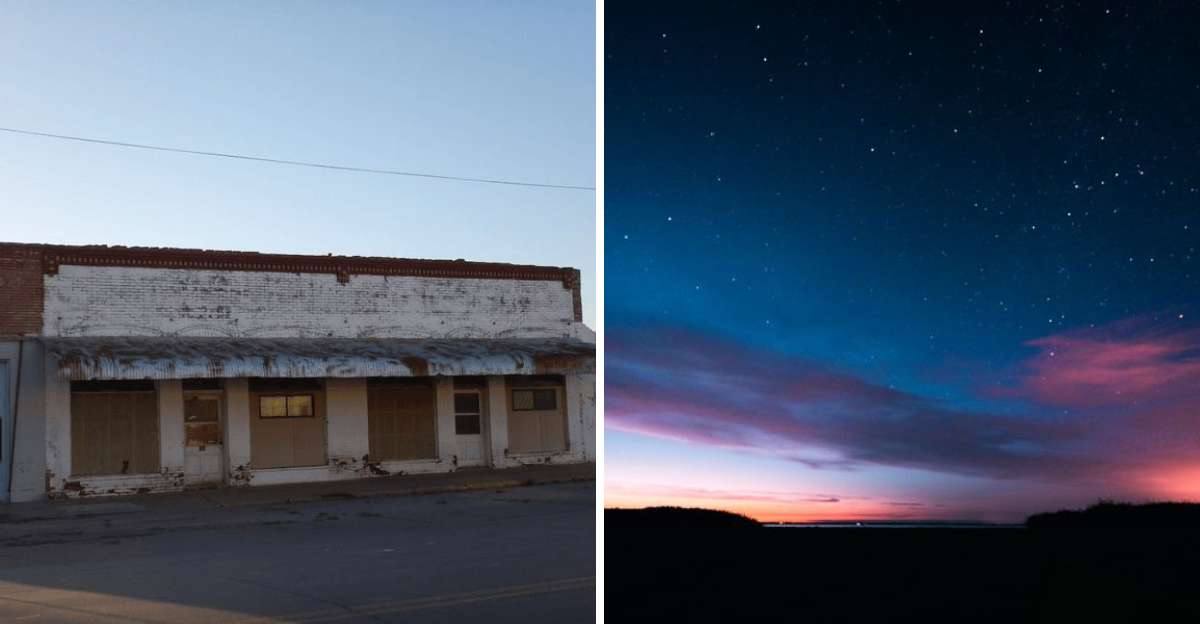
A tiny town in Ellis County that most people have never heard of is suddenly everywhere online. With a population so small you could fit everyone in a single classroom, this remote stretch of western Oklahoma has started catching serious attention from travelers, history buffs, and social media explorers alike.
The wide open skies, the quiet roads, and the raw, unfiltered character of the place make it feel like a step back in time.
The town does not have much by modern standards. No big-box stores, no chain restaurants, no traffic lights to speak of.
But what it does have is a kind of authenticity that is increasingly hard to find. The buildings are old, the streets are quiet, and the residents, all fifteen of them, are happy to share their piece of Oklahoma with anyone curious enough to stop.
Visitors come for the quiet and stay for the stories. The town has a way of making you slow down, look around, and appreciate the simple things.
If you have ever wondered what it looks like when a town refuses to disappear, this is your answer.
A Town Smaller Than Your High School Graduating Class
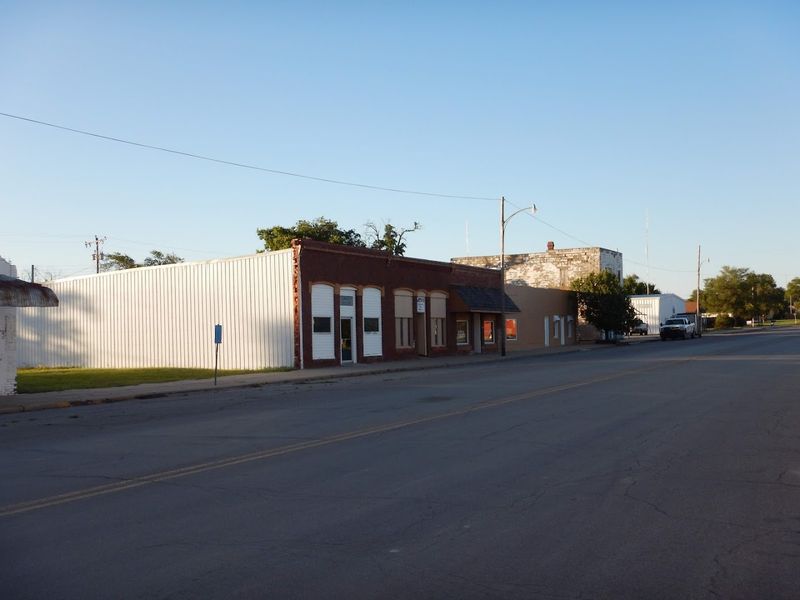
Most people blink twice when they hear the population count for Fargo, Oklahoma. According to the 2020 census, the town had 312 residents, but local estimates suggest the number living within the core community is far smaller today.
That kind of scale is almost impossible to picture at first. There are apartment complexes in major cities with more people than this entire Oklahoma town.
Yet that smallness is precisely what makes Fargo magnetic right now. In a world overloaded with noise and crowds, a place this quiet feels almost radical.
The streets are calm, the pace is unhurried, and you can actually hear the wind moving across the plains.
People are drawn to it the same way they are drawn to a blank page. There is something honest about a place that does not try to be more than it is.
Fargo sits in western Oklahoma without apology, offering exactly what it has always had: space, stillness, and a stubborn kind of staying power that is genuinely hard to find anywhere else.
Ellis County and the Land Around It
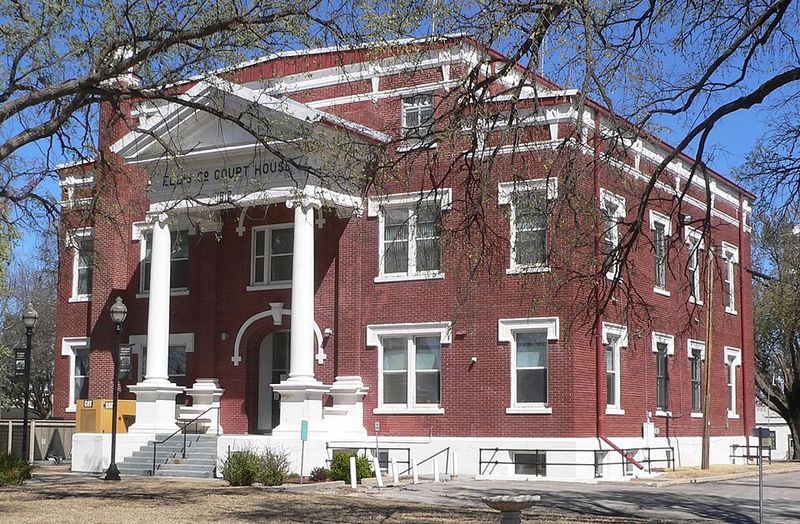
Ellis County is not the kind of place that shows up on most travel itineraries, and that is a real shame. Located in the far northwest corner of Oklahoma, it sits in a region where the land stretches out in every direction without interruption.
The terrain around Fargo is classic western Oklahoma: rolling shortgrass prairie, red dirt roads, and skies so wide they feel almost theatrical. On a clear day, the horizon seems to go on forever.
The Canadian River and its tributaries cut through parts of the county, adding texture to an otherwise open landscape. These waterways have shaped the land and the communities along them for generations.
Spending time in this part of Oklahoma means learning to appreciate subtlety. The beauty here is not dramatic or obvious.
It builds slowly, through repeated glances at the same field at different times of day, through the way the light shifts in the late afternoon, and through the deep quiet that settles over everything once the wind calms down. Ellis County rewards patience in a way few places can.
The Shadow of the Dust Bowl Still Lingers Here
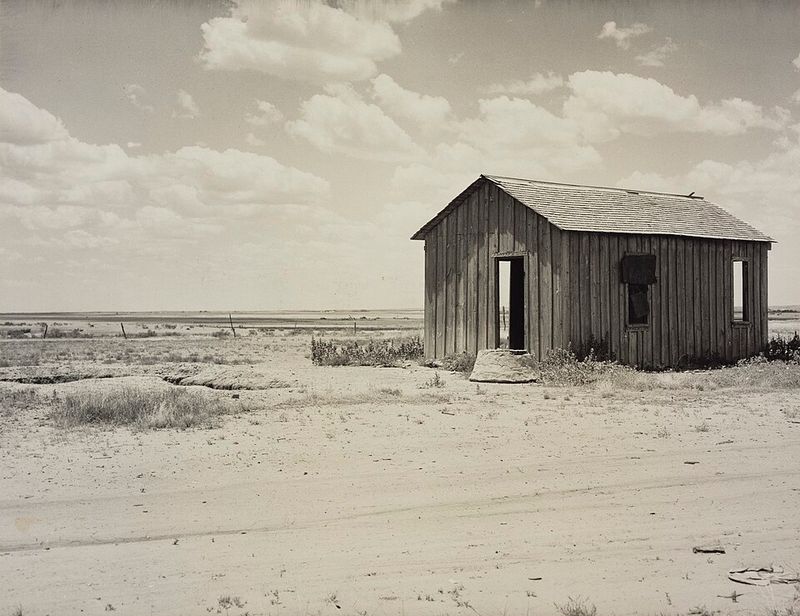
Few events in American history reshaped a region as completely as the Dust Bowl of the 1930s, and Fargo, Oklahoma still carries that weight. The town, like many across this part of Oklahoma, never fully bounced back from those years of environmental and economic collapse.
During the Dust Bowl, massive clouds of topsoil rolled across the plains, burying farms and forcing families to abandon everything they had built. Western Oklahoma was ground zero for some of the worst storms.
Walking through Fargo today, you can feel that history in the architecture, the empty lots, and the general quietness of the streets. Buildings that once served bustling businesses now stand weathered and still.
Understanding this history makes the town more meaningful to visit. Fargo is not struggling because of poor planning or bad luck alone.
It is a living record of one of the most difficult chapters in Oklahoma history. There is something deeply moving about a community that chose to stay and rebuild, even when the odds were stacked heavily against it.
The Dust Bowl shaped this land, and Fargo is its honest, unvarnished reminder.
Why Social Media Suddenly Found Fargo
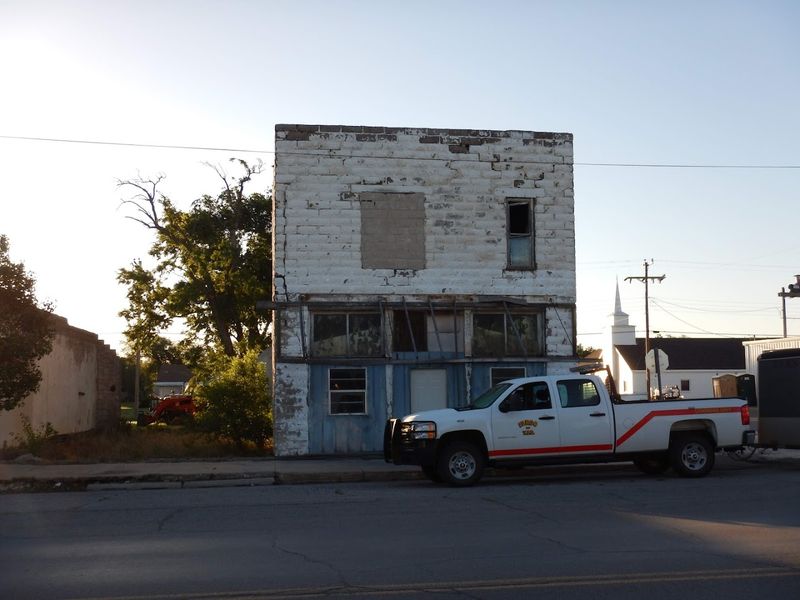
Somewhere between the obsession with over-touristed hotspots and the growing hunger for authentic experiences, Fargo, Oklahoma landed on the radar of a new kind of traveler. Short video clips of its empty streets and massive skies started circulating online, and people could not look away.
There is a visual quality to western Oklahoma that photographs beautifully. The flatness, the color of the soil, the old buildings catching golden hour light, all of it reads as cinematic without any filters needed.
Content creators focused on rural Americana and forgotten towns started sharing posts about Fargo, and the curiosity grew quickly. People started asking questions: What is this place?
Is it real? Can you actually visit?
The answer is yes, and that simplicity is part of the appeal. Fargo is not a curated experience.
There are no staged photo opportunities or tourist infrastructure designed to make things easier. What you get is the raw, unedited version of a small Oklahoma town, and in today’s world, that kind of realness is genuinely rare and surprisingly refreshing to stumble across.
The Quiet Roads That Lead Into Town
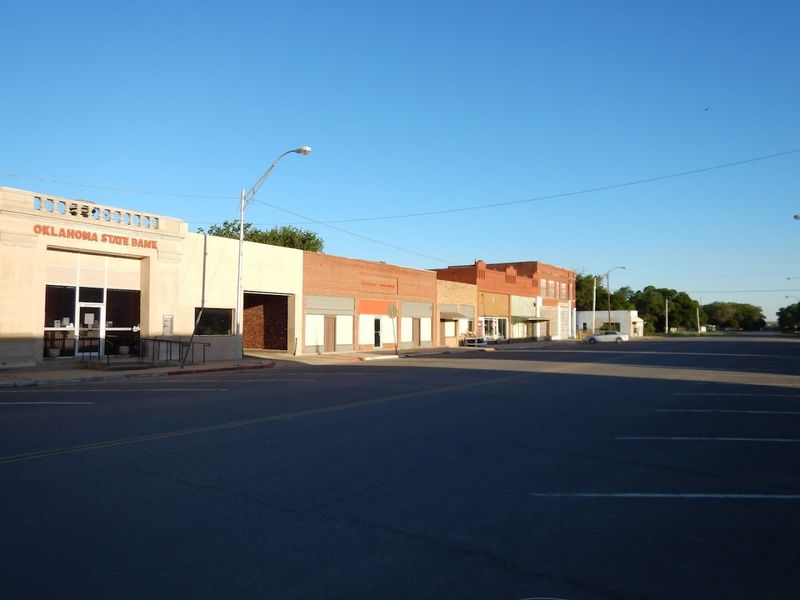
Getting to Fargo, Oklahoma is part of the experience. The roads leading into town from any direction are long, straight, and almost completely empty.
You will drive for miles without seeing another vehicle, and that solitude feels intentional.
State highways cut through the prairie with quiet confidence, passing through grasslands and occasional clusters of cedar trees. The drive itself becomes meditative, especially if you turn off the radio and just listen.
Coming in from the east along Highway 283 or approaching from the north through the flat farmland, the town appears gradually on the horizon. There is no dramatic entrance, no skyline to announce it.
Fargo simply arrives, modest and unhurried.
Road trippers moving through western Oklahoma often add Fargo as a stop because the journey itself is so visually rewarding. The open space on all sides creates a kind of mental reset that is hard to manufacture anywhere else.
By the time you pull into town, you already feel different, quieter and more present, as if the land itself has been slowly adjusting your pace the whole way there.
What the Town Itself Looks Like Up Close
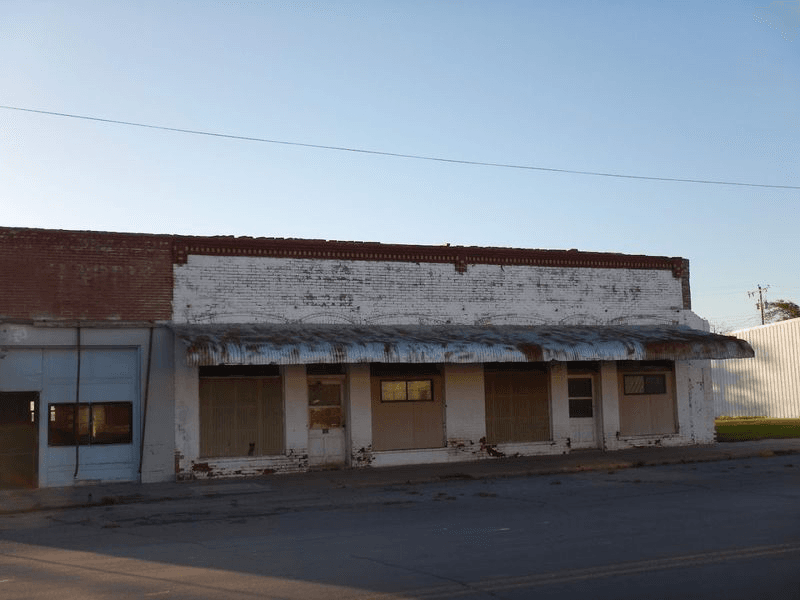
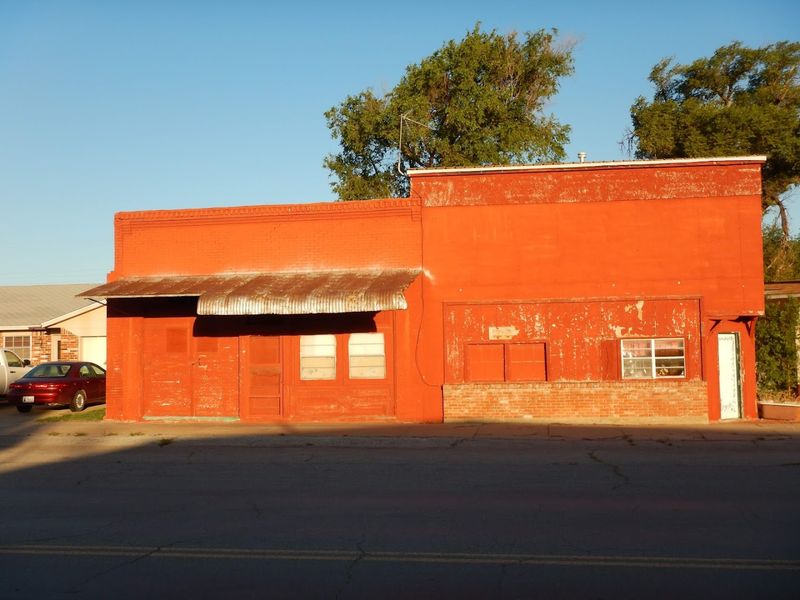
Arriving in Fargo is like finding a snapshot of a mid-century Oklahoma town preserved under glass. The buildings are modest, many of them showing their age in peeling paint and sun-worn facades, but there is a dignity to the way they stand.
A water tower marks the skyline, which in a town this flat means it is visible from a surprising distance. The streets are wide, laid out in a grid that once anticipated more growth than ever came.
A handful of structures still serve the community, including a post office and a few agricultural-related businesses that keep the town functional. The residential streets are lined with older homes, some well-kept and others slowly returning to the land around them.
What strikes me most about Fargo is how genuinely itself it remains. There has been no cosmetic renovation to attract outside attention, no murals commissioned to make it look more interesting for photographs.
The town looks the way it looks because that is simply what it is. That kind of straightforwardness is increasingly unusual, and it makes walking through Fargo feel like something worth doing slowly and carefully.
Agriculture Has Always Been the Backbone Here
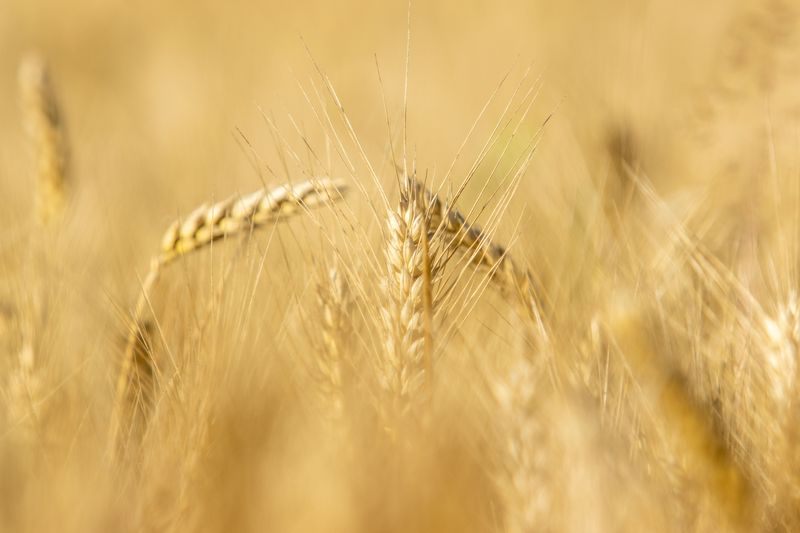
Farming and ranching have defined this corner of Oklahoma for well over a century, and Fargo exists because of that agricultural foundation. The surrounding land is used for wheat farming and cattle grazing, two industries that still drive daily life in Ellis County.
Grain elevators are among the most recognizable structures in the area, rising above the flat landscape and serving as landmarks for miles around. During harvest season, the activity around them picks up noticeably, and the whole region feels more alive.
The connection between the town and the land around it is not just historical. It is ongoing and practical.
Many families in the Fargo area have been working the same land for multiple generations, maintaining a relationship with the soil that goes back to before statehood.
Spending time here during planting or harvest gives you a completely different appreciation for where food comes from. The scale of the fields is humbling, and the work involved is constant and demanding.
Oklahoma agriculture is not a romantic abstraction out here. It is a daily reality, visible in the equipment, the schedules, and the deep familiarity locals have with every shift in the weather.
The Sky Over Fargo Is Something Else Entirely
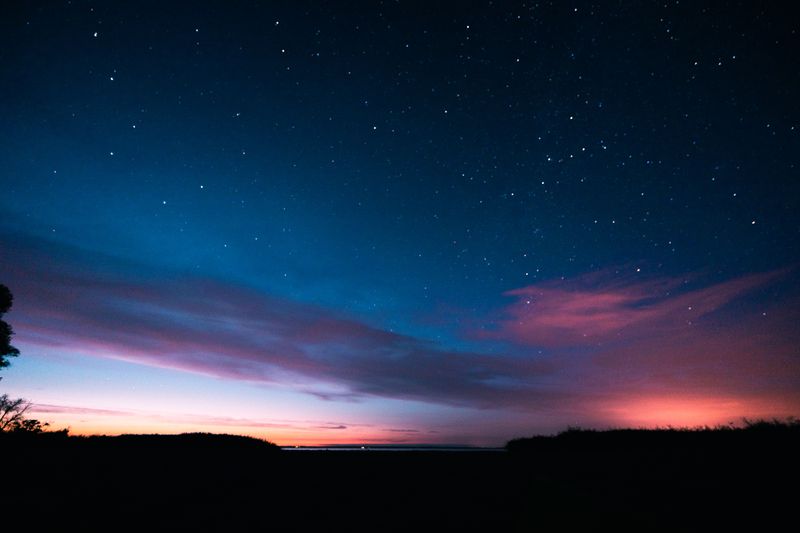
If there is one thing that absolutely no photograph fully captures about western Oklahoma, it is the sky. Around Fargo, the horizon is so unobstructed that the sky becomes the dominant feature of every single view, in every direction, at every hour of the day.
Sunrises here are slow and theatrical, with color spreading across the eastern horizon well before the sun actually clears the flat edge of the land. Sunsets are even more dramatic, painting the sky in layers of orange, pink, and deep purple that linger long after the light fades.
Nighttime in Fargo is a different kind of spectacular. With almost no light pollution from nearby cities, the stars are dense and close-looking in a way that genuinely surprises people who have only ever seen the sky from urban areas.
I spent one evening sitting outside in Fargo just watching the sky shift through its entire evening sequence, and it was one of the most visually satisfying things I have done on any road trip through Oklahoma. The sky here is not background scenery.
It is the main event, and it puts on a different show every single day.
The Spirit of Staying Power in a Shrinking Town
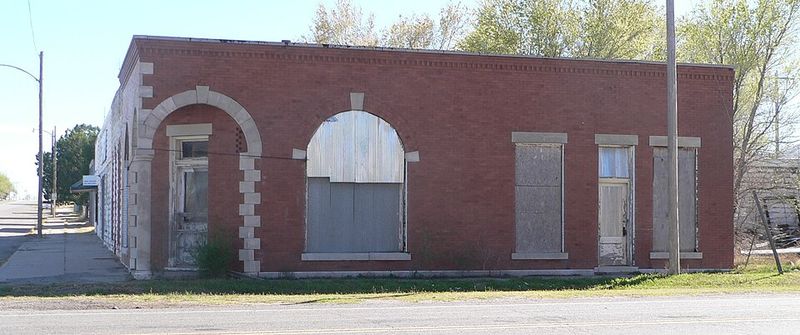
One of the most compelling things about Fargo, Oklahoma is simply the fact that it still exists. Dozens of towns across western Oklahoma have been completely abandoned over the past century, leaving nothing but foundations and memories behind.
Fargo kept going. It is smaller than it once was, and it carries the evidence of hard decades in its architecture and its streets, but the community has not surrendered.
People still live here, still maintain the post office, still tend the land around the town.
There is a particular kind of pride that comes with staying in a place when leaving would have been easier. You can sense it in the care taken with certain properties, in the way the town functions quietly and without drama, day after day.
Oklahoma has a long history of resilience, from the Land Run era through the Dust Bowl and beyond, and Fargo is one of the clearest living examples of that quality. It is not thriving in any conventional sense, but it is persisting, and in a landscape where so many similar towns have simply vanished, persistence feels like its own kind of victory worth respecting and celebrating.
How to Make the Most of a Visit to Fargo
Planning a visit to Fargo, Oklahoma requires a slightly different mindset than most travel. There are no restaurants to book, no guided tours to schedule, and no visitor centers handing out maps.
The experience is self-directed and open-ended by nature.
The best approach is to treat Fargo as a destination within a longer western Oklahoma road trip. Pairing it with nearby natural areas, including the Black Mesa region further west or the Salt Plains National Wildlife Refuge to the northeast, gives the trip more variety and range.
Bring your own supplies, including water, snacks, and a full tank of fuel, because services are extremely limited in this part of the state. A camera or a phone with good photo capabilities will get plenty of use given the landscape and the architecture.
Going in the early morning or late afternoon gives you the best light for photography and the most comfortable temperatures outside of summer. Oklahoma summers in this region are intensely hot, so spring and fall are the most pleasant seasons to visit.
Come curious, come patient, and come ready to appreciate the kind of quiet that most of the modern world has completely forgotten how to sit with comfortably.
