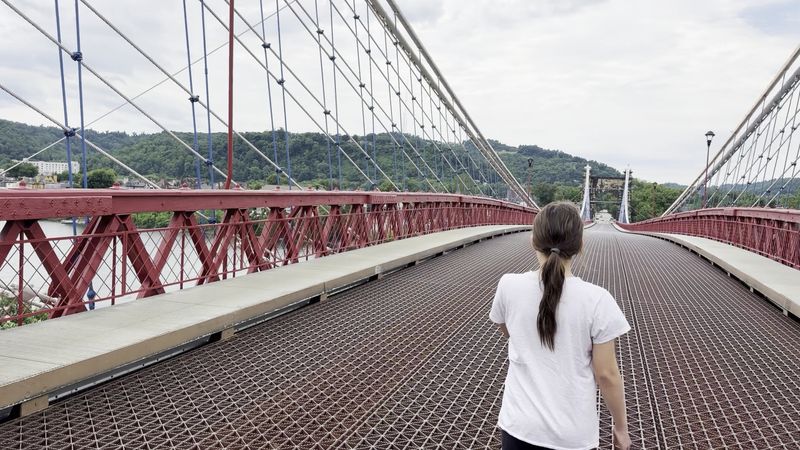
A bridge finished in 1849 once held the title of longest suspension span on Earth. It still hangs over the Ohio River today, and you can stroll right down the middle of it for free.
Cars used to rumble across those cables for generations. Then an overweight tour bus helped end that chapter in 2019, and the old giant became a walking bridge.
I love that one of West Virginia’s proudest records is something you can stand on. The deck grating even lets you peek at the river flowing beneath your shoes.
That detail alone makes my stomach do a tiny flip.
So how did a river town beat the whole world at bridge building? And why does this graceful old span still pull people out for a walk more than 175 years later?
A River Crossing That Beat The Whole Planet In 1849
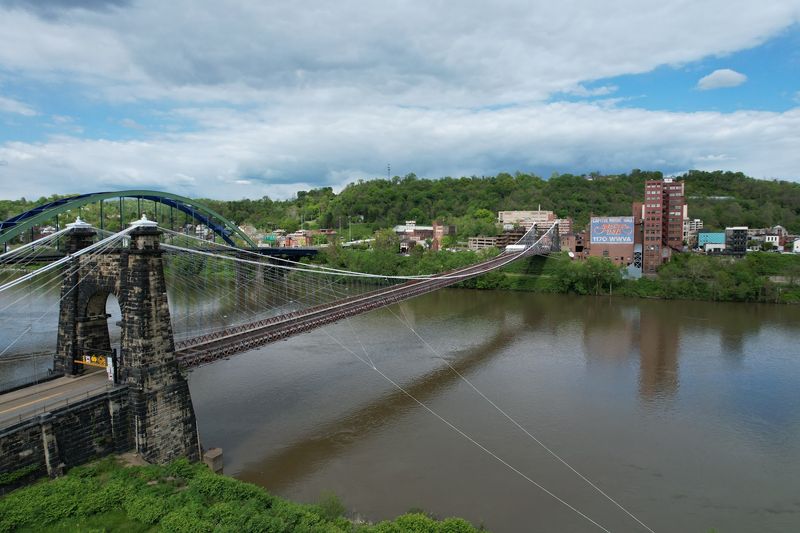
When the Wheeling Suspension Bridge opened in 1849, its main span stretched about 1,010 feet across the Ohio River. No other suspension bridge on the planet reached that far.
The bridge links downtown Wheeling to Wheeling Island, crossing the main channel of the river. It sits right where the old National Road once carried travelers west into a growing country.
That location mattered a lot. Before the bridge, people and wagons depended on ferries to get across the wide, moody Ohio.
Suddenly, West Virginia had a crossing that made headlines far beyond the hills. The record held from 1849 until 1851, when a longer span opened elsewhere.
Two years at the top might sound short. In the world of 19th-century engineering, though, it was a mic-drop moment for a river town.
Today the bridge is a National Historic Landmark, and it remains one of the oldest vehicular suspension bridges still standing in the country. It’s also the reason plenty of road-trippers pull off the interstate for a quick look.
Honestly, few landmarks pack that much history into a short, free stroll.
The Daring Engineer Behind Those Swooping Cables
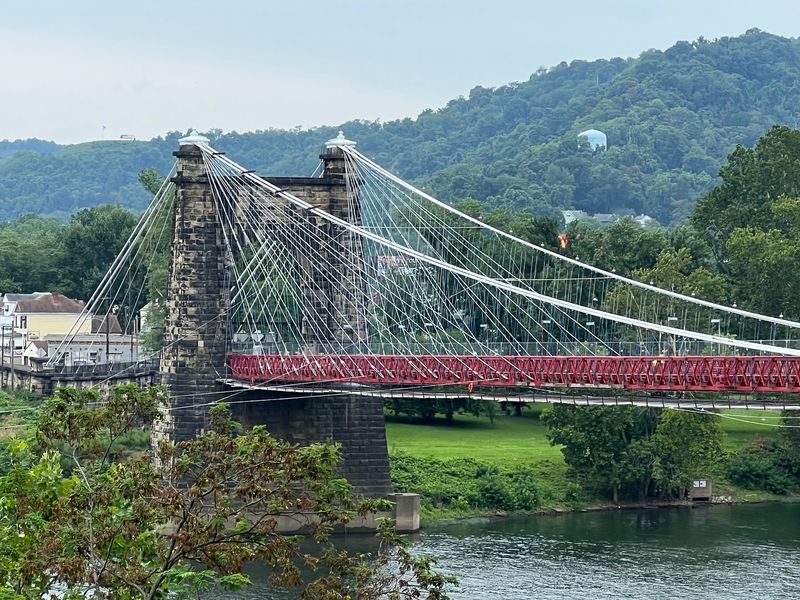
Charles Ellet Jr. was the bold mind who designed this bridge. He was one of America’s early champions of suspension bridges, and he wanted to prove they could tame big rivers.
Ellet beat out other designers for the Wheeling job. His plan used wire cables strung between massive stone towers, an idea many folks still found a little nerve-racking at the time.
Picturing that confidence makes me smile. He was basically telling a whole river, trust me, this thread will hold.
The work wrapped up in 1849, and the bridge instantly became a symbol of Wheeling’s ambition. Locals could watch traffic float over the Ohio instead of waiting on a ferry.
Ellet’s career took him to other famous projects too. Still, the Wheeling span became his best-known surviving achievement.
What I find fascinating is how much of his original vision remains visible today. The stone towers and the general sweep of the cables still echo his design, even after later repairs and upgrades changed parts of the structure.
Standing near those towers, you get a real sense of how daring this project felt in the 1840s.
Courtroom Drama Over A Bridge Too Low For Steamboats
Not everyone cheered when the bridge went up. Pennsylvania argued that it blocked tall steamboat smokestacks and hurt river commerce heading to Pittsburgh.
The fight went all the way to the U.S. Supreme Court.
In 1852, the court sided against the bridge, which seemed like bad news for Wheeling.
Then Congress stepped in with a clever move. Lawmakers declared the bridge a legal post road, which allowed it to stay right where it was.
Talk about a plot twist. A river town in what would later become West Virginia basically won a national tug-of-rope over who got to use the Ohio.
The case is still discussed as an early example of the federal government weighing in on interstate commerce. History buffs love that angle, and it adds real depth to a simple walk across.
Some steamboat owners even reportedly lowered or hinged their smokestacks to slip underneath. That image cracks me up a bit.
Next time you look down at the water from the deck, remember that this exact spot once sparked a legal battle with national stakes.
Wild Winds Of 1854 And The Comeback That Followed
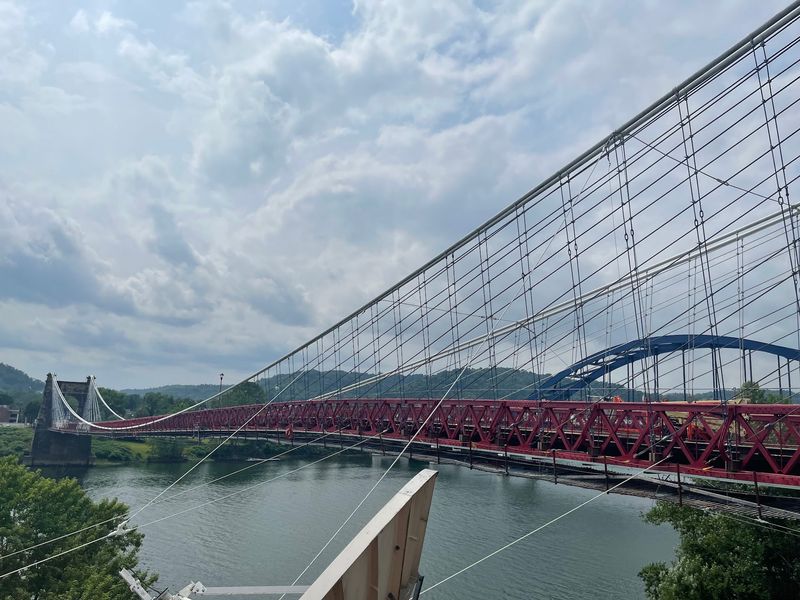
Five years after opening, a fierce windstorm in 1854 sent the bridge deck twisting until it fell into the river. Only the towers and some cables remained standing.
That kind of setback could have ended the story. Instead, Wheeling got to work and rebuilt the crossing within a few years.
The quick recovery says a lot about how badly the town needed this link. People weren’t ready to go back to ferries after tasting the convenience of a bridge.
Later on, more changes made the span sturdier. In 1872, engineers including Washington Roebling added diagonal stay cables to help steady the deck against wind.
Roebling’s name may ring a bell. His family is famous for the Brooklyn Bridge, so this little Ohio River span has some impressive relatives.
I like that the bridge carries those scars and fixes like a family heirloom. You can see layers of problem-solving stacked on top of Ellet’s original idea.
It’s a reminder that great landmarks often survive because people keep caring for them, decade after decade, storm after storm.
Why The Cars Finally Had To Stop Crossing
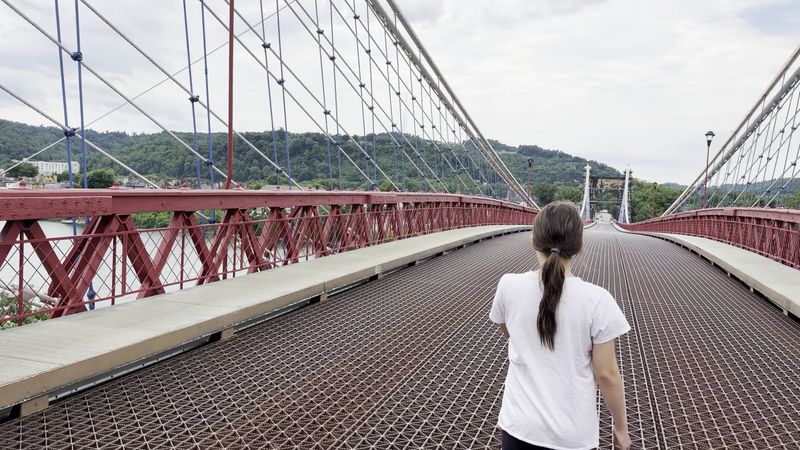
For well over a century, cars rolled across this old span every day. That ended on September 24, 2019, when the West Virginia Division of Highways closed it to vehicles for good.
The final straw involved an overweight tour bus. Repeated disregard for the bridge’s weight limits had already worried officials for years.
A 19th-century bridge simply wasn’t built for modern heavy loads. Drivers ignoring posted limits put real strain on the structure.
So the state made a practical call. The bridge would be preserved for people on foot and on bikes instead of vehicles.
That means the original title promise about cars isn’t true anymore, and it’s better to be honest about it. Today you’ll find a road closed sign at the entrance, but it only applies to motor vehicles.
Drivers now use the nearby newer crossings to reach Wheeling Island. Meanwhile, the suspension bridge has become something calmer, a place to slow down and soak in the river.
Honestly, I think the old girl earned her retirement. After all those decades of traffic, a quieter role feels fitting.
See-Through Steel Grating That Tests Your Nerves
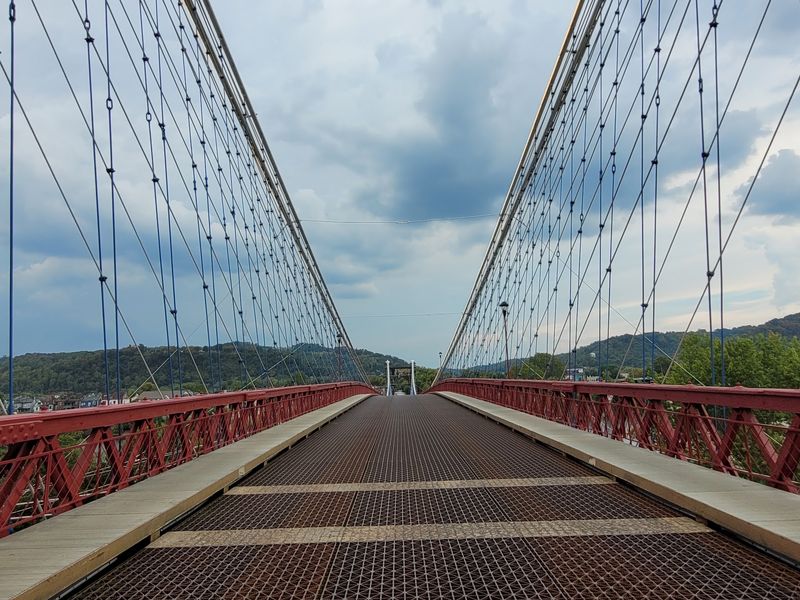
Here’s a fun little thrill. Both the roadway and the sidewalk on the bridge use open grating, so you can see the Ohio River moving right under your feet.
Walking the center roadway gives the clearest peek. Since cars no longer use it, you’re free to wander down the middle and look straight down.
If heights make you queasy, consider yourself warned. Some folks feel a bit light-headed out there, while others treat it like a fun dare.
The sensation is part of the bridge’s charm. You aren’t just looking at history from a safe distance, you’re hanging above a river on it.
Kids usually love the see-through floor, and plenty of grown-ups get a kick out of it too. It turns an ordinary walk into a story you’ll tell later.
One tip: wear sturdy shoes rather than thin heels. Grating and skinny heels are not friends, and nobody wants to wobble mid-span.
Good shoes also let you pause comfortably, lean on the railing, and watch the current swirl by below. Take your time, breathe, and enjoy the slightly wild feeling of floating over the Ohio.
River Views Worth Pausing For Midway Across
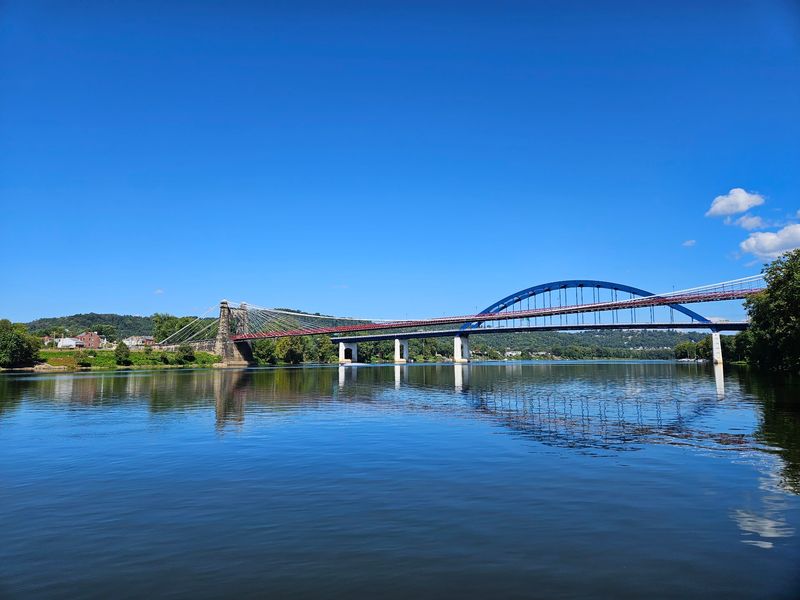
Stop in the middle and turn around slowly. You’ll catch the Ohio River stretching out in both directions, with downtown Wheeling on one side and Wheeling Island on the other.
The island side shows off South Front Street and its row of older homes. On the downtown side, brick buildings and church steeples rise behind the riverbank.
Boats sometimes drift by underneath, which adds a nice bit of motion to the scene. It’s easy to lose track of time just watching the water.
Photographers have plenty to work with here. The stone towers, cables, and river make a frame that’s hard to mess up, even with a phone camera.
Sunny afternoons really make the water sparkle. Cloudy days give the scene a moody, old-time feel that suits a bridge from 1849.
I can’t imagine a better way to understand this river town than seeing it from above the water. The view explains why Wheeling grew where it did, right on a busy river crossing.
For West Virginia history fans, this midpoint might be the best free seat in the region.
Glowing Lights Reflected On The Ohio After Sunset
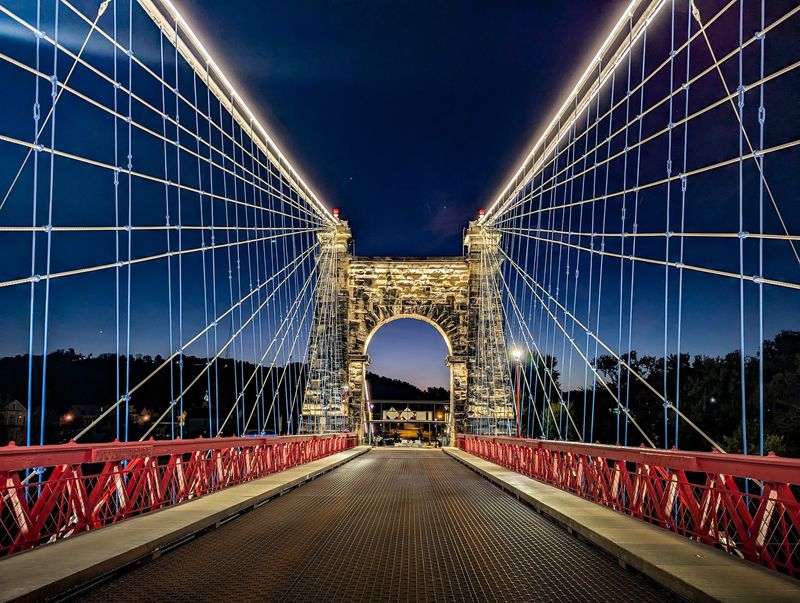
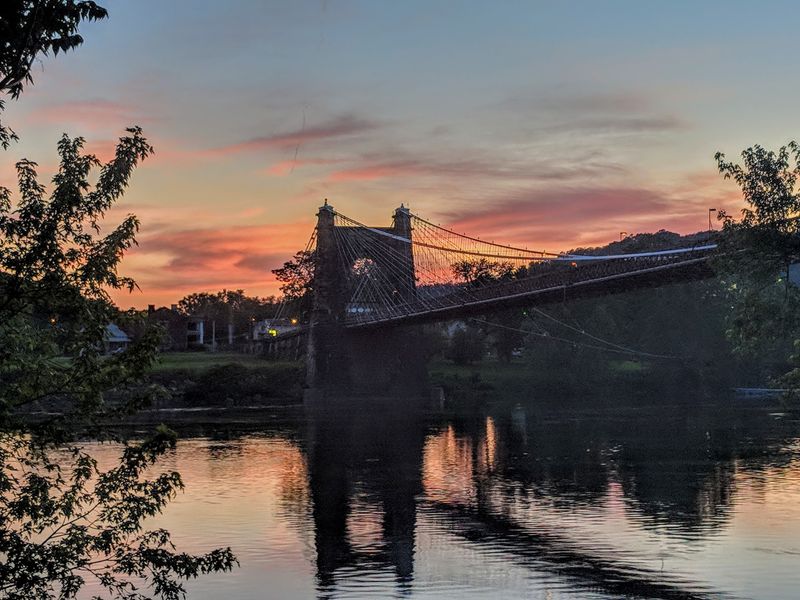
Once the sun drops, the bridge puts on a softer show. Lights trace the structure and shimmer across the surface of the Ohio River.
The reflection doubles the glow in the water. It’s a lovely sight for an evening photo, especially from the riverbank.
A smart approach is to admire the night view from a well-lit spot near downtown. Visiting with a companion rather than alone after dark is a sensible choice in this area.
Like many downtown areas, the blocks around the bridge can feel quiet at night. Bringing a friend or family member just makes the outing more relaxed.
Many people like to time things so they walk across in daylight. Then they hang around nearby until dusk to catch the lights coming on.
That plan gives you the best of both worlds. You get the see-through deck and river views by day, then the glowing reflection as evening settles over the valley.
Either way, those lights remind me how much this town still cherishes its old bridge. Some landmarks just look extra proud when they’re lit up.
Free Admission, Round-The-Clock Access, And Easy Parking
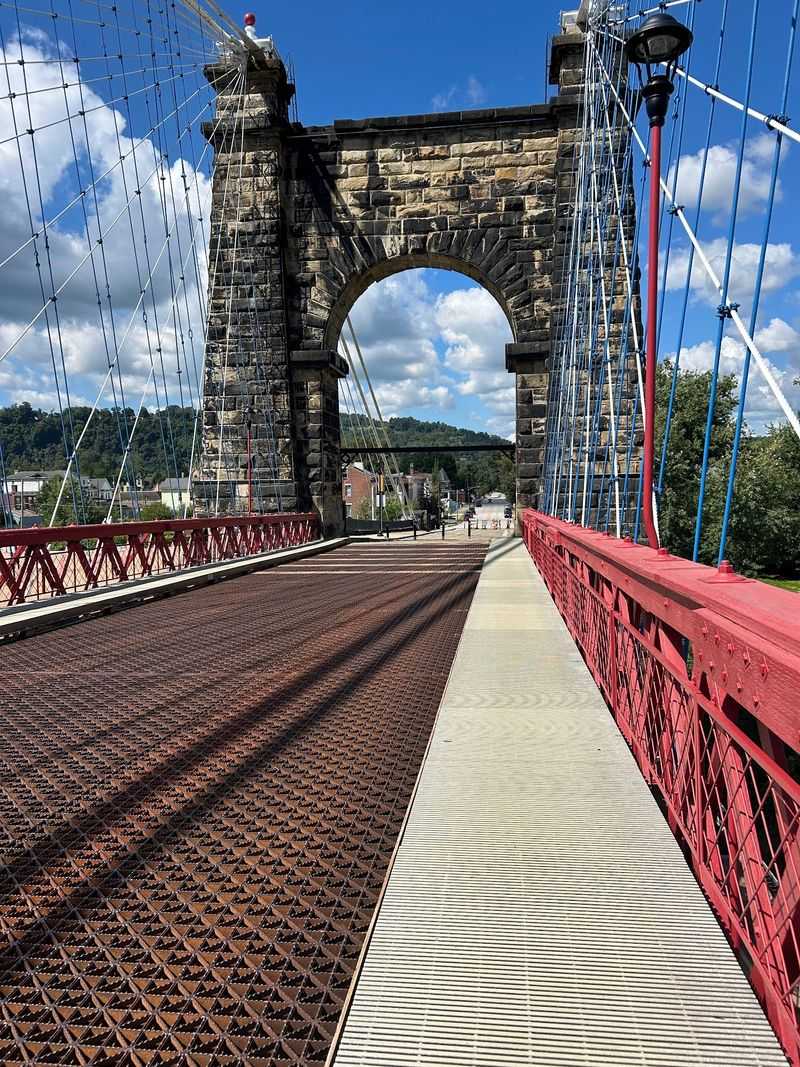
Good news for your wallet. Walking the Wheeling Suspension Bridge costs nothing, and there’s no ticket or reservation required.
The bridge is listed as open 24 hours a day, every day of the week. That flexibility makes it an easy add-on to almost any West Virginia road trip.
For mapping purposes, the bridge sits in Wheeling, WV 26003, connecting downtown with Wheeling Island. Look for it near the riverfront, close to the Heritage Port area.
Street parking nearby is the usual move. Many folks park within a block or so and simply walk over.
Remember which side you start on. Begin near Heritage Port and you’ll cross to Wheeling Island, while starting on the island sends you back toward downtown.
Bikes are welcome too, so cyclists can roll across instead of walking. Just keep an eye out for pedestrians stopping to snap photos.
Near the entrance, informational signs explain the bridge’s history and its link to the National Road. Give them a few minutes before you start across.
You’ll appreciate every cable a little more once you know the backstory.
Nearby Stops That Round Out A Riverfront Afternoon
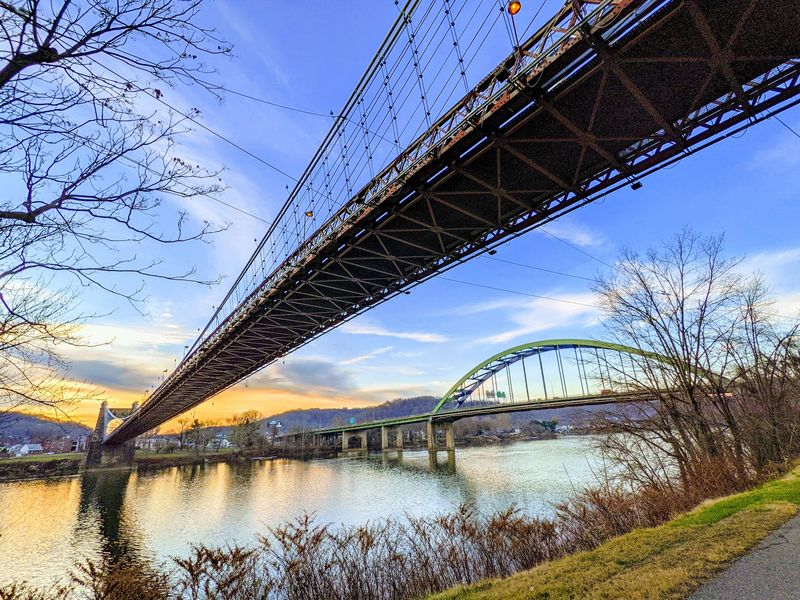
One bridge walk rarely takes long, so plan a little extra time. The surrounding area offers several easy ways to stretch the outing.
Heritage Port, the riverfront park on the downtown side, sits right by the bridge. It’s a pleasant spot to stroll along the water and take in the span from below.
Downtown Wheeling has plenty of historic architecture worth admiring on foot. Small shops and a handful of restaurants sit within easy walking distance of the Wheeling side.
WesBanco Arena is also close, which makes the bridge a fun pre-event stop. Wheeling Island, on the other end, holds a large entertainment complex and quiet residential streets.
The bridge also connects you to the larger story of the National Road. That historic route helped push travelers westward, and signs nearby share bits of that tale.
For parents planning a day trip, this cluster of sights is easy to manage. You can mix history, a snack, and a riverside walk without much driving.
I like that the bridge works as an anchor for a whole relaxed afternoon. It sets the tone for exploring the rest of downtown.
A Record-Breaker That Still Deserves Your Footsteps
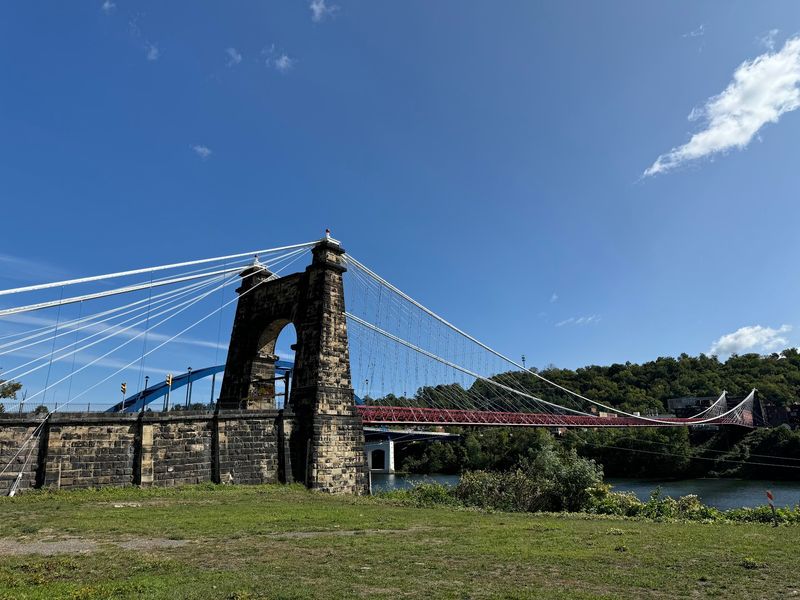
Few places let you literally walk on a world record. This one does, and it costs exactly zero dollars.
The Wheeling Suspension Bridge has survived storms, a Supreme Court fight, and more than a century of traffic. Now it gets to enjoy a gentler life carrying walkers and cyclists.
Cars may not cross anymore, but that change might be the best thing for visitors. You can take your time, wander the middle, and stare down at the Ohio without worrying about traffic.
History lovers, architecture fans, and anyone who enjoys a scenic stretch of river will feel right at home. Folks nervous about heights can still admire the towers from solid ground.
Rehabilitation work aims to keep the structure safe for future generations. That effort shows how much West Virginia values this proud piece of its past.
If you’re anywhere near the Northern Panhandle, I believe it’s worth carving out an hour. Bring sturdy shoes, a camera, and maybe someone who loves a good story.
Then step onto that grating and feel 1849 humming beneath you.
