I had been planning a trip through the Blue Ridge Highlands, mentally mapping out hiking trails and small-town stops, when a friend mentioned something that made me stop scrolling: a one-day blacksmithing class in Virginia.
The idea of spending a day working with fire, metal, and a hammer felt like exactly the kind of off-the-beaten-path adventure I had been craving.
So I booked it, packed my bags, and headed to a little town with one stoplight and a whole lot of creative energy. What I found was far richer than I imagined, a community-rooted hub where traditional crafts are kept alive and shared with genuine enthusiasm.
I spent the day shaping metal, sweat on my brow, fire glowing beside me, and left with something I had made with my own hands.
That one day changed how I think about travel, about making things, and about what a small Virginia town can hold.
Stepping Into the Forge: A Glimpse into Timeless Craft
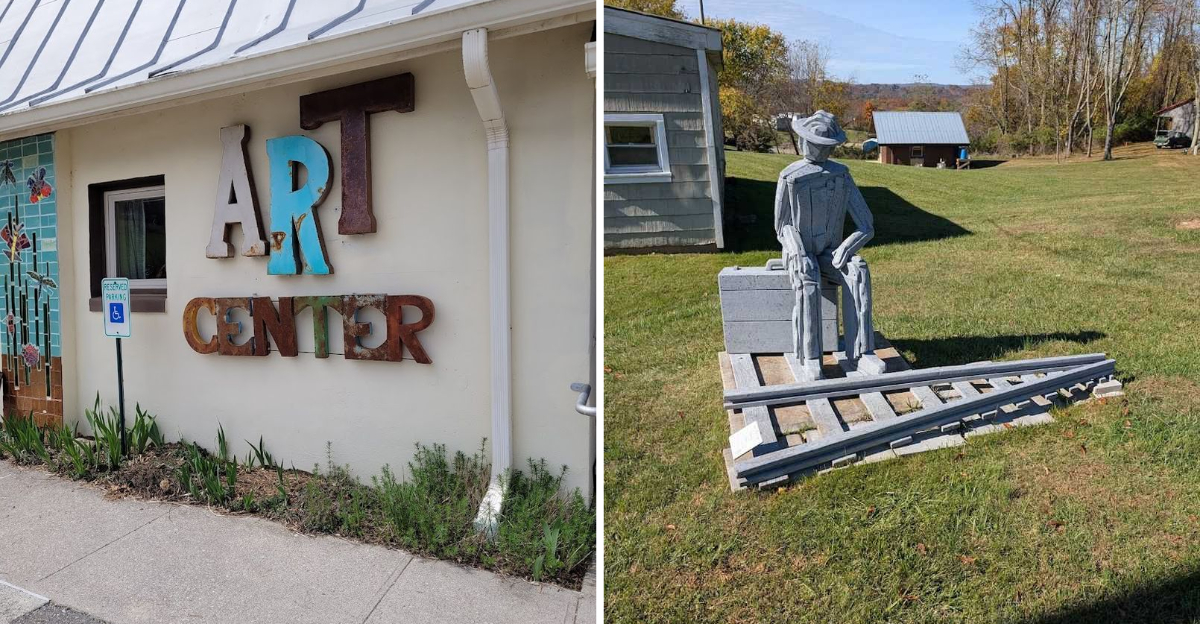
The moment you cross the threshold of the Floyd Center for the Arts blacksmithing shop, something shifts in the air around you. It is warm, alive, and thick with the faint scent of coal and iron, a sensory combination that feels both ancient and immediate.
The space has a working, purposeful energy that no gallery or museum can quite replicate.
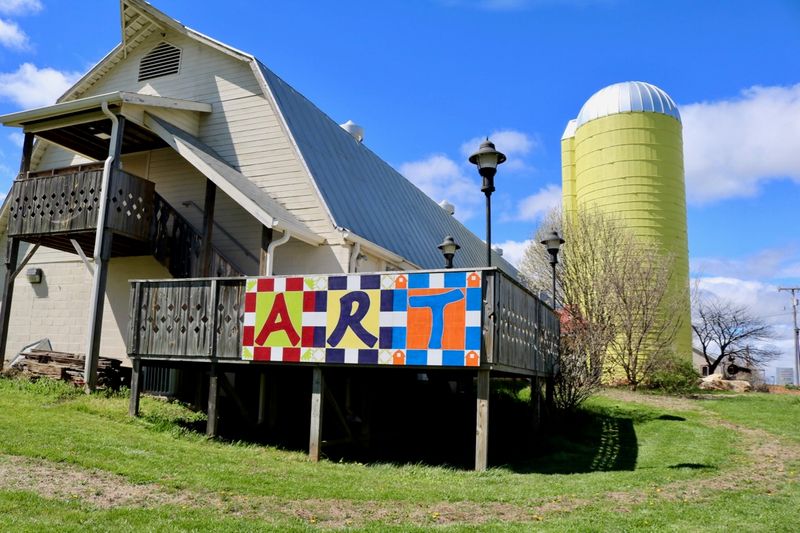
The Floyd Center for the Arts was built on a mission of facilitating, showcasing, and supporting creativity across the community and region.
Blacksmithing sits at the heart of that mission, honoring living traditions while welcoming anyone curious enough to try.
It is not a preserved relic of the past but a breathing, active craft practiced with real skill and real fire.
Instructors like Bryan Fritts and Harley Akers bring deep knowledge and genuine passion to every class. Bryan is known for tailoring his teaching to complete beginners as well as those with more advanced experience.
Harley shares that same enthusiasm, making students feel capable from the very first heat.
What struck me most was how unhurried everything felt. Nobody was rushing to finish or move on.
The instructors took time to explain the properties of metal, the behavior of heat, and the logic behind each technique. That patience is rare, and it makes a real difference for first-timers.
All materials are provided, so you show up ready to learn and leave with something made entirely by your own hands. The forge is not just a room; it is an invitation.
The Heat and the Hammer: What Your First Forging Session Actually Feels Like
There is a specific moment in a blacksmithing class when the metal glows orange and you realize you actually have to hit it.
That moment is both thrilling and slightly terrifying, and it passes quickly once your instructor calmly shows you where to strike and how to hold the hammer.
After that first confident tap, something clicks.
The class at the Floyd Center for the Arts is structured to ease beginners in without overwhelming them. You start by learning how to read the color of heated steel, which tells you exactly when it is ready to be worked.
Too cool and it resists; too hot and it moves unpredictably. Finding that sweet spot becomes a satisfying little puzzle you keep solving throughout the day.
Hammering technique matters more than raw strength, and the instructors here make that clear early on. Controlled, deliberate strikes shape the metal far more effectively than forceful ones.
My grip got corrected more than once, and each correction made an immediate, visible difference in the piece I was forming.
The small group format means you get plenty of individual attention. There is also a natural camaraderie that forms among students, all of you figuring out the same unfamiliar craft at the same time.
People laugh at their own wobbly results and cheer when someone gets a clean taper. The Center emphasizes equity and inclusion, creating a space where every skill level is respected.
That welcoming spirit is not just a policy; it is genuinely felt throughout the entire session.
From Raw Metal to Finished Piece: The Quiet Thrill of Making Something Real
By midday, the initial nerves had settled into something closer to focus. My hands had found a rhythm with the hammer, and the metal was starting to respond in ways that felt intentional rather than accidental.
That shift, from fumbling to forming, is one of the most satisfying progressions I have experienced in any hands-on activity.
The project for the day was a wall hook, a simple but genuinely useful object that requires heating, drawing out the metal, tapering the end, and bending it into shape. Each step builds on the last, so by the time you reach the final bend, you have already practiced the core techniques multiple times.
It is clever curriculum design disguised as a single afternoon project.
Holding the finished piece was unexpectedly emotional. It was small, slightly imperfect, and unmistakably mine.
Every hammer mark on its surface was a record of the learning that went into it, a physical diary of a few hours spent in honest concentration.
The instructors praised each student’s work with specific observations, pointing out what showed real progress rather than offering generic compliments.
The Floyd Center for the Arts has a strong commitment to hands-on arts education and lifelong creative learning. That philosophy was evident in how the instructors framed every correction as a step forward rather than a mistake to fix.
You leave the forge not just with an object but with a genuine understanding of how it came to be. That kind of knowledge stays with you long after the metal cools.
Beyond the Forge: Galleries, Gift Shop, and the Wider World of the Center
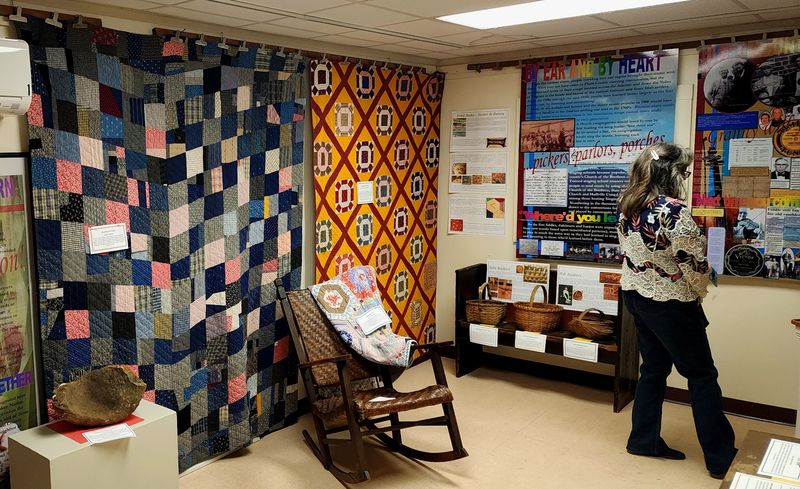
After setting down the hammer, I wandered through the rest of the Floyd Center for the Arts and discovered just how much the building holds.
The galleries rotate regularly, featuring work by local and regional artists across a wide range of mediums.
On the day I visited, the walls held paintings that ranged from quiet mountain landscapes to bold abstract compositions, all made by people connected to this corner of Virginia.
The gift shop deserves its own mention. It is stocked entirely with handcrafted items made by artists the Center actively supports, and the quality is genuinely impressive.
Ceramics, fiber work, jewelry, and small prints fill the shelves without feeling cluttered. Everything has a story behind it, and the staff are happy to share those stories if you ask.
The Center also houses multiple studio spaces where artists work regularly, giving the building a lived-in, purposeful feel that sets it apart from more formal art institutions.
You might catch a ceramicist at the wheel or a painter mid-session, which adds a spontaneous, behind-the-scenes dimension to the visit.
It is art in progress, not just art on display.
Programming at the Center extends well beyond blacksmithing, covering ceramics, fiber arts, stained glass, painting, and digital arts.
Children’s classes run alongside adult workshops, and the schedule shifts with the seasons to reflect new exhibitions and visiting artists.
The Center serves thousands of visitors and hundreds of students each year, supporting a significant number of artists through exhibitions and vendor opportunities. It functions as a true community anchor, not just a destination.
The Heart of Floyd County: Community, Tradition, and Creative Culture
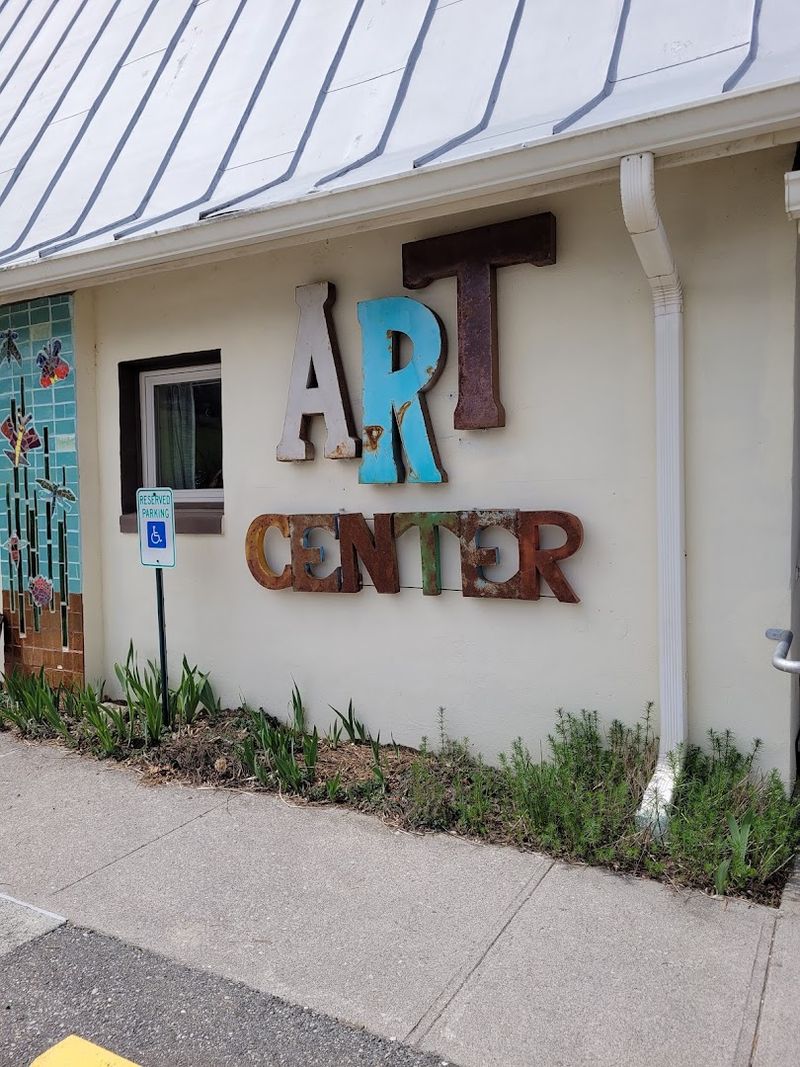
Floyd County has a personality all its own, and the Center reflects it perfectly. The town itself runs on a single stoplight and a deep, unironic love of handmade things.
Music spills out of doorways on weekends. Craft studios share walls with coffee shops.
There is a collective pride here in making things by hand that feels entirely genuine and not at all performed for tourists.
The Floyd Center for the Arts is deeply embedded in that culture.
Its vision is to be a vital and vibrant art center that enriches the community by cultivating a creative culture, and that is not marketing language; it is a description of what the place actually does on a daily basis.
After-school programs bring children in to explore art. Adults return semester after semester to deepen their skills in one craft or try something entirely new.
One of the Center’s most celebrated annual events is the Floyd Living Traditions Festival, which brings together nearly 70 makers for live demonstrations of traditional crafts including blacksmithing, basket weaving, spinning, and quilting. The festival celebrates the skills and stories that have shaped mountain life in Floyd County for generations.
It draws families, artists, and curious visitors from across the region.
What makes this community so compelling is how naturally the old and the new sit together here. Traditional crafts are not treated as museum pieces but as living practices passed between neighbors and friends.
The Center is the place where that exchange happens most visibly, a hub of creativity that keeps both heritage and innovation moving forward.
Why This Experience Is Worth Every Mile of the Drive
Some travel experiences are easy to describe: a beautiful view, a great meal, a well-curated museum. This one is harder to summarize because it operates on a different level entirely.
A day of blacksmithing at the Floyd Center for the Arts is less about what you see and more about what you do, and that distinction matters enormously when you are trying to figure out what kind of traveler you want to be.
The physical act of making something from raw metal, guided by instructors who genuinely care about your progress, creates a memory that sticks differently than a passive sightseeing experience.
You leave with a tangible object, yes, but also with a new understanding of patience, heat, and the strange satisfaction of controlled force.
Those are not things you can pick up at a gift shop.
The Floyd Center for the Arts also makes the logistics easy. Materials are provided, class sizes are kept small, and the welcoming atmosphere means you do not need any prior experience to feel comfortable showing up.
The Center is open Tuesday and Wednesday from noon to five, Friday from noon to five, and Saturday from ten in the morning to five in the afternoon.
It is worth calling ahead or checking the website to confirm workshop availability before you make the trip.
If your Virginia itinerary has been built around the expected, this is the detour worth taking. Floyd is a town that rewards curiosity, and the Center is its most expressive proof.
You might arrive as a traveler and leave feeling, unexpectedly, like a maker.
Address: 220 Parkway Lane South, Suite 1, Floyd, VA 24091
