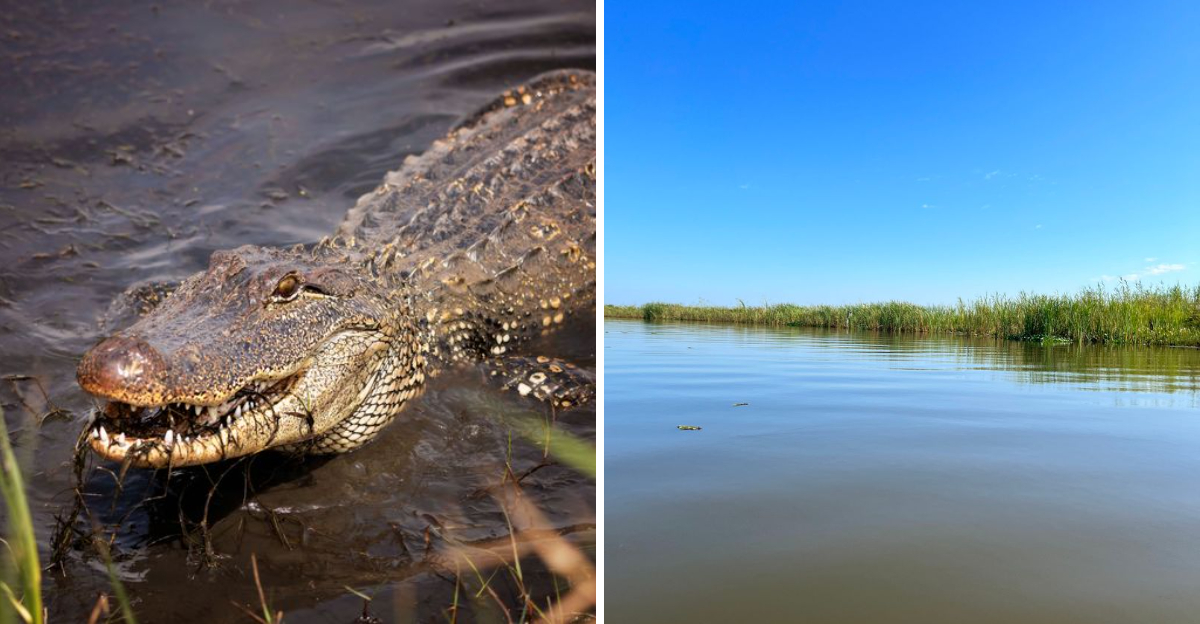
You think you know what the coast looks like, and then an alligator floats past looking exactly like a log that has learned to swim. A few minutes later, a bird drops into the marsh after crossing the Gulf, and suddenly the trail feels less like a walk and more like a wildlife scavenger hunt.
That is the fun of exploring Alabama’s wilder side. Trails run through salty dunes, cypress swamps, marsh grass, and quiet stretches of coastline where animals still have room to wander.
You might spot a sea turtle track in the sand, hear wings moving through the trees, or catch a pair of eyes watching from the water. Some routes are easy enough for a casual stroll.
Others are sandy, rustic, or better explored by paddle. Bring water, keep those binoculars handy, and pay attention to what moves around you.
The best part of these trails is never knowing what might appear around the next bend.
1. Pine Beach Trail At Bon Secour National Wildlife Refuge
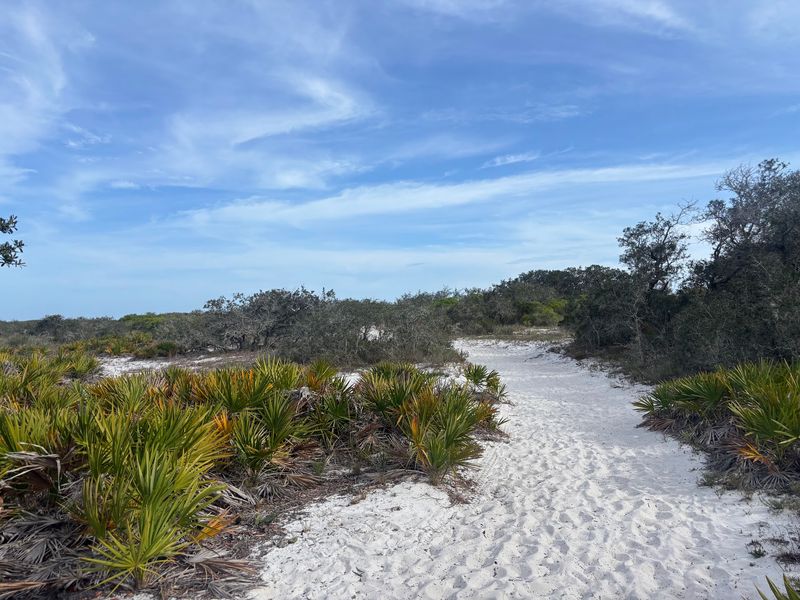
Few coastal walks change character as often as this one. The path begins in shady maritime forest and scrub, then opens into rolling dunes before finishing at open Gulf sand.
Roughly two miles one way, the route works best as an out-and-back, and the flat terrain stays friendly until the soft sand near the beach makes legs work a little harder.
The most talked-about stretch runs between Little Lagoon and Gator Lake, a narrow strip where freshwater and saltwater sit side by side.
Alligators use that freshwater edge, so scanning the shoreline before setting up a photo is smart practice. Migratory birds pour through the refuge in spring and fall, joined year-round by residents that thrive in the marshes and swamps behind the dune line.
Red fox, coyotes, and armadillos leave tracks in the sand long before hikers arrive.
From May through October, the beach becomes nesting ground for loggerhead, green, and Kemp’s ridley sea turtles, which is why roped-off zones and posted signs deserve serious respect. Endangered Alabama beach mice and snowy plovers rely on those same protected pockets.
Morning light keeps the heat manageable and wildlife active. Sunscreen, plenty of water, and closed shoes make the sandy sections far more pleasant.
Leave the dunes exactly as found.
Address: 13900 AL-180, Gulf Shores, AL
2. Hugh S. Branyon Backcountry Trail In Gulf State Park
More than 28 miles of pathways spread out here like a spiderweb across nine separate ecosystems, which sounds ambitious until the first turn reveals pine flatwoods giving way to a hardwood swamp.
Paved surfaces and raised boardwalks make much of the network manageable for wheels, strollers, and unhurried walkers. Cyclists share space easily, and shade shows up right when it is needed.
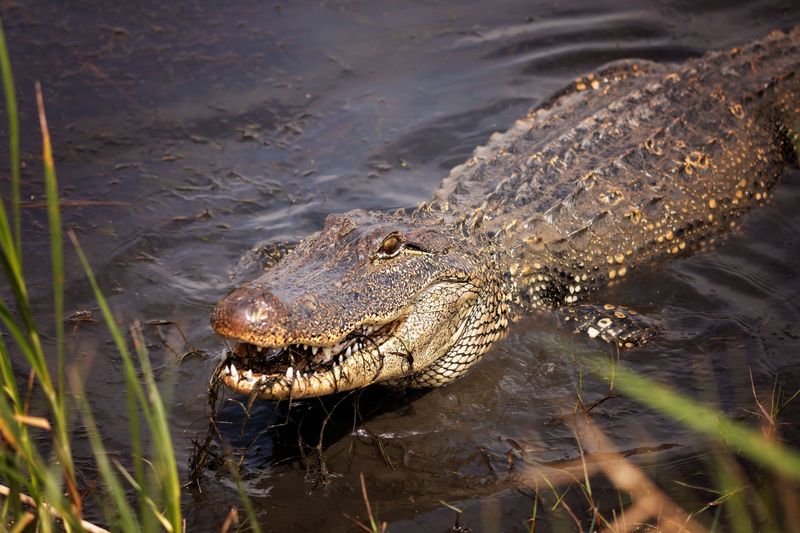
The Gopher Tortoise Trail lives up to its name, with tortoise burrows, turtles, and steady bird traffic along the edges. Alligator Marsh, a rustic loop of about four-tenths of a mile, pushes deeper into wetland territory where gators genuinely live rather than occasionally visit.
Rattlesnake Ridge adds sandy uplands, armadillos rustling through leaf litter, and songbirds working the canopy. Overhead, bald eagles and osprey patrol, and deer often step onto the pavement at dusk without much concern for schedules.
Lake Shelby draws attention for good reason, since alligators bask along its banks and the overlook offers a safe vantage point. Down on the park’s Gulf-facing beaches, loggerhead, green, and Kemp’s ridley turtles nest between May and October.
Keep a respectful distance from every reptile, no matter how still it looks. Bring bug spray for the marsh sections.
Late afternoon delivers the best wildlife odds and the softest light.
Address: Gulf Oak Ridge Trailhead, Gulf Shores, AL 36542
3. Dauphin Island Audubon Bird Sanctuary
Birders talk about this 164-acre patch of island the way anglers talk about a secret fishing hole. Spring migration is the reason, and it can be genuinely overwhelming.
Neotropical migrants crossing the Gulf from Central and South America hit this shoreline as their first landfall, arriving exhausted and hungry. When weather stacks against them, a fallout happens, and the trees fill with warblers, tanagers, buntings, and orioles at eye level.
More than 400 species have been recorded on the island, a number that explains the National Recreational Trail designation. Habitats packed into a small footprint include maritime forest, marsh, freshwater ponds, dunes, a lake, a tupelo gum swamp, and beach.
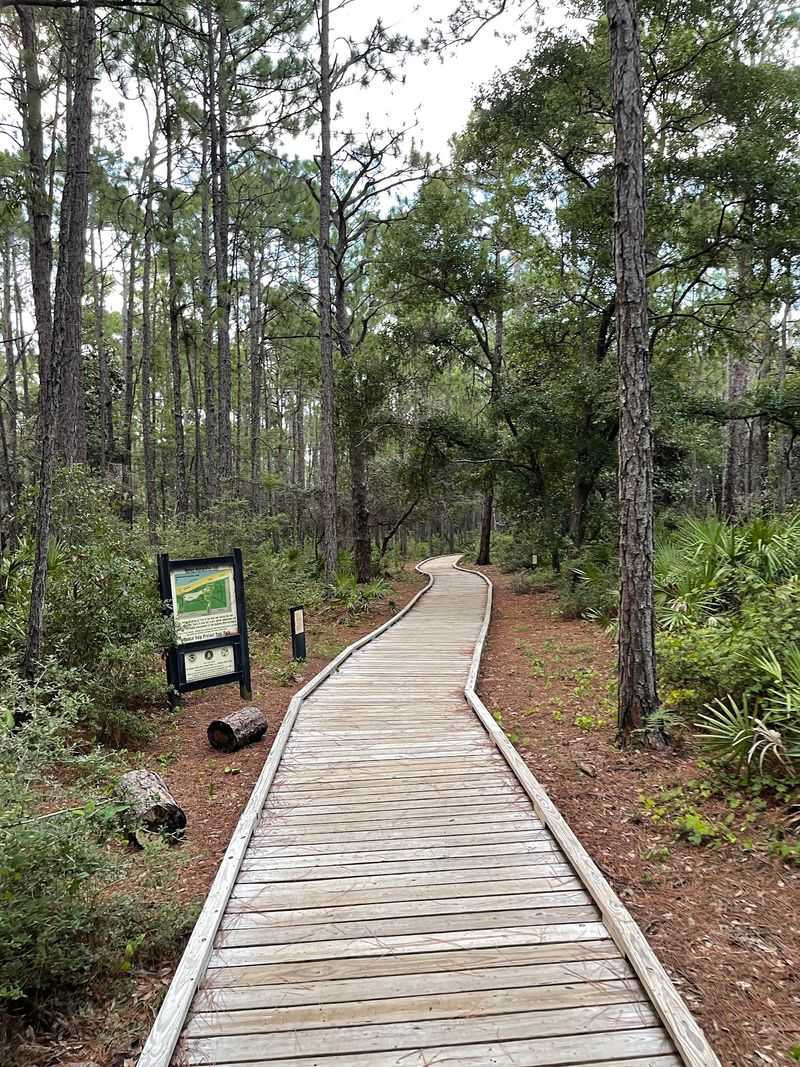
A boardwalk stretching about a thousand feet gives comfortable access to Gaillard Lake, where turtles line up on logs and hawks circle above the treetops. Herons, egrets, and shorebirds hold down the year-round shift, and alligators quietly claim the wetter corners.
Out on the island’s west end, loggerhead, Kemp’s ridley, and green sea turtle nests appear between May and October, marked and monitored through the season.
Go early, move slowly, and let the birds come closer instead of chasing them. Binoculars beat a camera zoom here.
Mosquito protection is not optional in warm months.
Address: 213 Bienville Blvd, Dauphin Island, AL 36528
4. Weeks Bay National Estuarine Research Reserve
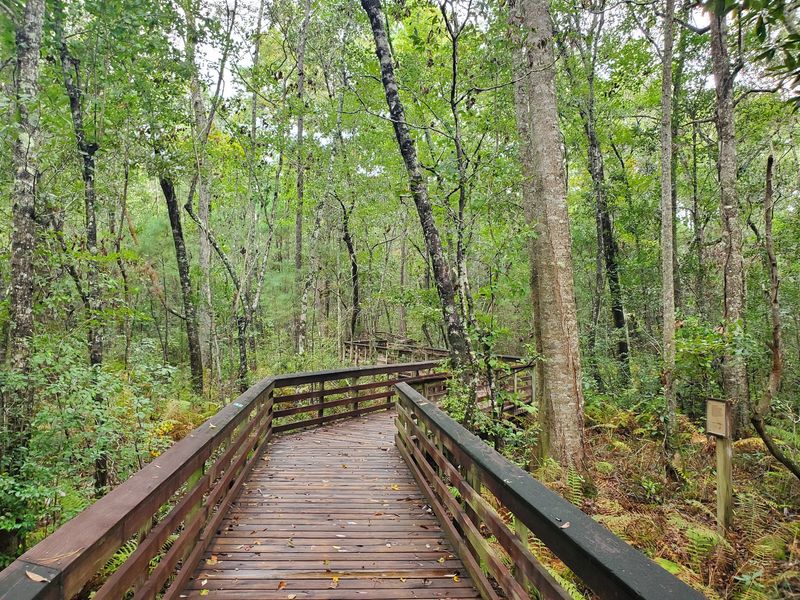
Pitcher plants are the unexpected stars here. Carnivorous, oddly elegant, and thriving in fire-dependent bogs, they line an easy trail that feels more like a botanical curiosity shop than a hike.
Fed by the Fish and Magnolia Rivers, this reserve protects more than 9,300 acres of estuary and the wetlands fringing it. Self-guiding nature trails mix boardwalk with packed dirt, and interpretive signs handle the identification work for anyone still learning.
Alligators show up in the quiet backwaters, along with several turtle species, including the rare Alabama red-bellied turtle that calls the delta region home. The endangered eastern indigo snake also belongs to this landscape, though sightings are a matter of pure luck.
Bird variety is the real reward. Brown pelicans and osprey work the open water while brown-headed nuthatches, pine warblers, indigo buntings, and common yellowthroats fill the woods and edges.
Clapper rails and sora skulk through the marsh grass, laughing gulls and royal terns cruise overhead, and marsh wrens chatter from the reeds. Stay until dusk and great horned owls often begin calling.
Wear shoes that tolerate damp ground, since bog margins hold water after rain. Late summer brings pitcher plant blooms worth the trip alone.
Patience pays here more than pace.
Address: 11401 US Highway 98, Fairhope, AL 36532
5. Meaher State Park Boardwalks Above The Delta
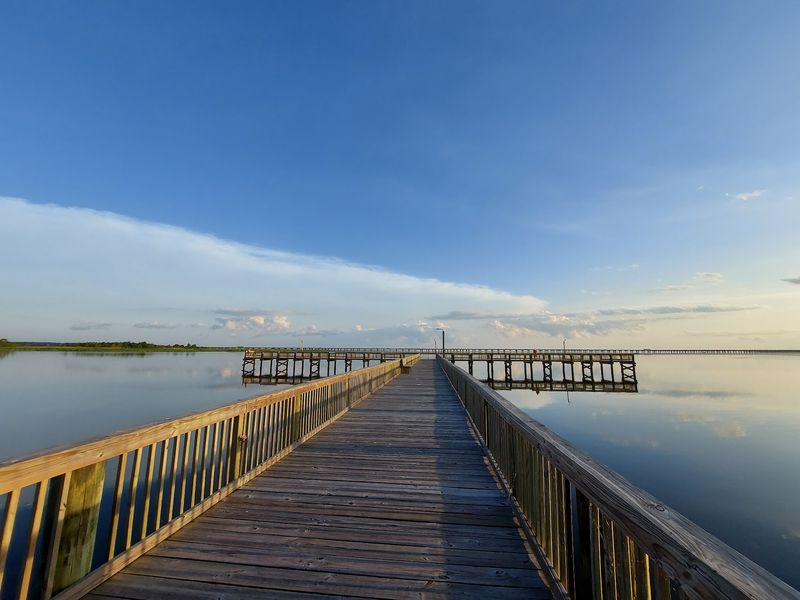
Traffic hums along the causeway nearby, yet a few steps onto the boardwalk and marsh grass swallows the sound almost completely.
Spread across 1,327 acres, this park sits inside the wetlands of the Mobile-Tensaw Delta, the second-largest river delta in the lower 48 states. Fresh water and salt water meet right here, which turns the whole area into a buffet for fish and everything that eats fish.
Well-kept trails and elevated walkways bring visitors eye level with the marsh. Alligators drift in the shallows or stretch out on mudbanks, sometimes close enough to make the boardwalk railing feel very important.
Bird activity peaks during spring and fall migration, though the cast stays impressive year-round. Herons, egrets, gulls, owls, and eagles all make regular appearances, and least bitterns occasionally reveal themselves in summer.
Clapper rails call from the grass more often than they show themselves. Winter brings American white pelicans and big rafts of waterfowl settling onto the open water.
Near the entrance, yellow-crowned night-herons are famously easy to find, usually busy hunting crabs with a look of total concentration.
Sunrise and sunset deliver the best color and the most movement. Bring insect repellent, and check the water surface twice before assuming that log is a log.
Address: 5200 Battleship Pkwy, Spanish Fort, AL 36527
6. Bartram Canoe Trail Through The Mobile-Tensaw Delta
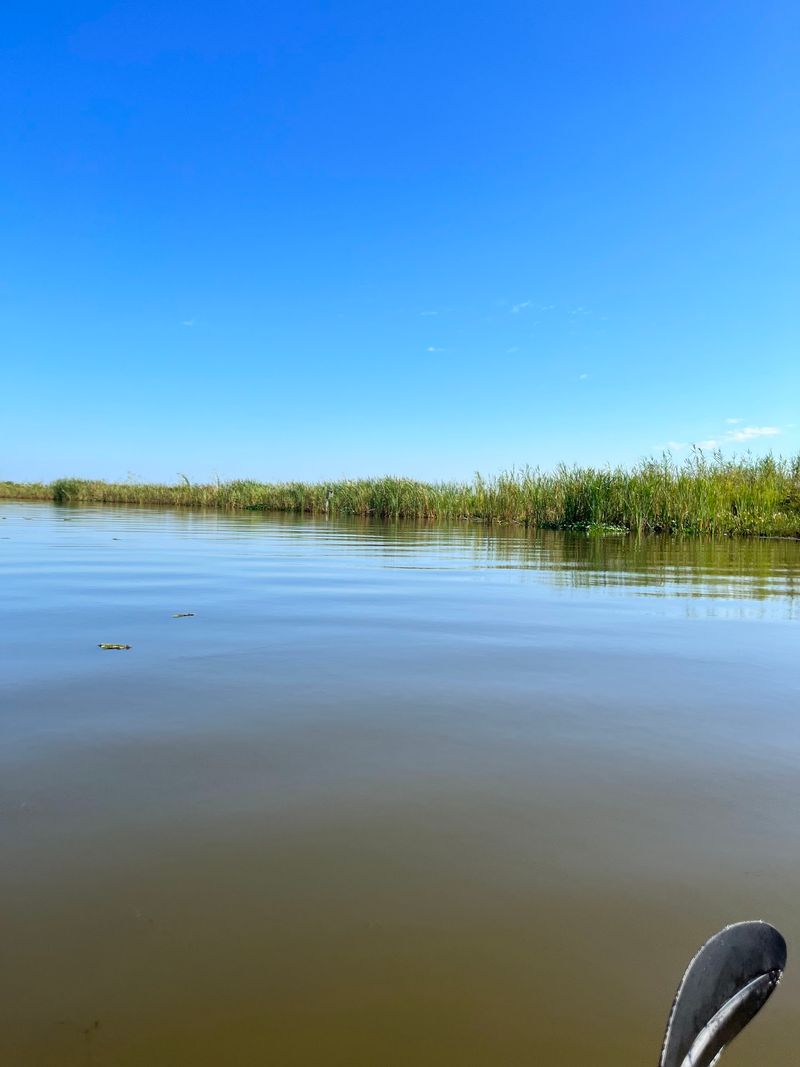
Sometimes the best trail has no dirt at all. Paddling replaces hiking across this network of tidal rivers, creeks, bays, and bayous, and the change of perspective is the whole point.
Nicknamed America’s Amazon, the Mobile-Tensaw Delta ranks as the nation’s second-largest river delta and shelters more than 50 rare and endangered plants and animals. Cypress-tupelo swamp, estuarine marsh, and bottomland hardwood forest press right up to the waterline.
Day routes suit casual paddlers, while overnight options include floating camping platforms for anyone wanting to hear the swamp after dark. American alligators are common along quiet banks, often announcing themselves with nothing more than two eyes and a ripple.
Birdlife fills the canopy and the shallows, from wading birds stalking the edges to raptors perched on snags watching the water. Sound carries strangely out here, so a distant splash can feel unnervingly close.
Currents shift with the tide, which makes checking conditions and carrying a map essential rather than optional. First-timers often start from the Five Rivers Delta Resource Center, which functions as the gateway and information hub for the region.
Dry bags, a hat, and extra water go a long way. Paddle early, keep a respectful buffer from every wild animal, and let the swamp set the rhythm.
Address: 30945 Five Rivers Boulevard, Spanish Fort, AL 36527
7. Beaverdam Creek Swamp At Wheeler National Wildlife Refuge
Alligators in north Alabama sound like a rumor until the refuge maps confirm it. A small population lives here along the Tennessee River, far from the salty air most people associate with gators.
Covering roughly 35,000 acres, the refuge blends cypress swamp, oak-hickory forest, and broad wetlands into one of the state’s most important stopovers for migrating birds. Its place on the North Alabama Birding Trail keeps binoculars busy through every season.
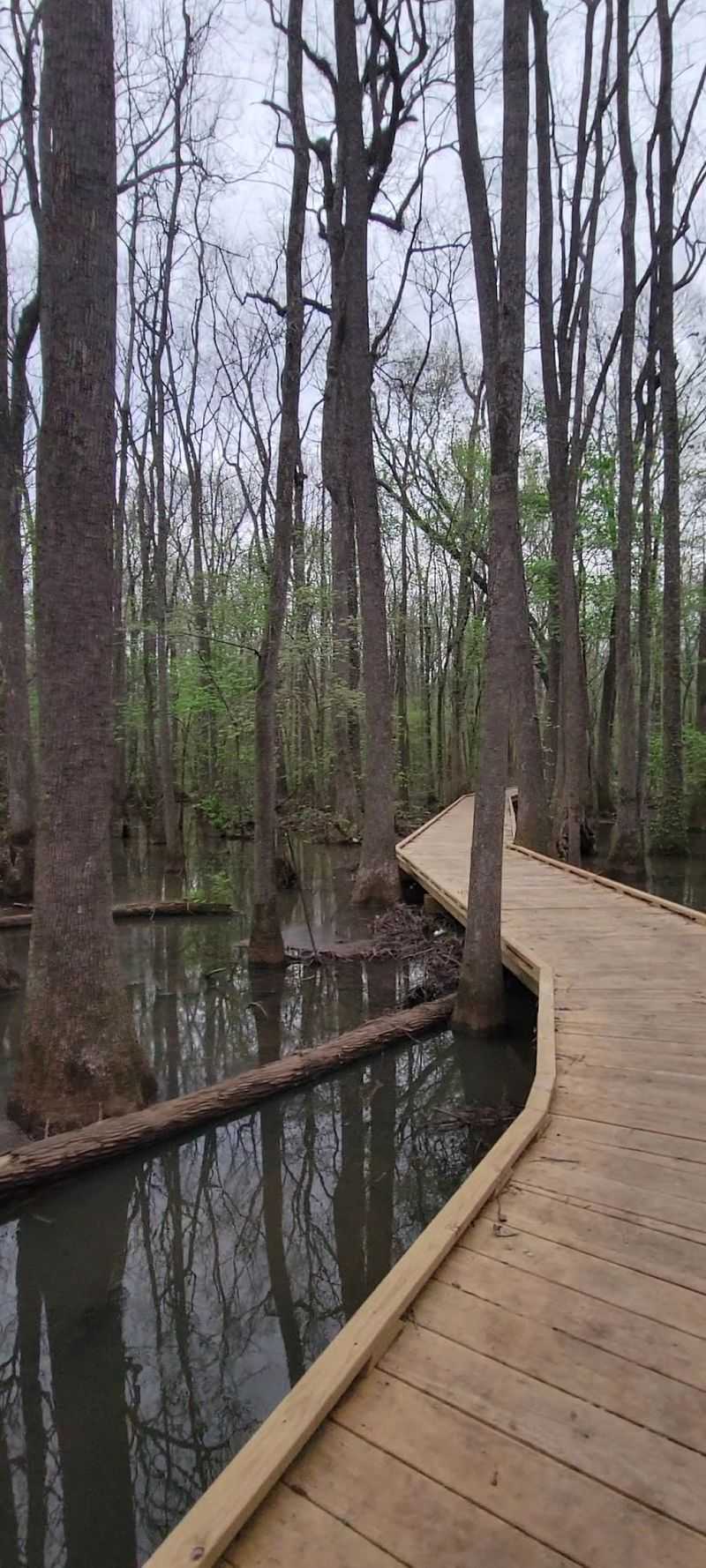
The Beaverdam Creek Swamp trail runs about half a mile, combining gravel path with boardwalk, and it leads into a tupelo gum swamp recognized as a National Natural Landmark. Water sits dark and still beneath the walkway.
Frogs call from the shallows, turtles stack up on fallen limbs, and fish shadows slide past the pilings. Songbirds work the canopy overhead, often heard well before they are seen.
Hikers wanting more distance can pick up the refuge’s 5.5-mile hiking and biking route, while the Morgan Lake and Lady Ann Lake loops offer relaxed water views without much elevation to worry about.
Winter turns the refuge into a waterfowl spectacle, including sandhill cranes gathering in impressive numbers. Spring floods the woods with warbler song.
Check seasonal closures before visiting, since some areas rest during peak wintering months.
Address: 3121 Visitor Center Road, Decatur, AL 35603
8. Fort Morgan Historic Site And Its Migrant Trap Shoreline
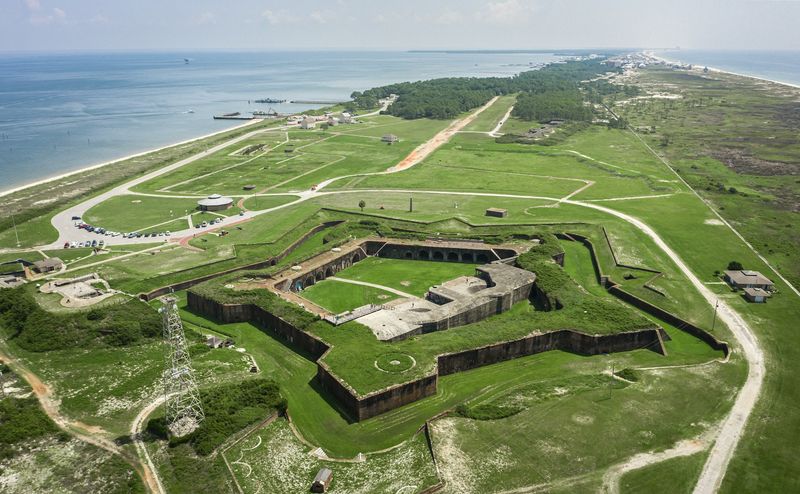
History gets most of the attention at the tip of this peninsula, but the birds have their own claim to fame.
Roughly 479 acres of nature areas, protected dunes, and marsh surround the old brick fortifications where Mobile Bay pours into the Gulf of Mexico. Wind is a constant companion, and the horizon stays enormous.
Recognized as a Globally Important Bird Area and part of the Alabama Coastal Birding Trail, the site earns the nickname migrant trap during spring and fall. Exhausted travelers funnel down the narrow peninsula with nowhere else to go, concentrating warblers, raptors, wading birds, gulls, terns, and marsh species into a small area.
The road trail heading toward the fort passes marsh edges and opens onto sweeping water views on both sides, making it a favorite among birders who prefer easy walking with big payoffs.
Dunes and shoreline along the site protect endangered species and serve as active nesting habitat for loggerhead, Kemp’s ridley, and green sea turtles from May through October. Marked nests and fenced areas are there for a reason.
Bring a windbreaker, since shade is scarce and gusts off the Gulf can be sharp. Sturdy shoes handle the sandy shoulders best.
Stay on established paths and keep flashlights off the beach at night.
Address: 110 AL-180, Gulf Shores, AL 36542
9. Alligator Creek Nature Trail In Gulf Shores
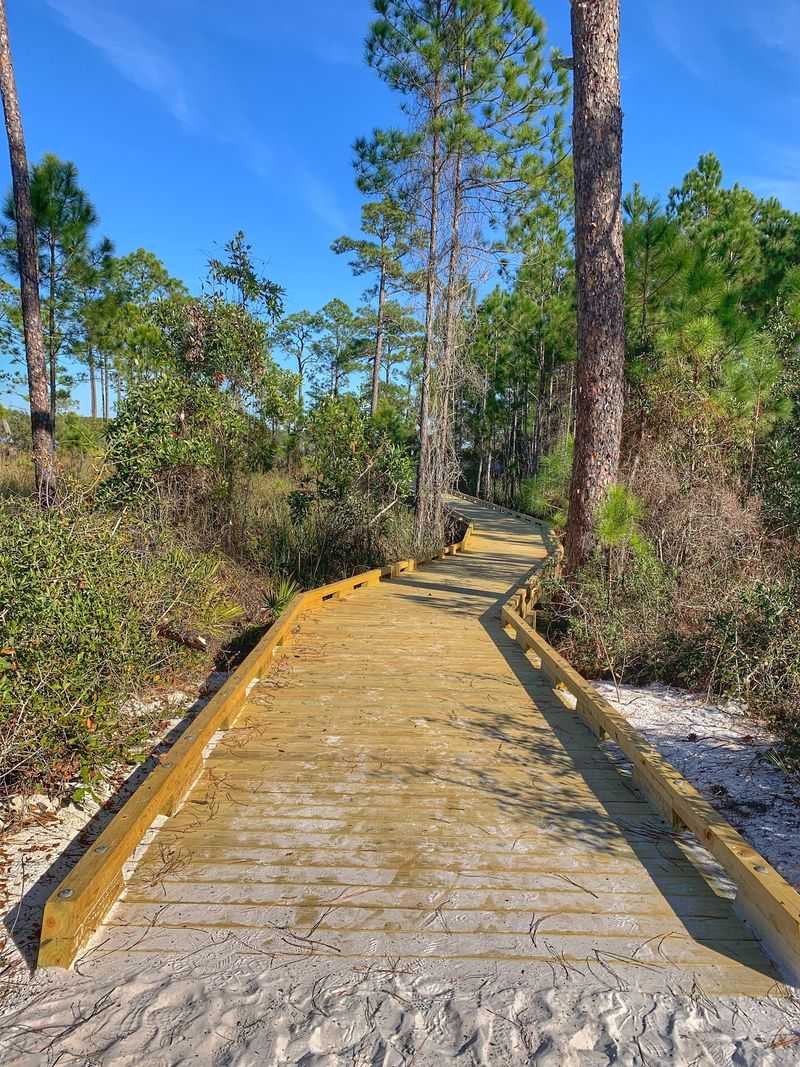
A trail named after alligators sets expectations clearly, and the creek here rarely disappoints anyone willing to stand quietly for a few minutes.
Tucked inside a 27-acre park, the looping walkway runs about 1.9 miles through mixed hardwood and pine flatwoods. Elevated boardwalk sections hover above marshy, boggy ground, which keeps feet dry and sightlines open.
Bald cypress trees draped in Spanish moss line the banks, giving the whole place a hushed, filtered-light quality that feels far removed from nearby beach traffic. Birding is excellent from the boardwalk, where great blue herons and egrets hunt the shallows with slow, deliberate steps.
Turtles are everywhere once the sun warms the logs, and the watershed supports several species. American alligators cruise the creek, sometimes visible as little more than a nostril and a lazy wake.
Late summer brings white-topped pitcher plants into bloom across the wet prairie sections, a detail plenty of visitors miss entirely by looking up instead of down.
Shade helps, though humidity still wins in July. Early morning offers cooler air, better light, and fewer people on the loop.
Repellent, water, and a slow pace cover most needs. What makes this spot memorable is how much wild survives inside a fast-growing coastal town.
Address: 20115 State Park Rd, Gulf Shores, AL 36542
