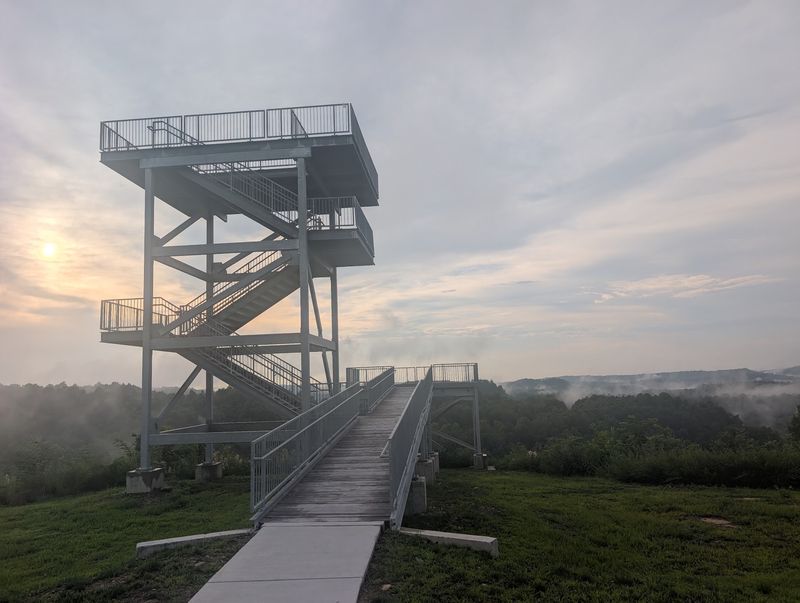
Picture a quiet ridge in southern West Virginia, the sun sliding low over a grassy field that used to be a coal mine. Then a sound cuts through the cool air, a high, wild whistle that nobody in these hills heard for more than a hundred years.
That is a bull elk bugling, and it means one of the greatest comeback stories in Mountain State history is happening right now. I went looking for a simple lookout tower and found something that felt a lot like hope.
A Lookout Above the Coalfields
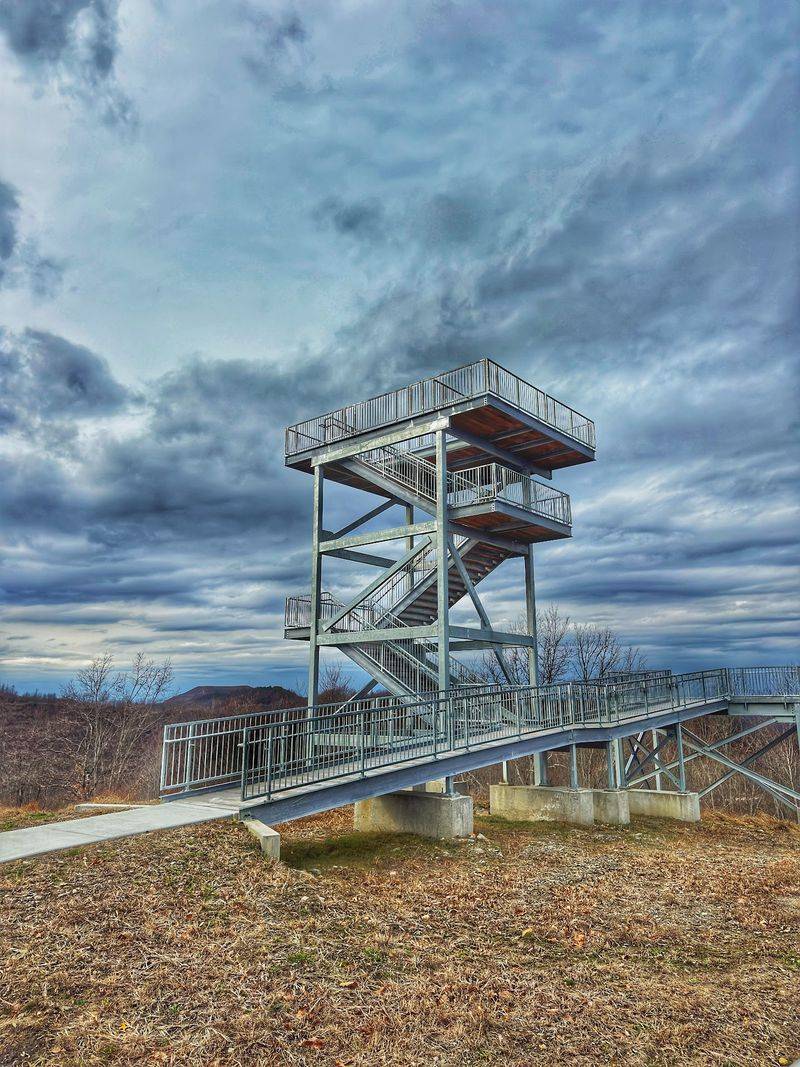
Some places announce themselves with billboards. The Elk Viewing Tower does no such thing, and that quiet humility is part of its charm.
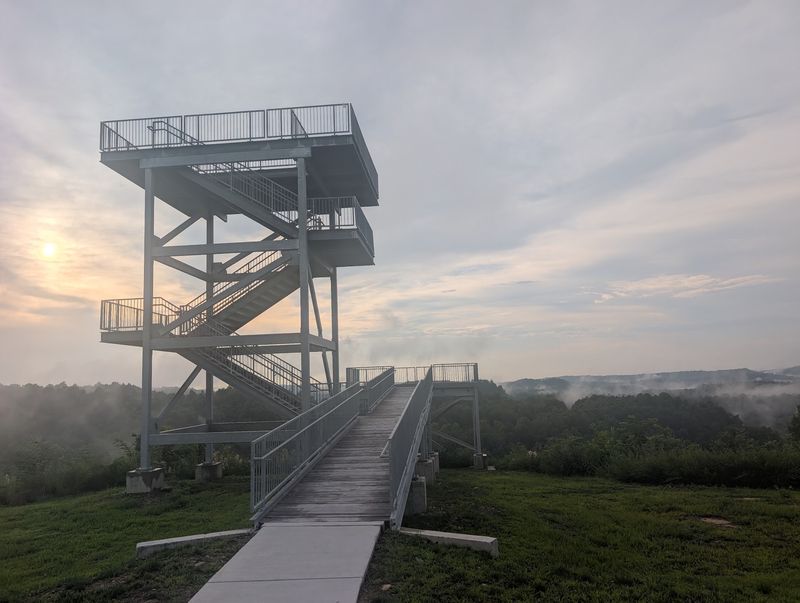
Tucked into the southern coalfields of West Virginia, the tower is an elevated platform built for one main job: giving folks a clear look across wide, open fields where wild elk now roam. It sits beside an Elk Education Center and connects to a trail with rest stops along the way.
The land around it is part of a much bigger story about recovery, both for wildlife and for the hills themselves.
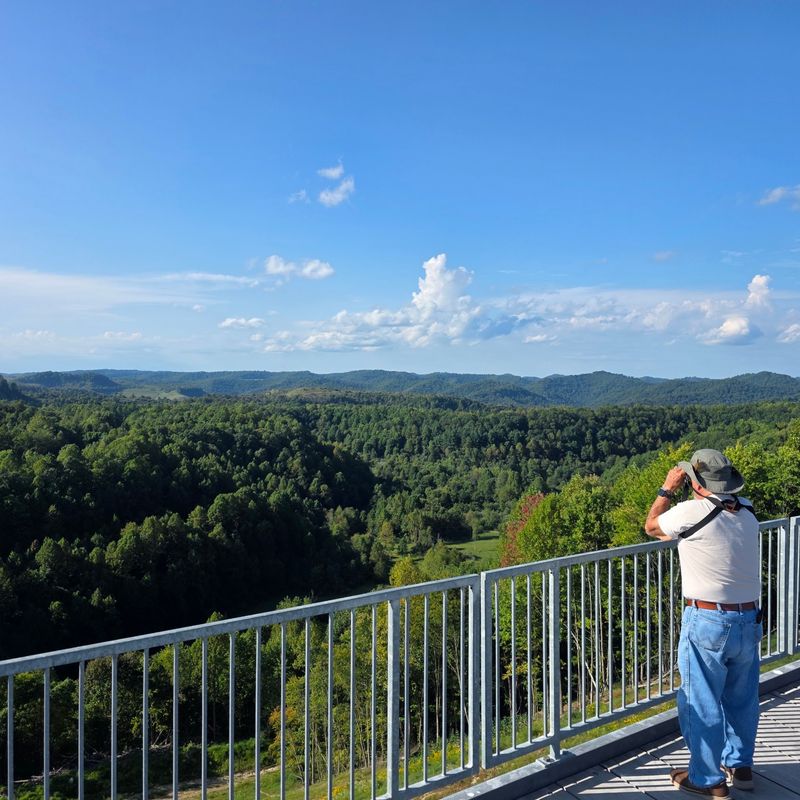
Visitors describe the setting simply as beautiful. They talk about sweeping views of fields and mountains, an easy approach, and a peaceful feeling that settles in once you reach the top.
It is listed as a wildlife park, but it feels more like a front porch overlooking a reborn landscape.
What makes the spot special is not fancy amenities. It is the chance to stand where coal trucks once rumbled and hear a sound that vanished from these mountains in the 1800s.
For many West Virginians, that alone makes the drive worth it, and the rest of this story explains why that bugle means so much.
When the Mountains Went Silent
Long before coal camps and company stores, elk walked these ridges. They were a familiar sight in the high mountains and river valleys, and both Native Americans and early settlers depended on them.
Then the herds began to thin. Heavy hunting and the loss of natural habitat pushed elk out of the state, and by the late 1800s they were gone.
The last native elk in West Virginia was reportedly seen around 1875, near the headwaters of the Cheat River in Pocahontas County and around the Webster Springs area of Webster County.
Think about how long that silence lasted. Generations of families grew up, worked the mines, built churches, and raised kids without ever hearing an elk bugle in their home hills.
Grandparents told stories about deer and turkey, but elk had slipped into the history books.
Plenty of folks figured that was the end of it. The sound of the bugle seemed lost to the past, like the old steam whistles and the busy Main Streets many of us remember from childhood.
Few could have guessed that the comeback would someday begin on land scarred by surface mining, in the very coalfields that once powered the nation.
Decades of Planning Behind the Return
Bringing back a large animal is never a quick project. The West Virginia Division of Natural Resources began feasibility studies as early as 1972, though the idea simmered for years before real momentum arrived.
Kentucky helped light the spark. Its own elk restoration showed what was possible, and by the late 1990s West Virginia was taking the dream seriously.
In 2005, the WVDNR worked with groups like the Rocky Mountain Elk Foundation on studies to find the best habitat and to see whether communities would welcome the animals.
The answer pointed south. The southwestern coalfields offered suitable habitat, very little farming that elk might bother, and strong local backing.
Reclaimed mine land mixed with forest looked like a promising place for a herd to settle in.
Support grew from the top down as well. With backing from then-Governor Earl Ray Tomblin, lawmakers passed legislation in 2015 creating an official Elk Management Area in the southern coalfields.
That step gave the WVDNR the green light to launch an active restoration plan. It took decades of patience, paperwork, and partnership, but the stage was finally set for something many people thought they would never see.
December 2016 and the First Two Dozen
Mark the date: December 2016. That winter, the WVDNR released the first 24 elk into the Tomblin Wildlife Management Area in Logan County.
Those animals came from the Land Between the Lakes Recreation Area in western Kentucky. Their arrival marked the return of elk to West Virginia after an absence of more than 140 years.
For conservation folks, it was a monumental moment. For local families, it was a little bit of magic in their own backyard.
More releases followed. Elk from Kentucky and Arizona added 95 more animals by 2018, giving the young herd a stronger start.
Additional releases in 2024 reportedly pushed the estimated herd size to around 130 animals.
The best news, though, comes from the calves. More than 60 have reportedly been born in the wild since 2016, and that number matters more than any truckload of transplants.
Calves born on West Virginia ground show the herd is settling in, finding food, and raising young on its own.
Every one of those births is a quiet vote of confidence from the elk themselves. They seem to agree with the biologists that these old coal hills make a fine place to call home.
Strip Mines Turned Grassland
Here is the twist that surprises most first-time visitors. The land that makes elk happiest in West Virginia is not deep, untouched forest.
It is old strip mine country.
Large areas once mined from the surface have gone through reclamation, leaving rolling grasslands mixed with recovering woods. Biologists call this early successional growth, meaning open fields and young plants.
For elk, it works like a buffet with a hiding place nearby, plenty of forage and enough cover to feel safe.
The Tomblin Wildlife Management Area stretches over 25,000 acres in Logan and Mingo counties. The Conservation Fund, a key partner, acquired more than 32,000 acres across Logan, Lincoln, and Mingo counties, building a large protected block of habitat, much of it transferred to the WVDNR to manage.
There is something deeply moving about that for anyone with coal in the family tree. The hills that fed furnaces and paid the bills for generations are now feeding a returning herd.
It is not erasing the past. It is building on it.
Deer, wild turkey, and many bird species benefit too, so these fields hum with life well beyond the elk.
Finding the Tower in Logan County
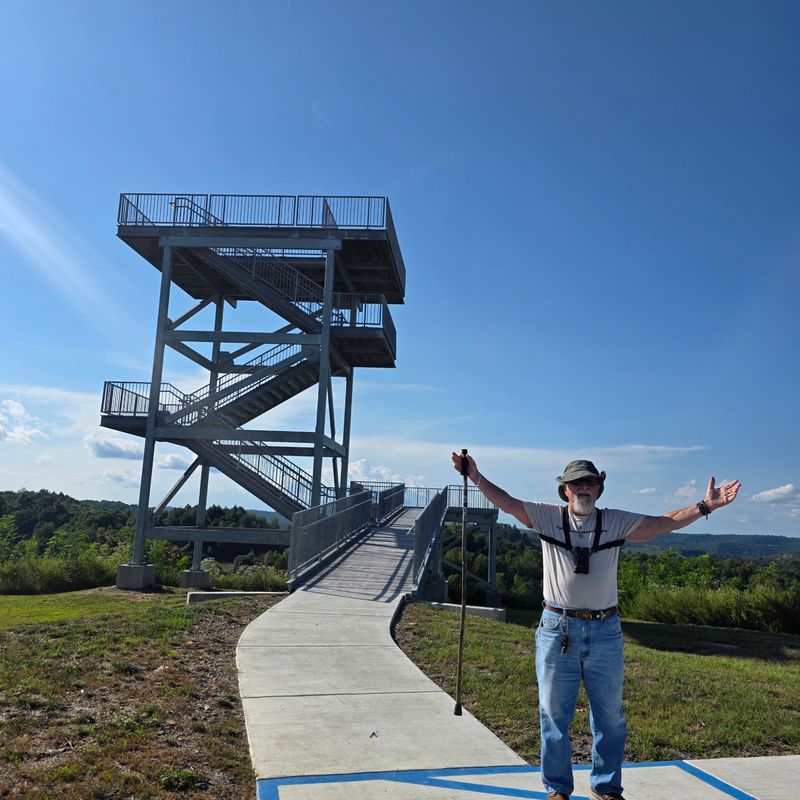
Alright, time to get specific. The Elk Viewing Tower sits in Holden, a small community in Logan County, right in the heart of the state’s elk country.
It pairs with the Elk Education Center, which West Virginia built as part of its investment in elk tourism. Together they give visitors a place to learn about the restoration project and a raised platform to scan the land for wildlife.
The site is tied to the Tomblin Wildlife Management Area, the primary viewing area for the herd.
Logan County folks know these hollows well. Coal shaped every town here, from the camps to the churches to the ballfields, and many retirees in the area remember when the mines ran around the clock.
Now the same county is welcoming travelers who come to watch elk instead of coal trains.
Visitors say access is easy, which is a relief in a part of the state known for twisty roads. The location is part of a much larger Elk Management Area covering about 2,845 square miles across all of Logan, Mingo, McDowell, and Wyoming counties, plus parts of Boone, Lincoln, and Wayne counties.
The tower is simply the best front-row seat.
The View From the Top
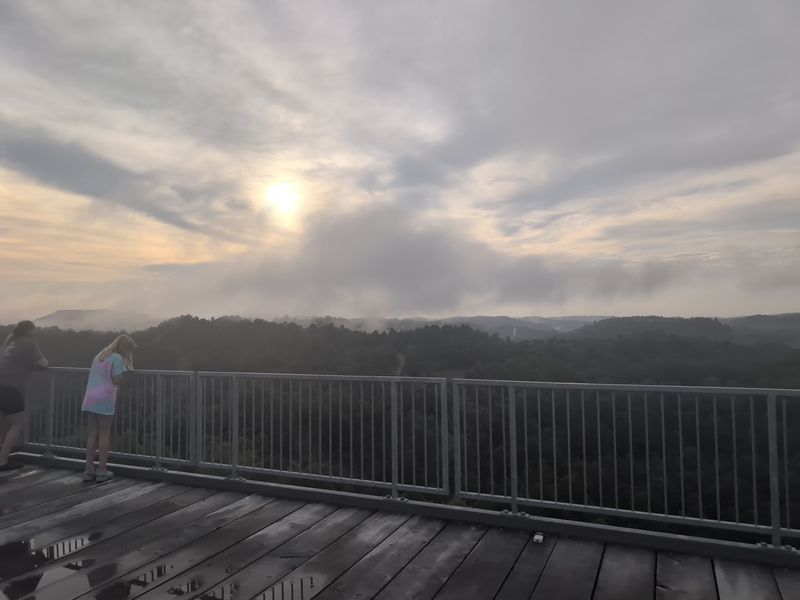
Climb up, catch your breath, and look out. That first glance is the moment most visitors remember.
People who have stood on the platform describe stunning views of open fields rolling toward layered mountains. One visitor called it simply wonderful and peaceful.
Another kept it even shorter, saying it was just beautiful. When folks run out of words, you know the scenery is doing its job.
The tower is reported to be well maintained, which matters when you are planning to linger. You can settle in, scan the edges of the fields where grass meets trees, and let your eyes adjust to the distance.
Elk often move along those edges, so patience pays off.
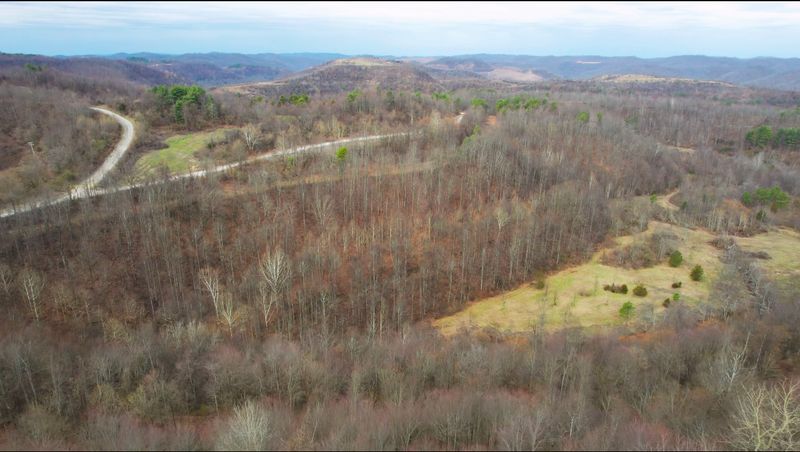
The elevated spot also gives you a sense of scale for the reclamation work. From up high, you can see how the old mine land has smoothed into meadows, with forest creeping back around the borders.
It is a living map of how the land has healed.
Fall adds extra color as the ridges turn gold, orange, and red. Even without a single elk in sight, the panorama alone feels like a reward for the trip.
A Trail With Lessons Along the Way
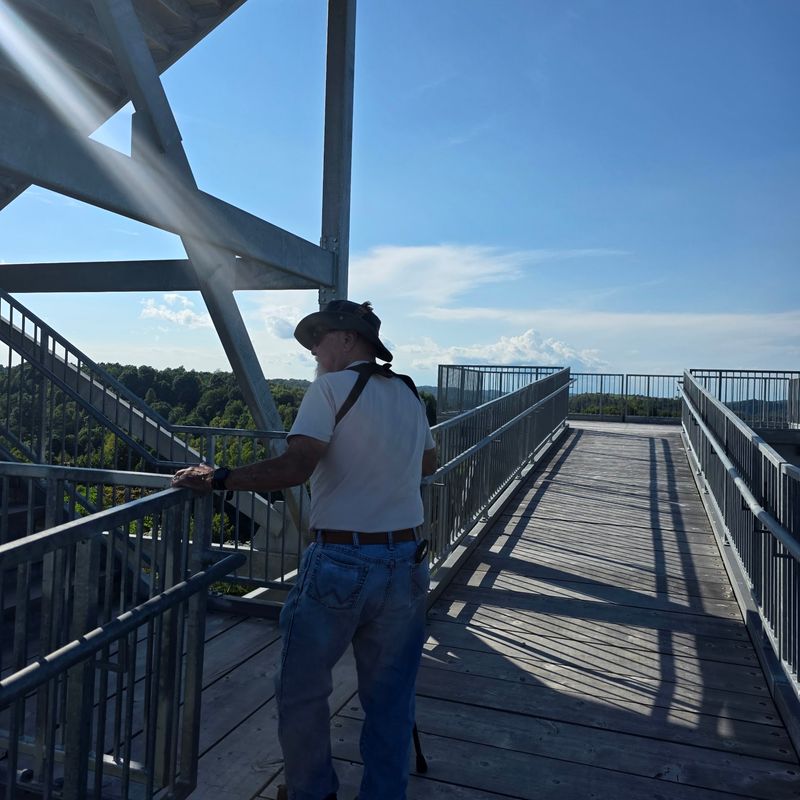
Good news for folks who like a little stroll with their scenery. Reaching the tower involves a pleasant hike, and visitors describe it as a nice one.
The trail includes several rest points, and each one offers information about local wildlife. That makes it ideal for grandparents walking with grandkids, since there is a natural place to pause, read a sign, and talk about what you might spot.
Kids get a mini nature lesson, and grown-ups get a breather.
Those signs tie the whole experience together. You learn about the animals that share this reclaimed land, not just the elk, so the walk becomes part of the education rather than just a route to the platform.
Wear comfortable shoes and take your time. There is no prize for racing to the top, and the slower pace lets you notice birds flitting through brush or turkeys pecking along the field edges.
One family who visited did not see elk on their walk, but they did watch about a dozen turkeys moving around. That is the beauty of a wildlife trail.
Something interesting usually shows up, even if it is not the animal you came hoping to see.
Bugling Season Under Autumn Skies
Close your eyes and imagine it. Dusk falls, the air turns crisp, and a high, eerie whistle rolls across the fields, followed by deep grunts.
That is the bugle of a bull elk, and it belongs to the rut, the elk breeding season. Bulls bugle to show dominance, attract cows, and challenge rivals.
The call can range from a sharp, high shriek to a string of low grunts and whistles, and it can carry a surprising distance across open ground.
Timing matters. The rut can start as early as late August and stretch into November, but peak activity typically lands in early October.
Calls may be heard from dusk until dawn, which makes fall evenings the classic time to listen.
For older West Virginians, there is something almost nostalgic about the sound, even if they never heard it before. It feels like a piece of the old mountains returning, the way a hymn from childhood can catch you off guard in church.
Bring a jacket and keep conversation low. When that first bugle echoes over the old strip mine benches, the hair on your arms will likely stand up.
Binoculars, Timing, and Patience
Quick tip from people who have been there: pack your binoculars, or even a telescope if you own one. One recent visitor recommended exactly that, and it makes sense given how far the fields stretch.
Elk can blend into the grass and tree lines, especially at a distance. A good pair of binoculars turns a brown smudge into an animal with antlers and personality.
Spotting scopes work well too if you plan to settle in for a while.
Timing is the other half of the puzzle. Locals reportedly say morning and evening are the best times to view elk, and one family learned that the hard way after visiting midday and seeing turkeys instead.
Elk tend to be more active around dawn and dusk, so plan around those hours.
Patience ties it all together. Sightings are common but never guaranteed, because these are wild animals roaming freely across a huge area.
Some evenings deliver a herd in the open, others offer only a distant bugle.
A thermos of coffee, a folding mindset, and a willingness to wait often lead to the best memories. Treat it like fishing.
The waiting is part of the fun.
Guided Tours Into Elk Country
Want to go deeper than the platform? The WVDNR hosts guided Elk Management Tours in September and October, right during the bugling season.
These excursions last about four hours and head into the Tomblin Wildlife Management Area. Guides share how the restoration program works and steer visitors toward the best chances of seeing elk up close.
It is a bit like riding along with a neighbor who knows every back road and every story.
Fair warning, though. The tours are incredibly popular and reportedly sell out well in advance, so booking early is strongly recommended.
If fall is your target, put a reminder on the calendar long before the leaves start turning.
Chief Logan State Park also offers elk tours during the fall rut, giving travelers another way into elk country. That can be handy if one option fills up.
As with any wildlife outing, sightings are common but not promised. Even on a quiet day, the guides make the experience informative and engaging, and you will come home understanding exactly why this herd matters so much to southern West Virginia.
Check the WVDNR elk page for current tour details before you go.
New Life for Coalfield Communities
Ask anyone raised in the coalfields and they will tell you the same thing. These towns have seen good times and lean ones, and folks here know how to hold on.
Elk tourism is adding a fresh chapter. Visitors coming to see the herd stop for gas, grab a meal, and spend a night nearby, and that steady trickle may help local businesses.
Kentucky’s elk program is often pointed to as a model, reportedly bringing in major hunting and tourism dollars, and West Virginia hopes for similar long-term benefits.
The state has backed that hope with real investment, including the Elk Education Center and the elevated viewing platform. Elk are sometimes called charismatic megafauna, a fancy way of saying people love big, impressive animals.
That appeal draws support for conservation that helps many other species too.
There is real pride in that. Communities that once powered the country with coal are now sharing a different kind of treasure, a living one.
For retirees on a budget, it is also a wonderful outing that does not require a long road trip out of state. Southern West Virginia has a world-class wildlife story right at home.
Collars, Science, and a Wandering Herd
Spot an elk wearing what looks like a chunky necklace? That is a GPS telemetry collar, and it is helping scientists learn a great deal.
WVDNR biologists use these collars to track where elk travel, which habitats they prefer, and how they spread across the land. West Virginia University researchers also study the herd’s genetics, looking at diversity, adaptive differences, and even parentage.
All that information helps guide decisions for a healthy herd over the long haul.
Conservation easements protect key habitat for the future, partnering with groups like the Rocky Mountain Elk Foundation, The Conservation Fund, and the National Fish and Wildlife Foundation’s Acres for America program.
The collars have revealed some fun surprises. Nearly a decade after reintroduction, individual elk are exploring beyond the Tomblin area into parts of Lincoln and Mingo counties.
One young female reportedly wandered north into Lincoln County, spent time on a ridge and in a pasture, then headed back home.
That is not a statewide stampede, but it is an encouraging sign. A curious, roaming herd suggests healthy animals testing their range, and it hints that elk may slowly reclaim more of their historic Mountain State territory.
Worth the Drive, Every Fall
So, is a trip to this little tower worth the gas money? For anyone who loves West Virginia, the answer leans heavily toward yes.
You get sweeping views, a well-kept platform, a pleasant trail with wildlife lessons, and a peaceful setting that visitors keep praising. One guest said they plan to return again and again, and that sentiment feels easy to understand once you stand up there at sunset.
Plan for early morning or evening, bring binoculars, and visit in fall if you want the best shot at hearing bulls bugle, with early October typically the peak. If a guided tour appeals to you, reserve early.
Check the WVDNR elk page at wvdnr.gov for the latest details on tours and access, since specific hours and fees are not listed in our information.
The address is 333 Doyle Dr, Holden, WV 25625.
More than anything, this place offers a feeling. The hills that once rang with coal machinery now echo with a sound lost for over a century.
Do you remember the first time you heard about elk coming back to West Virginia? Stand on that tower some autumn evening, and you will never forget the sound.
