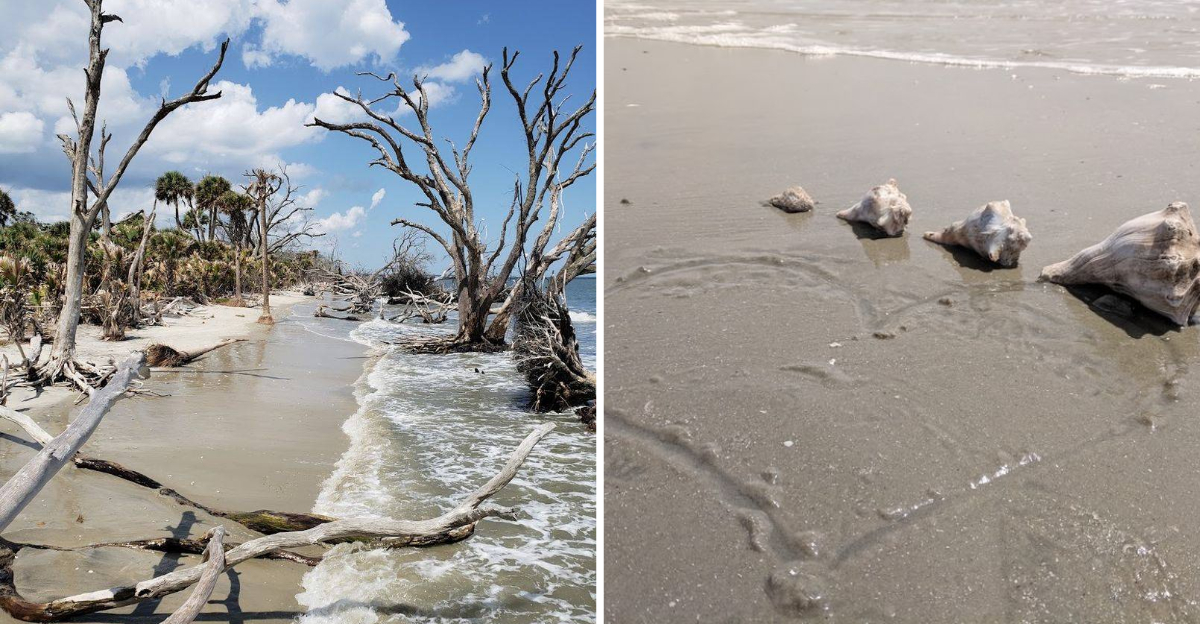
Massive, bleached tree skeletons rise from the sand along a stretch of South Carolina coastline, and the salt air hits you before you even reach the shore.
Twisted oaks and pines stand in an eerie, sculptural graveyard of wood and roots, slowly claimed by the sea over decades of coastal erosion.
I first laid eyes on that place and genuinely stopped in my tracks, no beach bars, no umbrella rentals, no noise, just wind, waves, and the raw, ancient quiet of a shoreline that has been surrendering to the ocean for years.
I walked among those skeletal trees, the sand soft beneath my feet, and felt like I had stumbled onto the edge of the earth.
If you have ever wanted a place that delivers on that promise, this is exactly the kind of place.
The Boneyard Landscape That Looks Like Another Planet
Nothing quite prepares you for the first glimpse of Boneyard Beach, South Carolina.
The landscape unfolds in a way that feels genuinely unreal, like a film set someone forgot to take down.
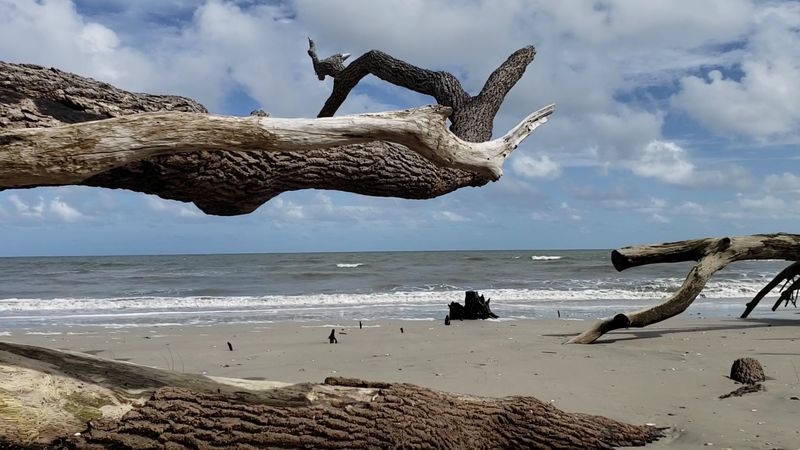
Enormous oak and pine trees, stripped bare by years of saltwater and wind, lean and twist out of the sand at impossible angles.
Some of the root balls are fully exposed, worn smooth like driftwood sculptures.
Others still grip the earth stubbornly, half-buried beneath layers of pale gray sand.
The contrast between the skeletal white wood and the dark, wet shoreline is striking in a way that photographs struggle to capture.
Erosion along this section of Edisto Island has been relentless for decades.
The maritime forest that once stood here gradually lost its footing as the ocean crept closer, leaving behind this haunting collection of natural monuments.
It is the kind of scenery that makes you pause mid-step and just look around, trying to take it all in.
Bring a camera.
Actually, bring two, because you will not want to stop shooting once you arrive.
How Erosion Shaped This Hauntingly Beautiful Shore
The science behind this beach is just as fascinating as the scenery itself.
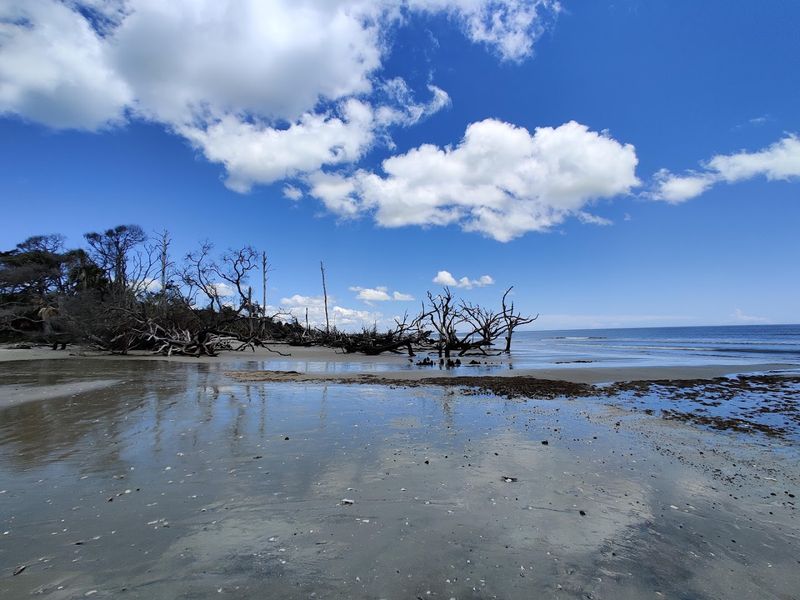
Over many years, the ocean has been steadily eating away at the hammock, which is a low, tree-covered ridge of land surrounded by water, that once supported a thriving maritime forest.
Saltwater, strong tidal currents, and persistent winds have done the slow, patient work of undermining the roots of massive oaks and pines.
As the ground eroded beneath them, trees toppled, were buried, re-emerged, and were sculpted by the elements into the dramatic forms you see today.
Some remain upright but ghostly, their bark long gone and their branches reaching skyward like frozen lightning.
Others have collapsed into tangles of roots and trunk that pool with seawater at high tide.
What makes this place feel so alive, despite being a landscape of dead trees, is that the process is still happening.
The ocean is still winning.
Every season shifts the beach slightly, revealing new formations and burying old ones.
Visiting different times of year means you might see a completely different arrangement of wood and sand.
It is geology and ecology working together in slow, visible motion.
Wildlife Encounters You Will Not Find at Ordinary Beaches
The wildlife situation at Boneyard Beach is genuinely impressive.
On the walk in from the parking area, the salt marsh on either side hums with activity.
Fiddler crabs scatter at every footstep, and egrets stand motionless in the shallows like patient sentinels.
Out on the beach itself, seagulls patrol the tide line, and if you are lucky and quiet, you might spot a dolphin cruising just offshore.
The waters around Edisto Island are known for dolphin sightings, and seeing one arc out of the water with that bleached driftwood backdrop is the kind of moment that stays with you.
Raccoons sometimes wander the upper beach, and the area is also habitat for sea turtles during nesting season.
Bird watchers will find this spot particularly rewarding.
The preserve draws a wide variety of shorebirds and wading birds throughout the year, and the quiet atmosphere means you can observe them without the usual beach crowd disruptions.
It is worth bringing binoculars.
The wildlife here is not a bonus feature, it is genuinely part of what makes the visit feel like a nature expedition rather than just a beach trip.
Timing Your Visit Around the Tides Makes All the Difference
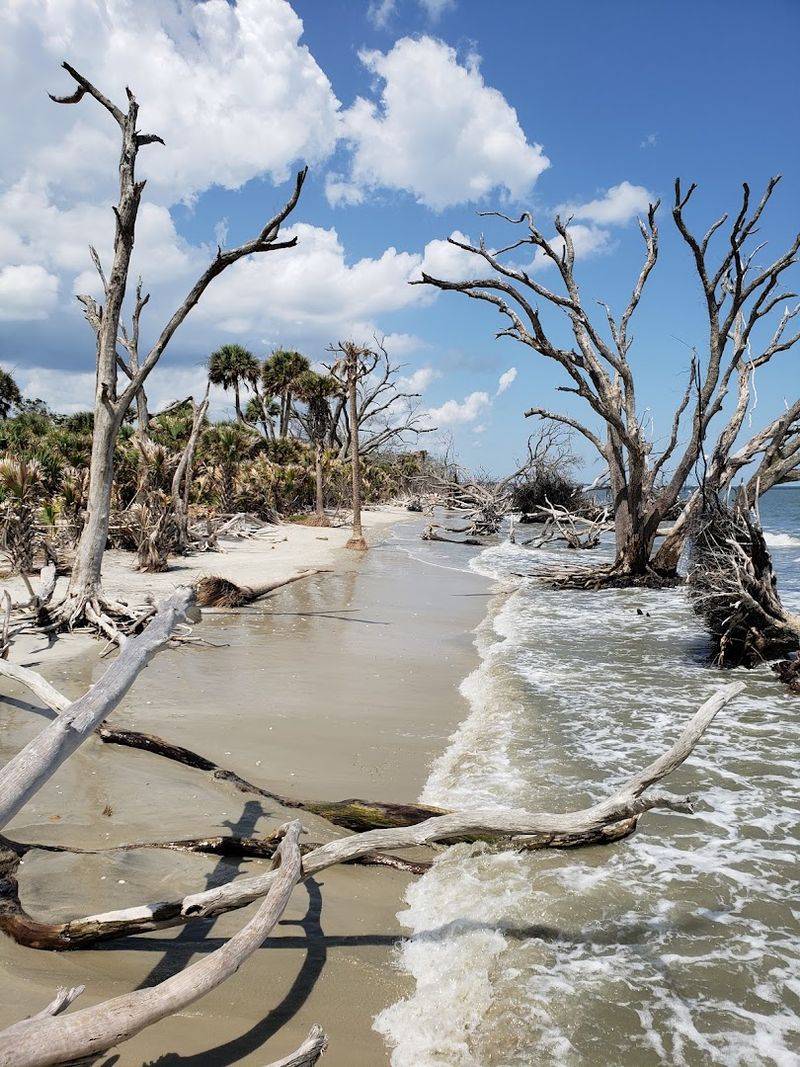
Tide timing at Boneyard Beach is not optional advice, it is essential planning.
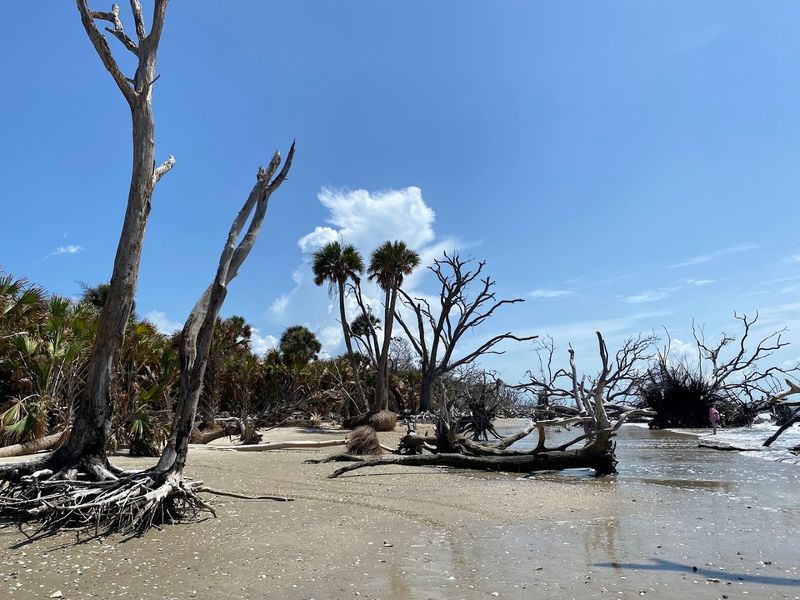
At high tide, the ocean pushes right up to the edge of the palmettos, and much of the dramatic driftwood landscape disappears beneath the water.
You might arrive expecting a vast, sculptural shoreline and instead find a narrow strip of sand with waves lapping at the tree trunks.
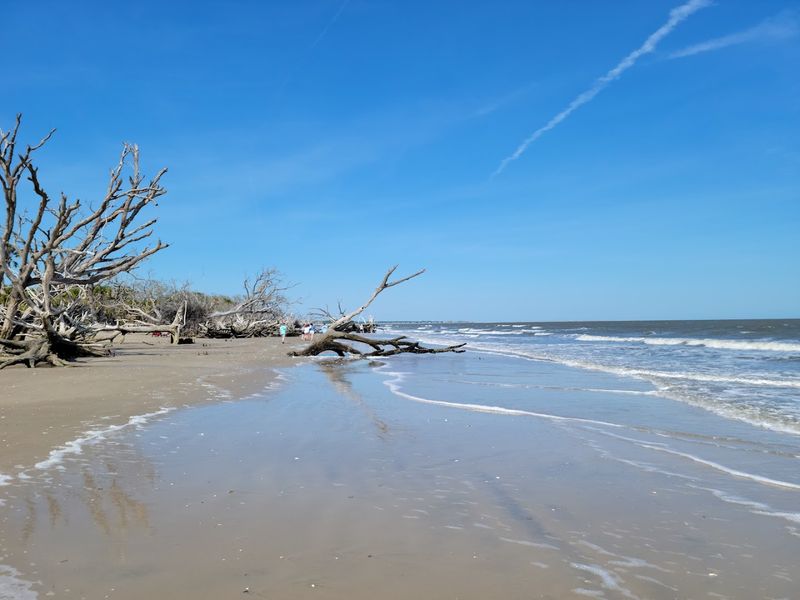
Low tide is when the beach truly reveals itself.
The sand stretches wide and flat, exposing the full spread of root systems, fallen trunks, and tide pools filled with small shells and the occasional shark tooth.
That extra width of exposed shoreline gives you room to wander, explore, and find quiet corners between the larger formations.
Early morning at low tide is genuinely magical.
The light is soft and golden, the crowds are minimal, and the shadows cast by the twisted trees create a moody, cinematic atmosphere that photographers chase specifically for this location.
Late afternoon during golden hour has the same effect.
Check a local tide chart before you leave, and plan to arrive just after low tide so you can watch the water slowly reclaim the sand around you.
It makes the whole experience feel dynamic rather than static.
The Walk In Through Salt Marsh and Shell-Covered Paths
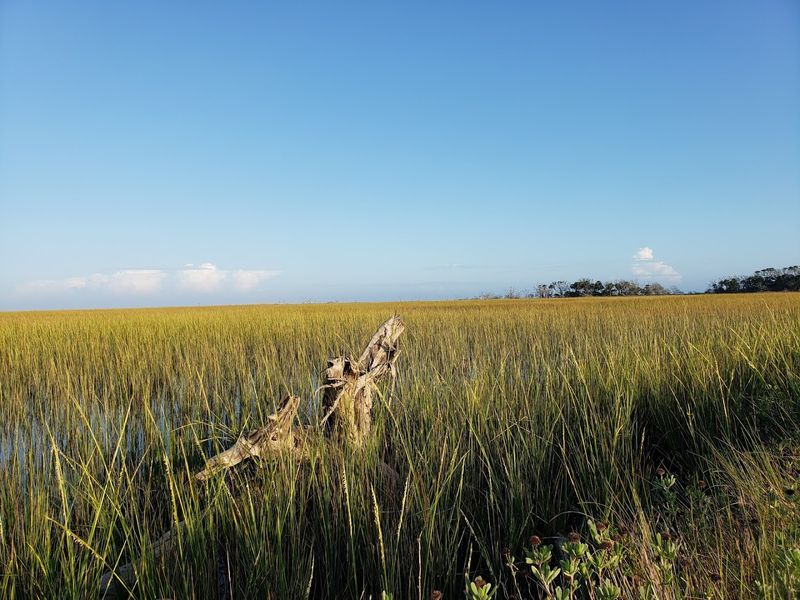
Getting to Boneyard Beach is part of the experience, not just the prelude to it.
After entering through Botany Bay Park and stopping at the kiosk off Botany Bay Road for your day-use pass, you follow a long dirt road through what was once a working plantation.
The landscape shifts as you go, from canopied tree tunnels to open marsh views.
The final stretch to the beach is a half-mile walk along a path covered in crushed shells.
It sounds simple, but the terrain is surprisingly varied.
The shells crunch underfoot, the air thickens with salt, and the marsh on either side fills with bird calls and the occasional rustle of something unseen moving through the reeds.
Wearing shoes that can handle getting wet is genuinely smart advice here.
Parts of the path can be damp, and the step down onto the beach itself is a bit of a scramble depending on the tide level.
Water shoes or old sneakers work perfectly.
Pack water and snacks because there are no facilities on site.
No restrooms, no vendors, nothing but the trail and what you brought with you.
That absence of infrastructure is actually part of what keeps the place feeling so wonderfully off-grid.
The Deep History Buried Beneath the Sand and Saltwater
Edisto Island carries a lot of history in its soil, and Boneyard Beach sits within land that has seen centuries of human story.
The Botany Bay Plantation was once made up of two distinct working plantations called Sea Cloud and Bleak Hall.
Remnants of the old plantation home are still visible within the preserve, adding a layer of historical weight to an already atmospheric place.
Long before colonial settlement, the Edistow people lived along these shores, giving the island its name.
Later, the history of the Gullah people became deeply woven into the fabric of this region.
Gullah culture, rooted in the traditions of West Africans who were enslaved here to cultivate rice, remains a living part of the Lowcountry identity.
Walking through the preserve with that history in mind changes how the landscape feels.
The old oaks draped in Spanish moss, the quiet marsh, the eroding shoreline, all of it becomes part of a longer story about land, time, and endurance.
The beach itself may feel wild and timeless, but the ground beneath it has been touched by centuries of human experience.
That depth makes a visit here feel more meaningful than a typical afternoon at the shore.
Practical Tips to Make Your Boneyard Beach Trip Worthwhile
A few practical things can genuinely make or break a trip to Boneyard Beach.
The preserve is closed on Tuesdays for scheduled hunts, so check that before you drive out.
It is open from thirty minutes before sunrise to thirty minutes after sunset every other day of the week, which means early morning arrivals are absolutely possible and highly rewarding.
Collecting shells, fossils, or driftwood is prohibited, and the fine is steep enough to take seriously.
That rule exists to protect the beach, and it works.
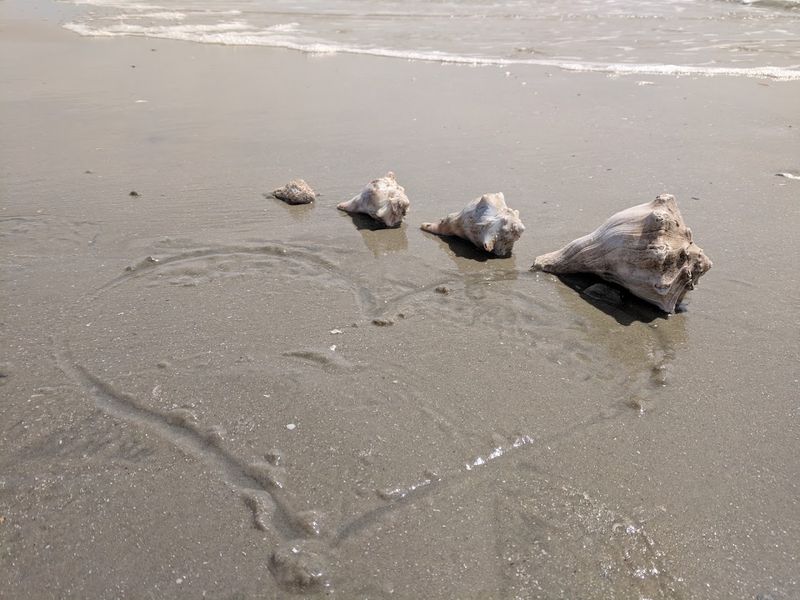
The result is a shoreline that remains strikingly pristine, covered in whole shells and interesting formations that nobody has picked over.
Visitors have taken to decorating the dead tree branches with shells they find nearby, creating informal, ever-changing art installations all along the beach.
Dogs are not allowed on the beach or the causeway leading to it, so plan accordingly if you are traveling with pets.
Bring more water than you think you need, especially in summer when the heat and humidity on the trail can be intense.
Spring and fall offer the most comfortable visiting conditions with lighter foot traffic.
Sunscreen is non-negotiable.
The open beach offers little shade, and the reflected light off the pale sand and bleached wood amplifies the sun considerably.
Address: Botany Bay Road, Edisto Island, South Carolina
