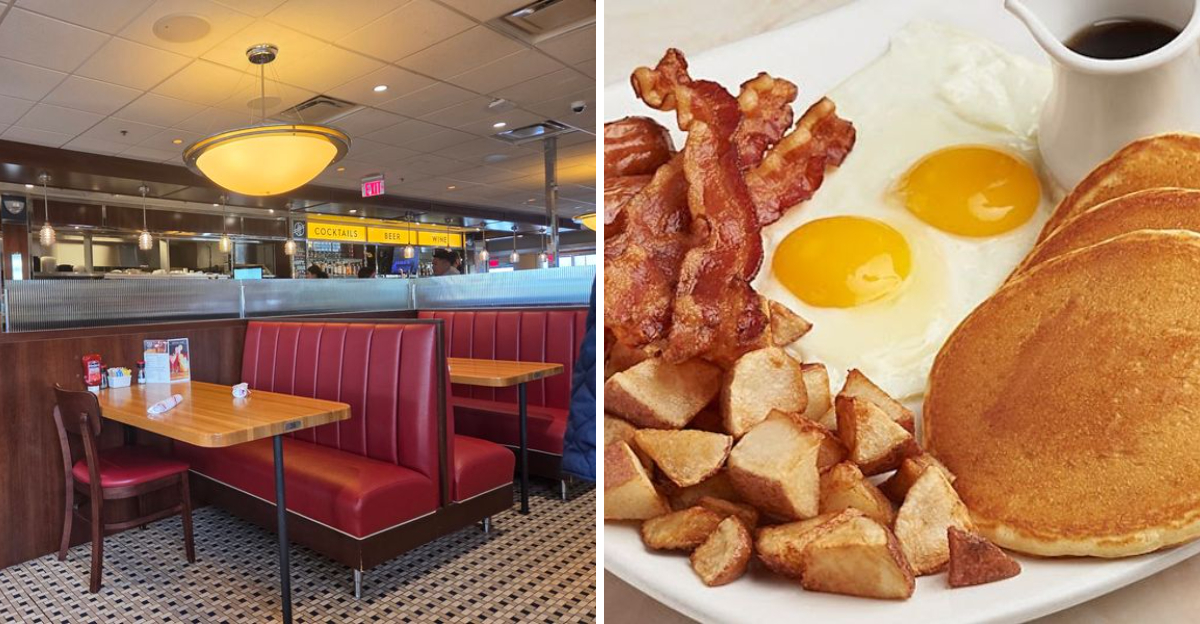
Chrome-and-neon diner nostalgia is fun, but having a menu that moved beyond 1950s expectations is even better.
This Maryland restaurant belongs to a regional diner group built around updated American classics, offering breakfast favorites, burgers, shakes, kids’ meals, healthier choices, and halal-certified meats at this particular location.
The brand has long leaned into classic diner imagery, although this newer location reflects the company’s more modern generation rather than the vintage jukebox setup found at several older restaurants.
That makes it less of a frozen-in-time museum piece and more like somebody gave traditional diner culture a useful update.
For Maryland diners who want pancakes, burgers, and milkshake energy without pretending food trends stopped seventy years ago, the combination works surprisingly well.
The Neon Clock And Glass Block Entrance
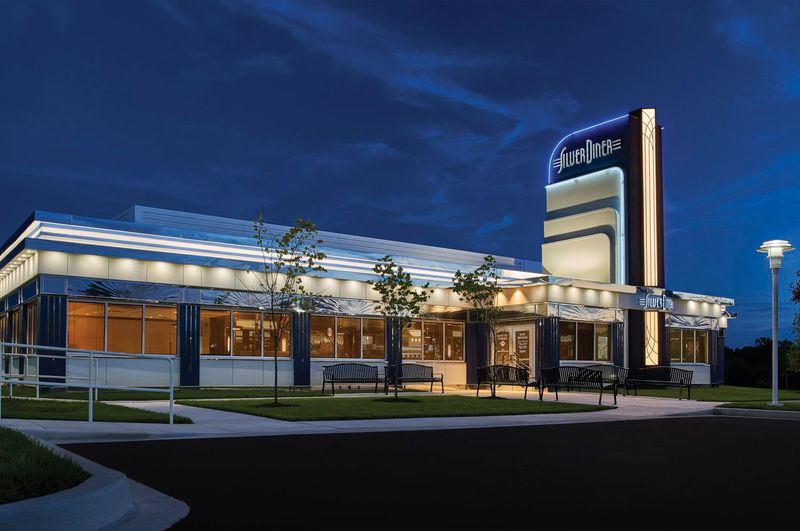
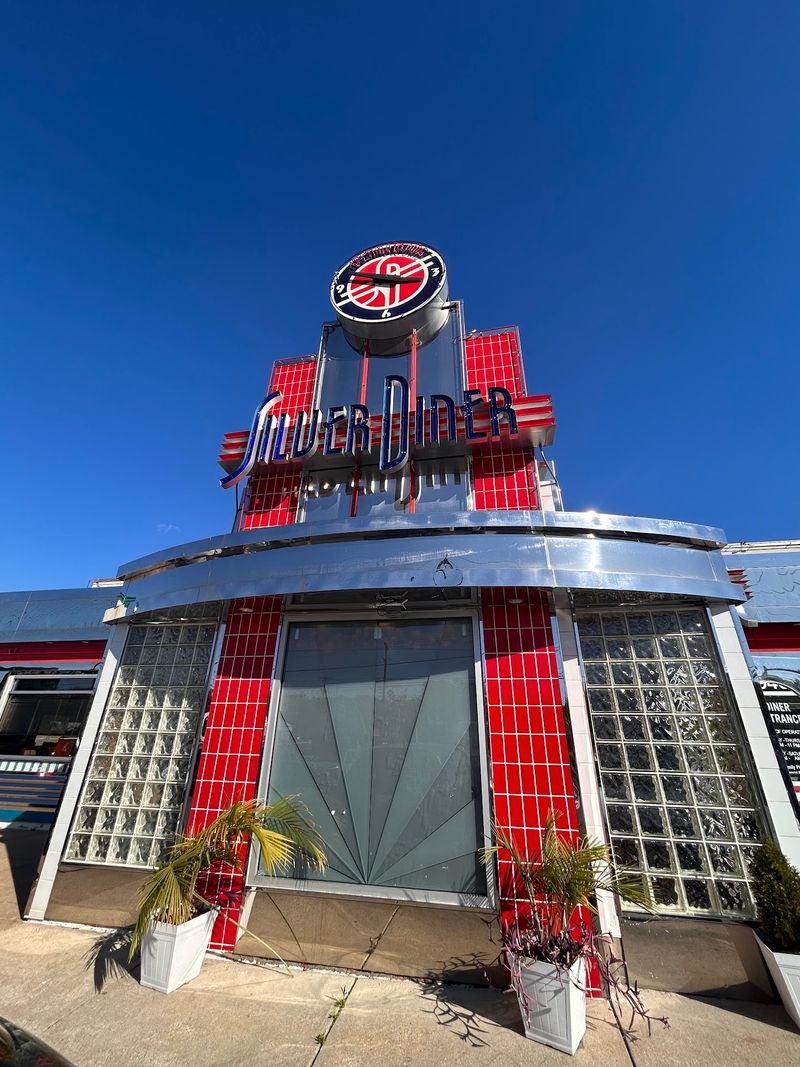
That neon clock is the handshake. Red and blue, humming softly, it sits above the entry like a signal that the ordinary world stops here.
Glass block walls catch the light in a way modern storefronts never manage, scattering it into soft squares across the sidewalk. Stainless steel runs along the edges, polished enough to throw back a warped reflection of anyone walking past.
The design leans on Art Deco lines, which was the language of the golden age of American diners. Curves instead of corners.
Shine instead of matte.
Arriving just before sunset gives the best view, since the neon starts to win against the daylight and the whole facade takes on a warmer glow. Photographers will want that window.
Inside the entry, tile underfoot and marble accents keep the theme going without turning cartoonish. Mahogany trim softens all the metal, and it reads as genuinely designed rather than thrown together from a costume shop catalog.
Parking sits close, which matters on a rainy evening in Lanham. The lot connects easily to the surrounding shopping area, so a meal here folds neatly into a longer afternoon out.
Small detail worth catching: the way the stainless reflects the neon back onto the glass block, doubling the color. It is the kind of thing that only registers once someone slows down enough to look.
Take a minute outside before heading in. The building tells half the story on its own, and rushing past it means missing the setup for everything waiting inside.
Tabletop Jukeboxes Built Into The Booths
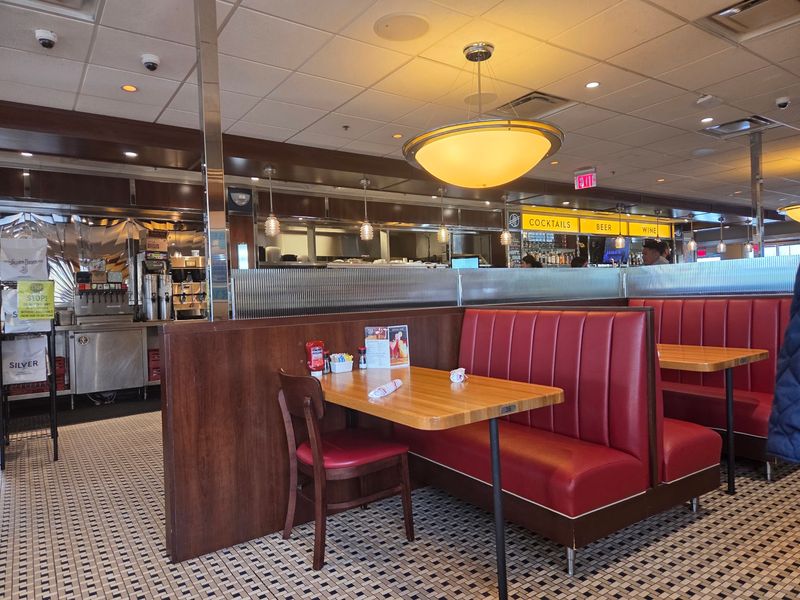
Flipping through the song cards became the unexpected highlight of the visit. The little chrome Seeburg units sit right at the booth, close enough to reach without leaning.
These machines started out spinning vinyl and were later rewired to play CDs, which is a quietly clever bit of engineering. Around two hundred songs live inside each one, and a quarter buys a selection.
They need real upkeep. Parts wear out, mechanisms stick, and keeping them running takes actual attention rather than a switch on a wall.
The song list was not assembled at random either. Diner historian Richard Gutman consulted on the selections, which explains why the mix feels curated instead of generic oldies radio.
Kids tend to be fascinated by them, mostly because a physical music machine at the table is completely foreign now. Watching a seven-year-old figure out the page-flip mechanism is worth the price of a coffee refill.
Bring quarters. Nothing deflates the moment faster than finding the perfect track and having nothing but a debit card.
The music carries just far enough to reach neighboring booths without turning the room into a concert. It layers under conversation rather than competing with it.
There is something grounding about choosing a song deliberately, waiting for it, and hearing it play in a room full of strangers. Streaming gives instant access, but it does not give that shared moment.
Ask for a booth if the jukebox experience matters. Counter seats are fun, but the machines belong to the booths.
Breakfast Served Whenever The Craving Hits
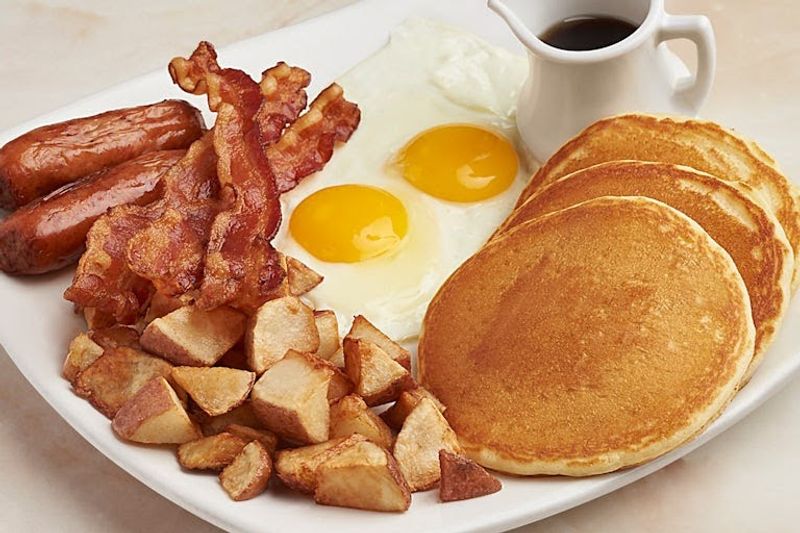
Ordering breakfast at four in the afternoon is one of life’s small freedoms, and it is fully supported here. The morning menu does not clock out.
Caramel French Toast and Eggs shows up often on tables around the room, and it is easy to see why. Sweet and savory on one plate covers most cravings at once.
Belgian waffles arrive with those deep pockets built for holding syrup, crisp at the edges and soft in the middle. Simple execution, done properly.
Omelets run through several variations, including a Western loaded with peppers and a Philly Steak version that borrows from the sandwich world. Both are hearty enough to carry someone through an entire afternoon.
The Lumberjack Breakfast is the big swing. It is named honestly, and anyone ordering it should arrive genuinely hungry.
Coffee refills keep coming, which is exactly what a breakfast plate needs beside it. The mugs are the sturdy kind that hold heat.
Weekend mornings bring more families and a livelier hum, while weekday afternoons stay calmer. Both moods work, depending on what kind of visit is wanted.
Portions run generous, so splitting a sweet plate between two people and adding a savory one is a smart approach. Nobody leaves disappointed, and nobody leaves overwhelmed.
What stands out is the consistency. Diner breakfast lives or dies on whether the eggs are cooked right and the toast arrives warm, and both boxes get checked here without fuss.
Burgers, Clubs And Sandwiches Done The Old Way
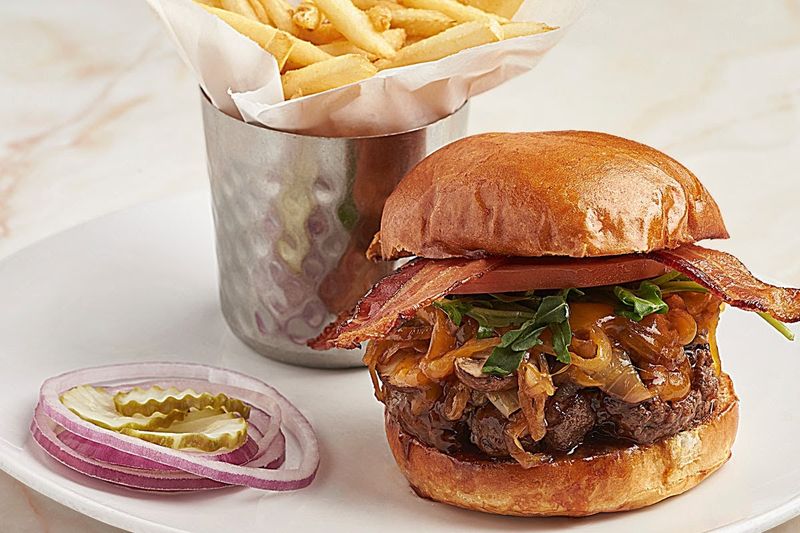
Some foods do not need reinvention, and the Triple Decker Club is proof. Three layers, toothpicks holding it together, cut into neat quarters.
The hamburger sticks to fundamentals. Griddled patty, proper bun, nothing engineered to break a jaw.
Sandwiches make up a solid stretch of the menu, and they land in that reliable middle ground between a quick bite and a full sit-down meal. Lunch here does not require a long commitment.
Fries come alongside and disappear faster than expected, especially when shared. That is the standard trajectory of diner fries everywhere.
What separates the sandwich section from a fast food counter is the plating and the pace. Food arrives on real dishes, at a table, with someone checking in.
The founding idea behind Silver Diner was to sit between drive-through speed and formal restaurant fuss, and the lunch menu is where that philosophy shows most clearly. Fast enough for a work break.
Comfortable enough to stay awhile.
Fresh and local ingredients feed into the kitchen, which lifts familiar items above the expected baseline. A burger is still a burger, but the details register.
Grabbing a counter seat during lunch means watching the kitchen rhythm up close, plates moving, orders called. That view is entertainment on its own.
For anyone dropping in with limited time, the sandwich section is the safest bet. It moves quickly and satisfies without requiring much deliberation over the menu.
Milkshakes Thick Enough To Challenge A Straw
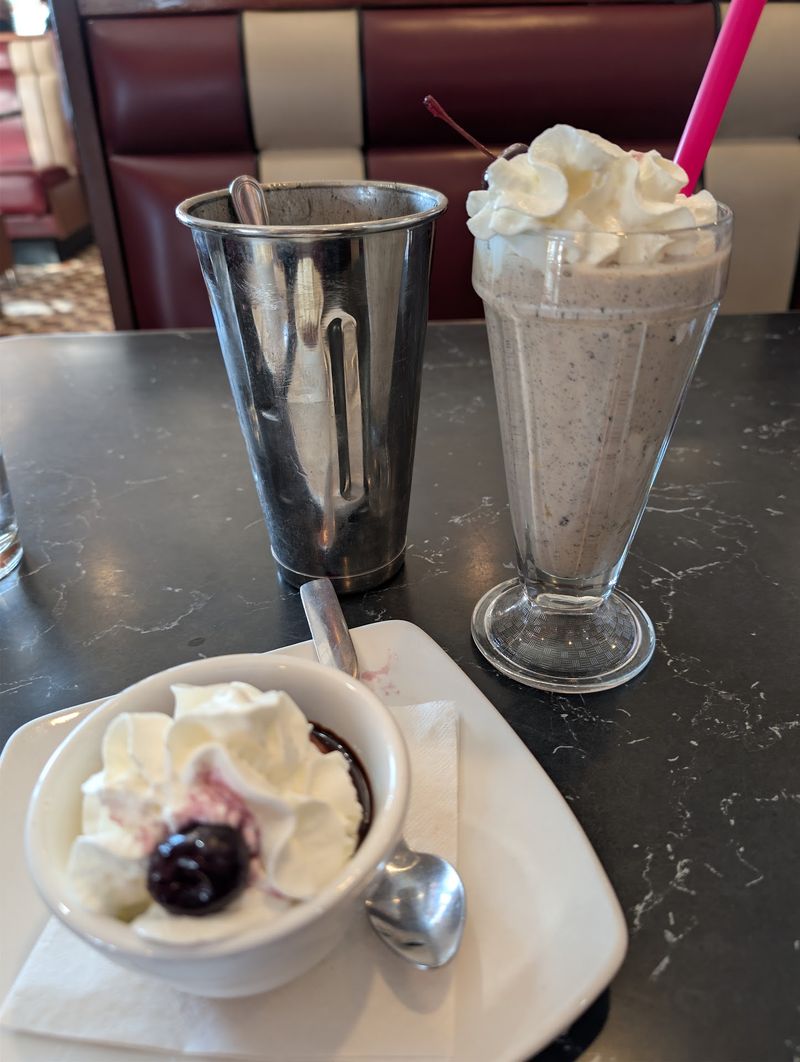
A proper milkshake should put up a fight against the straw, and these do. Thick, cold, unapologetic.
The shake menu is one of those things that turns a regular meal into an occasion, especially for kids who have negotiated their way through vegetables to earn one. Adults order them too, usually with less negotiation.
Served in tall glasses, they pair strangely well with savory food. A burger and a shake is a combination that predates most modern food trends and has outlasted nearly all of them.
Sharing one is possible but rarely successful. Two straws in one glass tends to end in a quiet race.
Timing matters a little. Ordering a shake at the start of the meal means finishing it before the food arrives, so requesting it alongside the main plate works better.
The dessert-adjacent nature of a milkshake makes it a good ending for anyone who cannot commit to a full slice of pie. Sweet enough to close out the meal, light enough to still walk out comfortably.
Colors and flavors vary, and the visual appeal alone explains why they appear in so many photos taken at diner tables.
Pairing a shake with the jukebox playing something from the mid-century catalog is about as close to a time machine as a Maryland strip of road is going to offer. Silly, maybe.
Also genuinely fun.
Skip the shake and the visit feels incomplete. Consider it part of the admission.
Weekday Blue Plate Specials Keep Tradition Alive
Blue Plate Specials are one of those diner customs that mostly vanished, which makes finding them on a weekday menu here feel like a small win. Different day, different dish.
The tradition goes back to the era when a single plate with compartments held a full meal at a set price, served fast and served hot. The name stuck long after the compartmented plates faded away.
Weekdays are when to catch them, so anyone planning a visit around the specials should aim for Monday through Friday.
Rotating dishes mean repeat visitors get variety without the menu changing wholesale. Regulars figure out which day matches their favorite and build a routine around it.
There is something practical about the format. Less deciding, more eating.
The specials also tend to showcase the kitchen’s comfort food range, the sort of dishes that never trend but never disappear either. Home-style plates, prepared with attention.
Executive Chef and co-founder Ype Von Hengst shapes the culinary direction, blending traditional American favorites with the way people eat now. The specials sit right at that intersection.
Asking a server what the day’s plate is takes five seconds and often produces a better meal than scanning the full menu. Local knowledge beats guesswork.
For anyone curious about how diners actually operated decades ago, this is the most direct link on the menu. History served warm, no museum admission required.
Formica, Marble And The Details Nobody Rushes Past
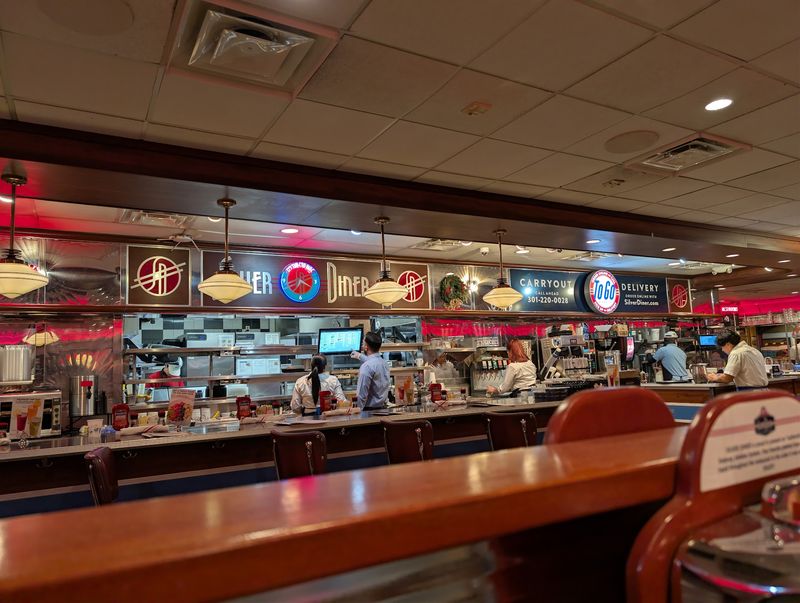
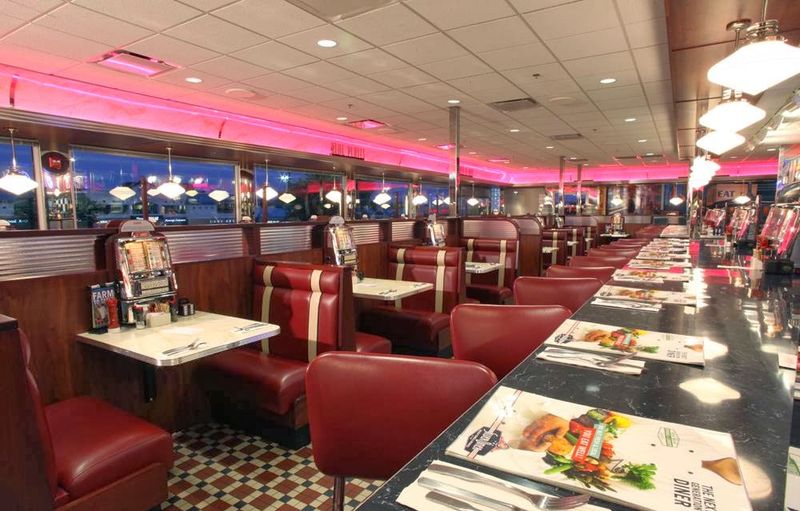
Run a hand along the counter and the material tells you something. Formica, cool and smooth, the surface that defined mid-century American eating.
Marble shows up in places, tile covers the floor, and mahogany warms the whole palette. It is a specific combination, and it was chosen rather than inherited.
The co-founders visited more than five hundred diners across the country before building this concept. That research shows in choices most guests will never consciously notice.
Booth spacing, counter height, the way light bounces off stainless. All of it borrowed from places that got it right decades ago.
Sitting at the counter versus a booth produces two different meals. The counter is social and quick, the booth is private and slow.
Lighting deserves mention. Warm, not harsh, which flatters both the food and everyone eating it.
Design nostalgia can easily tip into theme park territory, and this stops well short of that line. There are no costumed servers or forced catchphrases, just an environment that trusts the materials to do the work.
Arriving during a quieter hour makes the details easier to appreciate, since a packed dining room naturally pulls attention toward people rather than surfaces.
The room ages well because it was never chasing a trend in the first place. Chrome and neon peaked seventy years ago and never really lost their appeal.
Take a slow look around before the food lands. The building rewards attention.
A Neighborhood Table More Than A Restaurant
Look around during a busy stretch and the mix says everything. Families with strollers, older couples sharing a booth, someone alone at the counter with a newspaper.
Silver Diner was built around the idea of a community gathering place, something between fast food and a formal dining room. That intention still holds in the Lanham location.
Kids get their own entree section, which quietly signals who is welcome. Nobody is apologizing for a noisy toddler here.
Service leans toward genuine diner hospitality, meaning coffee gets refilled without asking and nobody hovers to turn the table over.
The location makes it useful for real life. Close to shopping, easy to reach, open across a range of hours that suit shift workers, early risers and late finishers alike.
Groups work well because the menu spans breakfast, lunch and dinner all day. Everyone orders what they actually want.
Solo visits are comfortable too. The counter exists precisely for that, and sitting there never feels like a consolation seat.
What lingers after leaving is not just the food. It is the feeling of a place that functions the way restaurants used to, as somewhere people return to rather than simply visit once.
Bring quarters for the jukebox, order something from the breakfast page regardless of the hour, and give the room a slow look before diving into the meal.
Address: 9151 Ruby Lockhart Blvd, Lanham, MD 20706
