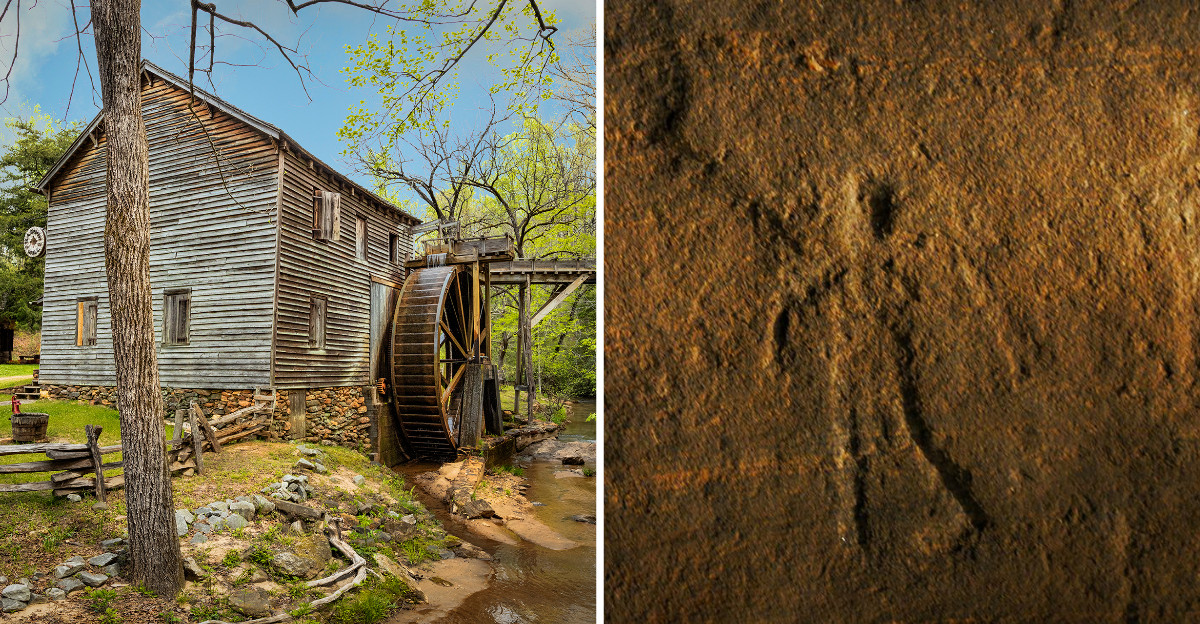
Old mills dot the South Carolina landscape, but few hold a secret buried under a dirt road for nearly two centuries. In South Carolina, a big gray boulder carries stick-like human figures pecked into stone by people who lived here at least 1,000 years ago.
When the lights dimmed and those faint shapes glowed on the rock, I honestly forgot to breathe for a second. One volunteer spotted the carvings on a rainy January day in 2003, and digging beneath the old road revealed even more figures that had been kept safe the whole time.
The carvings remained hidden for generations, covered by the road and forgotten by nearly everyone. Now visitors can see them glow under special light, and the effect is haunting.
Outside, a waterwheel creaks, chickens wander the yard, and grits are ground right on site. History here feels close enough to touch.
This is the kind of place you tell your friends about on the drive home.
A Rainy Day Find That Changed Everything
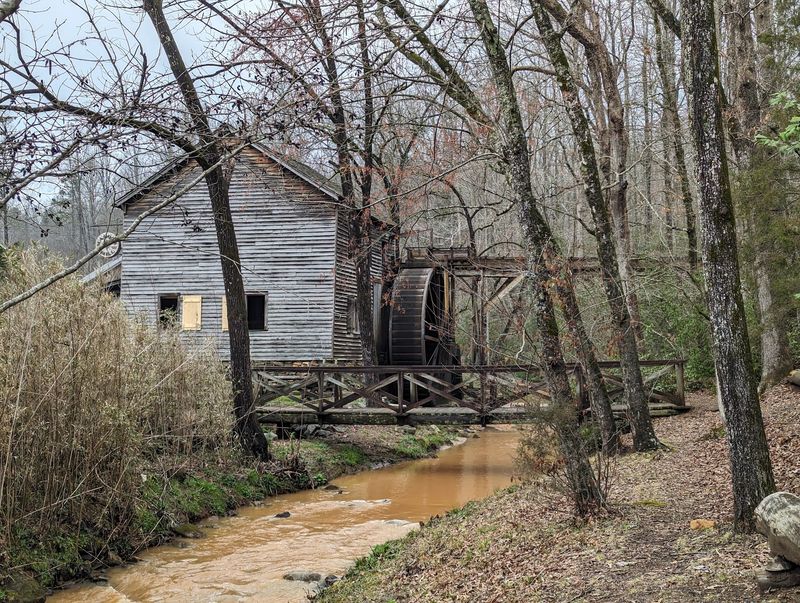
Rain usually sends people indoors, yet a soggy January day in 2003 turned out to be lucky for South Carolina history. Michael Bramlett, a volunteer with the South Carolina Petroglyph Survey, noticed carvings on a rock near the mill.
Wet stone shows shallow marks much better than dry stone, which helps explain why the timing mattered.
I love thinking about how close this discovery came to never happening. The boulder had been sitting beside a busy historic site for ages, and plenty of feet must have walked right past it.
Sometimes the most amazing things are hiding in plain sight, just waiting for the right weather and the right pair of eyes.
After that first spotting, experts took the find seriously. University of South Carolina archaeologist Tommy Charles and his team came out to study the rock.
Their work showed that this was no small scribble, but one of the most important rock art sites in the whole state.
Here is a helpful tip if you visit on a gray day. Do not cancel your trip because of drizzle.
Wet weather has a special connection to this story, and the mill grounds look extra green and moody when clouds roll in over the hills.
Nearly Two Centuries Under a Dirt Road
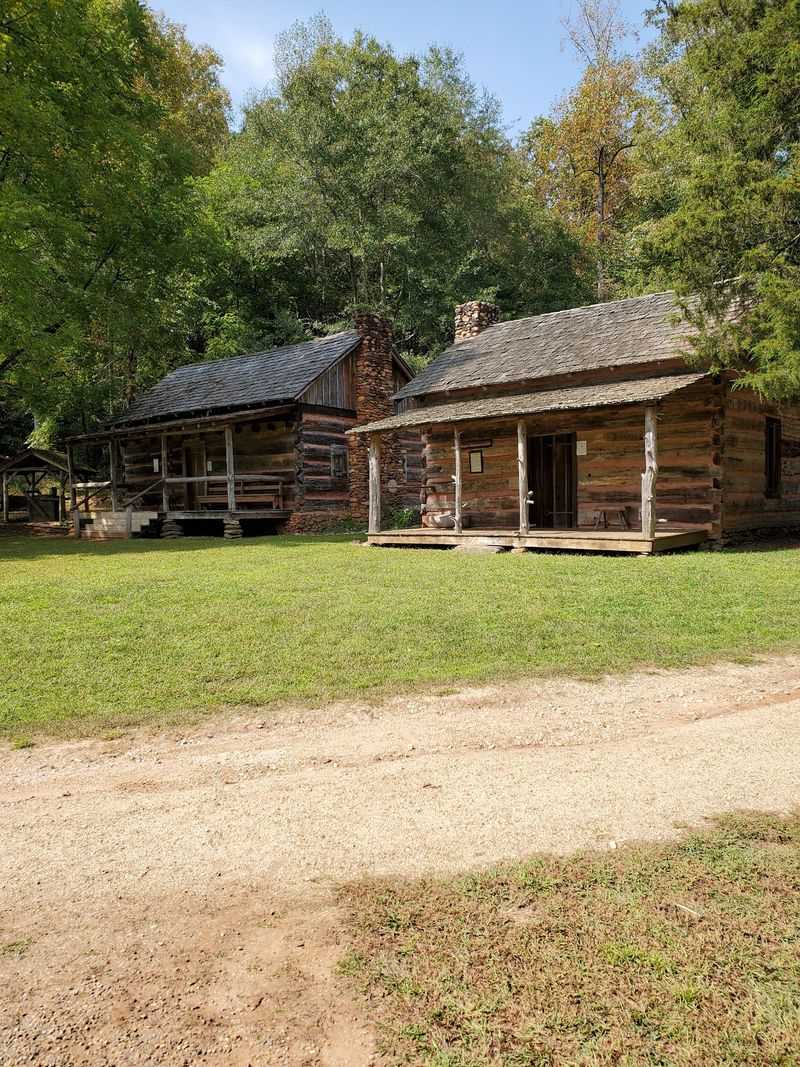
Picture wagons rolling over a hidden art gallery every single day. Back in the 1820s, a dirt road was built here as the first public route linking Pickens, South Carolina, to Rosman, North Carolina.
Part of the carved rock ended up buried right underneath it.
For close to two hundred years, travelers had no clue what lay under their wheels. Farmers hauling corn to the mill, families heading north, and neighbors visiting each other all passed over ancient figures.
I find that thought a little funny and a little magical at the same time.
The road actually did these carvings a big favor. Soil and dirt acted like a protective blanket, shielding the stone from rain, wind, and freezing weather.
Figures found under the roadbed were in better shape than the ones left out in the open air.
There is another clever clue hidden in this story. Since the carvings sat beneath a road built in the 1820s, they had to be older than that road.
This simple fact helped experts confirm the art was made long before settlers arrived.
Next time you drive down an old country lane, you might wonder what secrets sit just a few inches below.
Meet Refrigerator Man and His Stone Companions
Thirty-two. That is the number of distinct carvings experts have counted on this rock, and around 17 or 18 of them are human figures.
Most look like simple stick people, and many appear to be male forms.
My favorite one has a big rectangular body with a little head and legs sticking out. People nicknamed him Refrigerator Man, and once you see him, you will never unsee it.
It made me laugh out loud, which felt oddly fitting for something so old.
Not every carving is a person. You can also spot abstract designs, a mark that looks like a deer track, and a small round dip called a cupule.
Nobody knows for sure what each symbol meant to the people who made them.
Two marks on the rock are much newer. A name and some initials were scratched in during historic times, while the ancient figures were pecked.
Comparing the two styles is a fun way to train your eyes.
Bring kids along and turn the visit into a game. Ask them to count the figures or give their own nicknames to the shapes.
They will remember it far longer than any textbook page.
Stone Tools and a Thousand Years of Patience
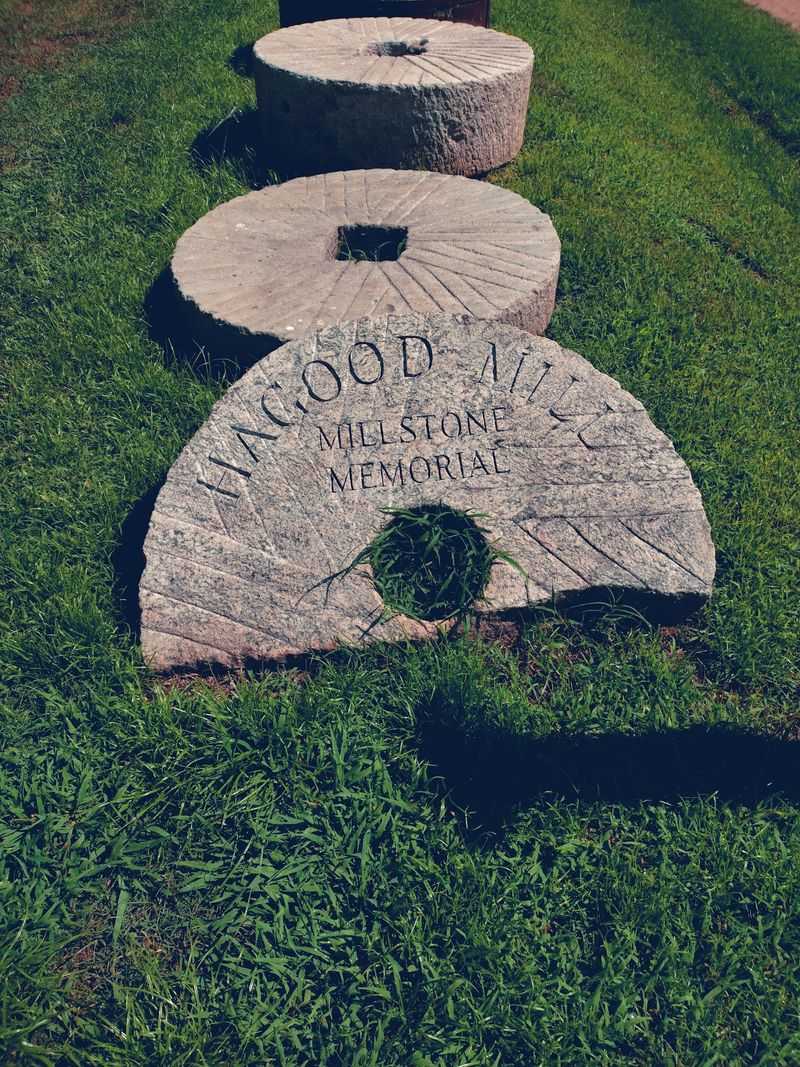
Grab a rock, then try tapping a tiny dot into another rock. That is roughly how these carvings were made, using a method called pecking.
Experts believe the artists used stone tools, striking the surface over and over to create each line.
When I thought about the time this took, my respect grew fast. Each stick figure needed hundreds of careful taps, and one wrong move could not be erased.
Whoever made them had serious patience and a clear purpose.
Experts estimate the petroglyphs are at least 1,000 years old. The pecking style itself supports this prehistoric origin, since it matches how Native American people created rock art across the region.
Historic scratches on the same rock look completely different.
We may never learn the exact reason behind each image. They could have marked stories, ceremonies, or important places.
Guessing is part of the fun, though it is good to stay respectful of the people and cultures connected to this land.
A small piece of advice for curious minds is to look at the edges of the lines up close. You can see the tiny dents left behind by each strike, like fingerprints from a long-ago hand.
Night Lights That Reveal Hidden Figures
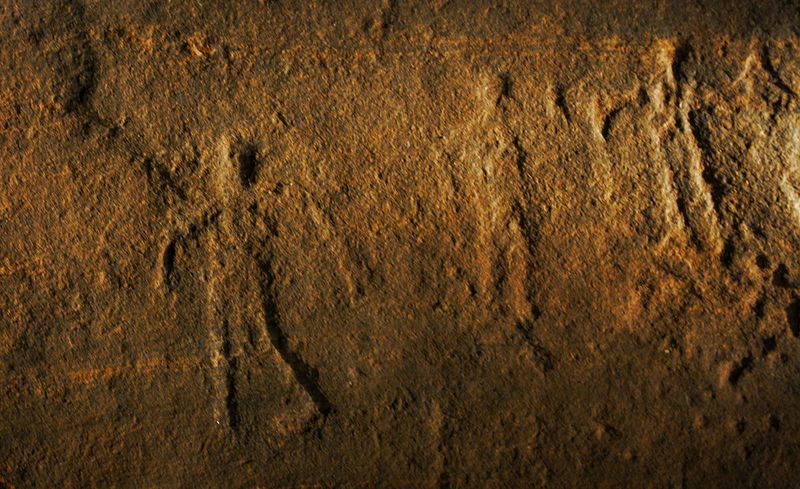
Some secrets only show up after dark. When Tommy Charles and his team studied the rock, they used side-scanning lights at night.
Light shining low across the stone creates tiny shadows inside the carved grooves.
That trick uncovered glyphs nobody could see in daylight. Bright sun flattens everything out, so faint lines simply vanish.
At night, with the right angle, the hidden figures suddenly popped into view.
Later, the team dug into the part of the rock that had been covered by the old road. More human figures were waiting there, adding to the growing count.
I imagine that moment of brushing away dirt must have felt like opening a birthday present.
You can try a mini version of this at home. Shine a flashlight sideways across an old coin, a carved tree trunk, or a worn gravestone, and watch details appear.
It is a simple science lesson about light and shadow.
Knowing this method makes the visit much more meaningful. When you watch the light show inside the viewing room, you are seeing the same idea the archaeologists used.
Suddenly the whole experience feels like you are part of the investigation.
A Room Built Right Over the Rock
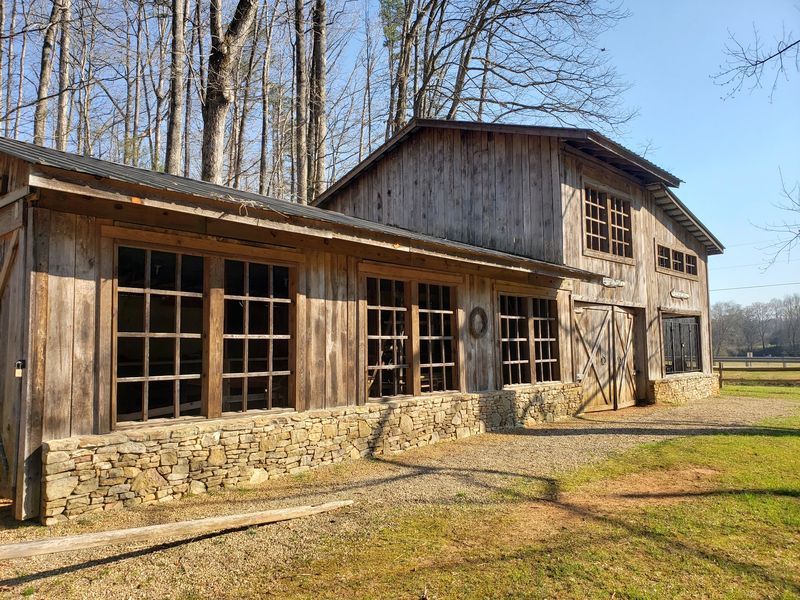
Instead of hauling the boulder off to a big city museum, folks decided to bring the museum to the boulder. A two-room building was constructed directly over the petroglyphs, protecting them right where they were found.
That center opened to the public in 2015.
Inside, the viewing room stays climate-controlled to keep the stone safe. An elevated walkway lets you look down at the rock, and it is wheelchair accessible too.
I appreciated how close you can get without ever touching anything.
The best part is the automated light show. You press a button, the room dims, and spotlights move across the carvings one by one.
Dr. Tommy Charles narrates the story, so you hear from the person who helped study the site.
Here is why this matters. Hagood Mill holds the only protected prehistoric rock art site in South Carolina that is open to the public.
Plenty of rock art around the state is hidden away on private land or in remote spots.
Give yourself time to watch the whole show without rushing. Then stay a minute after it ends and let your eyes adjust.
You might catch a figure you missed.
Waterwheels, Grits, and Third Saturdays
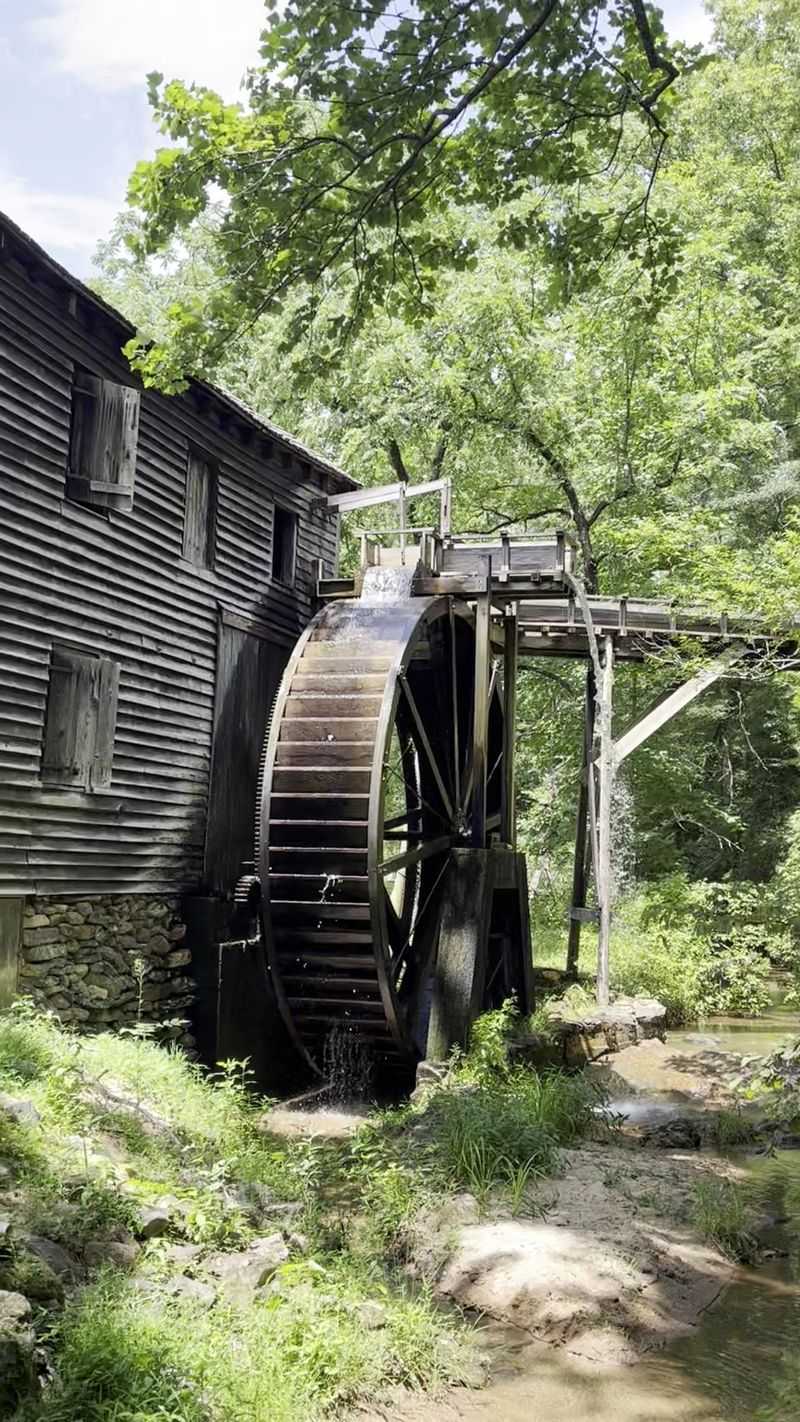
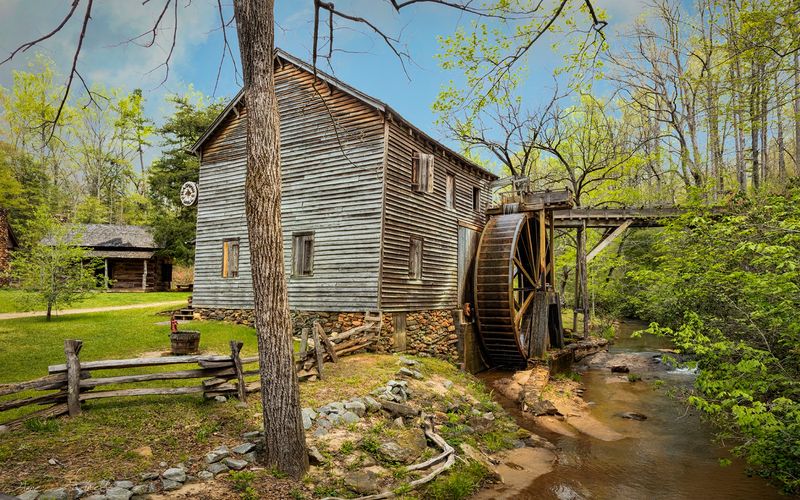
After all that ancient history, the soft creak of a 20-foot waterwheel brings you right back to the 1800s. The restored grist mill dates to 1845 and sits at the heart of a site listed on the National Register of Historic Places.
You can climb inside and see the belts and gears that once powered daily life.
Around the grounds, old log cabins, a blacksmith shop, and a barn tell more stories. Chickens peck in the yard, and walking trails wind through the trees.
I could have sat by the creek all afternoon just listening to the water.
Do not leave without visiting the store. Stone-ground grits and cornmeal milled right here make a tasty souvenir that lasts beyond the trip home.
Timing helps a lot. The site is open Wednesday through Saturday from 10 AM to 4 PM, and admission is usually free.
Third Saturday events bring demonstrations, music, and craftspeople, so plan for one if you want the full experience.
Wear sturdy shoes, since paths are dirt and gravel. Pack water and bug spray on warm days, too.
Address: 138 Hagood Mill Rd, Pickens, SC 29671
