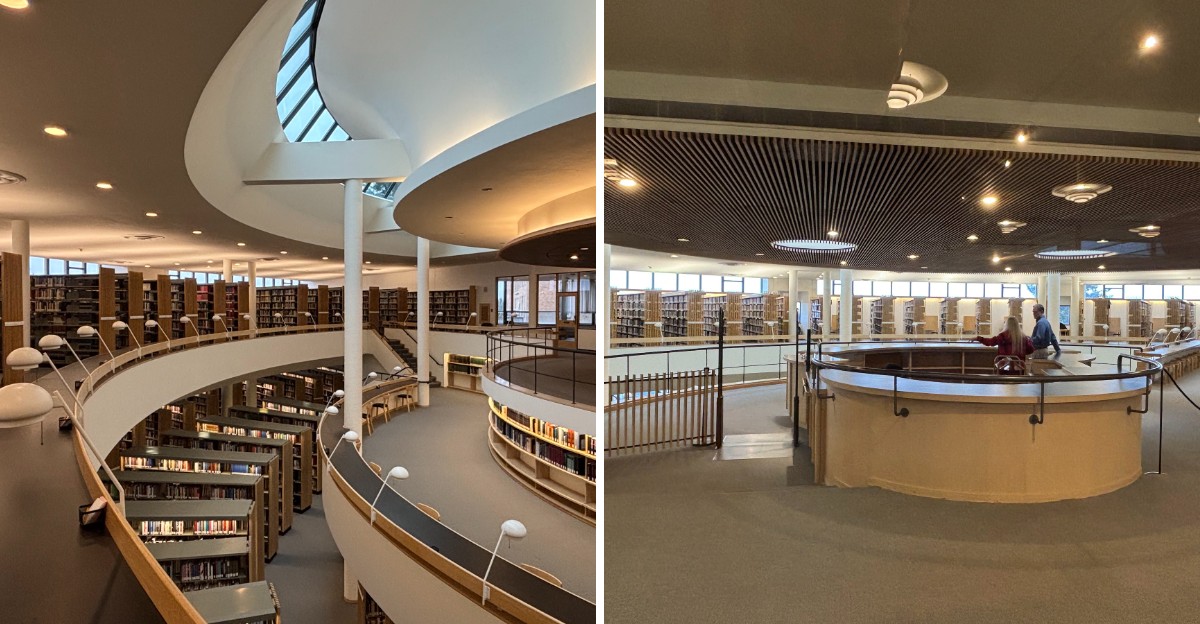
Most libraries ask for a quiet voice. This one earns it, because the architecture alone makes people stop mid-step and forget what book they came for.
A famous European architect shaped the design, and the result feels more like a work of art than a place to check out novels. Anyone wandering through Oregon expecting only forests and coastline tends to be surprised by how much global design sits tucked on a hilltop.
Great buildings do more than hold things, they shape the mood of everyone inside. Readers settle in, sketchers pull out notebooks, and curious travelers walk slowly with their heads tilted back.
Bring a book or just bring your curiosity, and give yourself time to linger. A visit here proves that Oregon can surprise you in the most peaceful way possible.
A Finnish Legend on an Oregon Hilltop
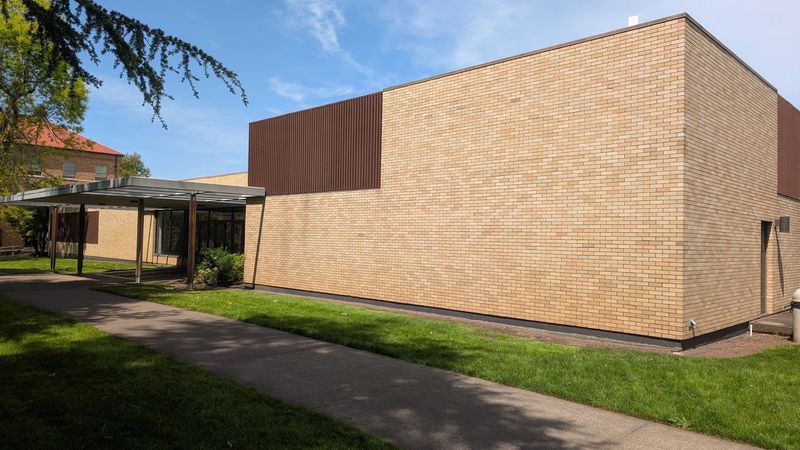
Alvar Aalto is a big deal. Architecture students across the globe study his work, and Finland once printed his face on its money. So it still surprises me that one of his very few buildings in the United States sits in a small Oregon community surrounded by hazelnut orchards and fields.
The Benedictine monks of Mount Angel reached out to Aalto in the 1960s because they wanted a library that felt both modern and thoughtful. He agreed, and the building opened in 1970. Aalto never visited the site in person.
From the outside, the library looks modest, almost shy. The pale brick front doesn’t shout for attention. That quiet first impression is part of the fun, because the inside opens up in a way you won’t see coming.
Tip for visitors: give yourself time here. Rushing through an Aalto building is a bit like speed reading a poem. You technically finish, but you miss everything that matters.
Light Pouring Down From Above
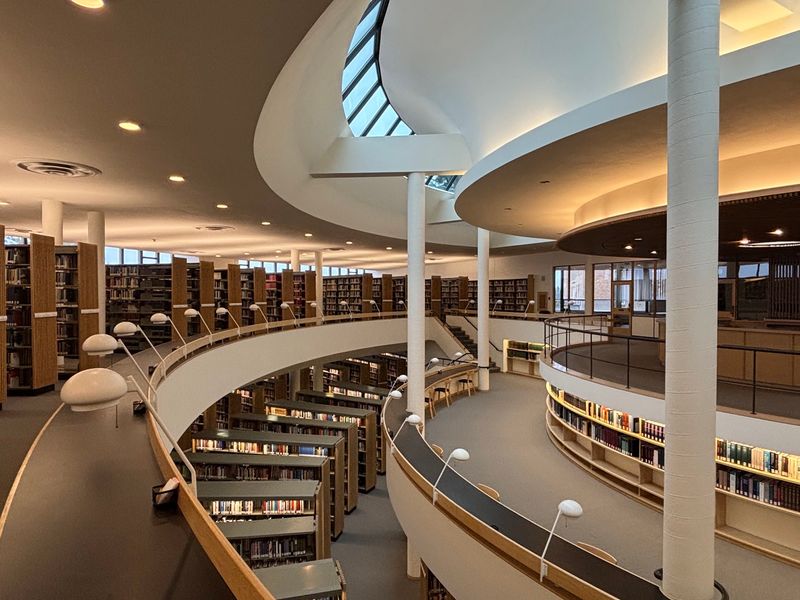
Look up. Seriously, that’s the best first move once you step through the doors. A huge curved skylight stretches over the main hall, and on a cloudy Oregon day it still fills the room with a soft, even glow.
Aalto was famous for working with northern light, the kind he grew up with in Finland. He knew that harsh sunbeams can tire your eyes and fade old book spines. So he shaped the ceiling to bounce daylight around gently, letting it spill across white walls before it ever reaches a page.
I found myself watching the light shift as clouds moved overhead. One minute the room looked silvery and cool. A few minutes later, it turned warm and golden, like someone had slowly turned up a dimmer switch.
Photographers will love this space, though flash is a bad idea in a working library. Natural light does all the heavy lifting anyway. Try visiting at different times of day if you live nearby, since morning and afternoon give the hall surprisingly different moods.
A Reading Room Shaped Like an Open Fan
Picture a hand-held fan spread wide open. That’s basically the floor plan of the main hall, and once you notice it, you can’t stop seeing it.
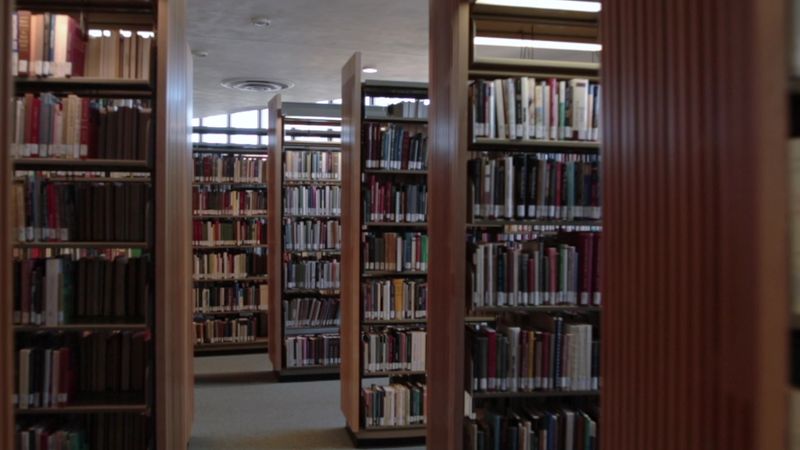
Bookshelves curve outward in rows that radiate from a central desk, much like spokes on a wheel. The design wasn’t just for looks. From the middle of the room, a librarian could see down nearly every aisle at once, which made helping visitors and keeping an eye on precious books much easier.
The levels also step down, so the room feels like a gentle amphitheater made of books. Wandering the curved rows is oddly relaxing. There are no harsh corners to bump into, and the shelves seem to guide your feet without you thinking about it.
Kids and grown-ups alike tend to enjoy tracing the curves from different spots. Head to the upper edge for the full overhead view, then drop down to the lower level to feel how cozy the space becomes. It’s a small lesson in how shape can change the way a room makes you feel.
Silence You Can Actually Hear
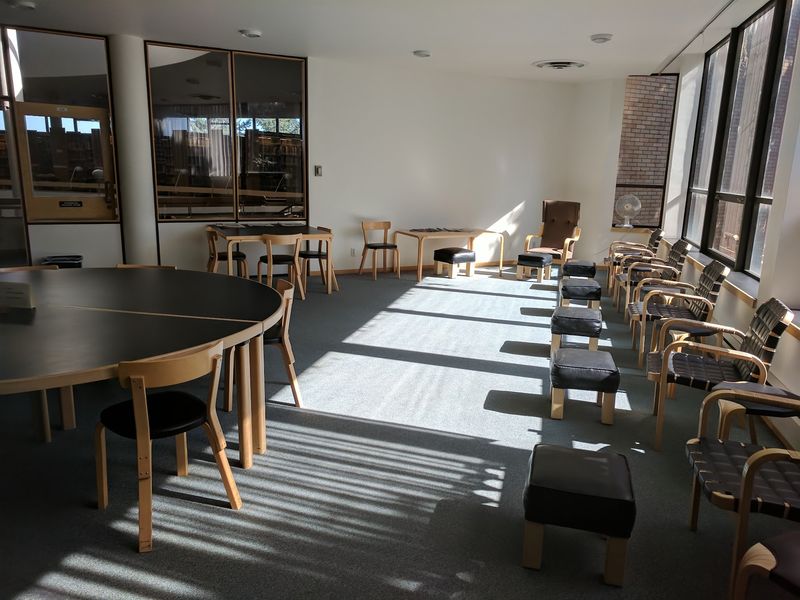
Most libraries are quiet. This one is something else entirely. The moment the door closed behind me, the outside world just sort of melted away.
Part of that calm comes from the building itself. Aalto used curved surfaces and careful materials that soften sound, so footsteps and whispers don’t echo around the room. The other part comes from the monks, whose daily rhythm of prayer and work sets a peaceful tone for the whole hilltop.
Plenty of visitors come here simply to read or study. Grab a seat at one of the desks, open a book, and notice how quickly your thoughts slow down. Students working on big projects often say they get more done here in an afternoon than in a whole week at home.
A few friendly tips help keep the peace. Silence your phone before entering. Keep conversations low, and save the excited chatter for the walk outside.
Respecting the hush isn’t just polite. It’s the secret ingredient that makes this place so special to everyone who walks in.
Treasures Hidden in the Rare Book Collection

Old books have a smell. Anyone who has opened a really ancient volume knows that sweet, dusty scent, and it’s one of my favorite little joys in life.
The abbey library protects an impressive special collections area filled with rare treasures. You’ll find medieval manuscripts written by hand on parchment, early printed books, and old Bibles that are centuries old.
The collection also includes a surprising set of materials related to the American Civil War. Nobody expects that at a monastery in Oregon. It’s a fun reminder that libraries often hold stories far beyond their main subject.
Here’s the practical part. Rare items aren’t usually sitting out for anyone to flip through, since they need careful handling. Watch for small exhibits that the library sometimes puts on display, or contact the staff ahead of time if you have a serious research interest.
Asking politely goes a long way, and the librarians clearly love sharing what they protect.
Shelves Packed With Theology and Big Ideas
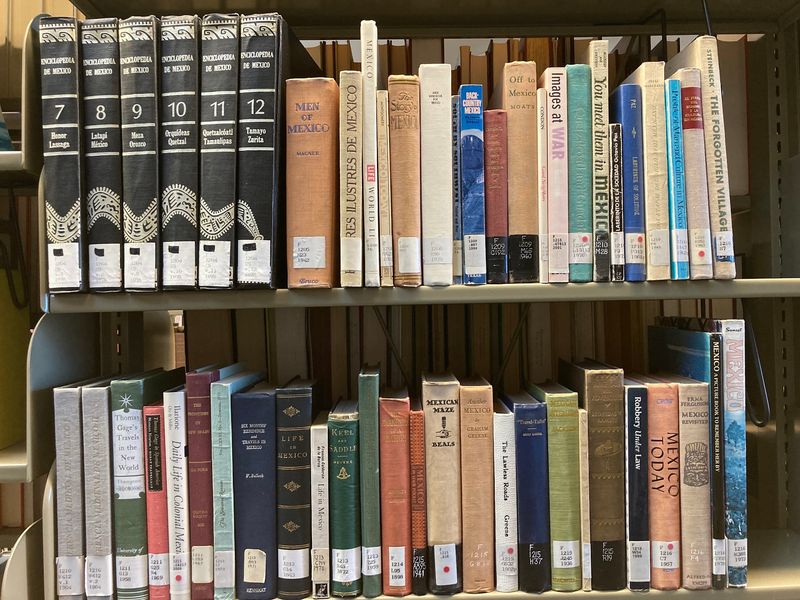
Curious about the biggest questions humans have ever asked? These shelves are ready for you. The library is known as one of the strongest theology collections in the Pacific Northwest, and it serves the seminary students who study on the abbey grounds.
Philosophy, church history, classic spiritual writing, and religious art all have a home here. Many older classics sit next to newer books, so you can trace an idea across hundreds of years just by walking a few steps. It’s like a conversation between writers who never met.
Even if theology isn’t your usual reading, browsing can be eye-opening. Pick a random spine, read the first page, and see where it takes you. Sometimes the best discoveries are the ones you weren’t looking for.
Frequent readers in the area may want to ask about getting a library card, which lets you borrow from the collection. The staff can explain how it works and point you to the right section. That kind of personal help feels rare these days, and it makes browsing far less overwhelming.
Little Aalto Touches Worth Spotting
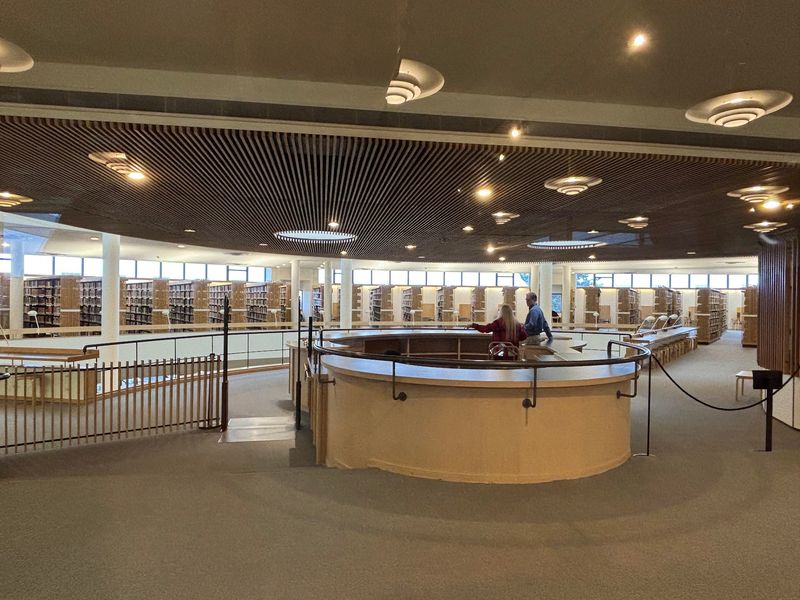
Here’s a fun game. Try finding every detail that looks handmade with care, and you’ll soon realize almost everything counts.
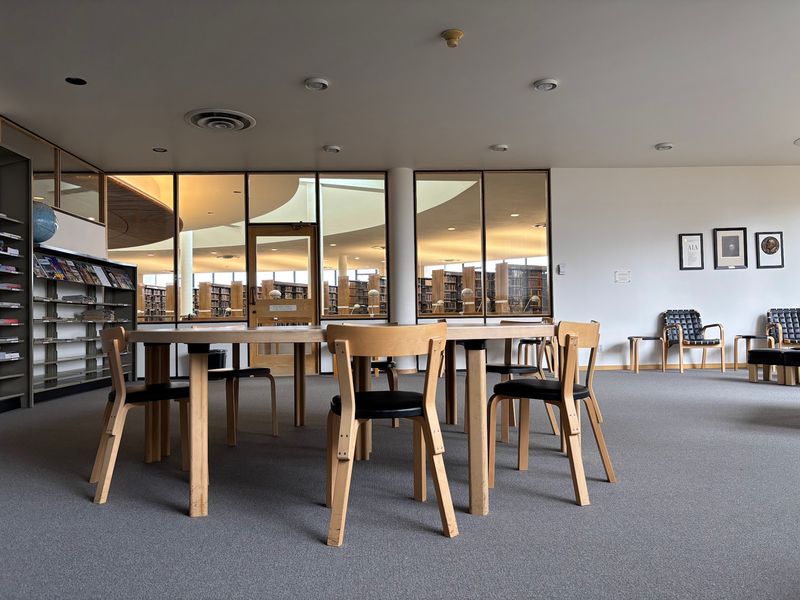
Aalto didn’t just design walls and roofs. He often designed the furniture, lamps, and door handles too, because he believed every part of a building should work together like a team. Look for smooth curved wood, rounded edges, and simple chairs that seem built to fit the human body comfortably.
Light fixtures deserve a close look as well. Their shapes help spread a gentle glow instead of creating glare on the pages below. Even the railings along the upper levels curve in friendly ways that invite you to rest a hand on them.
Fun fact for design fans. Aalto’s bent wood furniture became so popular that versions of his chairs and stools are still made today and sold around the world. Seeing them used in a real, working library, exactly as intended, feels a bit like spotting a famous painting hanging in someone’s living room.
Views That Stretch to the Cascades
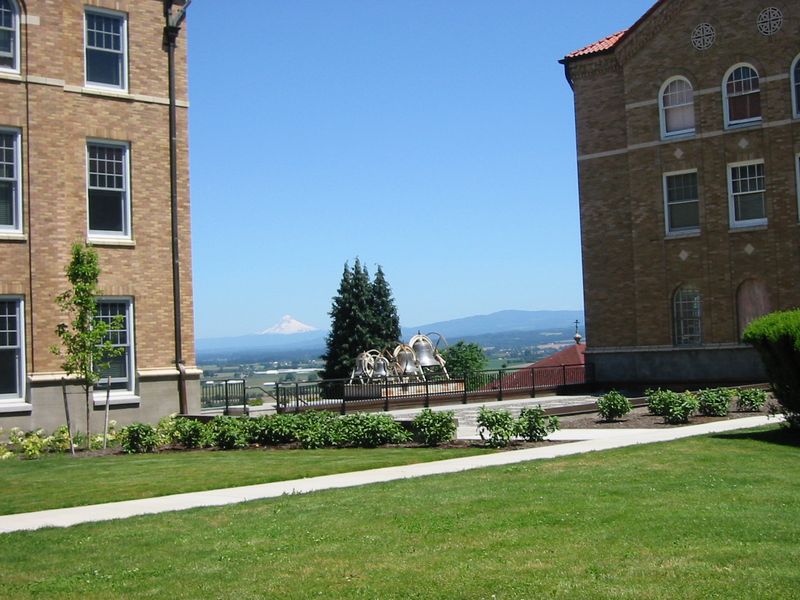
Step outside after your library visit and get ready to stop in your tracks. The abbey sits on a hilltop roughly 300 feet above the Willamette Valley, and the view is wide enough to make you feel tiny in the best way.
Patchwork farm fields roll out in every direction, changing colors with the seasons. Spring brings bright green. Late summer turns everything gold, and autumn mixes in rusty orange from the trees.
On a clear day, look east toward the Cascade Range. Snowy peaks, including Mount Hood, sometimes rise above the horizon like they’re floating. I may have taken far too many photos here, and I regret none of them.
Bring a light jacket, because hilltop breezes can feel cooler than the valley below. Benches and grassy spots around the grounds make lovely places to sit and soak it all in. Pairing quiet reading time indoors with a slow walk outdoors is the perfect rhythm for this visit.
Monks, Bells, and Evening Vespers
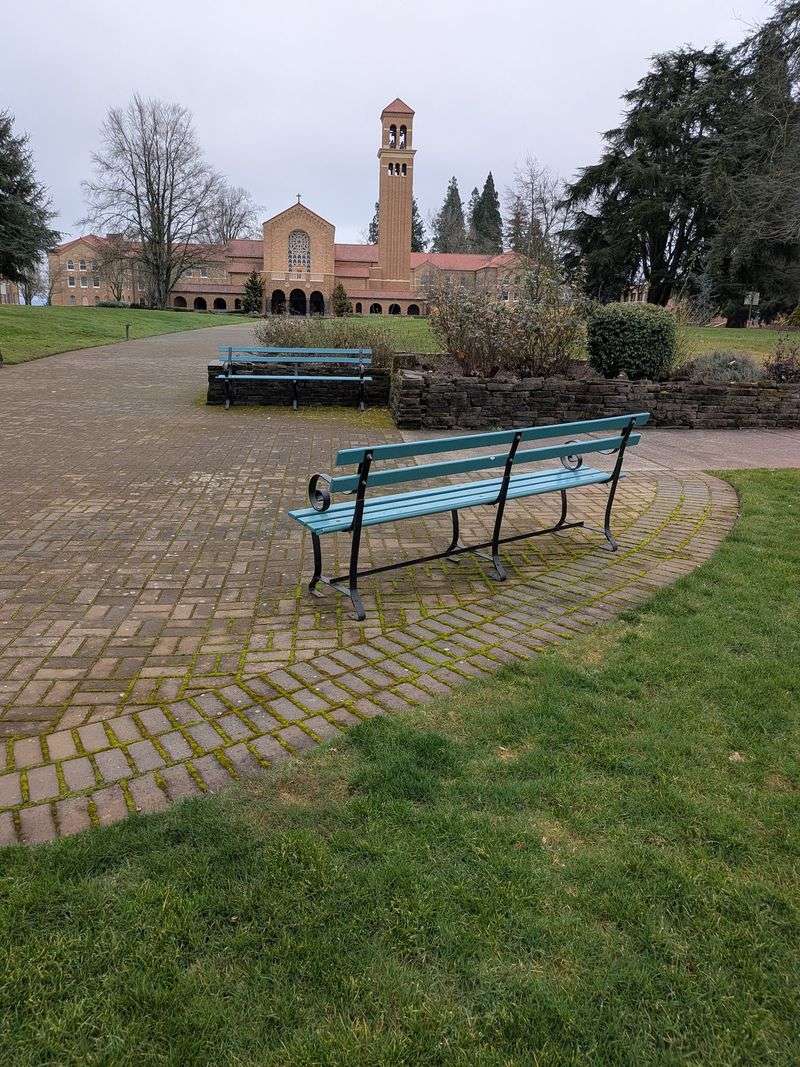
Bells ring across the hilltop several times a day, and the sound carries surprisingly far. That’s the monks calling each other to prayer, a tradition stretching back centuries.
Mount Angel Abbey was founded in 1882 by Benedictine monks who traveled all the way from Engelberg Abbey in Switzerland. Today, monks still live, work, and pray here, following a daily schedule that guides life on the grounds. The library is just one part of that bigger community.
Visitors are often welcome to attend prayers in the abbey church. Evening Vespers, a service of chanted psalms, is a memorable experience even if you aren’t religious. The singing is calm and steady, almost like the building itself is breathing.
Check the abbey’s schedule before you go, since times can change. Sit quietly toward the back, follow along if you’d like, or simply listen. Pairing a library afternoon with Vespers ties the whole visit together beautifully.
You’ll leave understanding why this hilltop feels so peaceful, because the calm isn’t decoration but part of daily life here.
Planning a Smooth Visit to the Abbey
Timing matters most here. The library is open Monday through Friday from 9 AM to 4:30 PM and closed on weekends, so plan a weekday trip if seeing the inside is your main goal.
Weekday mornings tend to feel especially calm. Arriving early also leaves time to explore the rest of the grounds afterward.
Don’t skip the abbey museum on site. It holds a quirky mix of natural history items, including Ice Age fossils, plus religious art and objects from around the world. Kids usually love it, and adults end up just as curious.
Wear comfortable shoes, since the hilltop has slopes and paths worth wandering. Dress respectfully, keep your voice low indoors, and enjoy the slower pace.
You’ll find this peaceful spot at Mount Angel Abbey Library, 1 Abbey Dr, St Benedict, OR 97373, a short drive from Salem and well worth the climb up the hill.
