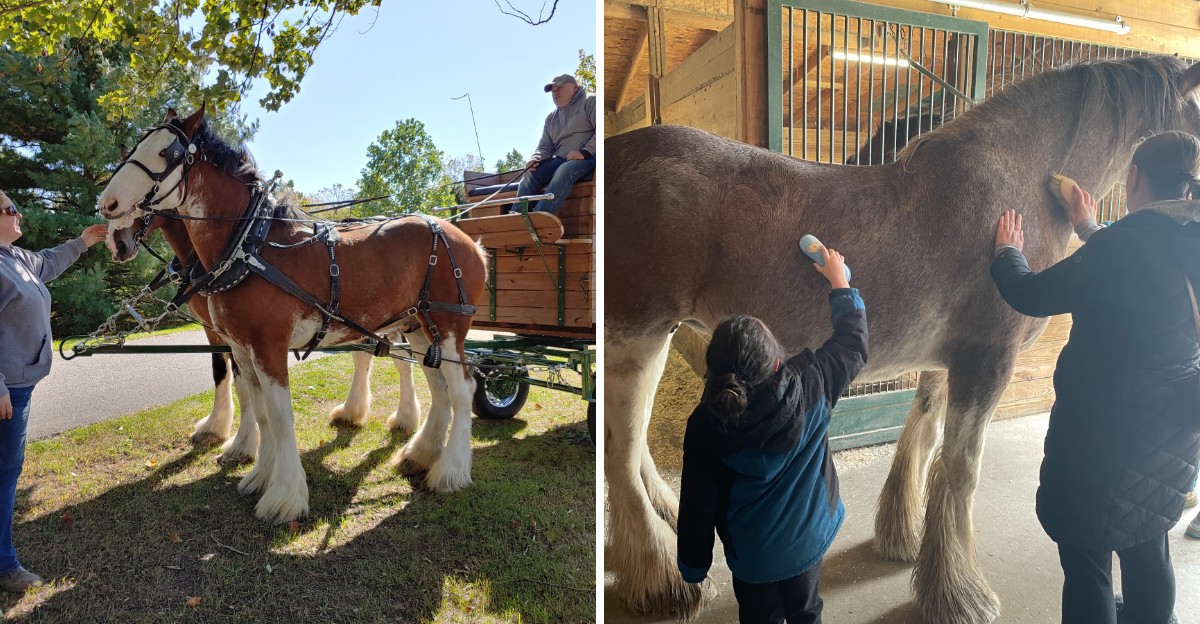
The horse is enormous. The manners are not.
A Clydesdale can make most adults look undersized, yet these Indiana gentle giants will lean over a fence for a treat, stand quietly for brushing, and let visitors fuss over them without turning the whole encounter into a wrestling match. That is only the beginning.
Goats wander around. Miniature donkeys join the crowd.
Ponies add even more personality. And somewhere in the middle of it all is a barn greeter who seems to take the welcome committee job very seriously.
The farm is family-run, relaxed, and small enough that the animals quickly become the main event. You do not just look at the horses.
You get to groom them, feed them, and actually spend time around animals that look like they should be pulling a medieval carriage.
Brush Duty Has Never Been This Relaxing
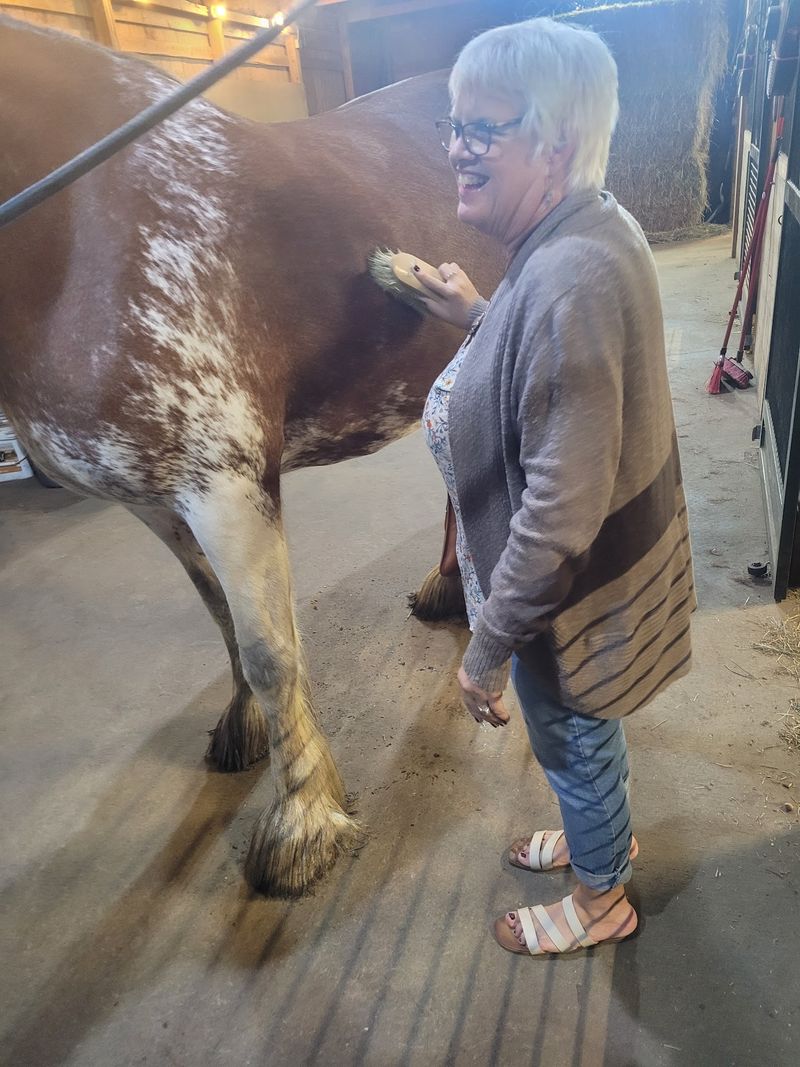
Grooming a horse that is taller than the doorway of most homes turns out to be oddly calming. The brush moves in long strokes, dust puffs into the air, and the horse often lets out a slow sigh.
Pure bliss, on both sides.
Brushing is one of the highlights of the VIP Tour at Sandy Acres, a private encounter that gives guests more time with the Clydesdales. Visitors have shared that they brushed mares, stallions, and even a pregnant Clydesdale during their stay.
The owners guide each step, showing where to stand, how to hold the brush, and which spots the horses love most.
There is a real reason grooming matters. Brushing spreads natural oils through the coat, removes dirt, and gives owners a chance to check for small scrapes or sore spots.
It also builds trust between people and horses, which is a big deal with animals this strong.
For visitors, the experience feels personal rather than rushed. Since VIP Tours are customized, families can ask questions, take turns, and snap plenty of photos along the way.
Wear clothes that can handle a little horse hair, because it will cling to sleeves and jeans like glitter.
Little ones may need a boost of courage at first. Most leave wanting another turn with the brush.
Giants That Make Grown Adults Squeal
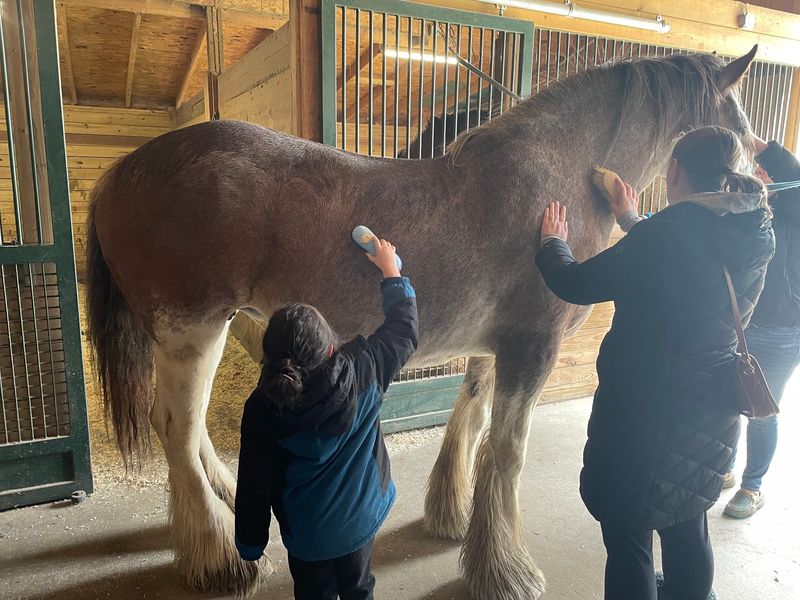
Nobody really understands how big a Clydesdale is until one is standing close enough to sniff a jacket pocket. Many of these horses weigh around a ton, and their heads can sit well above a tall person’s hat.
Photos online simply cannot capture it.
At Sandy Acres Clydesdales, located at 2304 E 1000 N, La Porte, IN 46350, those first moments up close tend to be the ones visitors talk about on the drive home.
The horses here come in several looks, including rich bay coats, deep jet black, and even spotted patterns that surprise people expecting only the classic brown and white style.
Each one has its own personality, too. Some are curious and pushy in a sweet way, while others hang back and watch the action.
Here is a fun bit of history. Clydesdales were first bred in Scotland, in the valley of the River Clyde, to pull heavy farm loads and haul goods through busy streets.
Their famous white leg hair, called feathering, once helped show off their high stepping walk.
Kids often start out nervous next to such huge animals. That fear usually melts fast once a horse lowers its nose for a gentle pat.
Bring a camera with a wide setting, because fitting a whole Clydesdale and a smiling person into one shot takes a little creativity. Comfortable closed toe shoes are a smart choice for barn floors as well.
Snack Time With Goats, Donkeys, and Ponies
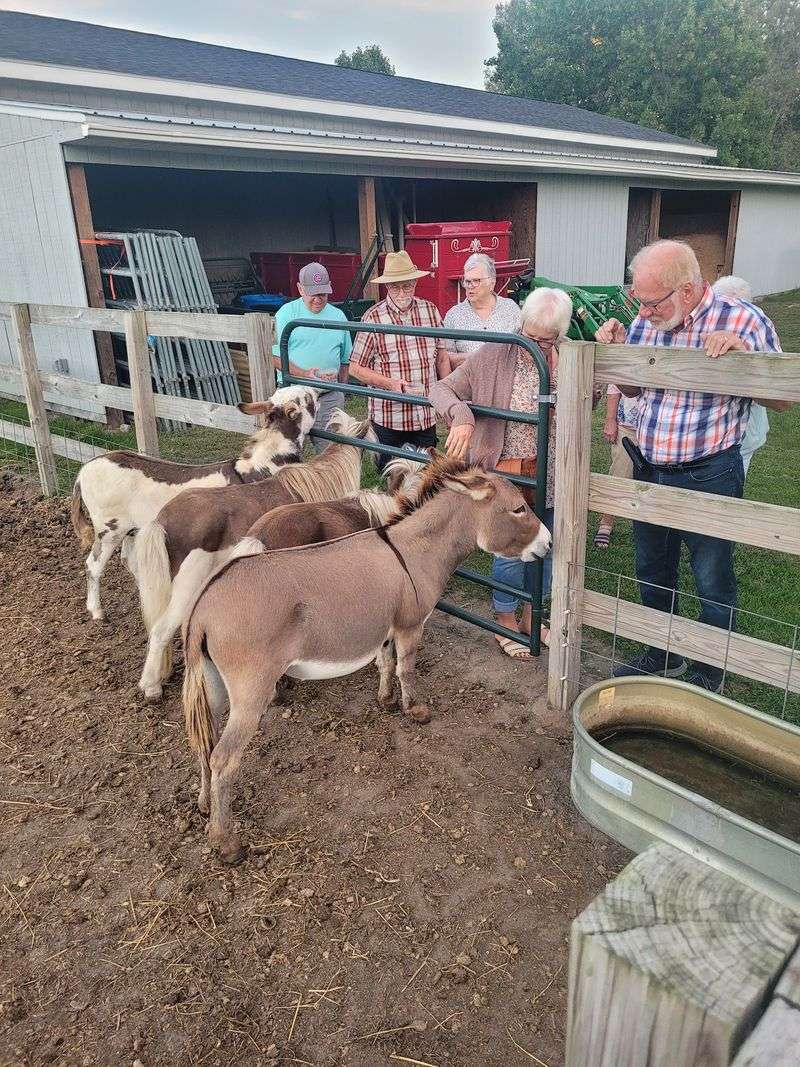
Goats have zero patience when treats are involved. Expect a small crowd of eager faces the moment a cup of snacks appears, each one convinced it deserves the first bite.
Feeding the animals ranks among the favorite parts of a visit to Sandy Acres. Beyond the Clydesdales, the farm keeps miniature donkeys, ponies, goats, and chickens, and guests often get to hand feed several of them during a tour.
Fainting goats live here as well. Their muscles stiffen briefly when they get startled, a harmless quirk that makes them famous among animal lovers.
Feeding a Clydesdale by hand is a different story from feeding a goat. Those massive lips are surprisingly soft, and the big horses usually take treats slowly and carefully.
Keeping the hand flat with fingers together helps everything go smoothly.
The miniature donkeys tend to steal hearts quickly. With fuzzy ears and calm eyes, they make a sweet contrast to the giant horses in the next pen.
Ponies add one more size to the mix, so kids can see how horses come in tiny, medium, and enormous.
Washing hands afterward is a good habit, so packing wipes or sanitizer in the car is helpful. Animals can also get a little spoiled, as the owners themselves happily admit.
Plan for lots of nudges.
Meet Mo, the Most Committed Greeter in La Porte
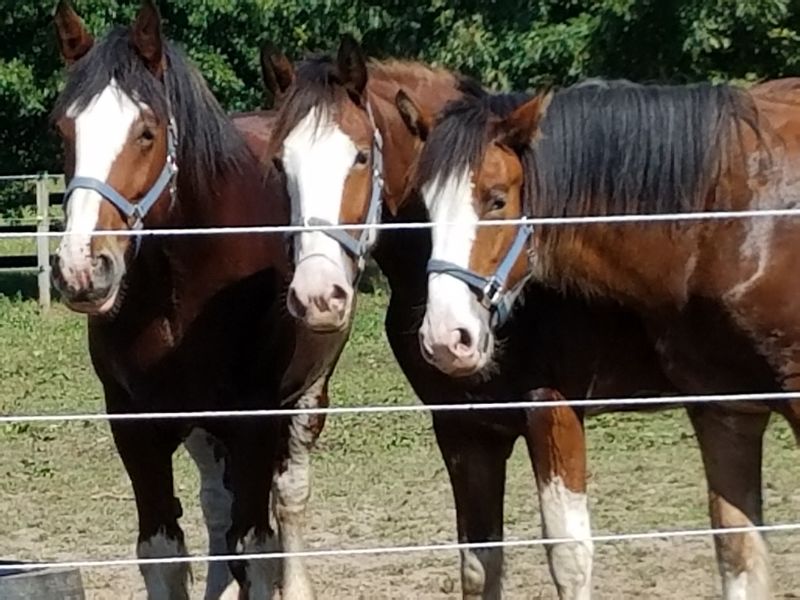
Every farm needs a welcome committee. At Sandy Acres, one of the most famous members is Mo, a greeter who rarely misses a tour and takes the job very seriously, according to the owners.
Small touches like this give the farm its charm. Visitors often describe the place as feeling more like a friend’s farm than a tourist attraction.
Nothing about it feels commercial or hurried, and guests have mentioned spending about an hour exploring without ever feeling pushed along.
The family behind Sandy Acres clearly loves sharing their animals. The farm began in 2002 with the family showing other draft breeds, like Belgians and Percherons.
They brought home their first Clydesdales in 2006 and later opened the gates for tours so others could learn about these remarkable horses.
That long history shows up in the stories told during visits. Owners share details about each animal’s background, personality, and quirks, turning a simple barn walk into something educational.
Friendly barn cats often wander through too, adding one more reason to slow down.
Curious guests should come ready with questions. How much does a Clydesdale eat?
How tall can they grow? The answers tend to surprise people.
Keep an eye out for Mo near the start of the tour, since a proper hello seems to be expected.
Foals, Genetics, and a Peek at Breeding Life
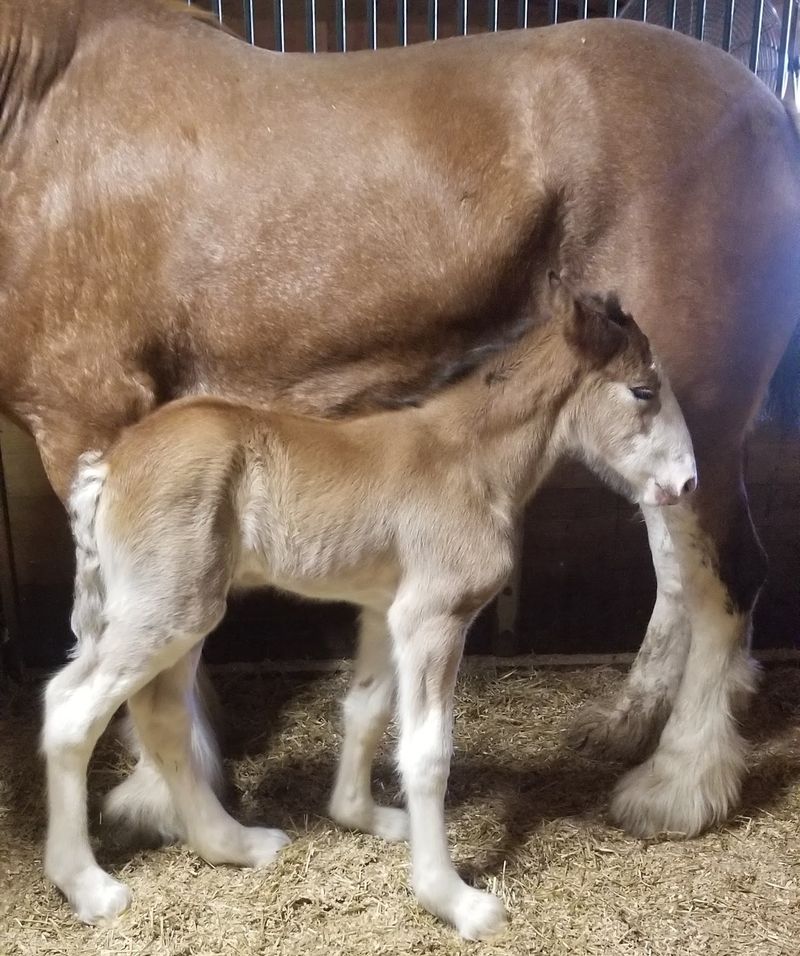
Baby Clydesdales are wobbly, fuzzy, and already bigger than many full grown dogs at birth. Seeing one up close is a real treat, and lucky visitors have even petted a friendly two month old foal.
Sandy Acres is a working breeding farm, which sets it apart from a typical petting zoo. Foals are often on the way, with arrivals planned for spring seasons like April 2027.
Young horses that are being weaned from their mothers sometimes appear during tours, giving guests a chance to see how the breed grows.
The farm also takes part in modern equine science. Sandy Acres has hosted aspiration days for In Vitro Fertilization, a process that helps protect and spread valuable horse genetics.
That might sound like a lab topic, but it matters for keeping strong, healthy Clydesdale bloodlines going.
Here is a fun fact for curious minds. Clydesdale foals can gain several pounds a day during their first months.
They grow fast because they have a lot of size to reach.
Spring visits offer the best odds of seeing young horses, though nothing is guaranteed with nature. Calling ahead to ask about new arrivals is a smart move.
Gentle voices and slow movements help keep both mothers and babies relaxed around new faces.
Rolling Down Country Roads by Wagon
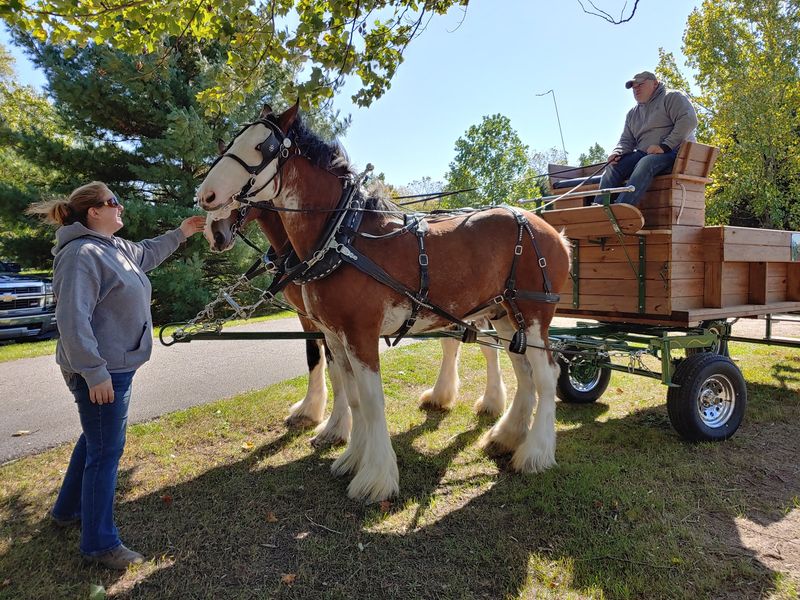
Clip clop, clip clop. The rhythm of huge hooves on a quiet country road sets a pace that nobody seems to mind.
Wagon rides at Sandy Acres carry anywhere from 10 to 16 people, rolling along the farm and nearby roads of rural La Porte County. They work well for birthday parties, family reunions, or a private picnic with a scenic twist.
Fields stretch wide on both sides, and the sky in northern Indiana can feel enormous on a clear day.
There is something special about being pulled by the same kind of horses that once powered farms across Scotland and North America. Before trucks and tractors, teams like these hauled crops, supplies, and people.
Riding behind them offers a small taste of that slower era.
Seasonal events have added extra magic over the years. Christmas with the Clydesdales once included sleigh rides, barn visits, and the chance to pet Clydesdales, miniature donkeys, and ponies.
Fall is another lovely time, with harvest colors filling the countryside.
Big groups should book well ahead, since wagon rides need planning. Bring layers in cooler months.
A blanket on the lap makes the ride extra cozy, and snacks for the picnic portion never hurt either.
Learn to Drive a Team, Sort Of
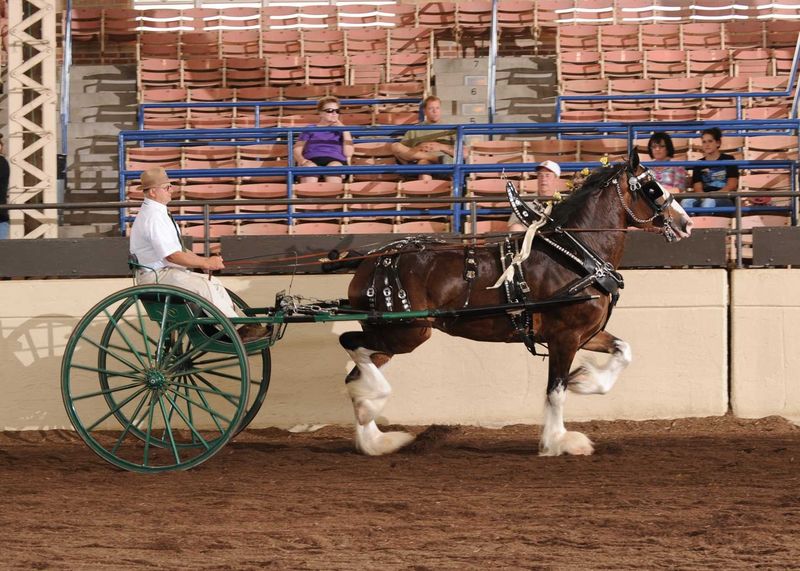
Ever wondered how professional drivers steer a whole team of giant horses? Holding the lines takes skill, timing, and a calm head, which explains why show hitches look so impressive.
Starting in Summer 2026, Sandy Acres introduced a driving experience that lets guests try it for themselves in a clever way. Specialized bikes and golf carts simulate how a team moves, so beginners can practice handling lines without worrying about a ton of horse reacting to every mistake.
Smart idea.
The experience offers a behind the scenes look at what goes into driving draft horses in parades, shows, and advertising work. Speaking of advertising, the farm’s Clydesdales have appeared in ad campaigns and staged photo shoots.
Their bay, black, and spotted coats look stunning on camera.
Photographers and families can also book onsite photo sessions with the horses. Engagement pictures, family portraits, or creative projects all get a boost when a Clydesdale joins the frame.
All visits, from basic tours to driving lessons, run by appointment only, with limited openings on weekends and most weekdays. The farm runs on Central Time, so double check the clock when scheduling from Michigan or other nearby areas.
