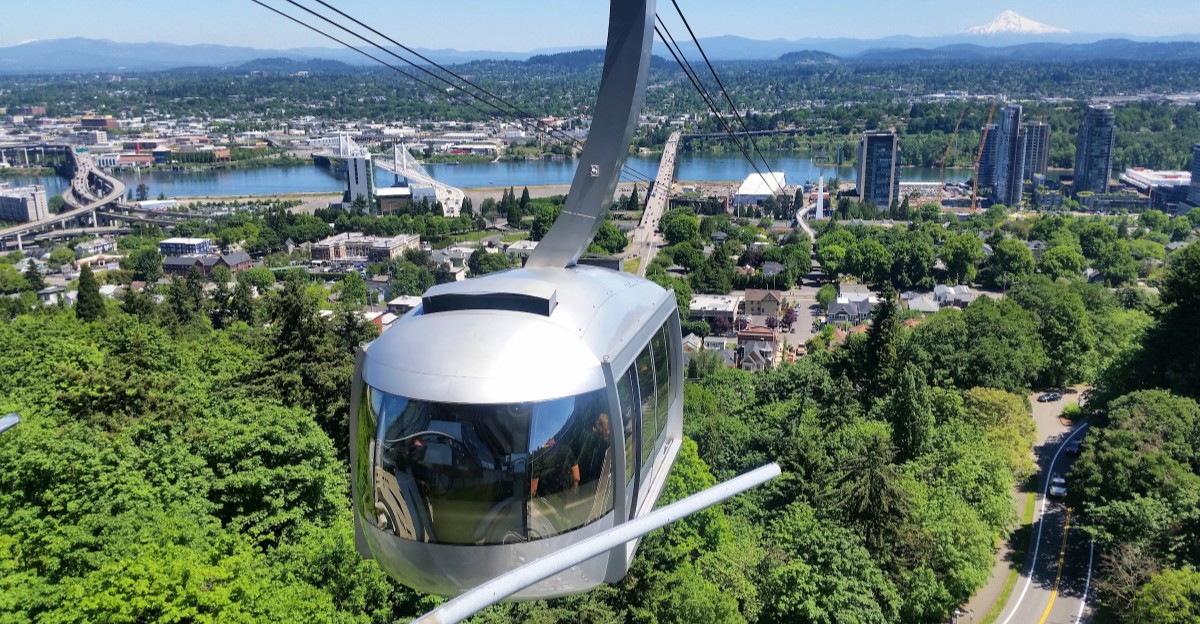
Doors slide shut, the cabin lifts off the ground, and the whole city starts shrinking into a toy model beneath your feet. Rooftops, rivers, and bridges stretch out in every direction while the tram glides up the hillside in a few smooth minutes.
Commuters treat it like an ordinary ride, but first-timers press their noses to the glass and point at everything. Anyone riding in Oregon for the first time tends to forget about the destination entirely.
Seeing familiar streets from above changes how a place feels. Details that blend together at ground level suddenly pop into sharp, colorful patterns.
Grab a spot by the window, keep your camera ready, and let the view do the talking. Few commutes feel this much like a mini adventure, and Oregon turns a simple ride into a highlight.
A Quiet Little Station With Big Sky Energy
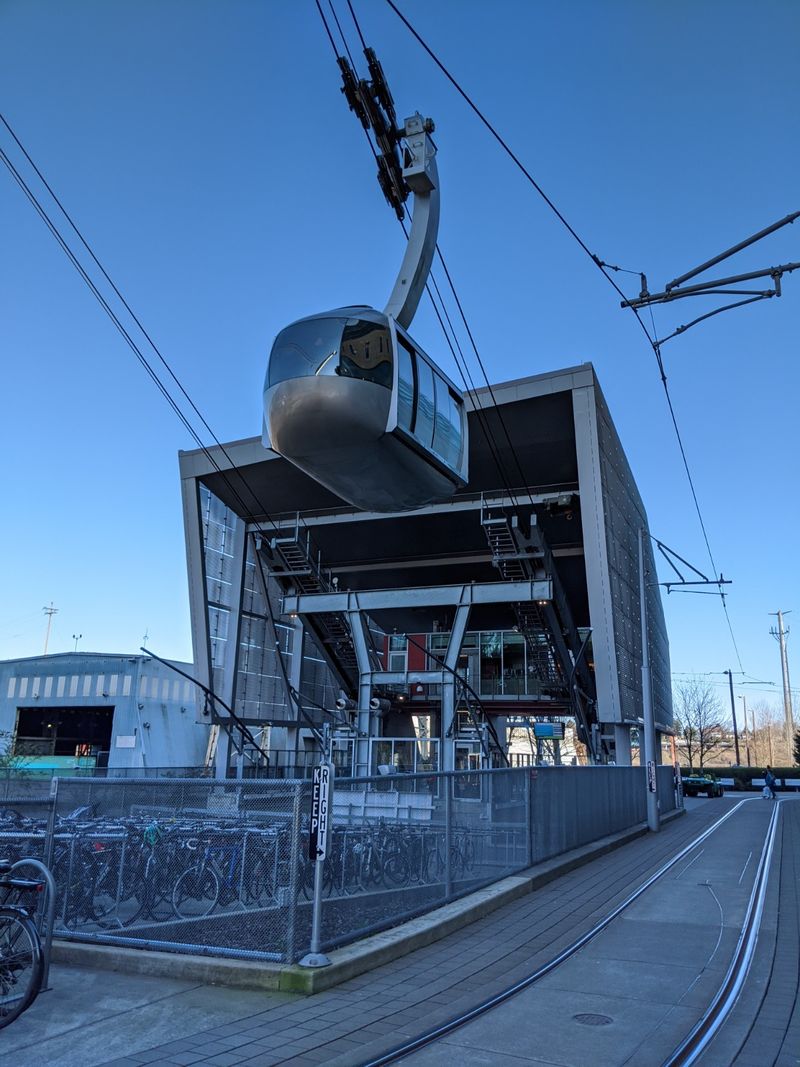
My first impression of the lower terminal was how calm it felt. There is no flashy gate or ticket booth fanfare, just a clean open station tucked among the glassy buildings of the South Waterfront neighborhood. Above it, thick cables stretch up toward the hill like guitar strings.
The Portland Aerial Tram opened in 2006, and it links this riverside area to the Oregon Health and Science University campus on Marquam Hill. Most riders are nurses, doctors, students, and patients heading to work or appointments.
Visitors are welcome too, which makes the whole place feel like a real slice of daily Portland life.
Tickets are easy to buy right at the station, and the line usually moves fast. Cabins leave every few minutes, so even a small crowd clears out quickly. Watch the screens and signs for the current schedule, since hours can shift.
Grab a Window Spot Before the Doors Close
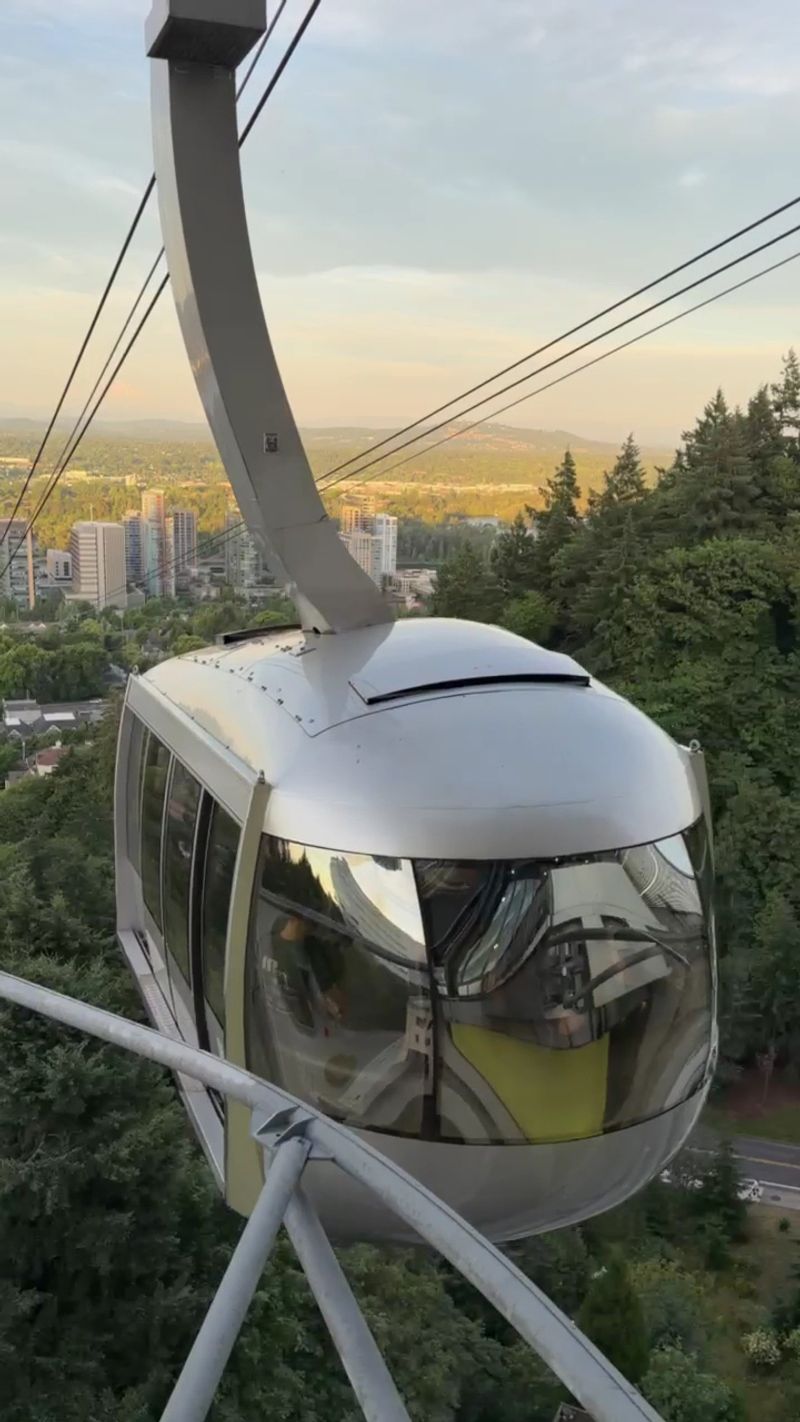
Here is my best tip, and it is a simple one. Get to the front or back windows of the cabin as soon as the doors slide open. Those wide glass panels give the cleanest views, and they fill up fast.
The cabins are standing room only, with rails to hold onto. There are no seats, which honestly makes sense for such a short trip. Everyone crowds near the glass, phones out, while regular commuters calmly scroll through emails like they have seen it a thousand times.
Above the front and back windows, a small map points out landmarks you will spot along the way. It helps a lot if you are new to town and cannot tell one hill from another. Glance at it before the ride starts so you know where to look.
Be kind and give working riders a little space, especially folks heading to the hospital. A friendly smile goes a long way in a packed cabin. Then just press your nose a bit closer to the glass and wait for liftoff.
Up, Up, and Over the Rooftops
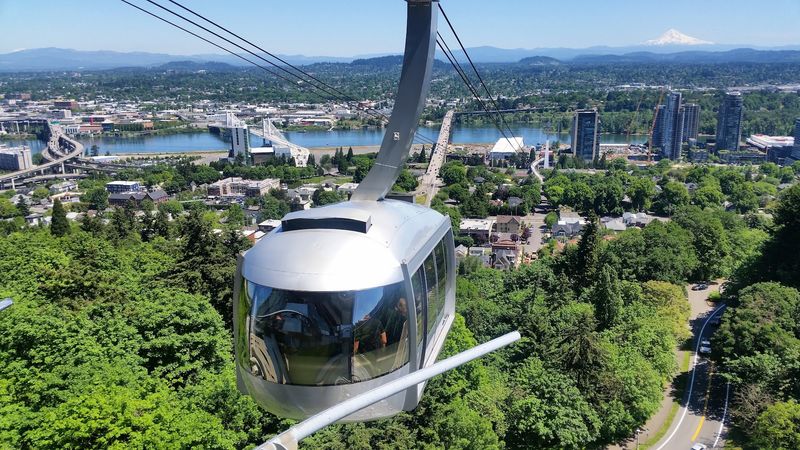
Liftoff is surprisingly smooth. One second the cabin is in the station, and the next the ground just sort of falls away beneath you. There is no jolt, no loud engine, just a soft hum and a rising feeling in your stomach.
The trip covers about 3,300 feet and climbs roughly 500 feet up to Marquam Hill. That sounds like a lot, but it all happens in around four minutes. You pass over Interstate 5, rows of houses, leafy backyards, and winding streets that look like a model train set from above.
I loved peeking down at the tiny cars and trees while the city slowly stretched out wider and wider. It is the kind of view that makes you want to point at everything at once. Try to pick out a few rooftops, gardens, and even people walking dogs below.
Bring your camera ready before the doors close. The best shots come early, while you are still close enough to see details on the ground. Blink too long and you will be halfway up the hill.
That Tiny Swing at the Tower
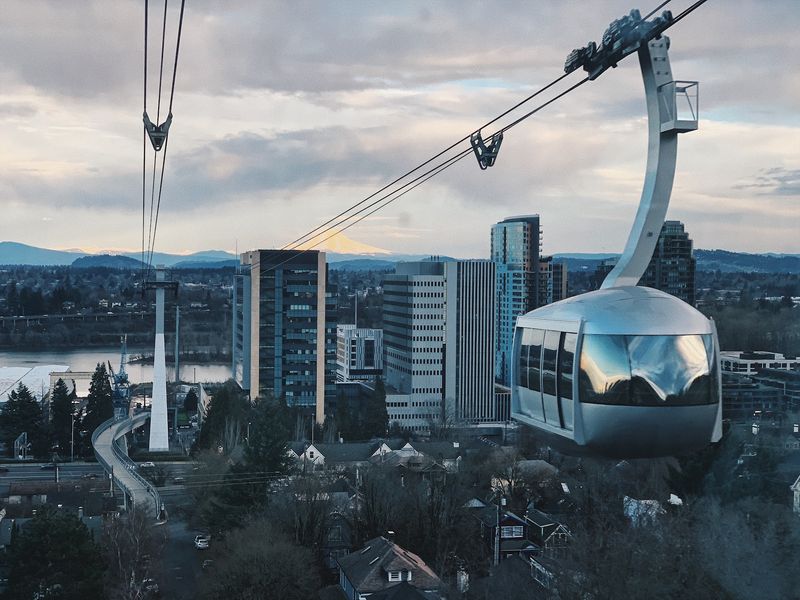
Nobody warned me about the swing. Partway up, the cabin rolls over a single tall steel tower, and for a few seconds it sways gently back and forth. A couple of riders gasped, then everyone laughed.
The tower stands close to 200 feet high and holds up the cables in the middle of the route. Passing over it causes that little rocking motion, which fades quickly once you are clear. It is totally normal and part of the fun, but it can surprise first-timers.
If heights make you nervous, plant your feet, grab the rail, and keep your eyes on the horizon instead of straight down. Operators ride along in each cabin, and they are often calm and reassuring with anxious passengers, especially little ones. Their steady voices help a lot.
Fun fact for curious minds. The tram moves on cables instead of rails, a lot like ski gondolas in the mountains, but it was built right in the middle of a city. That makes it one of only a few commuter aerial trams in the whole country.
Bridges, Bridges Everywhere
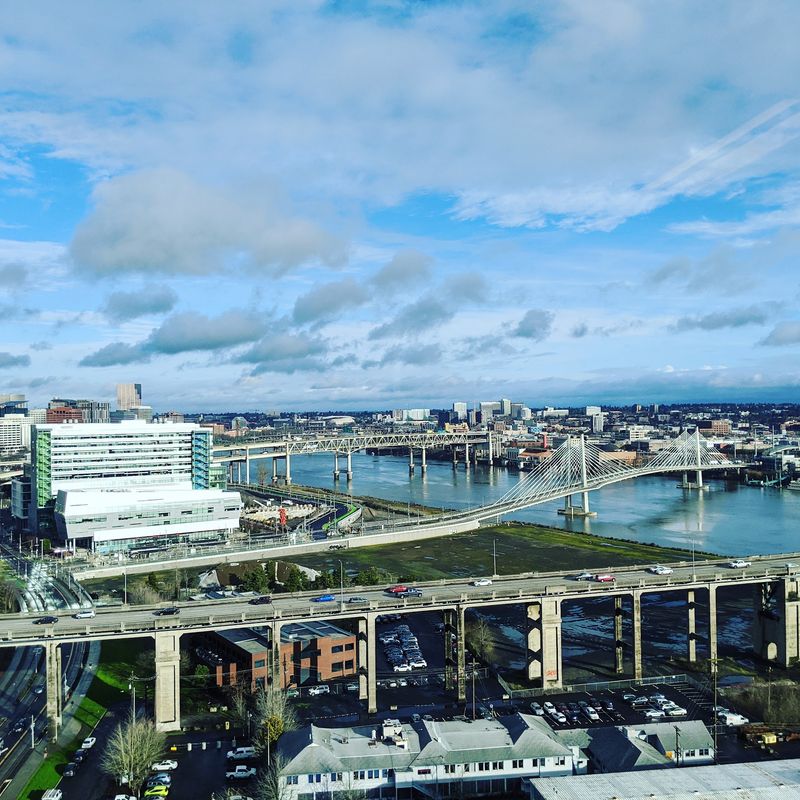
Portland is sometimes called Bridgetown, and from the tram, that nickname suddenly makes perfect sense. The Willamette River curls through the city below, crossed by bridge after bridge. Each one has its own shape and color.
Look for Tilikum Crossing, the sleek cable-stayed bridge close to the South Waterfront. It opened in 2015 and carries light rail, streetcars, buses, bikes, and people on foot, but no private cars. Its white cables fan out like a giant harp, and they look stunning from above.
Farther north, you can spot older bridges stacked along the river toward downtown. Some lift up for passing boats, which is fun to catch if you are lucky with timing. Counting them became my little game during the ride.
After your trip, walk over to Tilikum Crossing yourself. It is only a short stroll from the lower terminal, and crossing it on foot gives you a whole new angle on the tram you just rode. Seeing the cabins float by from the bridge feels like completing a circle.
Mountains That Steal the Show

Clear days in Portland are a gift, and on one of them, the tram turns into a front row seat for the Cascade Range. Mount Hood rises up to the east, white and huge, looking almost too big to be real. My jaw honestly dropped.
On extra crisp days, you might spot Mount St. Helens to the north too. Some riders even catch glimpses of Mount Adams and other peaks floating above the haze. Closer in, hills like Mount Tabor and Rocky Butte add more texture to the scene.
Weather matters a lot here. Cloudy or rainy mornings can hide the mountains completely, so check the forecast before you go. Late summer and early fall tend to bring more clear skies, though any sunny break is worth chasing.
Fall is especially lovely, when the trees on the hillside turn red, gold, and orange. Combine that color with a snowy peak in the distance and you have a view that looks painted.
Lingering on the Upper Deck
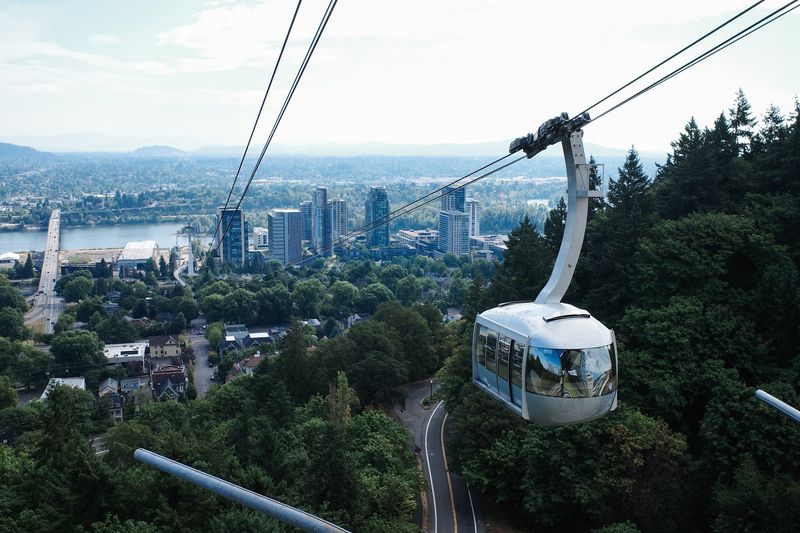
Arriving at the top feels a bit like stepping onto a balcony above the whole city. The upper station connects to the hospital campus, and there are open air viewing areas where visitors can hang out and soak in the scenery. Take your time.
From here, downtown spreads out to the north, the river sparkles below, and the South Waterfront towers look tiny. Benches and railings make it easy to relax. Watching cabins zip up and down from this spot is surprisingly peaceful, almost like watching boats in a harbor.
Keep an eye out for an informational sign about Portland past and future. It points out landmarks and shows how the city has changed over time. It is a neat way to connect what you are seeing to the story of the place.
Remember that this is a working medical campus, not an amusement park. Most of the buildings are meant for patients, staff, and visitors with a purpose there. Stay on the public viewing areas, keep voices low, and enjoy the calm.
Plan the Small Stuff Before You Ride
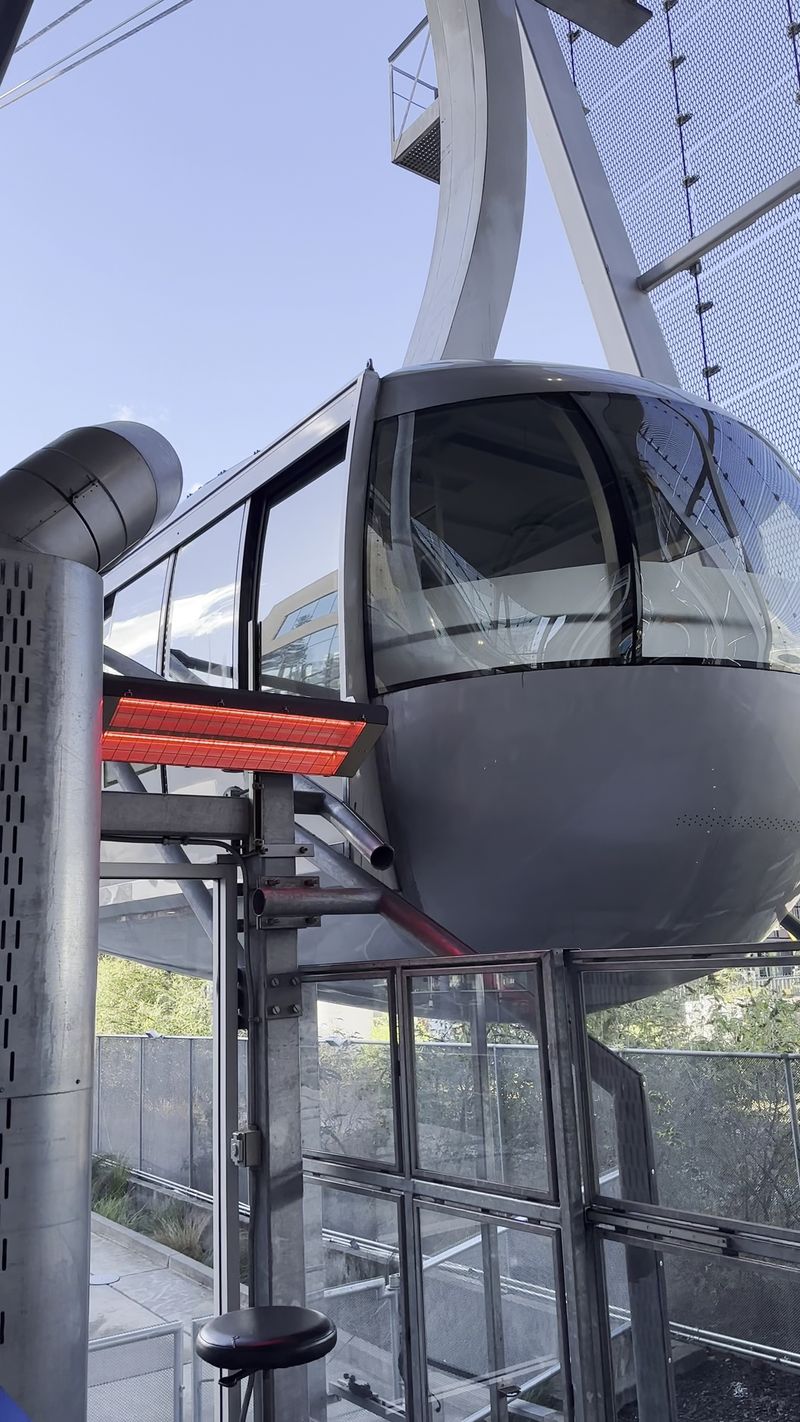
A little planning makes this trip so much smoother. Since the top is a hospital campus, there is not much in the way of snacks or casual stops for sightseers up there. Eat before you go and use a restroom down in the neighborhood first.
Food is not allowed on the tram itself, so finish that pastry or sandwich before boarding. The South Waterfront area has plenty of cafes and shops within an easy walk. A morning treat followed by a sky ride is a pretty great combo.
Timing matters too. The tram usually runs weekdays and Saturdays, and Sunday service is limited or seasonal, so check the official website before heading over. Early Saturday mornings tend to be quieter, while lines can build later in the day.
Getting here is easy. The Portland Streetcar and MAX light rail both stop nearby, and paid parking is available in the area if you drive. Honestly, riding public transit adds to the adventure.
Bikes, Hikers, and the Famous 4T Loop
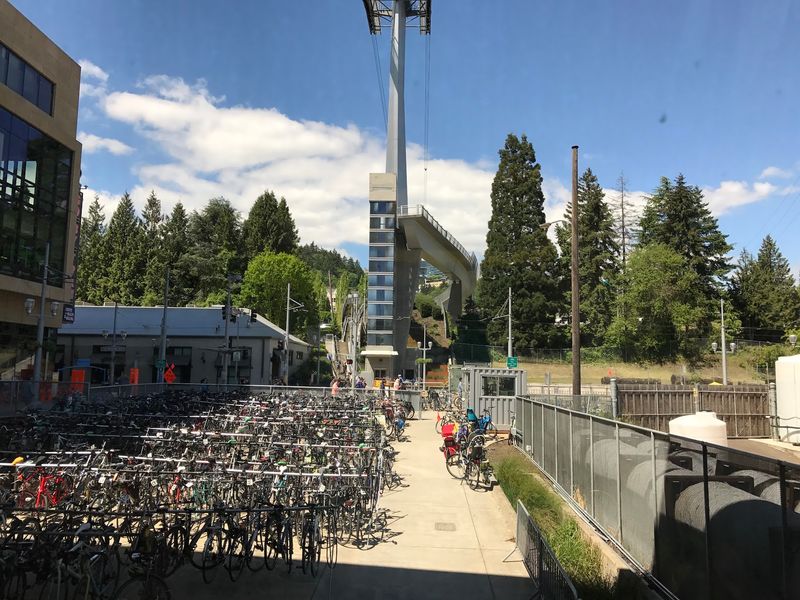
One morning I watched a whole row of cyclists roll right onto a cabin, and nobody blinked. Bikes are welcome on the tram, with a set number allowed per trip and a separate line just for riders on two wheels. The system is impressively organized.
Hikers love this spot too. The tram is one piece of the 4T Trail, a loop that links a trail, the tram, a trolley, and a train. Hikers usually climb through forested parks, ride the tram down, then hop on the streetcar and MAX to finish the loop.
The full journey can take around four hours, depending on your pace and how often you stop for views. It is a fun way to see forests, city streets, and riverfront all in one day. Wear comfy shoes.
Even if you skip the long hike, pairing the tram with a short bike ride along the river paths is a great idea. The flat waterfront trails make pedaling easy. Then the tram handles the hard uphill part for you.
Save the Last Ride for Golden Hour
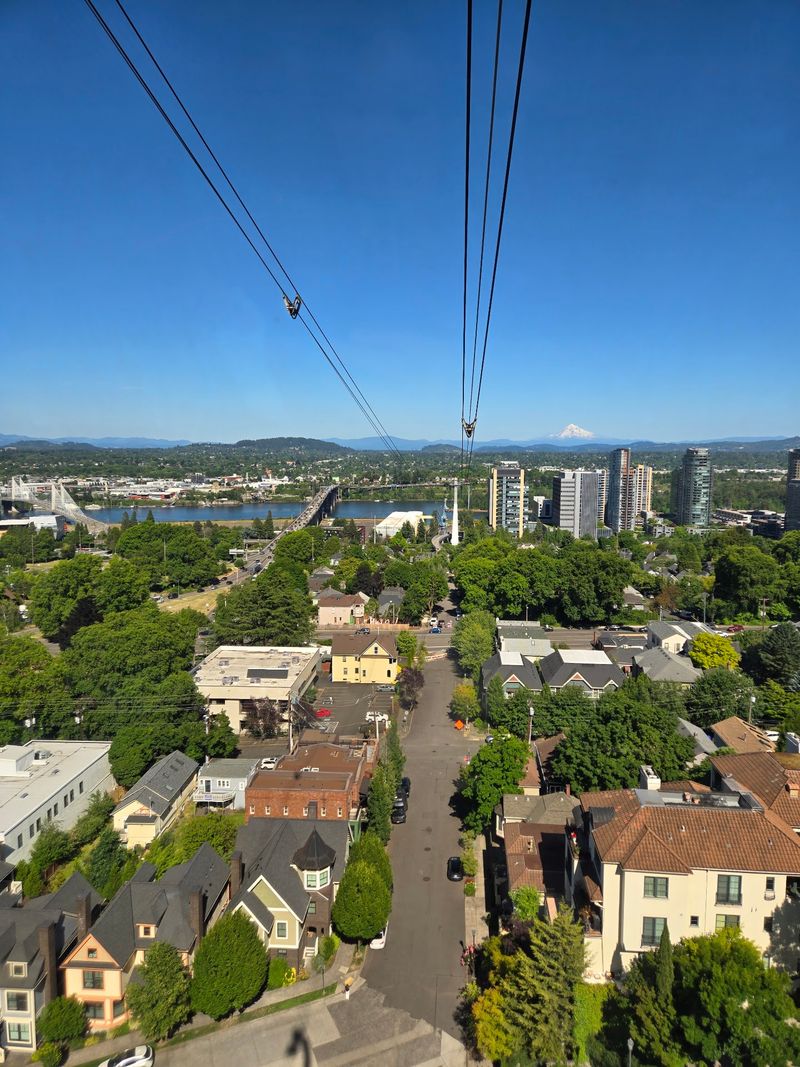
Sunset might be my favorite time for this trip. As the light drops, the river turns gold and the windows of downtown start to glow. The whole city seems to slow down and soften.
Try to time your ride so you reach the upper deck just before the sun dips low. Watching the sky shift from orange to pink to deep blue over the hills is something you will remember long after. Bring a light jacket, since breezes up top can feel cool in the evening.
Check closing times first so you do not miss the ride back down. The schedule changes on different days, and you will not want to be stuck admiring the view a little too long. Plan ahead and you can relax.
The trip is quick, but it sticks with you. It turns a normal city afternoon into something a bit magical, all in just a few minutes. When you are ready to float above Portland yourself, head to the South Waterfront Lower Tram Terminal at 3303 S Bond Ave, Portland, OR 97239.
