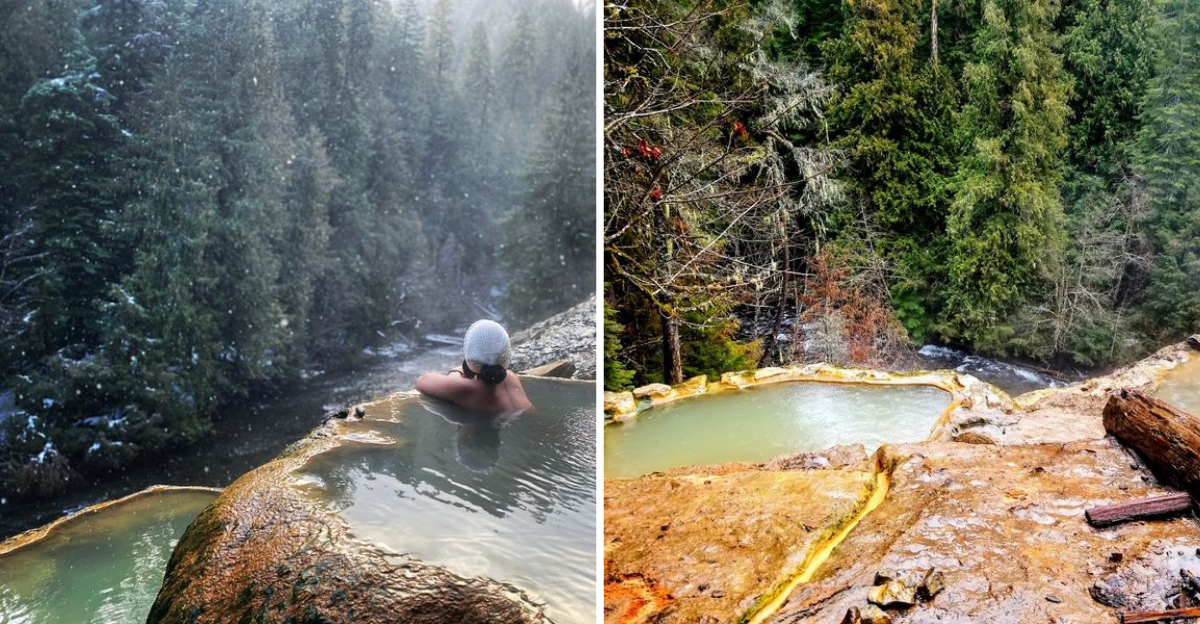
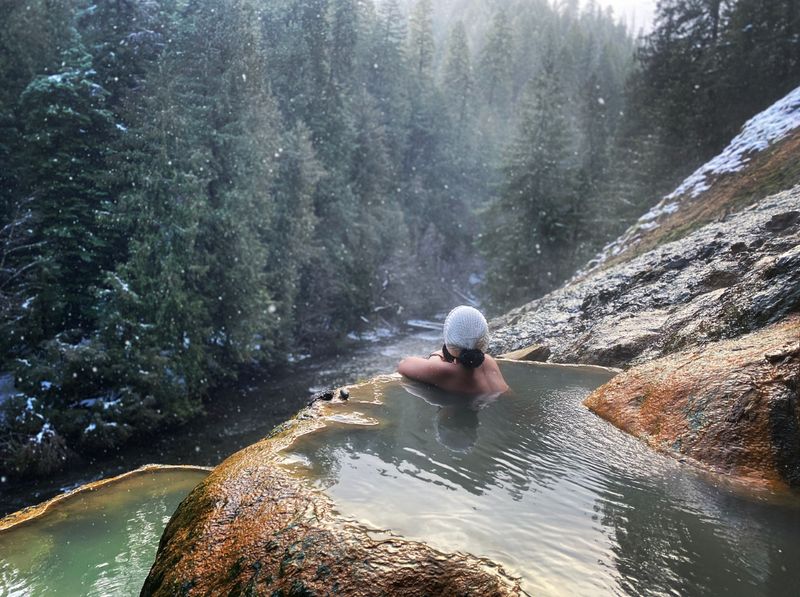
There is something almost unreal about sitting in steaming water while snowflakes drift quietly around your face. This Oregon hot springs reaches temperatures that can turn your skin pink, carved naturally from rock above a wild and scenic river.
Snow dusted fir trees, the sound of a waterfall across the way, and water hot enough to make you forget you were ever cold on the hike in.
The road closes in winter, which means you walk the last couple of miles through the forest. That extra distance feels less like a chore and more like the world filtering out the noise of regular life. No cell service.
No drinking water on site. Just you, the heat, and the quiet.
The Winter Hike In: Snow, Ice, and the Best Kind of Effort
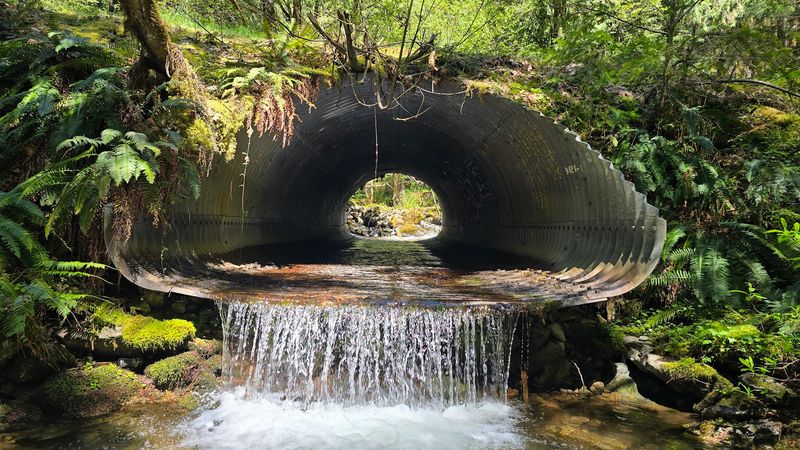
The road to Umpqua Hot Springs closes every winter, usually from November through April, and that closure turns the whole trip into an adventure. Forest Road 3401 gets gated off roughly 2 to 2.5 miles before the trailhead, which means you are hiking, snowshoeing, or skiing through the forest just to reach the starting point.
That extra distance sounds like a chore on paper. Out there in the snow, though, it feels like the whole forest is filtering out the noise of regular life.
The trees are heavy with white, the air smells like cold pine, and the trail is quiet in a way that is hard to find anywhere else.
Traction devices like YakTrax are a smart idea because the road gets genuinely icy. Solid footwear matters here, not just on the snowy road section but also on the final 0.3 to 0.4-mile climb to the springs, which is steep, rocky, and can be slick even in dry conditions.
Pack layers you can peel off once you reach the water. Bring cash for the five-dollar day-use fee, since cell service is unreliable out there and you will not find an ATM nearby.
No drinking water is available at the site, so a full water bottle is essential.
Arriving early on a weekday gives you the best shot at a quieter experience. The reward waiting at the end of that snowy walk makes every cold, crunchy step feel completely worth it.
Travertine Pools at 110 Degrees: What the Heat Actually Feels Like
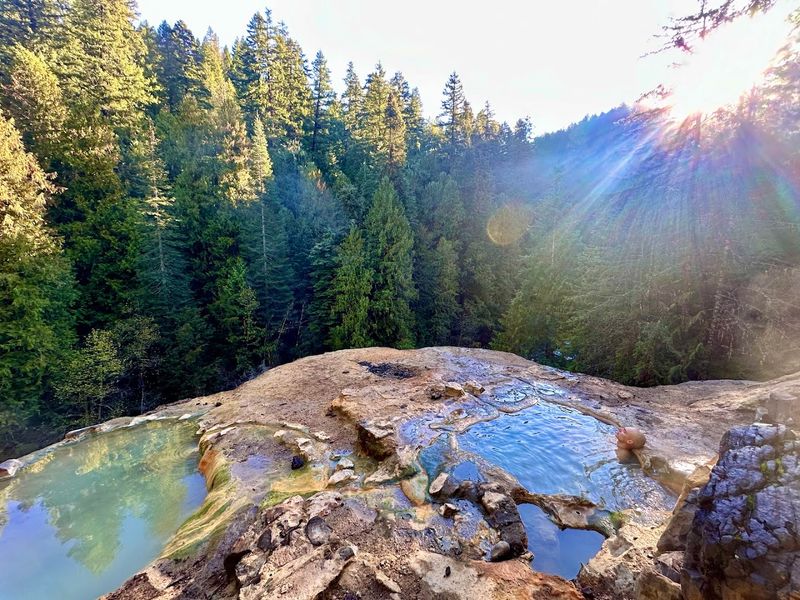
Geothermal water does something to your body that no heated spa can quite replicate. The heat at Umpqua comes from deep underground, mineral-rich and constant, and the uppermost pool regularly sits between 110 and 115 degrees Fahrenheit.
That is not a gentle warm bath, it is a full-on heat that you ease into slowly.
The main soaking tub is carved from travertine deposits, roughly three feet by five feet and about two and a half feet deep. An open-air roof structure sits above it, which means you are technically sheltered but still completely surrounded by the outdoors.
Snow can fall right past the edge of that roof while you sit in water that feels like it is trying to cook you in the best possible way.
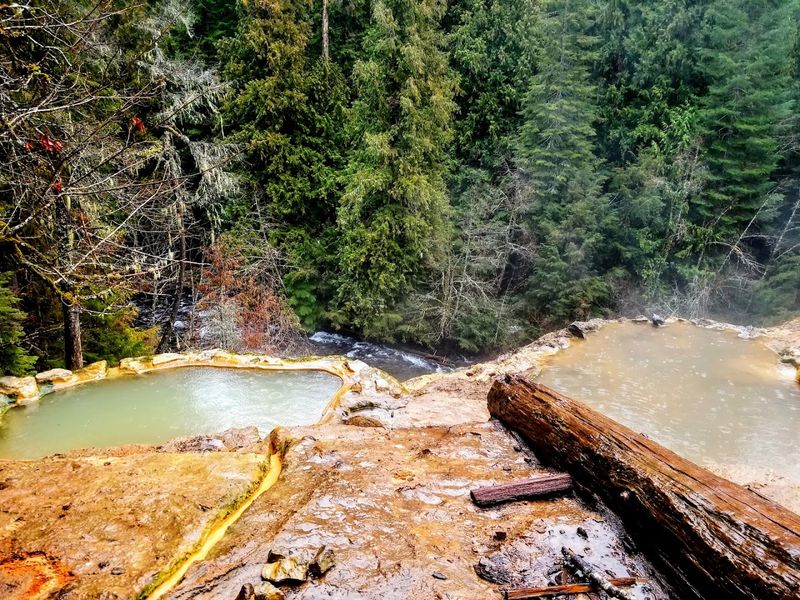
Below the top pool, the water cascades down through several other pools, each one slightly cooler than the last. There are around five to six soaking pools in total, and the temperature variety means most people can find one that suits them.
The lowest pools, closer to the river, are the mildest.
Sediment and mud are normal in natural springs like these, so do not expect crystal-clear water. The minerals leave a slight film on the rocks that makes surfaces slippery.
Moving carefully between pools is genuinely important, not just a suggestion.
From the top pool, the view across to Surprise Falls on the North Umpqua River is the kind of scenery that makes you forget you were ever cold on the way in.
Surprise Falls and the View That Makes the Whole Trip
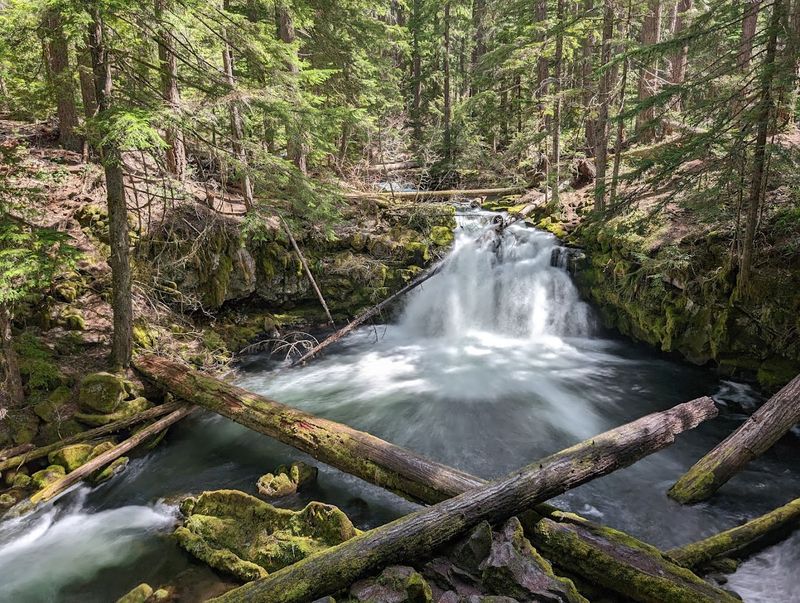
Most people come to Umpqua for the heat, but they leave talking about the view. Perched above the North Umpqua Wild and Scenic River at an elevation of 2,640 feet, the top soaking pool looks directly across to Surprise Falls.
The falls tumble down the opposite canyon wall in a thin, graceful sheet, and in winter they sometimes develop icy edges that catch whatever pale light filters through the clouds.
The river below runs fast and cold, a sharp contrast to the steaming pool you are sitting in. That contrast is part of what makes the whole scene feel so dramatic.
Hot water around you, cold air on your face, and a waterfall framed by snow-heavy forest directly in your line of sight.
Some visitors actually hike down to the river after soaking. The cold water rinse after sitting in mineral-rich springs is a bit of a tradition here, though the scramble down is steep and should only be attempted with appropriate footwear and dry conditions.
Early morning visits reward you with the most atmospheric light. Mist rises off both the river and the pools, and the forest feels absolutely still before other visitors arrive.
Getting there around 7 AM on a weekday often means having the whole place nearly to yourself for at least an hour.
The view is not polished or manicured. It is raw and wide and genuinely wild, exactly the kind of scenery that reminds you why Oregon earns its reputation for quiet, dramatic beauty.
Getting There from Roseburg: The Drive Through Umpqua National Forest
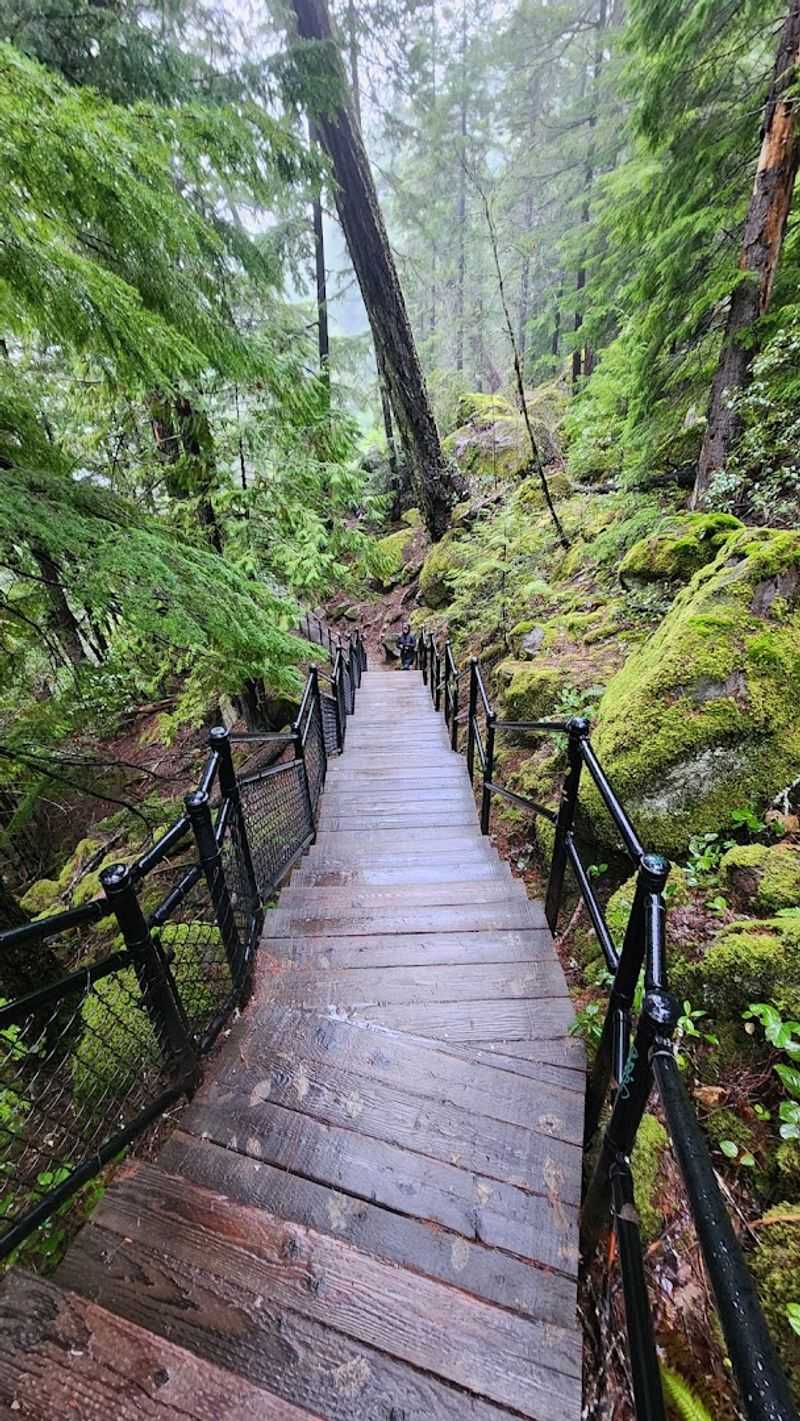
The drive out from Roseburg is one of those routes that earns its own appreciation. Highway 138 follows the North Umpqua River east for about 60 miles, and the scenery shifts gradually from valley farmland to dense conifer forest as the elevation climbs.
By the time you reach the turnoff for Forest Road 3401, the trees are tall, the canyon is deep, and the outside world feels genuinely far away.
In winter, that final stretch of Forest Road 3401 is where things get interesting. The road is rough even in good conditions, with potholes and uneven surfaces that make a slower pace necessary.
Once the gate appears, you park, gear up, and start walking.
The drive itself takes roughly an hour and fifteen minutes from Roseburg under normal conditions. Winter weather can add time, and checking road conditions before leaving is a genuinely good idea.
The Umpqua National Forest website and the forest service phone line at (541) 498-2531 are reliable sources for current access information.
Cell service becomes unreliable well before you reach the trailhead. Download any maps you need while you still have a signal.
Letting someone know your plan before heading out is a basic but important step when visiting remote spots in winter.
Fuel up and grab food in Roseburg before making the drive. Small towns along the route have limited services, and arriving hungry and low on fuel adds stress to what should be a relaxed outing into some genuinely spectacular forest.
What to Pack for a Winter Soak at Umpqua Hot Springs
Packing for Umpqua in winter is a small but satisfying puzzle. The goal is staying warm on the hike in, comfortable in the water, and dry on the way back out.
Getting that balance right makes the whole experience run smoothly.
Sturdy waterproof hiking boots are the most important item on the list. The trail is steep, rocky, and frequently muddy or icy.
Sandals are a genuinely bad idea here, and even regular sneakers can become a liability on the slick dirt and loose rock near the springs.
Bring a towel and a dry bag to keep your clothes protected while you soak. Changing in the open air in winter temperatures requires some speed and a sense of humor, but having dry, warm layers waiting for you makes it entirely manageable.
A second pair of dry socks is a small luxury that feels enormous at the end of a cold hike out.
Cash is essential since the five-dollar day-use fee is collected at the trailhead via self-pay envelope. No drinking water is available on site, so carry at least one full bottle per person.
A headlamp is useful if you plan to arrive right at the 7 AM opening time during the shorter days of winter.
YakTrax or similar traction devices fit over your boots and grip icy surfaces well. They are lightweight and easy to clip on and off as conditions change.
Tossing a pair in your pack before leaving home is one of those decisions you will never regret on a snowy Oregon morning.
Practical Tips for Visiting Umpqua Hot Springs Without the Headaches
A few logistical details can turn a frustrating visit into a smooth one. The parking area near the trailhead is small, fitting roughly a dozen vehicles.
On weekends and sunny winter days, it fills up fast. Arriving at or just after 7 AM on a weekday is the most reliable way to secure a spot and enjoy a quieter soak.
The five-dollar day-use fee per vehicle is paid at the trailhead using a self-pay envelope. Exact cash is helpful since there is no change available.
A Northwest Forest Pass or an Interagency America the Beautiful Pass covers the fee if you already carry one.
There is a vault toilet near the trailhead, but its condition varies and it has been noted by visitors as unreliable for supplies. Bringing your own tissue and hand sanitizer is a practical move.
No drinking water is on site, which bears repeating because dehydration in the heat of the pools is a real possibility even in cold weather.
Nudity is common at Umpqua Hot Springs. It is not mandatory, and plenty of visitors wear swimsuits without any issue.
Knowing this ahead of time simply helps you decide what to bring and sets expectations before you arrive.
The site is day-use only, open from sunrise to sunset, and camping at the springs is not permitted. Respecting that rule, packing out all trash, and leaving the pools clean keeps this place accessible for everyone who comes after you.
Umpqua is a shared resource, and treating it that way matters.
