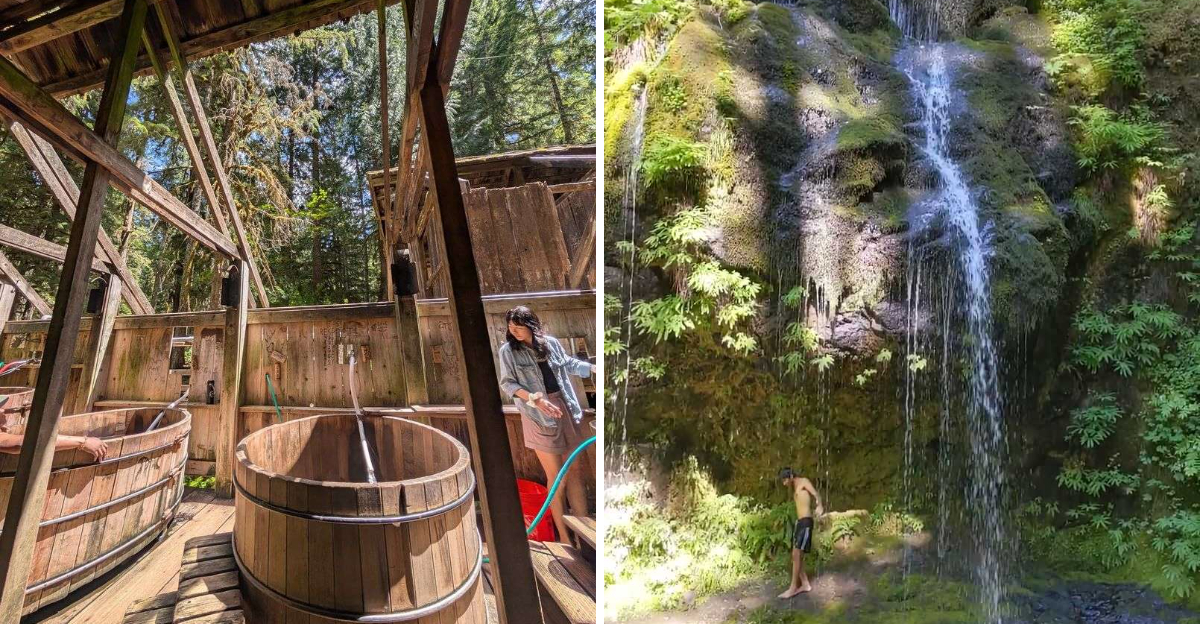
Soaking in a regular bathtub feels ordinary after learning what’s tucked into this forest. Giant cedar logs, hollowed out entirely, filled with steaming natural spring water instead of anything manufactured.
Getting there takes effort too, a hike through dense trees before the wooden structures finally appear. That walk somehow makes the soak feel earned rather than just another quick stop off a parking lot.
Oregon hides plenty of natural hot springs, but few present themselves quite this uniquely. Nothing about the setup feels commercial or overdone. Just warm water, old wood, and forest surrounding the entire experience on every side.
Oregon travelers willing to make that hike rarely regret it once they’re finally soaking, steam rising while trees block out everything else. Some experiences require a little effort first. This one rewards that effort completely.
Cedar Log Tubs Hollowed Out by Hand
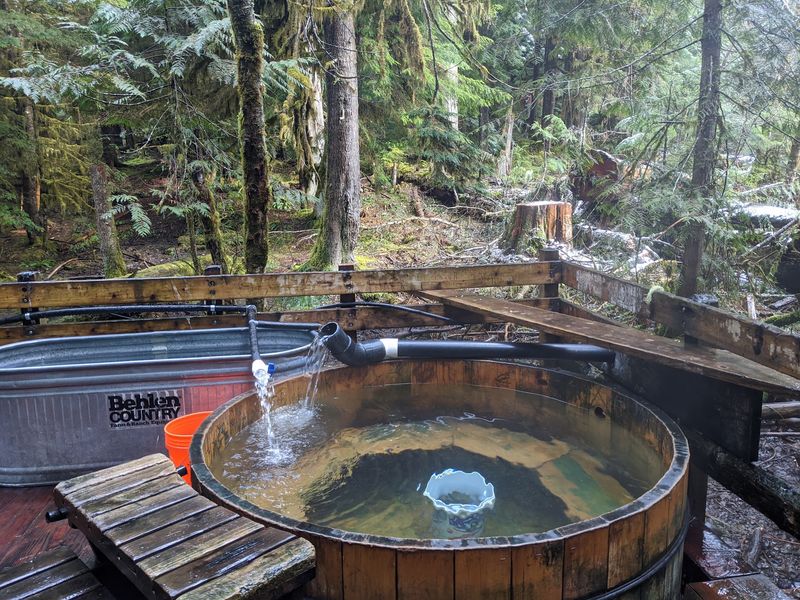
Nothing quite prepares a first-time visitor for the size of these tubs. Each one started as a huge cedar log, split and hollowed until it could hold a person lying flat with room left over.
Some fit two people comfortably. Others are big enough for four, which explains why groups often claim them and settle in for a long stretch.
The wood has a soft, worn feel from years of hot mineral water soaking into the grain. Cedar holds up remarkably well against constant moisture, which is exactly why it was chosen in the first place.
Visitors sometimes mention that the tubs feel a little slick to the touch, and that comes with the territory in a damp forest setting.
Alongside the log tubs, there are also round barrel-style tubs at the site, giving soakers a couple of shapes to choose from. Sitting in something carved from a tree that grew right there in the Cascades adds a layer to the whole experience that a tiled pool never could.
The Mile and a Half Walk Through Old Forest
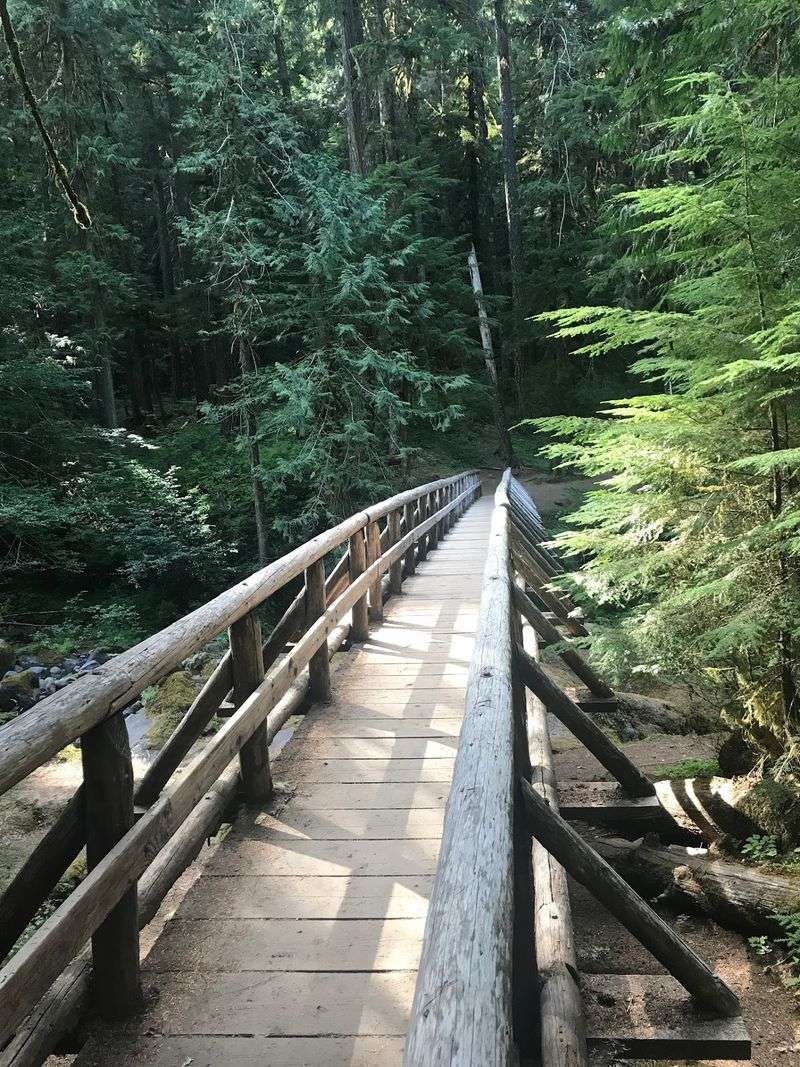
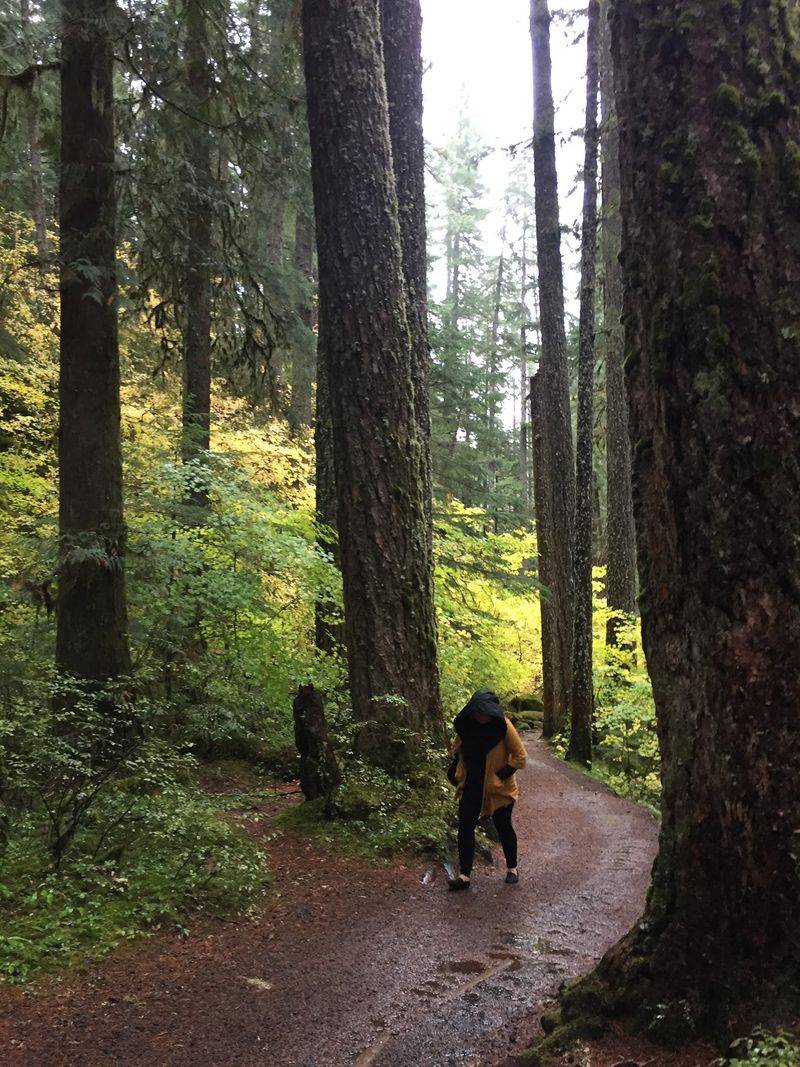
Getting to the springs takes a walk, and honestly that walk is half the reason to come. The trail runs roughly 1.5 miles from the parking area, gaining very little elevation as it follows the Hot Springs Fork of the Collawash River.
Sturdy footbridges cross the water more than once, and the sound of the river keeps company the whole way.
Most people cover the distance in about 40 to 45 minutes without rushing. Kids manage it. Older hikers manage it too, though the surface stays unpaved with a few uneven roots and drop-offs near the edges.
Towering firs and cedars block most of the sky, so even on a bright afternoon the light comes through green and filtered.
Rain barely changes things since the canopy catches so much of it. Bring a towel, snacks, and drinking water, because there is nothing to buy once the trailhead disappears behind you.
Water That Arrives Scalding and Needs Cooling
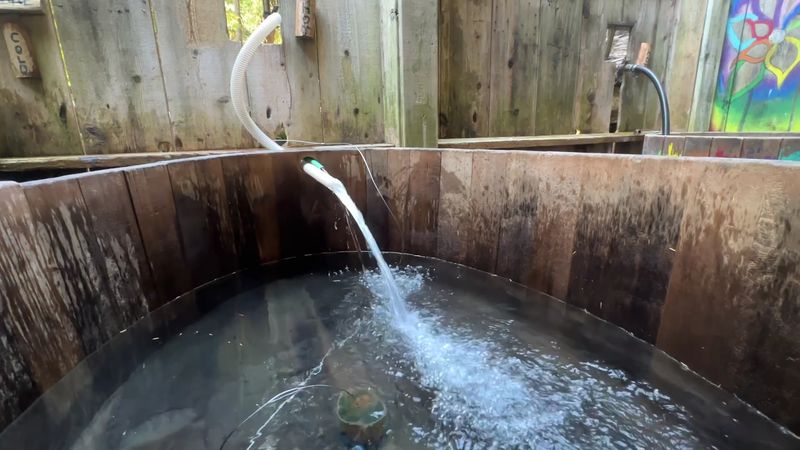
Here is the part that surprises newcomers. The spring water reaches the tubs extremely hot, hot enough that stepping straight in would be a serious mistake.
Hollowed wooden flumes carry the water from the source down into each stall, and a plug system lets soakers fill their tub to the level they want.
Cold water hoses sit nearby for balancing the temperature. Some people also haul buckets of cool river water to speed things along, which is a bit of a ritual in itself.
Mixing takes patience and a willingness to test with a hand before committing. Once the balance lands right, the soak becomes exactly as warm or mild as preferred, which is a rare kind of control.
Instructions are posted at the bathhouse, and following them matters for safety. Give the process ten minutes and the payoff is a private tub tuned precisely to personal taste.
Two Bathhouses and One Open Air Tub
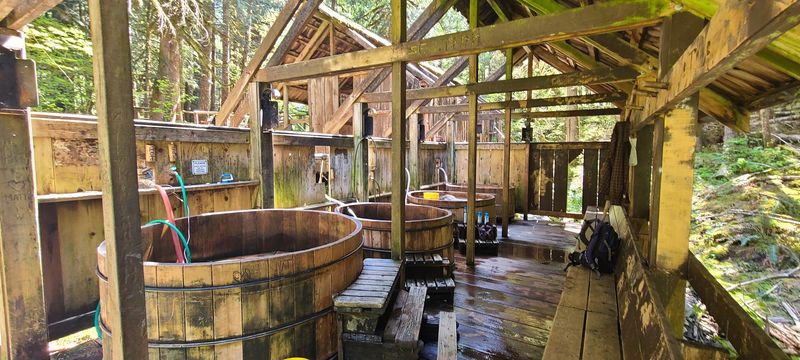
Layout matters when planning a visit. The main bathhouse holds several tubs of different sizes tucked into individual stalls with wooden walls and half-doors for privacy. A second structure adds more soaking spots, and one larger tub sits out in the open with trees rising directly overhead.
That outdoor tub tends to be the favorite for anyone who wants the full forest-above-you effect while steam drifts off the surface. Availability shifts depending on repairs. Some seasons every tub is running, and other times storm damage or restoration work reduces the number temporarily.
Checking recent trail reports before driving out saves disappointment. Volunteers and the current caretakers have been steadily refurbishing the structures, so conditions have improved noticeably in recent years.
Weathered boards, mossy roofs, and hand-built details give the whole complex a lived-in charm that feels earned rather than designed.
Timing Your Arrival to Skip the Line
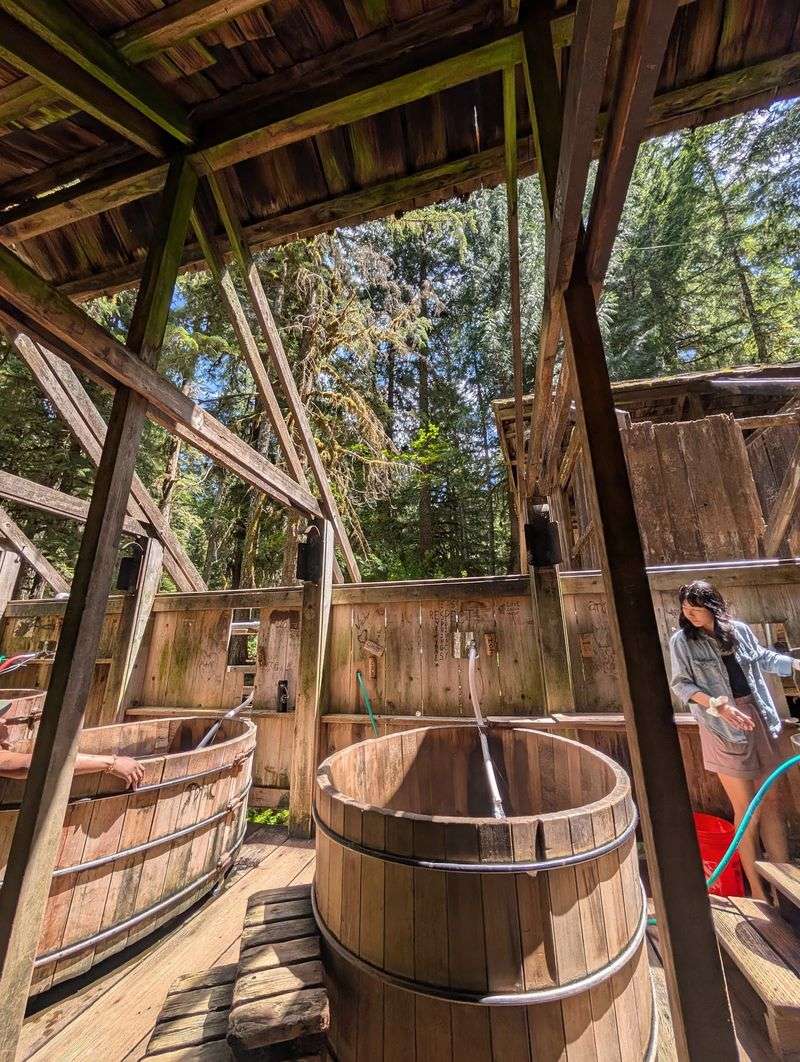
Waits happen here, and they can be long. Weekend afternoons often mean standing around for an hour or more while groups finish their soaks and tubs refill. Refilling is the bottleneck, since an emptied tub takes a good stretch of time to fill back up.
Early morning is the sweet spot. Arriving shortly after sunrise on a weekday often means walking straight into an open tub with the forest still waking up. Midday on a Tuesday or Wednesday can also work well, roughly in that quiet window between the morning crowd and the evening one.
A friendly move that speeds things up for everyone: ask the group ahead whether they plan to drain their tub, and if the water is still clean, consider taking it over as-is. Patience pays off either way. Bring a book, chat with other soakers, and treat the wait as part of the day.
Bring Cash and Leave the Phone in the Car
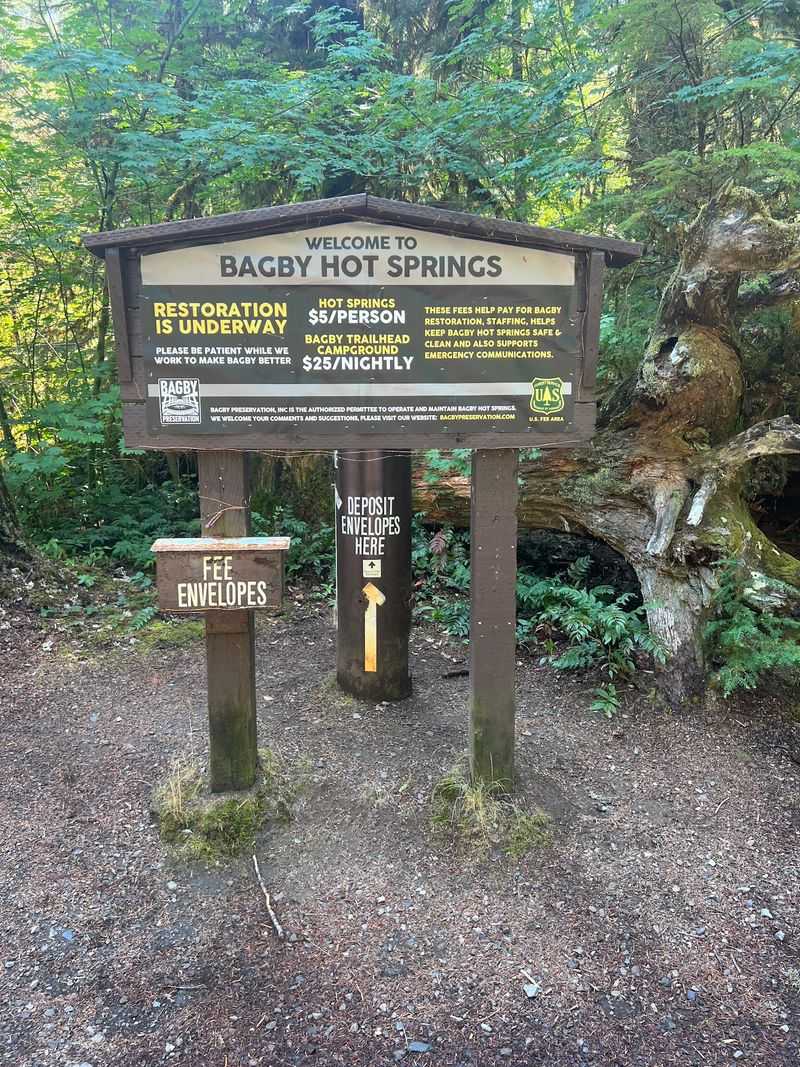
Practical stuff first, because it trips people up. Entry runs on a small cash fee collected per person at the site, and there is no card reader, no app, and no way to make change. Small bills solve the problem entirely.
Cell service disappears well before the trailhead. Downloading maps ahead of time is smart, and telling someone your plans is smarter still.
The funds collected go toward restoration of the bathhouses and upkeep of the trail and grounds, which explains why the place looks better now than it did a decade ago.
Restrooms are available near the parking area and again closer to the springs. Both were reported clean by recent visitors, which is not always a given at remote sites. Pack out every scrap of trash. The whole operation runs on people treating it well, and that shows in the condition of the grounds.
Knowing the Clothing Optional Custom
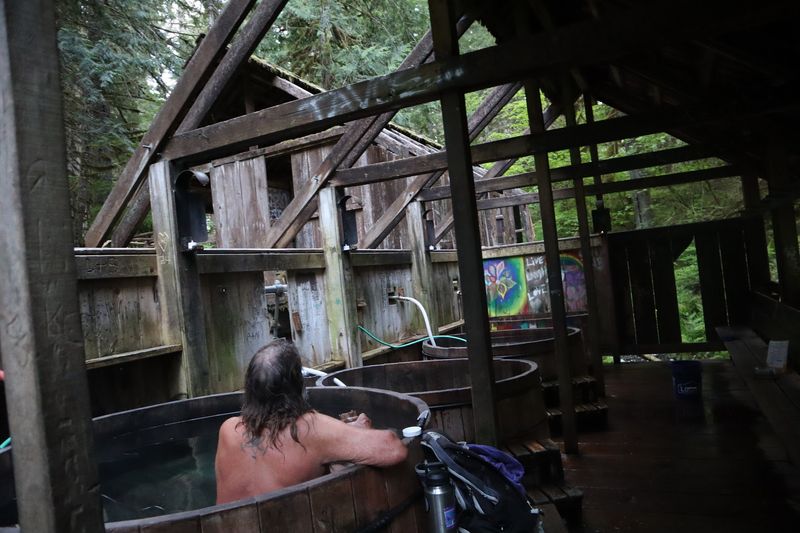
Worth understanding before arriving with a group. Bagby has a long-standing clothing optional culture, and some soakers use the tubs without swimsuits. Others wear suits the entire time, and both choices are completely normal here.
Individual stalls in the main bathhouse offer wooden walls and doors, so anyone wanting privacy has it. The larger communal and open-air tubs are where mixed situations are most likely. Families with children often plan for mid-afternoon visits, which tend to be the most low-key part of the day.
Nobody is pressured either direction. The general vibe reported by visitors is relaxed and respectful, with people minding their own soak.
Packing a swimsuit is never a bad idea, along with a change of dry clothes and an extra towel for the walk back. Wet layers plus a shaded forest trail equals a chilly return trip otherwise.
A Waterfall Hiding Fifteen Minutes Further Up
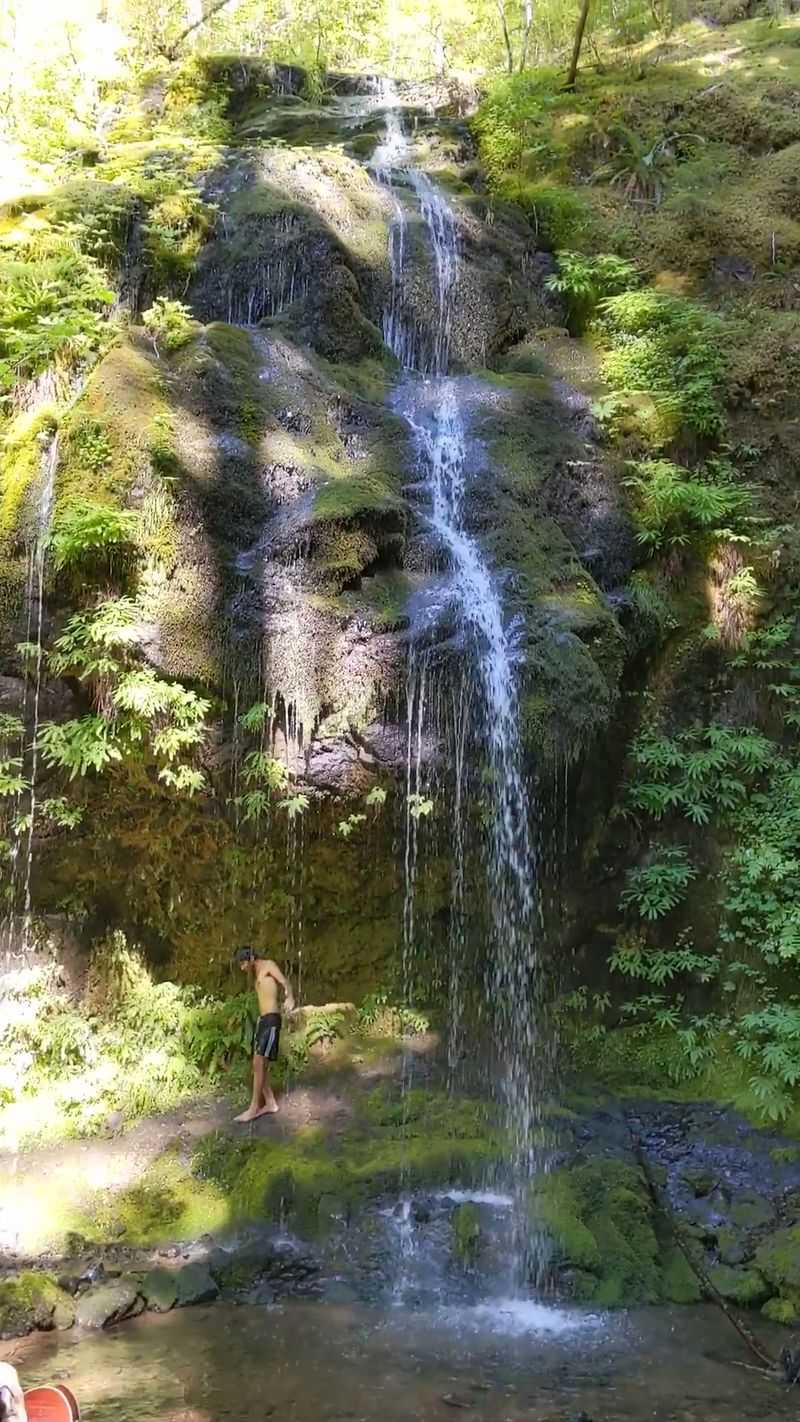
Most people turn around after their soak, which means they miss something good. Continue past the bathhouse for roughly fifteen more minutes and a waterfall appears, one you can actually walk behind. Cool mist, mossy rock, and the roar of falling water make it a fine spot to sit for a while.
Legs feel loose after a hot soak, so the extra distance barely registers. The trail stays forested and quiet, with far fewer people than the springs themselves. Footing near the falls can be slick, so shoes with grip help more than sandals.
Adding this side trip turns a quick soak into a proper half-day outing. It also breaks up the drive home nicely, since the body cools down before getting back in the car. Photographers tend to love the light there in the late morning.
Camping Nearby and Staying Overnight
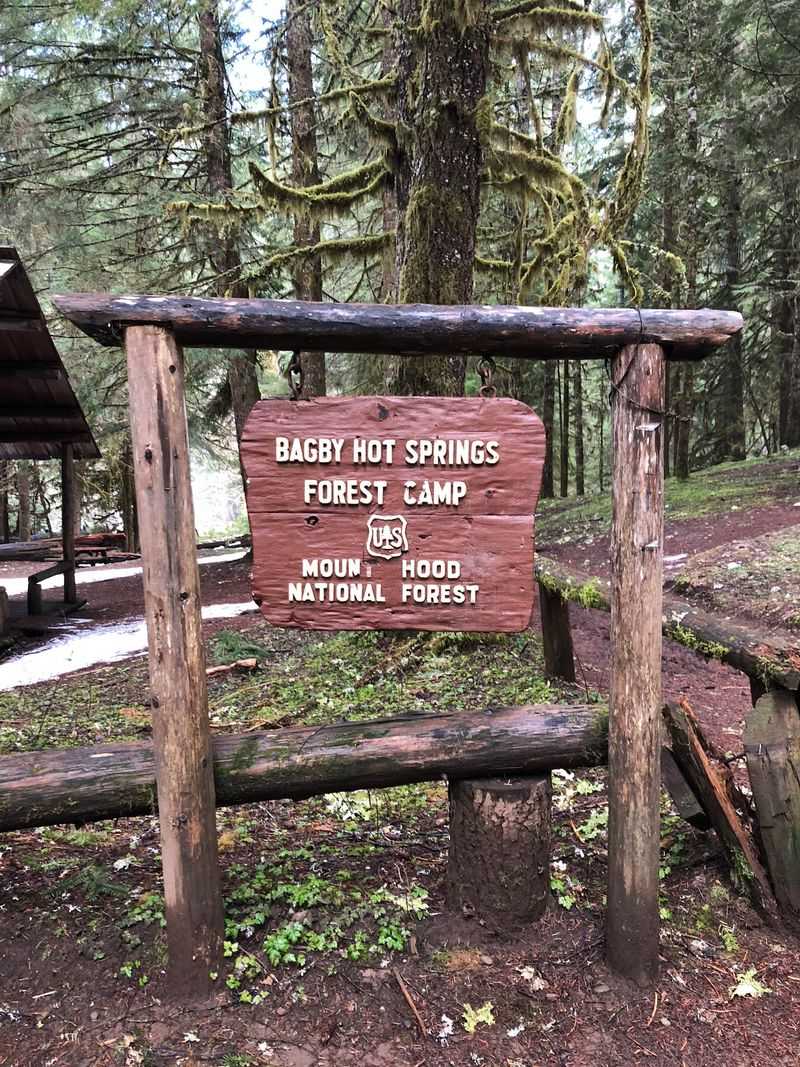
Turning the trip into an overnight changes everything. A campground sits near the trailhead, and recent visitors have described the sites as tidy and well kept. Staying the night means being on the trail at first light while everyone else is still driving out from Portland.
Nights get cold in the Cascades even during summer, so warm layers and a proper sleeping bag are worth packing.
The springs technically stay open around the clock, but there are no lights anywhere on the trail. Anyone attempting a night walk needs headlamps, backups, and a group that sticks together, since a single missed turn without cell service is a real problem.
Morning soaks are the reward. Steam rising off the cedar tubs while mist still hangs in the trees is the version of Bagby that sticks in memory. Fall and spring bring the fewest people and some of the best air temperatures for soaking.
Making the Drive From Portland
Roughly two hours of driving separates Portland from the trailhead, and the last stretch is all forest road. Good news for anyone worried about their vehicle: the route is paved the whole way, and recent visitors have made the trip in regular cars without four-wheel drive.
Curves come often, so drivers prone to motion sickness should plan accordingly. Parking is generous for a place this remote. Arriving early secures a better spot and a quieter trail.
Fill the gas tank before leaving town, since services thin out fast once the highway ends. Snacks, water, and a spare towel belong in the trunk. Winter driving can involve snow at elevation, so checking conditions ahead is essential during colder months.
Bagby Hot Springs sits within the Mt. Hood National Forest in Oregon, near the Collawash River drainage, and reaching it is genuinely part of the adventure rather than an obstacle to it.
