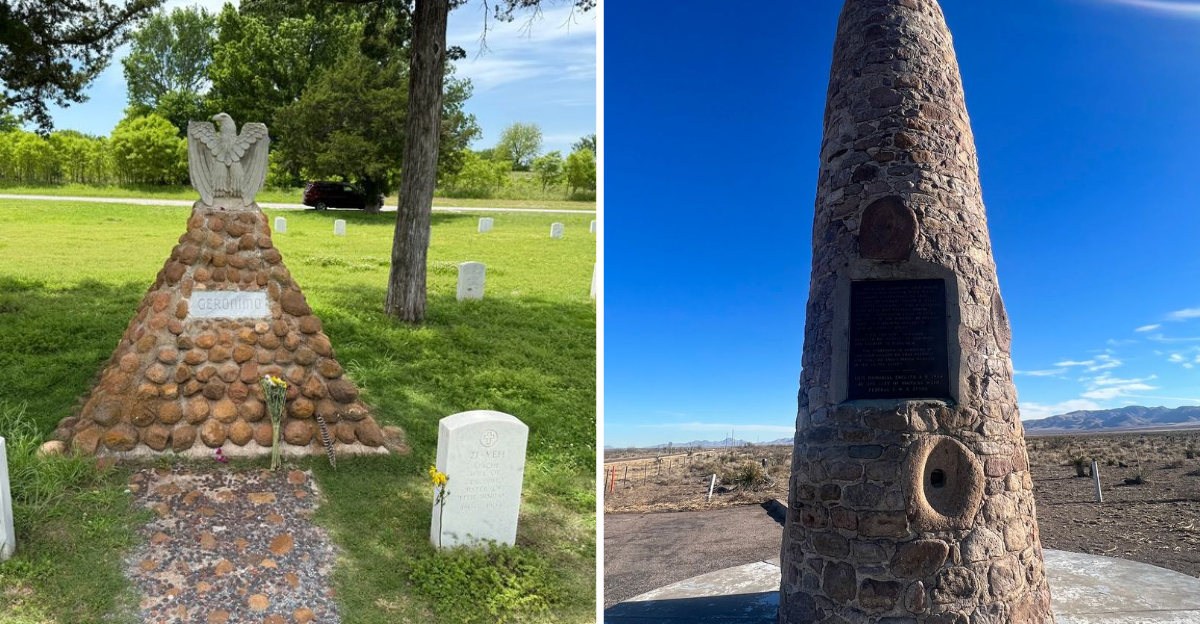
A stone pyramid topped with an eagle and a pass from an army base. That is what it took to stand at the grave of one of the most famous names in American history.
I had seen photos of the resting place before, but nothing prepared me for how still that corner of the Oklahoma prairie feels once you step out of the car. The base sits just north of a mid-sized Oklahoma city, and on its northeast edge, a small, quiet cemetery holds the remains of the Apache leader who died here in the early 1900s.
The five-foot pyramid of stacked cobblestones rises from the grass, a monument erected by troops decades ago. Wind moves through the trees, a hawk drifts overhead, and rows of plain white markers stretch out around the grave.
Getting there took a little planning: a stop at the visitor control center, a valid ID, and a background check. That extra effort made the whole visit feel earned, like I had been let in on a quiet corner of history that most people drive right past.
If you like history you can stand right next to, this is one of Oklahoma’s most unforgettable stops.
Getting Your Pass At The Visitor Control Center
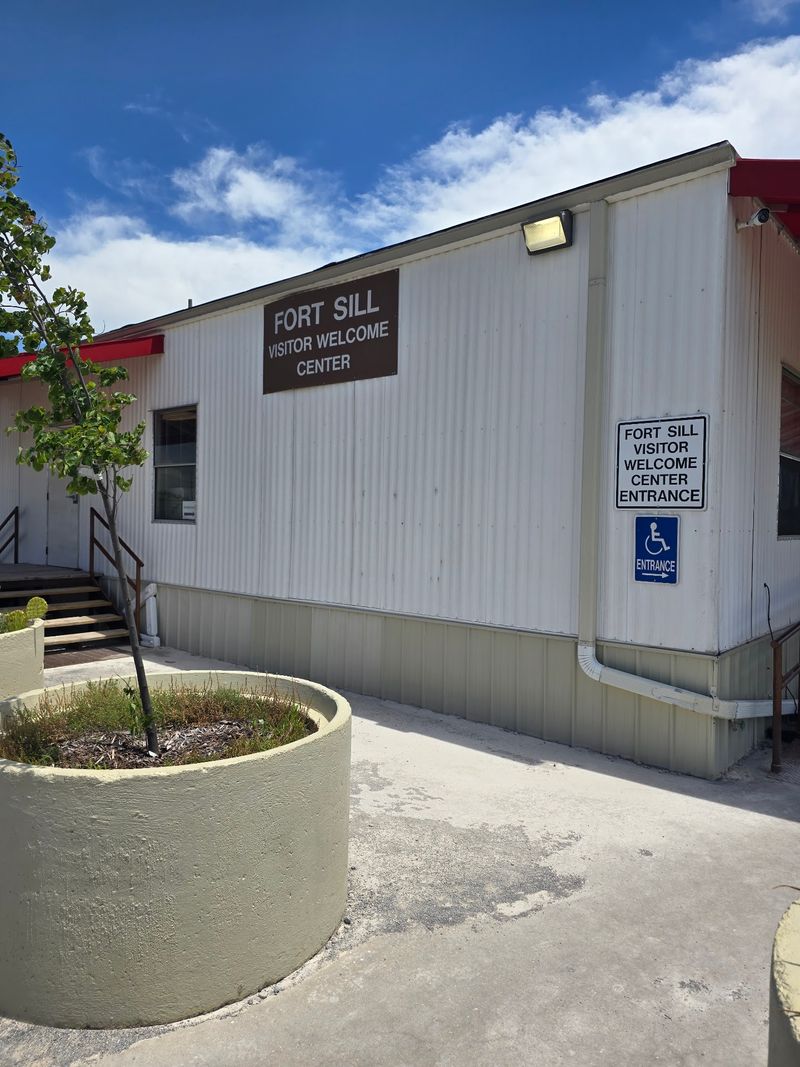
My visit started in a parking lot, not a cemetery. Fort Sill is an active United States Army installation, so anyone without a Department of Defense-approved ID has to stop at the Visitor Control Center first and request a pass.
The process is straightforward but not instant. You will need a REAL ID-compliant identification, and sometimes a second government-issued photo ID helps things move along.
A background check is part of the routine, and there are self-service kiosks near the reception desk where you begin.
Something worth knowing before you drive a long way: access rules for non-U.S. citizens are stricter, and visitors from other countries have been turned away without a military sponsor to escort them. Calling ahead is genuinely the smartest move, because procedures at active bases can change without much warning.
Several travelers mention starting the request online a few days early, which cuts down waiting time at the counter. Even so, I would build an extra half hour into the schedule and treat the stop as part of the experience rather than an obstacle.
The staff I dealt with were matter-of-fact and efficient, which is exactly what you want. Once the pass was printed and sitting on my dashboard, the gate wave-through felt oddly ceremonial.
One practical tip: ask about which gate to use while you are still inside. The gate nearest the cemetery is not always open, and knowing that in advance saves a frustrating loop around the property.
Finding Beef Creek Apache Cemetery Without Losing Your Mind
Here is the part nobody warns you about: your phone will probably try to sabotage you. GPS routing to the cemetery often picks a shortcut that ends at a locked fence or a dead-end service road, which is exactly what happens to a lot of first-time visitors.
The trick I picked up is simple. Set your navigation to the Fort Sill main entrance first, get through the gate, and only then punch in the gravesite as your next destination.
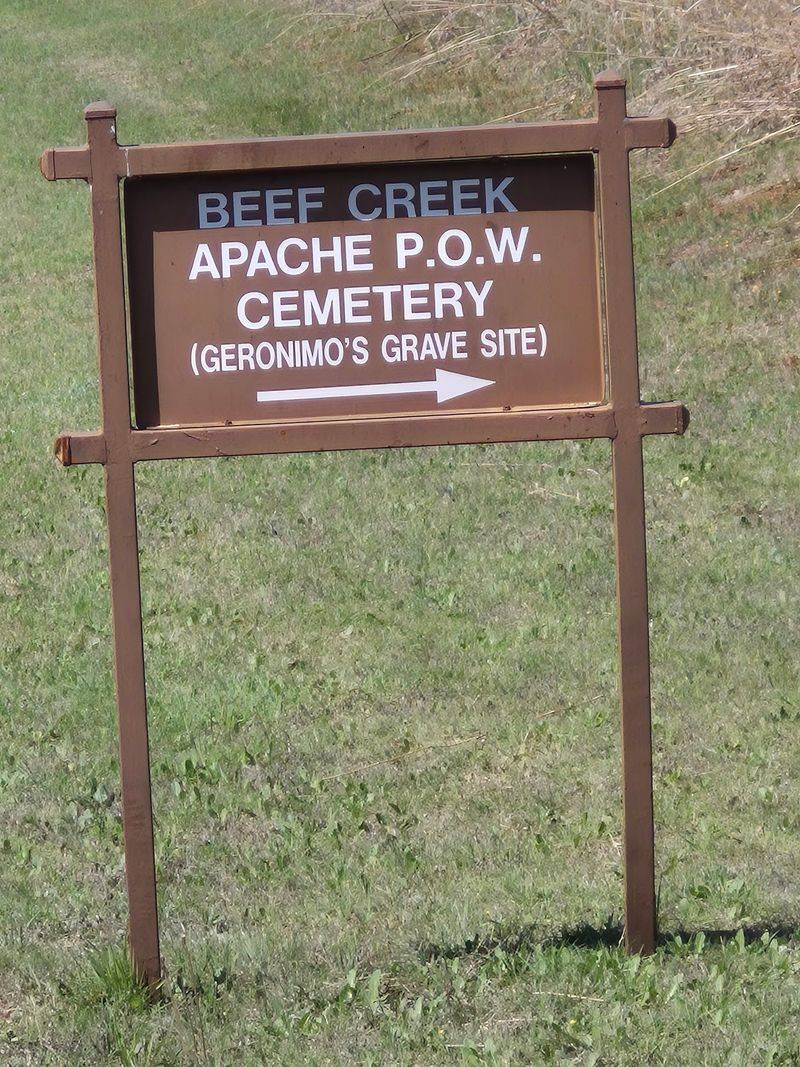
Beef Creek Apache Cemetery sits on the northeast side of the post, across the highway from the busier developed section. Small roadside signs point the way once you are close, though they are modest and easy to blow past if you are driving fast.
There is no visitor map handed out at the gate, so a little screenshotting before you arrive goes a long way. I saved a satellite image of the turn-off and it saved me at least one wrong loop.
Guards at the gate have given handwritten directions to lost travelers before, so asking politely is fair game. Bring a pen, because remembering three turns while a line of cars waits behind you is harder than it sounds.
A useful landmark: the Fort Sill Post Cemetery, where Quanah Parker is buried, sits nearby and connects easily to the Apache burial grounds. Reaching one usually means the other is within a short, scenic drive.
The Five-Foot Stone Pyramid With A Watchful Eagle
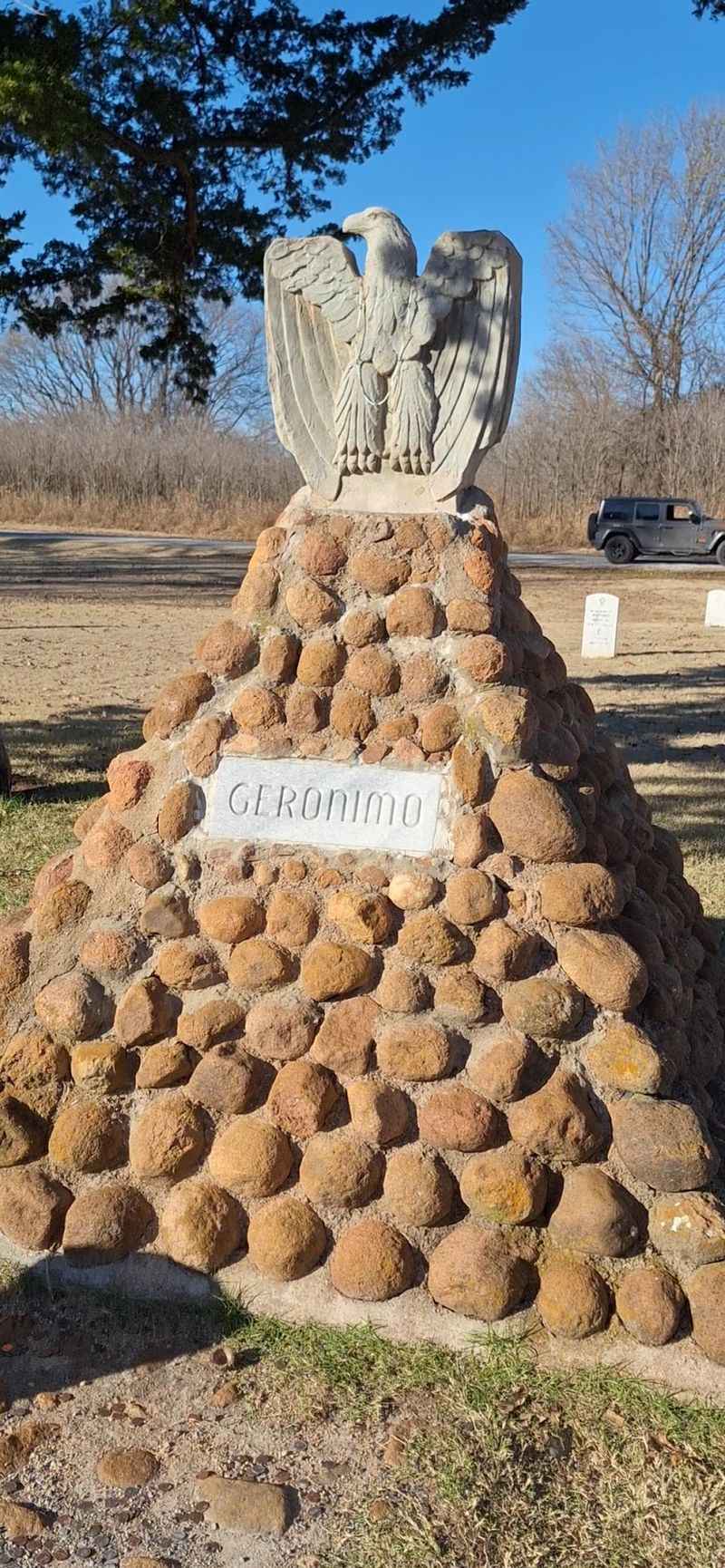
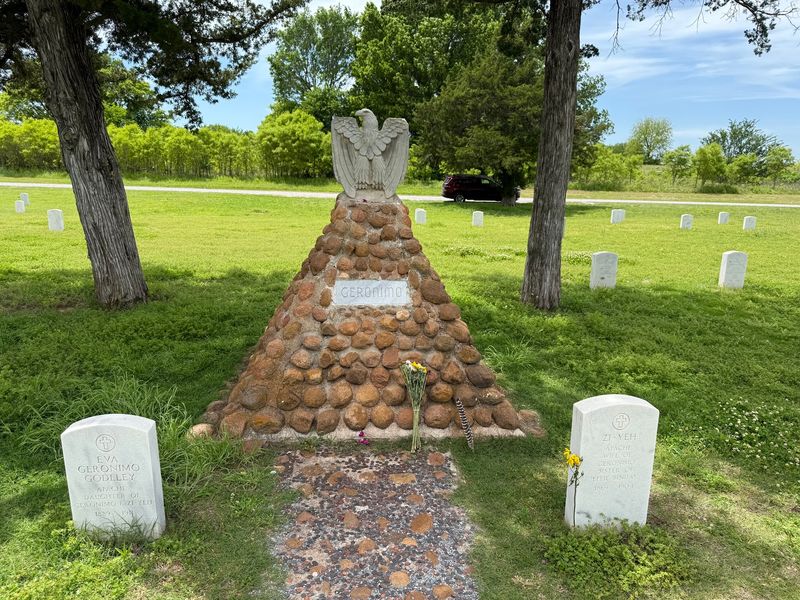
You spot it immediately. Amid rows of neat, uniform white headstones, one marker breaks the pattern completely: a rough pyramid of local cobblestones stacked roughly five feet high, crowned with a carved stone eagle facing outward.
The inscription is almost startling in its plainness. One word, Geronimo, with no dates and no surname, which somehow lands harder than a long engraved tribute would.
I stood there longer than I expected. The stones are irregular and clearly hand-gathered, the mortar visible between them, giving the whole thing a homemade solidity that a polished marble monument could never match.
Small tokens accumulate at the base. Coins, beads, feathers, and other little offerings get left behind by visitors, and seeing them scattered across the stone tells you that people still feel something strong here more than a century after 1909.
Photographs do not quite capture the scale. It is not a towering memorial, and that modest height is part of what makes standing beside it feel personal rather than performative.
The eagle on top is the detail I keep thinking about. Weathered by decades of Oklahoma wind and sun, it looks less like decoration and more like a guardian keeping watch over the prairie.
Take a slow walk around all four sides. Each angle shows different stones, different shadows, and a slightly different sense of the man buried underneath.
Who Else Rests In This Prisoner-Of-War Cemetery
Geronimo’s monument gets the attention, but the surrounding graves are what stayed with me longest. Beef Creek Apache Cemetery was established in 1894 by General Scott as a burial ground for Apache prisoners of war held at Fort Sill.
Roughly 340 burials fill the grounds. Among them are Geronimo’s wives, daughters, and fellow warriors, along with Chief Loco and Chief Nana, two other significant Apache leaders.
Reading the markers one by one changes the tone of the visit. Some stones note service with the United States Army during that same era, a detail that captures just how complicated this history really was.
The cemetery is not frozen in the past either. More recent graves belong to descendants of the original prisoners, which means families still have real connections to this ground today.
That living element deserves respect. Walking the rows quietly, keeping voices low, and not touching or rearranging anything felt like the obvious way to behave.
A tip from other visitors that proved accurate: there are actually several burial areas in the general vicinity, marked by small signs along the roadside. Most people only see this one and drive right past the others.
If you have the time, slow down and read every name you can. The list turns an abstract chapter of American history into individual people who lived, farmed, raised children, and died far from the land they came from.
The Story Behind The Man Under The Stones
Born in June 1829 in what is now western New Mexico, he was named Goyahkla, which translates to one who yawns. Geronimo came from the Bedonkohe band of the Chiricahua Apache and served as both a military leader and a medicine man.
Tragedy shaped his path early. In 1851, Mexican soldiers killed his mother, his wife, and his three children, and that loss hardened his resolve against anyone trying to control his people.
He was never a hereditary chief. His authority came from tactical skill, endurance, and courage in conflicts with Mexican and United States forces, and he frequently acted as spokesman for his band.
September 1886 brought the end of his armed resistance when he surrendered to General Nelson Miles. The final 23 years of his life were spent as a prisoner of war, first in Florida and Alabama, then at Fort Sill starting in 1894.
Life on the post included farming and, occasionally, permission to travel. He appeared at world’s fairs and Wild West shows as a figure of public curiosity, and he even rode in President Theodore Roosevelt’s inaugural parade in 1905.
He used those appearances to ask for his people’s return to their homeland. Every request was denied.
On February 17, 1909, pneumonia took him at Fort Sill after a fall from his horse left him exposed to a cold night. Reports say he voiced regret about surrendering.
Snakes, Silence, And What The Visit Actually Feels Like
Quiet is the word I keep coming back to. Traffic noise from the rest of the post barely reaches this pocket of land, and what fills the space instead is wind through grass and the occasional bird.
There is a posted warning about snakes, both on the ground and in the trees, which reads as slightly comical until you notice how tall the grass gets in places. Closed shoes are a good call, and staying on the mowed paths is smarter than wandering.
The grounds themselves are well maintained. Somebody clearly cares about keeping this place tidy, and that upkeep adds to the dignity of it.
Access is open around the clock once you are cleared onto the base, and no ticket is required. The terrain is mostly flat and open, which makes it manageable for wheelchairs and anyone who prefers level ground.
An informational sign near the entrance covers the basics of the cemetery’s history. Reading up beforehand is worthwhile, because that panel is brief and the fuller story is far richer.
One myth you may have heard: a long-circulating legend claims members of Yale’s Skull and Bones society took Geronimo’s skull in 1918. Historians widely dispute it, and the remains are believed to be intact right where you are standing.
Give yourself an hour. The drive out feels different than the drive in.
Address: Elgin Road and Dodge Hill Road, Fort Sill, Oklahoma
