California became a state on September 9, 1850, and I love the idea that one restaurant here was already feeding hungry gold seekers before that paperwork was signed.
My favorite way to travel this state has never been a checklist of viewpoints, it has been a slow crawl of old dining rooms, worn counters, and family kitchens that somehow kept going through earthquakes, booms, and busts.
Some sit in the middle of city noise, others hide out along farm roads and railroad tracks, and each one tells you something about the people who built the place around it. I think old restaurants are the most honest museums you can visit, because the recipes are still in use and the rooms still fill up at noon.
From fog-wrapped San Francisco to sunny Hollywood, these ten spots stretch from 1849 all the way into the roaring twenties.
Pack an appetite, because history tastes better than it reads.
1. Tadich Grill, San Francisco, CA (1849)
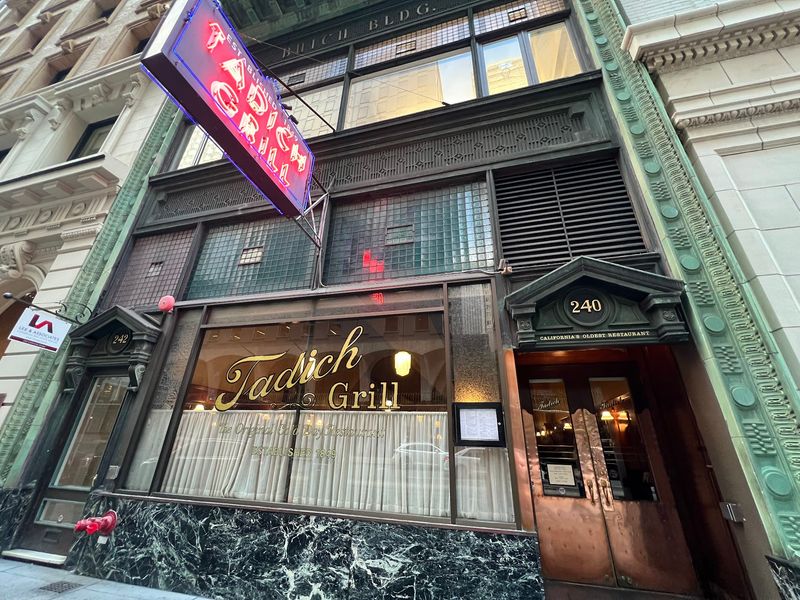
My first bite of cioppino here came with a side of goosebumps, because this dining room was already in business a year before California joined the Union.
It started in 1849 as a coffee stand on Long Wharf run by three Croatian immigrants who grilled fish for gold seekers and merchants. John Tadich bought it in 1867 and gave it his name.
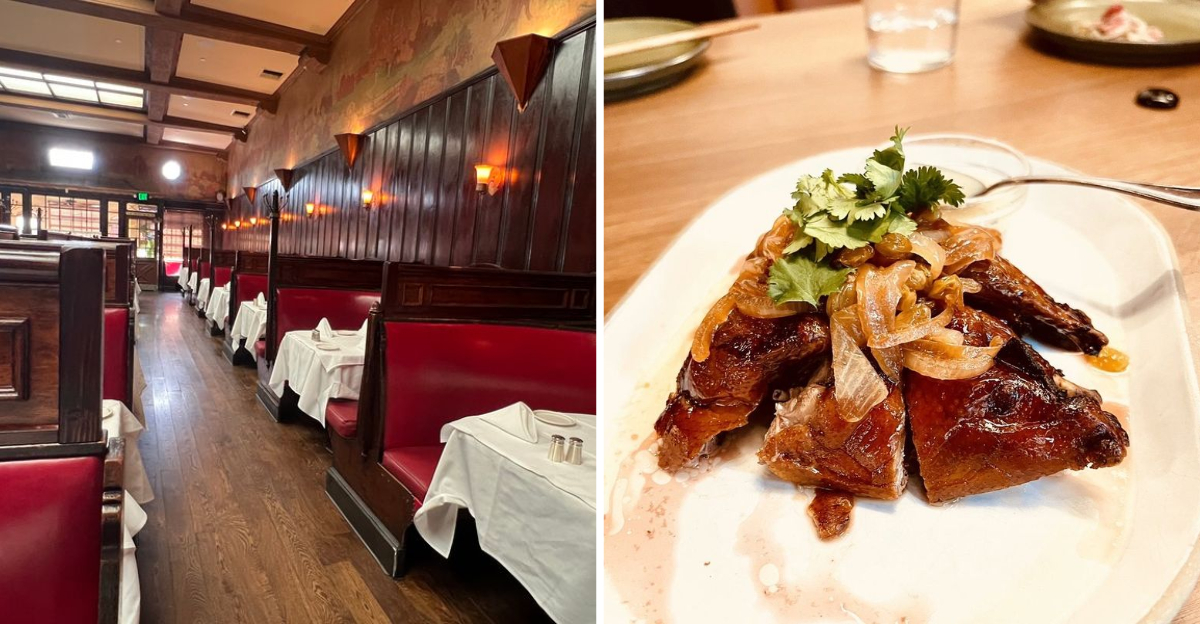
The Buich family took over in 1934 and still runs it today, which explains why the place feels loved rather than staged. Dark wood, Art Deco touches, and crisp white jackets set the mood.
Seafood still cooks over a mesquite charcoal broiler, and that smoky smell hits you the second the door swings open. Regulars swear by the cioppino, the petrale sole, and the crab cakes.
Sitting at the counter is my favorite trick, since many servers have worked here for decades and know the building’s stories better than any plaque could tell them.
Reservations help enormously, especially on weekends, because the room is smaller than its reputation suggests. Read the short history printed on the menu before you order.
Address: 240 California St, San Francisco, California.
2. The Old Clam House, San Francisco, CA (1861)
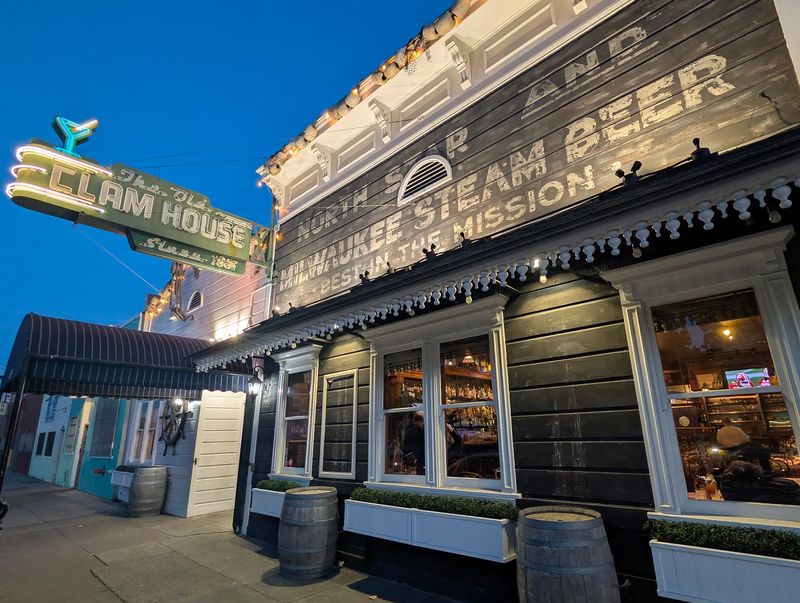
A warm cup of clam broth arrived before I even opened the menu, and that small gesture told me everything about this 1861 survivor.
It holds the title of the oldest San Francisco restaurant still operating in the exact same spot. When it opened as the Oakdale Bar and Clam House, the building sat right on the water’s edge.
Bay fill and city growth changed all of that. Today auto shops and warehouses surround it, which makes finding the wooden building and its glowing sign feel like uncovering a secret.
Inside, plank walls carry old photographs, newspaper clippings, and odd bits of memorabilia collected over generations. Nothing matches, and that is precisely the charm.
Clams, oysters, and chowder anchor the cooking, with a gentle Italian accent running through several dishes. Fresh bread comes alongside that broth, so pace yourself.
Locals fill the tables at lunch, and the crowd skews neighborhood rather than tour bus. I found the mood friendly and comfortably unpolished.
Bring a car or plan your transit, since the block sits away from typical tourist routes. The detour rewards anyone curious about the city’s working past.
Address: 299 Bayshore Blvd, San Francisco, California.
3. Saugus Cafe, Santa Clarita, CA (1886)
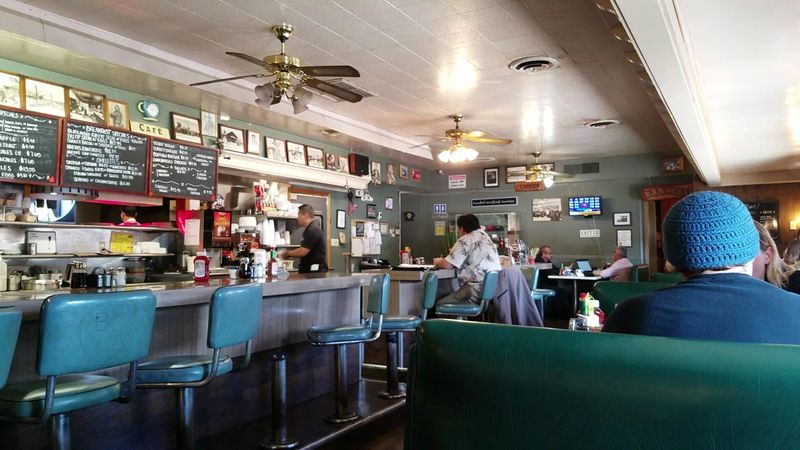
Sky-blue counter stools and a plate of eggs at eight in the morning: that is my clearest memory of this 1886 railroad-town holdout.
Los Angeles County has nothing older still serving meals. The business began as the Saugus Eating House at the north end of the Saugus rail depot, feeding passengers and crews on the line linking Los Angeles and San Francisco.
A move across the street in 1916 landed it roughly where it stands now, in the Newhall area, the oldest community in Santa Clarita.
The dining room keeps a proper diner rhythm, with roomy booths, a long counter, and walls covered in local history. Nothing feels corporate, and that is the appeal.
Presidents Benjamin Harrison and Theodore Roosevelt reportedly ate here, and silent film stars followed once Hollywood crews began shooting nearby.
Breakfast is the main event, hearty and unfussy, the kind of plate that fuels a long drive north or a hike in the surrounding hills.
Film and television productions still use the room, so you may recognize the counter before you sit down at it.
Address: 25861 Railroad Ave, Santa Clarita, California.
4. Duarte’s Tavern, Pescadero, CA (1894)
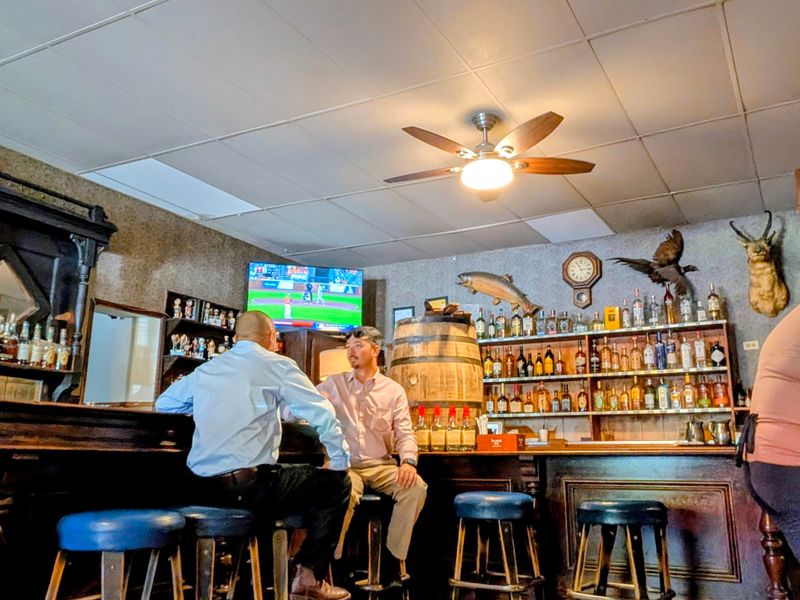
Pescadero sits in a green valley of fava beans and brussels sprouts, and this 1894 tavern is the reason I keep detouring off Highway 1.
Frank Duarte, an immigrant from Portugal, opened the business as a saloon with a barbershop attached, and food came later. The original bar survived a fire in the late 1920s that leveled much of town.
The fourth generation of the family runs things now, and the tradition of pouring the day’s first coffee for local farmers still holds.
Knotty pine paneling wraps the rooms, giving the whole place the feel of somebody’s cabin kitchen rather than a destination restaurant.
Artichoke soup is the signature, often ordered half and half with green chile, and the olallieberry pie uses berries grown nearby, some from the garden out back.
American country cooking with Portuguese roots describes the food best, and a James Beard America’s Classics award backs up the reputation.
Cows and goats graze in the pastures on the drive in, and the coast is minutes away, which makes a leisurely afternoon almost mandatory.
Address: 202 Stage Rd, Pescadero, California.
5. Molinari Delicatessen, San Francisco, CA (1896)
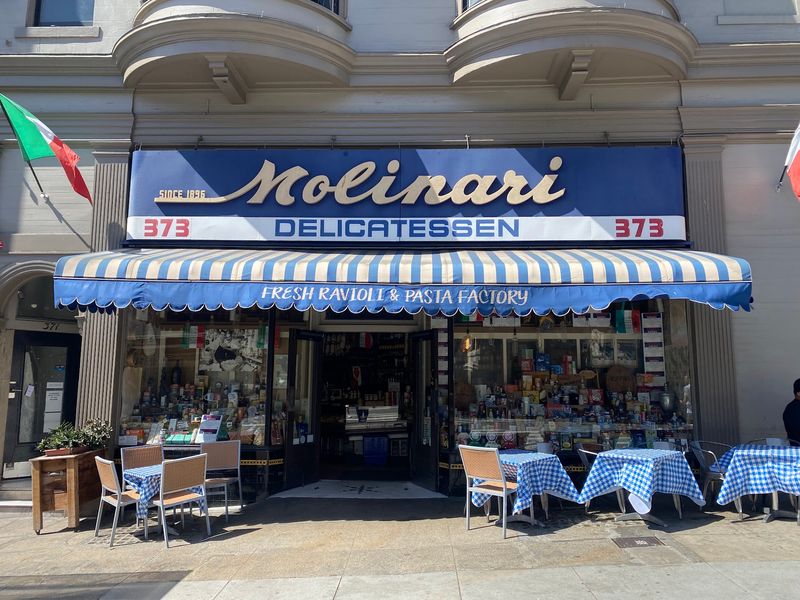
The smell reaches the sidewalk first. Cured meats, aged cheese, and warm bread greet you before you even pull the door of this 1896 North Beach fixture.
P.G. Molinari, from the Piedmont region of Italy, opened his shop on Broadway and moved to Columbus Avenue after the 1906 earthquake reshaped the city.
Salami and coppa hang from the rafters, shelves hold imported pasta and olive oil, and the cheese case runs longer than most home kitchens.
Sandwiches are the main draw, built to order and stuffed generously, with Dutch crunch bread being the choice I recommend to anyone visiting for the first time.
Their own salami has won awards and ships nationwide, and the housemade pastas and sauces make it a genuine neighborhood grocery, not just a lunch stop.
Expect a line at midday, expect to hear old Italian standards playing, and expect the counter crew to move fast once your turn arrives.
Little Italy surrounds the shop, so grab your order and eat in nearby Washington Square Park with Coit Tower in view.
Address: 373 Columbus Ave, San Francisco, California.
6. Philippe The Original, Los Angeles, CA (1908)
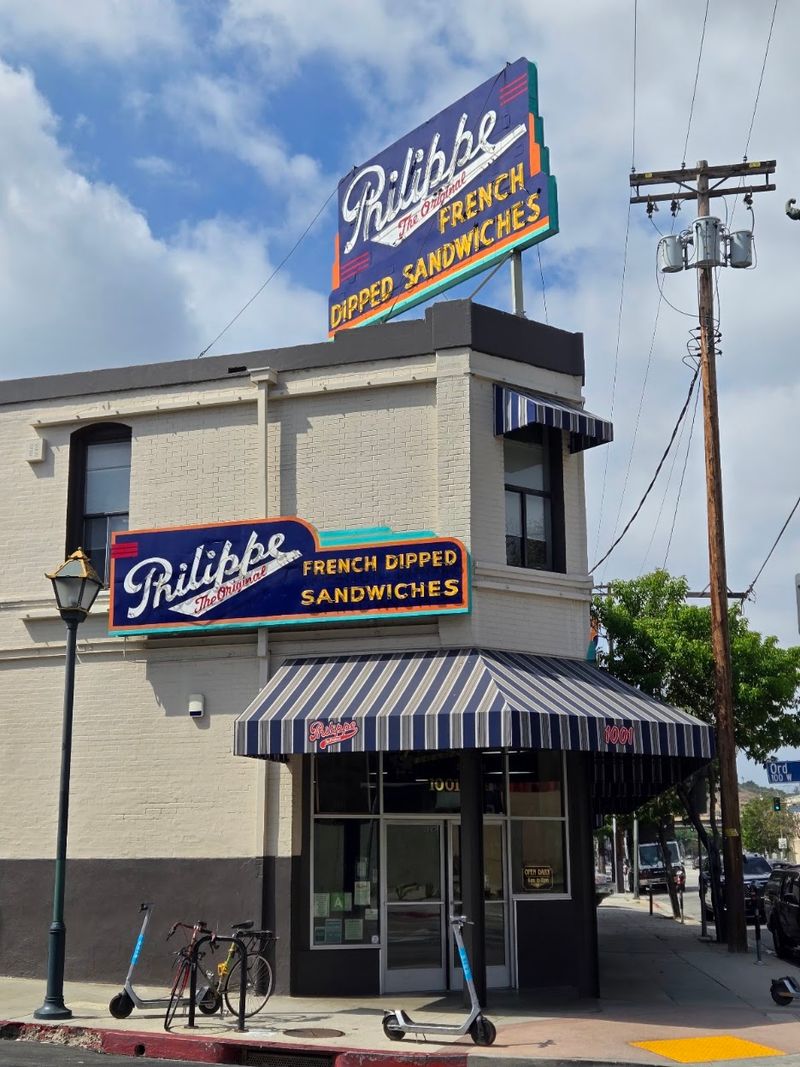
Sawdust on the floor and strangers sharing your table: not many restaurants in 2024 pull that off, but this 1908 Los Angeles institution has never seen a reason to change.
Philippe Mathieu, an immigrant from France, opened the place, and the French dip sandwich reportedly began here in 1918 when a roll landed in a pan of hot roasting juices.
A police officer ate it anyway, liked it, and a legend was born. Whether the tale is exact hardly matters after a century of repetition.
Ordering happens at a long counter, where carvers take your request and build the sandwich right in front of you. The line moves quickly and feels like part of the show.
Dark wooden walls hold old displays honoring circuses and railroads, and the communal tables encourage conversation whether you planned on it or not.
The Martin family bought the business in 1927, and their descendants still run it. That continuity shows in every detail.
Chinatown, Olvera Street, and Union Station all sit within a short walk, making this an easy first stop downtown.
Address: 1001 N Alameda St, Los Angeles, California.
7. Cole’s, Los Angeles, CA (1908)
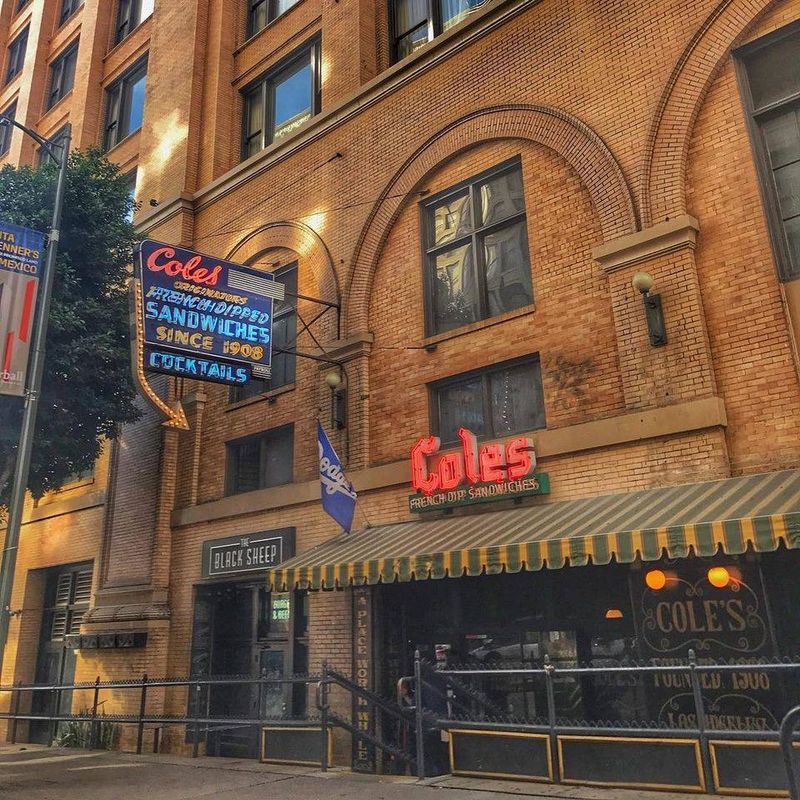
Two Los Angeles restaurants claim the French dip, and this one, opened in 1908, tells its version with a straight face and a very old room to back it up.
The story here credits cook Jack Garlinghouse, who supposedly softened a customer’s hard roll by dipping it in beef juices. Nobody has settled the argument, and honestly the rivalry is half the fun.
What is certain: it is the oldest restaurant in the city still operating in its original location, and the walls prove it.
Penny tile floors, maroon leather booths, dark paneling, and original glass lighting create the mood of an old workingman’s lunchroom. A Los Angeles Historic-Cultural Monument designation protects the character.
The building once housed the terminal for the Red Cars, the electric streetcars that carried thousands of commuters daily, and this ground floor room fed them.
Renovations have come and gone, always with an eye toward keeping the bones intact.
Historic core sidewalks outside make for good wandering, and I recommend eating here before exploring nearby theaters and old office towers.
Address: 118 E 6th St, Los Angeles, California.
8. Musso & Frank Grill, Hollywood, CA (1919)
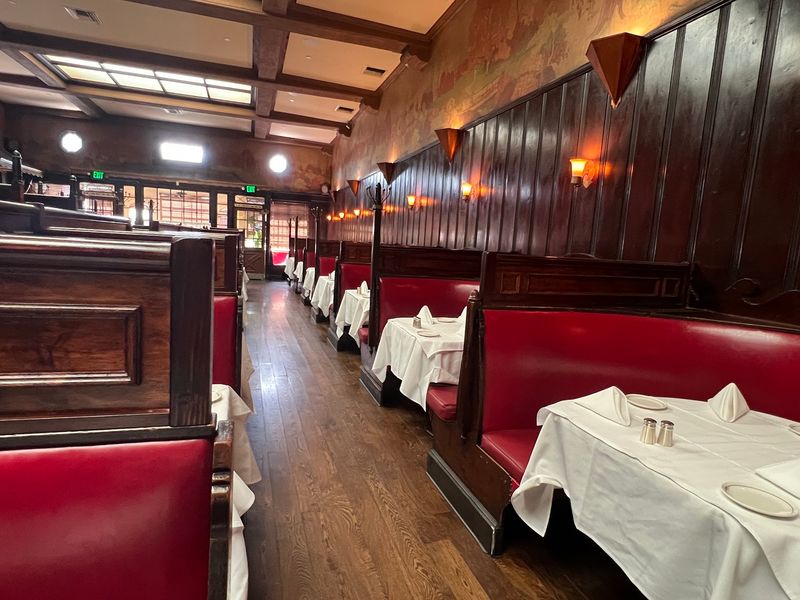
Hollywood Boulevard never stops buzzing, yet the noise disappears the moment this 1919 dining room closes its door behind you.
Joseph Musso and Frank Toulet started it, and John Mosso bought in during 1927 with Joseph Carissimi. Third and fourth generation family members run it today.
Chef Jean Rue led the kitchen for 53 years and shaped a menu that has barely shifted since, which is exactly why regulars keep coming back.
Red leather booths, dark paneling, coat hooks at every seat, and waiters in red jackets create an old-world elegance that manages to feel fun rather than stiff.
Charlie Chaplin had a favorite booth. Raymond Chandler wrote parts of The Big Sleep here, and writers like Faulkner and Fitzgerald turned the place into a second office.
New York steak, chicken pot pie, flannel cakes, and sanddabs remain the dishes people order without glancing at the menu.
A Walk of Fame star arrived in 2019 for the hundredth anniversary, and the building sits on the National Register of Historic Places.
Address: 6667 Hollywood Blvd, Hollywood, California.
9. El Cholo, Los Angeles, CA (1923)
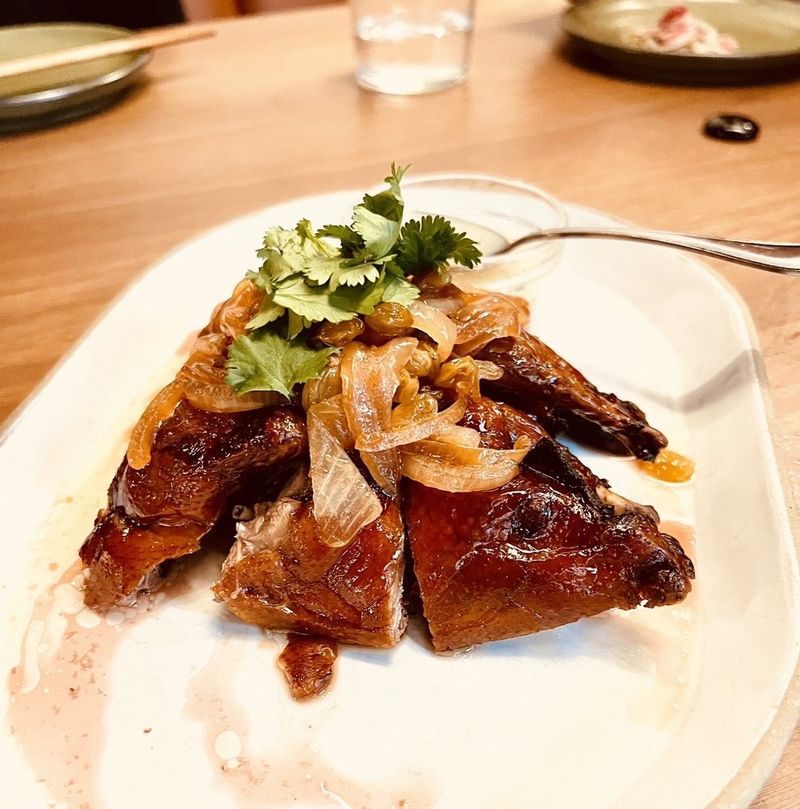
Green corn tamales are seasonal, and I have absolutely planned trips around them at this 1923 Los Angeles favorite.
Alejandro and Rosa Borquez opened it as the Sonora Cafe, named for their home state in Mexico. A customer sketched a caricature labeled El Cholo in 1925, and the name stuck.
The restaurant settled into its Harvard Heights bungalow in 1931, and the founder’s grandson guides the family business now.
Adobe walls, ironwork, and low warm lighting give the rooms the feel of an old cantina. Photographs cover almost every surface, showing staff, regular families, and stars from Hollywood’s early decades.
Credit goes to this kitchen for introducing burritos to American diners in the 1930s, and a longtime server named Carmen Rocha brought nachos onto the menu in the 1950s.
Sonoran-style cooking anchors everything, comforting and generous, the sort of meal you linger over.
Koreatown sits just north, so the neighborhood makes for an interesting evening of contrasts if you like walking after dinner. It is the oldest continuously running Mexican restaurant in the city.
Address: 1121 S Western Ave, Los Angeles, California.
10. Sabella & La Torre, San Francisco, CA (1927)
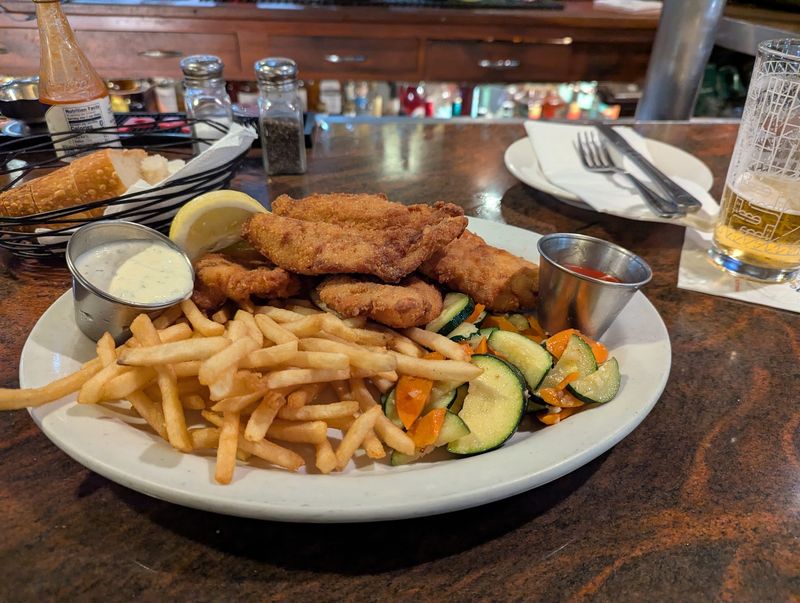
Sea lions bark a few piers away, crab pots steam on the sidewalk, and this 1927 family business keeps working right in the middle of it all.
Luciano Sabella and his son Antone, from the fishing town of Sciacca in Sicily, began with a small stand called A Sabella that sold crab and the day’s catch.
After World War II the La Torre relatives came aboard, and the stand grew into a full sit-down restaurant while the outdoor crab operation carried on.
Four generations later, it stands as the last of the original wharf families still running a place here, and it joined the Legacy Business Registry in 2024.
Dark booths, granite counters, and a mural of the Golden Gate Bridge and Coit Tower give the dining room a cheerful, old-school comfort. Harbor views come free.
Dungeness crab, cioppino, clam chowder, marinated calamari, and garlic prawns headline the Sicilian-leaning cooking.
Families fit easily here, with crayons handed to kids, and Alcatraz boats and Ghirardelli Square sit within an easy stroll.
Address: 2800 Taylor St, San Francisco, California.
