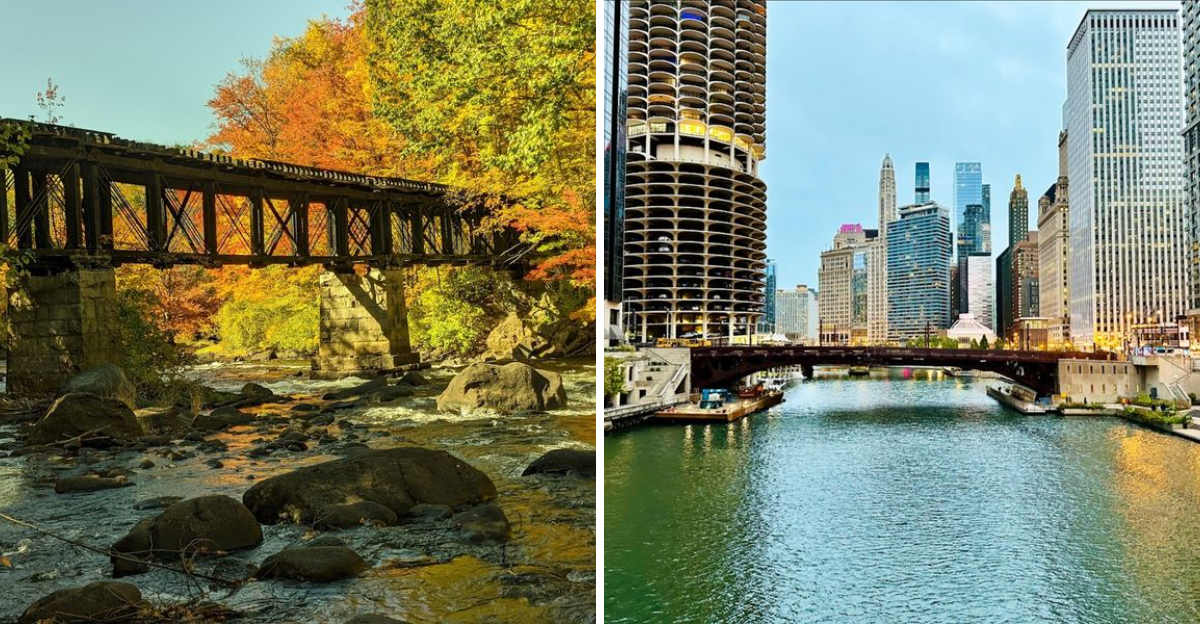
I have driven through a lot of covered bridges in New Hampshire over the years, but I did not realize how special some of them truly are. There are only seven covered railroad bridges left in the entire world, and five of them are hiding right here in New Hampshire.
That fact stopped me cold. I had probably driven past some of them without even knowing what I was looking at.
The bridges are old and weathered, with wooden beams that have been holding up trains for over a century. Some are still used by trains.
Others have been converted into footpaths for hikers. I visited one that spans a gorge, with the river rushing far below.
Standing on it, I could feel the history in the timbers. Another one is tucked away in the woods, accessible only by a short trail.
That is the thing about these New Hampshire bridges. They are not just functional.
They are a piece of history that most people have no idea exists.
Contoocook Railroad Bridge, Hopkinton
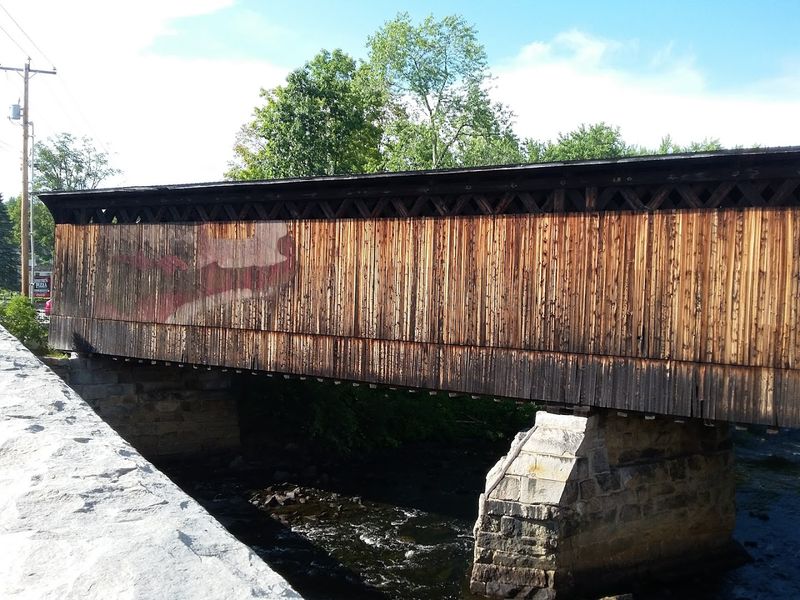
Calling itself the oldest covered railroad bridge still standing in the entire United States is quite a flex, and the Contoocook Railroad Bridge in Hopkinton pulls it off without breaking a sweat.
Nestled along the banks of the Contoocook River, this structure carries the kind of quiet dignity that only comes with serious age.
It sits in the small village of Contoocook, which is technically part of the town of Hopkinton, New Hampshire.
Built in 1889, it was substantially reconstructed from an even earlier bridge that went up between 1849 and 1850. That means the story of this crossing stretches back to a time when railroads were still reshaping the American landscape.
It is one of three surviving covered bridges along the former Concord and Claremont rail line, which adds a lovely layer of regional railroad history to its already impressive resume.
The bridge uses a Town lattice truss design, a style known for its interlocking diagonal planks that create a web-like wooden framework. Walking near it, you immediately feel the craftsmanship that went into every joint and timber.
The surrounding scenery is classic New England, all rolling hills and quiet riverbanks.
Getting here is straightforward. The bridge is located off Fountain Square in Contoocook village, making it very accessible for a quick stop or a longer photography session.
There is no grand visitor center or ticket booth waiting for you, just an honest piece of American engineering history standing in the open air. Address: Contoocook Railroad Bridge, Fountain Square, Contoocook, NH 03229.
Pier Covered Bridge, Newport
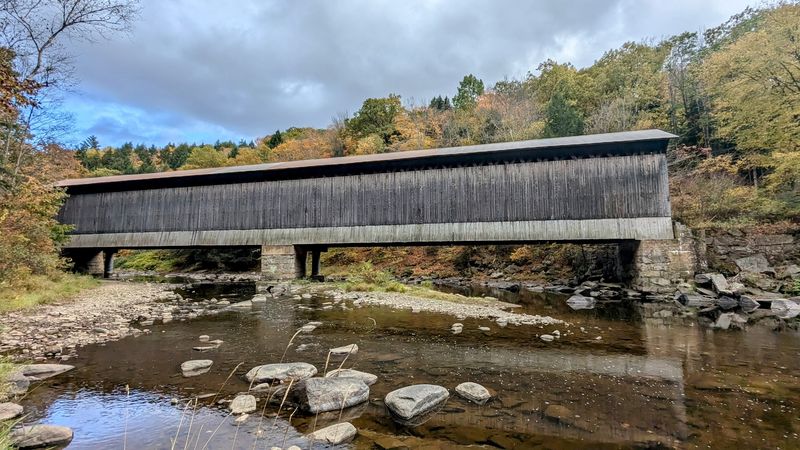
Some bridges are long. The Pier Covered Bridge in Newport, New Hampshire, is the longest of all five surviving covered railroad bridges in the state, stretching an impressive 217 feet across the Sugar River.
That length alone earns it serious bragging rights in any covered bridge conversation. Also known as the Chandler Station Bridge, this structure has a name with two personalities and a span that turns heads.
Constructed in 1907, it represents a moment in New England railroad history when builders were still trusting wood over steel for these important crossings. The bridge sits on a stone pier midspan, which is exactly where it gets its more common nickname.
That central support gives the whole structure a distinctive look that sets it apart from its neighbors down the rail line.
Newport is a charming small city with a lively downtown and a genuine appreciation for its historic landmarks. The Sugar River flows with a certain peacefulness beneath the bridge, and the surrounding landscape shifts beautifully through the seasons.
Autumn is particularly spectacular here, as the foliage frames the old timber in shades of orange and red that would make any photographer stop cold.
The bridge is accessible and worth exploring at a relaxed pace. Newport sits in Sullivan County and offers enough small-town charm to make a half-day visit feel completely worthwhile.
Address: Pier Covered Bridge (Chandler Station Bridge), Sugar River Trail, Newport, NH 03773.
Wright’s Covered Bridge, Newport
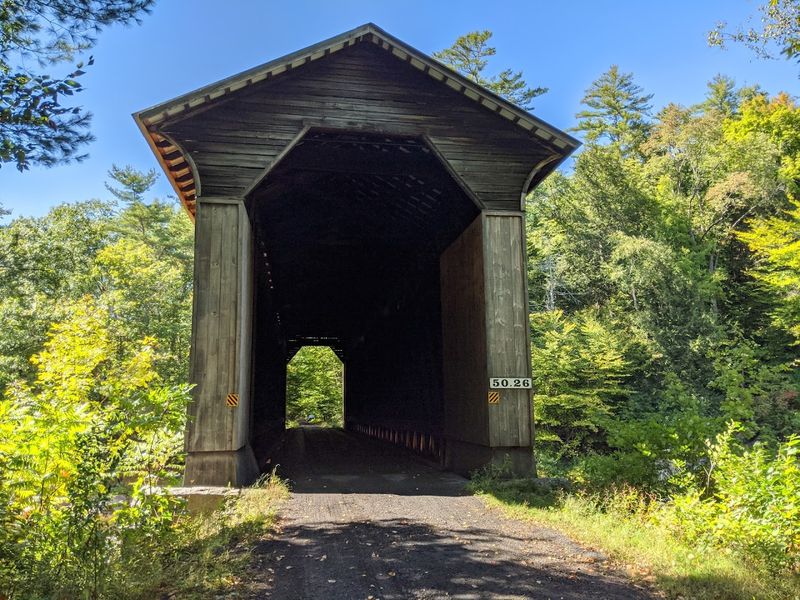
Right in the same town as the Pier Bridge, Wright’s Covered Bridge in Newport quietly holds a distinction that makes railroad bridge enthusiasts genuinely excited. It is the only surviving double Town lattice truss railroad bridge in the world that also incorporates integral laminated wood plank arches.
Say that three times fast, and then go see it in person because no description fully does it justice.
Dating back to 1906, Wright’s Bridge also served the historic Concord and Claremont rail line.
It’s making Newport, New Hampshire, an unexpectedly rich destination for anyone fascinated by 19th and early 20th century railroad engineering. The fact that two of these globally rare bridges exist in the same small city is almost too good to believe.
Newport clearly punches well above its weight in the covered bridge department.
The double Town lattice design means the bridge uses two overlapping layers of diagonal planks rather than one, creating a stronger and more visually intricate structure. The laminated wood arches add an extra architectural layer that was unusual even at the time of construction.
Standing inside or near this bridge, you can actually see the engineering logic working in the wood grain itself.
Newport makes it easy to visit both the Pier Bridge and Wright’s Bridge on the same outing since they are located along the same trail corridor. The Sugar River Trail connects these landmarks beautifully for walkers and cyclists.
Address: Wright’s Covered Bridge, Sugar River Trail, Newport, NH 03773.
Sulphite Railroad Bridge, Franklin
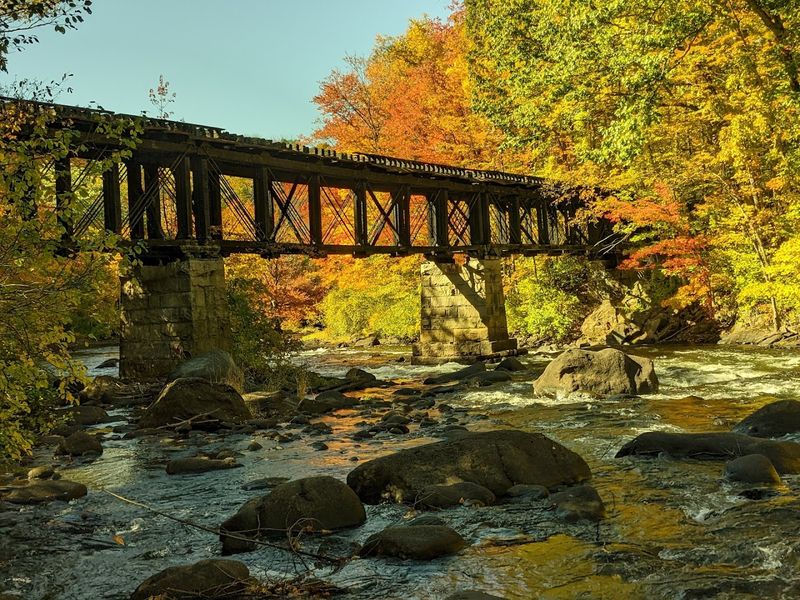
Most covered bridges put the road or railroad track inside the wooden shelter. The Sulphite Railroad Bridge in Franklin, New Hampshire, flips that idea completely upside down, and yes, that is literally how it earned its nickname.
Known as the Upside Down Covered Bridge, this is a deck-covered bridge, meaning the railroad tracks run across the top of the structure rather than through it. It is believed to be the only remaining example of this type in the entire United States.
Built in 1896 and spanning the Winnipesaukee River, the Sulphite Bridge carries a visual logic that takes a moment to fully process. The wooden covering protects the structural components from weather from below and the sides, while the deck sits exposed on top.
It is an engineering solution that was practical in its time and is now a one-of-a-kind architectural curiosity.
Franklin is a small city in Merrimack County that sits at the confluence of the Pemigewasset and Winnipesaukee rivers. The area has a quiet industrial history tied to textile mills and railroads, and the Sulphite Bridge is a physical remnant of that working past.
The riverside setting is genuinely scenic, and the bridge photographs beautifully from multiple angles.
Visiting the Sulphite Bridge feels a little like stumbling onto a secret that most of the world has completely forgotten. Franklin is easy to reach from several major routes through New Hampshire.
Address: Sulphite Railroad Bridge, Winnipesaukee River, Franklin, NH 03235.
Clark’s Railroad Bridge, Lincoln
Of all five covered railroad bridges in New Hampshire, Clark’s Railroad Bridge at Lincoln has the most adventurous biography. Originally built in 1904 for the Montpelier and Wells River Railroad in Vermont, this bridge was physically relocated to Clark’s Trading Post in Lincoln sometime around 1965.
That move alone makes it stand out, but there is an even bigger distinction waiting on the other side of the story.
Clark’s Railroad Bridge is widely considered the only known covered railroad bridge in the world still in active use. Trains actually run through it.
The bridge serves the tourist steam railway at Clark’s Trading Post, a beloved family attraction nestled in the White Mountains of New Hampshire.
Watching a steam locomotive roll through a covered wooden bridge surrounded by mountain scenery is the kind of experience that makes you feel like you have genuinely stepped back in time.
Clark’s Trading Post has been operating as a family entertainment destination for generations, and the steam train ride remains one of its signature attractions. The bridge adds historical authenticity to an experience that already leans heavily into nostalgia and fun.
Kids absolutely love it, but adults tend to be the ones standing still with wide eyes when the train appears.
Lincoln is a fantastic base for exploring the White Mountains region, with hiking, scenic drives, and plenty of mountain charm all around. Clark’s Trading Post is open seasonally, so checking their schedule before visiting is a smart move.
Address: Clark’s Trading Post, 110 Daniel Webster Hwy, Lincoln, NH 03251.
The Art of the Town Lattice Truss Design
Behind every covered railroad bridge is a structural idea that was genuinely clever for its time. The Town lattice truss, developed by architect Ithiel Town in the early 1800s, uses a series of diagonal planks nailed together in a crisscross pattern to distribute weight evenly across the span.
No heavy timber framing required, no complicated joinery, just planks and nails working together in a repeating geometric rhythm.
The elegance of the design is that it could be built by relatively unskilled labor using locally available lumber. That made it both affordable and practical in an era when bridges needed to go up quickly and cheaply across rivers all over the expanding American countryside.
Railroad builders adopted the design enthusiastically because it scaled well to the heavier loads that trains demanded.
New Hampshire’s surviving covered railroad bridges showcase several variations of this principle. Wright’s Bridge in Newport takes it further with a double lattice layer and integrated arch elements, demonstrating how builders pushed the basic concept toward greater strength and sophistication.
Seeing these structures in person makes the engineering logic immediately visible and surprisingly intuitive.
Understanding the Town lattice design adds a whole new layer of appreciation to any covered bridge visit. Instead of just seeing old wood, you start reading the structure like a diagram of 19th-century problem-solving.
Every plank is doing something specific, and the whole thing holds together through geometry as much as hardware. It is honest, practical, and quietly beautiful all at once.
Planning Your New Hampshire Covered Railroad Bridge Road Trip
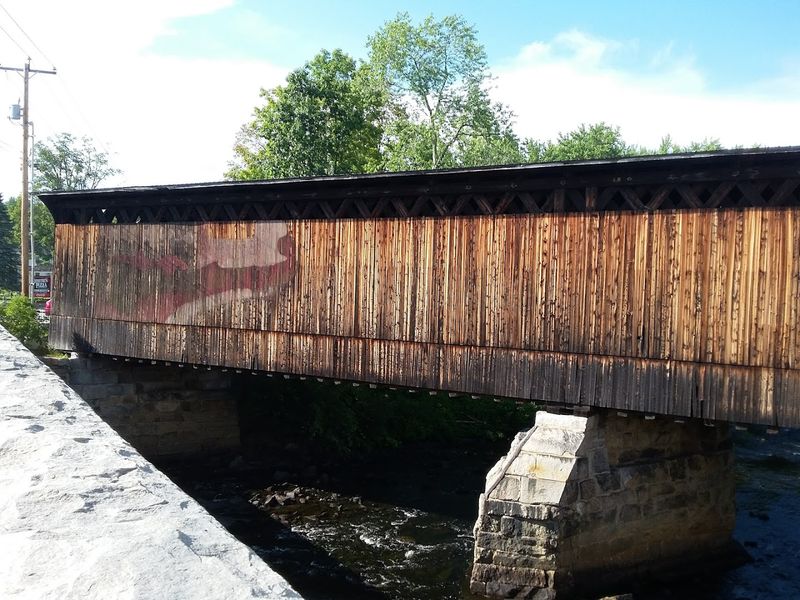
Plotting a covered railroad bridge road trip through New Hampshire is genuinely one of the most rewarding ways to explore the state.
The five bridges are spread across different parts of the Granite State, from the central towns of Hopkinton and Franklin to the Sullivan County city of Newport and the White Mountains destination of Lincoln.
Each location offers its own regional flavor, so the drive between them is part of the attraction.
Starting in Hopkinton to visit the Contoocook Railroad Bridge makes geographic sense if you are arriving from the south or from Concord, the state capital.
From there, heading west to Franklin for the Sulphite Bridge adds the quirky upside-down experience before continuing to Newport for the double bridge treat.
Saving Lincoln and Clark’s Trading Post for last gives the road trip a grand finale that includes a genuine steam train ride.
The best seasons for this adventure are late spring through early autumn, when the roads are clear and the scenery is at its most inviting. Fall is especially spectacular in New Hampshire, and timing a bridge tour to coincide with peak foliage turns a history trip into a full sensory experience.
Bring a camera, wear comfortable shoes, and give yourself enough time to actually stop and absorb each location.
Small towns along the route offer local diners, farm stands, and country stores that make the gaps between bridges as enjoyable as the destinations themselves. New Hampshire rewards the unhurried traveler.
Address: Start at Contoocook Railroad Bridge, Fountain Square, Contoocook, NH 03229.
