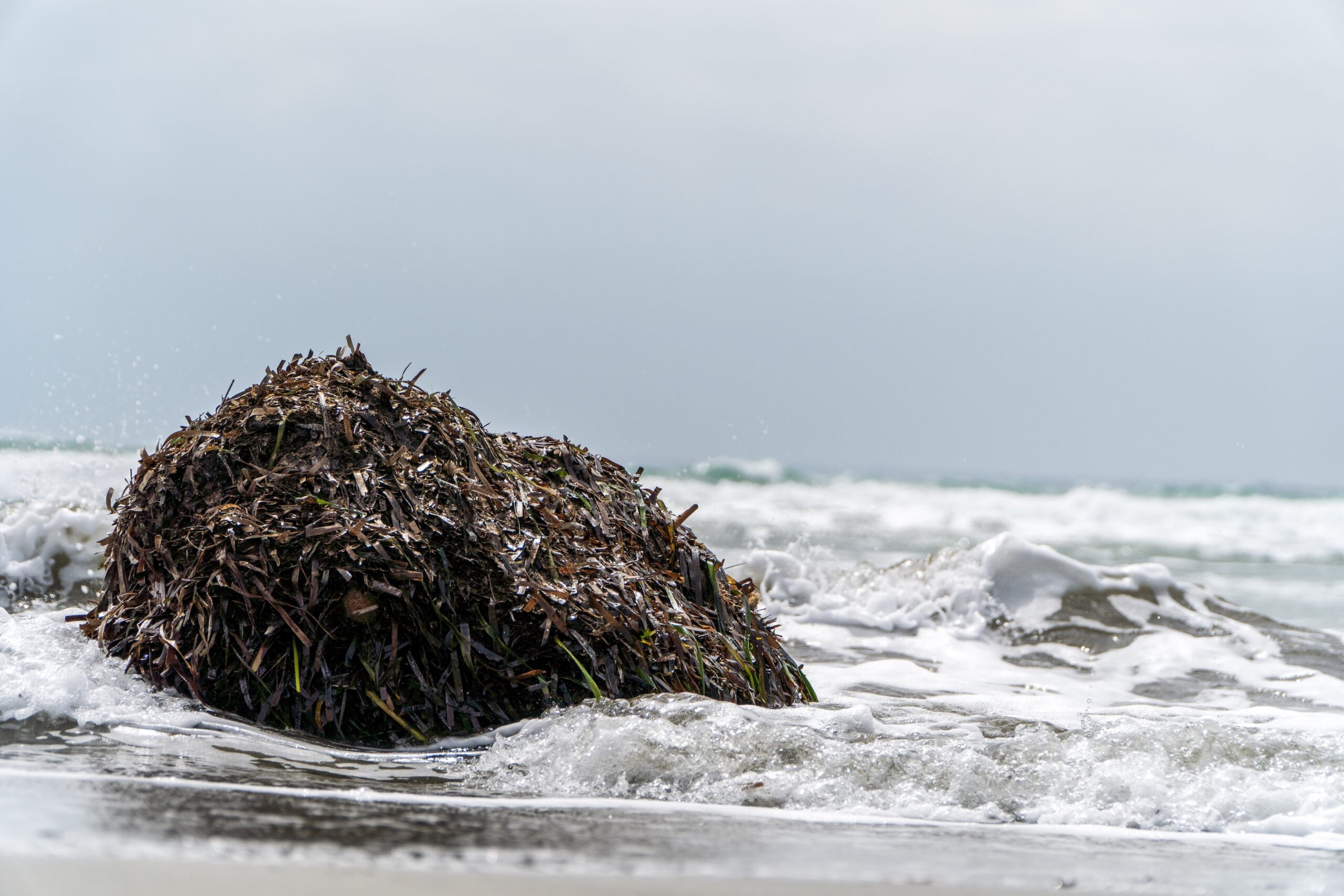
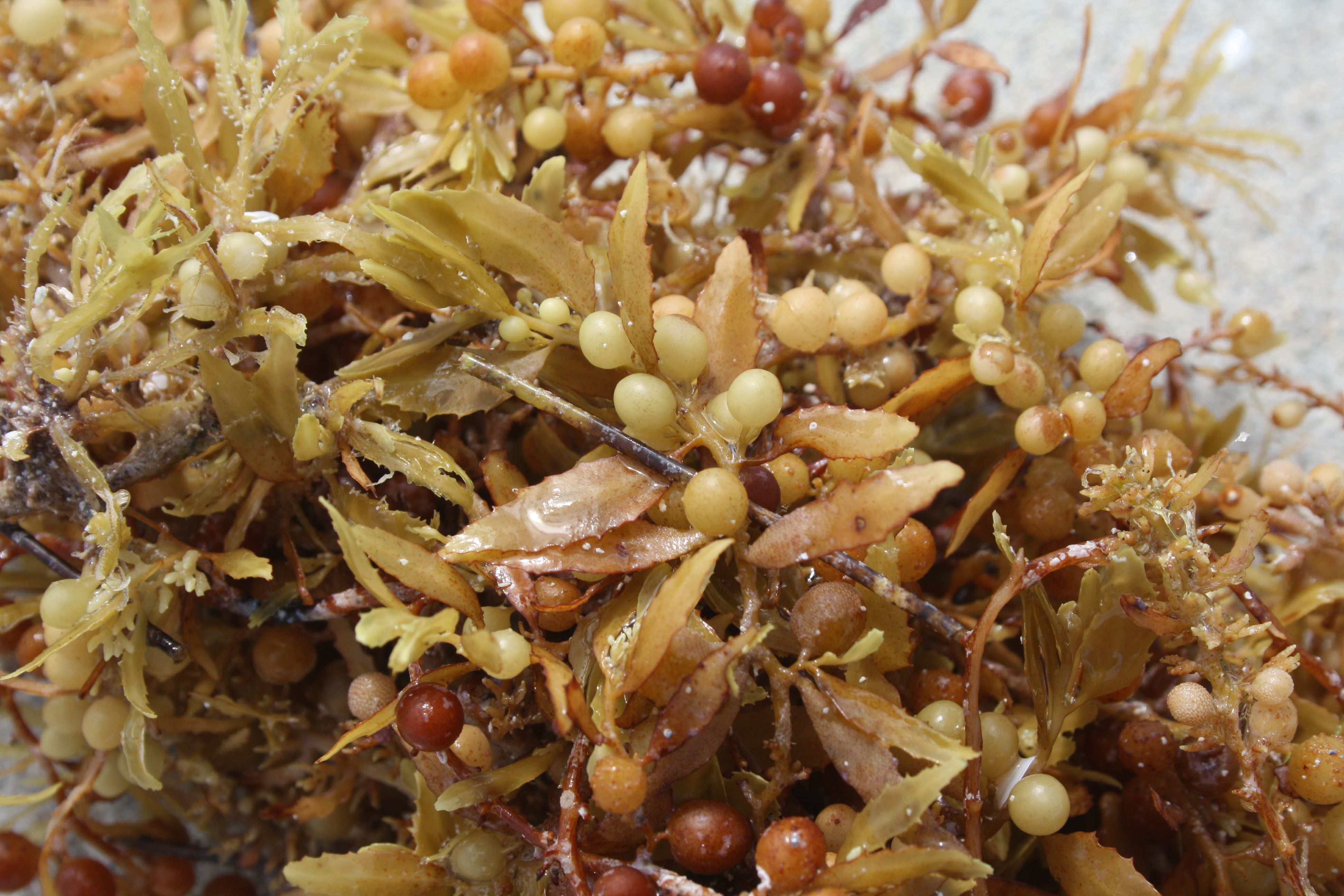
And it just won’t quit. Disruptive, hated-by-brides, smelly brown sargassum seaweed has hit Caribbean and Atlantic beaches for summer 2026. Sargassum is brown strands of algae that originate in the Atlantic’s Sargasso Sea and eventually wash up to shore.
I first encountered it a decade ago on a trip to Mexico’s east coast. At that time, our media group embedded with resort troops fighting the onslaught of sargassum seaweed. We learned how warming oceans might exacerbate a natural phenomena. That stuff was tough!
Just try sweeping a beach. Or, shoveling mounds of seaweed. You quickly learn it’s hard work.
Unusually dense sargassum came back with force a few years later, creating a 1,000-square-mile patch of floating seaweed that moved towards the Caribbean. Each year since, sargassum has returned to Caribbean coastlines and parts of the Atlantic during summer. With it come flies, decaying plankton, foul odors and impossible to wade through seaweed lapping the shores.
Globs of Seaweed beached for 2026
The trade publication Travel Weekly reports that this summer, the government of Mexico has pledged nearly $115 million to battle it off before it arrives ashore. Apparently 5 million metric tons of smelly brown goo washed in along Gulf of Mexico shorelines, double the amount that appeared just a year prior. The problem is not just Mexico’s.
Outbreaks have been reported off Barbados, Cayman Islands, Dominican Republic, Puerto Rico, Sint Maarten/St. Martin, Jamaica and other islands. In Mexico, it impacts the popular tourism resorts of Cancun, Playa del Carmen, Puerto Morelos, Tulum and Mahahual. This year, they’re using boats to capture it at sea, long rope barriers to keep it from floating to shore, and doing even more work to clean it faster and more efficiently when it does wash up ashore.
Of course, there’s potential for it to spread to more of the Caribbean, Yucatan peninsula and the mid-Atlantic as August heat waves continue to rock many regions. The unusual volume of sargassum — it has reached more than 90 metric tons per day in some parts of the Mexican Caribbean — is an economic nightmare. When it gets bad, resorts must close and shift business to one of their other properties if possible.
Here’s a look at what we experienced in Riviera Maya in 2015. Imagine , and what is recurring now as it moves around the Atlantic, Caribbean and Gulf Coasts, possibly through the end of the year.
What is Sargassum and why is it bad?
Sargassum is not new,. For centuries, it was primarily in the 2,000,000-square-mile region of the North Atlantic known as the Sargasso Sea. Clumps of the rich and nourishing brown seawood would break off and drift across other areas of the ocean, but rarely in such volume.
Left to dry on coastlines, in the hot sun, it becomes a tourism nightmare. Despite the eyesore and odor given off by the thousands of tiny plants and marinelife that travel with sargassum, it is not harmful in any way.
Instead, scientists stress this eco-system’s importance to healthy oceans. Some speculate that climate change causing shifting water currents and warmer seas have helped it bloom. Many blame carbon dioxide from fertilizer runoff for the abundance of sargassum.
How to find out about Sargassum before you make travel plans
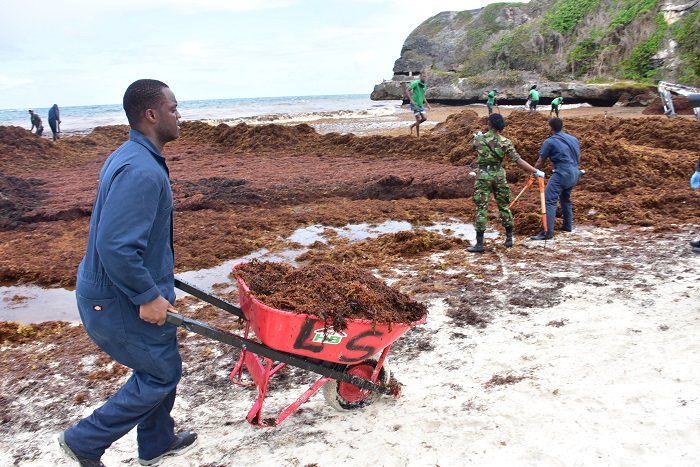
The sargassum outbreak is reported in real time by Sargassum Monitoring. You must expect to see some sargassum seaweed along any Southern beach. When we visited Fort Lauderdale last year, for example, we found sargassum seaweed. Yet, it was at more manageable levels than in many destinations.
Nonetheless, you don’t want to spend your hard-earned vacation dollars when you can’t go into the water! That’s why it’s important to know where you’ll find sargassum. Check the Sargassum Monitoring map and contact resorts directly to inquire about the current status of this naturally occuring — and unpreventable — event. Keep in mind that sargassum seaweed is unpredictable.
If you get lucky, just stand and admire your pristine resort beach. Elsewhere on the island, the port may be so clogged that ferry systems are unusable. Visit some fishing villages and you may find them overrun with mounds of drying seawood up to 10 feet high. If tons more clogs the harbor, the sargassum prevents fishing vessels from moving out to sea.
A Family Resource: Make lemonade from holiday lemons!
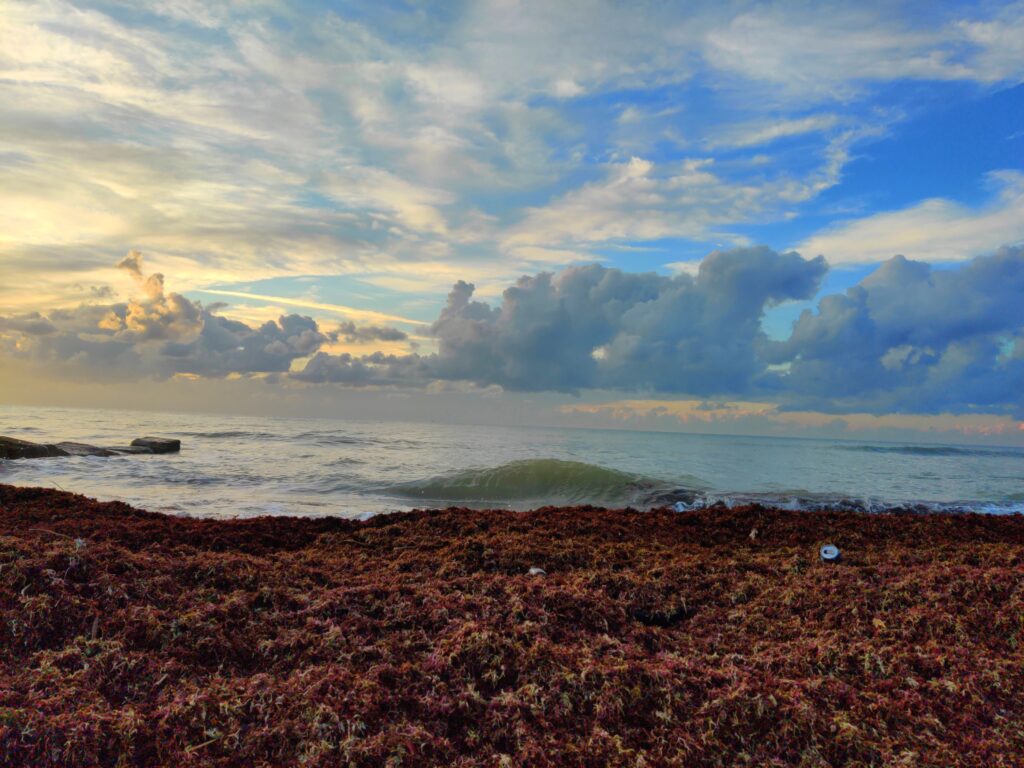
Make lemonade out of a sargassum seaweed-infested lemon of a vacation. Remind your family that it is not all bad news. Sargassum bloom is an economic boon for some places. Manual labor is used to remove the seaweed in beach areas where sea turtles have made their nests. Hundreds have found daily work shoveling the seaweed away from gold sand beaches so that brides can have barefoot weddings. The locals at your destination may be benefiting from this sustainable form of tourism.
Conservationists say that large scale efforts to bury the seaweed in trenches dug into the sand will pay off in the future, when the sargassum attracts more sand to replenish and widen the beachfront along the most heavily developed coastlines.
If your resort is suddenly awash in sargassum, use the inconvenience as a learning opportunity for the whole family to understand firsthand why we must live in harmony with nature. The Caribbean Alliance for Sustainable Tourism’s handbook “Sargassum, A Resource Guide for the Caribbean” will fascinate school-age kids and is good resource for crafts projects incorporating the dried seaweed.
All we know for sure is that trying to fight it on such a large scale is a losing proposition.

Hello, I enjiy eading alll of your artkcle post. I waanted tto write
a little comment too support you.
Can you tell us more about this? I’d care to find out more
details.