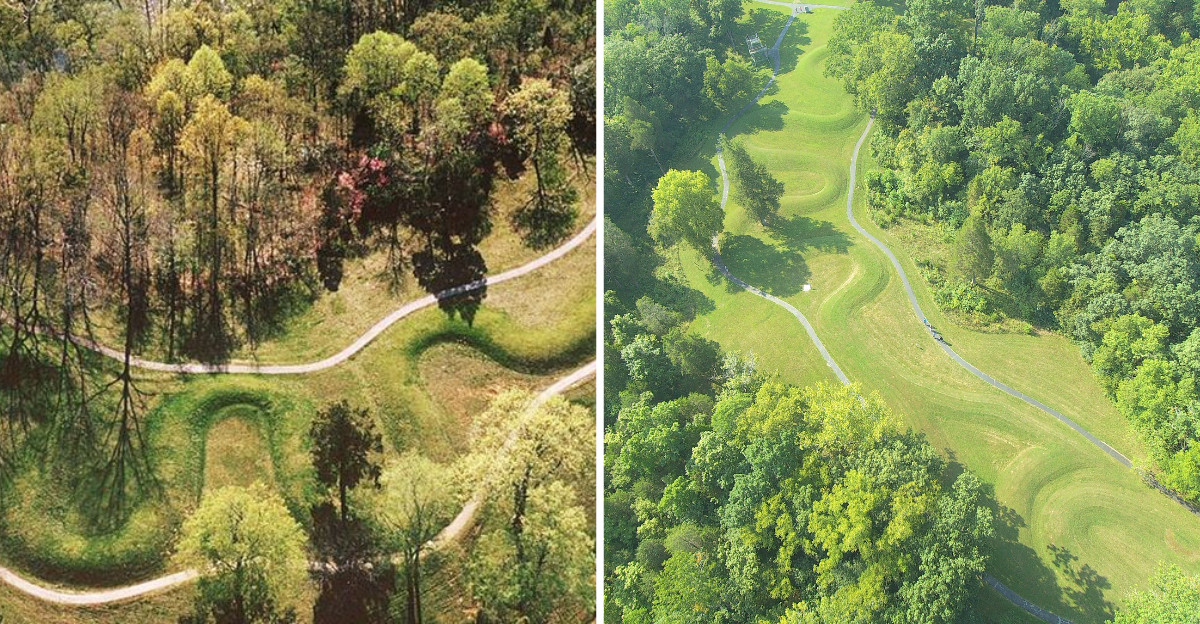
Rolling hills and a high ridge hide a giant earthen snake, nearly a quarter mile long, curling above a creek. Ancient people shaped this Ohio landmark by hand, basket of earth after basket of earth, and nobody wrote down why.
Walking along the ridge, tracing its seven coils with your eyes, the question of what it meant to them never goes away. The breeze moves through the trees, and the whole place feels calm and a little magical.
Grass grows over the curves, and the light shifts across the ridge as the day moves on. No one knows if this serpent was a burial site, a calendar, or something else entirely.
The mystery is part of the pull. Hours pass without notice while wandering the grounds and reading the few facts that survive.
History wrapped in fresh air and open sky makes this spot worth the drive.
A Snake Big Enough to Fill Four Football Fields
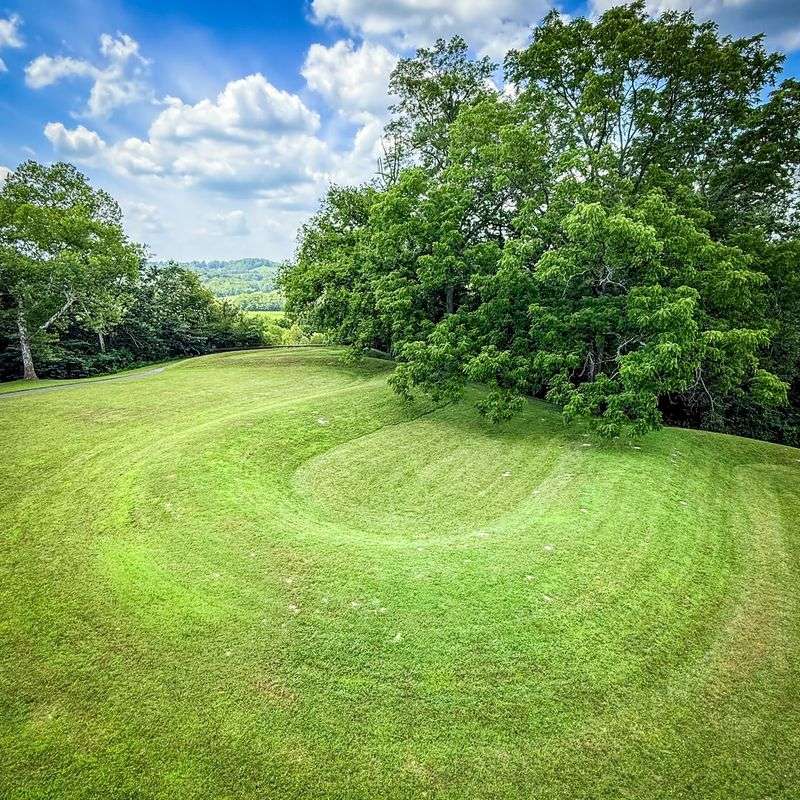
My first look at the serpent left me grinning like a kid. The mound runs roughly 1,348 feet from its curled tail to its open jaws, which is longer than four football fields placed end to end.
Its height changes as it slithers along, rising from about one foot to nearly five feet. The body stays around 20 to 25 feet wide, so it looks soft and rounded, almost like a green rope tossed over the hill.
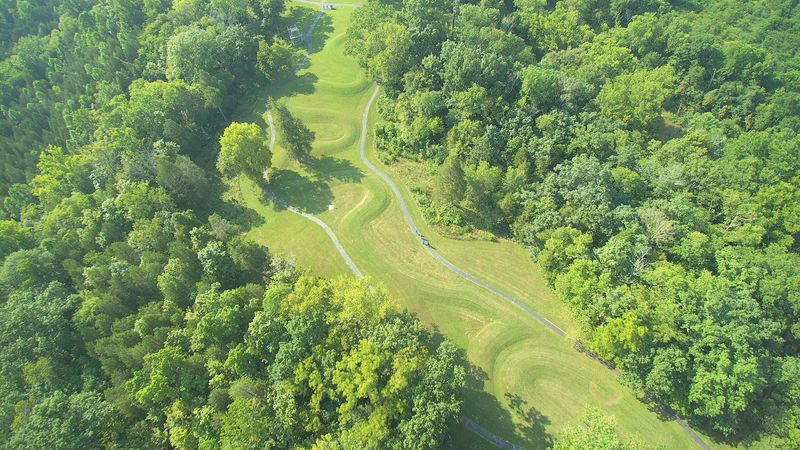
Seven big curves bend through the middle of the snake. The tail twists into a tight triple coil, while the head stretches east toward an oval shape that people still argue about today.
Some scholars think that oval is a giant eye. Others see a hollow egg, and a few believe it is a frog about to become lunch, which honestly made me laugh a little.
Here is a fun fact to share at dinner. The Great Serpent Mound is the largest serpent effigy mound in the world, and it follows the natural shape of the land instead of fighting it.
Give yourself time to walk slowly and notice how the coils rise and dip with the ground beneath them.
Who Actually Built It?
Archaeologists love a good argument, and this snake gives them plenty to chew on. Nobody knows for sure which ancient group built the mound, and that question still sparks debate.
The leading idea points to the Fort Ancient Culture, a society that lived in the Ohio Valley between about 1000 and 1650 CE. Many researchers think they shaped the serpent around 1070 CE, possibly inspired by the Mississippian culture nearby.
Another theory goes much further back in time. Some experts believe the Adena Culture made it around 300 BCE, which would make the mound more than two thousand years old.
There is even a middle path to consider. The Fort Ancient people may have repaired or reshaped an older mound first built by the Adena or Hopewell peoples.
What surprised me most was learning that no burials or artifacts have ever been found inside the serpent itself. That is unusual, since both cultures often placed objects or people within their mounds.
Nearby burial mounds, though, connect to both groups. I spent a while reading the signs and realized the mystery is part of the charm, because every visitor gets to wonder.
Reading the Sky Through a Snake
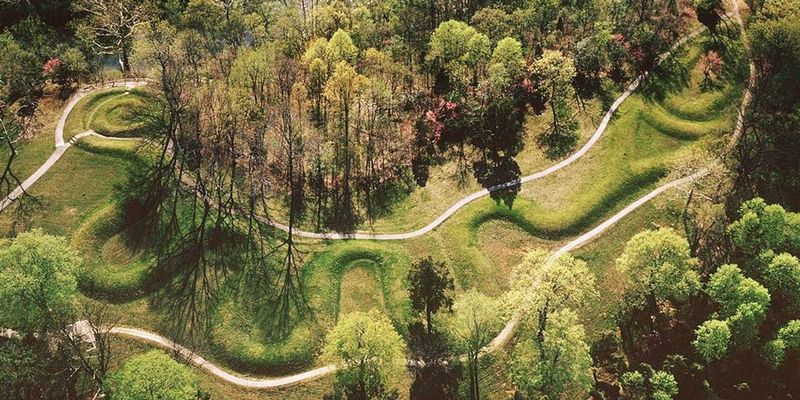
Picture a summer evening on the plateau with the sun sinking low. Many researchers believe the serpent’s head lines up with the sunset on the summer solstice, the longest day of the year.
The coiled tail tells another part of the story. It seems to point toward the sunrise on the winter solstice, so the snake may track the sun from one season to the next.
Some people think the curves of the body match moon phases and equinoxes too. If that is true, the mound might have worked like a giant calendar, helping people know when to plant and when to harvest.
There are wilder ideas as well, and I find them pretty fun. A few researchers connect it to Halley’s Comet in 1066 CE or a bright supernova that lit up the sky.
Another theory compares the shape to the constellation Draco. In that version, the old Pole Star Thuban matches the first curve near the head, which could have helped people find true north.
If you can visit near the solstice, bring a jacket and stay for sunset to see the alignment yourself.
A Place That Still Feels Sacred
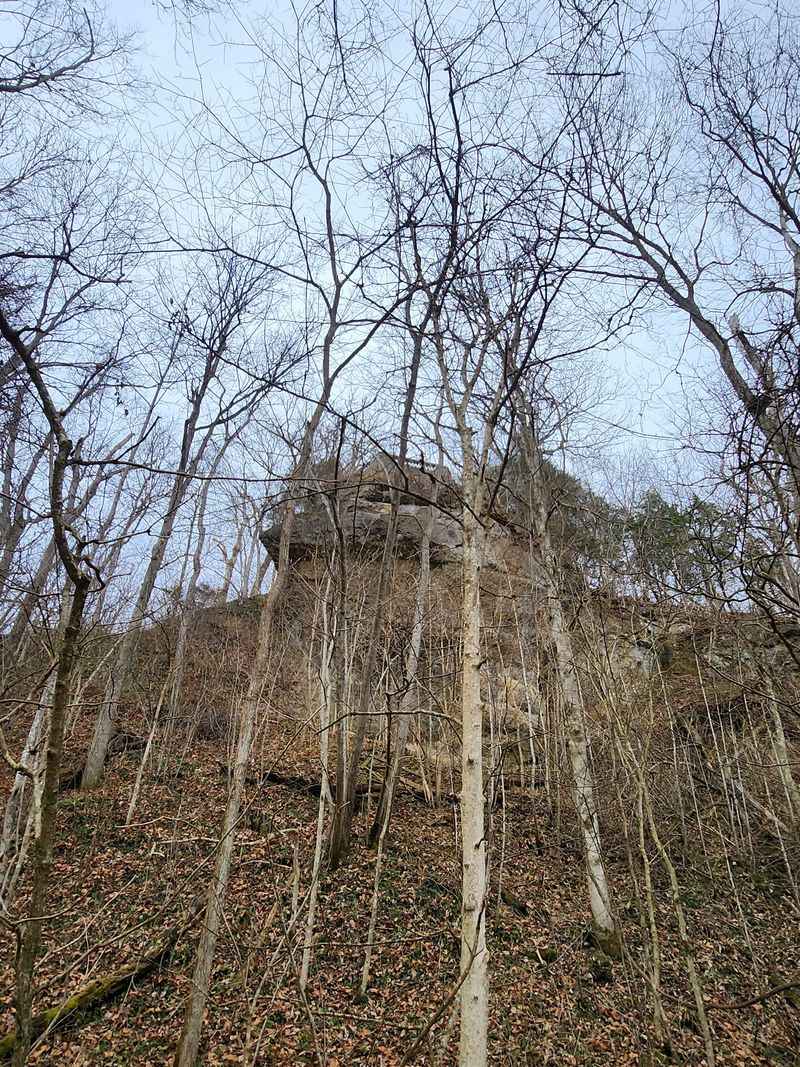
Something about the quiet here made me lower my voice without thinking. Birds chattered in the trees, yet the space around the snake felt hushed and respectful.
Many Native American cultures believed snakes and reptiles held special powers. Because of that, the mound may have been a holy place where people honored a powerful snake spirit.
One idea suggests the builders asked the Great Serpent, Lord of the Beneath World, for good weather. During dry seasons, they may have hoped the serpent would help bring rain for their crops.
Another thought is that the mound once held wooden totems or other structures. Those pieces would have rotted away long ago, leaving only the earthen body behind.
Today the Eastern Shawnee Tribe considers Serpent Mound a sacred site. Knowing that changed how I moved around the path, more slowly and with more care.
Visitors are not allowed to climb or walk on the mound, and that rule protects both the earthwork and its meaning. Stay on the paved trail, keep your voice soft, and let the calm of the hill settle over you for a while.
Built on the Edge of an Ancient Crater
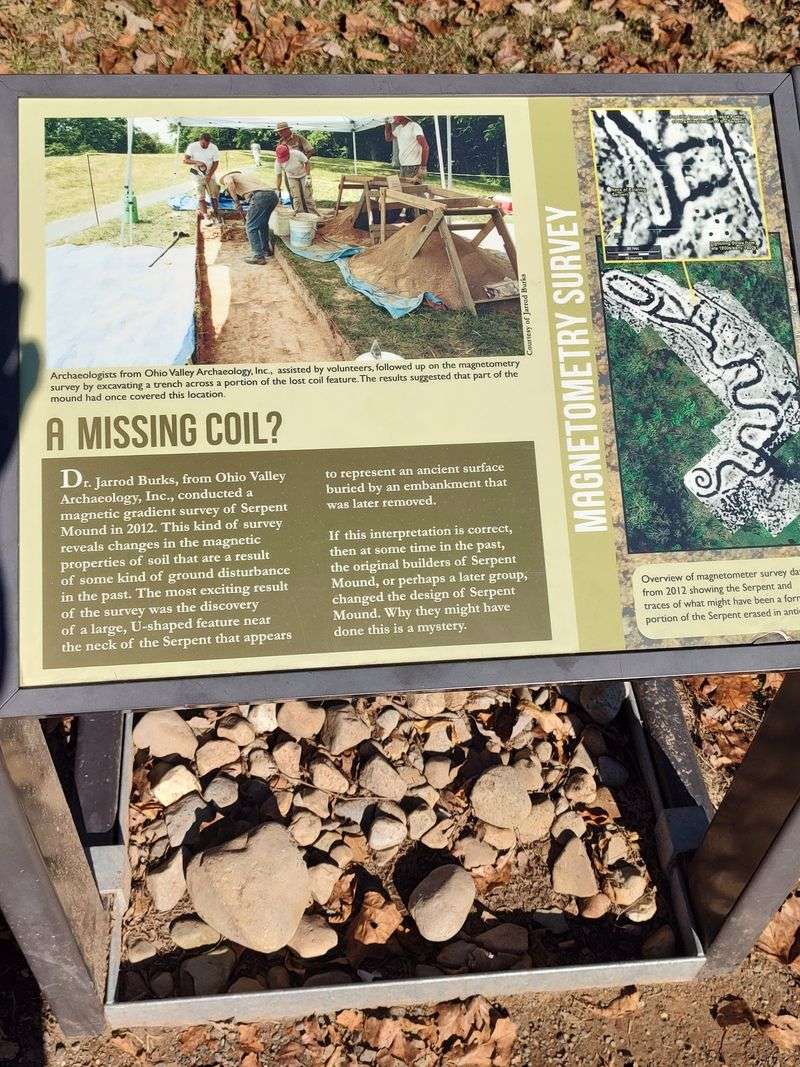
Hold on, there is a twist that geology fans will love. The serpent rests on the rim of the Serpent Mound crater, a huge scar left by an ancient impact.
That crater measures about 8.7 miles across. It formed somewhere between 252 and 330 million years ago, long before dinosaurs roamed North America.
The impact folded and cracked the bedrock in strange ways. Over time, wind and water wore the land down, so you will not see a deep bowl like you might expect.
Still, the land around here feels different when you know the backstory. I caught myself staring at the hills and imagining the blast that shaped them.
Some experts think the unusual rock and landscape drew ancient people to this exact spot. Maybe the place already felt powerful to them before they moved a single basket of soil.
The onsite museum has exhibits explaining the local geology in clear, simple ways. Stop there before or after your walk, because the displays help connect the rocks under your feet with the snake above them, and the story becomes much easier to picture.
Climbing the Old Tower and Strolling the Path
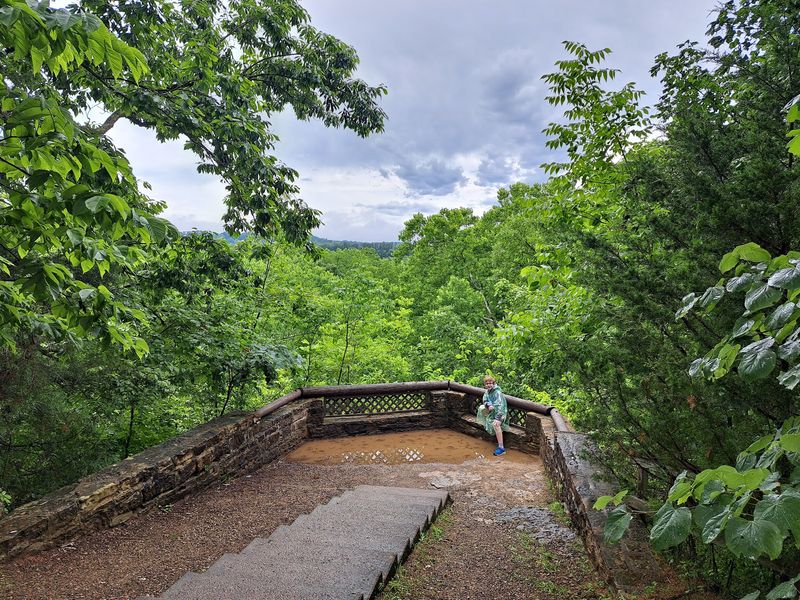
Honestly, the paved loop surprised me with how easy it was. The path circles the whole serpent, so you can view every coil up close without much effort.
Signs along the way share maps and history in small, readable bites. Kids can follow along too, which makes it a nice outing for families of all ages.
Near the tail stands a 25-foot steel observation tower built in 1908. From the top, the snake finally reveals its full shape, and those seven curves really pop.
Towers like this one need care, so it has closed for repairs at times. Check with the site before you go if a bird’s-eye view is your main goal.
At the head of the serpent, a small overlook peeks out toward Ohio Brush Creek. Trees can block parts of the view in summer, but the breeze up there feels wonderful.
A few spots on the path have bumps from tree roots, so watch your step. Wear comfy shoes, bring water on warm days, and pause often, because the slow walk is where the snake starts to feel alive.
Trails, Picnics, and Planning Your Visit
After circling the snake, I wandered down a nature trail and forgot about the time. The cliffside paths look over Ohio Brush Creek, and spring brings bright wildflowers along the way.
These trails are rougher than the paved loop. They suit hikers more than strollers, so plan accordingly if anyone in your group has trouble with uneven ground.
Back near the parking area, three smaller burial mounds sit under shady trees. Two belong to the Adena culture and one to the Fort Ancient culture, giving the visit another layer of history.
A picnic shelter, tables, and restrooms make it easy to linger. I packed a simple lunch and ate under the trees, which felt like the perfect break.
The museum and gift shop share artifacts, a short video, and souvenirs. Hours change by season, and the site closes on Mondays, so check ahead and arrive well before closing time.
Monthly tours led by an archaeologist are also offered, and they add great depth. In 2023 the mound joined the Hopewell Ceremonial Earthworks UNESCO World Heritage listing.
Address: 3850 State Route 73, Peebles, Ohio 45660
