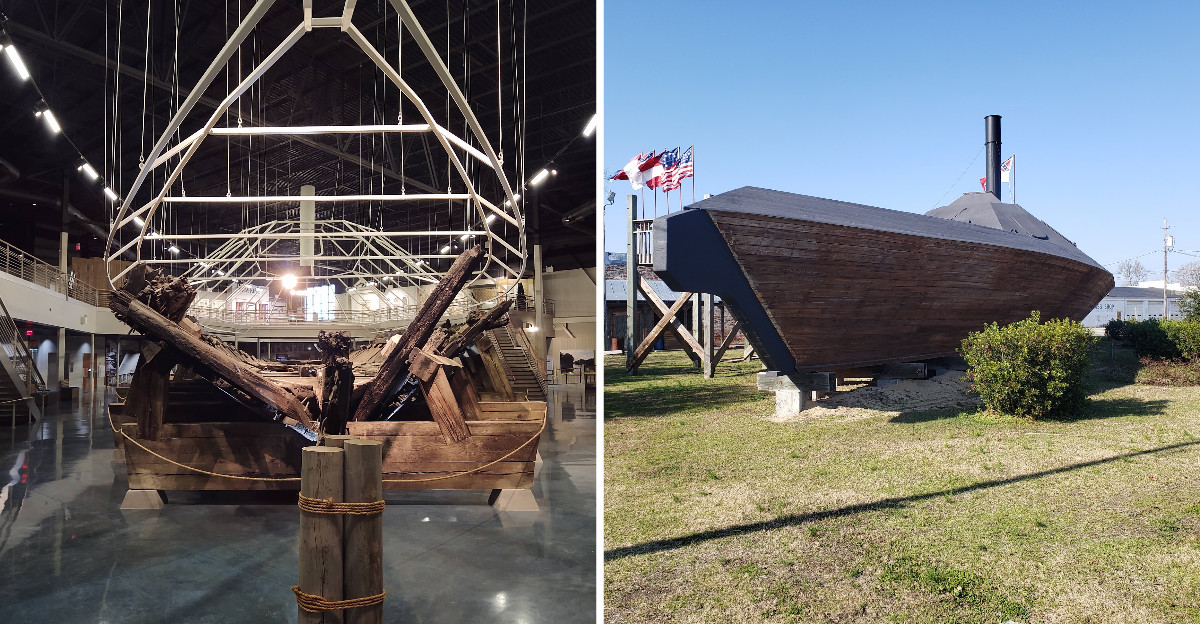
Charred wood and iron bolts from a Confederate ironclad sit under glass in a small North Carolina city, and they are far bigger than any photo prepares you for. A half hour was the plan at a local museum.
Ten minutes in, the plan was forgotten. The lower hull rests there, pulled from a river bottom after nearly a century, its timbers still holding the shape of the shipwright’s work.
Real wood. Real iron.
Real scale. The story layered around it is what gets you: a vessel built in a riverside village, run aground on a sandbar, blown up by its own crew to keep it out of enemy hands, then hauled back into daylight by determined locals decades later.
Walking in curious and leaving genuinely moved, notebook full and phone battery half empty, is the kind of outcome this place delivers. History you can stand next to and almost touch is rare, and this North Carolina museum offers exactly that.
The Hull That Refused to Disappear
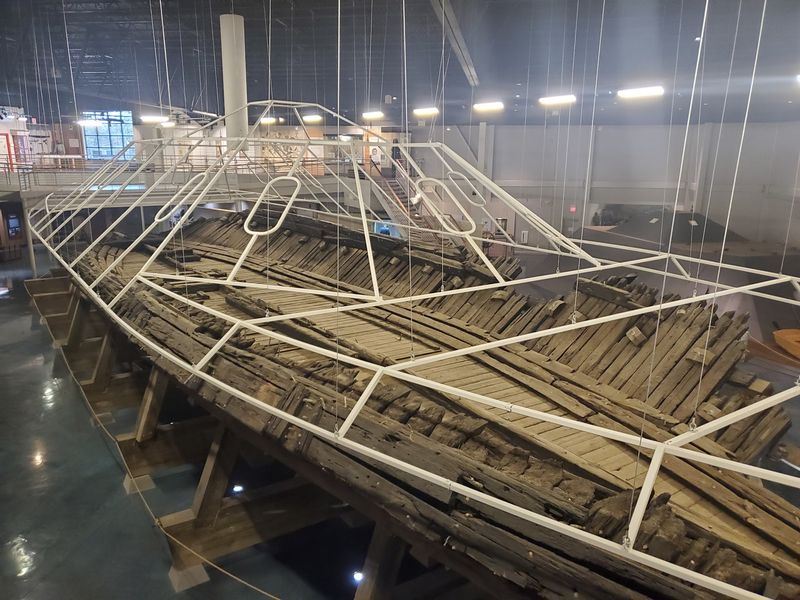
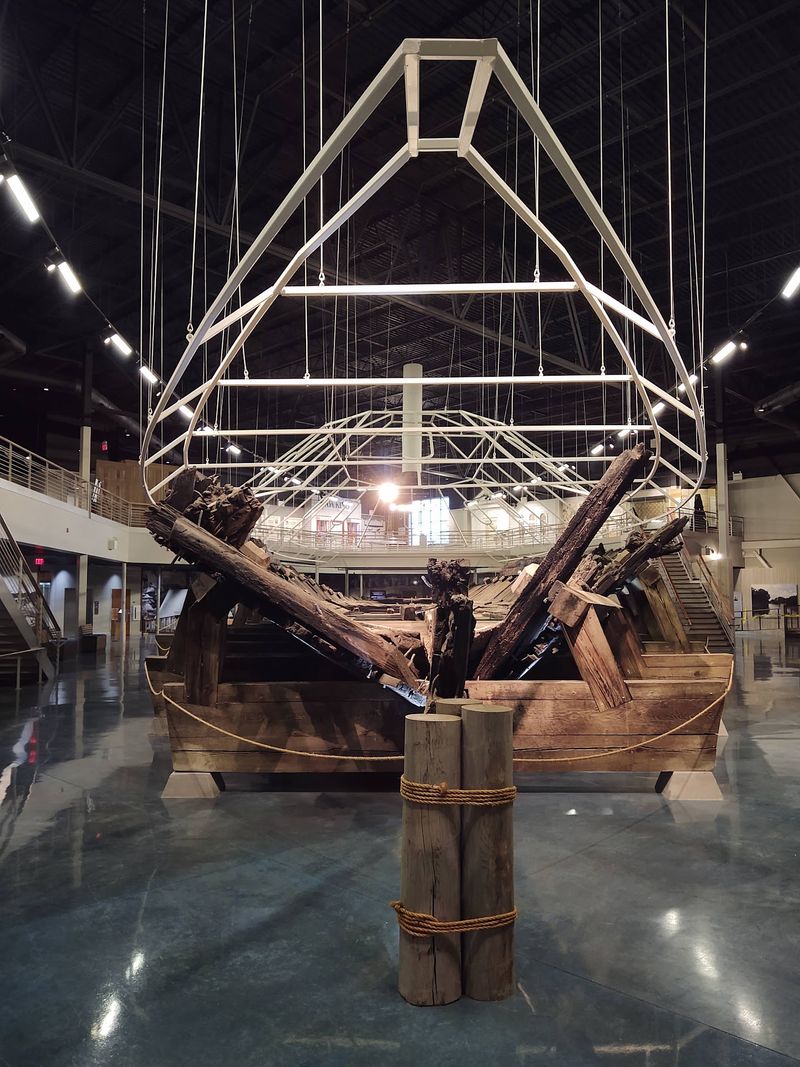
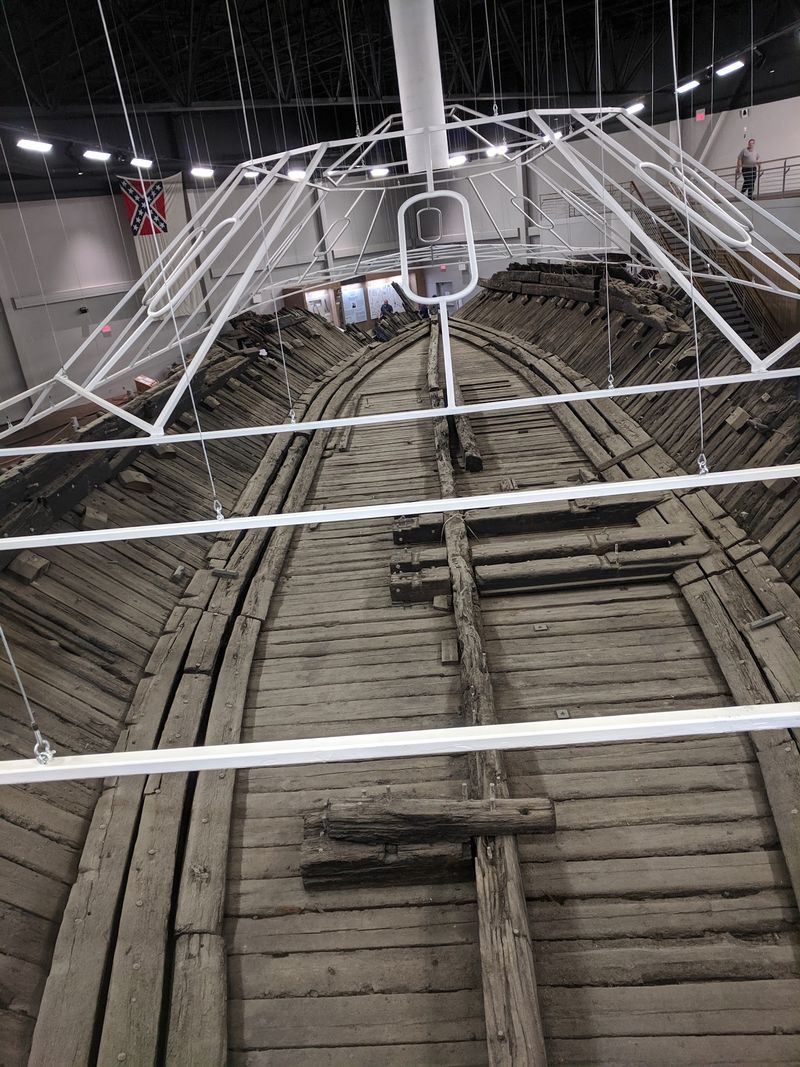
Nothing in the lobby quite prepares you for the main gallery. The lower hull of the CSS Neuse stretches out under soft directional lighting, dark timbers still holding their shape after more than a century in river mud.
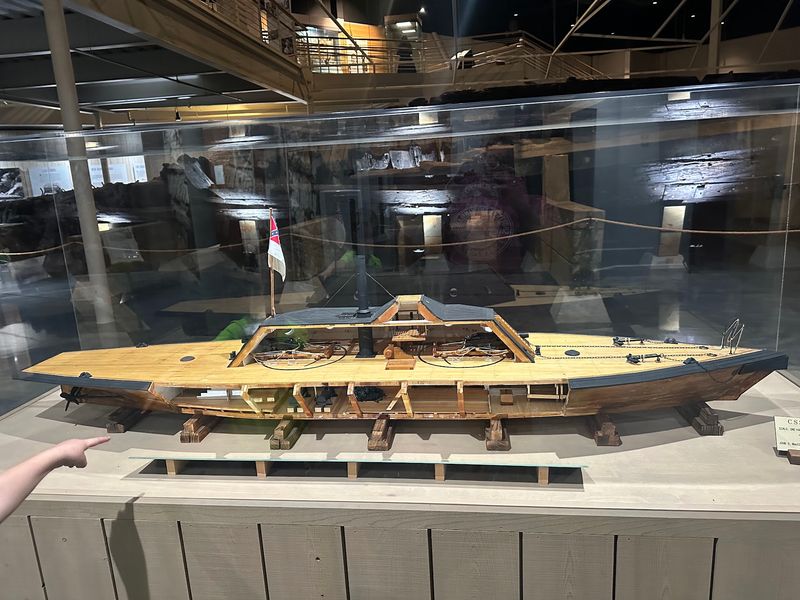
I leaned on the rail longer than I planned, tracing the lines of the frames with my eyes. The ship was designed at 158 feet long and about 34 feet wide, weighing roughly 376 long tons, and even with only the bottom portion surviving, the footprint is enormous.
Lighting inside the gallery marks where different spaces once sat, which helps enormously if you struggle to picture ship layouts. I found myself mentally placing the engine area, then the crew space, then the spot where the explosive charge tore into the port bow.
Visitors often mention being surprised by the size, and I understand why now. Photographs flatten it.
My tip is simple: circle the hull twice. The first lap is for the shock of scale, and the second is for the small details like fasteners, tool marks, and the way the wood darkened where fire once ran across it.
Built on a Riverbank in Whitehall
Here is the part of the story I keep repeating to friends: this warship was not built in a grand naval yard. Construction started in late 1862 at Whitehall, a small village on the Neuse River now called Seven Springs.
A contract was signed on October 17, 1862, between the Confederate Navy Department and the shipbuilding firm of Howard and Ellis. Reading that date on a museum panel made the whole project feel startlingly specific.
The design called for a flat-bottomed, twin-screw steamer, shaped that way on purpose so it could move through the shallow inland waters of eastern North Carolina. Deep-draft vessels simply could not operate in those rivers and sounds.
Launch came in November 1863, which tells you how long the work dragged on.
What I appreciated about the exhibits covering this stage is how clearly they explain the shortages. Iron plating, skilled labor, and machinery were all hard to come by that far from industrial centers.
Take a few minutes with the construction displays before moving on. They make everything that happens later, including the grounding and the scuttling, land with much more weight.
Stuck on a Sandbar Below Kinston
Few war stories are as frustrating as this one. Commissioned in April 1864, the Neuse steamed downriver almost immediately to help in an effort to retake New Bern, and then ran aground on a sandbar roughly half a mile below Kinston on April 22, 1864.
It stayed stuck for close to a month.
I stood at that exhibit imagining the crew’s mood, a brand-new armored warship parked helplessly in the shallows while the war moved on without them. Rising water in mid-May finally lifted the ship free, and it returned to its moorings in Kinston.
By then the infantry needed for the New Bern operation had been sent to Virginia, and the second attempt never happened.
So the ironclad became a floating fortification near Kinston rather than an attacking force. The museum presents this honestly, without dressing it up, and that made me trust everything else on the panels.
If you enjoy the odd, unglamorous side of military history, this section is the quiet highlight. It is a reminder that rivers, weather, and timing shaped outcomes as much as firepower did.
March 1865 and a Deliberate Explosion
March 1865 brought the end. Union forces were closing on Kinston, and rather than let the ironclad be captured, the crew received orders to destroy their own ship.
On March 11, 1865, the Neuse fired on advancing Federal cavalry, helping cover the Confederate retreat. Once their comrades had pulled out, the crew set fires aboard and placed an explosive charge beneath the bow, then left the vessel.
The blast opened a large gash in the port bow, and the ship settled into the river mud.
Seeing that damage on the actual hull is a different experience from reading about it. I could follow where the structure gives way, and knowing it was done on purpose by the men who served aboard adds a strange sadness to it.
Guns and useful machinery were salvaged shortly after the war ended. The rest of the hull stayed put, slowly sinking into sediment that, oddly enough, protected the wood from rot and river worms.
Bring a little patience to this part of the visit. The details reward slow reading, and the accompanying artifacts fill in what the timbers cannot say.
From Open-Air Shelter to Climate Control
Raising a ship is one thing. Keeping it from falling apart afterward is a much longer battle.
For decades the hull sat under an open-air shelter at Governor Caswell Memorial, visible to visitors but exposed to humidity swings, temperature shifts, and everything else eastern North Carolina weather delivers. The wood paid the price.
A major decision changed that. On June 23, 2012, the hull remnants were carefully moved in three sections to a new climate-controlled facility in downtown Kinston.
Moving a Civil War ironclad through city streets is not a small logistical puzzle, and the museum does a good job showing how it was managed.
The CSS Neuse Civil War Interpretive Center, which houses the museum, opened to the public on July 18, 2013. Inside, humidity and temperature are regulated around the vessel so the surviving timbers stay stable.
Visitors regularly mention how well the building frames the ship, and I’d agree that the architecture does its job without stealing attention.
Preservation stories rarely make headlines, yet this one deserves attention. Without that move, there might be far less hull left to see today.
Fifteen Thousand Artifacts and the Stories They Carry
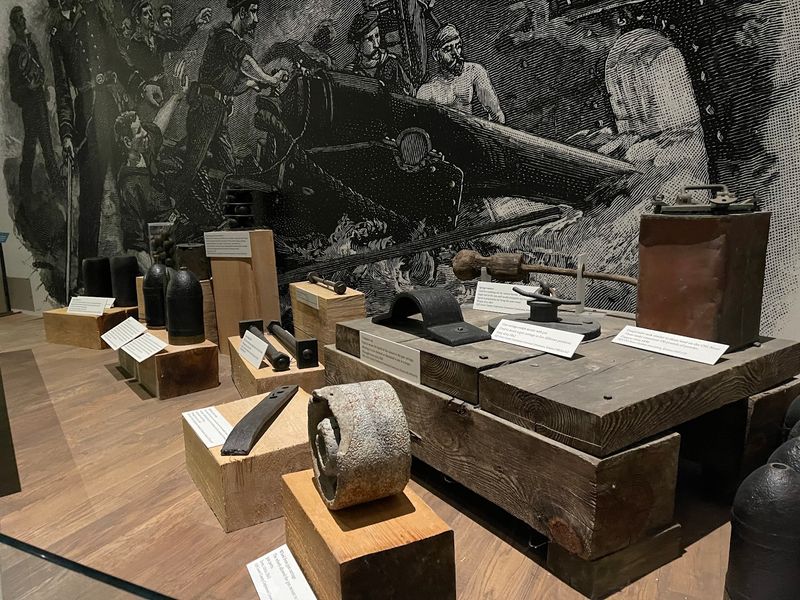
Artifacts are where the Neuse stops being a machine and starts being a place where people worked. Recovery produced about 15,000 objects, and the selection on display covers everyday items alongside naval hardware.
Small things stuck with me most.
Tools, fasteners, and pieces of personal gear tell you what shipboard life actually involved, hot, cramped, noisy, and frequently boring. Panels on daily life for Civil War sailors fill in details like food, duties, and sleeping arrangements that textbooks tend to skip.
Letters and written material from the period appear throughout the galleries, and they read as plainly human. One reviewer mentioned an 1851 pattern Army officer saber upstairs, which drew my attention as well.
Kinston’s strategic importance is explained clearly too, since the museum’s first floor sets up why this river mattered so much to both sides.
Practical advice: read the captions rather than skimming. Several objects look unremarkable until you learn what they were used for, and then they become the thing you talk about on the drive home.
Budget at least an hour here, longer if you enjoy detail.
Hands-On Corners That Keep Kids Moving
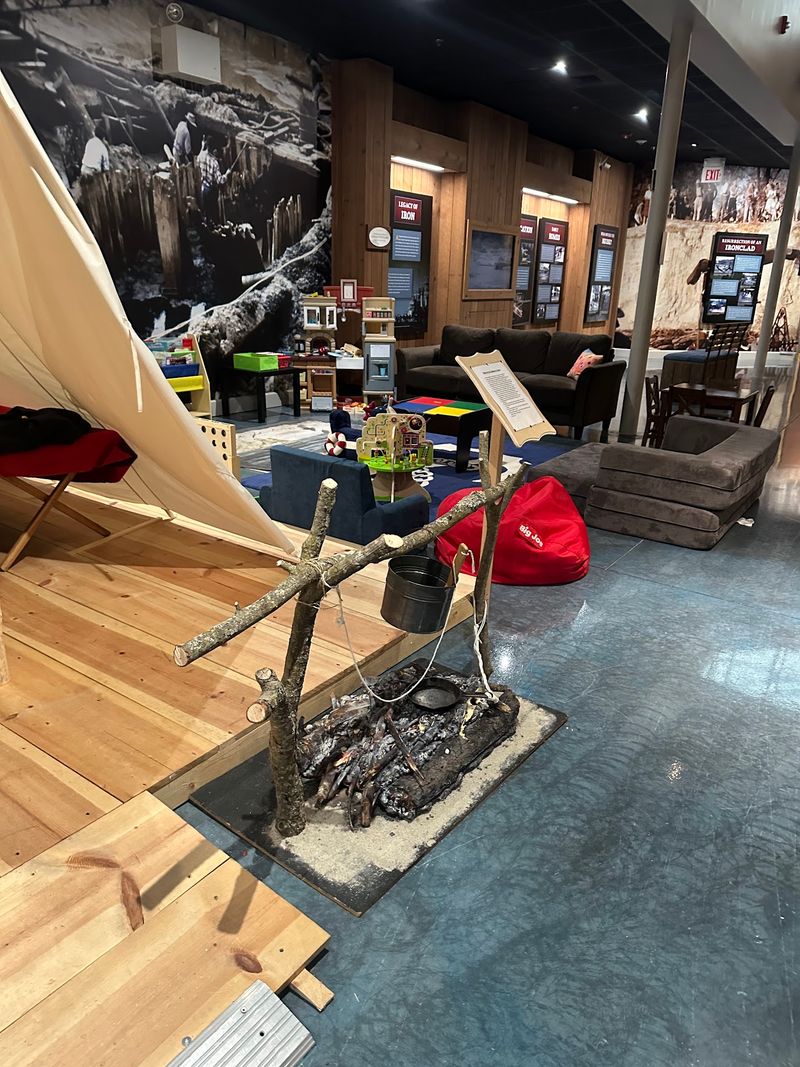
Traveling with kids? This museum clearly thought about them.
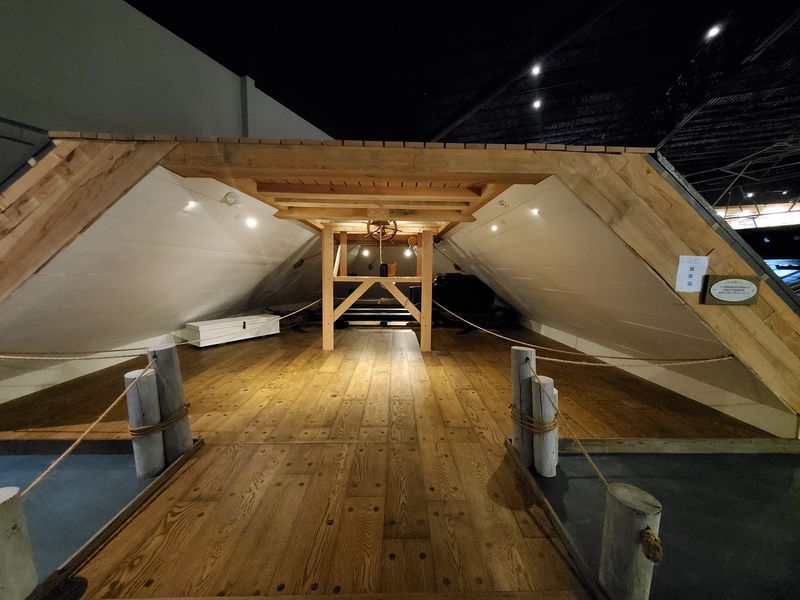
Touch stations sit throughout the galleries, giving younger visitors objects they can handle instead of only glass to press their noses against. There is also a walk-in replica of the gun area, which lets you feel how tight and low those spaces really were.
Families frequently mention a scavenger hunt that keeps small children engaged while parents read the longer panels. Smart design, honestly.
Homeschool programs and group events run here as well, along with overnight experiences for youth groups, and reviewers consistently praise the volunteers who lead them.
I watched a couple of kids race between stations while their parents lingered at a case of artifacts, and nobody looked bored.
Practical tip for parents: the walk-in gun area is the moment that usually clicks for children, so save it as a reward if attention starts to fade.
Ages six through thirteen seem to get the most out of the interactive pieces, though even younger visitors find something to do. Strollers move easily through the wide gallery floor, which makes the whole visit less stressful.
Two Blocks Away Stands the CSS Neuse II
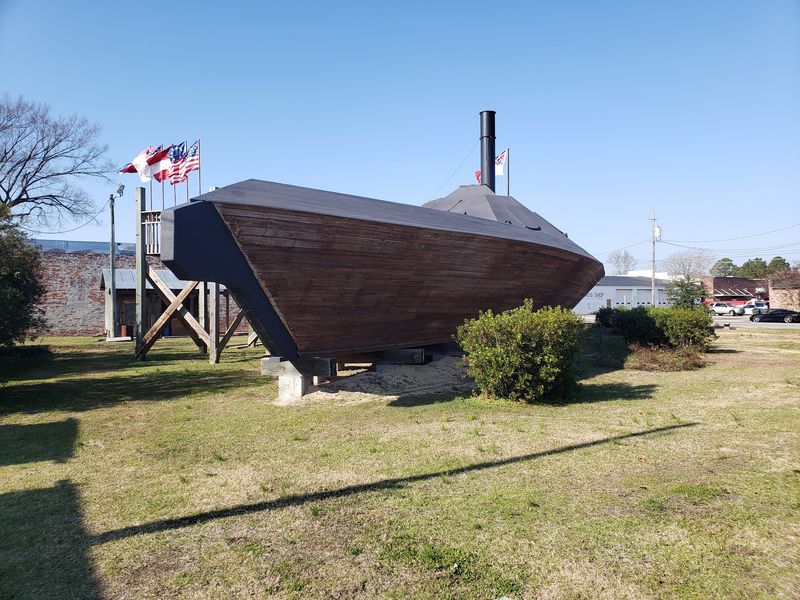
Then comes the bonus round. Two blocks from the museum, at 118 N.
Herritage Street, sits the CSS Neuse II, a full-size replica of the ironclad built as a community project.
The original gives you the archaeology. The replica gives you the architecture.
Climbing aboard changed my understanding immediately. Casemate walls slope in at angles that make the interior feel like a metal tent, and the gun ports frame narrow slices of the world outside.
I ducked more than once.
Standing on that deck after studying the recovered hull, I finally understood how the two halves of the story fit together. One shows what survived, and the other shows what was lost.
Many visitors recommend pairing the two in a single trip, and I’d say the order matters less than making sure you do both. Some prefer the replica first for scale, then the museum for depth.
Give yourself a short walk between them, since downtown Kinston is compact and pleasant on foot. The combination turns a quick stop into a genuinely full morning of history.
Address: 118 N. Herritage Street, Kinston, NC
Planning Your Kinston Stop Without Stress
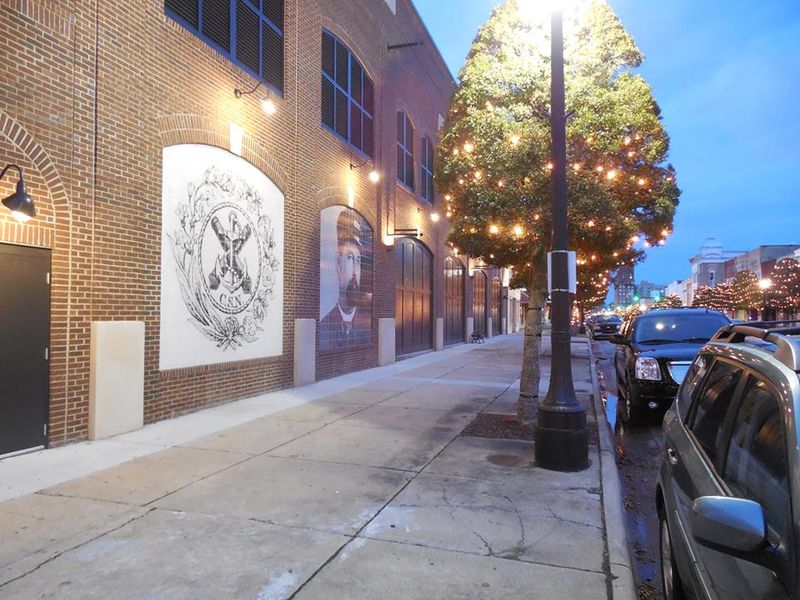
A few logistics will save you a wasted drive. The museum operates Tuesday through Saturday from 9 AM to 5 PM, and it is closed Sunday and Monday, which catches some road trippers off guard.
Doors open at 9 AM, and mornings felt calmest during my visit.
Call ahead if you’re coordinating a group or want to confirm anything, since the site can be reached at +1 252-526-9600. Details for programs and events are posted through the North Carolina Historic Sites website.
Allow ninety minutes minimum. Two hours is more comfortable if you read thoroughly, and history-minded visitors routinely stay that long.
Downtown Kinston makes an easy base, with the replica within walking distance and parking close by. Comfortable shoes help, though the galleries themselves involve gentle walking rather than any real effort.
I’d pair this with an early start, then use the afternoon for the replica and a wander through the surrounding streets.
What I took away was simple. A ship built in a river village, lost for nearly a century, now sits sheltered and studied, and you can stand right beside it.
Address: 100 N Queen St, Kinston, NC 28501
