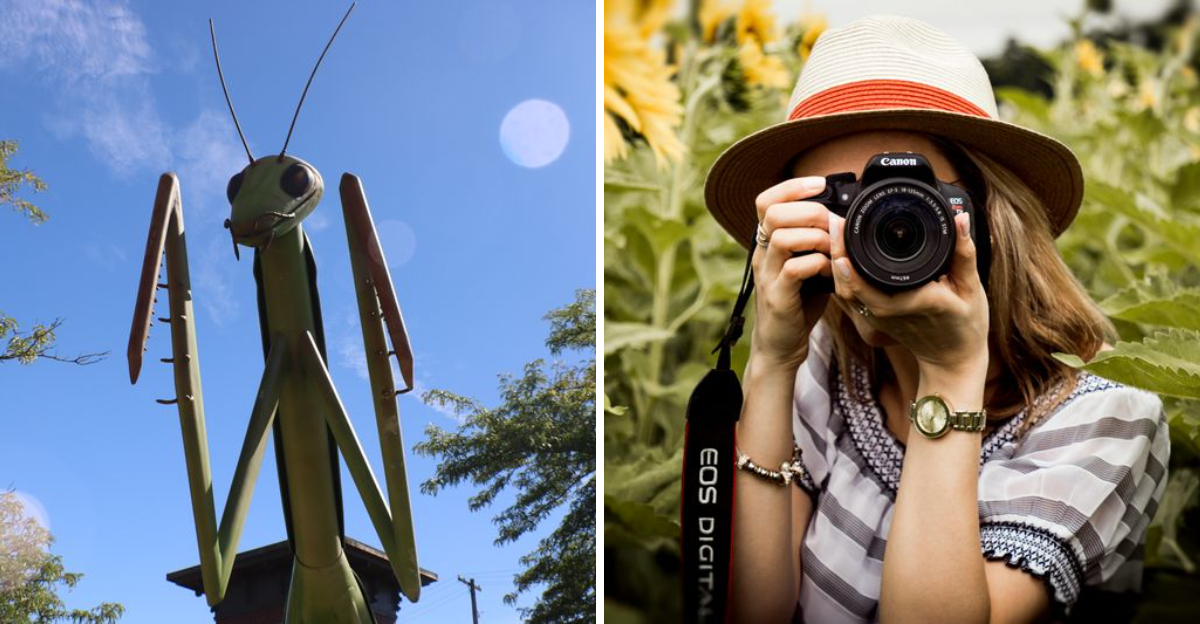
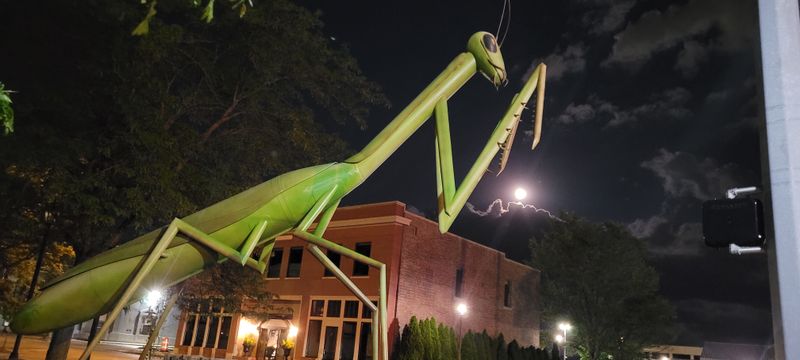
Standing tall at 17 feet, the KokoMantis is one of Indiana’s most unusual and beloved roadside attractions. This massive praying mantis sculpture has become a symbol of Kokomo, drawing visitors from across the country who want to snap photos with this incredible creation.
Made entirely from reclaimed metal materials, the sculpture represents both artistic innovation and community pride. Located at 200-298 W Sycamore St in downtown Kokomo, this giant insect has been greeting locals and tourists alike for over a decade.
The KokoMantis isn’t just a statue; it’s a conversation starter, a photo opportunity, and a testament to the creative spirit of small-town America. Whether you’re a fan of quirky roadside art or just passing through Indiana, this towering mantis deserves a spot on your itinerary.
Open 24 hours a day, seven days a week, the KokoMantis is always ready for visitors. From its intricate metalwork to its seasonal decorations, this sculpture has captured the hearts of thousands and put Kokomo on the map for art enthusiasts everywhere.
A Towering 17-Foot Marvel of Metal Craftsmanship
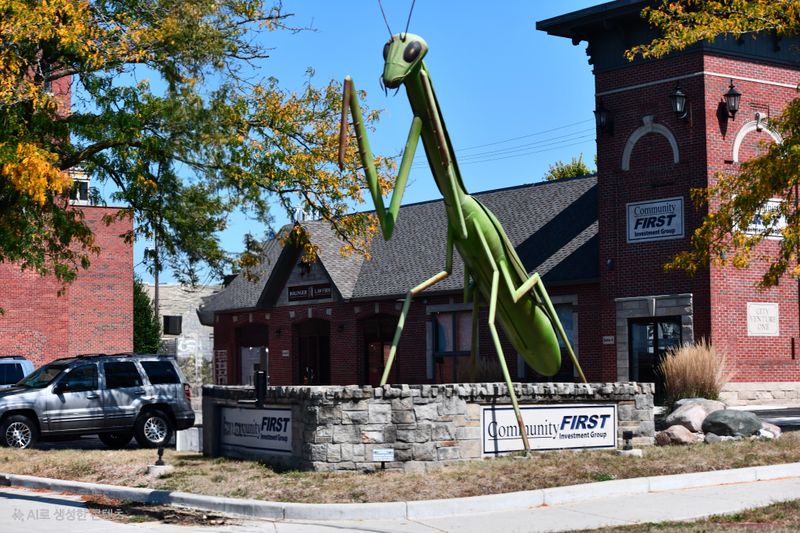
Imagine walking down a quiet Indiana street and suddenly encountering a praying mantis that stands nearly two stories tall. That’s exactly what happens when you visit the KokoMantis in downtown Kokomo.
This isn’t some fiberglass replica or painted statue. It is a genuine work of metal art that towers 17 feet above the sidewalk, making it impossible to miss from blocks away.
The sculpture’s impressive height puts it in the same league as many of America’s most famous roadside attractions. Unlike smaller installations that might blend into their surroundings, the KokoMantis commands attention with its sheer scale.
Visitors often underestimate just how massive it is until they are standing directly beneath it. They crane their necks to take in the full scope of this metallic insect.
What makes the height even more remarkable is how the artist managed to maintain perfect proportions throughout the structure. Every segment of the mantis’s body, from its triangular head to its folded forelegs, has been scaled up accurately.
The positioning of the sculpture at street level rather than on a pedestal makes it feel even more imposing. You are not looking up at something distant and untouchable.
You are sharing space with a giant insect that seems ready to turn its head and look right at you.
This accessibility has made it a favorite spot for creative photography. Visitors position themselves to look like they are being carried away or examined by the massive mantis.
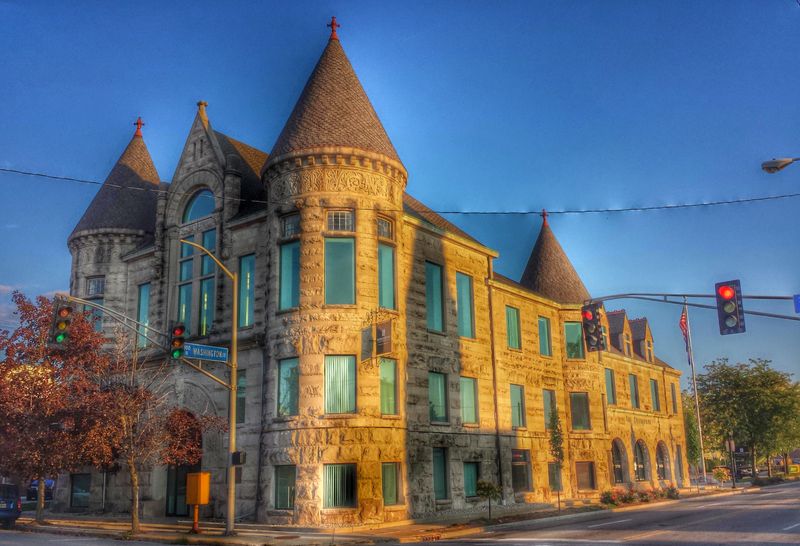
The downtown location at the corner of Washington and Sycamore Streets means the sculpture is surrounded by historic buildings. These provide a charming contrast to its modern, industrial aestheti
Crafted Entirely from Reclaimed and Recycled Materials
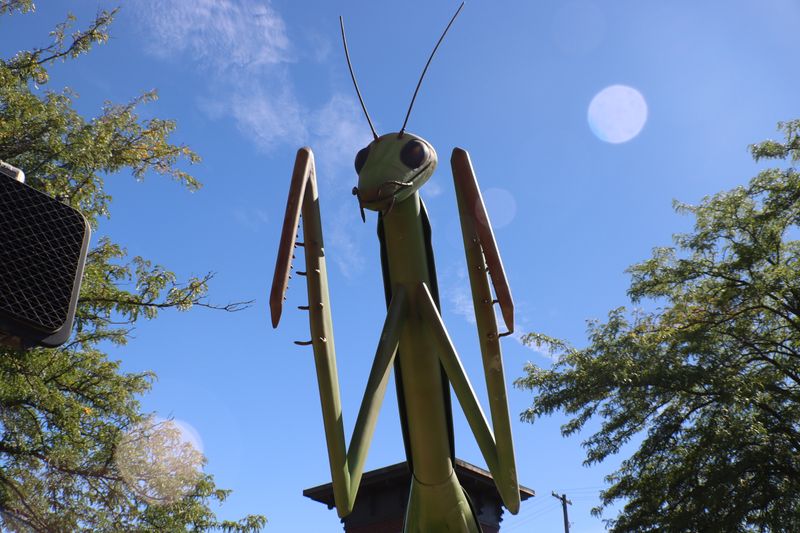
Every single piece of the KokoMantis tells a story of sustainability and creative reuse. The entire sculpture was constructed using reclaimed metal materials, giving new life to scrap that might otherwise have ended up in a landfill.
This commitment to recycling is not just an environmental statement. It is a fundamental part of the sculpture’s character and charm.
Artists who work with reclaimed materials face unique challenges that traditional sculptors never encounter. Each piece of metal comes with its own history, texture, and properties that must be incorporated into the final design.
The creator had to carefully select and position hundreds of individual metal components to create the mantis’s distinctive form while ensuring structural integrity.
Look closely at the sculpture and you will notice the varied textures and surfaces that come from using salvaged materials. Some sections might show traces of their former lives, adding depth and visual interest that would be impossible to achieve with brand-new materials.
This patchwork quality gives the KokoMantis a rustic, industrial aesthetic that perfectly suits its insect subject.
The use of reclaimed materials also connects the sculpture to Kokomo’s manufacturing heritage. This is a city with deep roots in the automotive and industrial sectors, and the KokoMantis honors that history by transforming industrial castoffs into public art.
It is a reminder that creativity can flourish anywhere, even in the remnants of yesterday’s factories.
Visitors who appreciate sustainable art practices often cite the KokoMantis as an inspiring example of what is possible when artists think outside the box. The sculpture proves that environmental consciousness and stunning visual impact can work together to create something truly memorable.
A Beloved Community Icon for Over a Decade
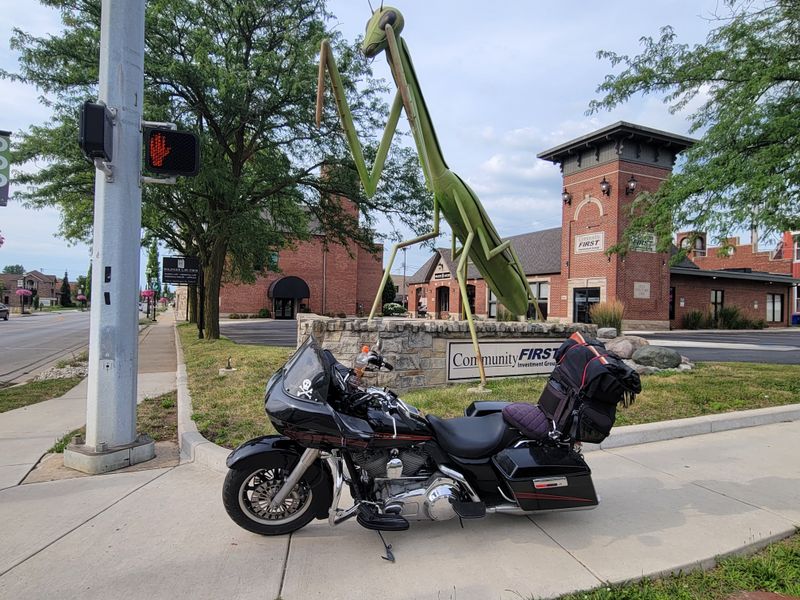
Since its installation more than ten years ago, the KokoMantis has evolved from a quirky art project into a genuine community treasure. Local residents have embraced the sculpture as a symbol of their city.
“Meet me at the mantis” has become a common phrase in Kokomo conversations. The sculpture serves as a landmark for directions and meetups.
Its popularity extends far beyond visual appeal. It has become a gathering place where memories are made and milestones are celebrated.
One couple even got engaged at the KokoMantis after their first date, showing that this metal insect has witnessed countless personal moments.
Many locals greet the mantis during their daily commutes. Some go out of their way to drive past it just to say hello.
The KokoMantis has inspired other public art installations throughout Kokomo. This single ambitious project sparked a broader movement celebrating creative outdoor sculptures.
City planners and artists point to the mantis as proof that bold, unconventional art can succeed in small-town settings. For former residents, it remains a powerful symbol of home.
Photographs of the sculpture frequently appear on social media, with people reminiscing about their time in the city.
Frequently Dressed in Seasonal and Festive Outfits
One of the most delightful aspects of the KokoMantis is its ever-changing wardrobe. Throughout the year, the sculpture receives seasonal decorations that reflect holidays, local events, and community celebrations.
These costume changes have become anticipated events in their own right. Residents check in regularly to see what the mantis is wearing now.
During Christmas, the KokoMantis might sport a Santa hat or be wrapped in festive lights. Halloween brings creative decorations that play up the insect’s slightly eerie appearance.
Even smaller holidays get recognition. The mantis receives accessories that show someone in Kokomo is always thinking about how to keep this landmark fresh and engaging.
The tradition of dressing up the sculpture creates a sense of playfulness around what could have been just a static installation. It invites ongoing interaction and gives people reasons to visit multiple times throughout the year.
Regular visitors never quite know what they will find. This adds an element of surprise to each encounter.
These decorative touches also show the community’s ownership of the sculpture. Kokomo residents have embraced the KokoMantis as something they can interact with and personalize.
Photographers especially appreciate the seasonal variations. A photo taken in summer looks completely different from one captured during winter holidays, giving collectors multiple reasons to return and document the mantis throughout the year.
Perfectly Positioned for Easy Access and Photography

Location matters tremendously for public art. The KokoMantis couldn’t be better situated.
Standing at the intersection of Washington and Sycamore Streets in downtown Kokomo, the sculpture occupies a corner spot visible from multiple directions. This prime real estate ensures that even people who aren’t specifically looking for the mantis will stumble upon it during their downtown travels.
The sculpture’s placement on a public corner rather than behind fences or barriers means visitors can get remarkably close. You can walk right up to the base, touch the metal to feel the texture, and position yourself for creative photographs without obstacles in the way.
This accessibility is surprisingly rare for large public sculptures. Many are kept at a distance from viewers.
Parking is readily available nearby. Street parking and adjacent lots make it easy to stop for a quick photo.
On weekends, visitors can even use nearby parking lots without worrying about taking up spaces needed by businesses. The convenience makes the sculpture even more approachable.
The surrounding streetscape provides excellent photography opportunities beyond the mantis itself. Historic downtown buildings create an attractive backdrop that gives photos a sense of place.
The contrast between old brick architecture and modern metal sculpture adds visual interest. This elevates photographs from simple snapshots to compelling compositions.
Being open 24 hours means photographers can visit at any time. Golden hour, sunset, or even nighttime lighting creates dramatic shadows and highlights on the metal surfaces.
A Generator of Tourism and Local Economic Impact
While the KokoMantis was created as a work of art, it has proven to be a significant economic asset for downtown Kokomo. Visitors who come specifically to see the sculpture often explore the surrounding area, stopping at local restaurants, shops, and other attractions.
This ripple effect shows how public art can serve as an economic development tool as well as a cultural landmark. Several online reviews mention visitors who decided to fuel up their vehicles, grab dinner, or even book hotel rooms in Kokomo after stopping to see the mantis.
What might have been a brief photo opportunity often turns into an extended stay that benefits multiple local businesses. Travelers passing through Indiana frequently take a short detour that becomes a longer visit.
The sculpture has also put Kokomo on the map for roadside attraction enthusiasts. These travelers often plan entire road trips around collections of quirky landmarks, and the KokoMantis has earned a spot on many of these itineraries.
Being featured on platforms like Atlas Obscura has further expanded its reach to adventure-seeking tourists. Local businesses have recognized the mantis’s drawing power and sometimes incorporate it into marketing or branding.
The sculpture has become part of Kokomo’s identity in a way that benefits everyone in the downtown area. Real estate near the mantis is even mentioned in property listings as a selling point.
For a relatively modest investment in public art, the KokoMantis delivers ongoing returns that extend far beyond its aesthetic contribution to the cityscape.
Dear Reader: This page may contain affiliate links which may earn a commission if you click through and make a purchase. Our independent journalism is not influenced by any advertiser or commercial initiative unless it is clearly marked as sponsored content. As travel products change, please be sure to reconfirm all details and stay up to date with current events to ensure a safe and successful trip.
