A 17-pound lump of gold used as a doorstop for three years sounds like a tall tale, but it happened in North Carolina in the early 1800s. A 12-year-old boy pulled a heavy yellow stone out of a creek while fishing, and nobody in his family thought twice about it until a jeweler finally told them what they had.
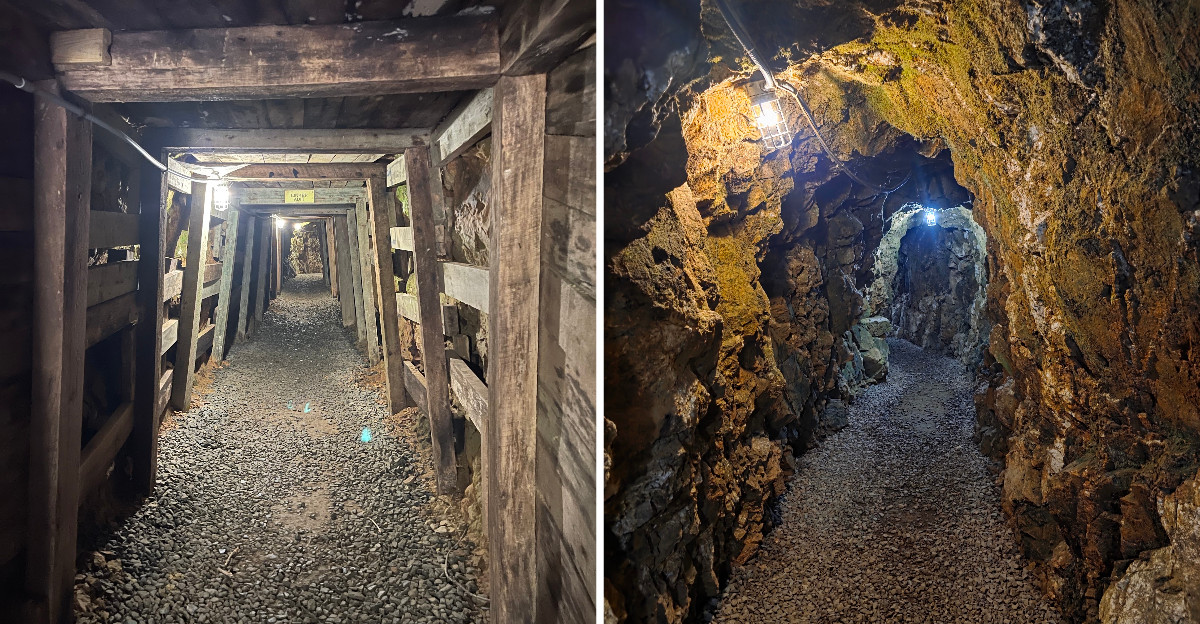
That single rock kicked off the first gold rush in the United States, decades before anyone yelled about gold in California. I walked through cool tunnels carved in the 1830s, swirled gravel in a pan until my wrists ached, and wandered trails where whole mining operations once roared.
Standing near that same creek felt strange in the best way, like history had been sitting there quietly waiting for someone to notice.
Stories where ordinary people stumble into something enormous are worth chasing, and this place delivers one from the first step.
The Doorstop That Changed Everything
A fishing trip started it all. Conrad Reed was just 12 years old in 1799 when he spotted something glinting in Little Meadow Creek, and he hauled home a chunk of rock that weighed a surprising 17 pounds.
His family had no idea what they were holding. For about three years, that heavy yellow stone did nothing more glamorous than prop open a door at the Reed farmhouse.
In 1802, John Reed, Conrad’s father and a former Hessian soldier who settled in the North Carolina Piedmont, finally carried the rock to a jeweler in Fayetteville. The jeweler recognized gold immediately.
Here’s the part that still makes me wince. John Reed sold that enormous nugget for just $3.50, nowhere close to its real worth, though some accounts say he later recovered more.
What I love about hearing this story on site is how ordinary it feels. No treasure map, no expert prospector, just a kid poking around a creek on his family’s farm.
That accidental find became the first documented gold discovery in the United States, and the ripple effects reached far beyond one Cabarrus County farm.
Little Meadow Creek, Where a Kid Got Lucky
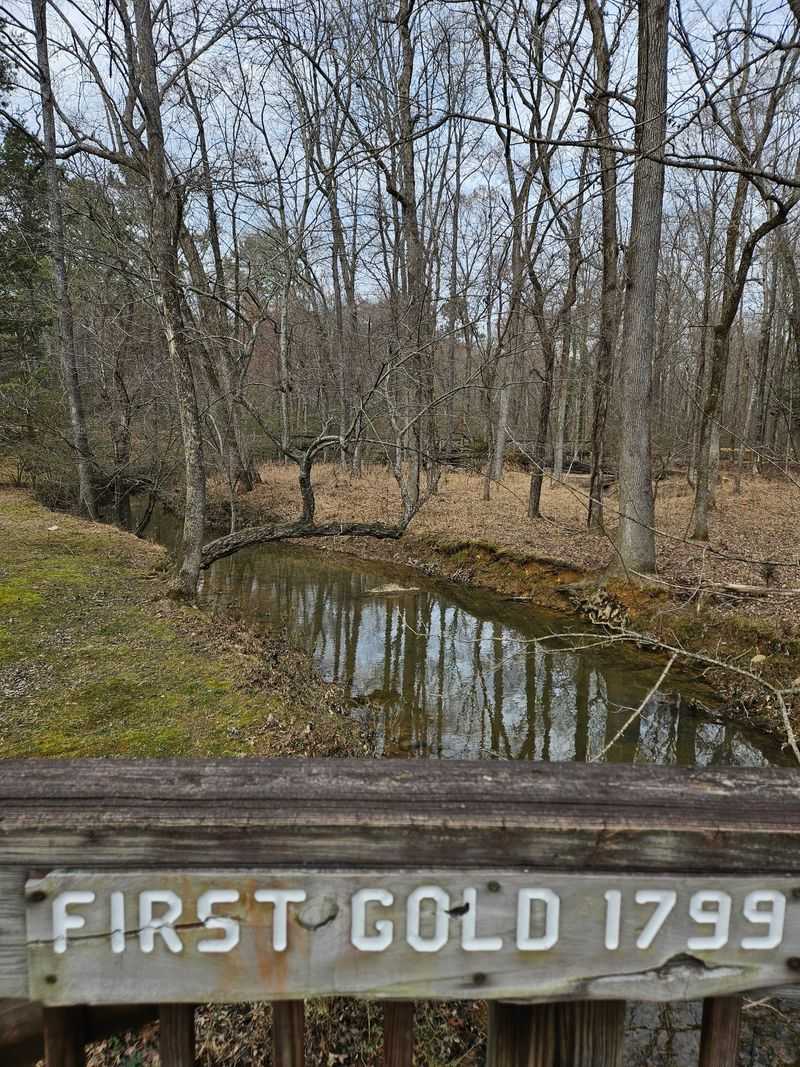
The creek itself is smaller than I pictured. Little Meadow Creek runs shallow and quiet through the woods, shaded by trees, looking like a hundred other creeks in the North Carolina Piedmont.
A boardwalk along the trail system gives you a clear view of the water, and I stood there longer than planned just letting the whole thing sink in.
Families with kids seem to love this spot most. Several visitors mention wading and stomping around in the shallow water, and there’s something fitting about children splashing where a 12-year-old once changed American history.
Early mining here was called placer mining, which simply meant searching creek beds for loose gold that water had carried downstream over centuries. No tunnels, no machines, just patience and a pan.
Listen for a moment and you’ll hear birds, water over stones, and not much else. Turtles, squirrels, and songbirds show up regularly along these paths, especially early in the day before the visitor center opens.
Bring decent shoes if you want to explore close to the bank, because the ground can be soft and slippery after rain.
Down Into the 1830s Tunnels
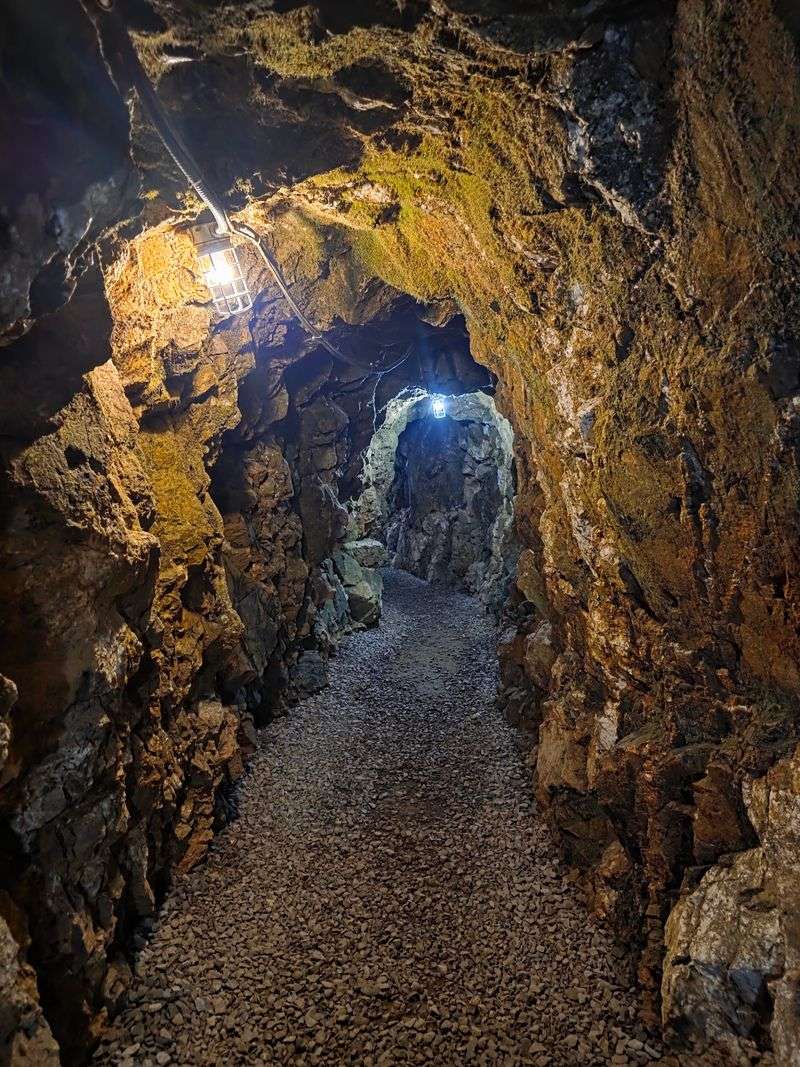
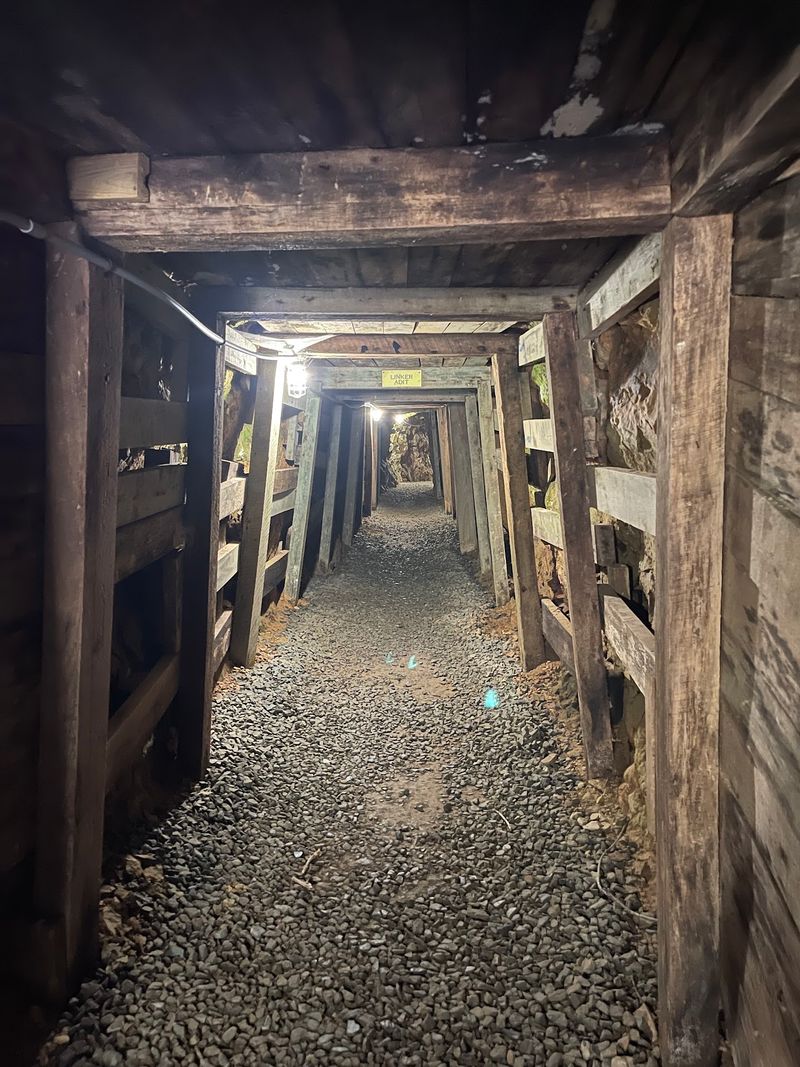
Cool air hits you before you even reach the mine entrance. On a brutally hot summer day, that blast of roughly 60-degree air felt like standing in front of an open refrigerator, and honestly it was my favorite surprise of the visit.
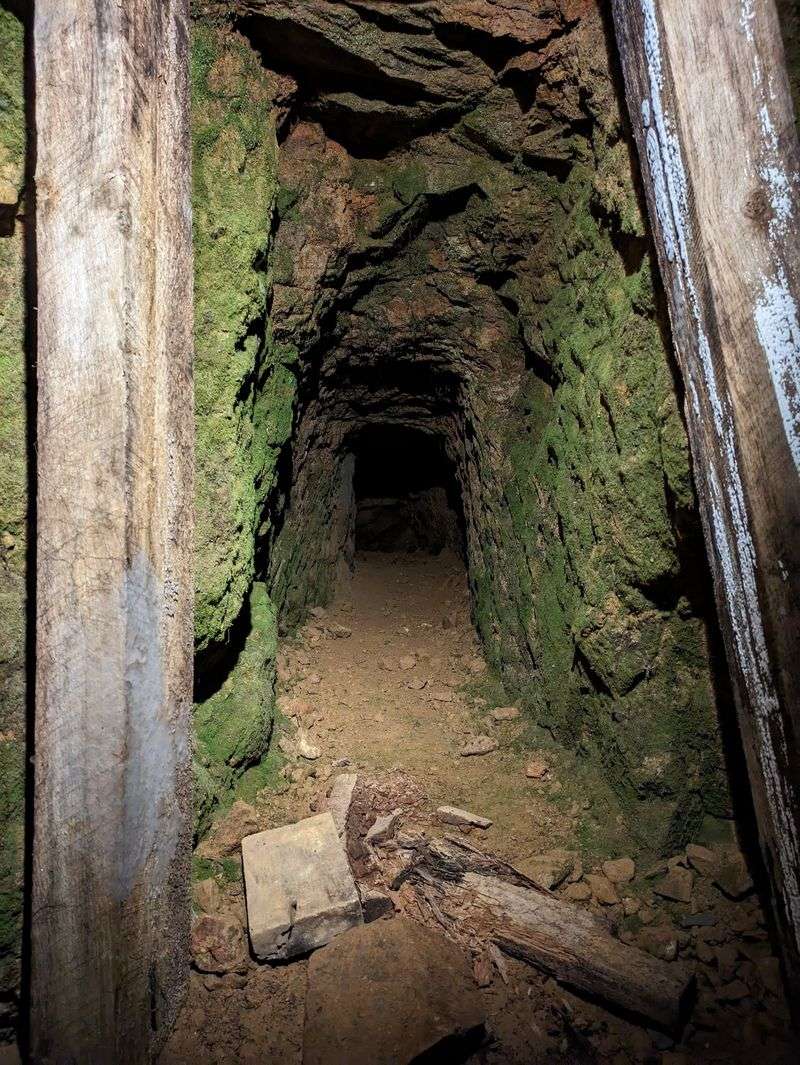
Guided tours lead groups through restored underground tunnels, some dating back to the 1830s. Underground work at Reed began in 1831, after miners realized gold ran in veins of white quartz rather than just sitting loose in the creek.
The walls are damp, streaked with quartz, and dotted with moss and tiny fungi in places. Water drips from the ceiling, so a hat is not a bad idea.
Bring a flashlight if you can, and a UV light is even better. Under ultraviolet light, sections of the rock genuinely sparkle, which turns the tour into pure magic for younger kids.
Small bats live in the tunnels too, maybe thirty or so by staff estimates. Spotting one clinging to the rock is a thrill for some visitors and a reason to skip the mine for others.
Self-guided walks are no longer offered, so plan around the scheduled tour times.
Panning for Gold With Aching Wrists
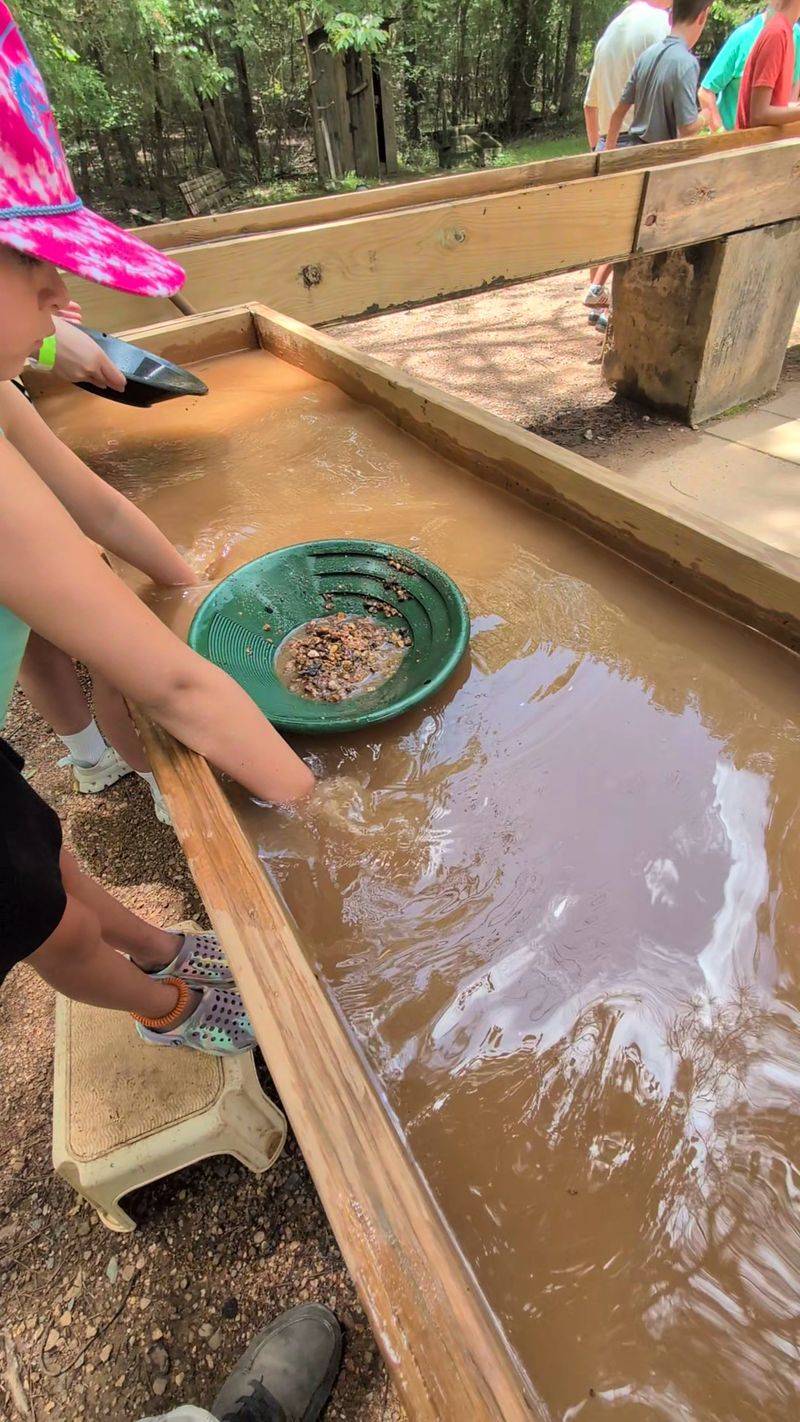
Swirling a pan of gravel looks easy until you try it. The trick is a steady circular motion that lets heavier gold settle while lighter sand washes over the rim, and my first few attempts were just messy splashing.
Staff at the panning troughs walk you through the technique and will check your pan to confirm whether those tiny specks are real. Paying attention to their instructions makes a genuine difference in your odds.
Panning runs seasonally, roughly April through October, for a small fee separate from general admission. Extremely hot days can shut it down, so heat waves are worth checking on before you drive out.
Nobody is walking away with a 17-pound nugget. Finds here are flakes and flecks, sometimes nothing at all, and half the group I watched came up empty while their neighbors got lucky.
Kids don’t seem to care much either way. The fun is in the sloshing, the hunting, and that hopeful tilt of the pan toward the light.
One cold-weather visitor noted the water was warmed for panning, which sounds like a small mercy in winter.
Museum Exhibits and the Bigger Gold Story
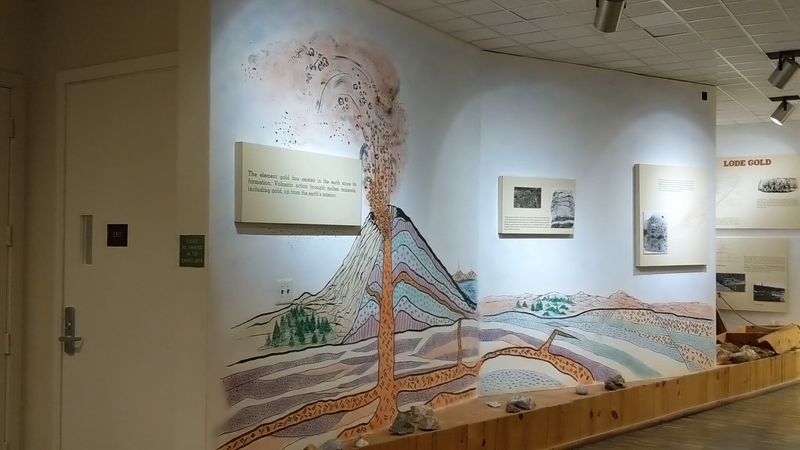
Exhibits inside the visitor center fill in everything the tunnels can’t explain. Displays cover the geology of gold, how miners found and crushed it, and the tools and technology that evolved through the 1800s.
An orientation film gives you the broad sweep of North Carolina’s gold mining industry, and I’d suggest watching it first so the rest of the site clicks into place.
Some numbers genuinely shocked me. North Carolina led the entire nation in gold production until 1848, when California took over, and at its peak mining was the state’s second-largest employer behind farming.
Annual gold recovery values climbed past one million dollars in those years. All that metal led to federal and private mints operating right here in the state.
Reed also produced some of the biggest nuggets ever found in the East. A 28-pound nugget unearthed by an enslaved boy named Peter remains the largest documented east of the Mississippi River, and in 1896 a 23-pound nugget was found by Jacob L.
Shinn, Jesse Cox, A.M. Cox, and Dr. J.R.
Jerome.
Grandparents tend to linger here. Kids may declare it boring, then change their minds at the nugget case.
The Stamp Mill and the Sound of Crushing Rock
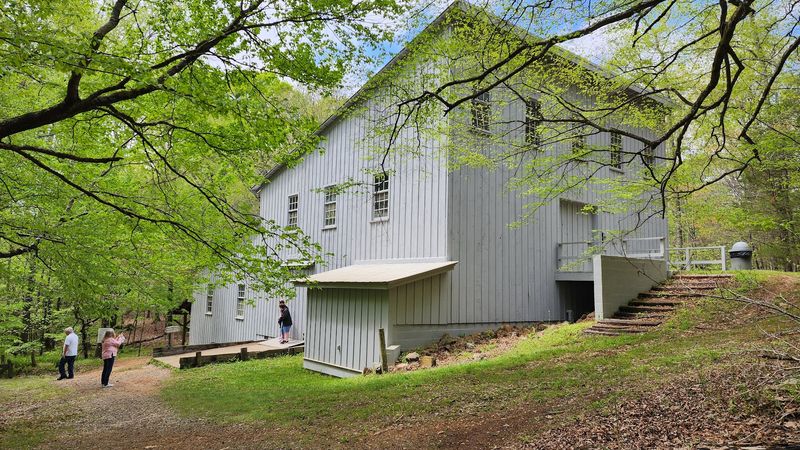
Machinery gets loud when it earns its keep. The reconstructed stamp mill at Reed represents 1890s technology, built to pound quartz ore into powder so the gold trapped inside could be separated out.
Demonstrations run seasonally from March through November, and catching one is worth timing your visit around.
Heavy iron stamps rise and drop over and over, hammering rock with a rhythm you feel in your chest. Suddenly the scale of industrial mining makes sense in a way no display case can manage.
Before mills like this, separating gold from hard rock was slow, brutal work. Technology like the stamp mill is exactly what pushed mining from creek-panning hobby into serious business.
The mill sits along the trail network, so you can reach it on foot from the visitor center. It’s a gentle walk with a bit of a climb toward the outer areas.
Later years brought new owners to the property. The Kelly family bought the mine in 1895 and kept underground operations going until 1912, when the digging finally stopped for good.
Photographing the mill in afternoon light gives you those beautiful weathered timber textures.
Trails, Picnic Tables, and 880 Acres of Quiet
The size of this place caught me off guard. Roughly three miles of trails wind across old lode and placer mining areas, past archaeological sites, a recreated mill, the hill where the Reed home once stood, and the family graveyard.
Grab a free map at the front desk before you head out. Junctions come up quickly and the paper guide saves you guessing.
Most of the walking is easy, with moderate uphill stretches toward the outer mining areas. All-terrain wheelchairs are available and reach many trail sections, though not every part of the property.
Picnic tables and a large grassy field make this an easy half-day stop rather than a quick drive-by. I saw families spread out with lunch while kids burned off energy nearby.
Reed Gold Mine is a National Historic Landmark, listed on the National Register of Historic Places, and managed by the North Carolina Department of Natural and Cultural Resources.
General admission is free, with fees only for guided mine tours and panning. Hours run Tuesday through Saturday, 9 a.m. to 5 p.m., closed Sundays, Mondays, and state holidays.
Address: 9621 Reed Mine Road, Midland, North Carolina
