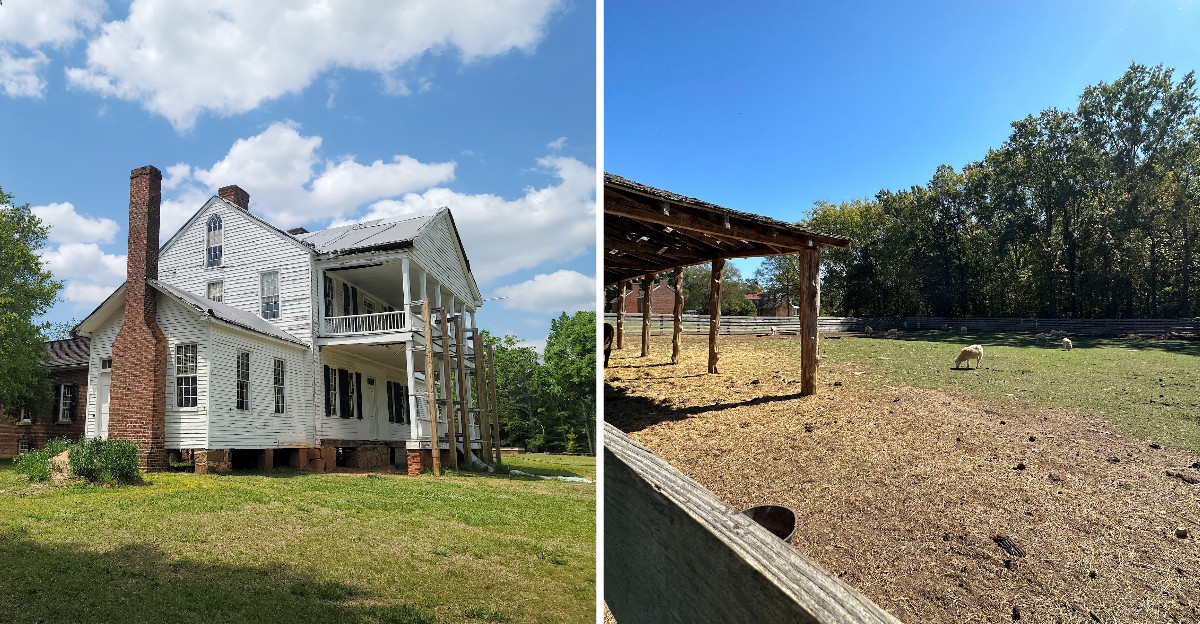
Nearly 800 acres of pasture, oak shade, and more than thirty old buildings spread across land settled in the 1760s are not what a quiet two-lane road usually delivers. A small historical marker and a locked cabin were the expectation, but the reality was far larger.
The oldest structure, a squat log house built around 1766, still stands where a colonel raised his family and where British Legion troops came looking for him in July 1780. What happened next, a pre-dawn Patriot attack on a nearby plantation, shifted the mood of the whole Carolina backcountry.
An afternoon disappeared while walking between those buildings, listening to sheep grumble and a musket crack somewhere behind the treeline. The place holds history the way a front yard holds a family, quietly and without fuss.
South Carolina hides some of its best stories in pastures like this. History here feels less like a textbook and more like somebody’s home.
The Log House That Outlasted the War
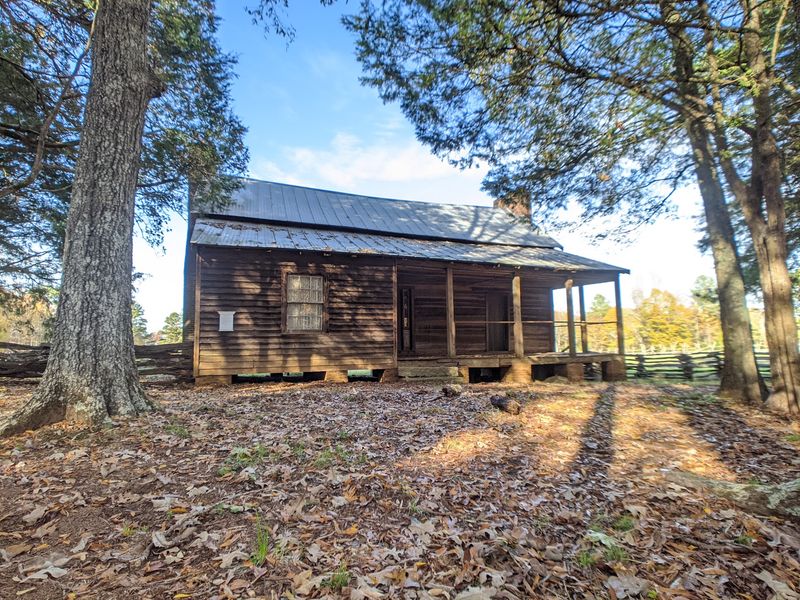
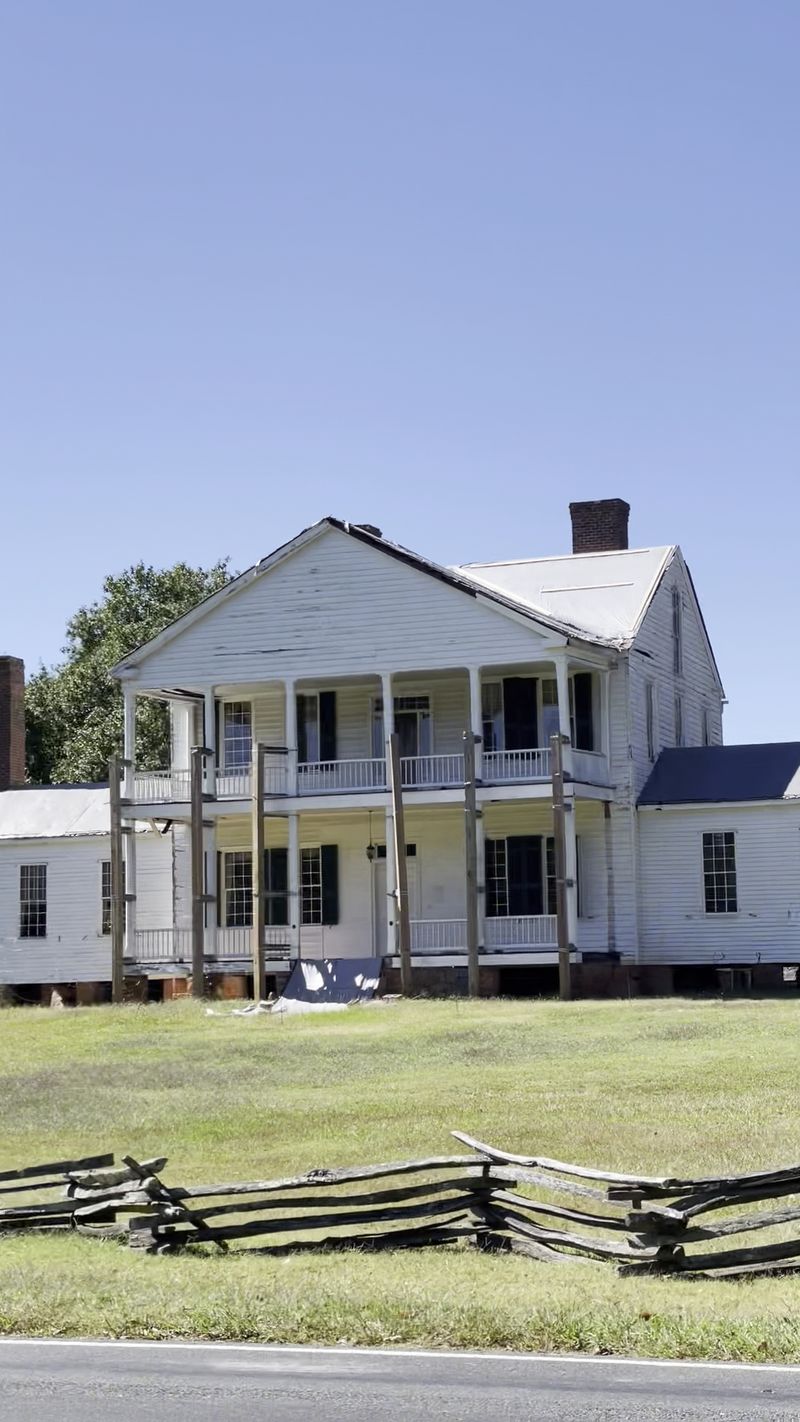
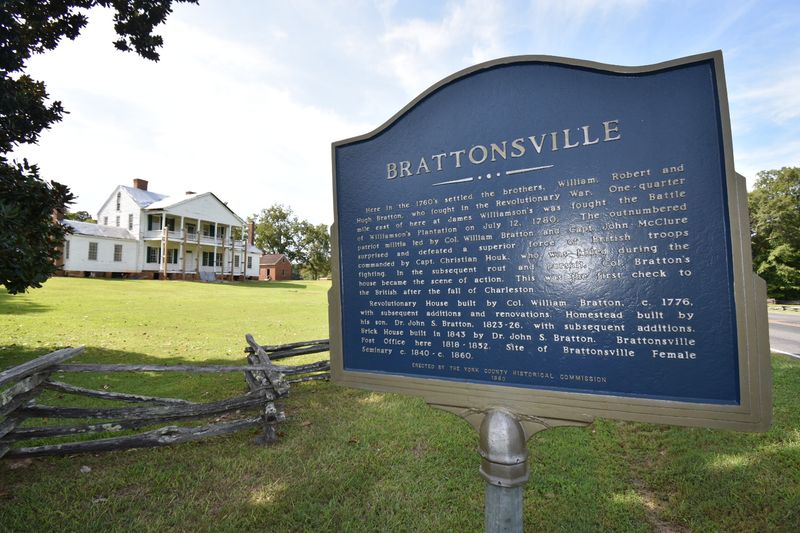
My first stop was the small log structure everyone here calls the Revolutionary House, and honestly, it looks almost too plain to matter. Colonel William Bratton is believed to have raised it around 1766, though some sources point to 1776 instead.
It started as a single room with a modest porch, which is exactly the kind of home a backcountry farming family would have built with their own hands and a good axe.
What struck me was the scale. The ceilings are low, the rooms are tight, and you realize a whole family lived, cooked, argued, and slept inside walls you could cross in a few steps.
It holds the title of oldest building on the property, and it watched the Revolution happen in its own dooryard.
If you go, take a slow lap around the outside before stepping in. The hand-worked logs and the joints between them tell you a lot about how much labor went into a house like this.
I ended up standing there longer than planned, thinking about how ordinary it must have felt to the people who called it home.
Three Brothers, One Piece of Backcountry Land
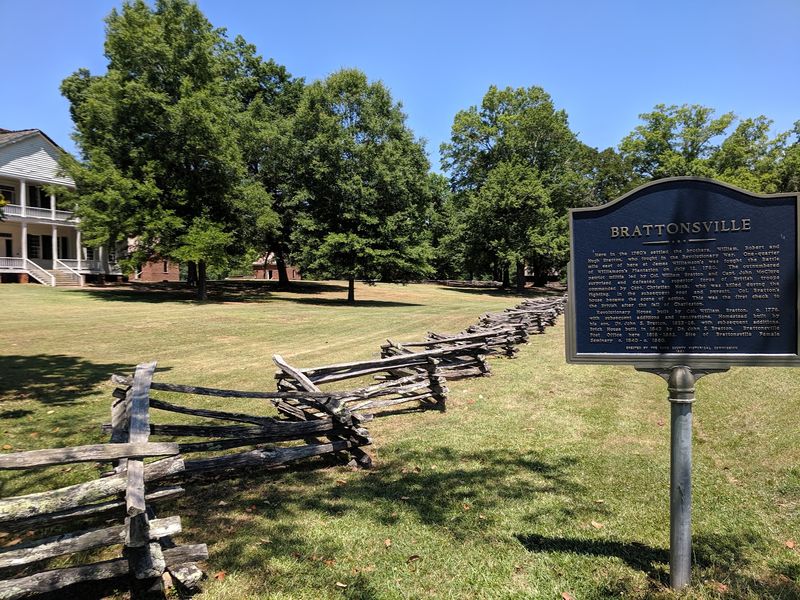
Long before any shots were fired here, this was simply land that needed clearing. Brothers William, Robert, and Hugh Bratton settled the property in the 1760s, part of the wave of Scots-Irish families who pushed into the South Carolina upcountry looking for farmland they could actually own.
All three brothers went on to take active part in the Revolutionary War, which is a detail I keep coming back to.
The frontier they built on was rough country. Neighbors were far apart, roads were poor, and a farm succeeded or failed based on how much work a family could squeeze out of a season.
Standing in the open pasture, I could see why they picked this spot. Gentle slopes, decent soil, water within reach.
The site does a genuinely thoughtful job interpreting both the Scots-Irish settlers and the African American people whose labor shaped this place across generations. That fuller story is woven through the buildings and the exhibits rather than tucked into a corner.
Give yourself time to read those panels carefully. They add weight to everything else you see out here.
July 11, 1780, Trouble Arrives on the Porch
Picture a hot July afternoon and the sound of horses coming up the lane. On July 11, 1780, British Legion troops under Captain Christian Huck rode onto Colonel Bratton’s plantation looking for him.
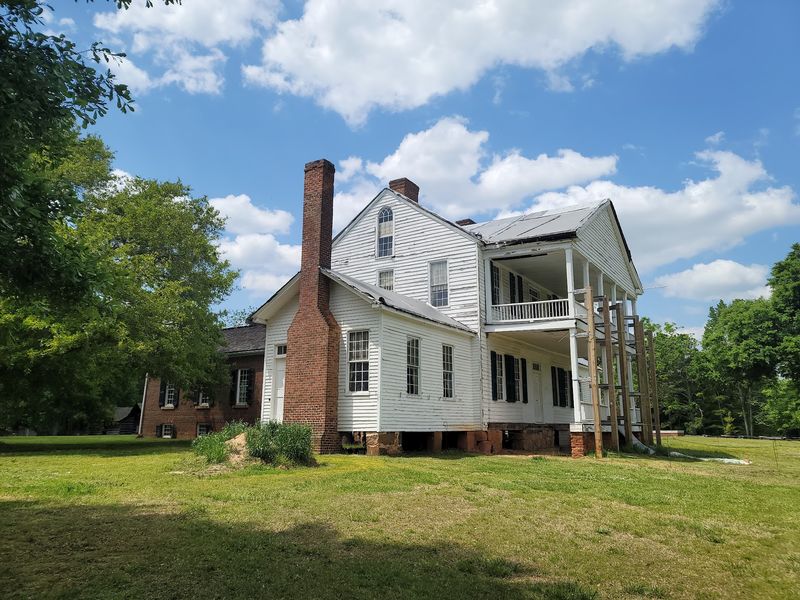
Martha Bratton, the colonel’s wife, was the one who met them. Huck reportedly confronted her on the porch of the house, pressing her about where her husband had gone.
That porch is still there, and it changes how the building feels once you know what happened on it. A confrontation like that was not an abstract military event.
It was strangers with weapons standing a few feet from a woman’s front door.
Guides here tell the story with care, sticking to what the record supports rather than dressing it up.
The visitor center film covers this sequence well, and I would strongly suggest watching it first. Twelve minutes of context makes the rest of the walk far more meaningful.
I watched it before heading out and was glad I did, because the geography of that night suddenly made sense.
Huck’s Defeat and the Dawn Attack Next Door
Word travels fast when your neighbors are watching. Colonel Bratton learned that Huck planned to move against him, and he pulled together Patriot militia in response.
Early on the morning of July 12, 1780, those militiamen struck Huck’s camp at Williamson’s Plantation while the British Legion troops were still settling into their morning. The surprise worked.
The Patriots won the fight, and Captain Huck passed during the engagement. The battle goes by two names, Huck’s Defeat and the Battle of Williamson’s Plantation, and it is short enough that plenty of history buffs have never heard of it.
On the guided tour I learned that the site where Huck spent his last night is now marked by a ghost structure, an open frame showing the outline of the house that once stood there.
Flat wooden soldier cutouts, painted red and blue, show where each side stood.
It is a simple presentation and it works beautifully. You can stand in one spot and understand the whole engagement in about thirty seconds.
That visual setup also makes the scale surprisingly clear. This was not some enormous battlefield stretching for miles, but a quick, violent clash around a rural plantation.
Walking between the markers lets you see how close the opposing forces actually were, and why surprise mattered so much once the Patriots moved in that morning.
Why a Small Skirmish Mattered So Much
Numbers alone would make this fight look minor. The real value was psychological, and that is what the interpreters here emphasize.
Patriot forces in the Carolina backcountry had taken serious losses before that summer, and confidence was low. A clean victory over British Legion regulars changed the conversation in a hurry.
Historians describe Huck’s Defeat as a shot in the arm for backcountry Patriots, the kind of win that convinced wavering neighbors the fight was still worth joining. Recruitment picked up.
Militia companies grew.
Within months came Kings Mountain, and then Cowpens the following January, two of the turning points of the Southern Campaign.
Brattonsville sits on the Liberty Trail network that connects these Revolutionary War sites, and pairing it with Kings Mountain makes for a strong day of driving and walking.
I did them in that order and the sequence clicked. You start with a farmyard skirmish almost nobody remembers, and you end up understanding how the war in the South actually turned.
That connection is the best reason to include this stop into your itinerary.
Thirty-Plus Buildings and a Farm Full of Rare Breeds
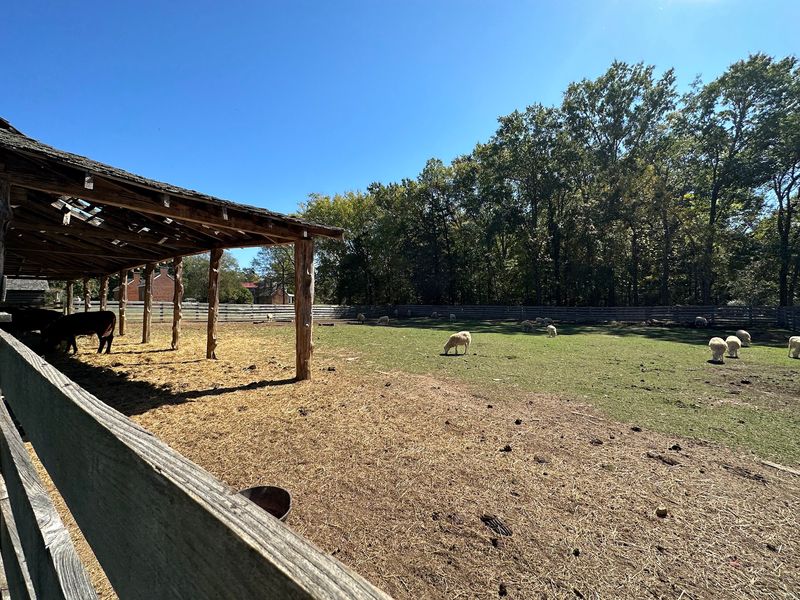
The pigs were an unexpected highlight, and I say that as someone who came for the battlefield. Brattonsville raises rare heritage breeds through an award-winning farm program, so the sheep, hogs, and horses you see resemble what families here would have kept generations ago.
Kids tend to park themselves at the fences and refuse to move.
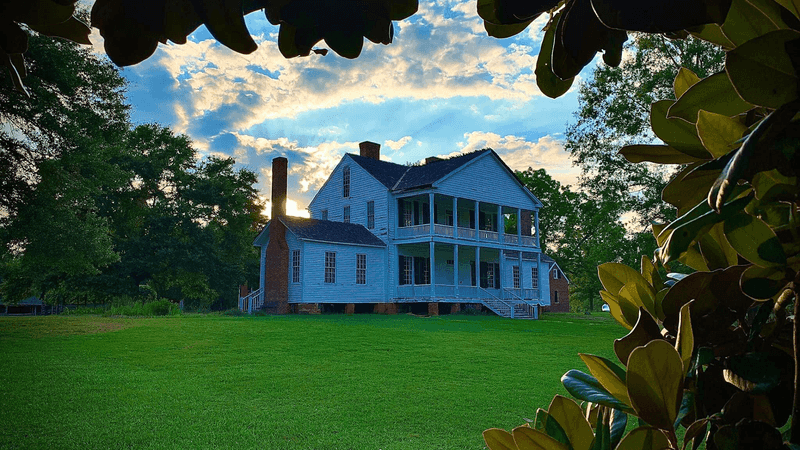
Beyond the animals, more than 30 historic structures stretch from the 1760s through the late 1800s. There is a reconstructed general store, a blacksmith shop, kitchen buildings, barns, a cotton gin, and the larger antebellum homestead.
Watching the architecture change from rough log to finished frame across a single property is a quick lesson in how the Piedmont grew.
Costumed interpreters demonstrate cooking, candle making, quill writing, and occasionally a musket firing. Staffing varies by day and season, so weekends with special programming give you the liveliest version.
Wear real shoes. The buildings are spread wide and you will log more steps than you expect.
Picnic tables and an air-conditioned gift shop offer welcome breaks in summer heat.
Trails, Film Credits, and Planning a Visit Worth the Drive
Here is a detail that surprised me: parts of the Mel Gibson film The Patriot were shot on this property. There are no signs pointing it out, so you only learn it if you ask a guide, which feels like a small secret handshake.
The Walt Schrader Trails add another layer entirely. Over eight miles wind through the woods here, open to hikers, mountain bikers, and riders on horseback.
I walked a short loop and had it completely to myself.
For timing, aim for the annual Huck’s Defeat reenactment around July 11 and 12, when reenactors, horses, and demonstrations fill the fields. The Christmas candlelight tour is the other standout, moving guests building to building through a storytelling format.
Morning visits beat the summer heat, and half a day is the minimum if you want to see everything without rushing.
Check the daily schedule at admissions and ask whether the Huck’s Defeat walking tour is running. That tour is what turns a pleasant stroll into a genuinely memorable stop.
Address: 1444 Brattonsville Road, McConnells, South Carolina
