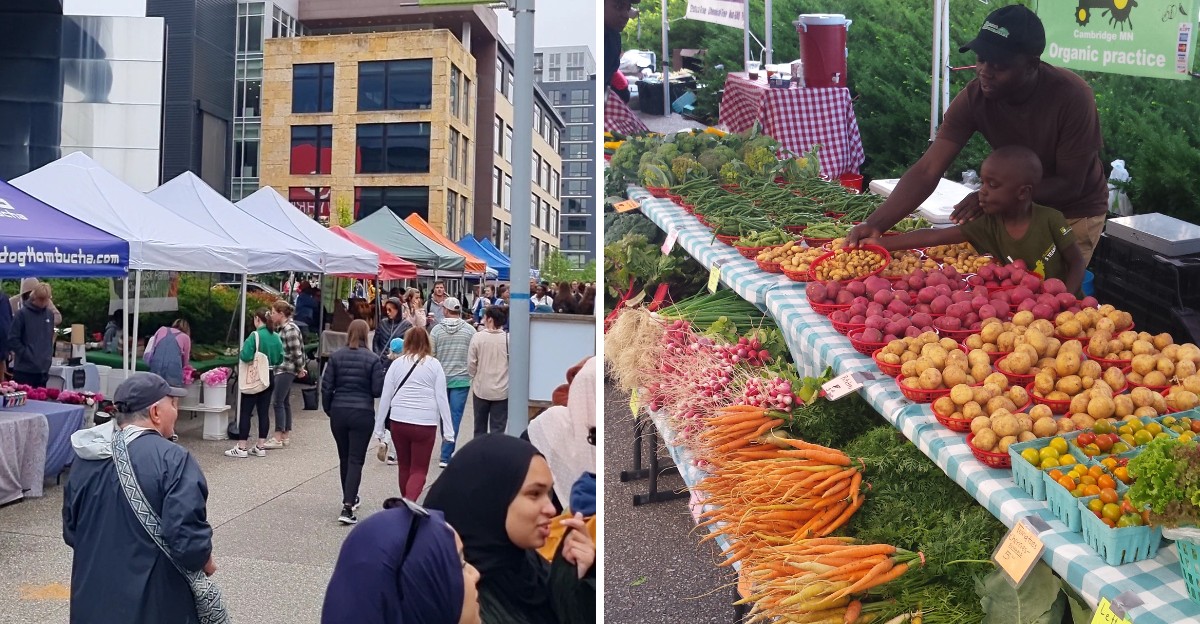
Cold weather usually empties out farmers markets fast, tables gone until spring returns. This one never bothers closing at all.
Vendors adjust their offerings as seasons shift, root vegetables and preserved goods eventually taking over from summer produce without the market itself skipping a single week. Shoppers bundle up in winter gear just as often as they show up in short sleeves during warmer months.
Staying open through every season takes real commitment from vendors willing to show up regardless of weather. Few markets sustain that kind of year round consistency, yet this one keeps running anyway, adapting constantly while never fully shutting down.
Markets this persistent rarely exist without a seasonal break somewhere. This particular Minnesota market keeps proving fresh food doesn’t have to disappear just because summer ended.
Saturday Mornings Along the Mississippi
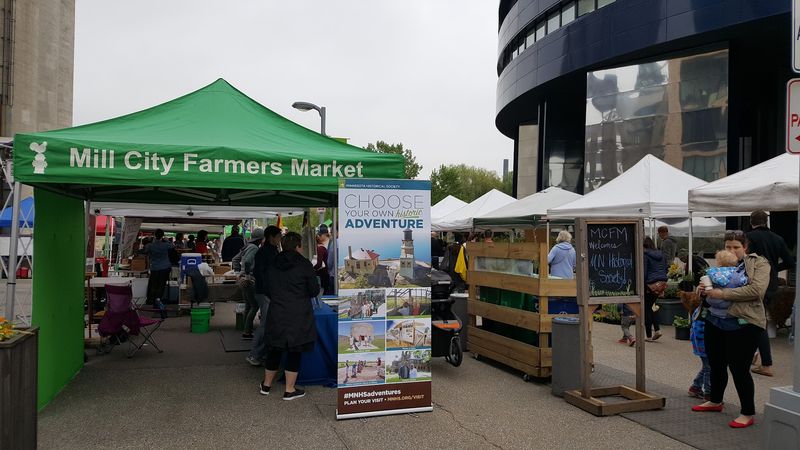
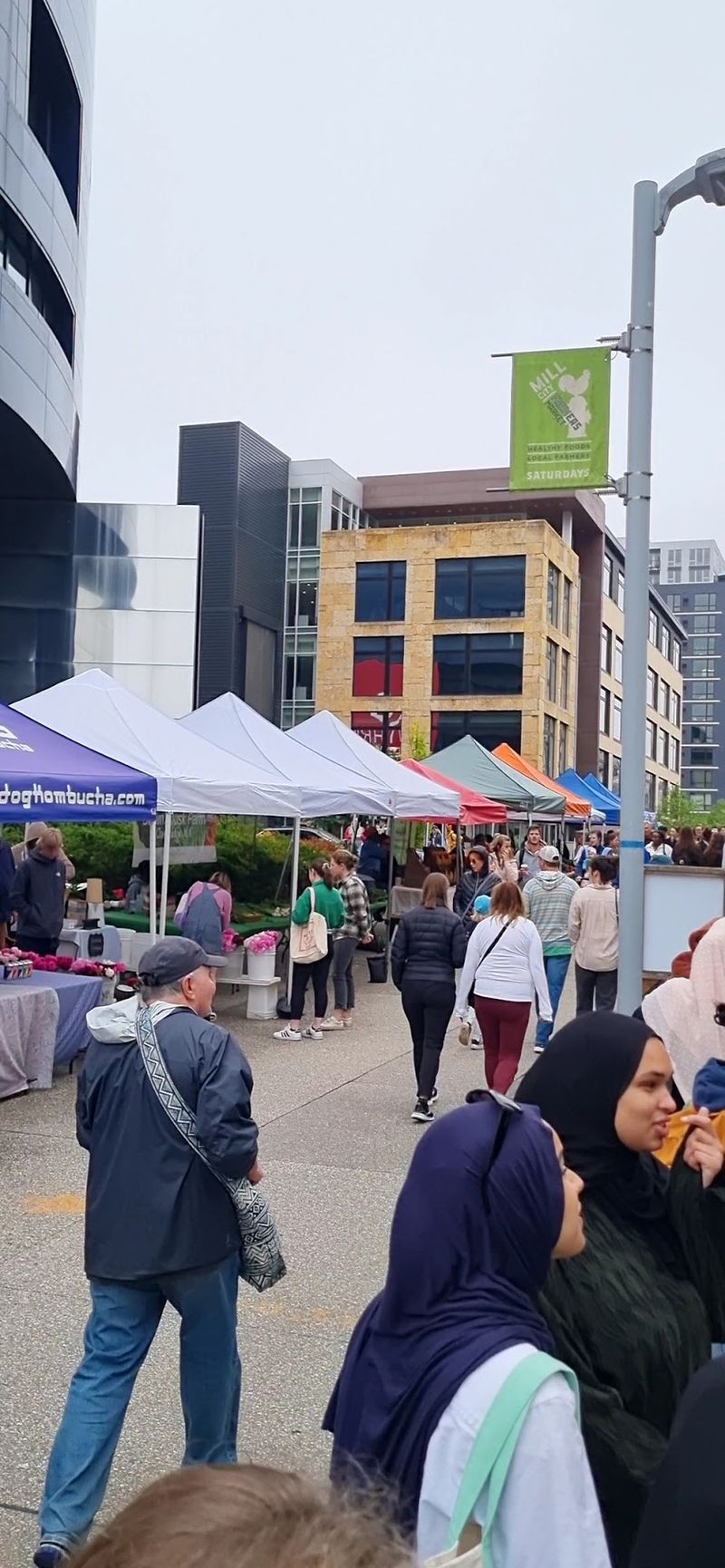
Few things top the sound of the Mississippi rolling past while vendors pop open their canopies and stack crates of vegetables. The market spreads out beside the old mill ruins, so weathered limestone walls frame nearly every view. Downtown towers rise on one side, the river on the other.
Early birds get the calmest version of it. Arriving close to opening means shorter lines, easier browsing, and vendors who still have time to chat about how the growing season went. By mid-morning the aisles fill with families, strollers, and people carrying tote bags that keep getting heavier.
A big part of the charm here is how the setting shifts with the weather. Summer brings sunlight bouncing off the water and music drifting between stalls. Colder months push everything closer together, which somehow makes the whole thing feel cozier.
Plan on wandering twice. One loop to see everything, a second loop to actually buy, because the first pass always leads to second thoughts about that bread or those tomatoes.
The Indoor Season That Beats Winter
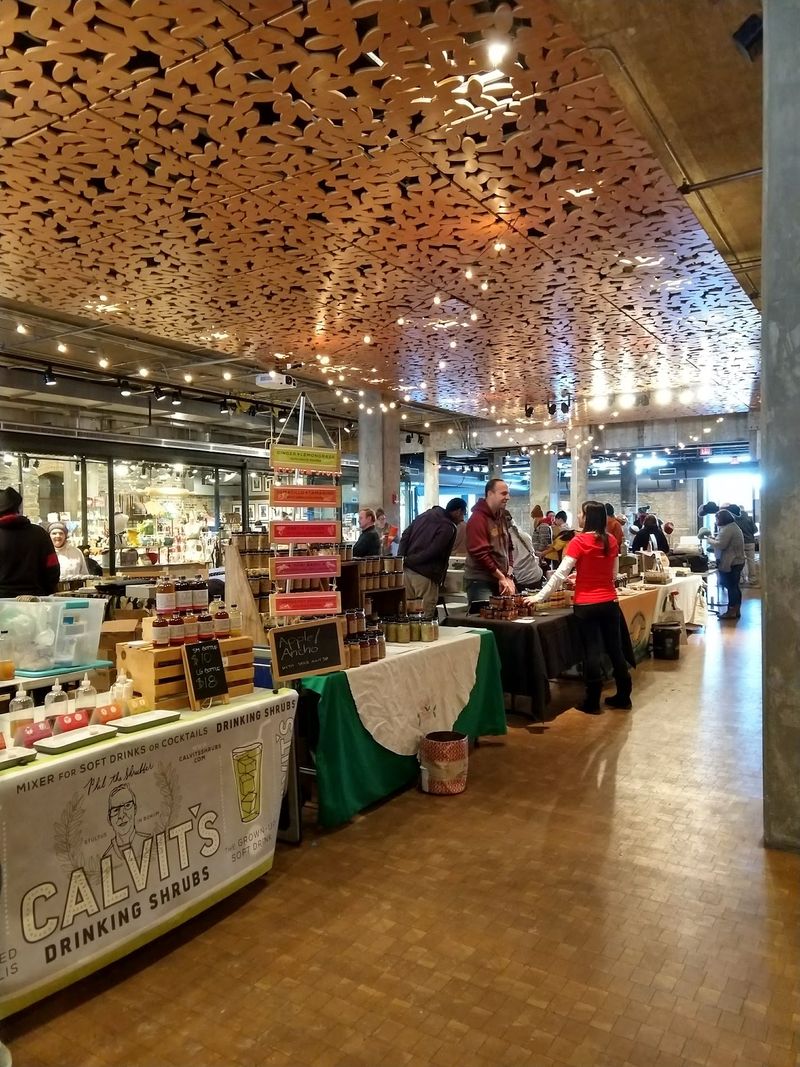
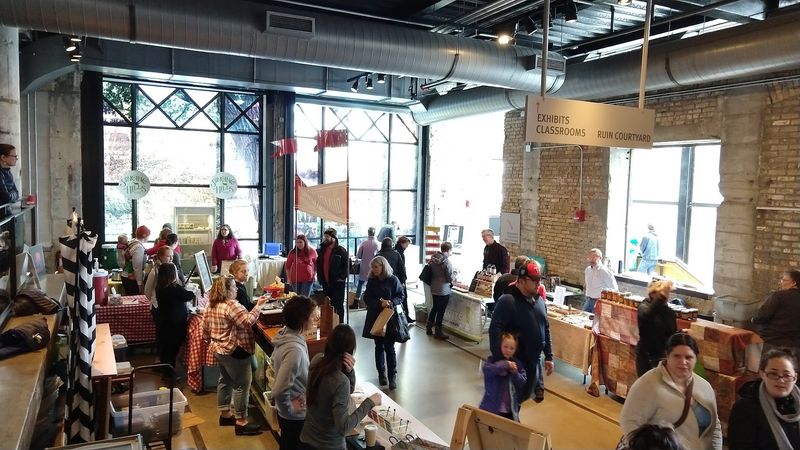
Cold weather does not shut this place down, which surprises plenty of first-time visitors. When temperatures drop, the market shifts indoors into the Mill City Museum, so shopping happens under a roof with heat and real restrooms.
Boots, mittens, and steaming cups replace sunglasses and sandals. The crowd thins slightly, the pace slows, and conversations stretch longer because nobody is rushing to beat the sun.
Vendors seem glad to talk through storage crops, grains, and whatever got preserved back in September. Winter shopping also changes what lands in the bag. Think root vegetables, squash, eggs, cheese, meat, flour, honey, and jars put up months earlier.
Greens still show up thanks to growers using tunnels and indoor setups.
The indoor season runs on a lighter schedule than summer, so checking the market calendar before heading over saves a wasted trip. Pair the visit with a quick look at the museum’s milling history displays.
Warm building, good food, zero wind chill. Layer up anyway, since the walk from parking is still Minnesota in January.
Produce Picked A Day Or Two Ago
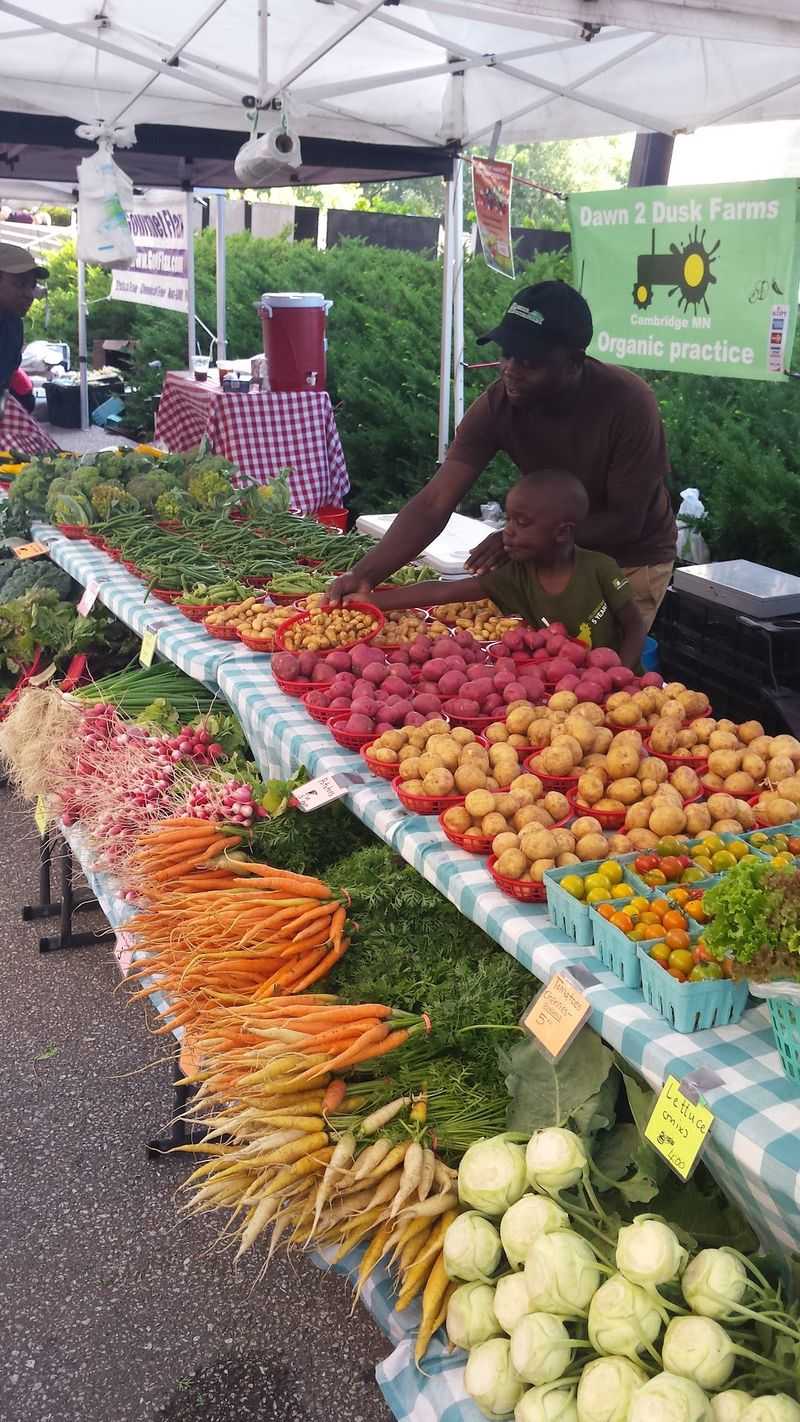
Tomatoes that actually smell like tomatoes say plenty about what the produce tables here offer. Growers haul in what was picked a day or two earlier, so the color, weight, and scent are noticeably different from grocery shelves. Many booths carry certified organic labels.
Spring leans on asparagus, rhubarb, radishes, and tender greens. Summer explodes with sweet corn, peppers, berries, cucumbers, and beans stacked in every direction. Fall turns into a parade of squash, apples, potatoes, and braided onions.
Asking questions pays off. Farmers will explain how a certain pepper behaves in a hot pan, which apple holds up in a pie, or how long a cabbage keeps in the fridge. Nobody minds the curiosity, and the answers beat anything found online.
Bring cloth bags with sturdy handles, because paper gives up fast under wet greens. Shop the outer stalls first, then circle back for delicate items like berries and herbs so they do not get crushed under a squash. Simple trick, big difference.
Bread, Pastry, And Flour Worth Hauling Home
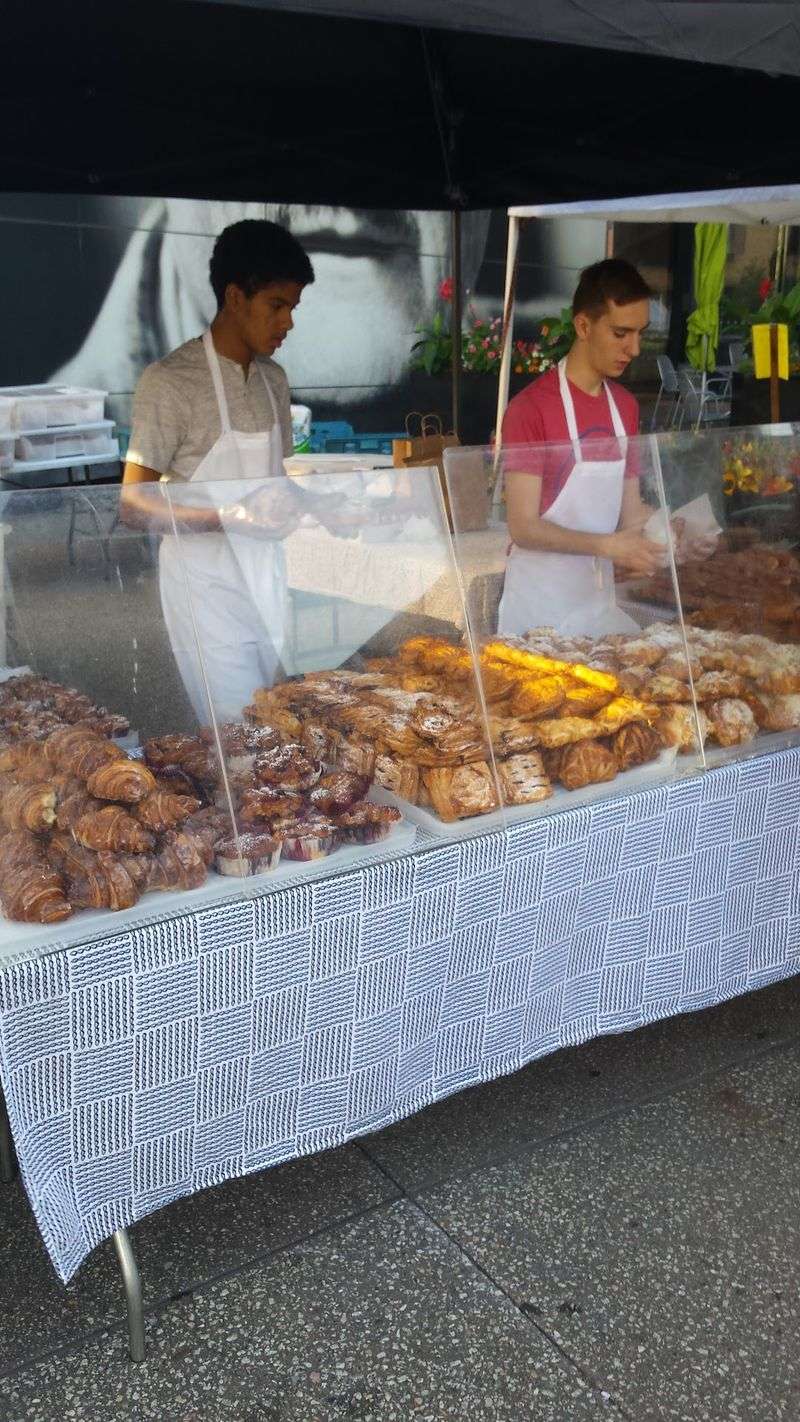
The smell gives it away long before the tent comes into view. Bakers here turn out croissants, pastries, pies, cookies, donuts, and loaves with crackly crusts, and the lines form early for good reason. Popular items sell out well before closing.
Baker’s Field Flour and Bread mills grain locally, which draws home bakers looking for flour with actual character. Picking up a bag alongside a loaf is a common move.
Sweet options run wide. Slices of pie, jam-filled pastries, and cookies big enough to share travel well if the plan includes a walk along the river afterward. Solomon’s Bakery and other regulars keep the selection shifting with the seasons.
One tip worth remembering is to eat something savory first, then buy dessert on the way out. Otherwise the pastry disappears before the shopping even starts. Not that anyone would admit to that happening twice.
Loaves freeze well, so grabbing an extra is rarely a mistake. Slice before freezing, then toast straight from the bag on a slow weekday morning.
Breakfast Is A Legitimate Reason To Show Up
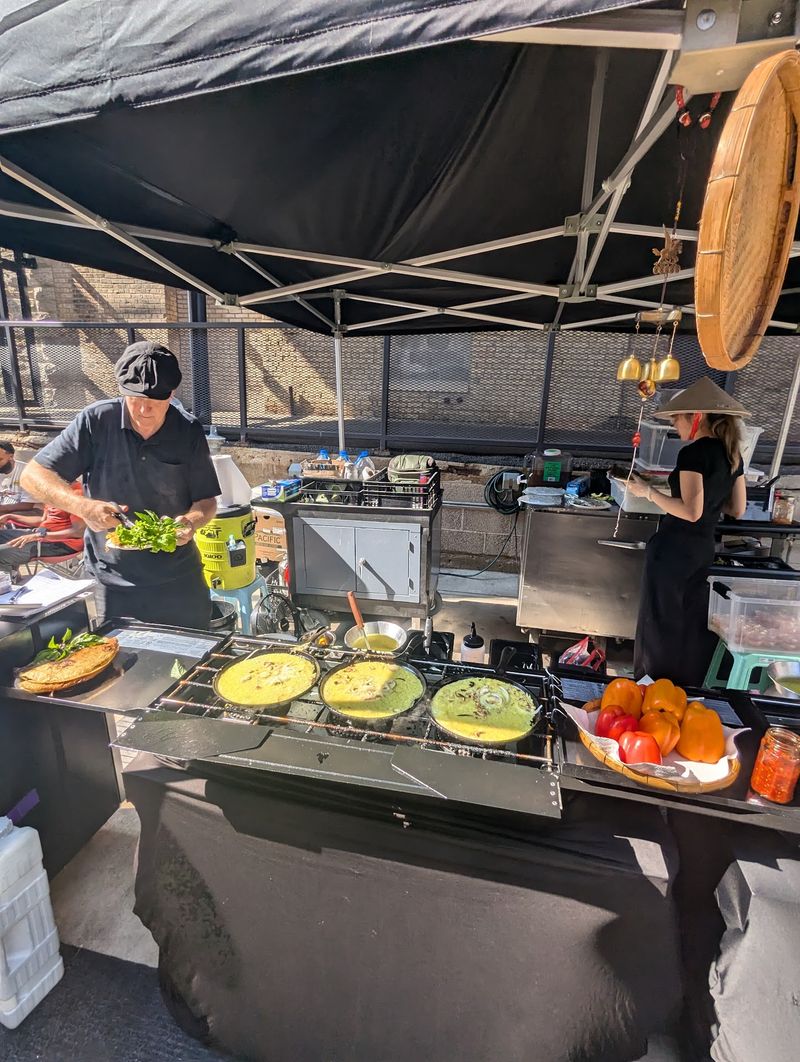
Breakfast counts as a legitimate reason to show up. Food booths and trucks line one section, and the smells compete hard for attention. Bagel sandwiches, tacos, crepes, pizza, and hot drinks all make appearances.
Rudy’s Breakfast Bagels draws a steady queue, and the lox version on an asiago bagel has plenty of fans. A Vietnamese crepe stand and a chai maker have their own loyal followings. Vegan choices turn up across several vendors, which makes group visits easier.
Seating is limited, so improvising is part of the routine. Plenty of people eat on the museum steps, along a low wall, or on the grass near the river with the skyline in view. Honestly, that beats a table most days.
Lines move faster than they look. Ordering before the mid-morning rush helps, and splitting a couple of dishes across a group means tasting more without overdoing it. Water refills are available inside the museum building, a small detail that matters on warm mornings.
Buckets Of Flowers And A Lavender Stall Out Back
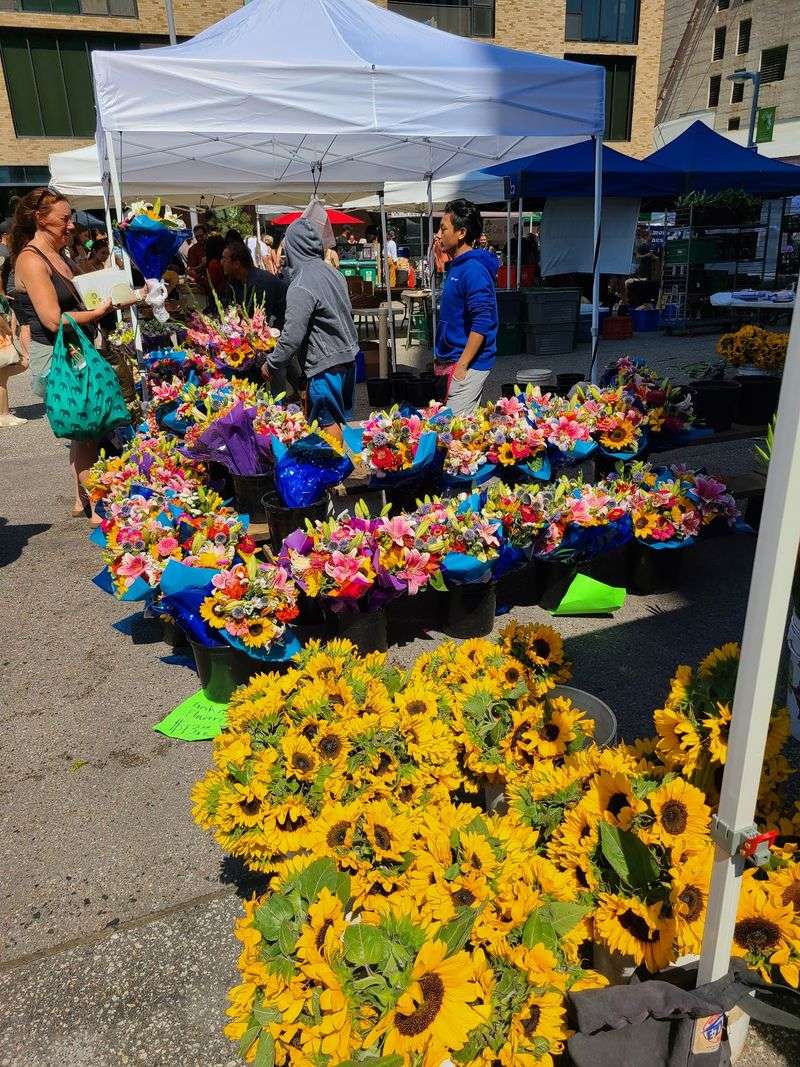
Buckets of cut flowers turn the aisles into something close to a painting. Sunflowers, dahlias, zinnias, and wild-looking mixed bundles get wrapped in paper while shoppers hover nearby, trying to decide. Prairie grasses sneak into arrangements late in the season.
Lavender has a following all its own. A stall near the back sells bundles and lavender goods, and regulars stock up for syrups, sachets, and baking. The scent carries far enough to work as a signpost.
Spring brings seedlings and starter plants for anyone with a garden bed or a sunny windowsill. Herbs, tomatoes, peppers, and flowers arrive in small pots, already hardened off for Minnesota weather.
Carrying flowers through a busy market takes strategy. Buy them last, hold them upright, and ask for a damp wrap if the drive home runs long. Blooms cut that morning tend to last well past the week, which makes the small ritual of buying flowers feel less like a splurge and more like a habit.
Maple Syrup, Honey, And Pantry Jars
Maple syrup gets talked about a lot around here, and it earns the attention. Producers tap Minnesota trees, boil the sap down, and bring jars that taste nothing like the stuff in a squeeze bottle.
Honey sits nearby, often labeled by season or flower source. Ames Farm and other beekeepers offer varieties that shift in color and flavor depending on what the bees worked that summer. Tasting the difference side by side is a small revelation.
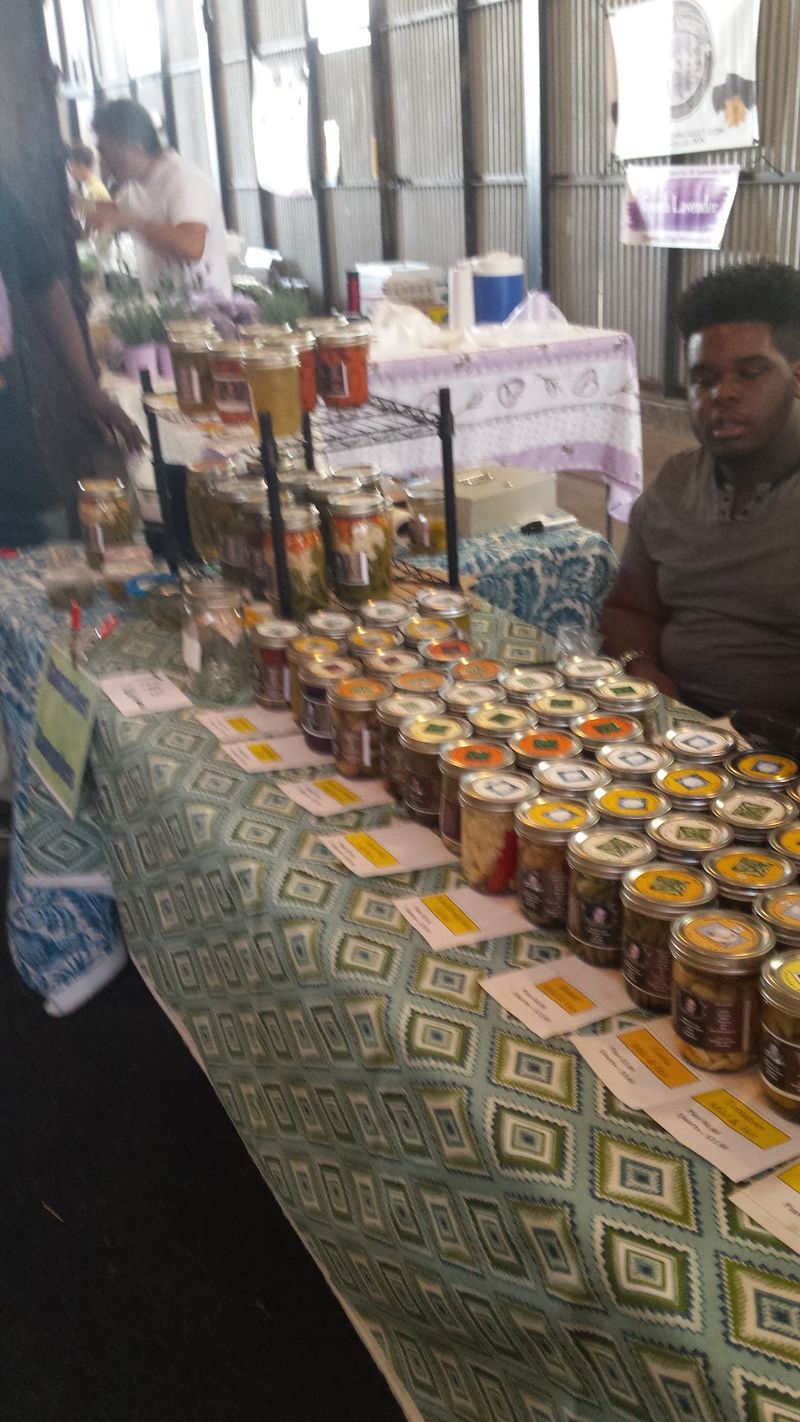
Jams, pickles, sauces, cheese, eggs, pasta, and locally raised meat round out the shopping list. Horner’s Corner, Sunshine Harvest Farms, and Twin Cities Jam come up often among regulars. Shelf-stable items make solid gifts, especially for anyone visiting from out of state.
Pantry goods are also the reason the cold season market still works. Even when the fields rest, jars, grains, and preserved foods keep the tables full. Stocking up in October means eating well through February. Just pack the heavy jars at the bottom of the bag and save the eggs for the top.
Handmade Goods Sitting Right Beside The Vegetables
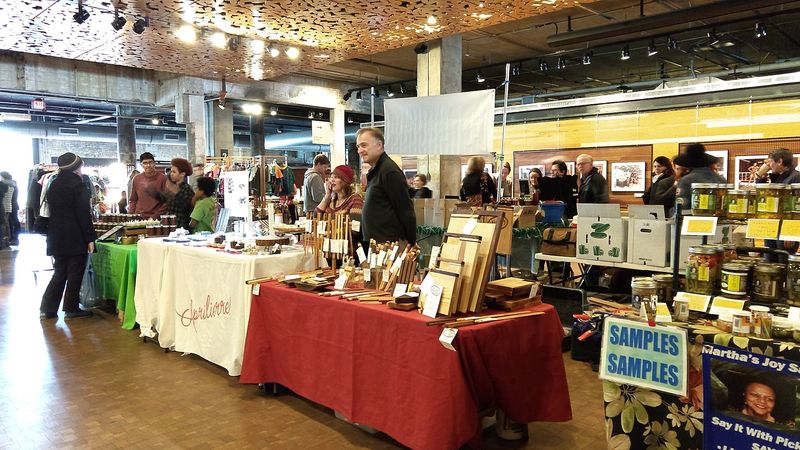
Not everything here is edible, and that catches some visitors off guard. Woven rugs, wool yarn, ceramics, soaps, candles, jewelry, and prints share the aisles with vegetables. Makers stand behind their tables, happy to explain a process.
Wool draws knitters who want to see and feel the fiber in person. Skeins dyed in small batches sit alongside finished hats and mittens, which makes perfect sense in a state that treats winter seriously.
Dog treats, pet gear, and household goods pop up too. Some vendors rotate through the season, so the lineup rarely looks identical two visits in a row. That unpredictability is half the fun.
Gift shopping works especially well here. Buying something handmade from the person who made it beats scrolling through a website, and the story behind the object usually comes free.
Holiday visits reward browsing, since makers bring their best inventory once the indoor season begins. Snap a photo of the vendor sign if a favorite turns up. Future you will be grateful.
Live Music, Kids Projects, And A Neighborhood Mood
Music drifts through the aisles most Saturdays, usually acoustic and rarely loud enough to drown out conversation. A guitarist here, a small band there, and suddenly the whole place has a soundtrack.
Kids get their own share of attention. Hands-on activities, cooking demos, and tasting projects run through the season, aimed at making younger shoppers curious about vegetables they might otherwise ignore. Parents tend to appreciate the built-in distraction.
Leashed dogs are a common sight, trotting along and collecting attention from strangers. The wide outdoor layout leaves room for everyone, though busy mornings call for a shorter leash.
What stands out most is the mood. Neighbors run into each other, vendors remember faces, and nobody seems in a hurry to leave. It feels less like errands and more like a weekly gathering that happens to involve groceries.
Demos and programs change week to week, so a glance at the posted schedule helps. Catching a cooking demo can completely change how a bag of vegetables gets used that night.
Getting There Without The Headache
Parking takes a little planning, which is the one wrinkle worth knowing in advance. Street spots exist nearby and often work out, especially for anyone arriving early. A ramp across the street handles the overflow.
Light rail and bus routes stop within walking distance, and the riverfront trails make biking simple. Plenty of visitors combine the trip with a stroll across the Stone Arch Bridge or a loop through Mill Ruins Park.
Timing matters more than people expect. Vendors are fully set up shortly after opening, and the final stretch before close brings thinner selection but calmer aisles. Peak crowds land in the middle.
Restrooms and drinking water sit inside the adjoining museum building, a detail that makes longer visits far more comfortable. Gold Medal Park and the Guthrie Theater are both a short walk away if the morning turns into a full day.
Find it at 750 S 2nd St, Minneapolis, MN 55401, open Saturday mornings from 8 AM to 1 PM. Checking the website first confirms the current season schedule, since indoor months follow a different rhythm.
