A white block of steel and portholes sat perched on a cliff above Lake Erie in Ohio, and from the deck of a ferry, my brain took a second to catch up.
That was the front of a ship up there, complete with a pilothouse, planted on solid rock like it had climbed out of the water on its own.
I had heard about this place before the trip, but seeing it from a moving boat is a different feeling entirely. The vessel was built in 1924 and spent decades hauling iron ore across the Great Lakes before it was retired.
Instead of being cut apart and melted down, the forward section was lifted off in the mid?1980s, barged to the island, and bolted to a cliff as a private home.
I spent the rest of my visit trying to learn how a 612-foot cargo carrier ended up as somebody’s house on a hill, a four-story residence with a view that no hotel could ever match.
Built in 1924 to Haul Iron Ore for Henry Ford
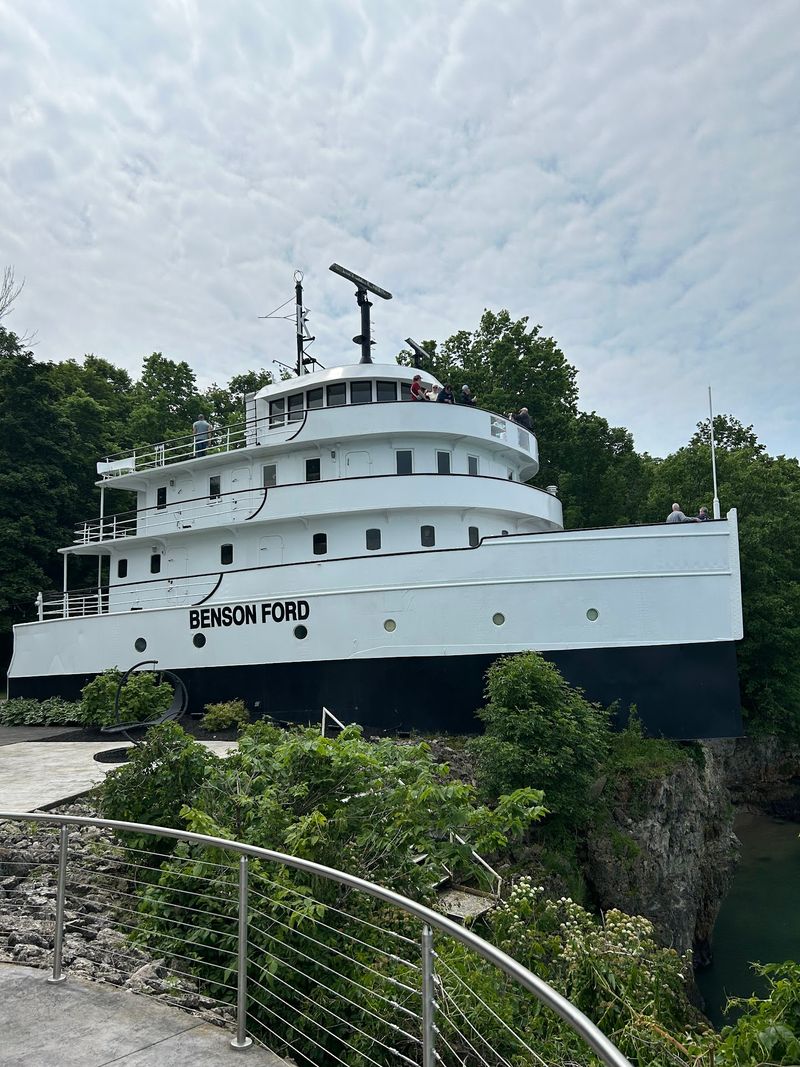
Long before it ever held a couch or a kitchen table, the Benson Ford worked for a living. Launched in 1924 for the Ford Motor Company, it was a Great Lakes bulk carrier built to move iron ore, coal, and other raw supplies to Henry Ford’s factories.
The ship stretched 612 feet from bow to stern, which is longer than two football fields laid end to end. Its name honored Henry Ford’s grandson, Benson Ford, so the vessel carried family pride along with cargo.
What I find interesting is that this wasn’t just a workhorse with bare metal walls. Henry Ford had a hand in designing parts of the interior, and he wanted comfort for the times he traveled the lakes on business.
That meant walnut-paneled staterooms, a proper dining room, a galley, and a passenger lounge tucked inside a ship whose main job was hauling ore. Picture polished wood trim just steps away from cargo holds full of rock.
The freighter kept at that routine for more than fifty years, crossing the same cold water season after season, until it was finally taken out of service in December 1981.
Retirement, a New Name, and a Long Wait on the Cuyahoga
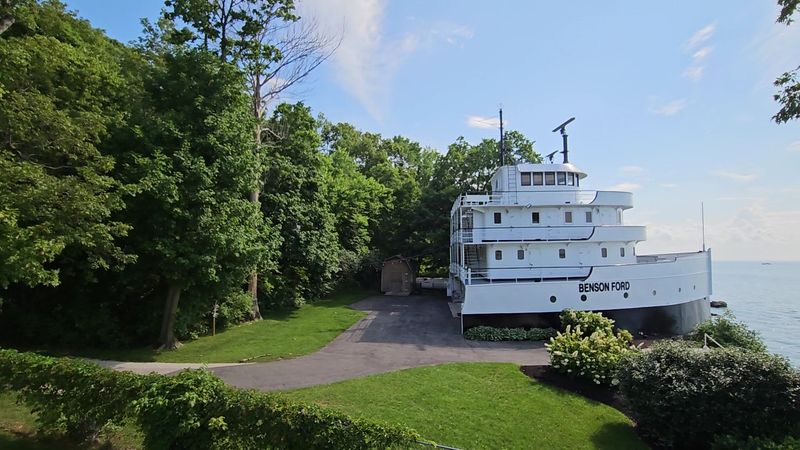
Ships don’t usually get soft endings, and the Benson Ford’s retirement started out looking pretty ordinary. After decommissioning in December 1981, the vessel briefly carried a different name, the John Dykstra II, so that a newer ship in the Ford fleet could inherit the original title.
Crews stripped out the engines and anything else worth salvaging. What was left got sold to Frank J.
Sullivan of Sullivan Marine in Cleveland, and the plan at first was to convert the hull into a barge.
That idea never happened. The ship never sailed again after the sale, and it sat tied up along the Cuyahoga River for close to two years while its future stayed undecided.
I think about that stretch of waiting whenever I look at the house now. Two years is a long time for something that big to just sit in the water with no purpose and no schedule.
Most vessels in that position get towed to a scrapyard and disappear quietly. Sullivan eventually landed on a wildly different plan, one that nobody in the shipping business would have guessed.
July 1986, Cutting the Bow Loose and Floating It to South Bass Island
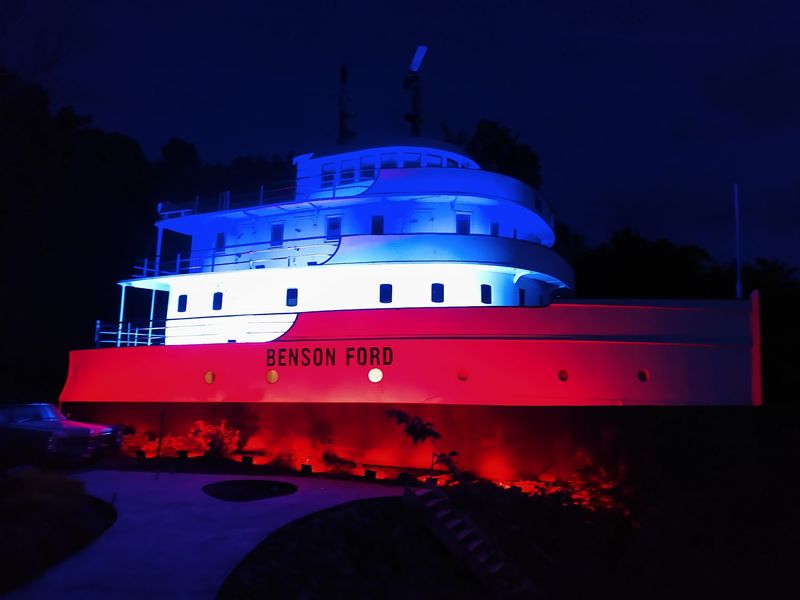
Here is the part of the story that still sounds made up. On July 3, 1986, workers separated the forward superstructure of the freighter from its hull, a four-story chunk measuring 62 feet by 59 feet.
That section, the forecastle, got loaded onto a barge named Thor 101 for a slow trip across Lake Erie. It reached South Bass Island on July 18, 1986, after roughly two weeks of moving and maneuvering.
Getting it ashore was only half the challenge. The structure then had to be hauled up an 18-foot promontory and set onto solid bedrock at Victory Point, where it has stayed ever since.
I’ve stood near the cliff edge there and tried to picture the rigging and cables involved. It looks impossible from ground level, which is probably why so many people on the island still talk about it.
The rest of the freighter, the enormous hull that made up most of the ship, was sent off to be scrapped. Only the front survived, and it survived by becoming a summer home.
Seven Thousand Square Feet of Ship Turned Into Rooms
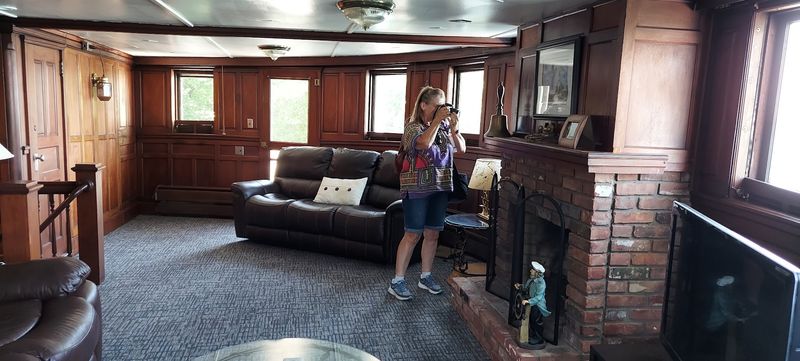
Four stories, roughly 7,000 square feet, five to six bedrooms, and five full bathrooms. Those numbers sound like a mansion listing until you remember every wall started out as part of a cargo ship.
The first level now holds a garage, a big family room with a pool table, a laundry room, a bathroom, and a game room. It’s the most modern part of the house and the least ship-like.
Climb up and things change fast. The second floor keeps two original walnut-paneled staterooms alongside the dining room, kitchen, another bedroom, two bathrooms, and a door out to the deck.
The third floor adds three more bedrooms, two bathrooms, a living area with a fireplace, and the captain’s office that Henry Ford originally designed. Original portholes, navigational gear, and steep metal stairwells were kept throughout.
Those stairs are narrow and no joke, and the house is not wheelchair accessible. Visitors who have toured it often mention how much of the original woodwork is still in place, right down to the paneling in the main staterooms.
The Pilothouse That Now Watches Sunsets Instead of Shipping Lanes
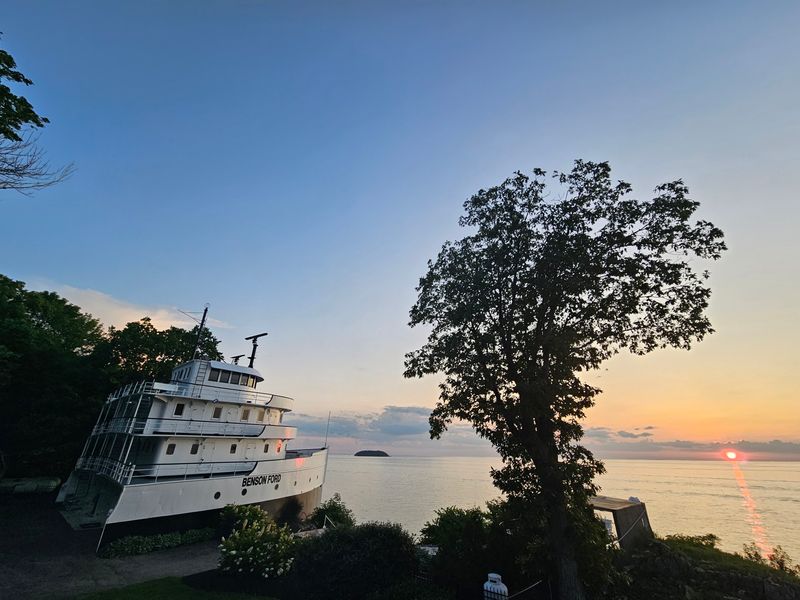
Top floor, best seat in the house. The pilothouse sits at the very top of the structure, still fitted with its original operating instruments, and it now works as a viewing room rather than a command post.
Windows wrap around, opening onto a wide sweep of Lake Erie and the neighboring islands. There’s another large deck up there too, which feels absurdly generous for what used to be a working ship’s bridge.
Where a captain once tracked weather and shipping traffic, someone can now sit with a book and watch boats crawl toward the harbor. Same view, completely different mood.
The house faces west, so the light in the evening does something special to the whole point. Even from the small public park nearby, that western angle is why so many people call it one of the best sunset spots on the island.
Knowing the instruments up there once guided a freighter through fog and ice makes the whole room feel a little like a museum with a lake attached.
A Bed and Breakfast Dream That Never Set Sail
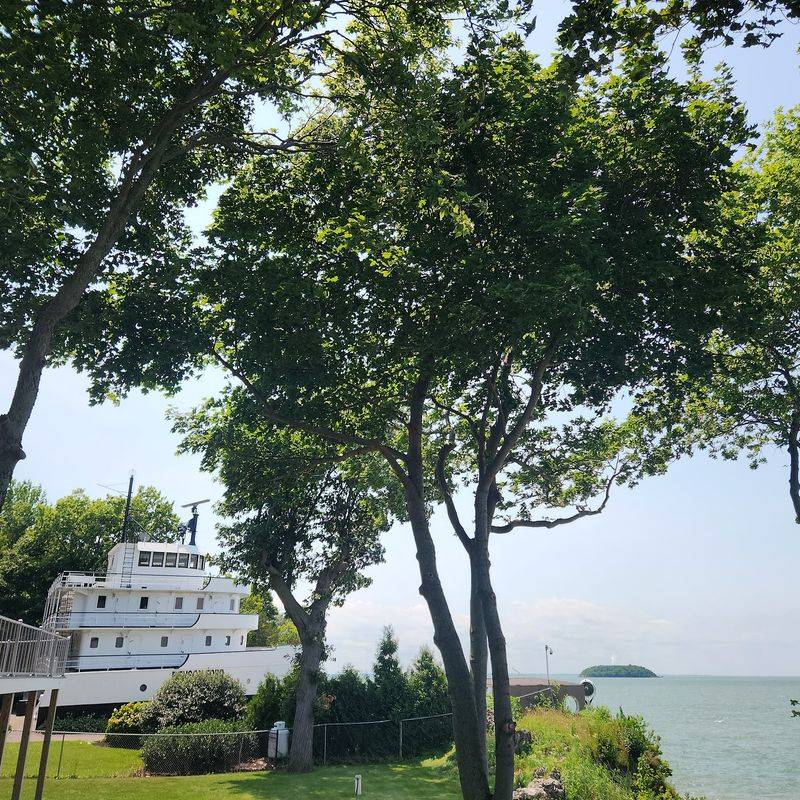
Frank Sullivan didn’t just want a summer place. His original plan was to run the shiphouse as a bed and breakfast so guests could sleep in the old staterooms.
The Put-in-Bay Township Zoning Board had other ideas. A drawn-out legal dispute in 1992 ended with the permit denied, closing the door on overnight guests for good.
By 1999, Sullivan decided to let the property go, and it sold at auction to Jerry and Bryan Kasper of Kasper Auto Group in Sandusky, Ohio. The Kasper family brought back the original Benson Ford name.
Since then it has served as a private vacation home rather than a business. That detail matters a lot if you’re planning a visit, because the driveway is marked private and the property is fenced.
Roughly twice a year, limited public tours open up, usually tied to fundraising, with proceeds going toward island charities and community causes. Tickets for those rare openings tend to be arranged well in advance, so checking the official site before your trip saves disappointment.
Outside those dates, the answer at the gate is simply no.
How to Actually See It, Ferries, Golf Carts, and a Fence Full of Padlocks
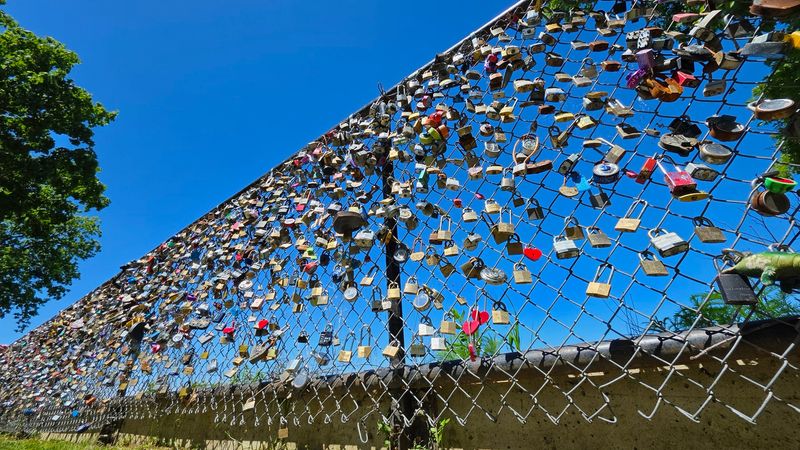
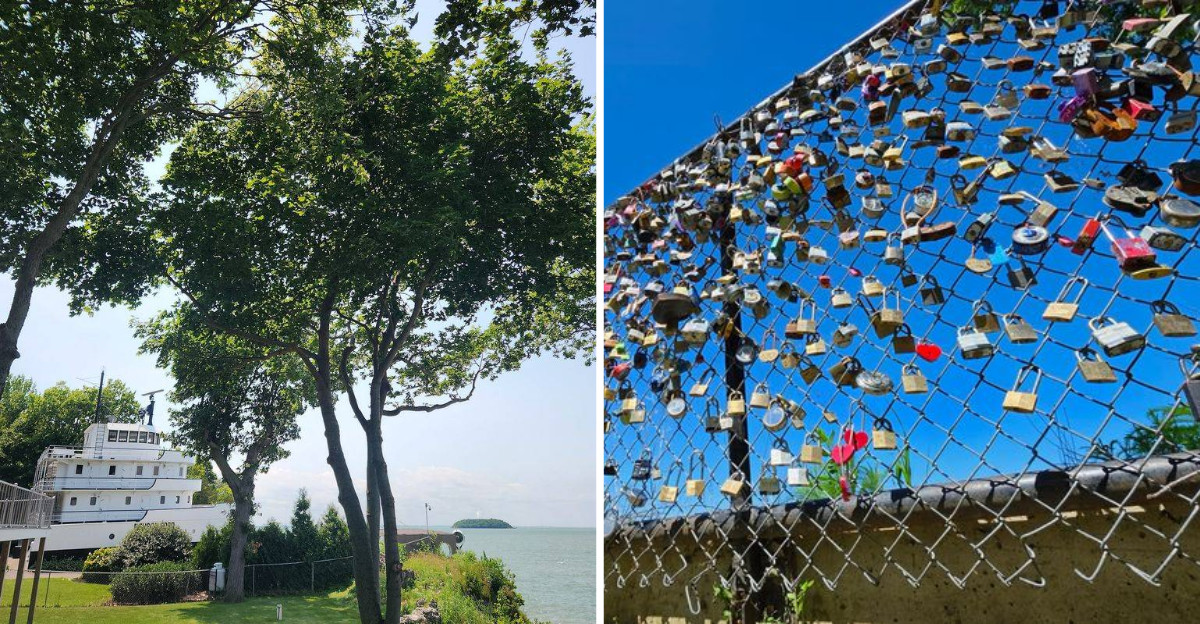
Bring a padlock. That’s the tip I wish someone had given me before my first visit, because the fence near the shiphouse is covered in them, each one left behind by a visitor marking a trip.
By land, the view comes from a small public park a couple of doors down, where there’s a bench, a bit of roadside parking, and a partial look at the structure through the trees. It’s not a full frontal view, and honestly the fence blocks a good chunk of it.
The water gives you the better angle. Riders on the Miller Ferry or the Jet Express often catch a clear look at the house on the cliff during the crossing, and boaters get the best view of all.
Once you’re on South Bass Island, golf carts and bikes are the standard way around, and the ride out from the ferry dock is short and pleasant.
The view is not just a view, it is a reminder that some places are worth the extra effort to reach. Each padlock on the fence represents a moment, a memory, a promise made or kept.
I left my own lock behind, not because I had to, but because the place felt like it deserved a small token of gratitude.
By the time I walked back to the golf cart, I had already decided to come back again, not just for the view, but for the quiet sense of connection that the island seems to offer everyone who takes the time to stop and look. It is a simple place, but it stays with you.
Address: 1191 Ashburn Ave, Put-in-Bay, Ohio 43456
