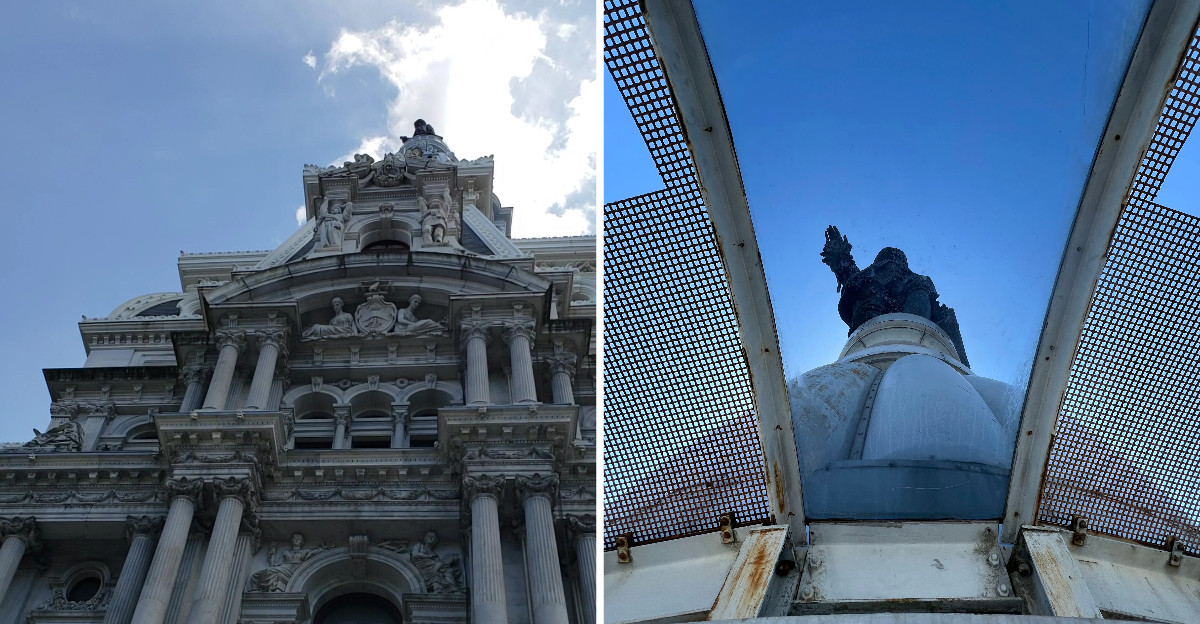
Tilting your head back on a busy sidewalk and spotting a giant bronze figure in a wide hat is not an everyday occurrence. He stands way up there, keeping watch over the whole city, a silent sentinel that most people pass without a glance.
Learning that he weighs about 27 tons and has been up there since 1894 blows the mind a little. Locals talk about him like an old neighbor who never moves.
Once you know his story, you start seeing him everywhere, peeking between buildings and glowing in the evening light. This statue in Pennsylvania is one of the coolest things to look up at.
Walking the streets below, you catch glimpses of him between rooftops, a flash of bronze against the sky. The scale is hard to process until you stand at the base and realize how small you are.
He has watched over this city for more than a century, and he shows no sign of leaving.
A Bronze Giant With Serious Numbers
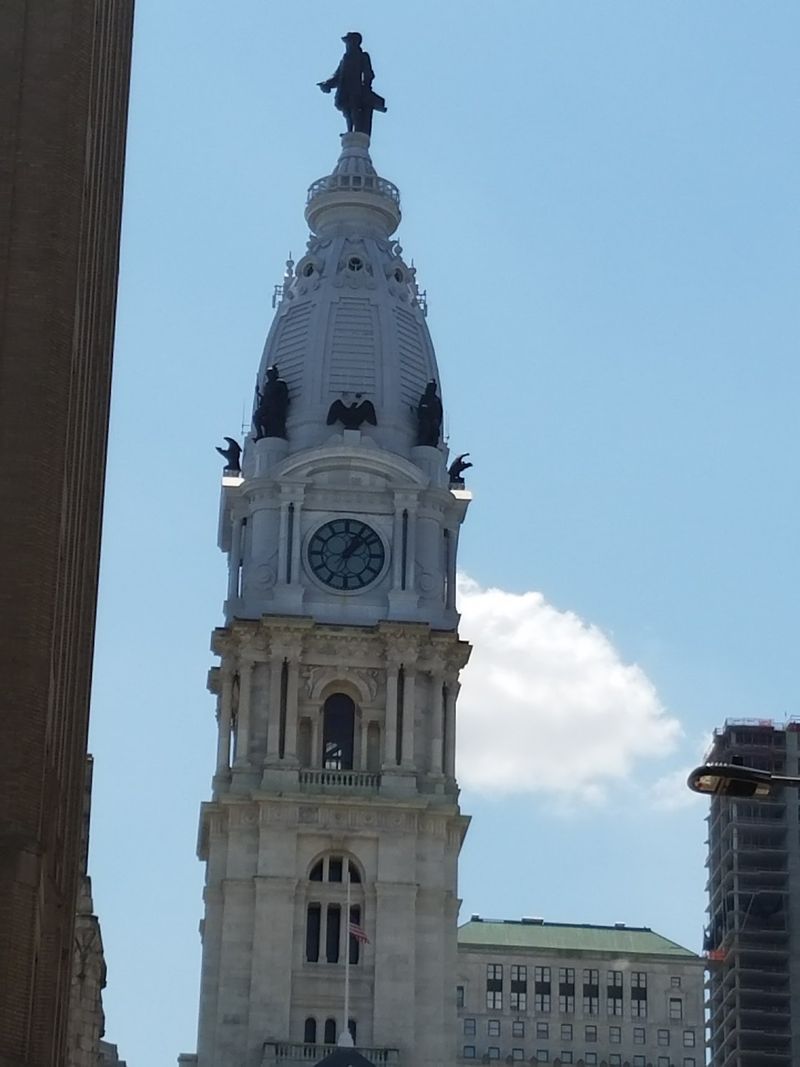
Big is an understatement here. The William Penn statue rises 37 feet tall and weighs 53,348 pounds, which rounds out to roughly 27 tons of solid bronze attitude.
I tried to picture that weight in everyday terms, and the best I could do was a small herd of elephants balanced on a clock tower. That is not a normal thing to put on a roof, yet here it has stayed since the 1890s.
Even more surprising, the statue holds the title of the tallest statue on top of any building in the world.
From the street, he looks almost friendly and small, like a figurine on a shelf. Then you learn his hat alone is wider than many cars, and your brain has to adjust.
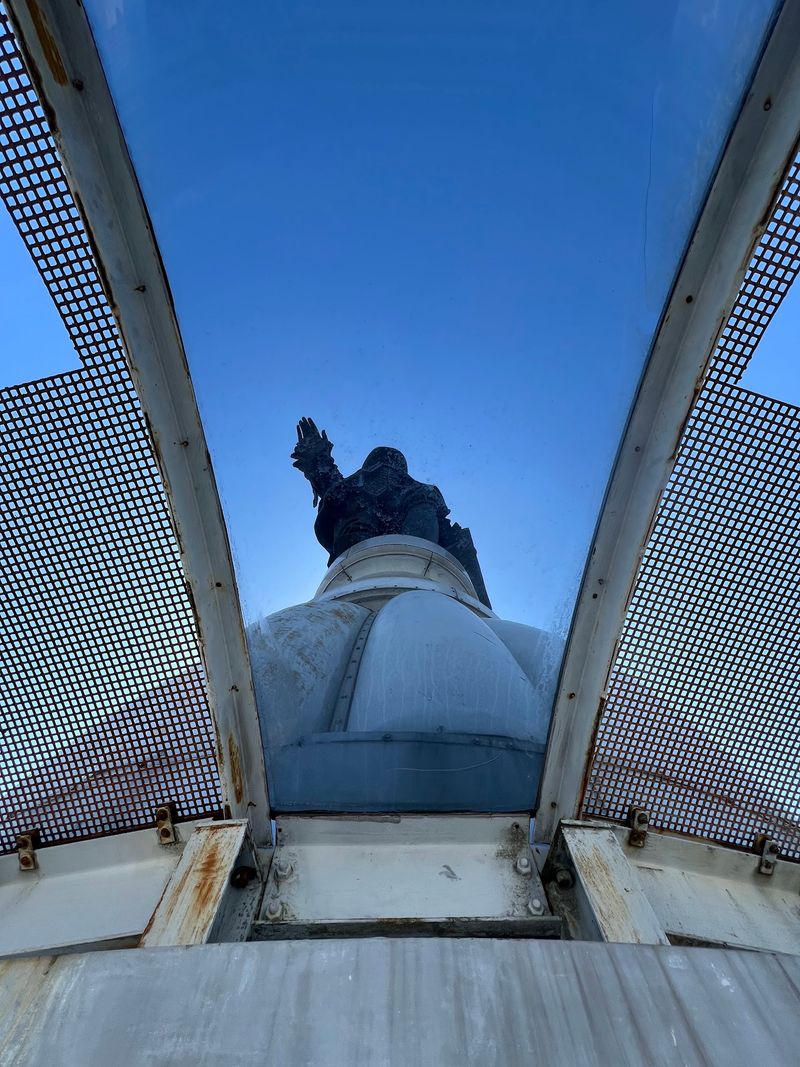
Penn stands with his right hand stretched out as if offering a blessing, while his left hand holds the Charter of Pennsylvania.
My tip is simple. Bring binoculars or use your phone zoom, because the details really do reward a closer look.
You can spot the folds in his coat and the careful shape of his face, which makes the size feel even more real once you step back again.
The Sculptor Who Filled a Building With Art
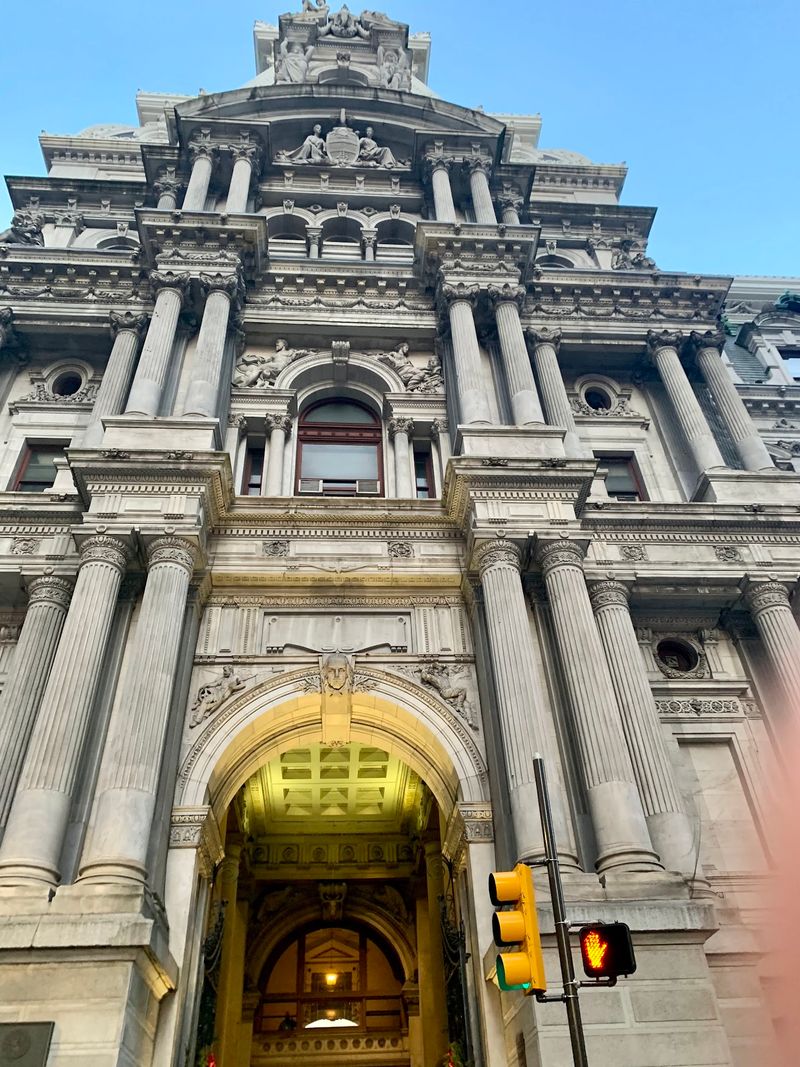
Alexander Milne Calder did not stop at one statue. He created more than 250 sculptures for City Hall, and once I knew that, I could not stop hunting for them around every doorway and window.
Faces, animals, and symbolic figures pop out of the stone like little surprises. Some look serious and wise, while others seem almost playful.
It turned a normal walk around the building into a kind of treasure hunt, and I lost track of time pretty fast.
Up on the tower, Calder added four bronze eagles, each weighing three tons with wings stretching 12 feet across. There are also figures representing Native Americans and Swedes, which nod to the early history of the region before and during Penn’s arrival.
Penn himself is the crown of all this work, sitting at the very top like the final word in a long story. Calder spent years shaping these pieces, and you can feel that patience in the details.
If you visit, circle the entire building slowly. Look up at the corners and arches, not just the tower.
You will probably find a favorite carving, and it might not be the famous one at the top.
How Billy Got Up There in 14 Pieces
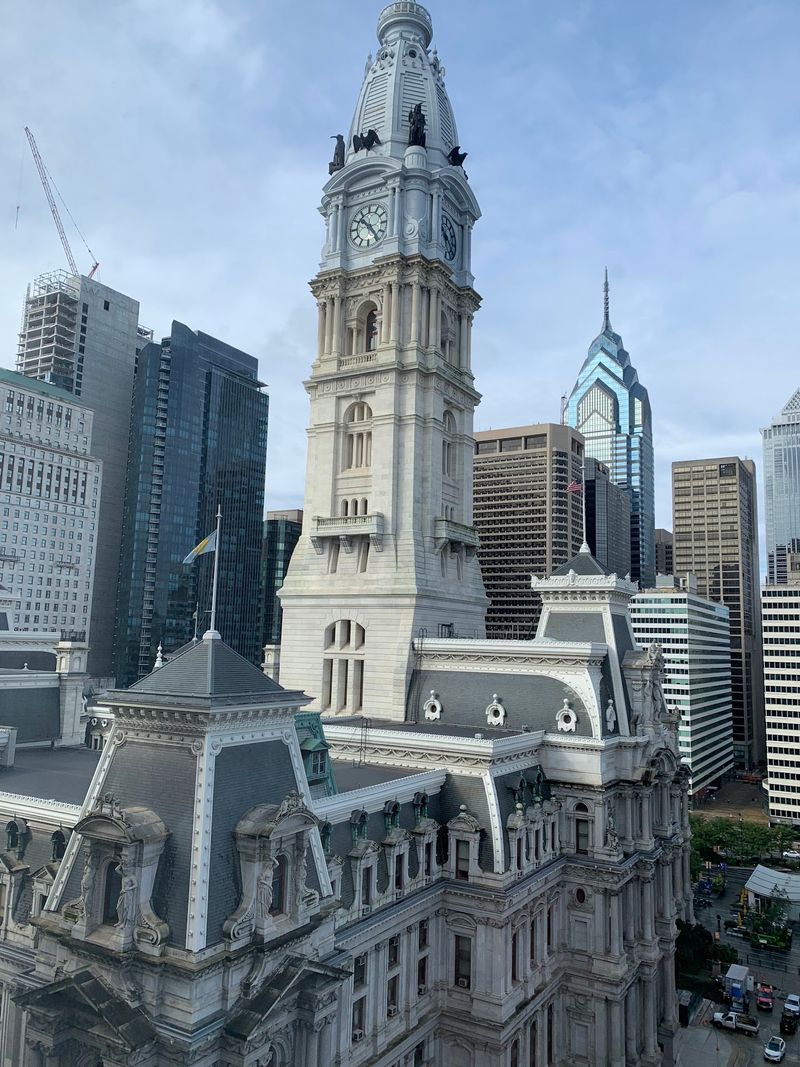
Getting a 27-ton man onto a tower is not a one-afternoon job. The statue was cast at the Tacony Iron Works in Northeast Philadelphia, a place that clearly knew how to handle heavy metal.
Before heading skyward, Penn was put together in the City Hall courtyard in 1893. For a while, anyone could walk right up and see him at eye level, which honestly sounds like the best selfie chance ever missed by history.
I kind of wish I could time travel just for that moment.
Then crews took him apart again. In 1894, workers lifted the statue up the tower in 14 separate sections, fitting each piece into place high above the streets.
Think about that the next time you hang a heavy picture frame and complain about it. These builders worked with ropes, muscle, and a lot of courage, all without the fancy cranes we have now.
Fun fact that I love: the statue is hollow inside. Ladders run up through the body to a small hatch in the brim of his hat.
It is not open for visitors, but just knowing it exists makes Penn feel a bit like a secret clubhouse in the sky.
Why He Faces Northeast
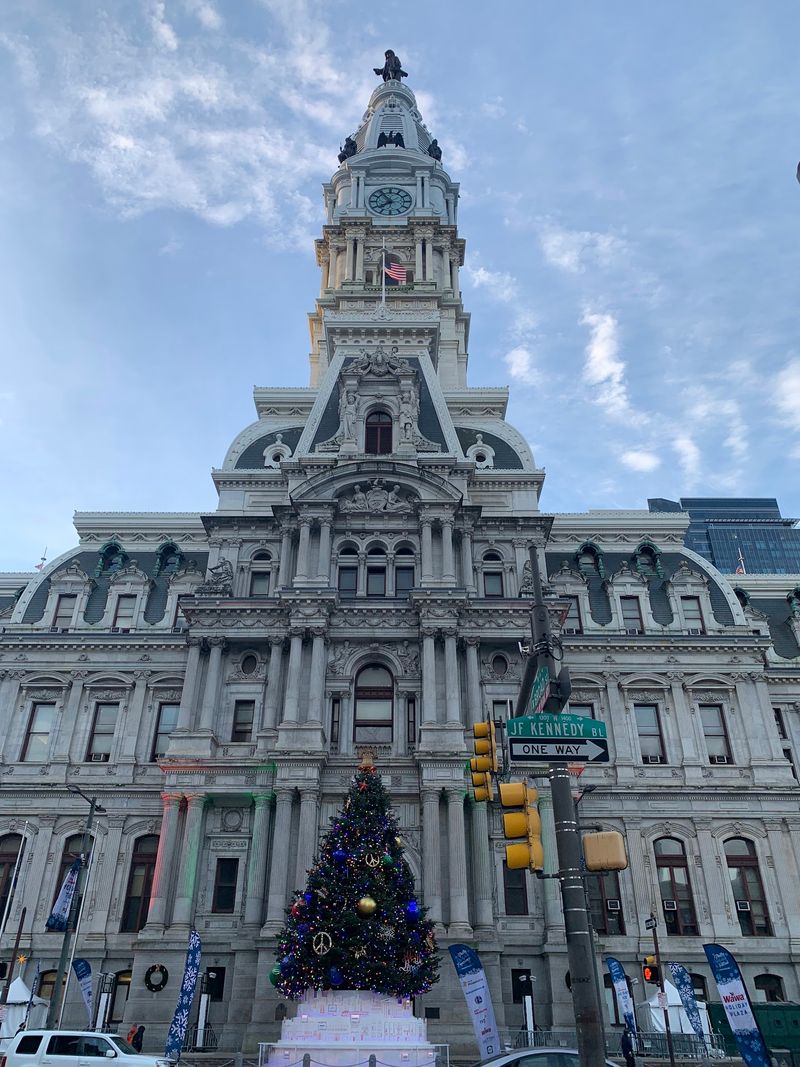
Here is a detail that made me smile. Calder actually wanted Penn to face south, so sunlight would hit the front of the statue and show off all his hard work.
The city’s Public Buildings Commission had other ideas. They turned Penn to face northeast, pointing toward Penn Treaty Park along the river.
That park remembers the spot where William Penn is said to have made a peace agreement with Chief Tamanend of the Lenni-Lenape nation. So the statue is not just looking at the view.
He is facing a place tied to friendship and fairness, which fits the ideas Penn cared about when he founded the colony.
There is a small downside that photographers notice. Because of the direction, his face is often in shadow during parts of the day, just as Calder worried.
I found that morning light works nicely for catching his features.
For a great street view, try looking up from the north side near Filbert Street. You get a clear angle of his face and outstretched hand.
It is one of those spots where you can stand still, stare up, and feel the city buzzing around you while Penn keeps his quiet gaze locked on the river.
The Gentleman’s Agreement and a Famous Curse
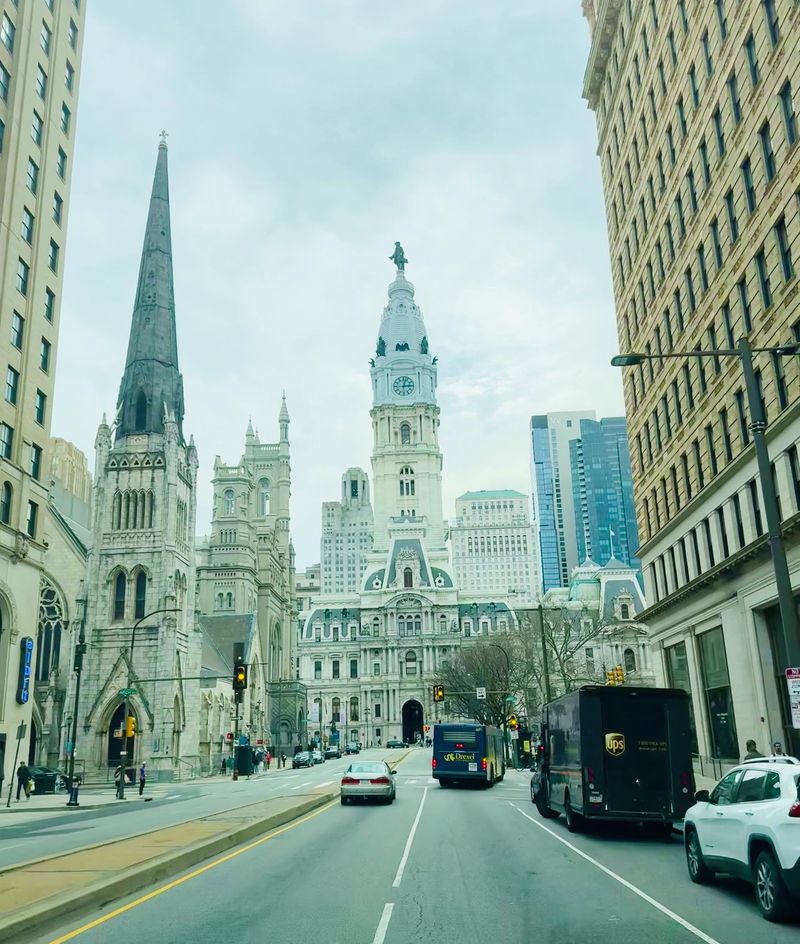
For almost 90 years, nobody built taller than Billy’s hat. No law demanded it, but an unwritten gentleman’s agreement kept buildings in Center City below the brim of Penn’s hat.
That rule shaped the skyline for generations. Penn was the undisputed king of the view, and people respected that.
I find it sweet that a whole city agreed to let one statue have the spotlight for so long.
Things changed in the 1980s when One Liberty Place rose higher. Soon after, fans started joking about the Curse of Billy Penn, blaming the broken tradition for a long string of championship losses by Philadelphia sports teams.
Now here is where it gets fun. When workers topped off a new skyscraper, a tiny Penn figure was placed at the top, and the Phillies went on to win the World Series in 2008.
Many locals happily counted that as the curse being lifted.
Is any of it real? Probably not.
Still, it shows how much people love this statue and treat him like part of the family. When you look at the skyline today, try spotting where Penn sits compared to the towers.
He may not be the tallest anymore, but he is still the heart of the picture.
Riding a Century-Old Elevator to His Feet
My favorite part of any visit is the ride up. A tiny elevator, more than a hundred years old, carries just four people at a time toward the observation deck.
It creaks a little, and that only adds to the charm. You squeeze in with strangers, share a nervous laugh, and then the doors open about 500 feet above the street.
The deck sits right below the base of the statue, so Penn is standing just over your head the whole time.
Glass now encloses the deck, which gives you a safe and wide 360-degree view of the city. On a clear day, I could trace the Benjamin Franklin Parkway toward the art museum and see rooftops stretching far away.
Streets look like lines on a map from up there. Cars turn into moving dots, and the city suddenly makes sense in a way it never does on the ground.
My advice is to check tour times ahead, since space is limited with such a small elevator. Pick a sunny day if you can, bring your camera, and give yourself a few quiet minutes.
Standing that close to a 27-ton founder is a memory that sticks around long after you ride back down.
A Record-Breaking Home in Penn Square
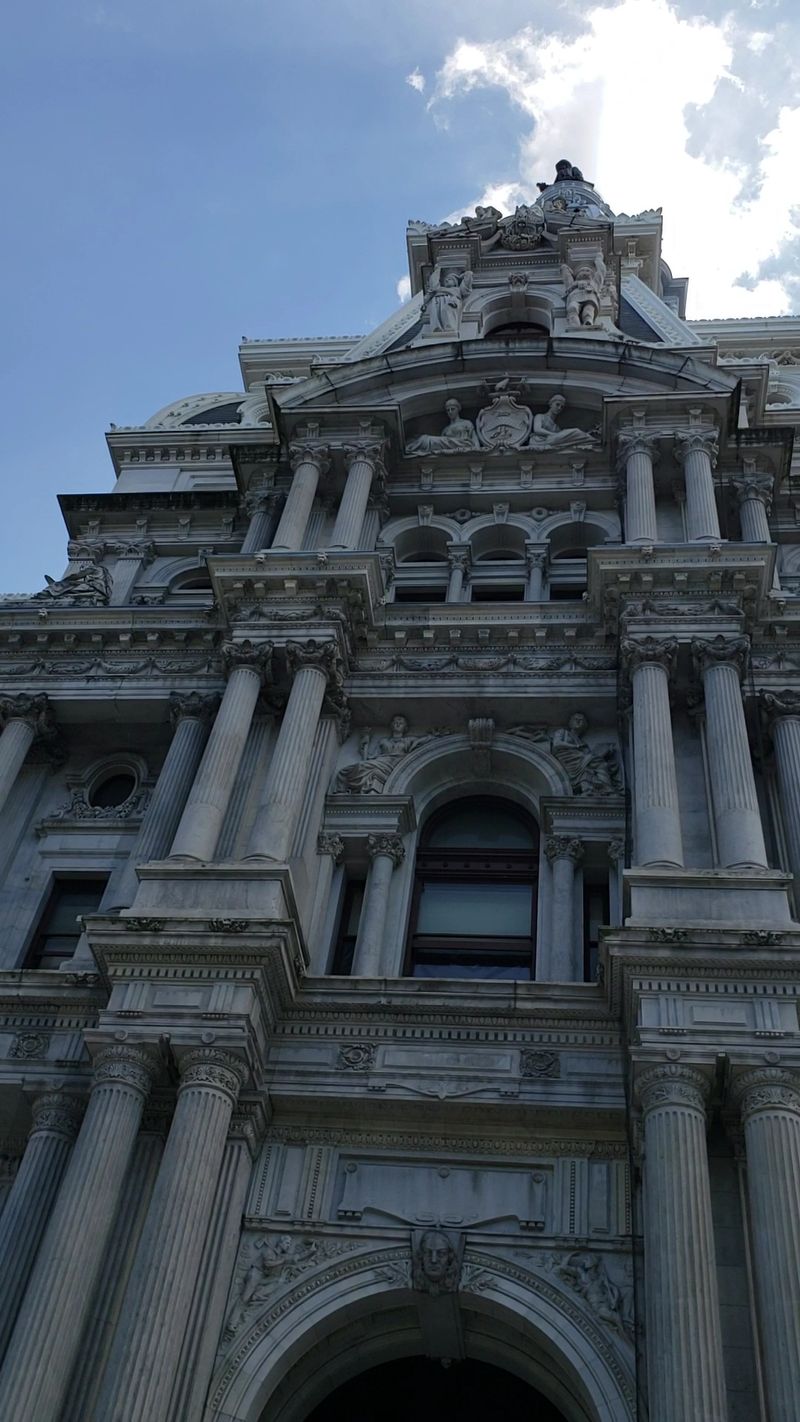
Some statues sit on simple pedestals. Penn got the world’s largest free-standing masonry building, which feels like a pretty generous upgrade.
City Hall was designed by Scottish-born architect John McArthur Jr., with help from Thomas Ustick Walter, in the fancy French Second Empire style. Building it took from 1871 to 1901, around thirty years of work.
With Penn on top, it reaches 548 feet, and it was the tallest habitable building in the world from 1894 until 1908.
The walls are massive, up to 22 feet thick on the first floor. They need to be, since they hold up all that stone and bronze above.
Inside, nearly 700 rooms make it the largest municipal building in the United States.
What I love most is how alive the place feels. You can walk right through the arches of the courtyard to cross from one side to another, just like locals heading to work.
The spot was originally Centre Square, one of five public squares in Penn’s 1683 city plan, later renamed Penn Square in his honor.
So in a way, Penn stands exactly where he planned the city’s center to be.
Address: 1400 John F. Kennedy Boulevard, Philadelphia, Pennsylvania 19107
