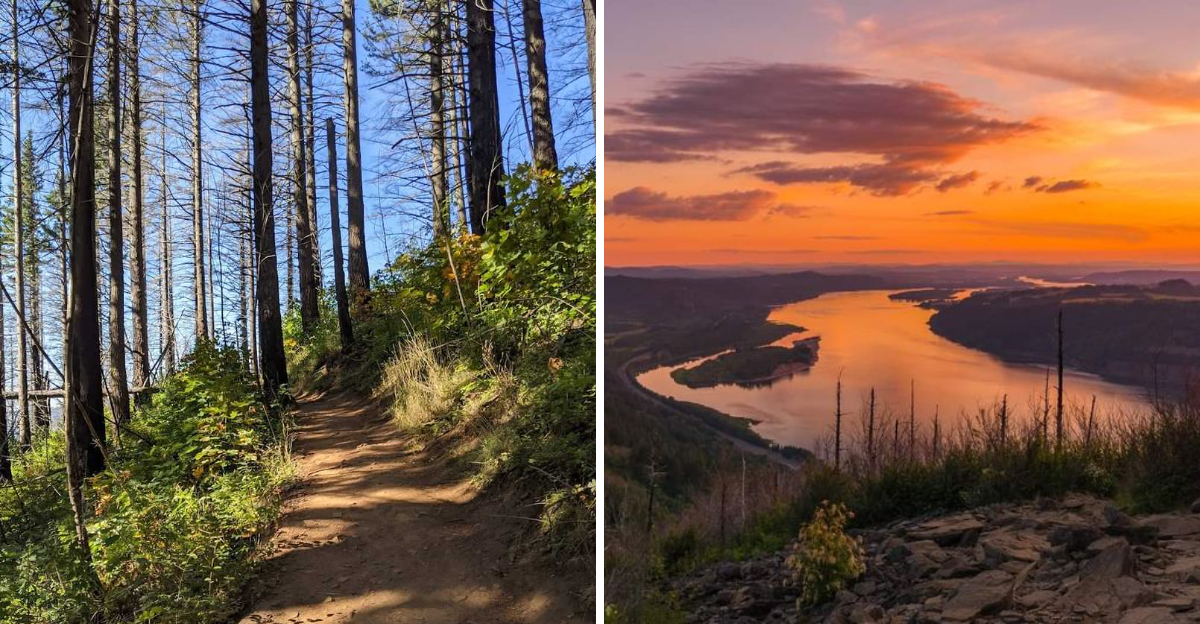
Four point eight miles of forested hillside sounds like a workout. And yes, your legs will feel it the next day. But the payoff at the top makes every step worth the effort. This Oregon hike winds through quiet woods with dappled sunlight filtering through the trees.
The trail climbs steadily but never feels cruel. You pass small waterfalls, mossy boulders, and patches of wildflowers if the timing is right.
Then the trees part and you step onto a rocky overlook that opens up the whole world. Expansive river views stretch out below while dramatic cliffs rise across the canyon.
You can see for miles in every direction. The wind hits your face and you suddenly understand why people do this for fun.
A few flat rocks near the edge make perfect lunch spots if you are not afraid of heights. Oregon has countless trails that deliver beautiful scenery, but this one offers a particularly satisfying reward for a modest effort.
Bring plenty of water because the exposed section near the top has no shade. Bring a snack to eat while you stare at the river and pretend you are in a commercial.
The Trailhead and Getting There
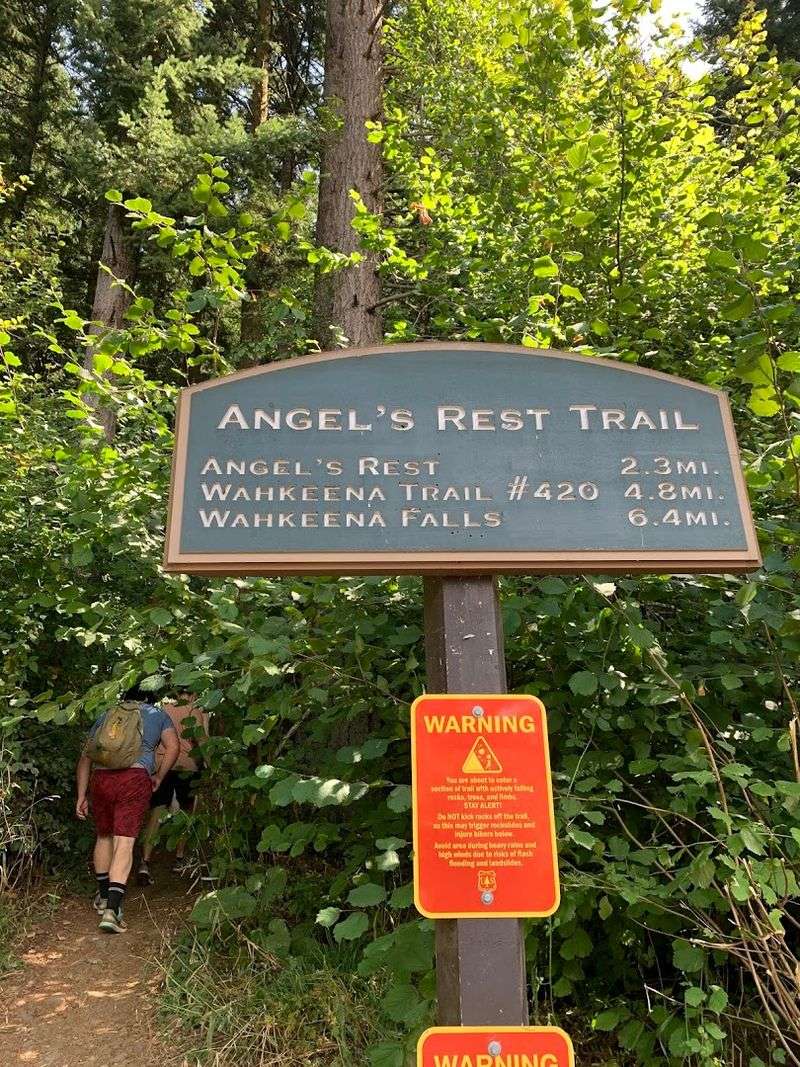
Pulling into the Angels Rest trailhead on a weekend morning feels like arriving late to a popular show. Parking fills up fast.
Getting there early, ideally before 8 a.m., makes a real difference.
The trailhead sits just off Historic Columbia River Highway near Bridal Veil, Oregon. It is about a 26-minute drive from Portland, which makes it one of the most accessible gorge hikes around.
No long road trip needed.
A Northwest Forest Pass or America the Beautiful pass is required for parking. Having one ready saves time and avoids the scramble of figuring it out on the spot.
Weekday visits tend to be calmer, with more parking available and fewer people on the trail. Arriving with your pack already loaded and your water bottles filled means you can start moving right away.
The trailhead has a basic information board with a map. Study it before heading up, since a couple of trail junctions can catch first-timers off guard.
The First Half Mile Through the Forest
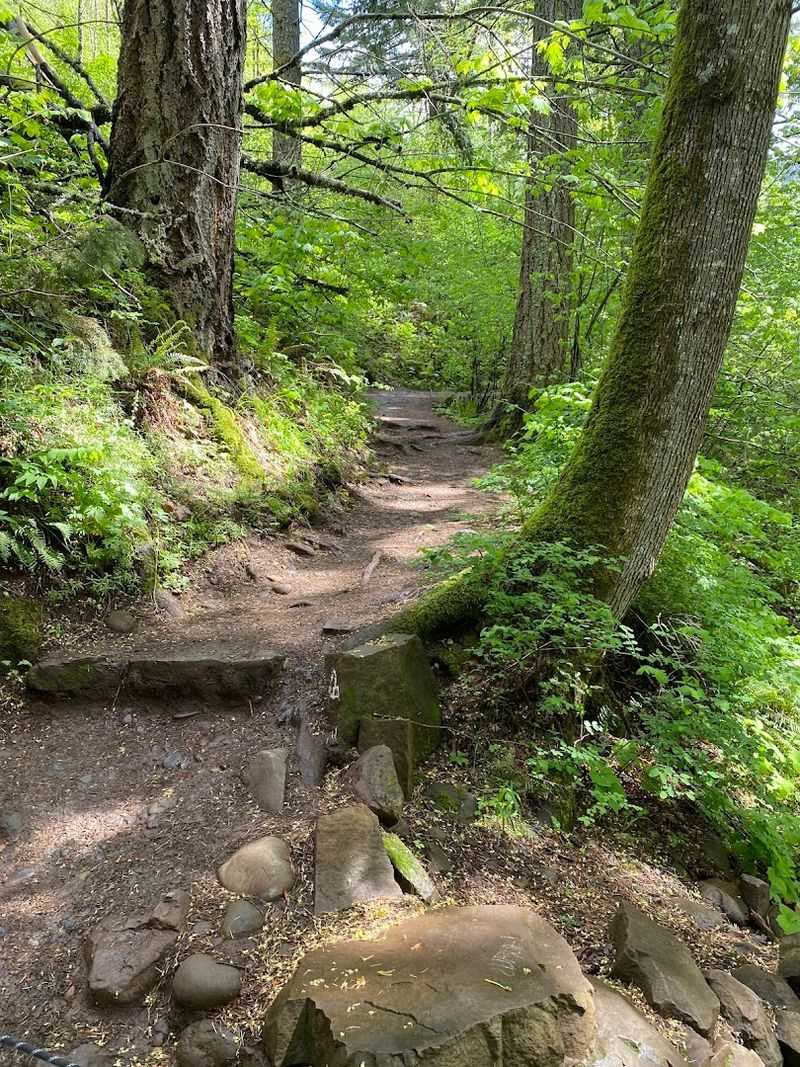
The trail starts quietly. Big Douglas firs and maples close in around you, and the air smells like damp soil and bark.
It is the kind of forest that makes you slow down and breathe deeper.
About a quarter mile in, the path crosses a rocky section that can feel a little uneven underfoot. Good ankle support matters here.
Hiking boots with solid grip make this part much easier to navigate without second-guessing each step.
Around the half-mile mark, Coopey Falls appears just off the trail. It is easy to miss if you are moving fast.
The waterfall drops in a long, narrow sheet and is especially beautiful after recent rain. Taking a short detour to see it adds almost no time to the hike.
The sound alone is worth pausing for. This early stretch sets a steady rhythm for the climb ahead, offering shade and visual interest before the trail begins to open up and gain more serious elevation.
Coopey Falls: A Hidden Reward Early On
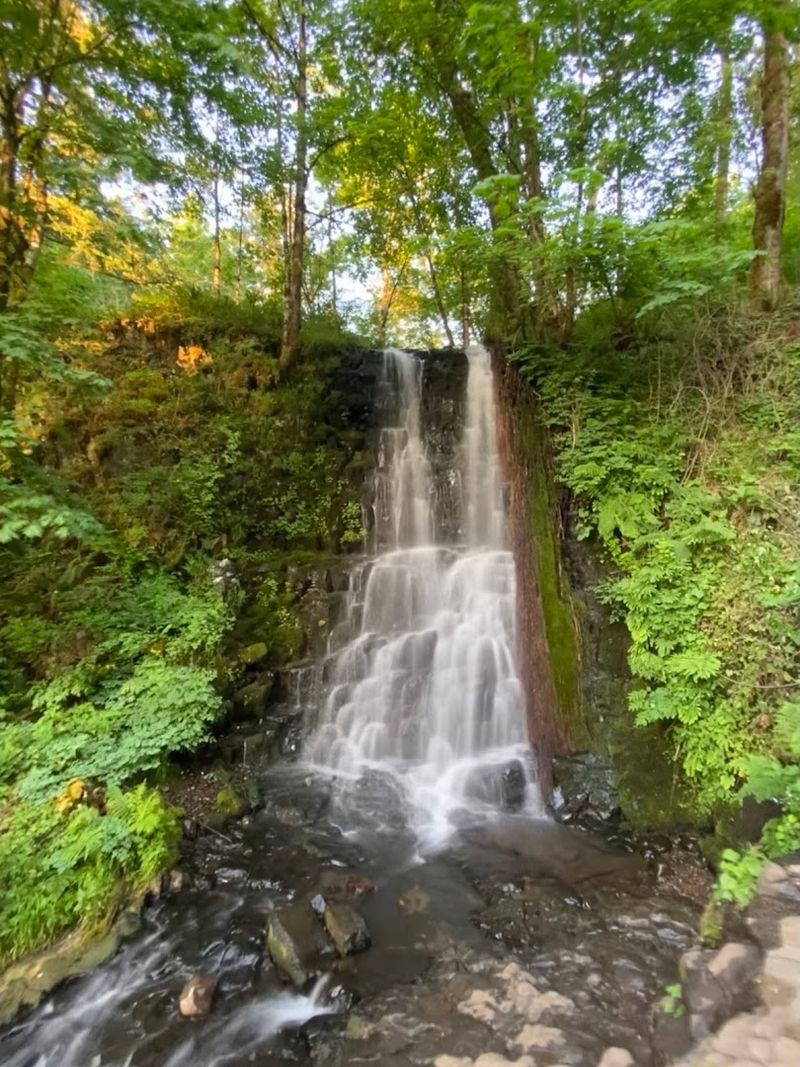
Coopey Falls is one of those small discoveries that makes a hike feel like more than just exercise. It sits close to the trail, tucked behind a screen of ferns and mossy rocks.
Most hikers walk right past without realizing it is there.
The falls drop about 150 feet in a slender, graceful stream. After a rainy stretch, the flow picks up considerably and the mist reaches the trail.
It is a genuinely lovely spot to pause and catch your breath before the steeper climbing begins.
There is no official viewpoint with a railing or sign pointing you in. You simply notice the sound first, then follow your curiosity off the main path for a few steps.
That sense of stumbling onto something unexpected makes it memorable. Photographing the falls works best in soft morning light, when shadows are not too harsh.
It is a small moment in a longer hike, but it adds personality to the trail that a bare ridgeline walk cannot offer.
The Steady Uphill Climb and Elevation Gain
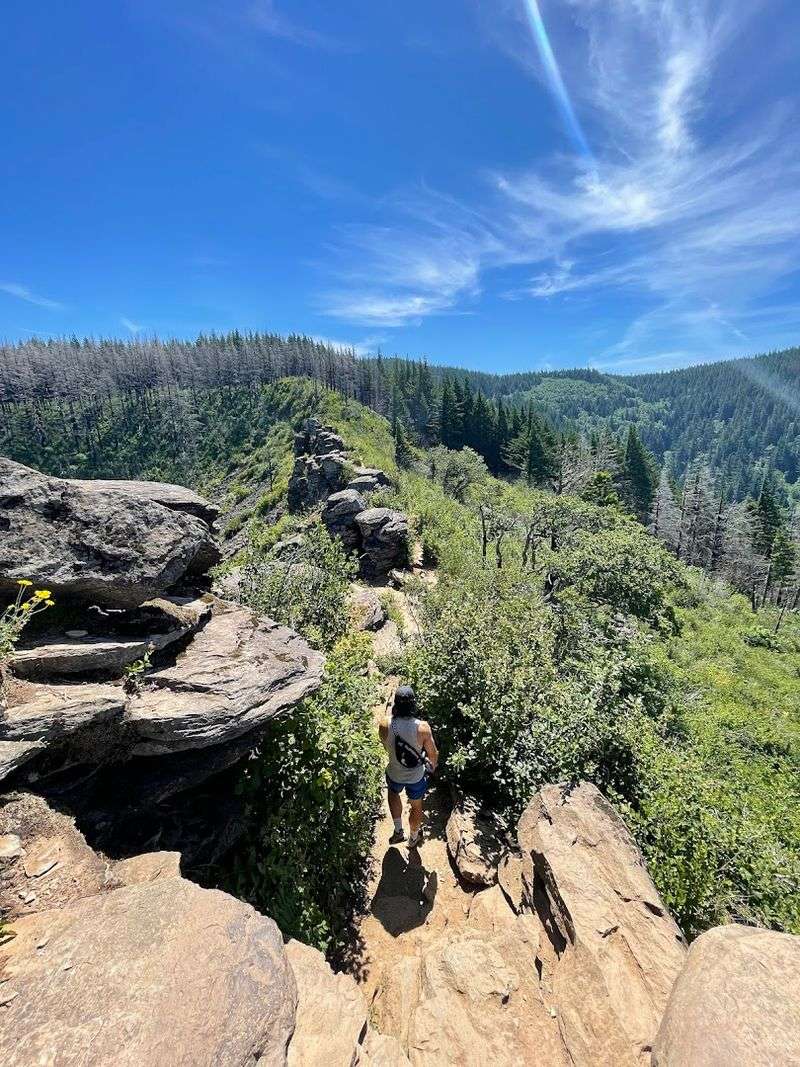
There is no gentle way to say it: Angels Rest goes uphill almost the entire way up. The trail gains around 1,500 feet over roughly 2.4 miles.
It is steady and relentless in the best possible way.
Switchbacks help manage the grade, but the trail never lets you forget you are climbing. The legs start to feel it around the mile mark.
Taking short breaks on the wider sections of trail helps keep energy levels steady without losing too much momentum.
The forest thins as elevation increases. More sky becomes visible through the canopy.
The trail becomes more exposed and rockier the higher you go, and you can start to feel the wind picking up. That shift in environment signals that the summit is getting closer.
Hikers who pace themselves consistently tend to reach the top feeling strong rather than wrecked. Bringing more water than seems necessary is always a good call on this section.
The last stretch before the summit is where the effort really pays off visually.
Rocky Outcrops and Trail Navigation Near the Top
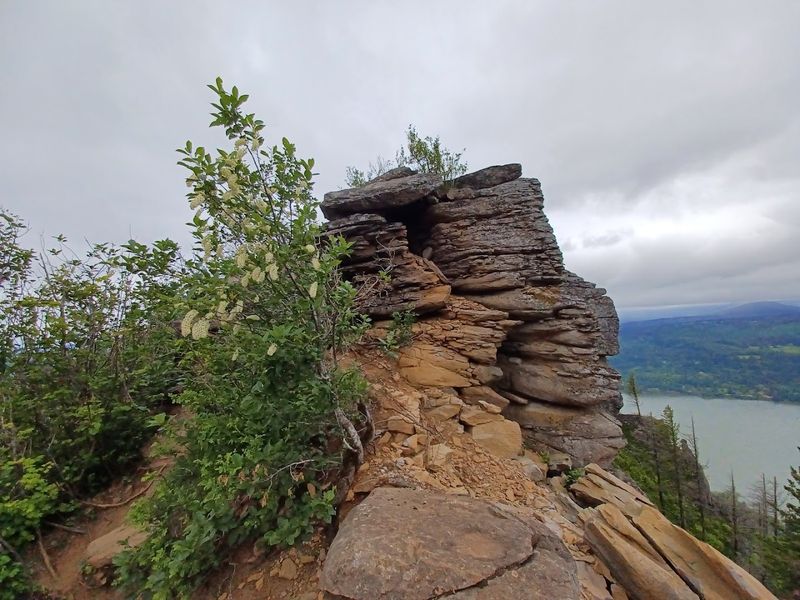
The upper section of the trail shifts from dirt path to open rock. Large basalt slabs and boulders mark the final approach to the summit.
The terrain changes fast, and it catches some hikers off guard.
There is a spot where the trail appears to disappear into a field of loose rock. This is the area where a past rock slide disrupted the path.
Walking straight across the rocks brings you to where the trail picks up again on the other side. It is manageable, but worth slowing down for.
Near the top, a small sign for Devil’s Rest appears on the left. The Angels Rest viewpoint is actually about 80 yards before that sign, so keep your eyes open for the turnoff to the rocky overlook.
The final scramble involves stepping up onto a few large boulders. It is not technical climbing, but it does require some confidence with uneven surfaces.
The exposure near the edge is real, so staying aware of your footing matters more up here than anywhere else on the trail.
The Summit View Over the Columbia River Gorge
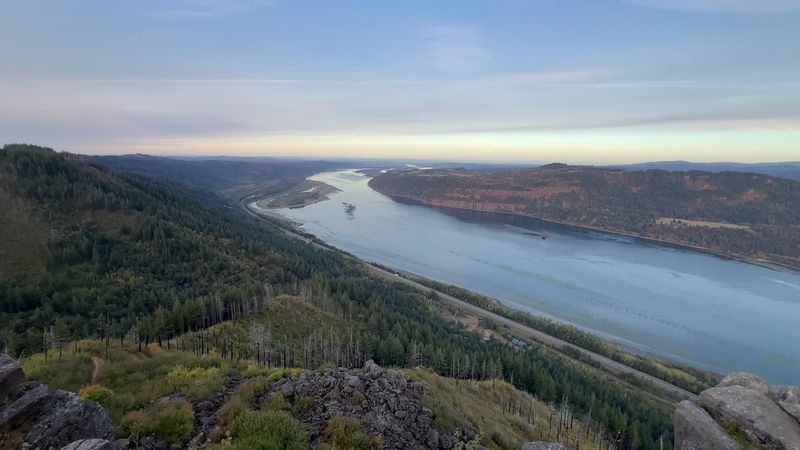
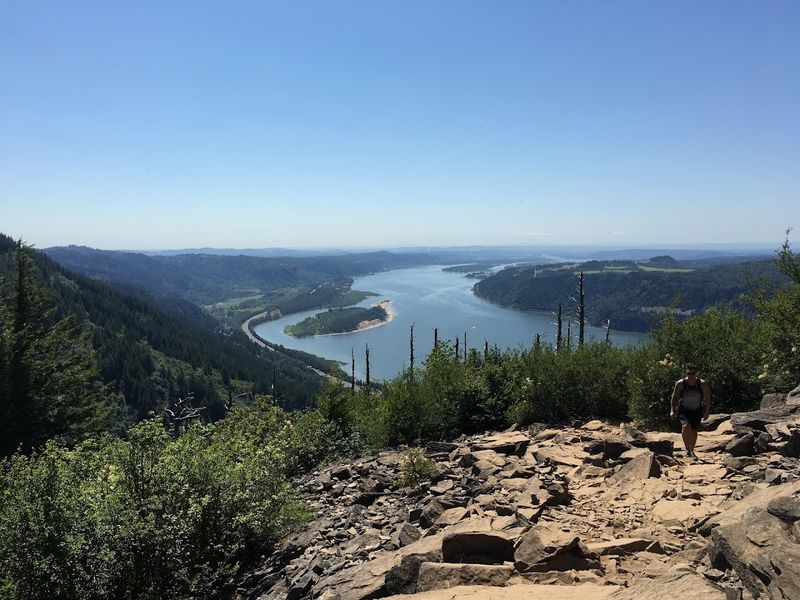
Reaching the top of Angels Rest for the first time is one of those moments that stops you mid-step. The Columbia River stretches out in both directions, wide and silver, framed by layer after layer of forested ridges.
It does not look quite real at first.
The summit sits at roughly 1,500 feet. From up here, the gorge spreads out like a topographic map brought to life.
Washington state is visible on the opposite bank, and on clear days the views extend for many miles in each direction.
Wind is almost always present at the top. On gusty days it can be strong enough to make you plant your feet before pulling out a camera.
The open rock platform at the summit is wide enough for many hikers to spread out comfortably. There is plenty of flat space to sit, eat, and take in the scenery without feeling crowded.
The view rewards every uphill step taken on the way here, and most people linger far longer than they planned.
What to Wear and Pack for This Hike
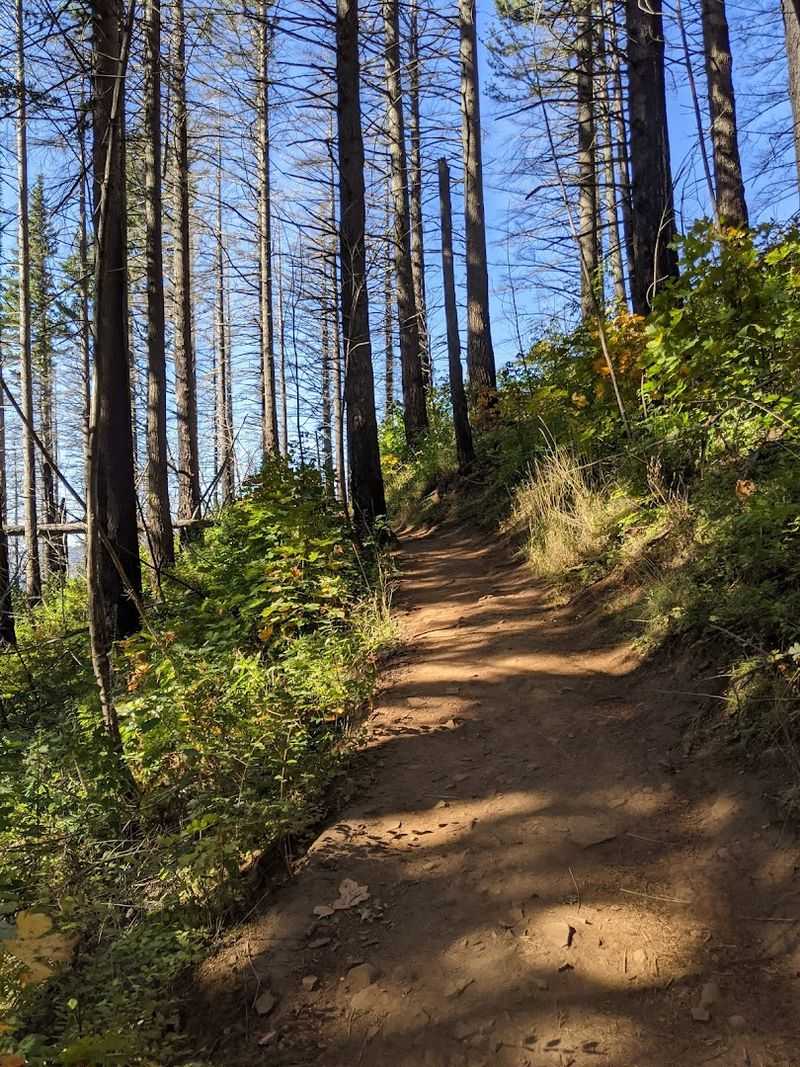
Footwear makes or breaks this hike. The trail is rocky from start to finish, and ankle support is not optional.
Trail runners with good grip work well. Hiking boots with stiff soles work even better on the boulder sections near the top.
Layering is smart for this trail. The forested lower section stays cool and shaded.
The upper section is exposed, and wind at the summit can drop the temperature fast. A light windbreaker takes up almost no space in a pack and earns its place quickly.
Water is the most important thing to carry. The last third of the hike has no shade and no water sources.
Bringing at least two liters per person is a reasonable baseline. Salty snacks help maintain energy on the long uphill stretch.
Sunscreen matters more than it seems, especially on the exposed upper trail. Trekking poles are optional but appreciated by hikers with knee concerns on the downhill return.
Best Time of Day and Season to Visit
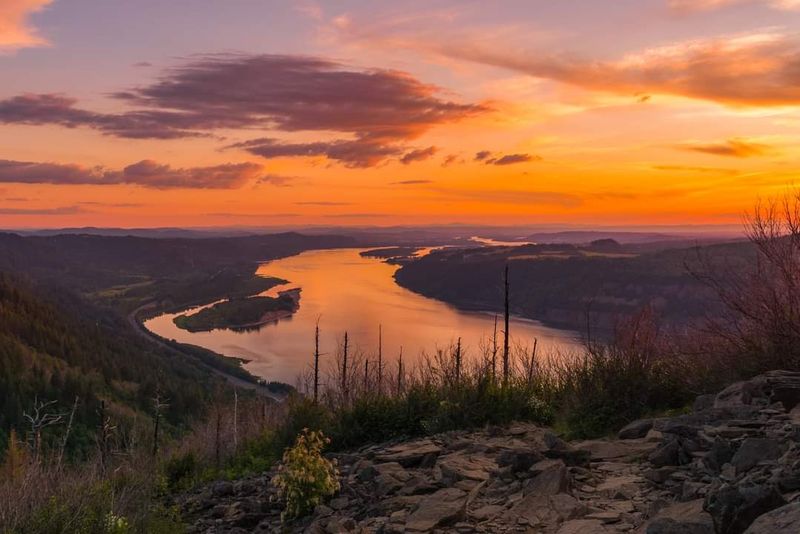
Sunrise and sunset visits to Angels Rest are genuinely spectacular. The light hits the gorge at low angles and turns the river into something that looks painted.
Starting an hour before sunset means reaching the top right as colors begin to shift.
Spring and fall tend to offer the most comfortable hiking conditions. Temperatures are mild, wildflowers appear along the trail in spring, and fall brings rich color to the surrounding forest.
Summer works too, but the exposed upper trail gets hot by midday.
Winter visits are possible on dry days, but the trail can become slippery with mud or ice on the shaded lower sections. Waterproof boots and extra caution make winter hikes manageable.
The gorge in winter fog has its own moody, atmospheric quality that feels completely different from a sunny summer afternoon. Weekday mornings in any season tend to be the quietest.
Trail Etiquette and Safety Reminders
Angels Rest is a popular trail, which means trail manners matter more here than on quieter paths. Uphill hikers have the right of way.
Stepping aside to let someone pass on a narrow section keeps the flow moving for everyone.
Cutting switchbacks is one of the most damaging habits on busy trails. It erodes the hillside and creates unofficial paths that confuse other hikers.
Staying on the marked trail protects the landscape and keeps the route clear for everyone who follows.
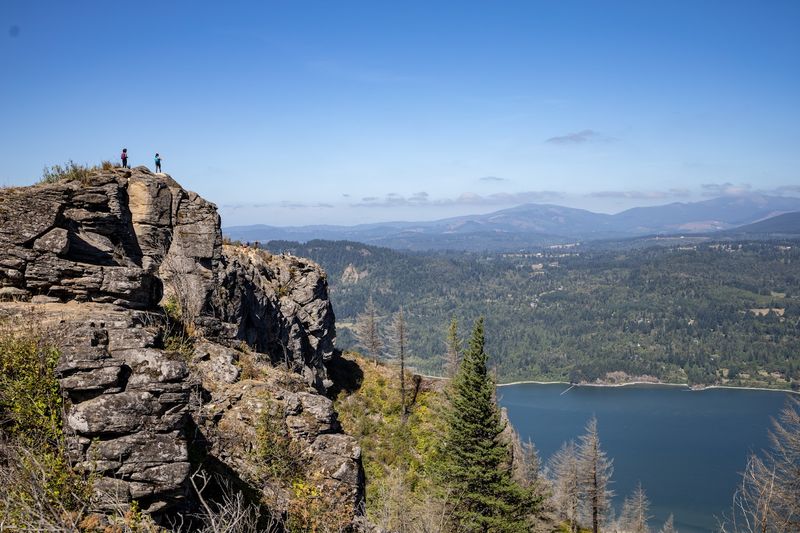
The drop-offs near the summit edge are real and steep. Standing close to the edge for photos is not worth the risk.
Keeping a safe distance from the cliff edge applies especially to children and dogs. Leashed dogs are welcome on this trail, and many hikers bring them along without issue.
Letting faster hikers pass without frustration and keeping noise at a reasonable level makes the experience better for the whole group on the mountain.
Why Angels Rest Keeps Drawing Hikers Back
Some trails you do once and check off the list. Angels Rest is not that kind of trail.
People return to it repeatedly, in different seasons, at different times of day, and for different reasons. That says something real about what it offers.
The distance is manageable enough to do on a half day. The elevation gain is satisfying without being punishing.
The payoff at the top is consistently excellent, regardless of how many times you have seen it before. That combination is harder to find than it sounds.
There is also something about the trail’s character that feels honest. It does not pretend to be easy.
It climbs steadily, asks for your attention on the rocky sections, and then delivers a view that feels genuinely earned. Cell service at the summit is reliable, which makes it easy to share the moment without waiting until you are back in town.
For hikers based in Portland, Angels Rest functions almost like a home trail.
