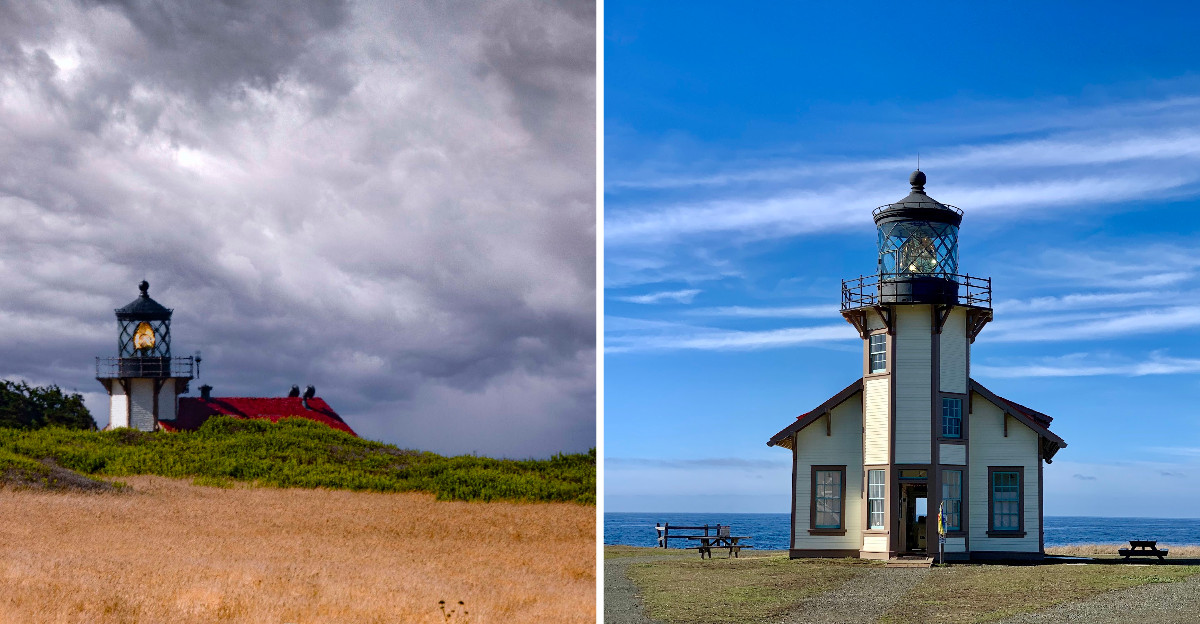
Fog rolled off the ocean and a beam of light cut through it, sweeping across the dark water and stopping me mid-step on a California headland.
That light comes from a 6,800-pound glass lens, built in England and set spinning here in 1909, and it has been flashing over this stretch of coast like it never took a single day off.
The drive up promised a pretty white tower and some ocean views, and both showed up, but so did a story about shipwrecks, clockwork, and stubborn volunteers who refused to let the light go dark. Walking down the path, salt and wild grass filled the air while seals barked somewhere below the cliffs.
By the time the keepers’ houses came into view, the whole place felt like a small village that time forgot to update.
Everything about the stop made it one of the favorites on the entire California coast.
Meeting the Giant Glass Eye
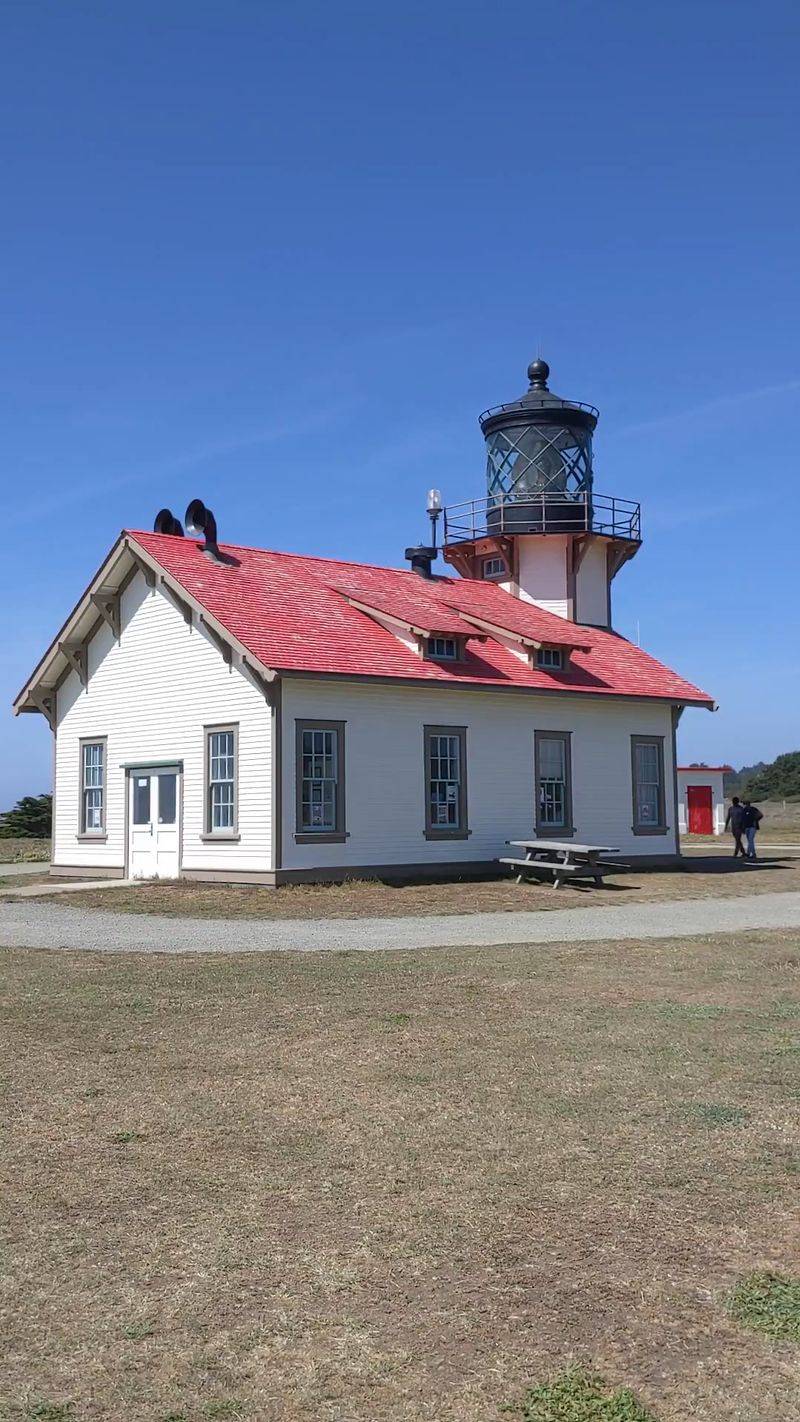
My nose was almost touching the glass when I realized how many pieces the lens actually had. There are 90 lead glass prisms stacked together, each one shaped to bend light into a single powerful beam.
The whole thing weighs 6,800 pounds, which is about as heavy as a large pickup truck parked on top of a tiny tower.
The lens is a third-order Fresnel, made by a British company called Chance Brothers. Up close, the prisms look like frozen waves, curved and layered in rings.
When sunlight hits them, little rainbows scatter across the walls, and I caught myself moving my head just to watch the colors shift.
Here is the wild part about that beam. It can be seen from 14 to 22 nautical miles out at sea, and it flashes once every 10 seconds.
Sailors used that timing like a signature, so they knew exactly which lighthouse they were looking at.
Honestly, I expected something smaller. Pictures online do not show how the glass seems to glow even when the lamp is off.
If you visit on a day when the tower is open, take a slow lap around the lens and look at it from different angles, because it changes every time you move.
Clockwork, Kerosene, and Two-Hour Shifts
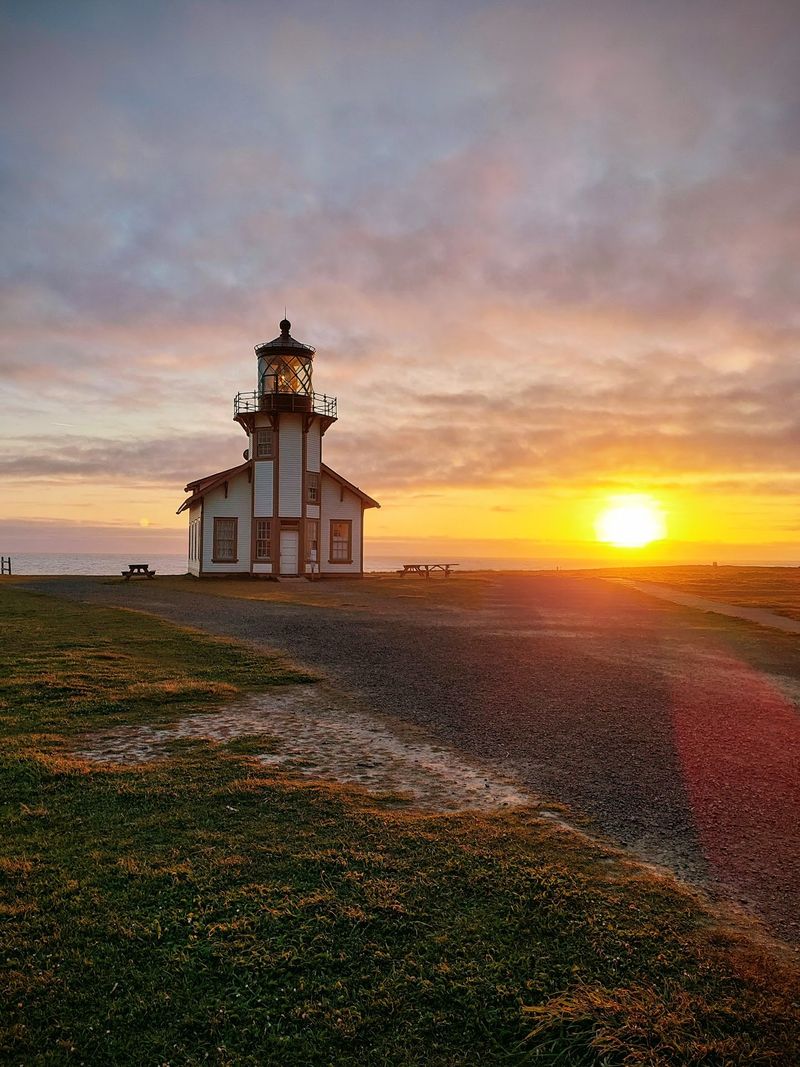
Picture waking up every two hours, all night long, just to crank a machine. That was real life for the first keepers here.
When the light began on June 10, 1909, a clockwork mechanism turned the lens, and someone had to wind it by hand before it ran down.
The light itself came from a kerosene lamp back then. Keepers trimmed wicks, cleaned soot off the glass, and made sure the flame stayed steady through storms and fog.
I tried to imagine climbing those stairs half asleep in a cold wind, and my respect for those workers shot way up.
Things changed in the 1930s. An electric bulb replaced the kerosene lamp around 1934 or 1935, and an electric motor took over the turning job around 1935, though some sources say 1937.
The clockwork did not get tossed out, though, and its gears are still part of the lighthouse story that volunteers love to explain.
A fun thing to notice is how smoothly the lens moves. It sits on 25 ball bearings, a clever design that let a simple wind-up system spin thousands of pounds of glass.
Ask a guide about the old mechanism if you get the chance, since hearing it explained in person makes the history click.
The Shipwreck That Started Everything
Long before there was a lighthouse, there was a wreck. In 1850, a clipper brig called the Frolic crashed on this rough stretch of California coast.
That one accident ended up shaping the entire region in a way nobody expected.
People who came looking for the lost cargo found something else entirely: huge redwood forests. That discovery kicked off a busy lumber industry, and soon ships were sailing up and down this coastline hauling wood to growing cities.
More ships meant more danger, because the Mendocino shore is full of hidden rocks, sudden fog, and pounding surf.
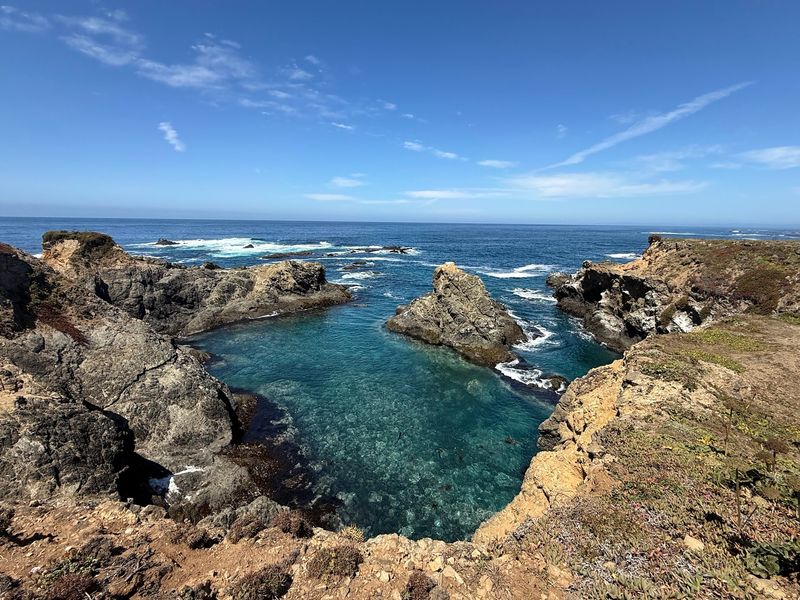
After enough ships went down, a light station was built right here on the headland. I stood near the cliff edge and looked at the jagged rocks poking out of the foam, and it was easy to understand why sailors feared this area.
Even on a calm afternoon, the water swirled and slapped in a way that looked restless.
Knowing this history made the whole visit feel deeper for me. The lighthouse is not just a pretty building for photos.
It exists because real ships were lost, and people wanted to stop that from happening again. Take a moment at the bluffs to think about that, especially on a foggy day.
Lights Out, Then a Comeback in 1999
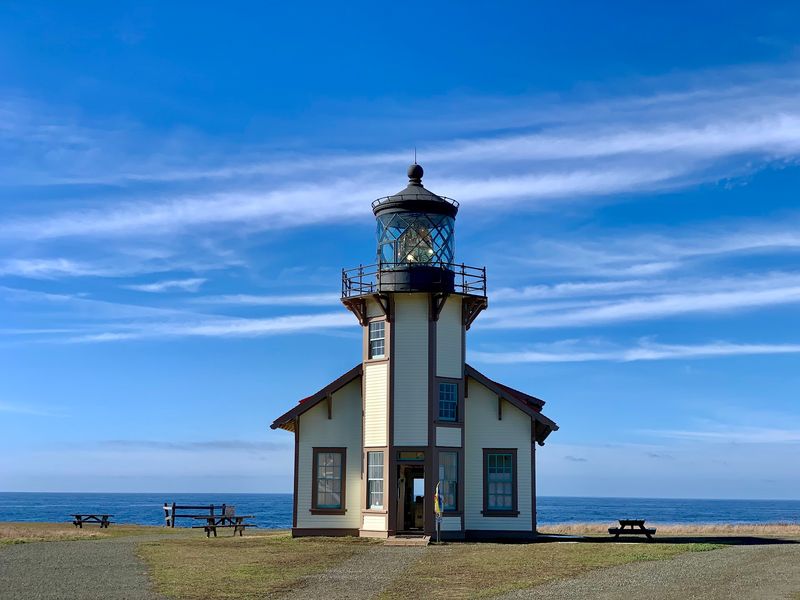
For almost three decades, the big lens sat in the dark. In 1972, it was disengaged and covered, and a small automated beacon was placed on the roof instead.
It did the job, but it had none of the charm of the original glass.
Then came a comeback story I really love. In 1999, the United States Coast Guard teamed up with dedicated volunteers to carefully restore the old Fresnel lens and turn it back on.
Today it works as an official Federal Aid to Navigation, which means real ships can still count on it.
The modern setup mixes old and new in a pretty neat way. A 1,000-watt electric lamp now shines through those century-old prisms, blending early 1900s craftsmanship with modern electronics.
It is kind of like putting a new engine in a classic car and watching it roar back to life.
When I learned this, the lighthouse felt less like a museum piece and more like a working neighbor. Plenty of old lighthouses have quiet, retired lenses sitting behind ropes.
This one still has a job to do every night, and knowing that makes the flash feel personal somehow.
The Half-Mile Stroll Down to the Station
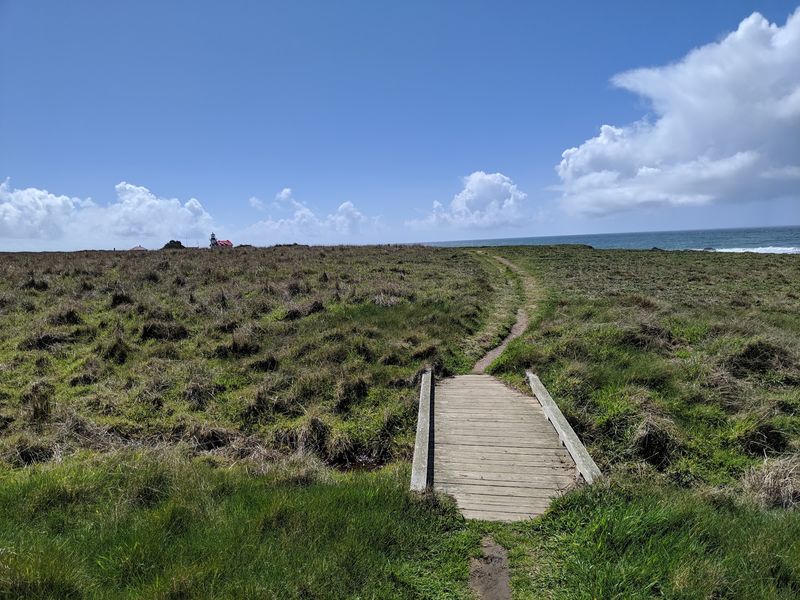
Parking is up near the highway, so everyone gets a little warm-up walk. The trip down to the light station is about half a mile, mostly flat with a gentle downhill slope.
I actually liked this, because the lighthouse slowly grows bigger in front of you like a reveal in a movie.
You get two choices at the start. One is a paved road, which is easier and great for families or anyone who wants steady footing.
The other is an unimproved trail through the grassland, and many visitors say it has better scenery and less dust.
Along the paved route, keep an eye out for small signs with trivia questions about sea creatures. They are a fun distraction, especially if you have kids who start asking how much farther.
Visitors with a disability placard can get permission to park closer, which is a thoughtful touch.
A few practical tips helped me a lot. Bring water, because the little shop by the lighthouse does not sell drinks, though there is a fountain for refills.
Wear layers too, since the wind off the ocean can pick up fast. Remember the walk back is uphill, so save a bit of energy for the return trip.
Whales, Seals, and a Very Loud Ocean
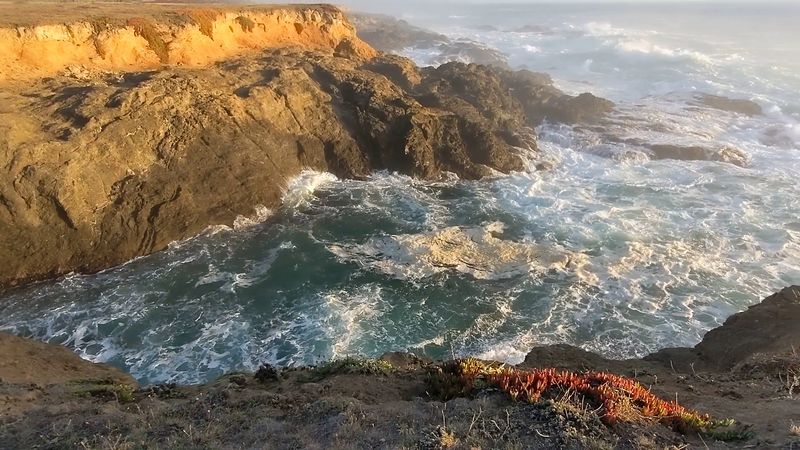
Barking drifted up from the rocks before I ever saw a single seal. Harbor seals and sea lions hang out along the shore here, lounging on rocks and splashing in the coves.
Once you spot one, you start seeing them everywhere.
Winter and early spring bring the real headliners. Gray whales pass by from December to April during their long migration, and the bluffs make a fantastic viewing spot.
Look for the misty spout first, then watch for a dark back rolling through the waves.
Other whale species show up too, and lucky visitors sometimes catch dolphins cruising past. Birds are constant company as well, gliding along the cliffs and diving into the surf.
A pair of binoculars will make a huge difference, so tuck some in your bag if you have them.
My best advice is to slow down and stay put for a while. Wildlife watching rewards patience more than hustle.
I sat on a patch of grass for about twenty minutes and saw more in that time than during my whole walk. Please stay back from the cliff edges, especially with kids, because the ground can be crumbly and the drop is steep.
Climbing the Tower and Planning Your Visit
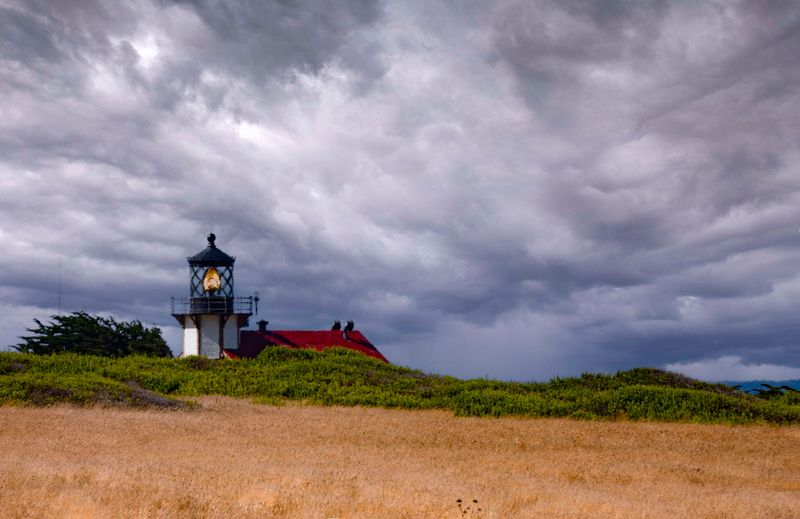
Four levels and one skinny handrail later, I was grinning at the top. The tower is only 32 feet tall, but it sits on the headland so the light shines 81 feet above sea level.
The climb is short, yet those narrow steps give your legs a little workout.
Tower access depends on the schedule. The Coast Guard must be present for climbs, and tours often happen on weekends with volunteer guides stationed on each level.
Check the official website before you go, because missing the tower after a long drive would sting.
The grounds usually open around 10 or 11 in the morning and close at 4 in the afternoon, depending on the day. The whole park covers 296.5 acres of prairie and bluffs, with trails that lead to hidden beaches and wide-open views.
Admission is free, and donations help keep everything running.
Mendocino village sits only about 1.5 miles south, so it is easy to pair this visit with lunch and some shopping in town. The gift shop in the lighthouse has lovely souvenirs and a few snacks too.
For directions, use the park entrance near the highway, which Google Maps lists as the main spot.
Address: 45300 Lighthouse Rd, Mendocino, California 95460
