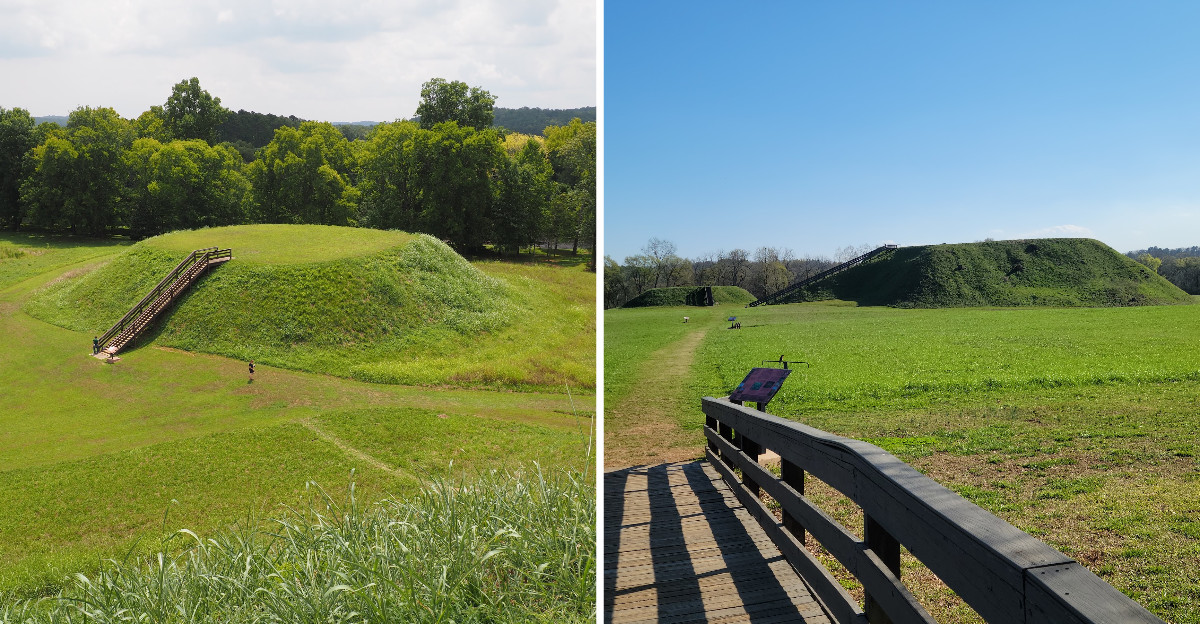
A 63-foot mound rising out of a flat Georgia field stops you mid-step, taller than a six-story building, every inch of it carried by hand. Basket after basket of soil, thousands of trips back and forth, shoulders aching, feet moving for years.
Picturing that labor is unavoidable. This site protects one of the most intact Mississippian towns in the entire Southeast, home to several thousand people between 1000 and 1550 A.D.
The mound sits quietly along a river, surrounded by birdsong, tall grass, and a calm that sneaks up on you. Walking the grounds, the scale of what patient hands built becomes clear.
No machines, no shortcuts, just human effort stacked into a monument that has survived for a thousand years. Sore legs and a full camera roll came home, along with new respect for the people who shaped this land.
The visit stays with you.
Mound A Towers Over Everything
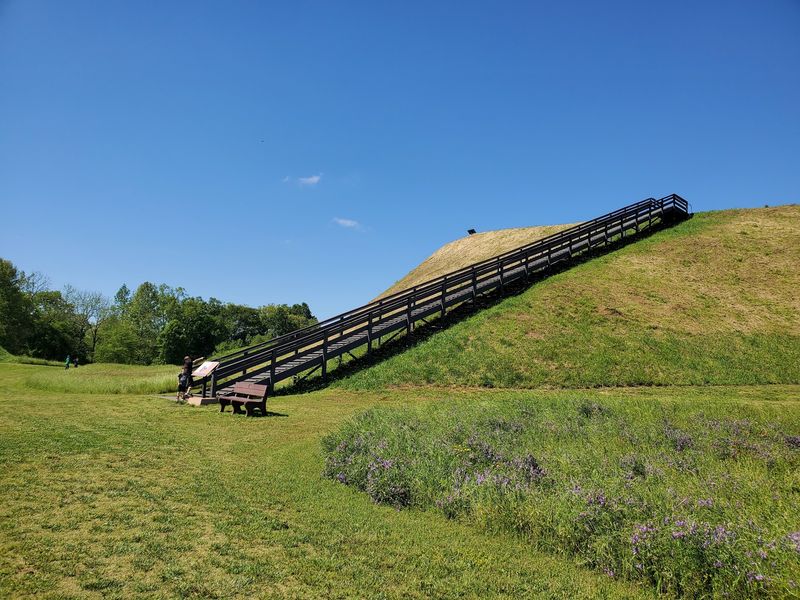
My calves noticed Mound A before my brain did, mostly because the stairs keep going longer than you expect. At 63 feet high with a base covering three acres, it is the giant of the site and easily the star of any visit.
Here is the part that gave me chills. The steps visitors climb today sit directly over the original steps the mound builders used, so your feet follow the same path as people from centuries ago.
Archaeologists believe the top once held the home of the priest-chief, and at the town’s peak there were four major buildings and a courtyard up there.
Mound A has never been fully excavated, which means it still keeps plenty of secrets inside its layers. I like that mystery, honestly.
It makes the climb feel less like a museum stop and more like visiting something that is still alive in its own way.
From the summit, the view stretches across the plaza, the smaller mounds, and the tree line along the river. Take a breather up top and imagine villagers gathered below, waiting to hear their leader speak.
Bring water on warm days, and wear shoes with decent grip, since the stairs are steep and the climb is real.
Borrow Pits Tell the Basket Story
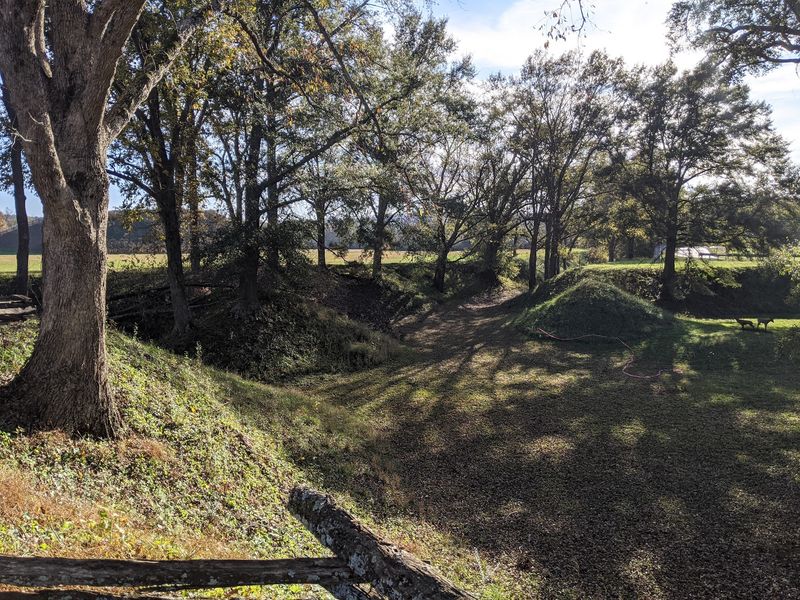
Low spots in the ground rarely get much attention, but at Etowah they are the whole secret behind the giant mounds. Those wide, shallow dips are called borrow pits, and they are exactly where the dirt came from.
The townspeople dug soil out of these pits, filled baskets, and hauled them over to build each mound. Over hundreds of years, they kept adding fresh layers to existing mounds, slowly raising them higher.
No trucks, no wheelbarrows, just people, baskets, and a whole lot of teamwork.
I tried doing rough math in my head while looking at one pit. It went badly, but the point landed anyway.
Moving enough earth for a 63-foot mound would take a huge, organized community working together over generations, and that tells you a lot about how strong this society was.
When you walk the paths, slow down near these pits and look back toward Mound A. Seeing the hole and the hill side by side makes the effort feel real in a way no sign can.
It is a great spot to talk with kids about patience, too. Big things really can be built one small load at a time.
Mound B and a View of the Fish Traps
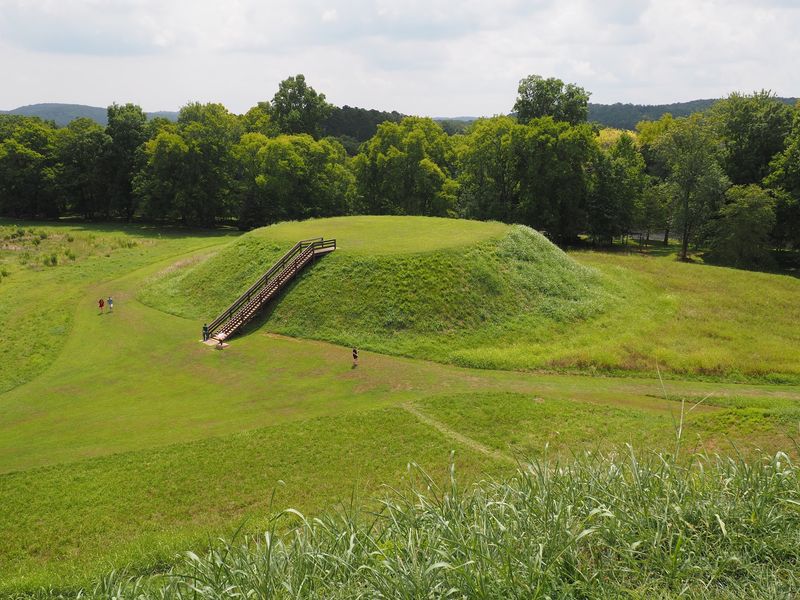
Smaller doesn’t mean less impressive. Mound B rises 25 feet, and after conquering Mound A, it felt like a friendly little sibling that still had something special to show me.
Archaeologists think this platform mound may have been used for religious rituals or as a base for temples. Its real gift for modern visitors is the view.
From the top, you can spot the ancient fish traps in the Etowah River, which still sit there after all these centuries.
In late spring, the meadows around this mound can burst with purple wildflowers, and the color against the green grass is hard to forget. Butterflies drift around, birds chatter in the trees, and the whole scene feels gentle and slow.
I could have sat up there much longer than I did.
A quick tip: climb Mound B after you have seen the museum exhibits about the fish traps. Knowing what you are looking for makes the moment so much better.
Pack a small pair of binoculars if you have them, since they help you pick out the stone lines in the water. It is a simple view, but it connects the mound builders to their everyday dinners in a very human way.
Mound C Holds the Deepest Stories
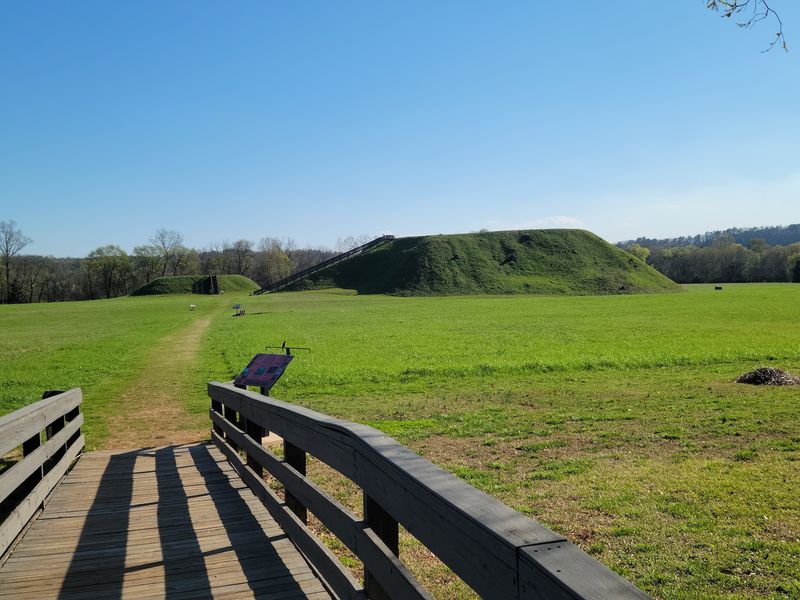
Quiet is the word I would use for Mound C. At only 10 feet tall, it looks modest, yet it has taught archaeologists more than any other spot at Etowah.
It is the only mound here that has been completely excavated. Built in stages between about 1200 and 1350 CE, each new layer matched new burials and ceremonies.
Around 350 burials were found, along with carved marble, polished copper, and other objects that showed the high status of those laid to rest there.
A temple or chapel once stood on top, which makes sense once you feel the calm around it. I found myself lowering my voice without even meaning to.
It is a sacred place for the descendants of the people who lived here, including the Muscogee (Creek) people.
Please treat this area with respect. Stay on the paths, keep things peaceful, and take a moment to think about the families connected to it.
Visiting Mound C after the museum helps everything click, since many exhibits explain what the excavation revealed about spiritual beliefs. For me, it turned the site from a cool pile of earth into a true home for real people with deep traditions.
Treasures Inside the Museum
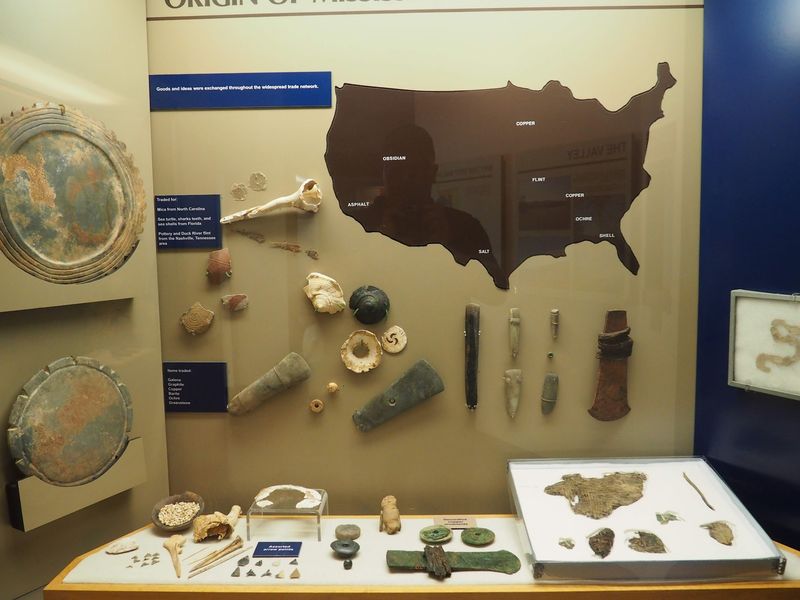
Starting indoors felt a little backward at first, since that giant mound was calling my name. Turns out the visitor center is the smartest first stop you can make.
An introductory film, roughly 15 minutes long, sets the scene beautifully. Then you get exhibits on Mississippian pottery, stone axes, copper jewelry, and detailed shell gorgets, plus a model showing how the walled town might have looked.
Some of the marble statues linked to Etowah are considered among the finest early art in the Southeast.
The trade story amazed me most. Copper came from the Great Lakes, shells from the Gulf of Mexico, and mica from the Appalachian Mountains, which means these folks were connected across half a continent.
People here decorated themselves with shell beads, tattoos, body paint, feathers, and copper ear ornaments, so fashion was clearly a big deal.
Some original artifacts have been returned to tribal nations, so displays may change over time. That is a meaningful thing in itself.
The staff are friendly and happy to answer questions, so go ahead and ask. Programs like pottery demonstrations sometimes pop up, and catching one adds a fun, hands-on layer to your trip.
River Walks and Ancient Fish Weirs
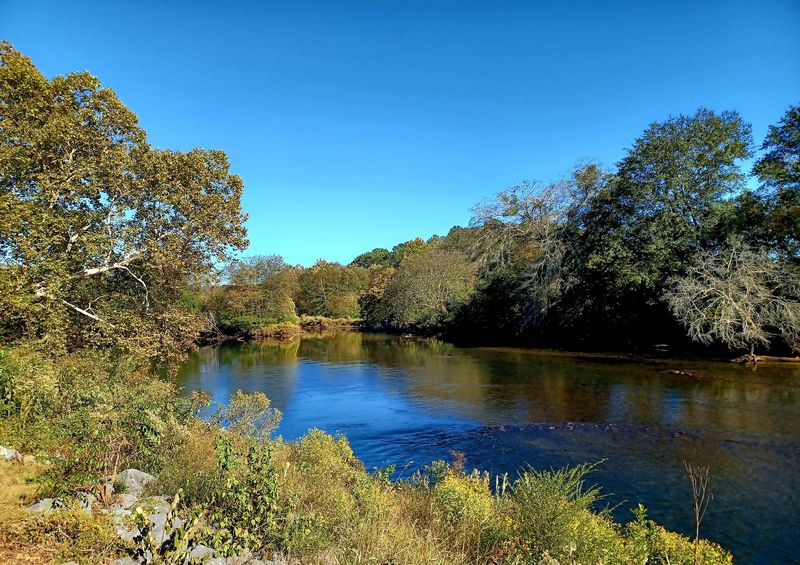
Down by the water, the whole place softens. The Etowah River runs clear and steady here, and a few benches along the bank invite you to sit and just listen for a while.
Look closely in the shallows and you will see V-shaped lines of piled stone. These are fish weirs.
The people of Etowah built them to guide fish toward the point of the V, where baskets waited to catch them, which is pretty clever engineering with nothing but rocks and know-how.
Their diet leaned on corn, beans, and squash, but the river added protein and plenty of variety. I stood there trying to imagine kids splashing around while adults checked the baskets.
It made the ancient town feel close, almost like neighbors from long ago.
A nature trail winds along the river and shares how early people used native trees for food and medicine. It is shady, easy, and peaceful.
Leashed pets are welcome on outdoor trails, so your dog can join you here, though not inside buildings. Bring bug spray in summer and wipes for railings, since the local birds are not always polite.
Then just breathe and enjoy the sound of moving water.
Planning a Visit That Feels Right
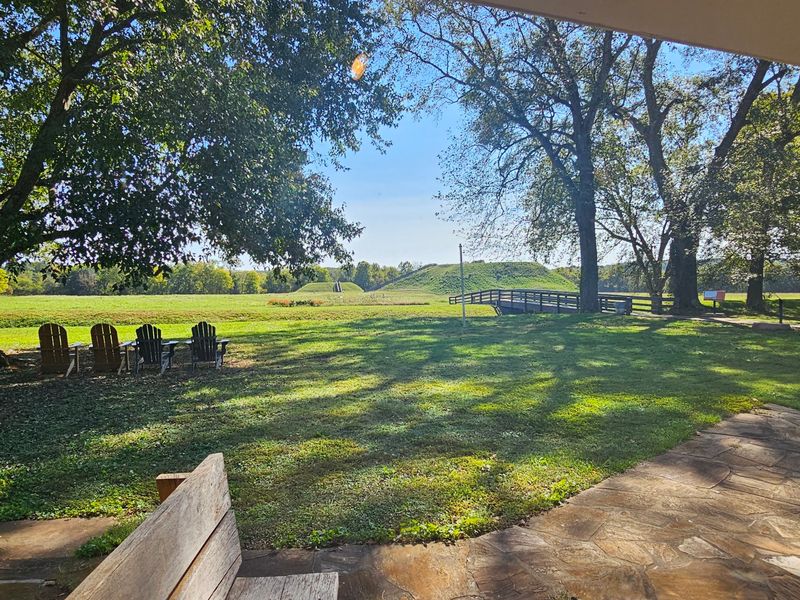
Good timing makes a big difference at Etowah, and I learned that the sweaty way. Georgia summers can be intense, so spring and fall are the sweet spots with milder weather and lovely colors.
The site is open seven days a week from 9 a.m. to 5 p.m., but the mounds area closes at 4:30, so do not show up late hoping for a sunset climb. It closes on Thanksgiving, Christmas, and New Year’s Day.
Plan for about 1.5 to 2.5 hours to see the museum and grounds without rushing.
Shaded picnic tables near the parking lot are perfect for a packed lunch after all that climbing. Restrooms are clean, and a small gift shop sells souvenirs that help support the site.
Kids will love the open space to run around, and teachers often bring field trips here for good reason.
Keep an eye on the event calendar, since special programs can make the experience richer. Wear comfy shoes, bring water, and give yourself time to linger by the river.
The name Etowah comes from a Muskogee word meaning town, and once you leave, it really does feel like you visited one.
Address: 813 Indian Mound Rd SE, Cartersville, Georgia 30120
