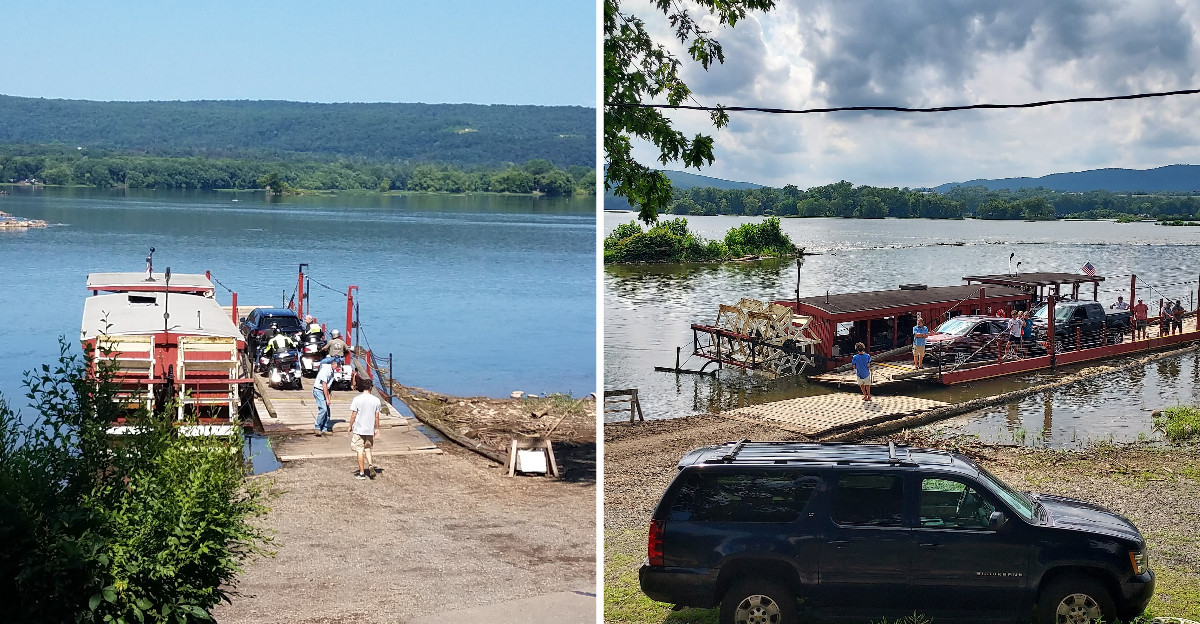
Red wooden boats with paddlewheels still carry cars across a Pennsylvania river, and watching them work is like stepping into another century. This ferry has been making the trip since 1817, and it is the last wooden double stern-wheel paddle boat ferry still running in the United States.
It is also the only ferry left on the entire river, which makes a short ride feel like a piece of living history. The paddles churn the water in a steady rhythm, and the crossing moves at the pace of the current.
Rolling off on the far shore with a grin comes naturally, and plans for a return trip form before the car even leaves the ramp. Road trips with a twist are rare, and this crossing delivers one without trying.
The boat is old, the river is wide, and the experience is worth every minute.
A Ride That Has Lasted Since 1817
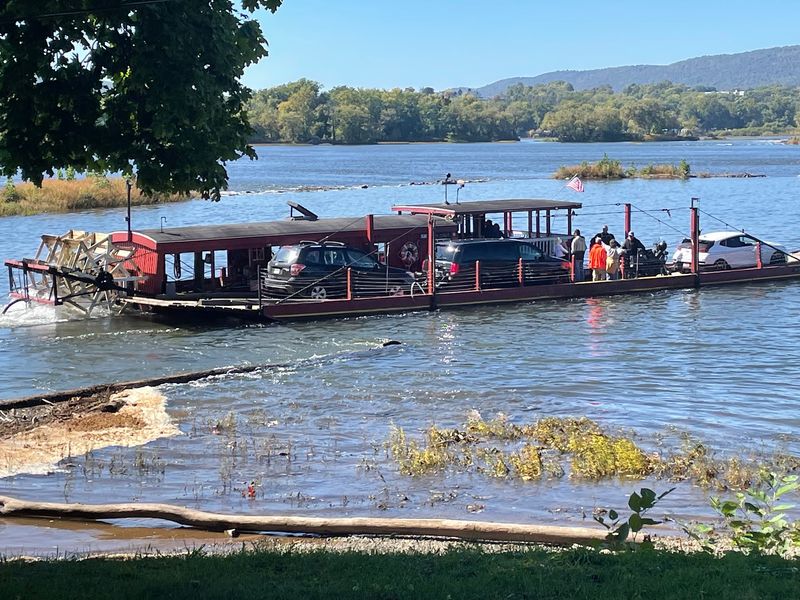
My first thought on the ramp was simple: people have been doing this exact thing for over two hundred years. The Millersburg Ferry started regular service in 1817, which makes it one of the oldest transportation companies in Pennsylvania.
Ferries actually crossed the river here even before Millersburg became a town in 1807. Back then, the boats were pole ferries, pushed across the water by hand with long wooden poles.
I tried to picture that work on a hot summer day, and my arms got tired just thinking about it.
In 2006, the crossing was added to the National Register of Historic Places. The old ferry wall along the shore is listed too, so even the stones you pass have a story.
Signs near the landing share bits of this history if you arrive early and want something to read.
What surprised me most is that the ferry is not a museum piece. It still works as a real way to get from Dauphin County to Perry County.
Locals, families, and travelers all use it, and that everyday purpose keeps the past feeling alive rather than dusty. Take a moment before boarding to appreciate that long, unbroken line of crossings.
Meet the Roaring Bull V and the Falcon III
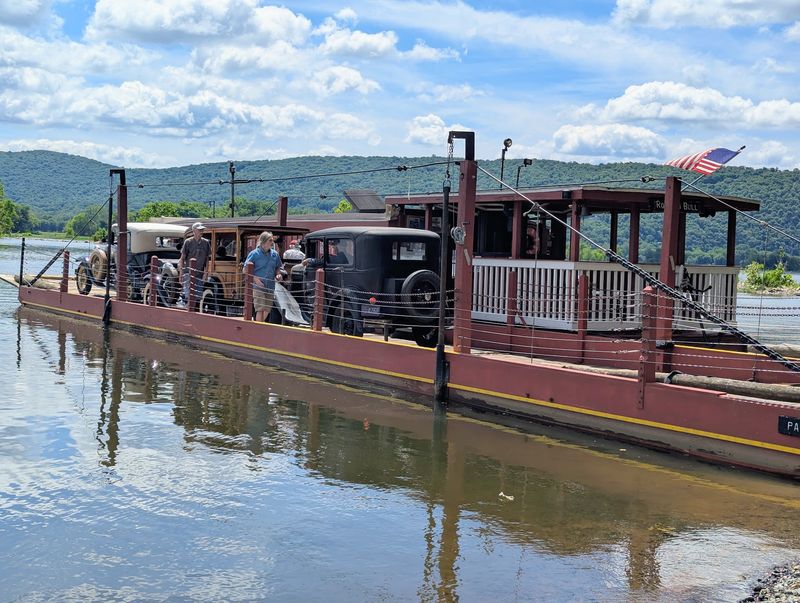
Two boats share the work here, and each one has its own personality. The Roaring Bull V is the bold one, painted a deep red or maroon and stretching 83 feet long.
It was built in 1998, which makes it the younger of the pair.
The Falcon III wears a calm gray coat. Its roots go all the way back to 1917, though it has been rebuilt in big ways over the years to keep it safe and sturdy.
I liked thinking of it as a grandparent that keeps getting new knees.
Both hulls are made of white pine wood, which is part of what makes this ferry so rare. Wooden boats like these have mostly disappeared from American rivers.
Running your hand along the rail, you can almost feel the craftsmanship.
Here is a fun detail for curious minds. Each boat runs on a 57 horsepower Deutsch diesel engine paired with hydraulic systems that turn the paddlewheels.
That is not a lot of power, yet it moves cars, people, and motorcycles across a wide river with steady confidence.
When you arrive, check which boat is running. Riding both on separate trips is a sweet little goal for repeat visitors.
Driving Your Car Onto a Wooden Boat
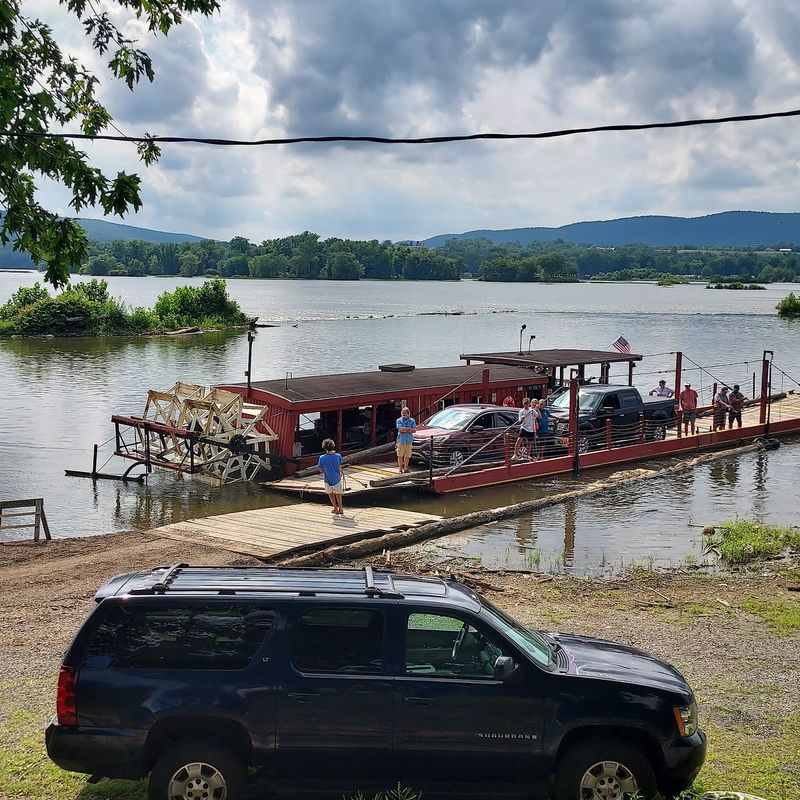
Honestly, my hands were a little sweaty on the steering wheel. Rolling a car onto a wooden deck that floats is not something most of us do every day, and it feels wonderfully strange.
Each boat can hold up to four vehicles at a time. The crew guides you on carefully, sometimes fitting cars in so snugly that you wonder how it all works out.
Somehow, it always does.
Motorcycle riders love this place too. A single boat can carry more than 20 bikes, and the ferry has earned a strong reputation among riders looking for a scenic detour.
If you ride, take note of the gravel and the hill on the eastern landing, since newer riders should go slow there.
There is one big rule to remember. RVs are not carried, so plan another route if you are traveling in a camper.
Larger vehicles simply do not fit the space or the weight limits.
Once you are parked, you can usually step out and stand near the rail. That is where the magic happens.
Watching your car sit quietly on a boat in the middle of a river is a memory that sticks.
The Paddlewheels Steal the Show
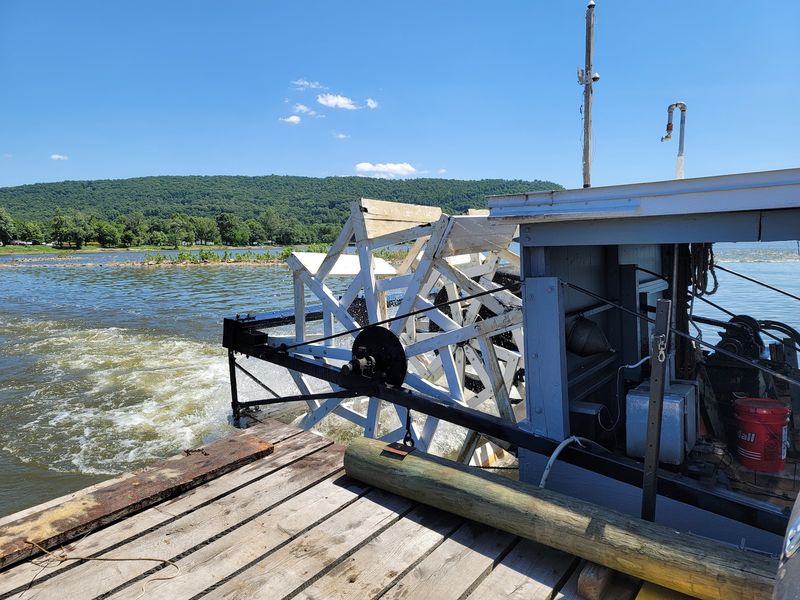
Splash, turn, splash, turn. That rhythm became the soundtrack of my crossing, and I could not stop staring at it.
The double stern-wheel design is what makes this ferry so special. It was first adopted in 1873, back when steam engines powered the boats.
Those early wheels were placed on the sides, but in the 1920s gasoline engines replaced steam and the paddlewheels moved to the stern, or back of the boat.
Why paddlewheels instead of propellers? The Susquehanna is famously shallow in many spots.
Paddles skim along the surface and handle shallow water better than a deep propeller would, which helps the boat glide where other vessels might get stuck.
From the deck, you get a front row seat to all of it. Water sprays off the wooden blades, and tiny rainbows sometimes flash in the sunlight.
Kids tend to crowd the back rail, and to be fair, so do plenty of grownups.
Bring a phone or camera with a quick shutter if you want good photos of the spray. A short video with sound captures the experience even better.
The gentle slapping noise is surprisingly relaxing to replay later.
Flip the Door to Call the Captain
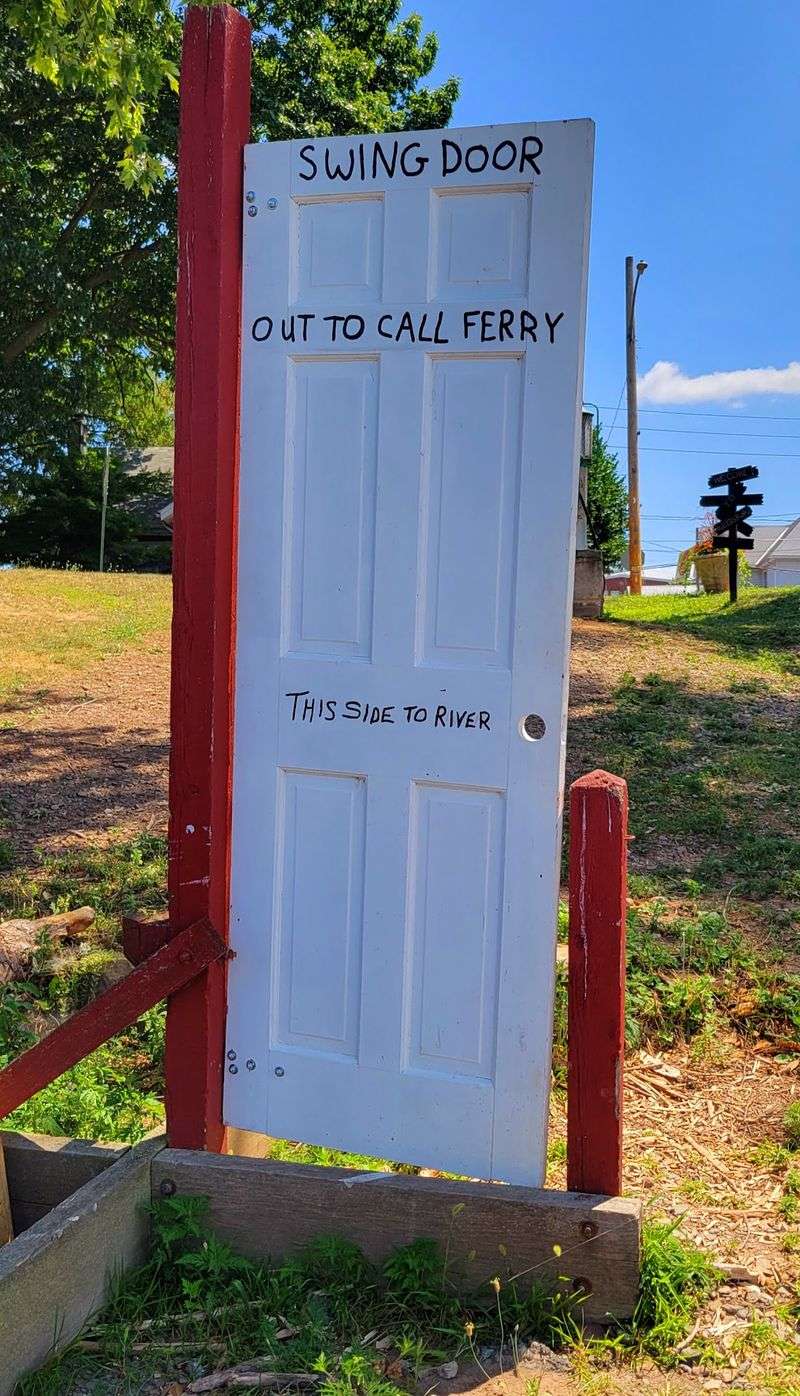
Nobody hands you a ticket app or a buzzer here. Instead, there is a charming old-school trick I still smile about.
The ferry does not follow a fixed timetable. It runs as traffic needs it, so sometimes the boat is waiting on the far shore when you pull up.
To let the captain know you are there, you turn a large door so it faces the river.
That simple signal travels about a mile across the water. Then you wait and watch for the boat to start its slow return.
It feels a bit like sending a message by flag in an old adventure story.
While waiting, the riverside park makes the time pass easily. There are two-person tree swings and picnic tables along a clean, shady path.
I sat on a swing and watched the current drift by, and the wait felt more like a bonus than a delay.
A tip from my visit is to arrive without a tight schedule. If the boat just filled with four cars heading the other way, you may wait for a full round trip.
Pack some snacks, enjoy the breeze, and let the river set your clock.
Islands, Ridges, and a Very Slow Mile
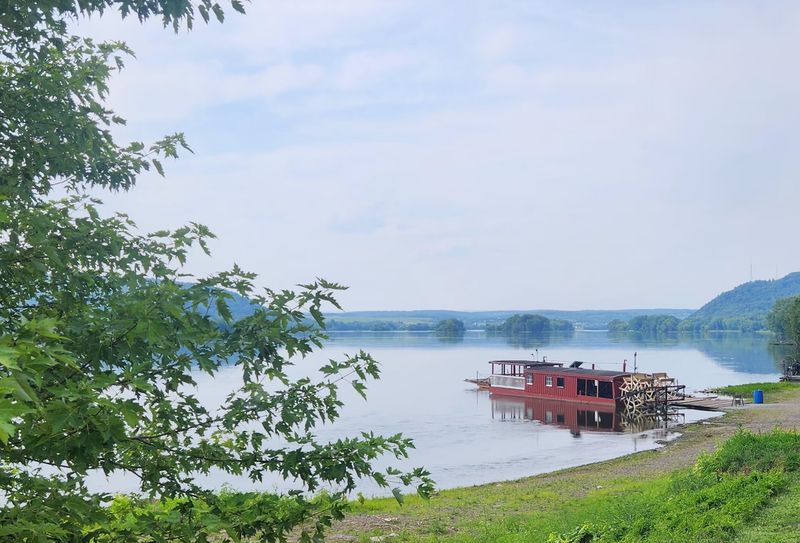
About halfway across, I realized I had stopped checking my phone entirely. The view had quietly taken over.
The crossing covers roughly a mile, or about nine-tenths of a mile, and takes around 15 to 25 minutes each way. That is slow by modern standards, and it is exactly the point.
You have time to really look around.
Wooded islands dot the river, and green ridges rise along both sides. On calm days, the water reflects the sky like a giant mirror.
Birds skim low over the surface, and the air smells fresh and a little earthy.
The ride itself is smooth and peaceful. Even folks who worry about boats usually feel fine, since the river here is gentle and wide.
The paddles keep a steady beat that makes the whole trip feel unhurried.
Crew members often share stories about the ferry and the river if you ask. Curious questions are welcome, so do not be shy.
Learning a fact or two while gliding past those islands made my crossing feel richer.
For the best light, try a morning or late afternoon trip. Soft sunshine on the ridges turns an easy ride into a postcard moment.
Planning Your Trip Before You Go
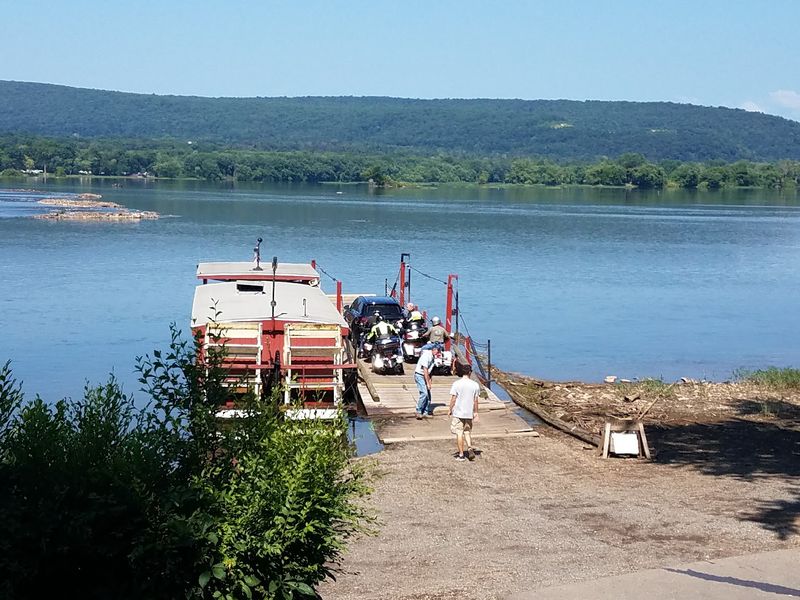
A little planning goes a long way, and I learned that the friendly way. The Millersburg Ferry runs seasonally, usually from May through mid-October.
Weather and river conditions decide a lot. Low water, high water, or strong wind can pause service, so checking ahead is smart.
The ferry shares updates through its website and social pages, and you can call the office too.
On the Millersburg side, the east landing sits along the river at the edge of town. Restrooms are near this ramp, but not on the boats, so plan a quick stop before boarding.
The west landing is in Perry County near Liverpool, where a campground with a store and ice cream treats is waiting.
Walk-on passengers are always welcome, which is a great option if you want a round trip without your car. Many visitors ride over, enjoy some time on the far shore, and come right back.
That way, you get double the scenery.
Give yourself time to stroll through Millersburg too. The riverside park is lovely for a picnic, and the small-town streets are pleasant to explore after your ride.
Address: 1 North Street, Millersburg, Pennsylvania 17061
