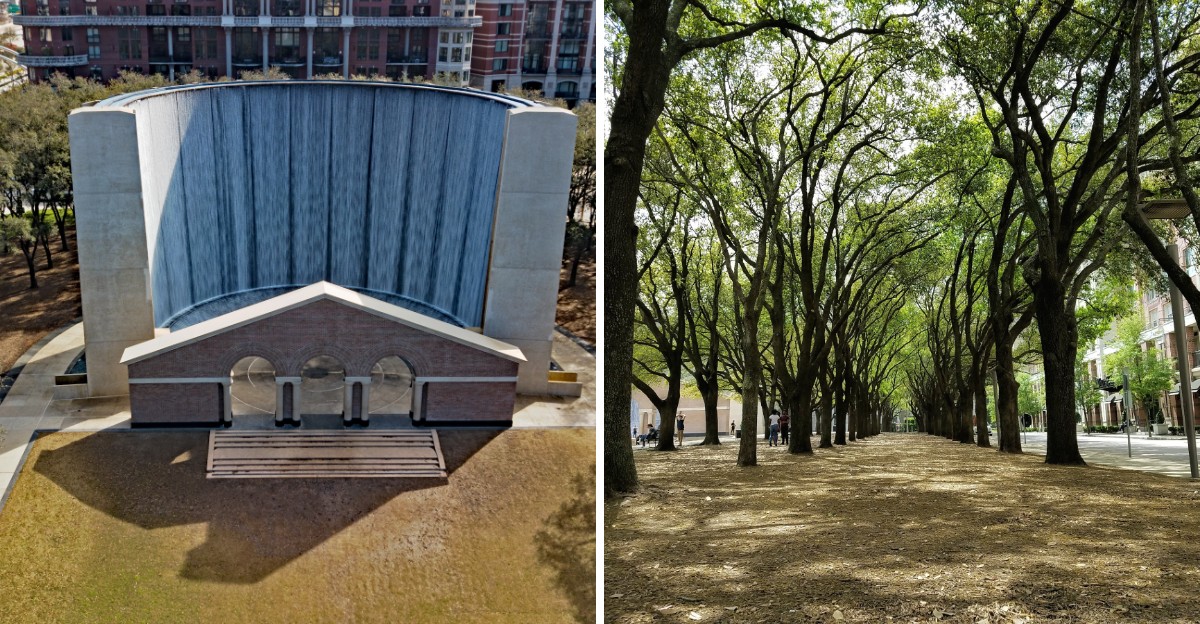
A 64-foot wall of water in the middle of the city. That is not something you see every day.
But this Texas spot delivers exactly that. The waterfall is dramatic, loud, and surprisingly peaceful once you settle in and watch it.
It is the kind of place where you can stand at the base, feel the mist on your face, and forget that traffic and office buildings are just a few blocks away. The surrounding area is designed for lingering, with paths and seating that invite you to stay awhile.
It is a favorite for lunch breaks, photo shoots, and anyone who needs a quick escape from the daily grind. You do not have to drive to the mountains to find a moment of nature.
Sometimes it is right there in the middle of everything. This spot proves that.
Bring a camera and a few minutes to spare. It is worth the stop.
The First Sight That Stops Conversation Mid Sentence
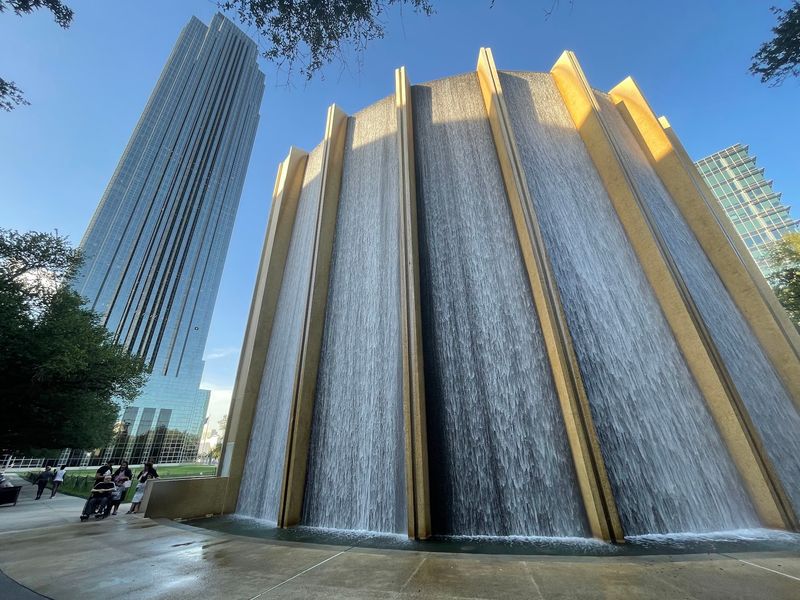
Nothing quite prepares a person for the scale of it. From the sidewalk along Post Oak Boulevard, the structure reads as a curved stone wall behind some trees, almost modest.
Then the walk down the lawn begins and the proportions shift completely. Sixty-four feet is roughly a six-story building, and the water covers nearly every inch of that height in a moving sheet.
The horseshoe shape is the clever part. Because the wall wraps inward, stepping into the open center means water surrounds a visitor on three sides at once, which produces a strange and wonderful feeling of being swallowed by something beautiful.
Sound arrives before the full view does. There is a low rumble that builds as the walkway narrows, and by the time anyone reaches the arched entryway, ordinary talking volume no longer works.
Plenty of visitors describe the first look as surreal, and that seems fair. The contrast between a polished corporate skyline and this thundering curtain of water feels almost like a movie set that somebody forgot to dismantle.
Worth knowing before arriving: the fountain occasionally shuts down for cleaning. A quick check with the park beforehand saves disappointment, especially for anyone planning photos.
Best approach is from the lawn rather than the parking side. Coming up through the long allee of oaks builds the reveal properly, the way the designers clearly intended, and the payoff at the end is genuinely worth the extra ninety seconds of walking.
Cooling Mist That Works Better Than Any Fan In August
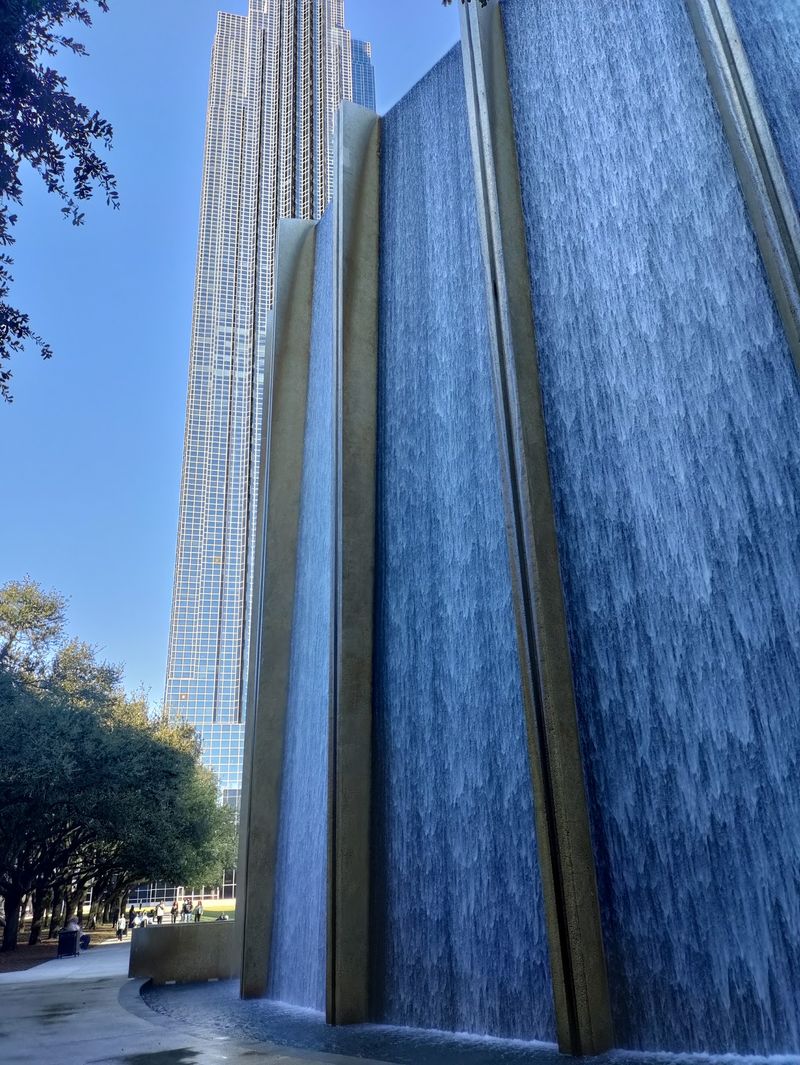
Houston humidity has a reputation, and it is earned. Which is exactly why the base of this fountain turns into the most popular square footage in Uptown once summer settles in.
The falling water throws off a constant fine spray that drifts several feet outward. Standing near the inner curve means getting lightly misted whether planned or not, and on a ninety-five degree afternoon, nobody complains.
Visitors regularly mention how much cooler the air feels inside the horseshoe compared to the sidewalk outside. There is a real temperature drop, plus a breeze the falling water generates on its own.
A practical heads up though. Glasses fog, phone lenses spot, and anyone wearing a full face of makeup for portraits should factor that in and shoot from a step or two farther back.
Shoes matter too. The stone around the edges gets slick, and the combination of smooth surfaces and running water is exactly as slippery as it sounds, so grippy soles beat sandals here.
Children tend to love the mist most of all. Watching a kid close their eyes and lean into the spray while the roar washes over them is one of the small joys of this park.
Bring a light towel or a change of shirt if the plan involves dinner afterward. The dampness fades fast in the heat, but a lingering camera lens smudge is harder to fix on the fly.
Numbers Behind The Roar Are Genuinely Wild
Eleven thousand gallons per minute. That figure gets repeated often, and it still sounds exaggerated until the water is right there in front of you.
To put it in perspective, that volume would fill a decent backyard swimming pool in under two minutes. Every minute.
All day long.
The whole system runs on recycled water rather than constantly drawing new supply. Roughly 78,500 gallons circulate through filtration and cycle completely about every three hours, which is a lot smarter than it first appears for a fountain built in the mid-1980s.
Water pours down both the inner concave face and the outer convex face. Most people only notice the inside at first, then circle around and realize the back is just as dramatic.
The height was not chosen at random either. Sixty-four feet mirrors the 64 stories of the Williams Tower standing right behind it, a quiet architectural handshake between the two structures.
The dark interior surface uses black obsidian aggregate, which is why the white foaming water reads so sharply against it. Contrast like that does not happen by accident.
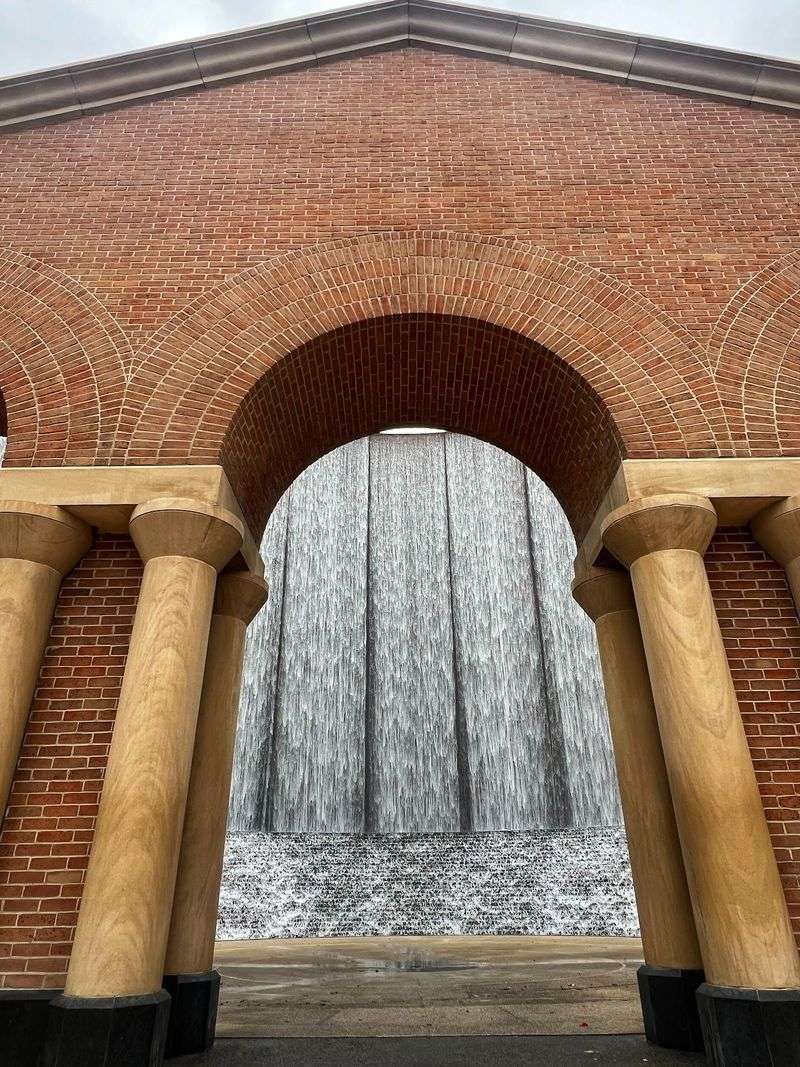
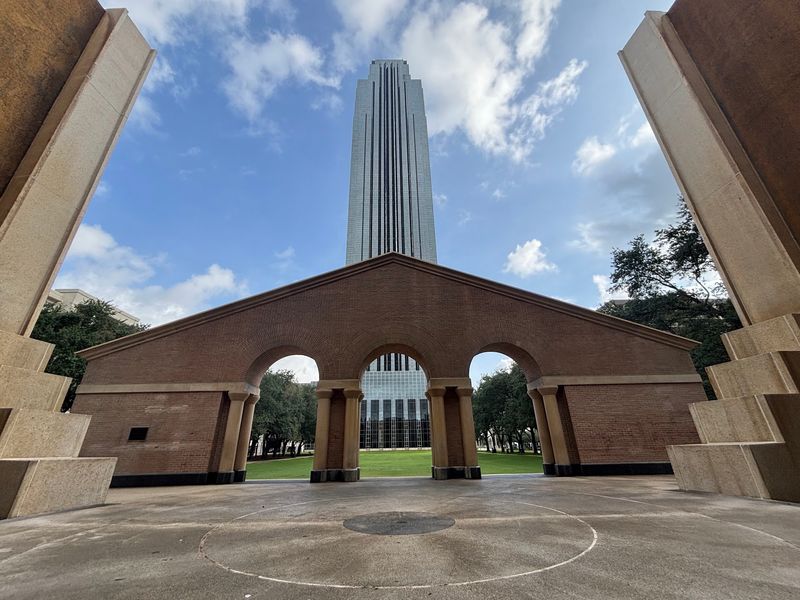
Fun detail for anyone who likes theater history: the three arches at the entrance mimic a scaenae frons, the permanent backdrop of a Roman stage. Somebody clearly wanted visitors to feel like they were walking onto a set, and honestly, it works every single time.
Live Oaks And A Lawn The Length Of A Football Field
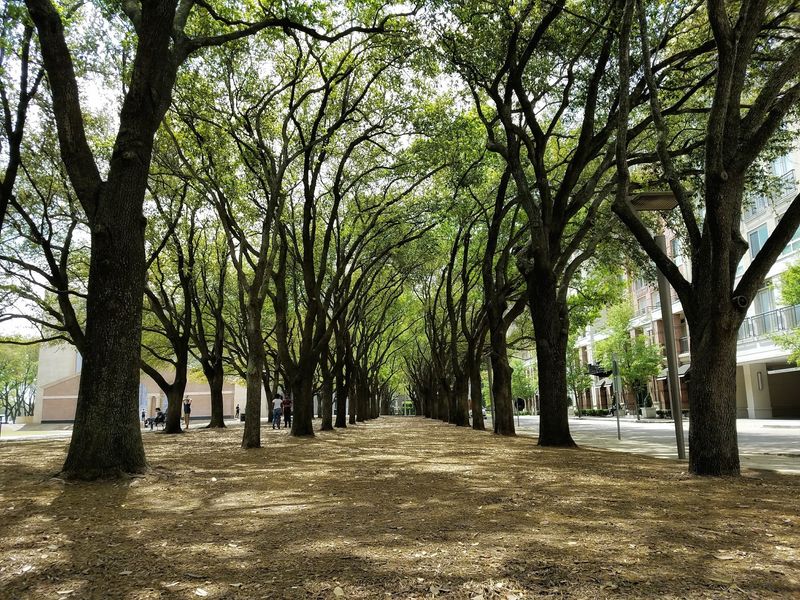
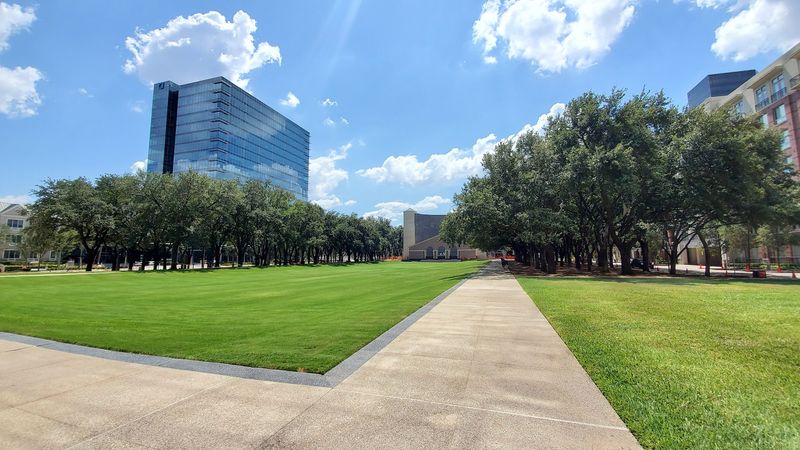
The fountain gets the attention, but the trees do a lot of quiet work here. Rows of live oaks, counted somewhere in the neighborhood of 186, line both sides of the open lawn in a formal quadruple allee.
They create shade that actually matters in this climate. Even at midday, the sidewalk beneath the canopy stays noticeably cooler than the open grass.
The lawn itself stretches roughly 360 feet, about the length of a football field, which gives kids plenty of room to sprint off energy. Ball games are not allowed, but running, cartwheels, and bubble blowing seem to be the unofficial sports of choice.
Picnics work beautifully here. Spread a blanket under the oaks, face the wall, and the sound carries just enough to feel present without drowning out conversation at that distance.
Grounds crews keep the space tidy year round. The grass has its rougher patches after heavy use, though the overall maintenance is consistently solid.
Leashed and well behaved pets are welcome, which makes the park a favorite for neighborhood dog walkers in the early evening.
Benches sit along the walkway for anyone who prefers not to sit on grass. Office workers from the surrounding towers often claim them during lunch, book or sandwich in hand, squeezing thirty minutes of calm out of an ordinary Tuesday before heading back upstairs.
Where Houston Comes For Its Biggest Photos
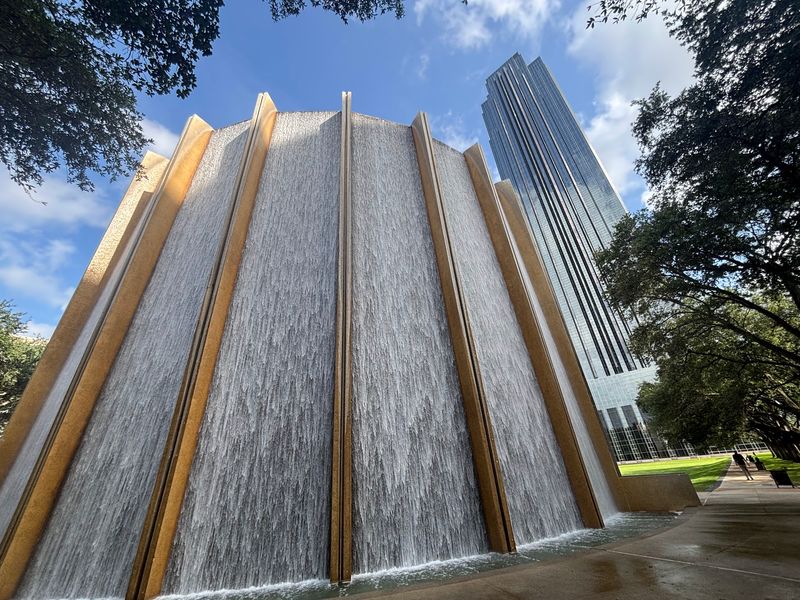
On almost any weekend, count the cameras. Graduation gowns, quinceanera dresses, prom groups, maternity shoots, engagement sessions, family portraits with three generations squeezed into frame.
The wall functions as a backdrop that does most of the heavy lifting. Soft diffused light bounces off the water, and the sheer scale makes even a phone snapshot look intentional.
Photographers who work the area often skip the obvious center shot and use the arches, the oak lined path, or the benches instead. Those angles feel less crowded and age better in an album.
Morning light tends to be gentler than harsh midday sun. Late afternoon into early evening also works well, especially once the fountain lighting kicks on and the water glows after dark.
Expect company. Other groups will be waiting for the same spot, so a little patience and cheerful turn taking keeps everyone happy.
Bring a lens cloth. Between mist and humidity, glass fogs constantly, and a smeared shot is a sad way to end a portrait session.
Families have been coming here for decades for milestone pictures, which gives the place a sweet layered quality. Someone photographed at eighteen may return years later with their own kids, standing in roughly the same spot, water pouring exactly the same way it always has.
Philip Johnson, Gerald Hines, And A Postmodern Statement
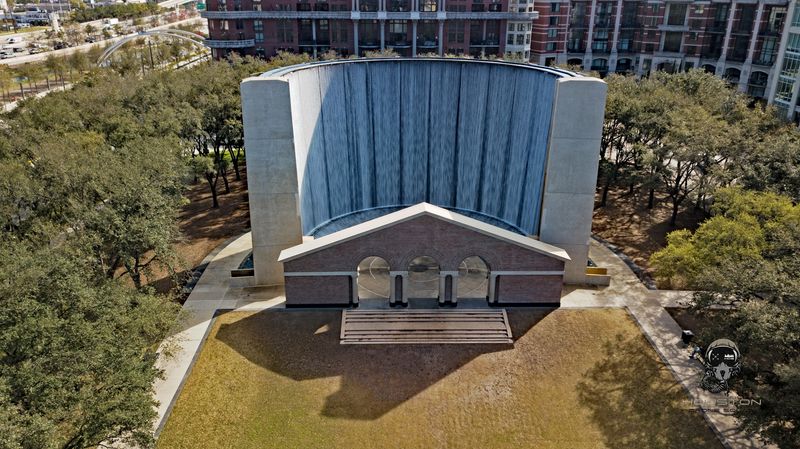
Credit where it belongs. The design came out of John Burgee Architects with Philip Johnson, working alongside developer Gerald D.
Hines, while the SWA Group shaped the surrounding landscape.
Construction started in 1982 and the fountain was running by 1985. That places it squarely in the postmodern era, when architects were pulling classical references back into contemporary buildings with obvious delight.
The Romanesque arches are the clearest nod to the past. They frame the entrance and give the whole thing a monumental, almost ancient quality despite being younger than many of the people visiting it.
Material choices reward a closer look. St. Joe brick, Indiana buff limestone across the gable and columns, precast concrete ribs in Alamo Gray cement, and a black granite base all stack together in careful layers.
None of it feels fussy in person. From a distance the eye reads one giant sculptural object, and only up close do the individual textures separate out.
The Williams Tower behind it, once known as the Transco Tower, was part of the same Hines vision. Tower and fountain were always meant to be read together as one composition.
Architecture fans will find plenty to study here. Everyone else just gets a gorgeous object to sit in front of, which is arguably the mark of design that actually succeeded.
From Private Corporate Amenity To Public Treasure
Here is a bit of history most visitors never hear. The park did not begin as a public space at all.
When it opened, the fountain was a private amenity attached to the neighboring office tower, built to make a corporate address feel more impressive. It carried the name Transco Waterwall, then later Williams Waterwall, following whichever company held the tower.
People used it anyway. Word spread, families showed up for pictures, and the site gradually became a de facto public landmark without anyone officially declaring it one.
In 2008 the Uptown Houston District stepped in and purchased the fountain along with the surrounding land. The goal was straightforward, keeping it free and open rather than risking its future to private development.
A year later, in 2009, the park took its current name honoring Gerald D. Hines for the vision behind it and for his broader contributions to the city.
You will find the whole thing at 2800 Post Oak Blvd, Houston, TX 77056, United States, sitting between Hidalgo Street and Westheimer Road.
Knowing the backstory changes how the place lands a little. What looks like a grand gesture of civic generosity actually started as private property that a community more or less adopted, and then formally rescued, which is a pretty good Houston story in its own right.
Smart Planning, Parking Warnings, And What Sits Nearby
Two words save more visits here than anything else: parking garage. Street and front area parking around the park is tightly enforced, and tow trucks work the area quickly.
Paid visitor parking sits in the garage beside the Williams Tower, and the Galleria garages are only a couple of minutes away on foot. The small parking cost beats a towing headache by a wide margin.
Entry to the park itself costs nothing. Gates generally open in the morning and the fountain runs through the evening, with the water illuminated after dark for a completely different mood.
Comfortable shoes help. Between the long lawn, the walkways, and whatever shopping comes next, there is more walking involved than people expect.
Weekday middays tend to be quietest. Some visitors have practically had the whole horseshoe to themselves during those hours, which is a very different experience from a busy Saturday.
The location makes combining stops easy. The Galleria sits right there with its restaurants and shops, so a thirty minute fountain visit slots neatly into a larger Uptown afternoon.
Budget more time than seems necessary. Almost everyone plans a quick stop and then ends up lingering on the grass, half hypnotized by the sound, watching the light shift across all that falling water until somebody finally suggests leaving.
