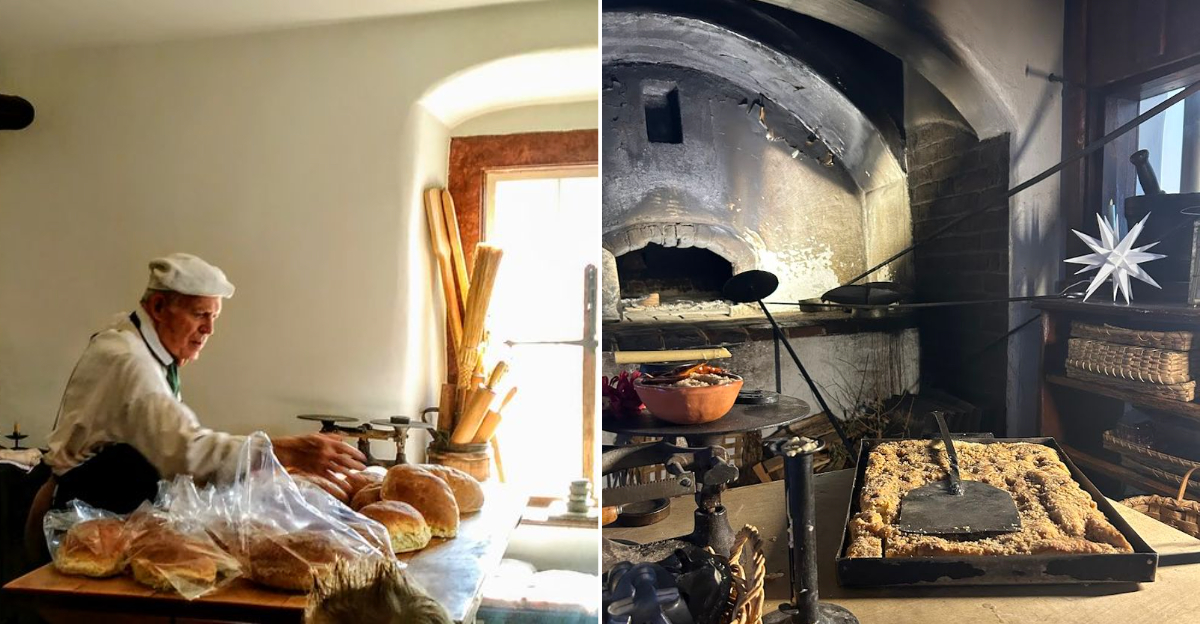
What does it take to bake bread in a wood-fired dome oven that was built before Thomas Jefferson became president? You wake up at five in the morning, light a fire, and heat 700 degrees of stone until the embers are swept away and the lingering warmth settles at just the right temperature.
That is the daily ritual at this hidden North Carolina bakery, believed to be the oldest continuously operating bakery in the United States, running for more than 220 years. The same gingerbread recipe has been used since 1807, producing paper-thin cookies that cowboys once packed into saddlebags.
The staff dresses in period-appropriate clothing, and visitors can sample sugar cake passed through a historic window. So which Winston-Salem gem still bakes like it is 1799?
Walk up to the old stone building, follow the smell of wood smoke and butter, and take a bite of living history. The oven has never switched to gas, and it is not about to start now.
The Dome Oven Has Fired Since Eighteen Hundred
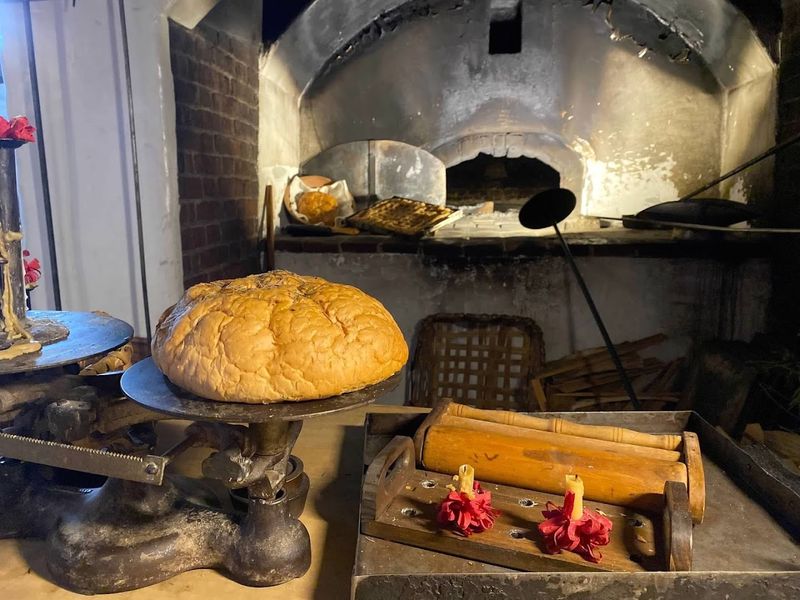
You know how some places hum quietly like a heartbeat you only notice when you stand still? That dome in Old Salem does exactly that, and you feel it before you see it because the heat has a way of wrapping around your shoulders and making you listen.
Step through the door, and the room holds a soft glow that settles you down, almost like the building takes a breath and lets you borrow it.
The oven is curved and sturdy, brick over brick, and it feels as if the walls have learned patience from the fire. You can hear small sounds that are oddly soothing, the light crackle, the gentle shuffle of tools, the low conversation that never rushes.
Nothing here tries too hard, which is kind of refreshing when most places feel like they are always hurrying.
I kept catching myself drifting toward the oven just to watch how it guides everything else. The bakers read it the way a musician reads a tempo, nodding to each other, shifting a peel, leaning close, then stepping back.
If you have ever wanted to see craft without fuss, this is it, and North Carolina wears it proudly. The glow touches every corner, and the day nudges forward at the oven’s pace.
A Swiss Baker Bought The Business In Eighteen Seven
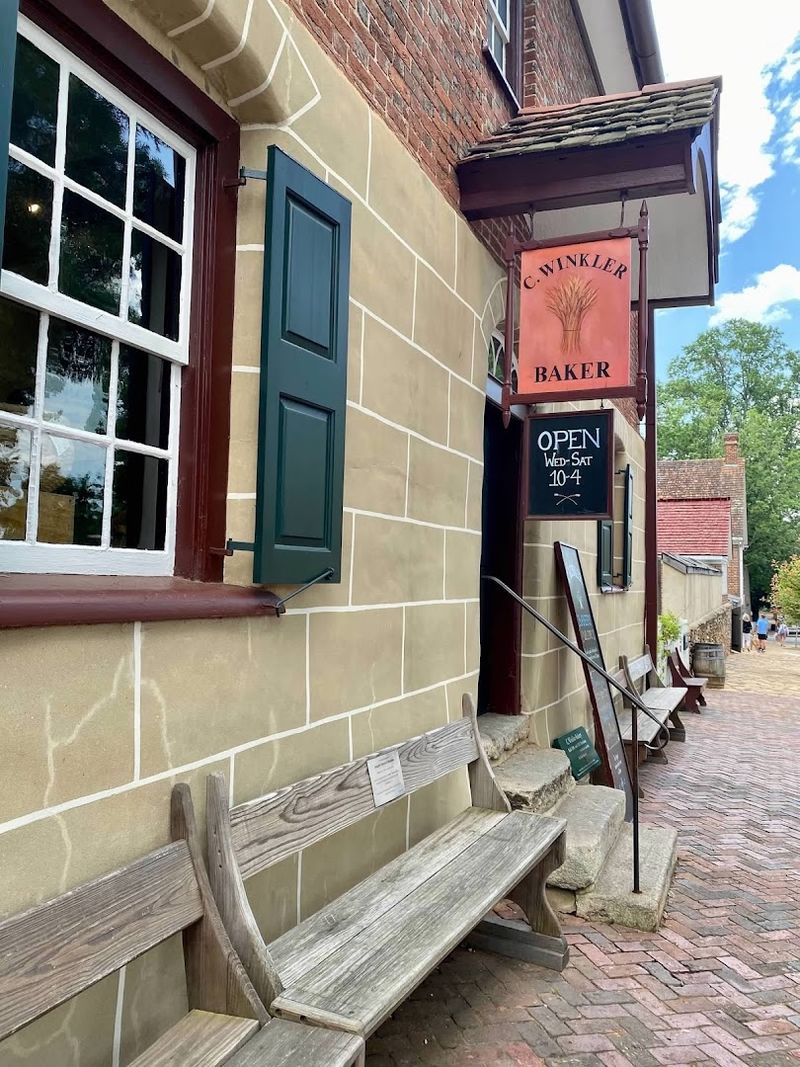
If you like when history comes with a clear address you can actually stand in front of, this one’s easy to find. Winkler Bakery sits at 521 S Main St, Winston-Salem, NC 27101, and the building faces the street like it has seen everything pass by and decided to keep doing its own thing anyway.
The sign hangs with a quiet confidence, and the doorway feels friendly without trying to stage a moment.
The story includes a Swiss hand taking the reins, and you can feel that mix of precision and care in the way the place is organized. Nothing screams at you, yet everything has its spot, which is oddly calming.
I like that the building lets the story breathe without pushing you around, which is rare when so many places try to narrate every second.
Walking up those steps, you can almost sense conversations layered over time, the way choices stack into a rhythm that lasts. North Carolina keeps surprising me with places that hold their ground like this.
You get the sense that the work here matters because it is done steadily, not loudly. It is the kind of stop where you catch yourself smiling at the door before you even go inside.
Three Generations Of Winklers Lived And Worked Upstairs
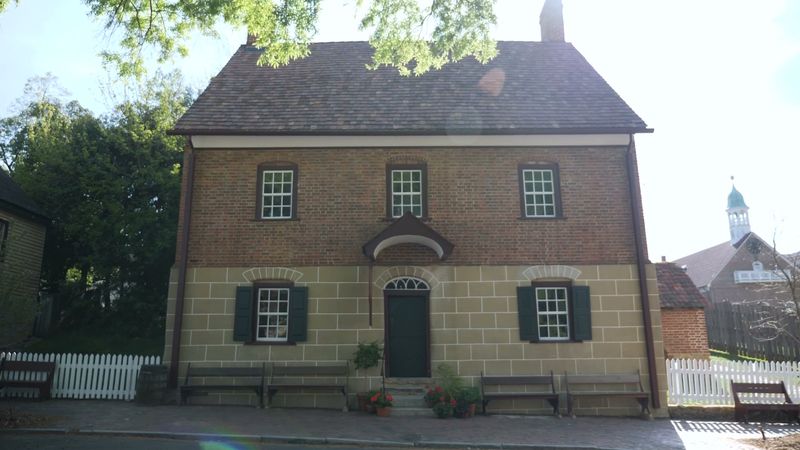
Look toward the stairs, and you can almost hear evening footsteps, the end of a long day climbing to a quiet room above the work. I love that idea, life and craft stacked together, like the building held everything a family needed in one honest vertical line.
It makes the whole place feel personal, not like a museum setup, but like a home that never forgot its purpose.
You can picture a lamp glowing upstairs while the last coals settle in the oven below. Maybe there was laughter after a busy stretch, or maybe it was just a calm silence where the day stretched out and softened.
That closeness between living and working explains the steadiness you feel on the main floor.
North Carolina has a way of blending tradition with daily life, and this building proves it better than any signboard ever could. The walls carry the rhythm of shared routines, and even the floorboards seem to remember who walked where.
When a place holds generations like that, you sense a kind of built-in kindness. It shows up in the way every tool sits ready, in the way the air changes near the stairs, and in the way the light lingers politely along the rail.
The Oldest Continually Operating Bakery In America
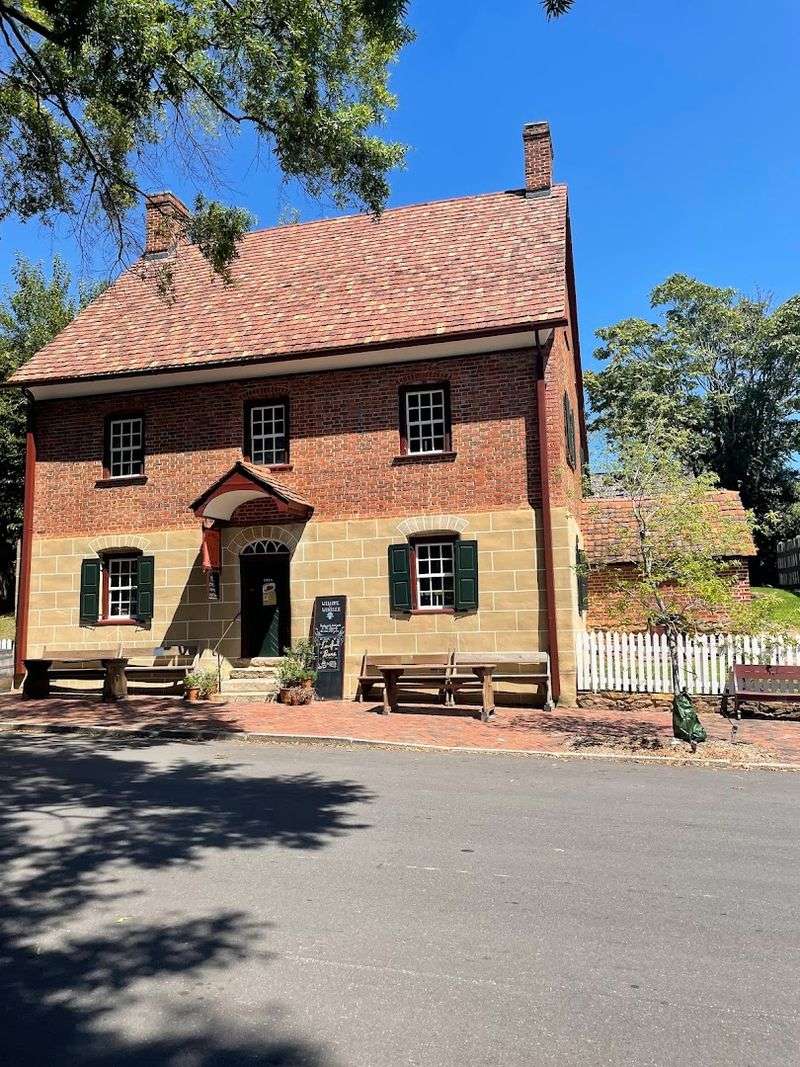
I get why people say this place has kept at it longer than anywhere else doing the same craft, because the continuity is right there in the air. The doors open, the coals get managed, the day sets its pace, and suddenly you are watching a living timeline without any drama.
It is a steady promise instead of a headline, which feels rare and pretty great.
Standing outside, you notice how the building greets the street with no hurry, just a grounded kind of welcome that has learned patience. I like that the claim to longevity does not arrive with fireworks.
It shows up as routine, as care, as the way the staff knows the room without looking around much.
In North Carolina, the word tradition can get tossed around, but here it lands with weight and grace. You feel it in the cadence of footsteps and the small smiles at the counter.
It is not about size or noise, just the daily act of doing the work the way it has been trusted to be done. That simple, that strong, and very easy to believe once you have stood here and taken a slow breath.
A Wood Fire Still Heats The Historic Baking Oven
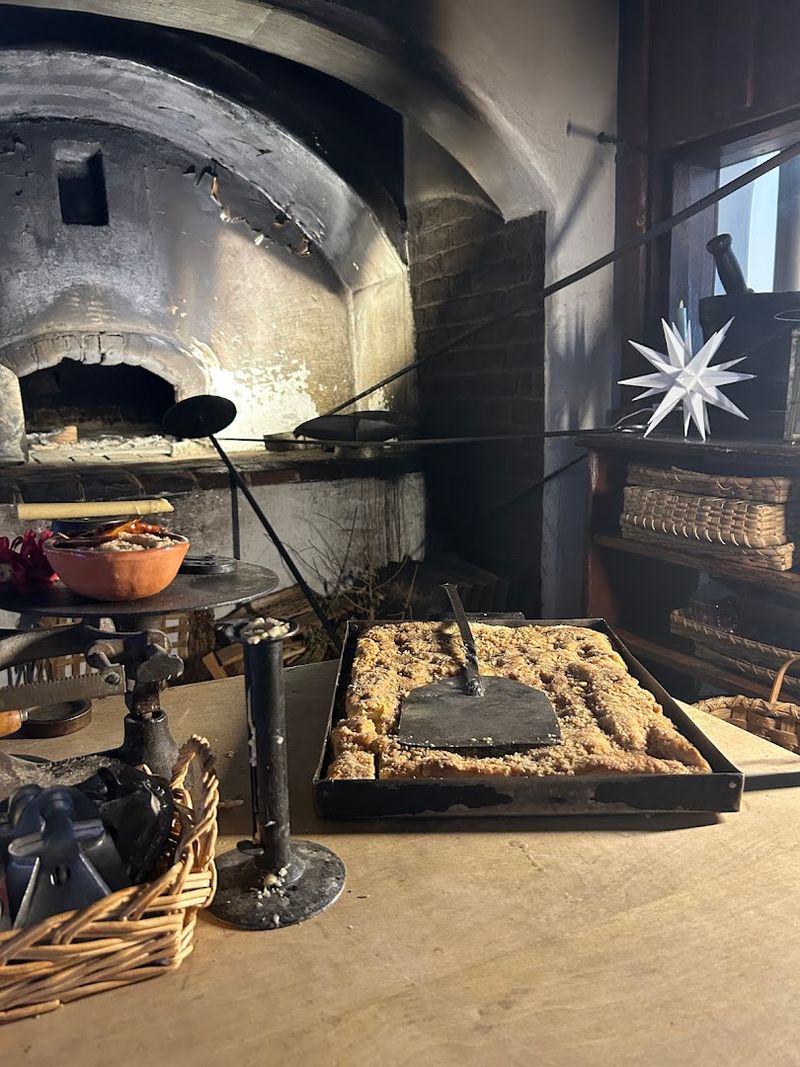
There is something about a real fire that calms the brain, right? You can feel it in your chest before you register the glow, like the room quietly tunes you to the same key.
The oven’s mouth flickers, and the coals settle with a low confidence that says everything important is handled in this corner.
What strikes me is how the fire decides the tempo. People and tools move when the heat says move, then wait when the heat says wait, and that kind of listening becomes part of the craft.
No clock on the wall could keep time better than that gentle red inside the bricks.
North Carolina has plenty of places that lean on heritage, but this feels like heritage doing real work. The fire is not a backdrop.
It is the instrument, the metronome, the steady heart that gives the room its shape. Watching it, you understand how patience becomes muscle memory, and how skill becomes the language everyone speaks without needing to say much.
It is quieter than you expect and more persuasive than any sign ever printed.
Costumed Bakers Welcome Guests At The Door
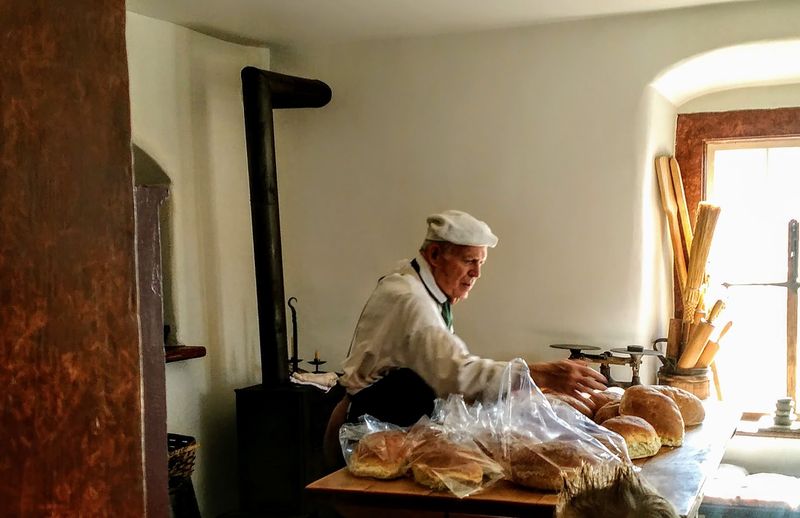
Right at the threshold, the welcome feels sincere in a way you notice immediately. The staff wears period clothing that looks lived-in rather than staged, and it changes the tone from hello to come on in and see how this actually works.
It is friendly without being performative, which is a tricky balance and they pull it off with ease.
I watched one of them pause to answer a question and then slide back into the rhythm of tending the space, and it made the whole scene feel connected. The door swings, a small group steps in, and the room keeps moving like a conversation you walked into at the good part.
You are included without being put on the spot, which I really appreciate.
In North Carolina, hospitality can mean a lot of things, but here it reads as care for the craft and the people curious about it. The clothes help set the scene, sure, yet the real magic is the calm, steady kindness.
You feel taken care of from the start, and the day seems to open up right there on the threshold.
The Buttery Moravian Sugar Cake Is A Local Legend
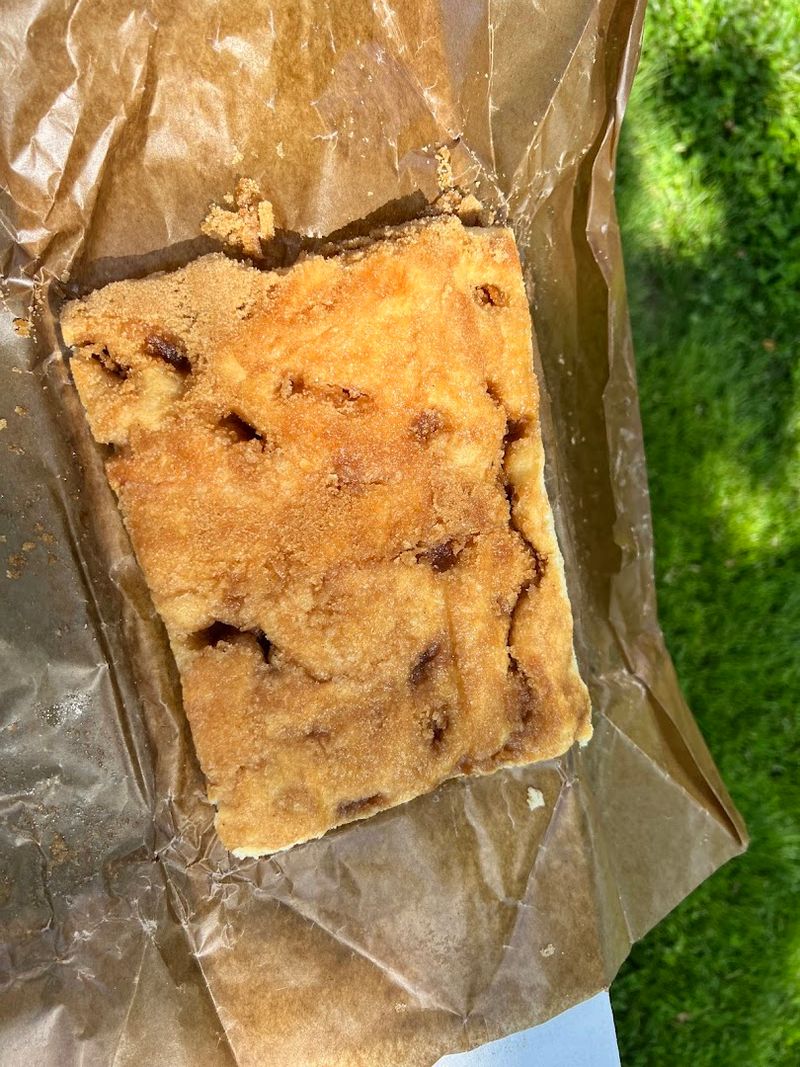
So here is the thing people whisper about with a tiny grin, the legend that locals mention before you even ask what to look for. They point you toward a tray with an expression that says trust me, and the room suddenly feels like it has a secret handshake.
You lean in, nod, and find yourself part of a story that has lived here far longer than you have.
I like how the presentation stays unfussy, just a simple lineup that lets the aroma do the talking. There is no show, just a quiet confidence that you will understand when you see it.
The staff gives a small smile, and honestly, that is enough to push anyone straight into curiosity.
You feel North Carolina pride humming under the surface, the kind that glows rather than shouts. Everyone seems to have a memory attached to this, and they share it in that easy front-porch tone.
It is less about ceremony and more about continuity, and you can sense how the story keeps growing with each person who steps up to the counter and nods like they already know.
The Cookie Wall Offers The World’s Thinnest Cookies
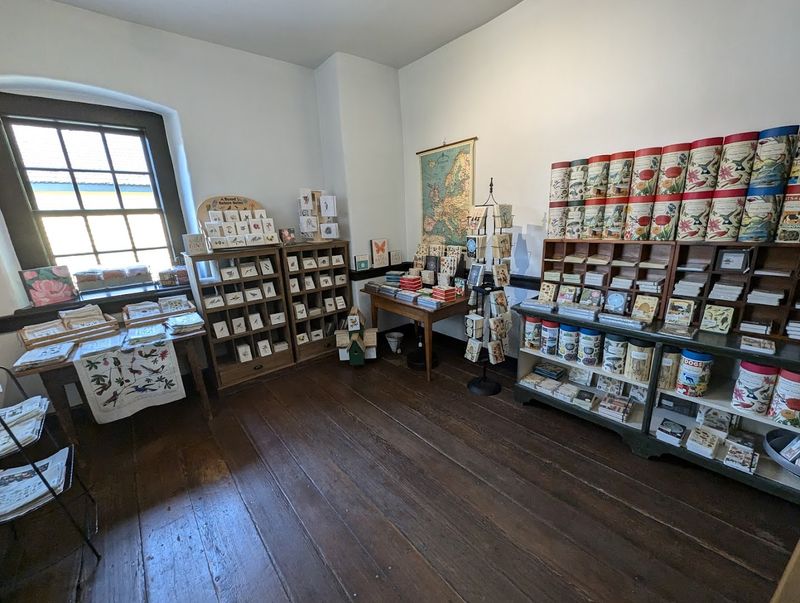
Turn your head and you will notice a tidy wall of tins and packages that looks almost architectural. Everything lines up so neatly that you want to trace a fingertip along the edges just to feel how intentional it all is.
The display works like a quiet introduction to a long-running hometown conversation.
Locals love to tell visitors that this place is known for a specialty so thin it practically becomes a rumor. I heard it three times before I even reached the shelves, each time with that knowing smile people wear when they have a favorite.
It is satisfying to see a claim presented so simply, no splash, just presence.
As with everything in Old Salem, the tone is humble, which somehow makes the pride land even better. North Carolina does subtle well, and this wall proves it.
You get the sense that craft here is measured in patience and care, not volume, and that is exactly how it feels while you stand there. Even the light along the shelves seems to slow down for a second and say, go on, take a closer look.
Old Salem Streets Carry The Story Forward
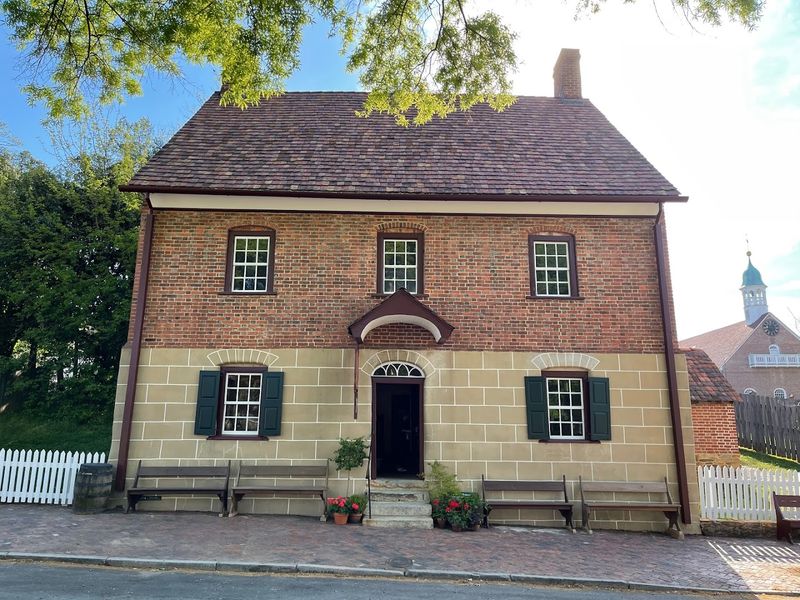
Step back outside for a minute and let the street knit everything together. Brick walks, shade trees, tidy fences, and that low murmur of people talking softly like the neighborhood itself asked for inside voices.
It is the kind of street that helps you slow down without announcing that it is doing you a favor.
I like wandering a short loop here, letting the building recede and then return, so the visit has a beginning, middle, and end. You notice how the storefronts and homes keep the same measured pace, as if the whole block took cues from that dome.
Nothing feels rushed, and that makes every detail land better.
Back in North Carolina, this is exactly the kind of walk that resets your day. You look up, breathe a little deeper, and realize you are carrying less than you brought in.
When the bakery comes back into view, it feels like a friend waving from across the way. That is when you know the visit stuck, not because of a checklist, but because the street quietly told the story again as you walked.
You Can Watch The Fire Set The Rhythm
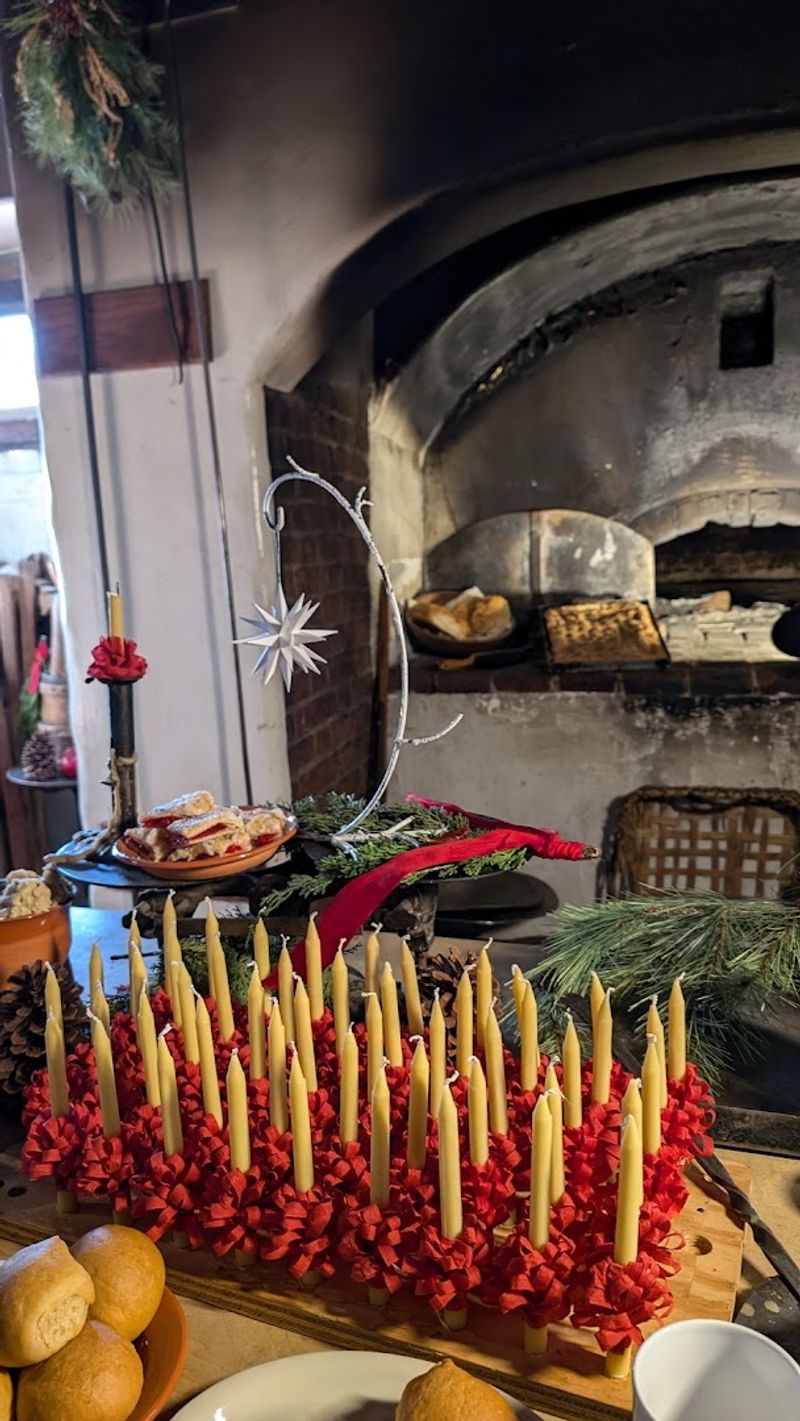
Find a spot where you can see both the workbench and the oven mouth, and just hang there for a few minutes. The movements are small but precise, and you start picking up the pattern like a song you forgot you knew.
A tool slides, a door shifts, a nod passes, and the room stays in step with that steady heat.
This is the moment where curiosity turns into attention. You realize the show is not a show at all, just practiced skill that does not need to announce itself.
Watching it makes you want to do fewer things quickly and more things well.
It is one of my favorite corners in North Carolina for exactly that reason. The lesson slips in quietly and sits with you long after you walk out.
The fire keeps time, the work listens, and anyone willing to stand still gets to feel the whole thing click. You step back into daylight with a calmer heartbeat, and that is a pretty good souvenir, if you ask me.
