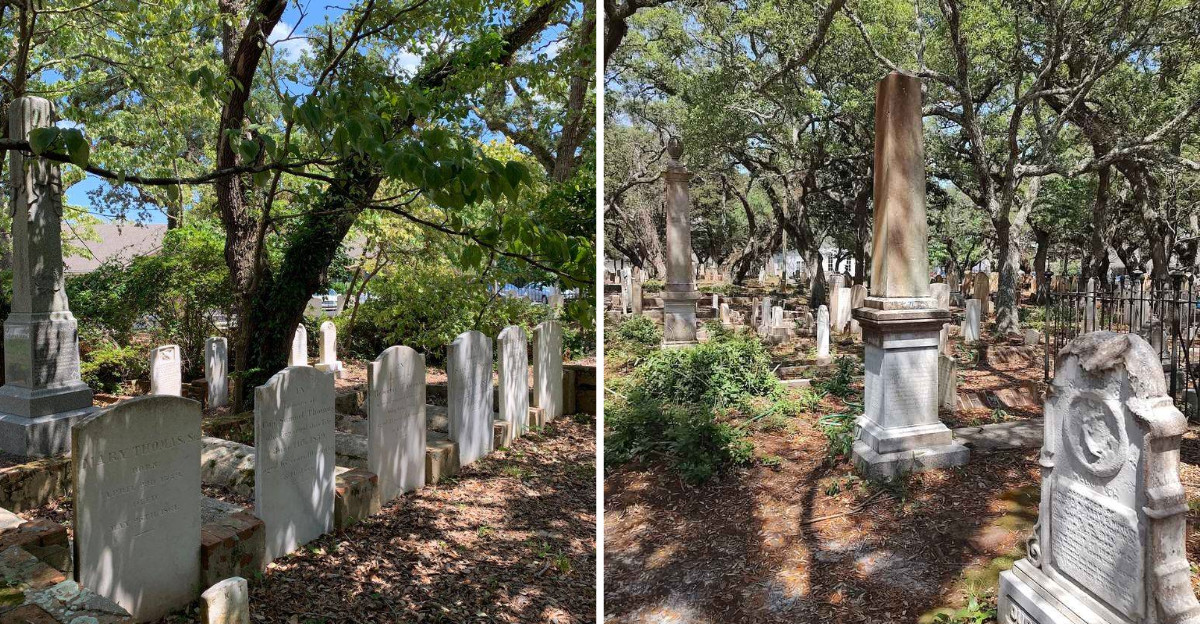
Live oaks lean over the iron gate of that North Carolina cemetery like they are guarding something, and the light that filters through them turns the whole place a soft green. I had wandered off the waterfront and turned up a side street, no idea I was about to spend two hours among the headstones.
Somewhere in that shade, according to generations of local history, an unknown British naval officer was buried standing straight up, in full uniform, facing home.
I read that on a pamphlet and honestly stopped walking for a second, trying to picture the burial and the decision behind it.
The town has been around for more than three centuries, and this small plot of ground holds more of its stories than any museum case could, from Revolutionary soldiers to sea captains to ordinary families whose names have faded from the stones.
History that feels close enough to touch is the kind of stop I would tell a friend not to skip.
The Standing Officer Who Refused to Lie Down
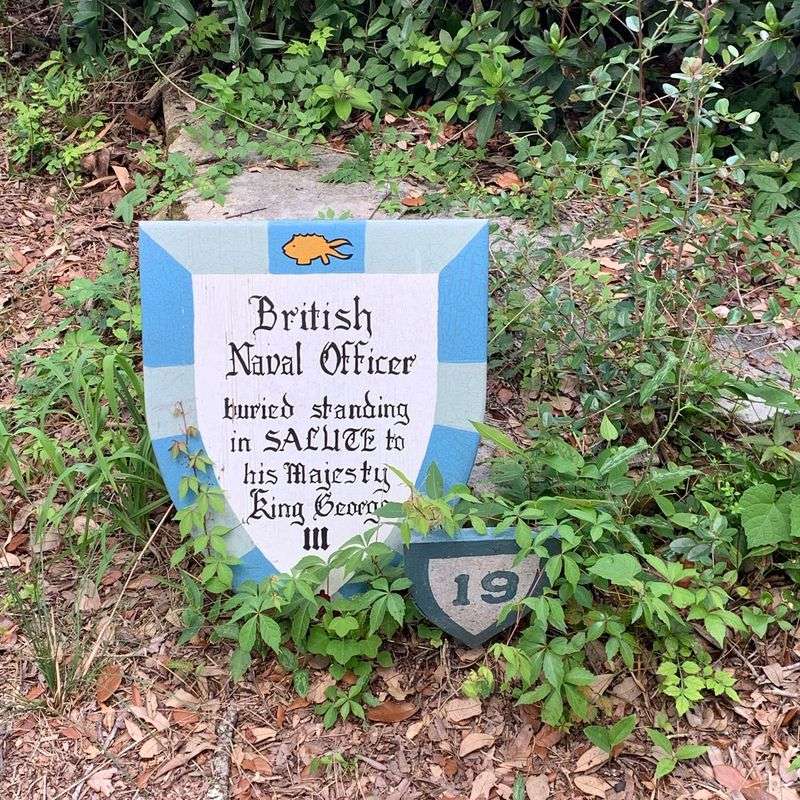
Of all the graves here, the one people ask about first belongs to a man whose name nobody knows. Local history holds that he was a British naval officer who passed aboard a ship in Beaufort harbor sometime in the 1700s.
Rather than being laid flat, he was reportedly buried upright, in full dress uniform, standing at attention and facing east toward England.
The reasoning passed down through the years is stubborn and a little magnificent. He would not lie down in what he considered rebel territory, and he wanted to remain saluting King George.
A verse printed on cemetery literature captures it plainly, describing a sailor of Mad George’s crown resting beneath foreign ground, nameless and alone.
Visitors often leave small British flags at the spot, which is how you’ll usually spot it before you read the marker.
I found myself standing there longer than I expected, doing the math on how many centuries have passed while he’s technically been on his feet.
There’s no dramatic monument, no towering statue, just a modest marker under old branches.
Somehow that makes it land harder. A whole war, an ocean crossing, and one man’s refusal to give an inch, all compressed into a patch of sandy soil in coastal North Carolina.
Ann Street’s Iron Gate and the Live Oaks Above It
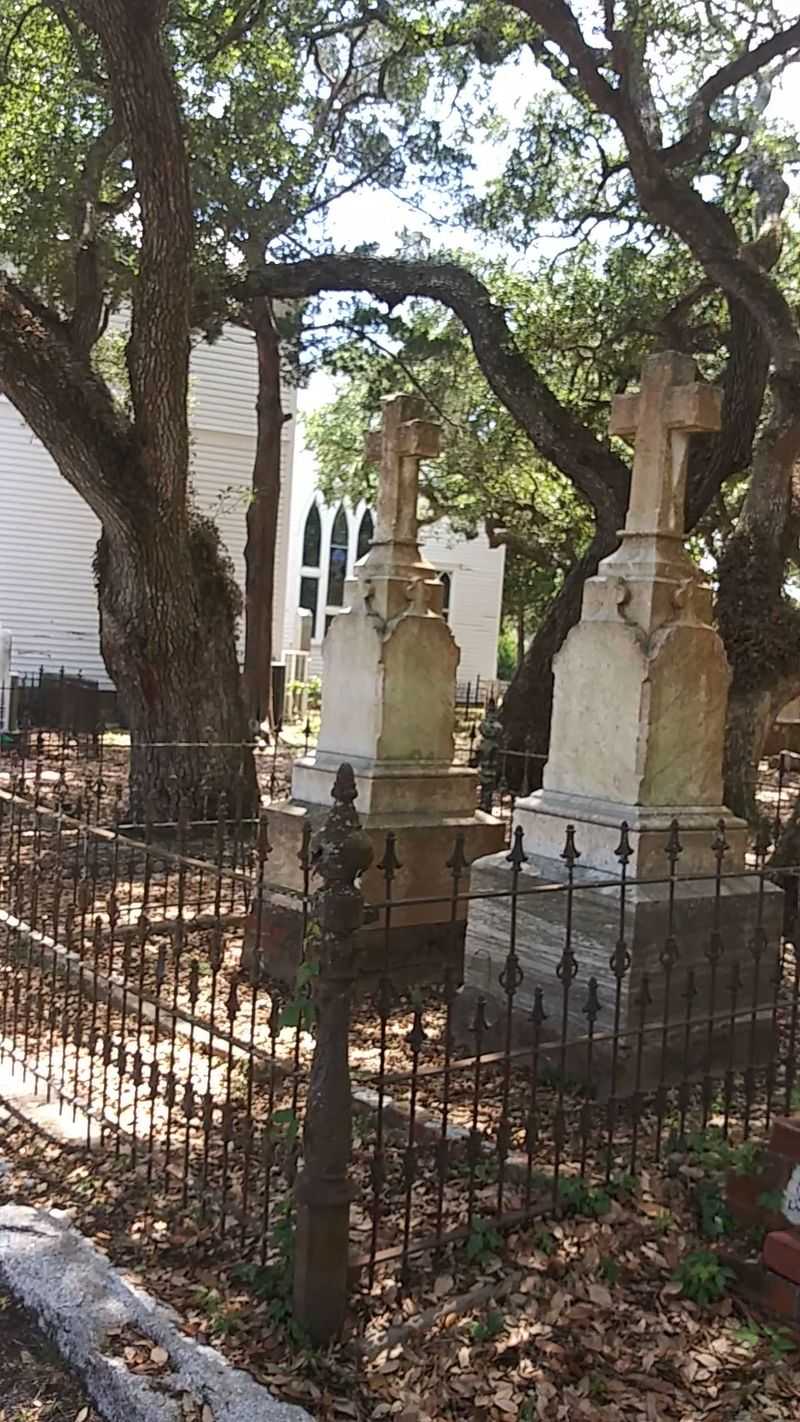
You almost walk past the entrance if you’re busy looking at Beaufort’s clapboard houses instead of the sidewalk. The gate sits in the 400 block of Ann Street, framed by trees so old and wide they’ve turned the block into a tunnel of shade.
Once you step through, the temperature genuinely drops a few degrees.
The live oaks are the real architecture of the place. Their branches sag low, some resting nearly on the ground, and native shrubs fill in the gaps between the older sections.
Sunlight arrives in patches, moving across the stones as the afternoon goes on.
Ground rules are simple and worth respecting. Roots buckle the paths, stones tilt at odd angles, and the footing is uneven almost everywhere, so sturdy shoes beat sandals every time.
Pets aren’t allowed inside, which surprises some visitors who read otherwise online.
Parking is street parking only, and on a busy weekend you may circle a block or two. The neighborhood is residential, so tucking in politely matters.
My advice: come in the first hour after opening at 9:30 AM. The light is soft, the streets are calm, and you’ll have long stretches of path entirely to yourself before the waterfront crowd wanders up.
Captain Otway Burns and the Cannon on Top of His Tomb
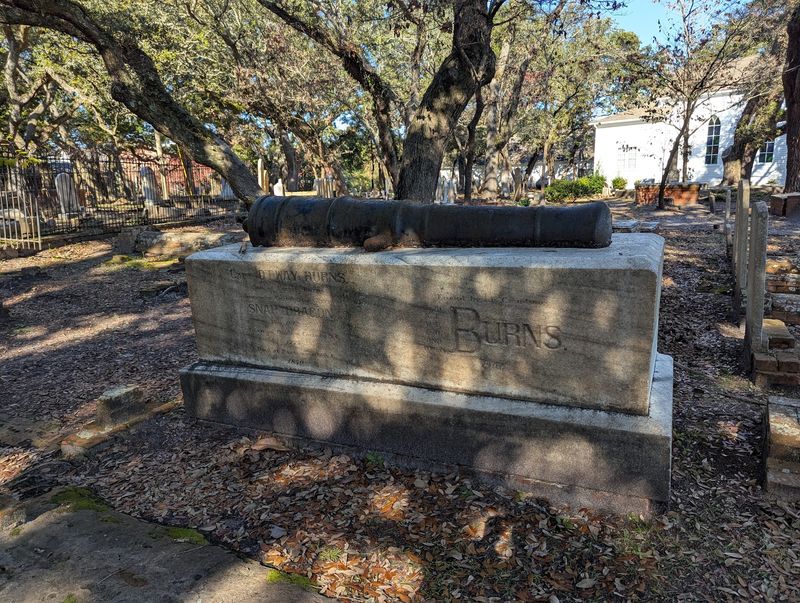
Picture a grave with an actual cannon bolted to the top of it. That’s Captain Otway Burns.
A privateer and naval hero of the War of 1812, Burns sailed out of North Carolina and made a considerable nuisance of himself to enemy shipping.
The cannon resting on his tomb was captured during one of his voyages, which is quite a way to sign your own headstone.
Kids on the path tend to spot it before adults do, and it’s usually the first thing anyone photographs.
The tomb itself is a raised, bricked structure rather than a simple upright stone, which was a practical building choice along this coast.
Vaulted graves were built to protect remains from high water and from animals, and you’ll see several around the grounds once you know what to look for.
Burns is remembered well enough in North Carolina that a town in the western part of the state carries his name.
Standing beside his tomb, the connection between Beaufort and the open Atlantic feels obvious rather than abstract.
Take a slow lap around it. The details in the brickwork and the weathering on the iron tell you plenty about salt air, hurricanes, and the patient work of keeping a 19th century monument upright.
Graves Marked With Shells, Bricks, and Wooden Slabs
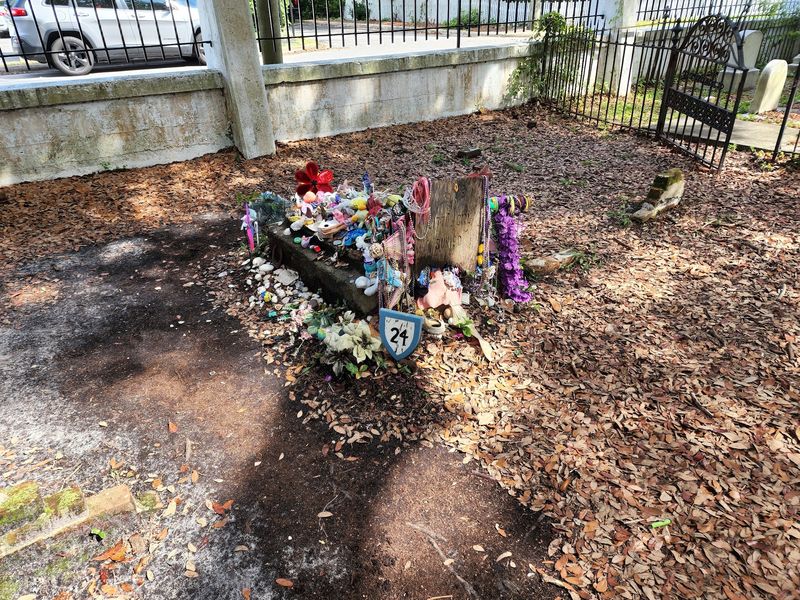
Not every grave here got a carved stone, and the reason is refreshingly practical.
Coastal North Carolina has sand, marsh, and water, but very little quarry stone. Shipping granite or marble down was expensive and slow in the 1700s.
Families used what they had, which meant oyster shells, handmade bricks, and wooden slabs marking the resting places of people whose names have mostly faded.
Once you know to look, you see them everywhere, low mounds and outlines that don’t announce themselves.
The northwest corner is the oldest section, and it holds many unmarked graves. Some may date back to conflicts with the Coree and Neusiok people in the early 1700s.
That part of the grounds is the quietest, and it feels the most ancient.
Another detail worth noticing: most graves face east.
The tradition held that the passed ones should face the rising sun on Judgment Morn, so row after row points the same direction toward the Atlantic.
I spent a while just following that orientation with my eyes, which is not something I expected to find interesting.
Slow down in this section. There are no plaques to read, but the improvised markers say plenty about what people had and what they were willing to do with it.
Maps, Apps, and Actually Getting the Stories
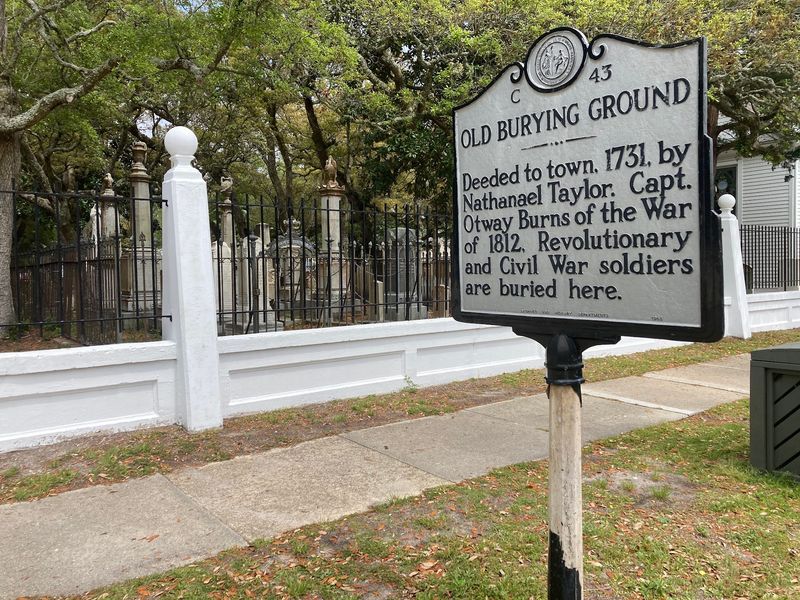
Skip the map and you’ll see a pretty cemetery. Grab the map and you’ll see a whole town’s history.
Pamphlets are usually stocked near the Ann Street gate, and many of the notable graves are numbered so the guide matches what’s in front of you.
Supplies run out sometimes, which trips people up.
The fix is easy: the guide is available online, and there’s an audio option that reads the stories aloud as you walk, which is genuinely better than squinting at a folded brochure.
Download it before you arrive if your signal is spotty.
Guided tours run through the Beaufort Historical Association and cover both straightforward history and the ghost-story angle, depending on which you book.
Volunteers are occasionally stationed at the gate in the mornings, and if you catch one, the stories come with detail no printed page includes.
Give yourself real time. I planned thirty minutes and stayed close to two hours, and plenty of visitors report the same drift.
Gates are open daily from 9:30 AM to 5 PM, entry is free, and the site is run as a working piece of Beaufort’s heritage rather than an attraction.
Bring water in summer, bug spray in late season, and shoes that handle roots.
Why the Oldest Corner Feels Different
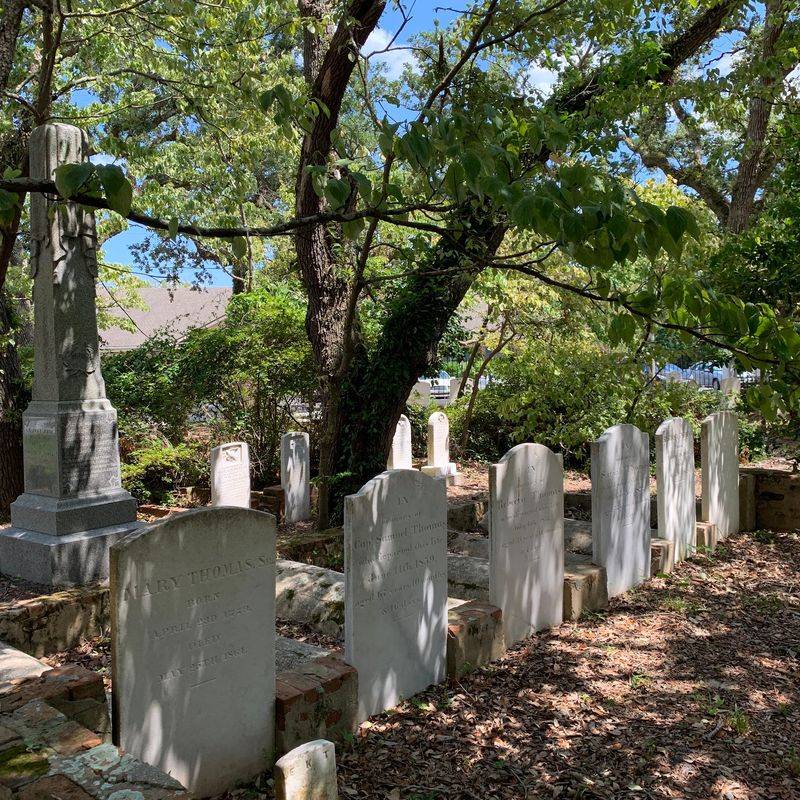
Every cemetery has a quiet corner, and here it’s the northwest.
The ground dips and rises in ways that hint at burials nobody recorded, and the shade is heavier because the oldest trees cluster there.
Records from the early 1700s are thin, and the land was formally deeded to the town by Nathaniel Taylor in 1731, though burials likely began before 1724.
That gap means a lot of people here were never written down anywhere.
Sound behaves oddly in that section too. Traffic from Front Street fades, birds get louder, and your own footsteps on packed sand and leaves become the main soundtrack.
It’s the part of the visit where most people stop talking without deciding to.
Vaulted graves show up around here as well, bricked over to keep out floodwater and animals, a reminder that this is a low-lying town on a barrier coast.
Hurricanes have washed through Beaufort many times over three centuries.
I’d recommend saving this corner for last rather than first.
After you’ve read about the officer, the privateer, and the little girl, the anonymous graves hit differently. They’re the reminder that most lives end without a marker, and that a place like this exists partly to hold space for them anyway.
Pairing the Cemetery With the Rest of Beaufort
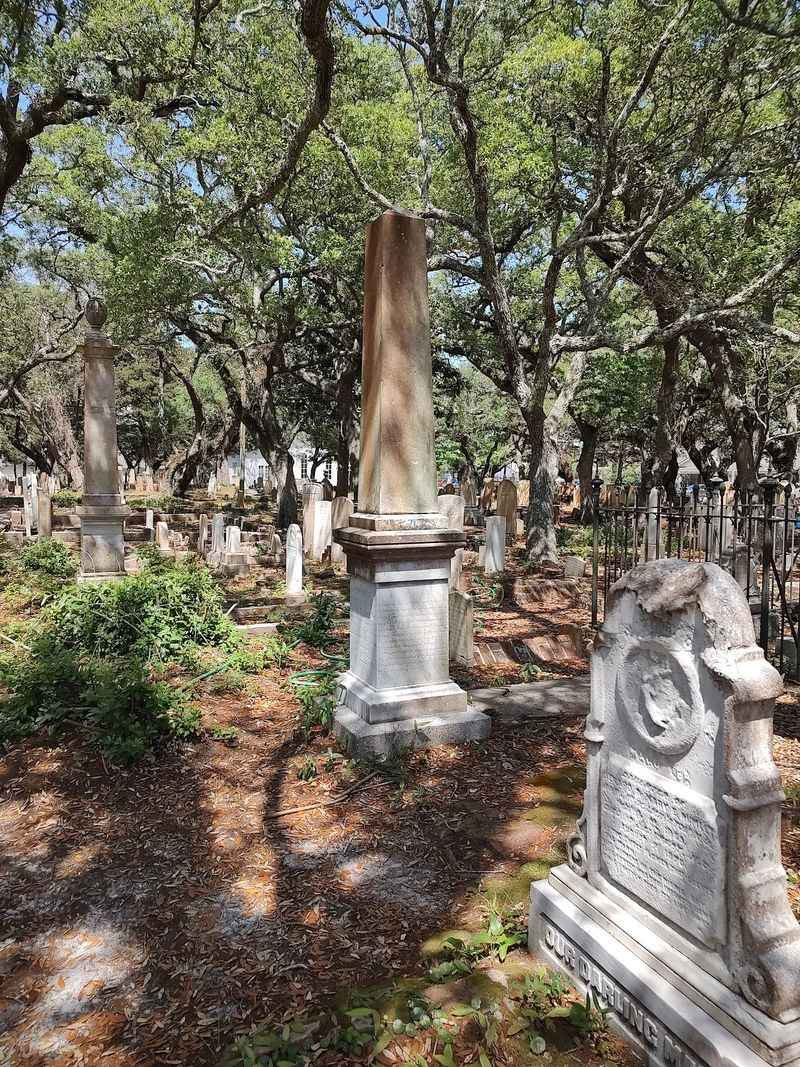
One thing I’d tell anyone planning a trip: don’t treat this as a standalone stop.
The cemetery sits a few blocks up from the waterfront, tucked into a neighborhood of white clapboard homes with dates on plaques by the doors.
Walking from the harbor to Ann Street takes just minutes, and the transition from boat masts to oak branches is part of the experience.
Front Street’s shops and eateries are close enough that you can wander down afterward without moving your car.
The Beaufort Historic Site operates nearby and connects directly to the cemetery’s upkeep, so a visit there fills in context on the town’s colonial period.
Ferries and boat tours run out toward Shackleford Banks, where the wild horses roam and where the Crissie Wright met her end.
Seeing that shoreline after reading the shipwreck story changes how the water looks.
My honest take is that Beaufort works best when you do the whole loop in one day, cemetery included, so the stories connect instead of sitting separately.
Come early, walk slowly, and let the town set the pace. It’s a small place with an enormous amount of history packed into a handful of streets.
Address: 411 Ann St, Beaufort, NC 28516
