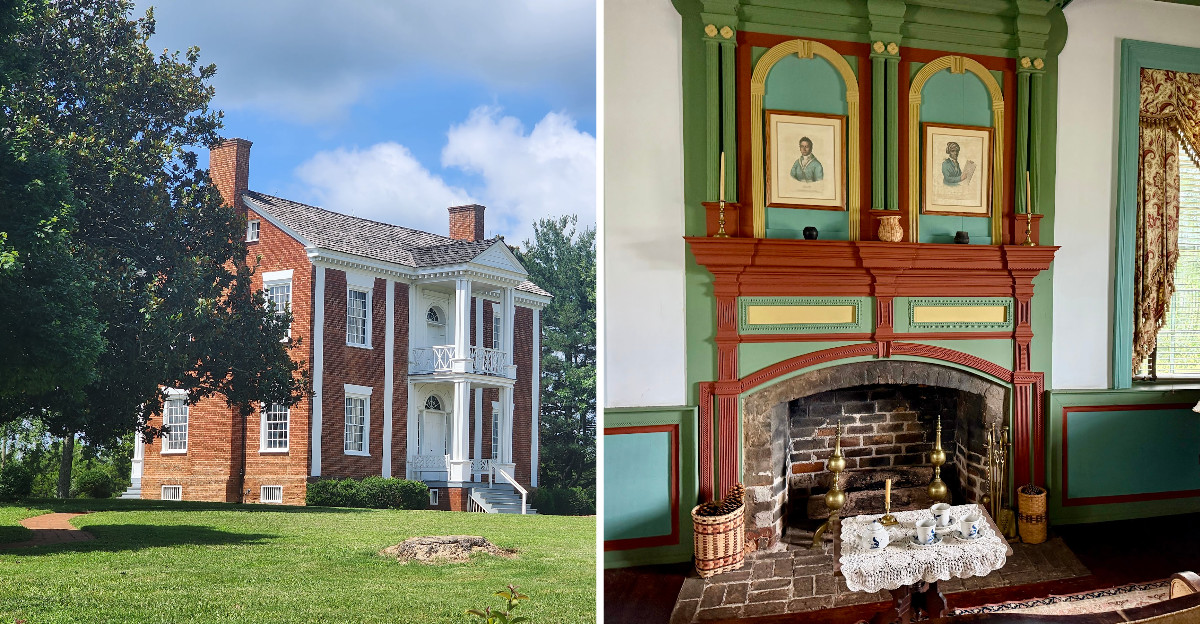
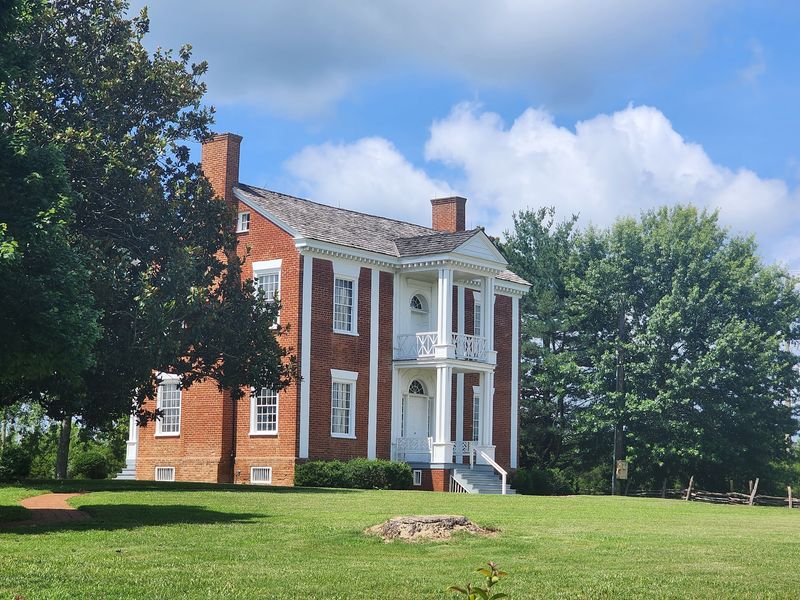
Finished in 1804, a brick mansion completely rearranged what I thought I knew about this part of Georgia. A Cherokee leader and businessman built the home, and it was the first brick house ever constructed in the Cherokee Nation.
Red bricks, tall windows, and a staircase that seems to hang in midair tell a story that goes from enormous wealth to forced removal in about thirty years.
What struck me most was how ordinary the setting feels, just rolling farmland and old oaks, until a guide starts talking and the whole landscape changes shape.
Architecture brought me there, but families, land lotteries, and the Trail of Tears stayed with me. Brown historical markers along the road finally make sense after a visit to this place.
The house itself is a masterpiece, but the history it carries is heavier than the bricks.
James Vann and the Ambition Behind the Bricks
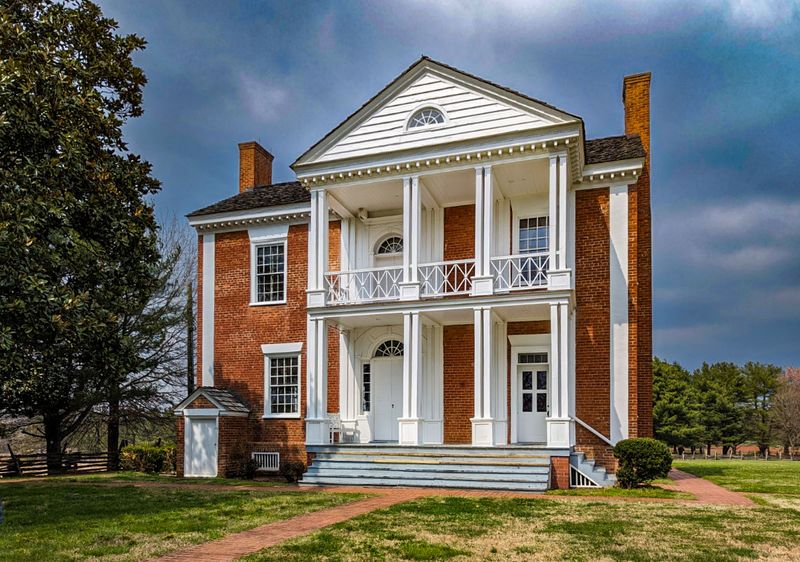
Most house museums start with furniture. Here, the story starts with a man who built an empire out of trading posts, ferries, mills and sheer nerve.
James Vann was born to a Scottish trader father and a Cherokee mother, which placed him between two worlds at a moment when both were shifting fast. He became one of the most influential figures in the Upper Towns region covering parts of east Tennessee and north Georgia.
What surprised me was the scale of his business interests. Taverns, ferry boats, grist mills, a trading post and a blacksmith shop all fed into the same operation, and that blacksmith shop supplied nails and hinges for the mansion itself.
Vann also backed education, supporting the Moravian mission school that operated beside his Spring Place plantation. That choice says a lot about how he read the future.
His estate earned the nickname Showplace of the Cherokee Nation, and once you see the house you understand why the phrase stuck. Wealth on that level was meant to be visible.
He did not enjoy it long. Vann passed away in 1809, only a handful of years after the house was completed, leaving behind a fortune and a home that would outlast nearly everyone connected to it.
That Floating Staircase Everyone Talks About
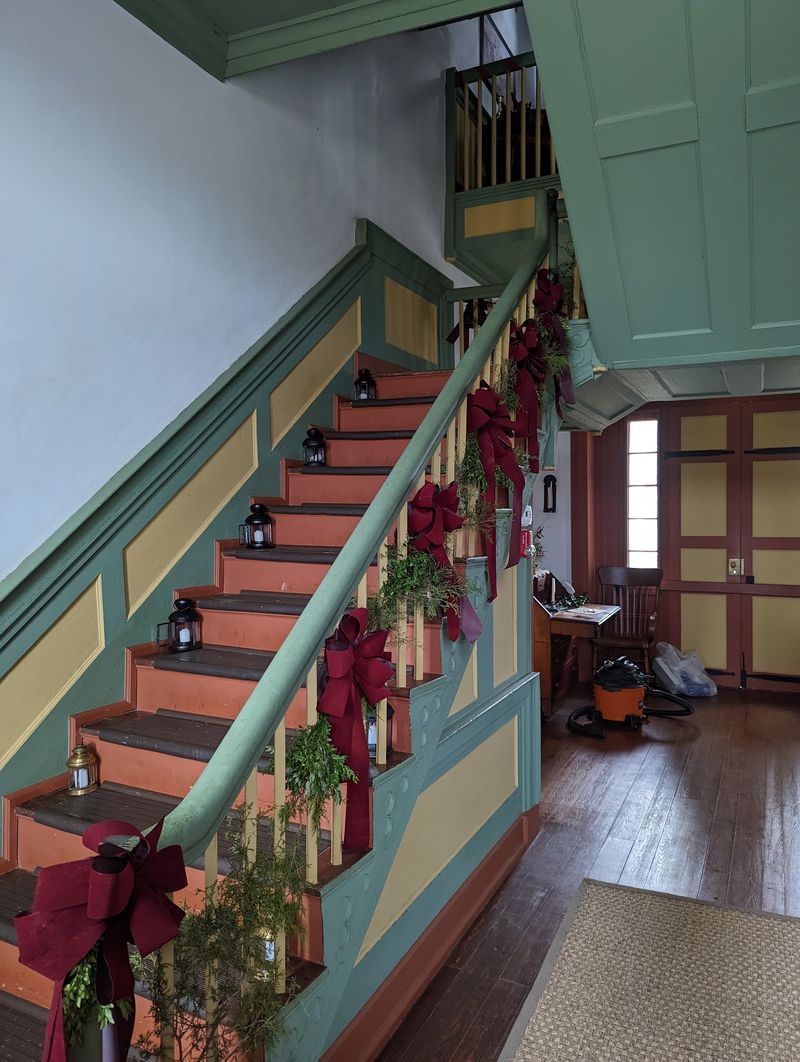
Our guide paused at the base of the stairs and let everyone look for a second before explaining anything. Smart move, because the reaction is usually the same.
The cantilevered stairway appears to float, rising without the visible support you expect. It is recognized as the oldest example of its kind in Georgia, and it remains the single most photographed feature of the house.
Joseph Vann extended the concept to the third floor later on, which is where the famous floating staircase reference usually points. Carpentry like that took real skill and real money.
Elsewhere inside, the interior doors carry carvings of a cross and an open Bible, known as Christian doors. They reflect the Moravian connection woven through this property.
Original mantels, door jambs and wainscoting survive, and the Ionic columns added between 1809 and 1818 give the main rooms a formality that feels almost surprising this far from any city.
Tours run at the top of each hour, so time your arrival. Mine lasted about forty five minutes with plenty of room for questions.
Ask about the woodwork. The guides seem to enjoy that subject more than almost any other, and the answers go deeper than the placards do.
Paint Colors Hidden Under a Century of Neglect
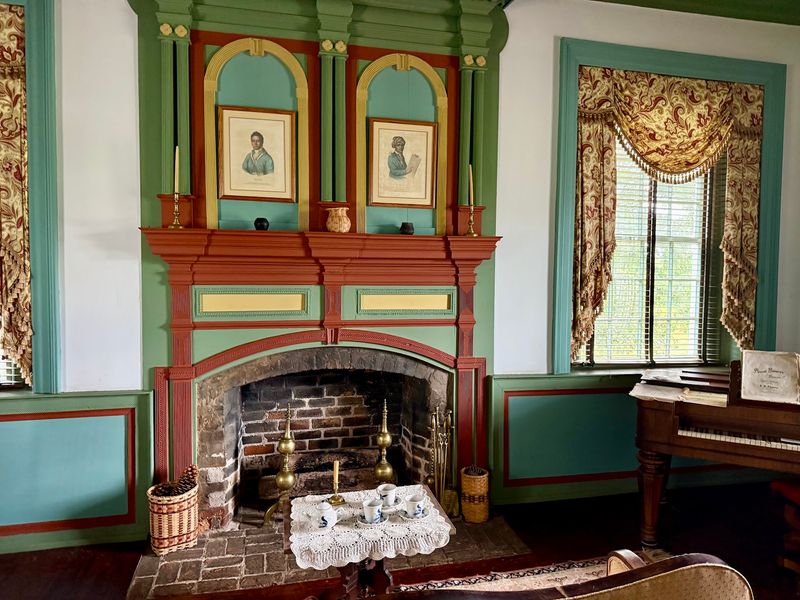
Honestly, the color inside the house is the thing I did not see coming. I expected muted creams and browns, the usual historic-house palette.
Instead there is blue, red, green and yellow, bold and confident, running across mantels and trim. Those shades are not decorator guesses.
When restoration began in the 1950s, workers scraped through layers of later paint and found the original colors underneath. Those findings were carefully matched and reapplied.
The effect completely changes how you read the rooms. A house painted like this was meant to announce something, and it does.
Standing in a parlor lit only by window light, the reds feel warmer than any photograph manages to capture. Cameras flatten it.
The restoration itself took six years after the Georgia Historical Commission acquired the property in 1952. At that point the roof was gone and the building had been badly neglected.
Knowing that makes the finished result land harder. Somebody had to decide this place was worth saving when it looked like a lost cause.
Look for the paint evidence discussed on the tour, and ask where original surfaces end and restoration begins. Guides are upfront about the distinction, which I appreciated more than I expected to.
Spring Place Plantation, A Thousand Acres of Enterprise
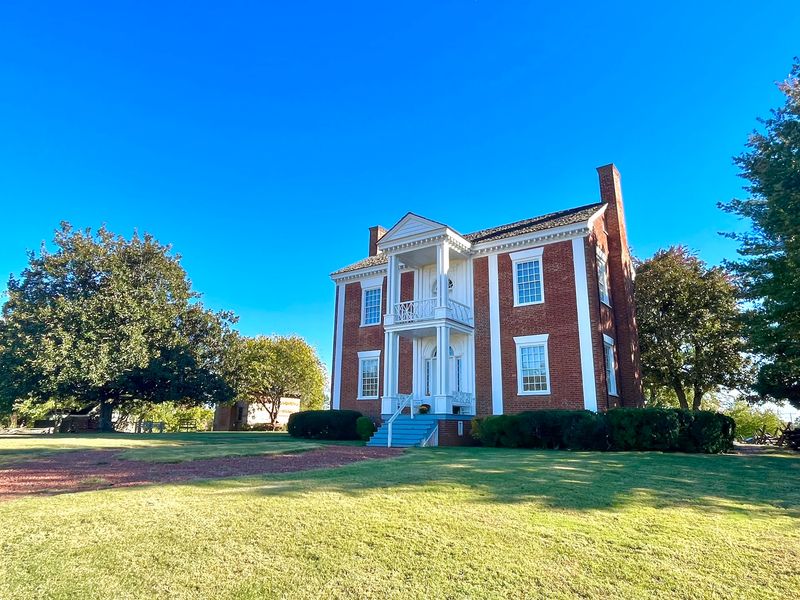
Try to picture the modern parking lot gone and replace it with orchards stretching toward the tree line. That is roughly what stood here.
Spring Place Plantation covered somewhere between 800 and 1,000 acres, functioning as a working economy rather than simply a home. Records list more than 1,000 peach trees and 147 apple trees.
Six barns and five smokehouses supported the operation, alongside the mills, ferries and stores Vann ran across a wider area. This was agriculture at industrial ambition.
The property also held 42 cabins for enslaved people who lived and labored here, and the site does not skip past that. Both James and Joseph Vann held enslaved workers, and the interpretation addresses it directly.
I found that honesty important. A plantation owned by a Cherokee leader complicates the tidy versions of history most of us absorbed in school, and the site lets that complication stand.
Interpretive placards along the walking paths fill in details about crops, labor and daily rhythms. Take fifteen minutes to read a few.
Picnic tables sit on the grounds, which makes this an easy place to slow down. Bring lunch and eat where an orchard once grew.
Dispossession, Land Lotteries, and the Removal Era
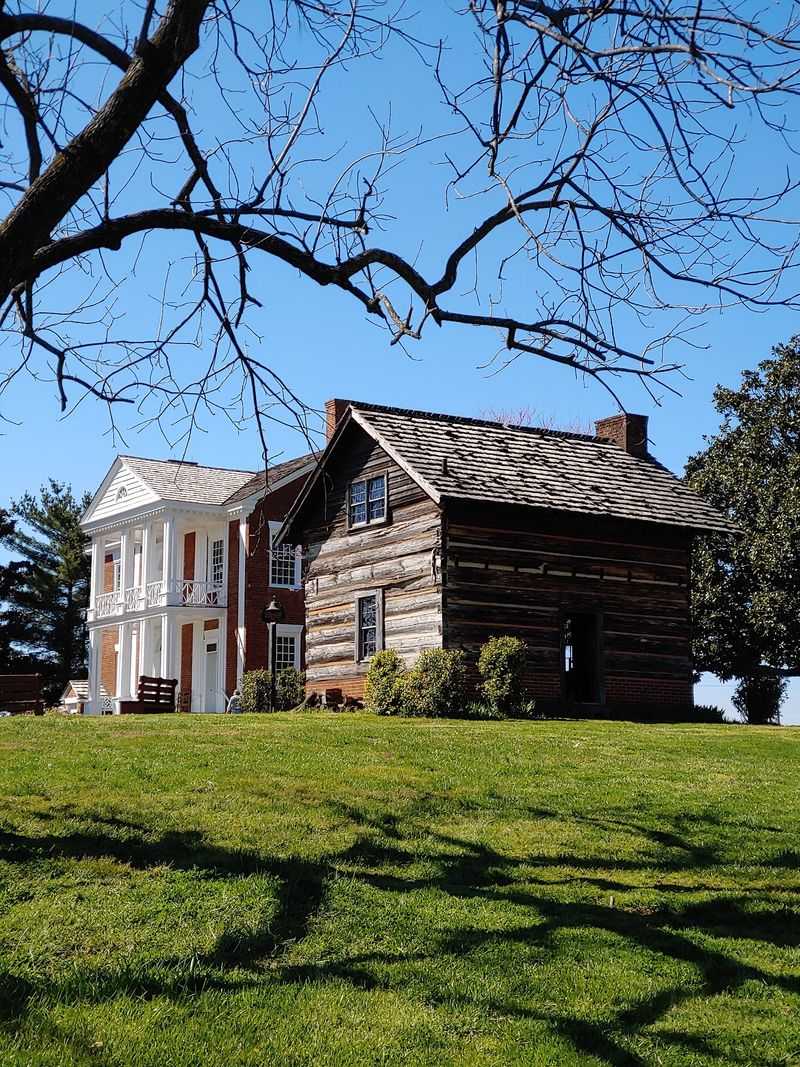
The tour shifts tone in the 1830s, and you feel it in the room. Everyone goes quiet.
Despite enormous wealth, political influence and a house grand enough to host a president, the Vann family lost everything. Joseph and his family were forced off the property in 1834 or 1835.
Georgia’s land lottery system handed Cherokee land to white settlers, and new state laws targeted Cherokee citizens directly. One of those laws made it illegal for Cherokee people to employ white workers, a rule used against Joseph as justification.
The state militia removed the family. That same machinery of removal swept across the Southeast and led to the Trail of Tears, when thousands of Cherokee people were forced west to Indian Territory in present-day Oklahoma.
Joseph later sued and received compensation of $19,605 for the property. Set that against generations of accumulated wealth and it reads as almost insulting.
He rebuilt businesses in the West, but the home never came back to the family.
A visitor review I read described the takeaway plainly: even the wealthiest Cherokee family was still removed. That point lands harder standing inside the actual rooms than it ever did on a textbook page.
A Stop on the Trail of Tears National Historic Trail
Those brown Trail of Tears road signs scattered across north Georgia finally made sense to me here. Context does that.
Chief Vann House is a certified site on the Trail of Tears National Historic Trail, which links locations connected to the forced removal of Cherokee and other Southeastern Indigenous peoples. Certification means the National Park Service recognizes its role in that history.
The connection is not abstract. This was a home taken during removal, from a family that was then relocated west.
Interpretive materials on site trace maps and routes, showing how removal unfolded across the region rather than in one single moment. Seeing the geography laid out helped me understand the scope.
Several travelers I overheard were building a longer route, pairing this with New Echota and other Cherokee heritage sites nearby. That approach makes a lot of sense if you have a full day.
Guides handle the material carefully, informative without lecturing, which strikes a balance that is harder than it sounds.
For anyone with Cherokee ancestry, or anyone who simply wants the real version of Georgia history, this belongs on the itinerary. The house is beautiful, and the story behind it matters just as much.
Inside the Robert E. Chambers Interpretive Center
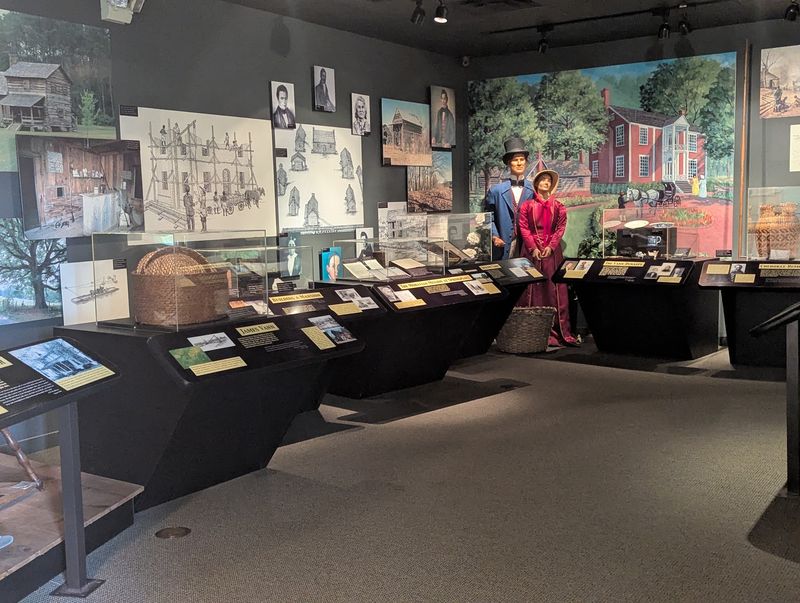
Do the museum first. Seriously, watch the film and walk the exhibits before your tour slot, because everything in the house makes more sense afterward.
The Robert E. Chambers Interpretive Center opened in 2002 and covers the lives of James and Joseph Vann alongside the broader story of the Cherokee Nation.
Artifacts, historical maps and static displays fill the space.
The Trail of Tears section gives the removal era proper room to breathe, with detail that goes beyond what a forty five minute tour can hold.
There is a gift shop with books and regional items if you want to read further. I picked up something on Cherokee history and finished it that week.
Restrooms here are genuinely excellent, which matters more on a road trip than anyone admits.
Since tours run hourly with the last one starting at 4 p.m., the center gives you somewhere worthwhile to spend a waiting half hour. Nobody rushes you through.
Staff answer questions freely even when you are just browsing. That relaxed approach sets the tone for the whole visit and made me want to stay longer than I had planned.
Outbuildings, Gardens, and the Nature Trail
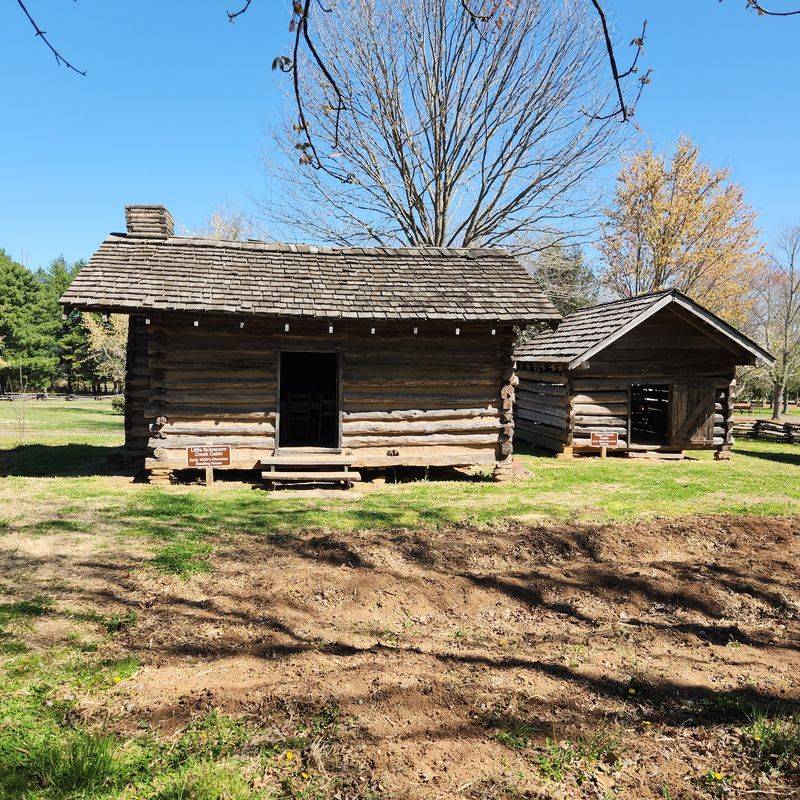
Once the guided portion ends, the grounds are yours to wander at whatever pace suits you. That freedom is half the appeal.
Reconstructed outbuildings include a workhouse and kitchen, both showing how separate the practical functions of a plantation were from the main residence. Cooking happened away from the house for fire safety.
Original Cherokee log structures were relocated to the site, offering a look at everyday early nineteenth century building methods. The contrast with the brick mansion is stark and instructive.
Gardens near the outbuildings are planted and maintained thoughtfully. One visitor mentioned taking inspiration home for their own garden, and I understood the impulse.
A short nature trail loops through the wooded edge of the property, quiet and shaded. It is not strenuous, more of a pleasant fifteen minute reset.
Interpretive placards line the walking paths, so the self-guided portion still teaches you plenty.
One practical note: the mansion and several buildings are not wheelchair accessible, though handicap parking is available. Worth planning around if that affects your group.
Give yourself at least two hours total. Between the film, museum, tour and grounds, an hour will leave you feeling rushed.
Planning Your Visit to Chatsworth
A little planning saves frustration here, mostly because of the hours. The site is closed Monday through Wednesday.
Thursday through Saturday runs 9 a.m. to 5 p.m., and Sunday is 1 p.m. to 5 p.m., though Sundays are closed from December through March. Holiday closures cover Thanksgiving, Christmas and New Year’s Day.
The mansion can only be seen on a guided tour, and those begin at the top of every hour with the last one at 4 p.m. Arrive with time to spare.
Guides get consistent praise, and after my visit I get it. The one I had turned history into conversation rather than recitation, and small groups mean your questions actually get answered.
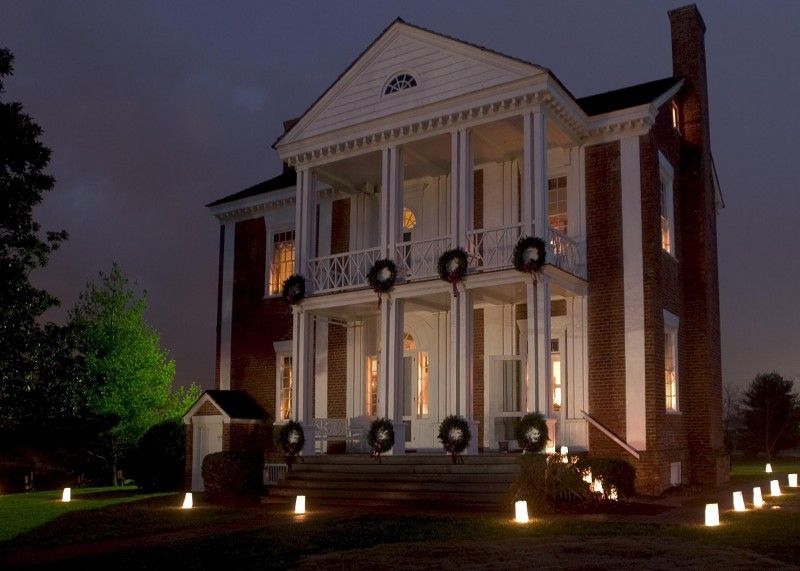
December brings a candlelight open house with the mansion decorated for the season. If you can time a visit then, people who have gone speak about it fondly.
Chatsworth sits close to the north Georgia mountains, so pairing this with a scenic drive works nicely. Fort Mountain is not far.
Address: 82 GA-225, Chatsworth, GA 30705
