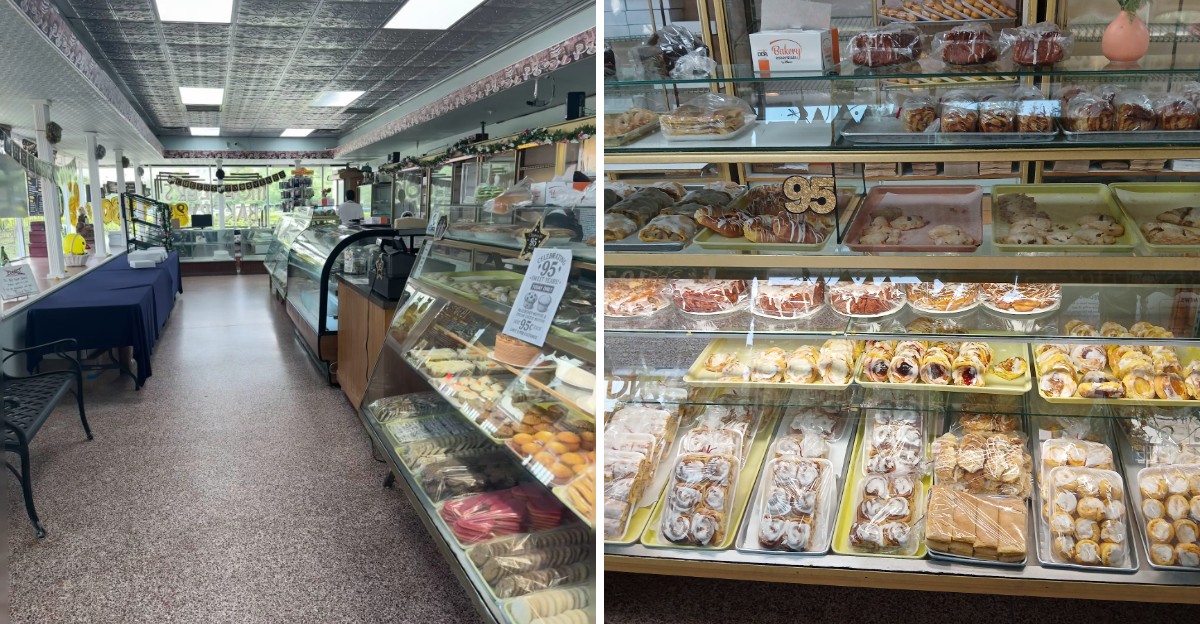
Not many bakeries can say they have been around for nearly a century. This Texas spot can.
It has been family owned and operated for generations, serving the same recipes that made it a local favorite from the very beginning. The bread is baked fresh daily, the pastries are made from scratch, and the cakes are the kind you want for every birthday and celebration.
Walking through the door feels like stepping into a piece of history. The shelves are lined with familiar favorites, and the smell of fresh baking fills the air.
It is the kind of place where you can taste the tradition in every bite. Nearly 100 years in business is not just impressive.
It is a testament to quality, consistency, and a family that never stopped caring. A true Texas treasure.
Worth the visit, no matter how far you have to drive.
Two Brothers, One Oven, and a Start in 1930
Nineteen thirty was not exactly a gentle year to open a business anywhere in America, which makes the opening chapter here even more impressive.
Brothers Goswin Moeller, known to everyone as Gus, and Raymond Moeller launched their bakery in Houston after learning the trade in New Braunfels, Texas.
Their family had carried German baking traditions across the ocean, and those habits shaped everything about the operation. Nothing fussy.
Just solid technique and ingredients treated with respect.
The first location sat on Almeda Road, humble by any measure, and it grew into what is now recognized as Houston’s oldest family-owned bakery. That title gets thrown around loosely in a lot of cities.
In this case it holds up.
Gus’s wife Lucille became a central figure in those early years, remembered widely as Grandma Moeller. She had a habit of slipping cookies to children while their mothers picked out cakes, a small gesture that ended up defining the whole tone of the place.
That instinct toward kindness turned out to be surprisingly durable business strategy. Generations later, customers still describe the staff as warm rather than efficient, which says something.
Knowing the origin story changes how a visit feels. The cases stop looking like retail displays and start looking like the continuation of something two brothers began with limited money and a lot of skill.
Ninety-plus years is a long time for anything to survive in Houston. A bakery pulling it off is genuinely remarkable.
Recipes That Nobody Bothered to Modernize
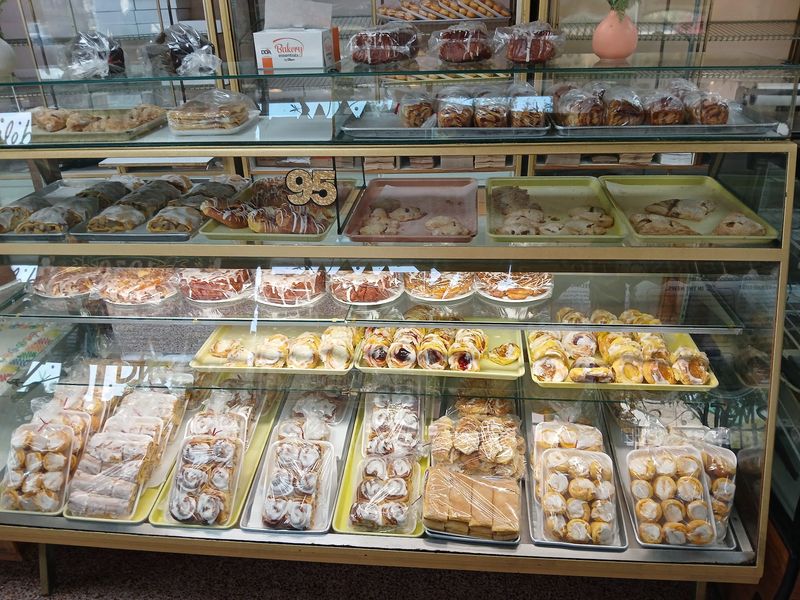
Plenty of bakeries advertise old recipes and then quietly reinterpret everything. Not the case here, apparently.
The formulas used daily trace directly back to what Gus Moeller developed in 1930, and the bakery makes a point of skipping additives and preservatives entirely.
That choice has consequences. Baked goods without preservatives taste fresher and also disappear faster, meaning things are made in smaller, more frequent batches rather than sitting around.
There is a practical upside for visitors. Morning trips tend to reward you with the widest selection, since the cases fill early and thin out through the afternoon.
The hand work is the other piece of it. Cookies get cut by hand.
Sweet rolls get rolled by hand. In an era of industrial extruders and automated depositors, that level of manual labor is almost eccentric.
It shows up in small imperfections, too. Edges are not laser-identical, icing thickness varies slightly from one petit four to the next, and honestly that is part of the charm.
What strikes people most often is the recognition factor. Customers who grew up eating these things describe the flavors as unchanged, which is a strange and lovely thing in a food world obsessed with reinvention.
Consistency like that requires discipline. Someone decided long ago that the recipes were good enough, and then everyone who followed agreed to leave them alone.
Simple idea. Hard to actually pull off for nine decades.
The Pre-World War II Carousel Oven Still Doing Its Job
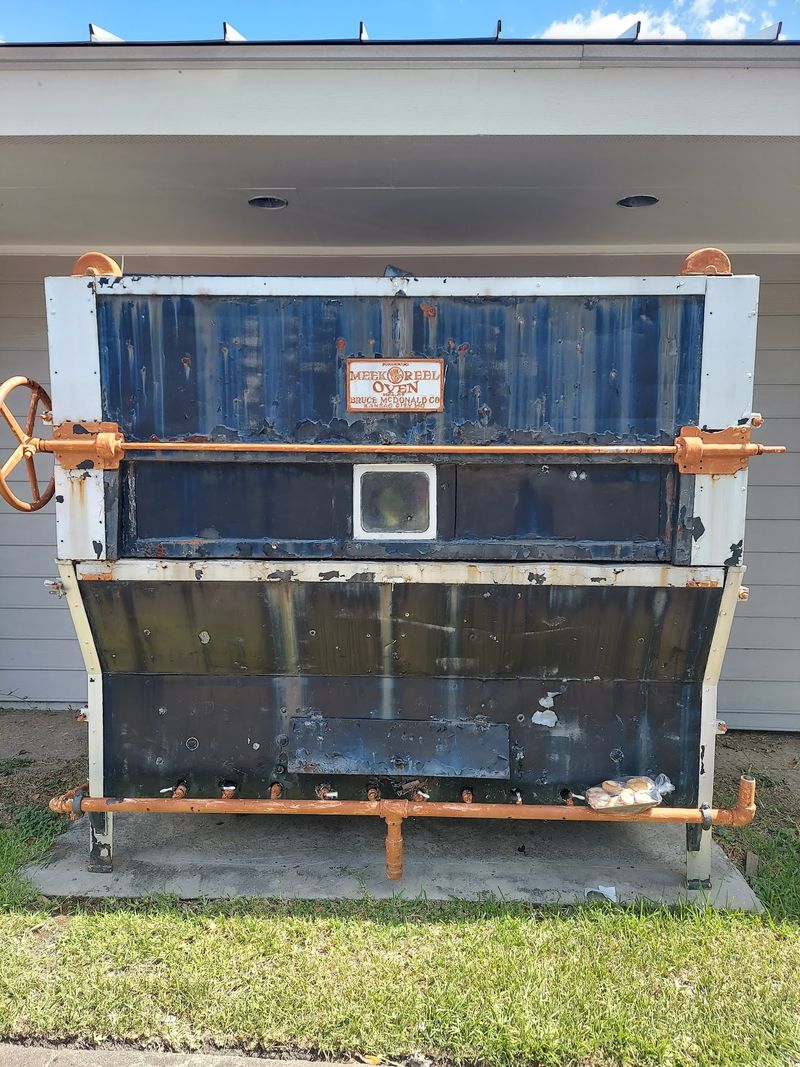
Here is the detail that makes equipment nerds sit up straight. The bakery still runs a carousel oven built around 1935 to 1940, and it is not decoration.
It bakes product every single day.
Carousel ovens work by rotating shelves slowly through the heat, which evens out hot spots and gives everything a uniform bake. The technology is old.
It also happens to work beautifully.
Keeping an oven of that vintage alive is not a matter of calling a repair line. Parts stopped existing decades ago, so the bakery’s team fabricates custom replacements when something wears out.
Owner Eric Moeller has personally made parts to keep it running, which tells you how seriously the family treats that machine. Replacing it with something modern would be easier and probably cheaper.
They have not, and the reason seems pretty clearly tied to flavor and texture. Different ovens bake differently, and swapping one out would change results people have trusted for generations.
There is something quietly moving about a piece of machinery that has outlasted wars, recessions, and entire architectural eras in Houston. It has been turning out cakes and rolls longer than most Texas businesses have existed at all.
Ask about it if the staff has a free moment. Bakeries with genuine history usually enjoy talking about their tools.
Not many places can point at their oven and call it an antique in active service. That alone justifies the trip.
Three Generations of Moellers Behind the Counter
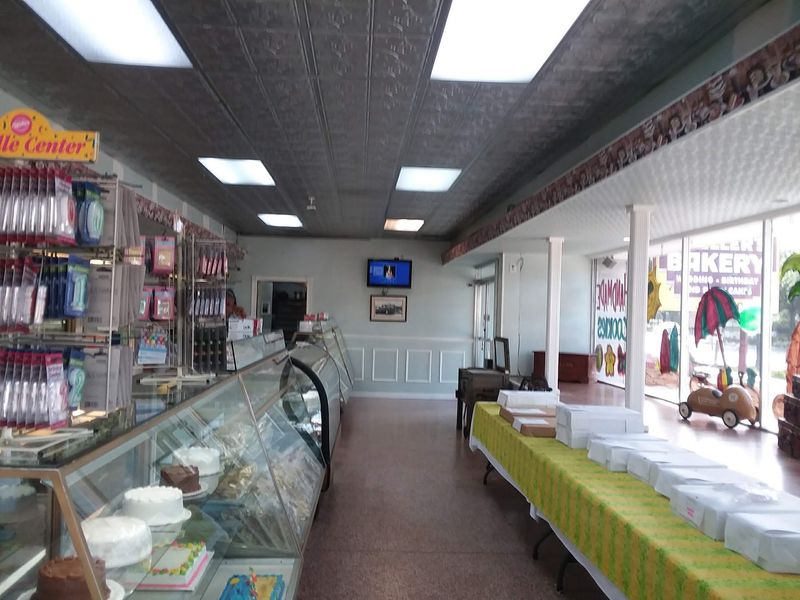
Family businesses usually falter at the third generation. Statistics are pretty grim on that front, which makes the Moeller run worth pausing over.
In 1980 Gus’s son, Donald W. Moeller, took over leadership.
He worked alongside his wife Theresa, and their division of labor became part of the bakery’s rhythm.
Donald personally oversaw every cake that left the building, holding the line on standards his father had set. Theresa handled the office and the staff, keeping the operation organized behind the scenes.
Their son Eric now owns the place, and he stays hands-on right down to machining oven parts when needed. That is not absentee ownership by any stretch.
The loyalty extends well past the family, too. Among the current fifteen employees, combined experience adds up to roughly 224 years, which averages out to about fifteen years each.
Miss Dorothy has been a familiar face for fifty years. Miss Carol for forty.
Those are not typical retail numbers, and they explain a lot about why the place feels steady.
Carol’s son James now runs the baking operations, having learned directly from Donald W. Moeller starting in his teens.
Knowledge got handed down person to person, not through a manual.
You notice that stability when ordering. The people helping you have often been doing it since before you were born, and it shows in how calmly they work.
Petit Fours, Orange Rolls, and Other Case Favorites
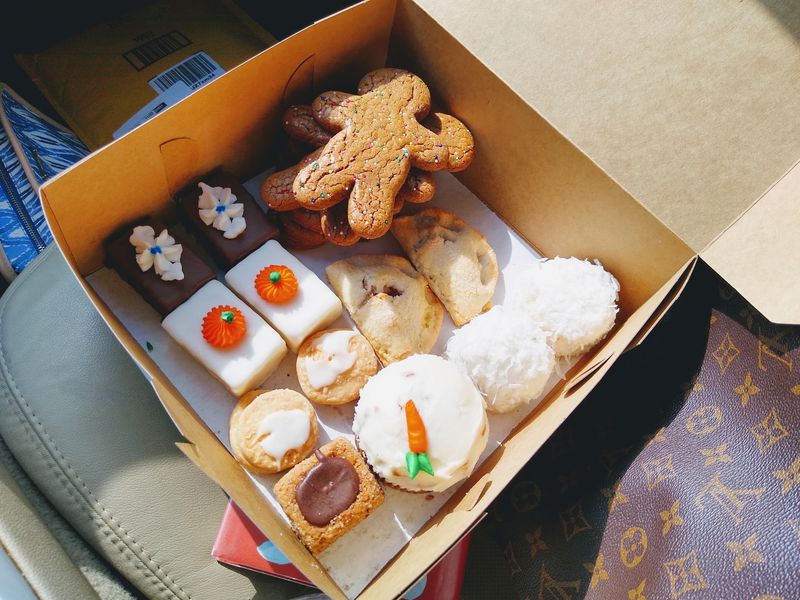
The petit fours get talked about more than anything else, and for good reason. Small squares of cake wrapped in poured fondant glaze, available in white and chocolate, with a moist interior and a thin icing shell that gives a faint crunch.
Dozens go out the door daily. They are the item people drive across Houston for.
Then there are the orange rolls, which have a genuinely unusual method behind them. Oranges are ground, mixed with cake and icing, then rolled and baked in a style similar to cinnamon rolls.
Former Houstonians have had them shipped out of state. A local elementary school once built a play around them, which is a level of cultural penetration most pastries never reach.
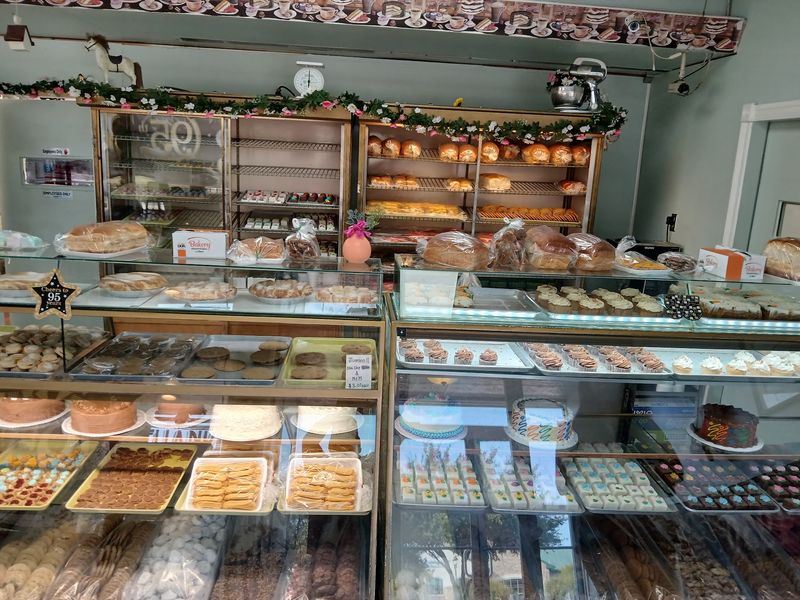
Beyond those two, the range is wide. Gingerbread men, pecan chewies, coconut macaroons, almond crescents, and decorated cookies fill the cookie side of the case.
Pies run through apple, cherry, buttermilk, Boston cream, and assorted meringues. Breads and rolls include kolaches, sweet rolls, and cinnamon rolls that regulars are quietly evangelical about.
Cupcakes come in white, devil’s food, and snowballs rolled in coconut shavings. Cheese straws show up too, which feels like a nice savory break from all the sugar.
Carrot cake and strawberry cake with cream cheese icing earn steady praise from customers marking celebrations. Hard to go wrong.
Pick two things you recognize and one you do not. That approach works well here.
The Cake Shop Houston Families Keep Coming Back To
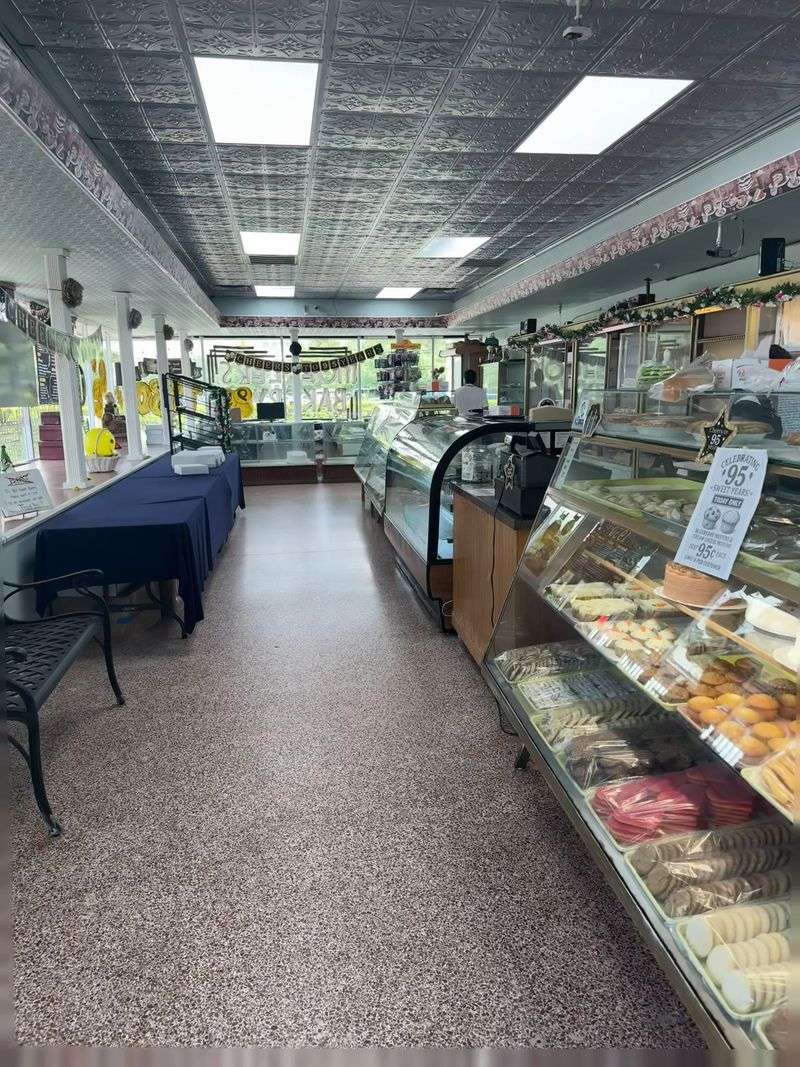
Birthday cakes, graduation cakes, baptism cakes, wedding cakes. For a huge number of Houston families, the default answer to where the cake comes from has been the same for decades.
The approach leans toward flavor over spectacle. Decoration tends to be clean and classic rather than sculpted into elaborate shapes, and the reputation rests on how the cake actually tastes.
White cake with white icing gets requested constantly. Strawberry cake with cream cheese icing has its own devoted following, as does the carrot cake.
Combinations like white cake with a raspberry center and cream cheese icing have anchored wedding receptions. Families describe trusting the bakery across thirty-five years and more of celebrations.
Online ordering with pickup is available, which makes planning easier if you are coming from across town. Worth noting that pickup can involve a short wait during busy stretches, so building in a buffer helps.
Ordering ahead is strongly advisable for anything custom. This is a hand-operated bakery, not a factory, and lead time matters.
What keeps people loyal seems less about flash and more about predictability in the best sense. You know roughly what you are getting, and it fits the occasion without stealing the show.
Third and fourth generation customers are common. Parents bring kids to the counter where they once stood at the same height, which is a pretty specific kind of continuity.
Cake as family tradition. It works.
Painted Windows, White Boxes, and Old-School Atmosphere
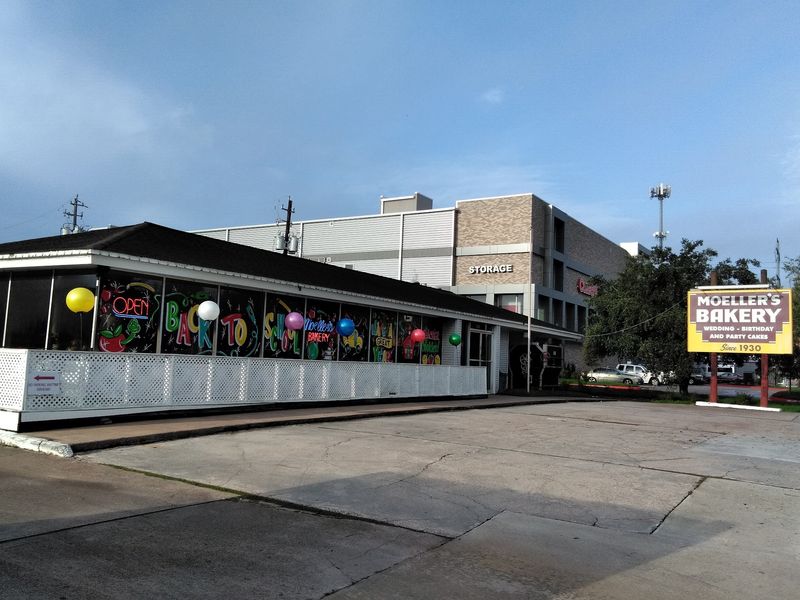
Drive down Bellaire Boulevard too fast and you will blow right past it. Longtime customers openly warn each other about that.
The building is modest, but the windows are frequently decorated with hand-painted seasonal murals that change through the year. Little visual gifts for anyone paying attention.
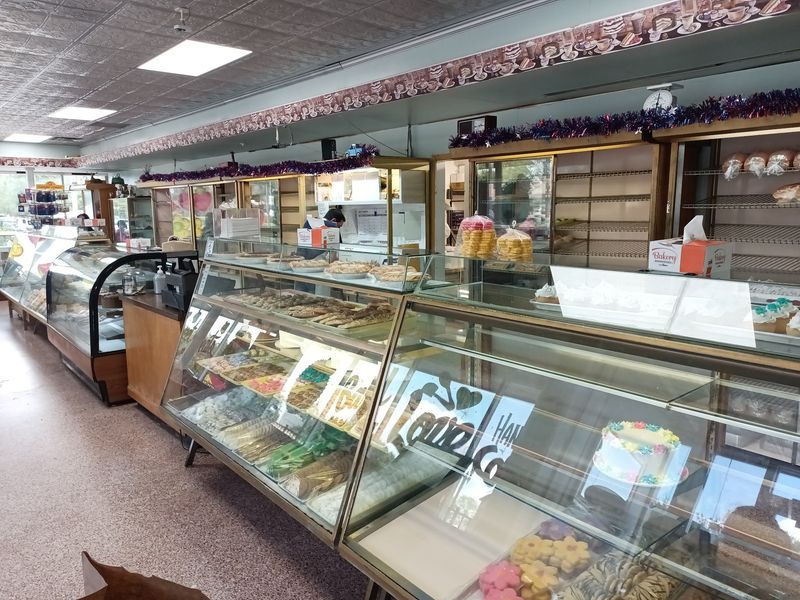
Inside, the aesthetic is unapologetically old-school. Glass display cases, plain white cake boxes, and baker’s twine doing the job that plastic clips do elsewhere.
Staff have a habit of calling customers Honey or Sweetie, which lands as genuinely friendly rather than performative. Small-town manners in a big city.
The address is 4201 Bellaire Blvd, Houston, TX 77025, hidden into a stretch that has changed a lot around it while the bakery held its ground.
Hours are worth checking before you go. Weekday openings start early at 6:30 AM and run to 6 PM, Saturday shifts to 7 AM until 5 PM, and Sunday is closed entirely.
Renovations have happened over the years to make the space more comfortable, though they were done carefully enough that the original character survived. It still reads as a neighborhood bakery, not a redesign.
The smell hits first when the door opens. Bread, sugar, warm dough, the whole comforting mix.
Bring cash or card, take a number mentally, and enjoy the slower pace. Rushing here misses the point.
Approaching a Century and Still Baking Forward
A hundred years is close enough now to see from here. The bakery opened in 1930, which means the centennial is genuinely within reach, and that alone makes a visit feel a little more significant.
Houston has expanded, contracted, flooded, rebuilt, and reinvented itself many times over during that span. The bakery just kept baking.
Its survival does not appear to rest on chasing trends. No seasonal rebrands, no viral novelty desserts, no reinvention of the petit four.
Instead the formula has been original recipes, a historic oven, handwork, family ownership, and employees who stay for decades. Unglamorous ingredients that turned out to be extremely durable.
For visitors to Houston, it offers something the city’s newer food scene cannot provide, which is depth of time. For locals, it functions as a kind of edible memory bank.
Both groups get the same thing at the counter. A white box, some twine, and pastries made the way they were made before anyone thought to photograph food.
Best plan is to go early on a weekday, ask what came out of the oven most recently, and grab the petit fours before they vanish. Add cinnamon rolls if coffee is in your near future.
Places like this do not appear anymore. They only persist, one batch at a time.
Worth pulling over for. Worth remembering, too.
