Fog settled over the highway on an afternoon with no real plan, just a stomach that had been growling for miles. A small farm town appeared the way they do, quietly, with fields of Brussels sprouts on one side and a church steeple on the other.
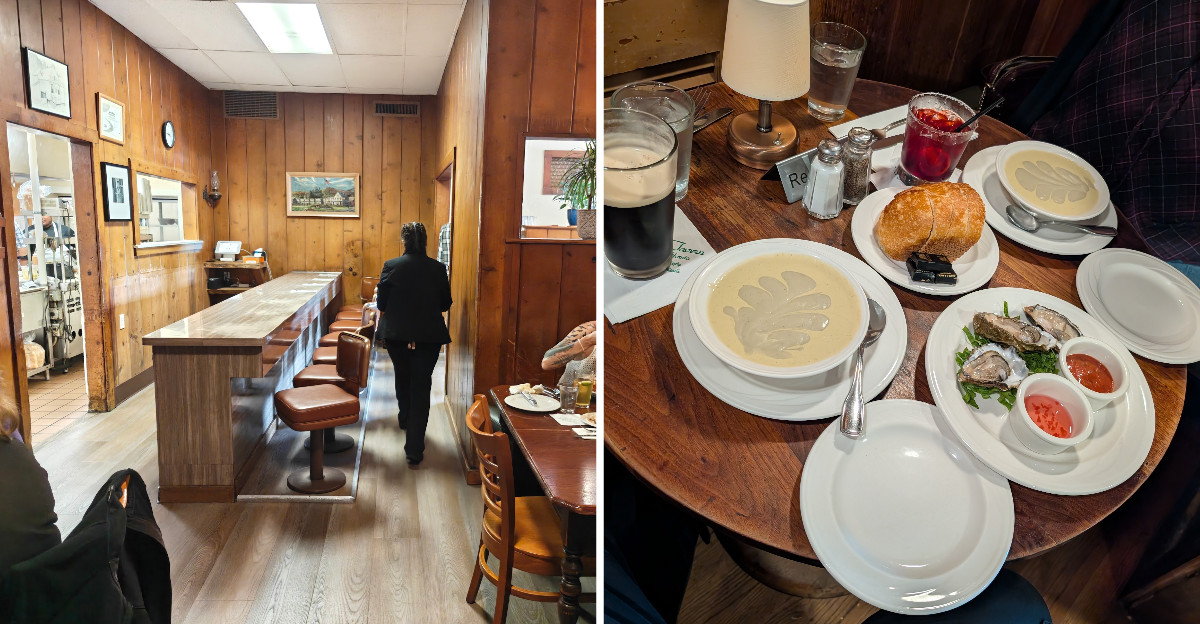
At a corner sat a low wooden building that has been feeding hungry travelers since the 1890s, and the smell of sourdough reached me before I even opened the door. Inside, knotty pine walls and the clatter of plates made it feel like someone’s family kitchen.
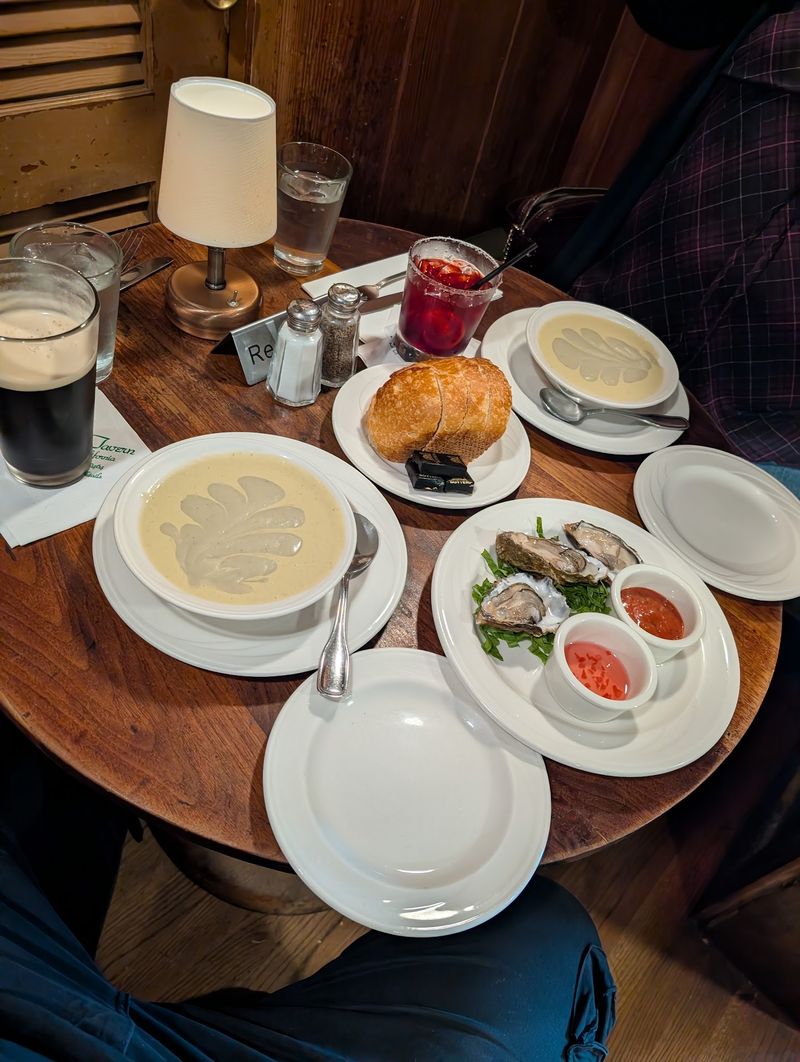
The artichoke soup was ordered because everyone says it is mandatory, and they are right. That first spoonful is the reason for finding excuses to drive this stretch of California coast again and again.
Creamy without being heavy, with a flavor that tastes like the fog itself somehow got captured in a bowl. The fog, the fields, and the wooden counter all add up to a meal that lingers.
Some detours become traditions without anyone planning them, and this stretch of coast is proof.
Stage Road and the Weight of 130 Years
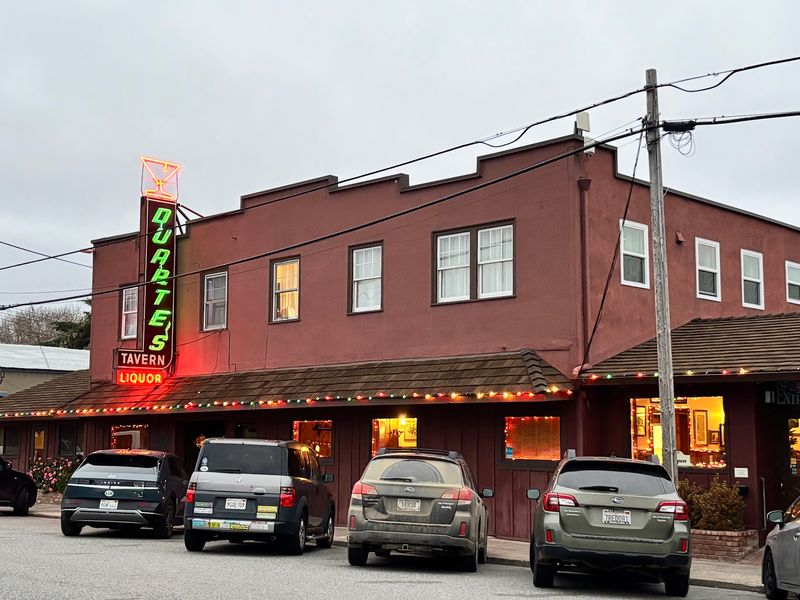
My first impression came from the outside, before any food arrived. The building looks modest, almost plain, and that is exactly what makes it feel honest.
Frank Duarte, a Portuguese immigrant, opened the place in 1894 as a saloon with a barbershop attached. Within a few years he was serving food to locals and weekend visitors, and the kitchen slowly became the main event.
A fire tore through much of Pescadero in the late 1920s, yet the original tavern bar survived. That single detail tells you plenty about how stubborn this corner of town can be.
Today the fourth generation of the Duarte family runs it, which is rare anywhere, let alone on a road this quiet. Standing outside, I kept thinking about how many travelers have parked here, stretched their legs, and walked through the same doorway.
Stage Road once carried stagecoach traffic and tourists heading south along the coast. Some of those old buildings still line the street, giving the whole block a lived-in, unhurried look.
It never feels staged or dressed up for visitors, which I appreciated more than I expected to.
The tavern seems comfortable letting its history speak for itself. Old photographs, weathered details, and the simple storefront do more than a polished renovation ever could.
Even before sitting down to eat, it feels clear that this is a working restaurant with more than a century of stories behind it.
Why the Artichoke Soup Earns Its Reputation
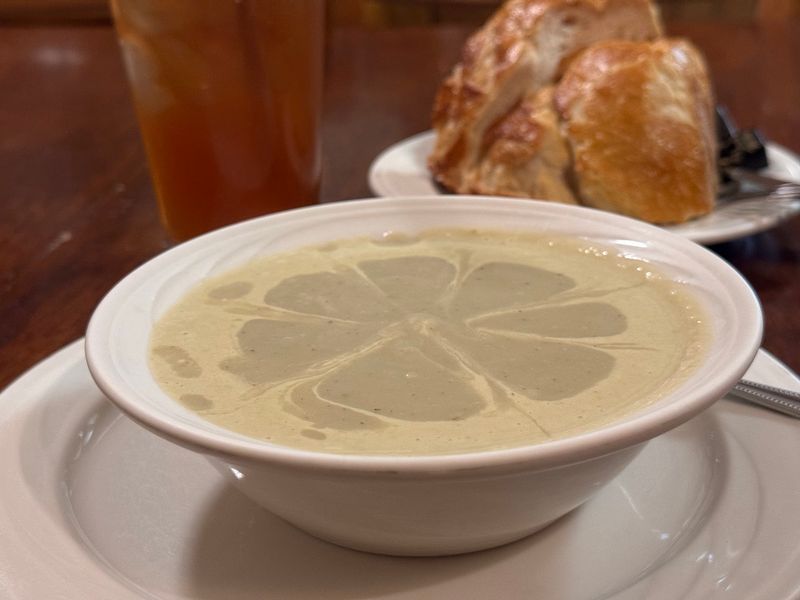
Nobody warned me how thick it would be. The cream of artichoke soup arrives pale green and glossy, smelling faintly earthy and sweet at the same time.
It was first worked out in the early 1960s by Frank’s grandson Ron Duarte and his wife Lynn, and Ron’s handwritten recipe book still lives in the kitchen. That kind of continuity shows up in the flavor.
Artichokes grow in the garden right behind the restaurant, though demand got so big that hundreds of extra pounds come in twice a week from nearby family growers. Local really does mean local here.
Ask about the half and half version, which combines the artichoke with their cream of green chile soup. It is not printed on the menu, but plenty of regulars swear by it, and the gentle heat plays nicely against the creamy side.
Fresh sourdough comes alongside, warm and chewy, ideal for mopping the bowl clean. I took my time with it and watched the fog drift past the window.
Soup as a destination sounds silly until you taste this one.
Knotty Pine Walls and a Room That Slows You Down
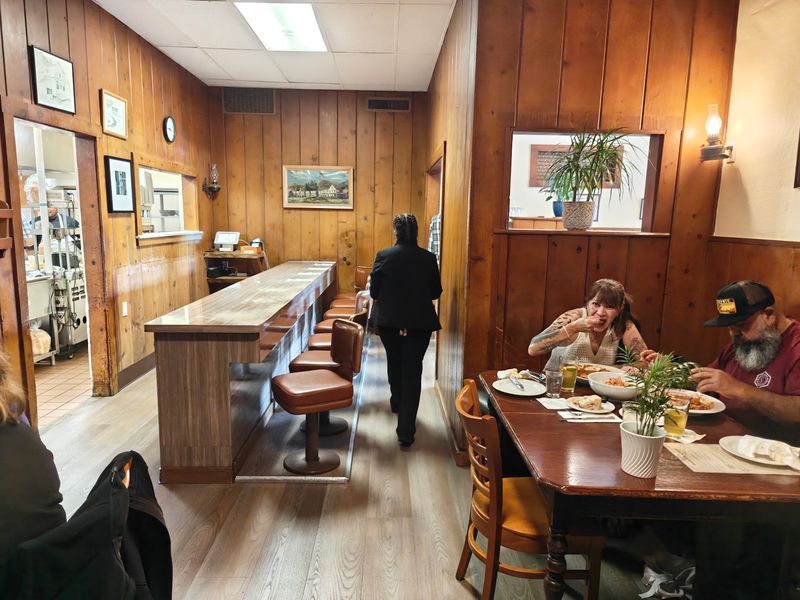
Something about wood paneling makes people talk quieter. The main dining room is wrapped in knotty pine, warm and a little golden under the lights, and it muffles the room in a comforting way.
Tables sit close together, the ceiling is low, and there is a snug nook near the door that I claimed immediately. Nothing matches perfectly, and that is part of the charm.
The pace here runs slower than city restaurants, which threw me off for about five minutes before I settled into it. You are meant to linger, not turn the table.
Staff move between rooms with pots of coffee and stacks of plates, and the energy feels more like a busy family gathering than a restaurant service.
Duarte’s picked up a James Beard America’s Classics award in 2003, an honor given to independent spots with staying power and real character. You can feel why sitting in that room.
Bring patience on weekends, since the place is small and travelers pour in. The wait is honestly part of the experience.
A Kitchen Fed by the Valley Around It
Driving in, I passed fields that explain the menu better than any description could. Pescadero sits in a valley known for fava beans, Brussels sprouts, and artichokes, with pastures where cows and goats graze between the crops.
Egrets pick through the marshland and hawks circle above the creekside trees. The landscape has barely changed in a century.
That proximity matters at the table. The garden behind the restaurant supplies produce, and what the kitchen cannot grow comes from neighboring family farms just down the road.
Fresh fish shows up depending on what the boats bring in that week, so the menu shifts a little with the season. I like restaurants that admit the ocean has an opinion.
The town is so still in the morning that you can hear surf breaking a couple of miles away. Coffee gets brewed early here for local farmers, a habit that goes back generations.
Eating a bowl of soup made from artichokes grown fifty steps away gives the whole meal a different weight. Food and place line up perfectly.
Olallieberry Pie, the Sweetest Tradition on the Coast
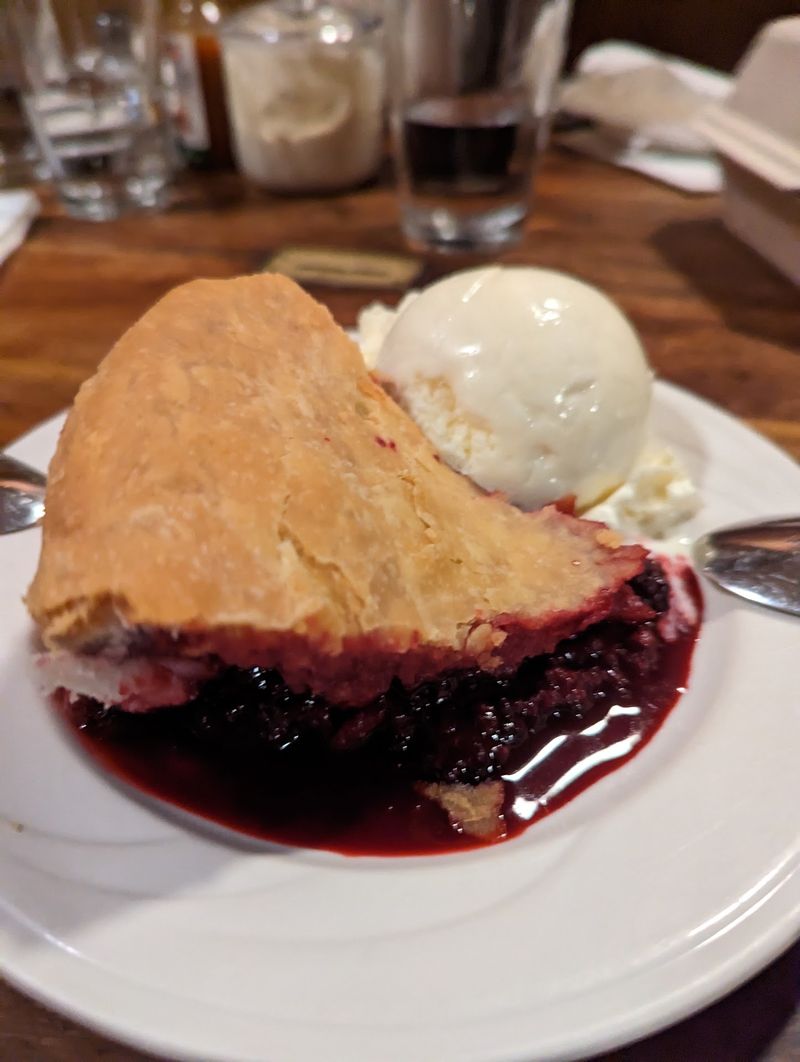
Save room. I say that as someone who almost did not, and nearly missed the best part of the meal.
The pie tradition started in the 1930s with Emma Duarte, and olallieberry has been the headliner ever since. The berry itself is a cross between a loganberry and a youngberry, grown mostly along California’s central coast.
Their season is short, so the kitchen freezes thousands of pounds every year to keep pies coming all twelve months. That is dedication most places would not bother with.
Each slice runs generous and packed with fruit, leaning tart before the sweetness catches up. A scoop of vanilla ice cream melting into the warm filling balances it beautifully.
Crust gets made the old way, flaky and sturdy enough to hold all that juice. Berries that do not make it into pies get turned into jams and vinaigrettes, so almost nothing goes to waste.
I ordered a slice to eat there and briefly considered a second one for the car. Regret is real.
Comfort Plates That Have Outlasted Food Trends
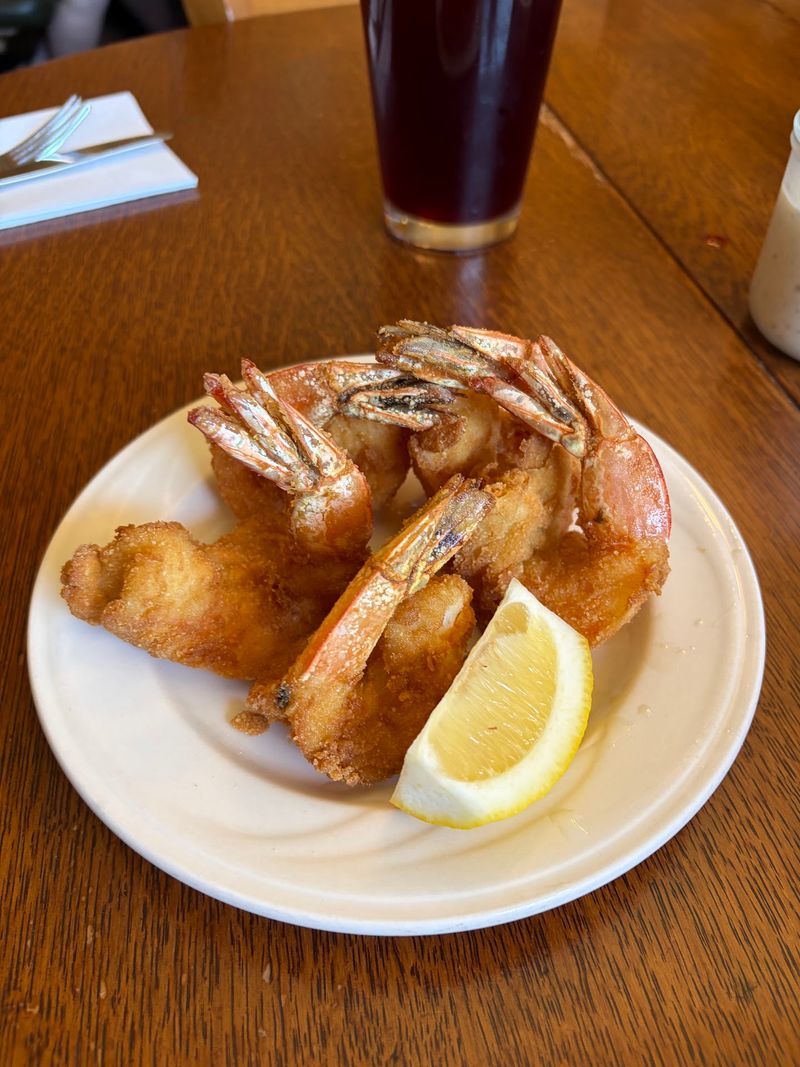
Hearty is the word that kept coming to mind. The cooking here leans American country with Portuguese family roots showing through, and none of it is fussed over or arranged with tweezers.
Crab cioppino is the other big name on the menu, a Bay Area classic loaded with crab in a tomato-rich broth. It is gloriously messy, so tuck a napkin somewhere useful.
Beyond that, you will find a hot beef sandwich with mashed potatoes and gravy, pork chops with fresh apple sauce, deep-fried scallops, and a crab sandwich people drive in for.
Onion rings and battered fries come out crisp, and ordering a mix of both is apparently a known move worth asking about.
Warm sourdough lands on the table shortly after you sit down, fluffy inside with a good chewy crust and soft butter alongside. I could have made a meal of just that.
Portions run generous, prices reflect the fresh coastal ingredients, and the whole spread tastes like food meant to fuel a long drive home.
Planning Your Stop and Wandering the Town After
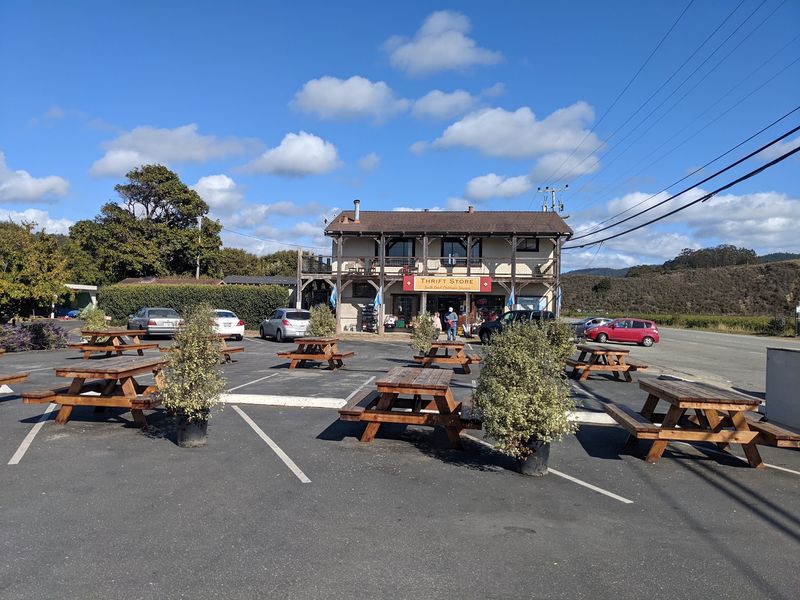
A little planning goes a long way with a place this small. Doors open at 11 AM most days, with dinner service stretching to 6 PM on Friday, Saturday, and Sunday, and a Sunday morning breakfast window from 8:30 to 10:30.
Tuesdays are closed, so double-check before committing to the drive. Midweek visits tend to be calmer than weekend afternoons.
Pescadero holds roughly 600 residents, and the main drag takes about ten minutes to walk end to end. Shops, galleries, farm stands, and a bakery make the stroll worth it while your meal settles.
The beaches sit a couple of miles west, and the marsh preserve nearby is good for spotting birds if you have binoculars in the trunk.
Cell service can get patchy out here, so download directions before leaving the highway. Cash is not required, though arriving hungry certainly is.
I left with a full stomach, purple fingertips from the pie, and a strong suspicion I would be back before the year ended.
Address: 202 Stage Road, Pescadero, California
