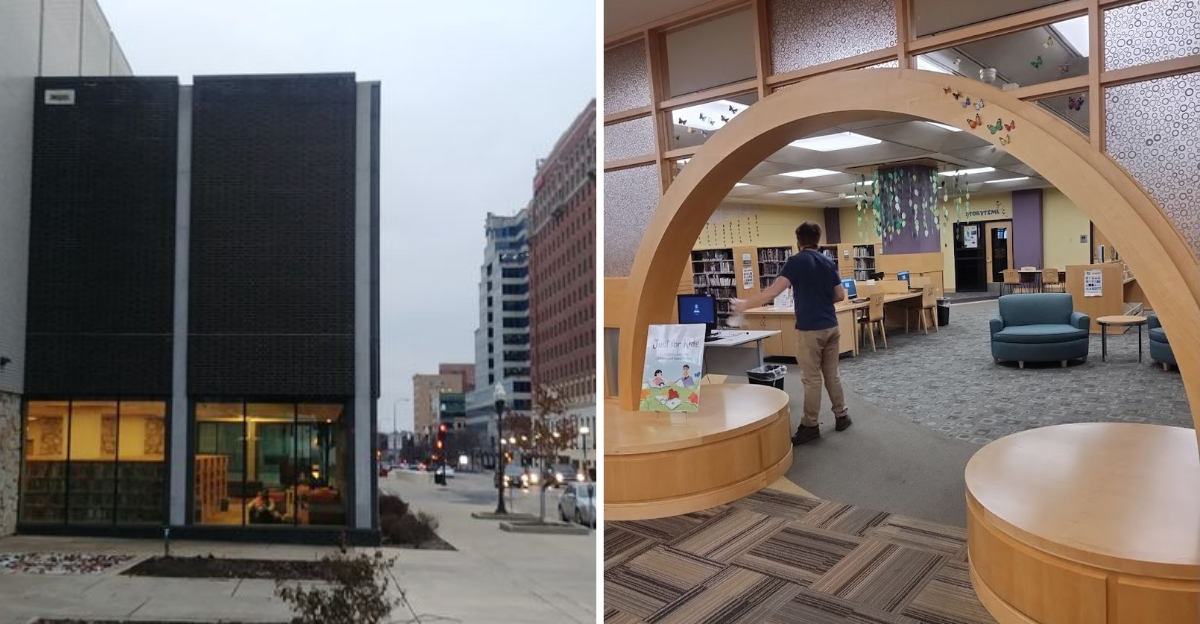
Long before the shelves were stocked and the reading rooms filled with light, a stretch of Illinois street held a grief so sharp it reportedly became a curse.
The story starts in the 1830s with a woman whose loss and fury over a stolen home set something in motion that Peoria is still talking about today. Three library directors passed in strange succession. Paranormal investigators showed up with cameras.
Even now, staff members describe cold drafts and voices in empty rooms. I stood in the reading room on a quiet afternoon, trying to imagine the weight of everything that had happened on that exact spot before the books ever arrived.
The library holds all of it between its walls, quiet and unshaken, but never quite silent.
The Woman Behind the Curse: Mrs. Andrew Gray and the 1830s Betrayal
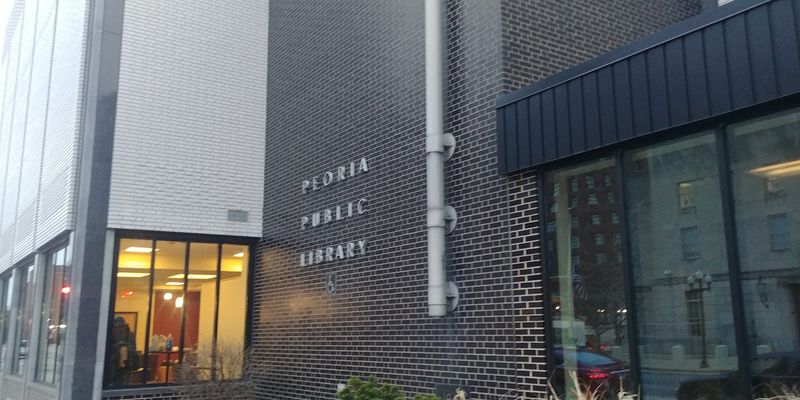
Not every curse begins with darkness. This one began with grief, a nephew, and a lawyer who took more than he was owed.
Mrs. Andrew Gray lived on Monroe Avenue in Peoria around 1830, keeping a home and tending to gardens that neighbors reportedly admired. After her brother passed away, she took in his son, a young man who had a habit of finding trouble with the law.
To keep him out of serious consequences, she hired a lawyer named David Davis, using her home as collateral against growing legal fees.
When the debt mounted beyond what she could pay, Davis sued to collect on the mortgage. She lost the house.
Then, not long after, her nephew was found floating lifeless in the Illinois River. The loss was too much to bear quietly.
Distraught and furious, Mrs. Gray reportedly cursed the property itself, not just the man who took it, but every future owner and occupant of that land. What makes this story so enduring is that the curse did not seem to follow people away from the property.
It stayed exactly where it was, waiting for whoever came next.
Nothing Would Grow: The Land Itself Seemed to Refuse
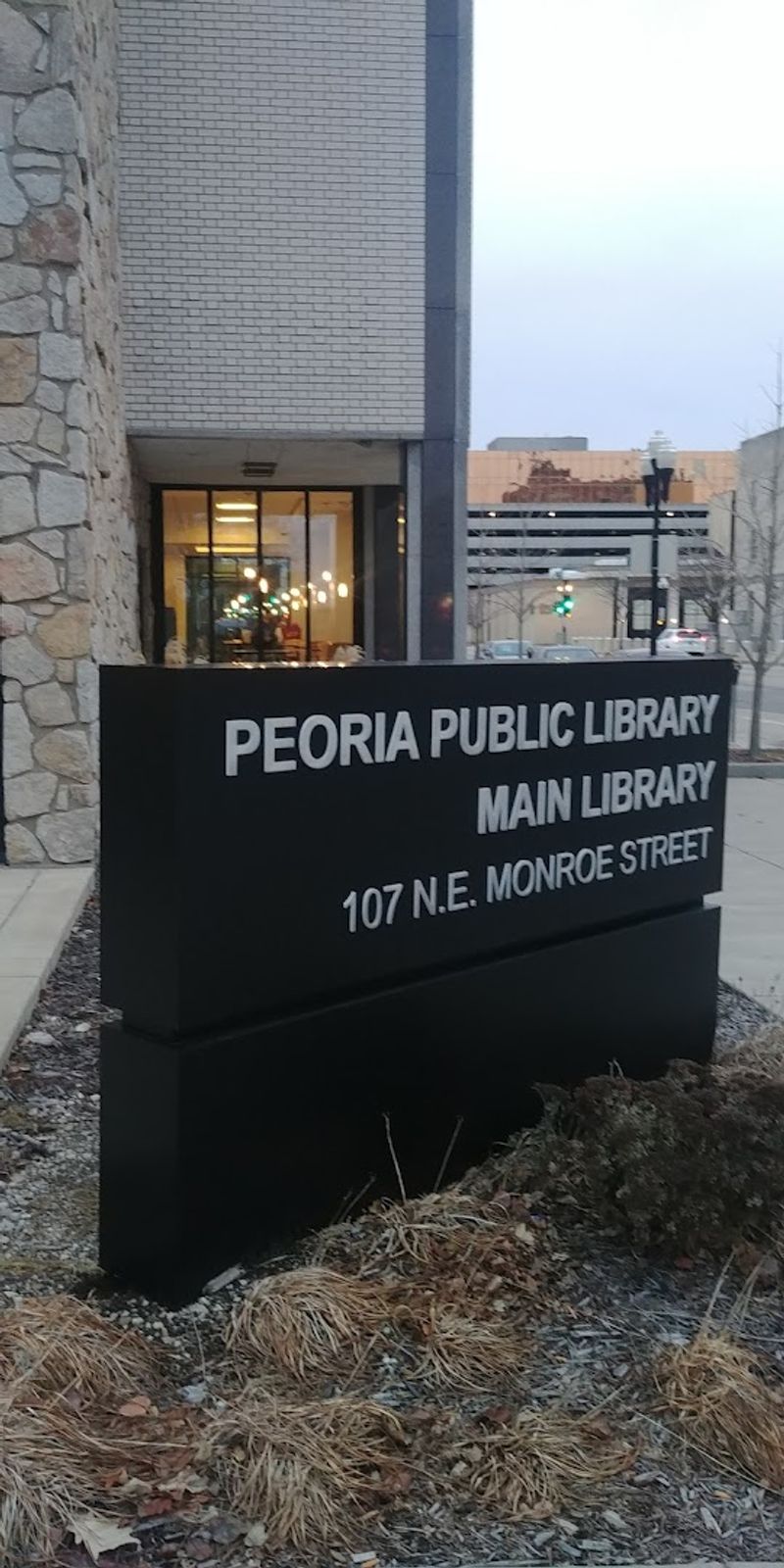
After David Davis took possession of the property, something odd began happening in the yard. The gardens that Mrs. Gray had carefully cultivated, the ones neighbors once admired, simply stopped producing.
Nothing would grow.
For a time in the 1800s, land that had previously bloomed sat barren and stubborn, as if the soil itself had chosen a side. People in Peoria noticed.
A property that had once been considered well-kept and lively became a place people talked about in hushed tones.
There were also reports of ghostly appearances. Witnesses claimed to see the figure of Mrs. Gray’s nephew at the door of the house, banging and begging to be let in before vanishing entirely.
Whether those accounts reflect genuine experience or the way grief reshapes memory, they added another layer to the land’s reputation.
What is striking about this part of the story is how physical it felt. The curse was not just whispered about in parlors.
It showed up in the dirt, in the silence of a garden that refused to cooperate. That kind of detail has a way of sticking with people across generations, and in Peoria, it absolutely did.
1894 and a Library Is Built on Contested Ground
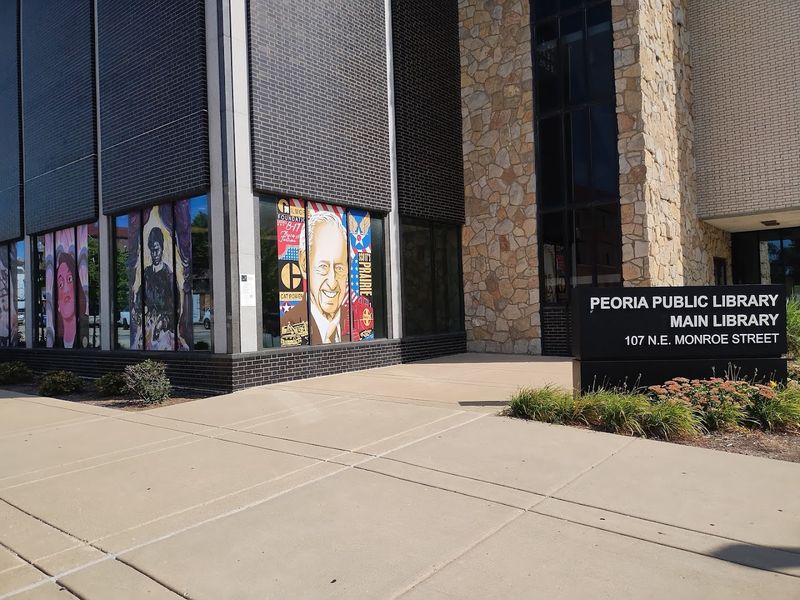
By 1894, Peoria had grown into a city with civic ambitions, and the property on Monroe Street became the site chosen for a new public library. The city purchased the land, which included three separate lots, and construction moved forward with the kind of optimism that comes with building something meant to last.
There was some debate, even then, about whether the library sat directly on the footprint of Mrs. Gray’s original house or on an adjacent portion of the property. That distinction mattered to some people.
The curse, after all, was tied to the land itself, not to any specific structure.
The library opened and quickly became a resource for the community. Books, periodicals, space to read and learn.
From the outside, everything looked exactly as it should. But the story of Mrs. Gray’s curse had not faded from local memory, and people were watching, perhaps more closely than the library’s new directors realized.
What the city built in 1894 was more than a library. It was a test of whether a curse rooted in personal tragedy could really outlast the people who first felt it.
Peoria, it turned out, was about to get a very specific and unsettling answer to that question.
Three Directors, Three Passings, One Terrible Pattern

The part of this story that tends to stop people cold is the fate of the first three directors of the Peoria Public Library. Each one ended under circumstances that were, at the very least, unusual.
E. S.
Willcox, the first director, was gone in a streetcar accident in 1915. The second director, Samuel Patterson Prowse, passed from a heart attack during an actual library board meeting in 1921.
He was at work, in the building, when it happened. Then came Dr. Edwin Wiley, the third director, who took his own life in 1924 after swallowing arsenic.
Three directors. Three passings within roughly a decade.
All of them tied to the same building on the same cursed stretch of land. Local lore connected the pattern directly back to Mrs. Gray’s declaration decades earlier, and it is hard to argue that the timing was not striking.
None of this has ever been officially explained as supernatural. But the sequence of events embedded itself into Peoria’s identity in a way that factual explanations alone never quite resolved.
The library kept serving the public. The stories kept circulating.
And people kept asking whether the land itself had something to do with all of it.
The 1966 Demolition That Changed Nothing
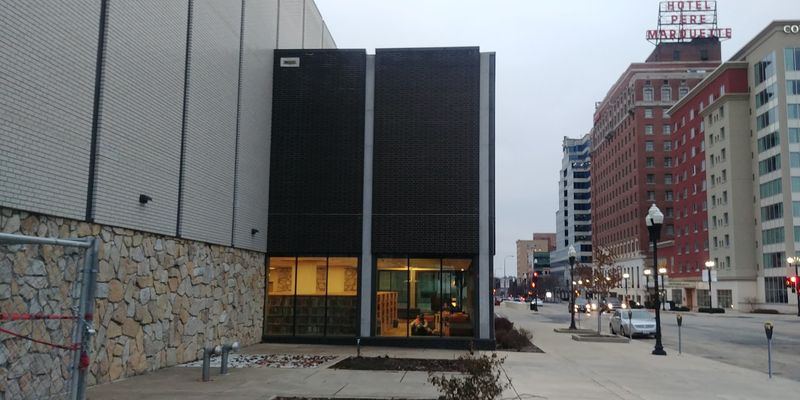
In 1966, the original library building was torn down. A new structure went up in its place, modern and updated, the kind of fresh start that a city might hope would reset the atmosphere of a troubled location.
It did not.
Reports of strange occurrences continued after the new building opened. Staff members described hearing their names called out clearly when they were alone in the stacks.
Cold drafts appeared in areas with no obvious source. Some reported seeing an apparition near the basement doorway, a figure that resembled a former library director.
The fact that the haunting persisted through demolition and reconstruction became, for many, the clearest proof that the curse had always been about the land. Not the walls.
Not the windows or the floors. The ground itself, the same ground Mrs. Gray stood on when she made her declaration in the 1830s.
There is something genuinely unsettling about that idea, that you can tear a building down to its foundation and still not escape what the earth beneath it is holding. The new library looked different.
The address stayed the same. And whatever had been stirred up on that property in the 1830s apparently had no interest in leaving just because the architecture changed.
Ghost Hunters, Paranormal Fame, and What Staff Still Report
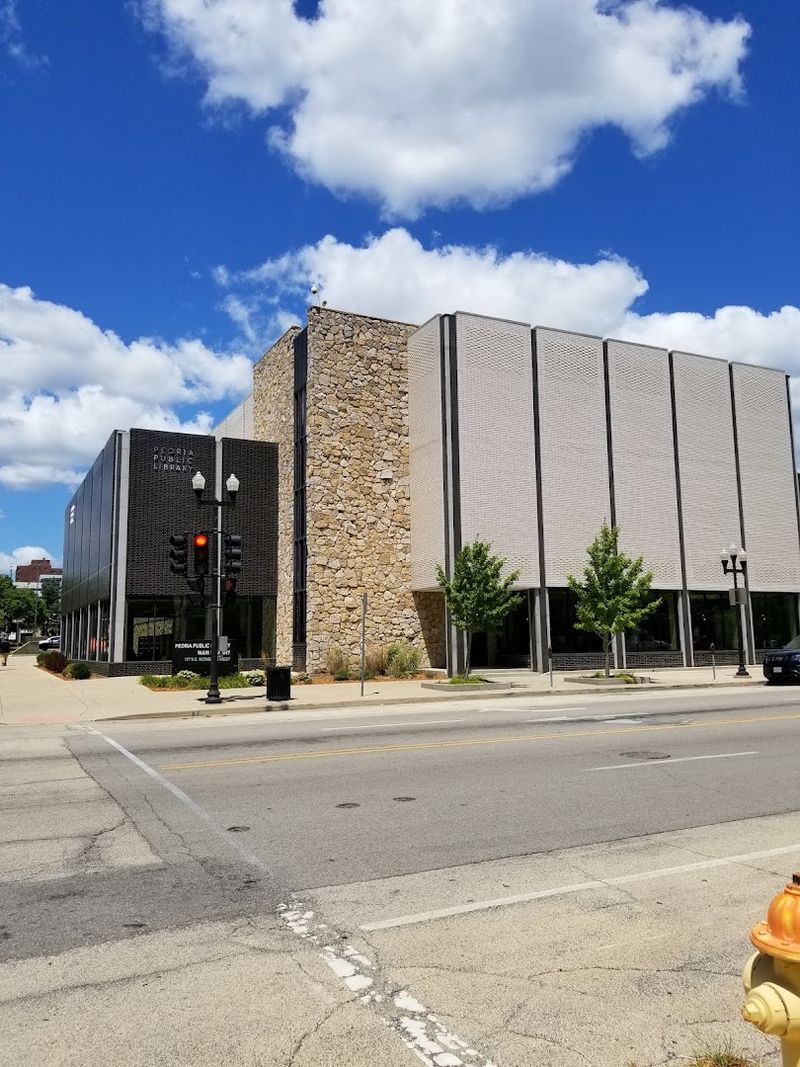
At some point, the legend of the Peoria Public Library’s haunting grew large enough to attract professional attention. The SyFy channel’s Ghost Hunters featured the library, bringing cameras and equipment into the stacks to investigate what staff and visitors had been describing for years.
The reports themselves are consistent in a way that is hard to dismiss entirely. People hear their names spoken in empty rooms.
Cold spots appear without explanation. The basement doorway seems to be a particular focal point, with multiple accounts of a figure appearing there and then simply not being there anymore.
Current staff at the library at 107 NE Monroe St tend to discuss these things with a kind of matter-of-fact calm that comes from working in a place long enough to get used to its personality. The library is also genuinely beloved by the community, rated 4.5 stars and praised for its helpful staff, art exhibits, and welcoming atmosphere.
Miss Nina is frequently mentioned for her work with children. Security guard Ashley was celebrated by a visitor for a remarkable act of kindness.
The haunted reputation and the warm community spirit coexist here without much conflict. That balance, between the eerie and the everyday, is part of what makes this library feel unlike any other.
What the Library Feels Like Today and Why the Story Still Matters
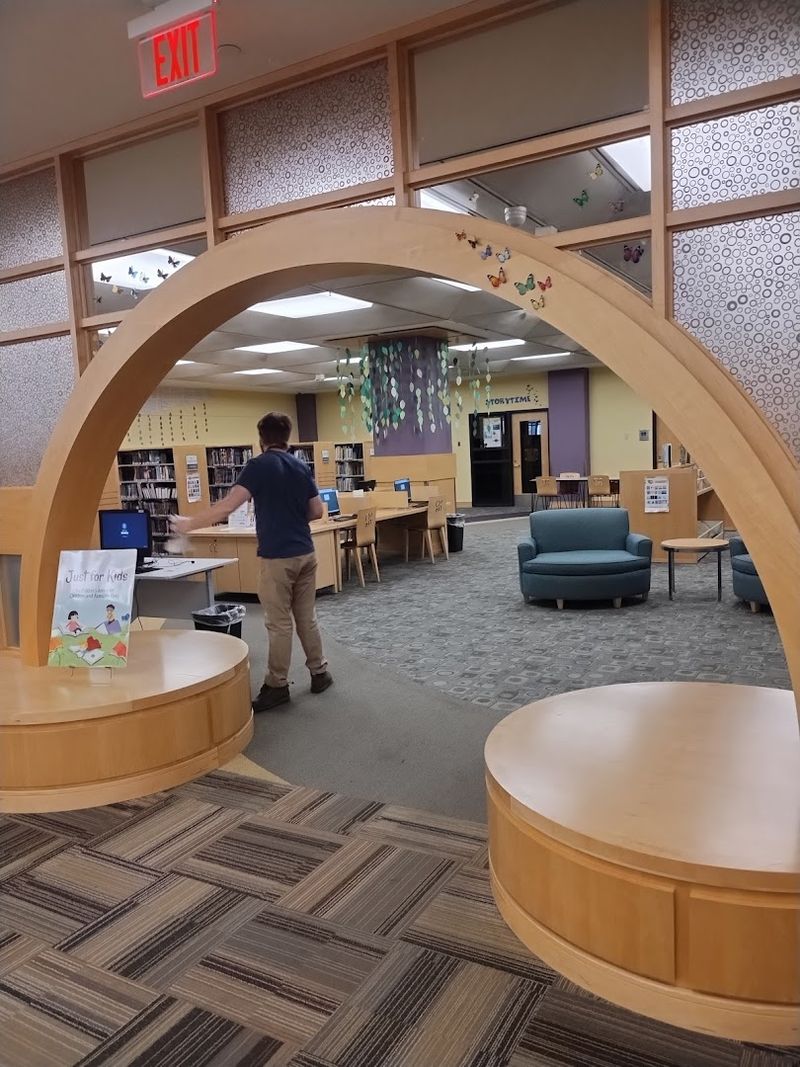
There is a real pleasure to spending time inside the Peoria Public Library today. The building is spacious and comfortable, always at the right temperature according to more than one visitor, with art exhibits in the lower level gallery and a local history and genealogy room that draws researchers from across the region.
The collection is impressive, fiction and nonfiction, audiobooks, movies, computers for public use, and a children’s section that families return to again and again. People come to study, to research old classmates from the 1960s, to attend art unveilings, and sometimes just to sit quietly with a book and let the afternoon pass.
The curse story matters not because it is provably true, but because it reveals something real about how communities hold onto their history. Mrs. Gray was a real person who experienced genuine loss.
The three directors who passed away were real people. The land has a past that no renovation erased.
Knowing that history changes the way a place feels. You notice the basement staircase a little differently.
You pause when the room goes cold. And somehow that awareness makes the library richer, not darker.
It is a building full of stories, and the oldest one is buried right beneath your feet.
Address: 107 NE Monroe St, Peoria, IL 61602
