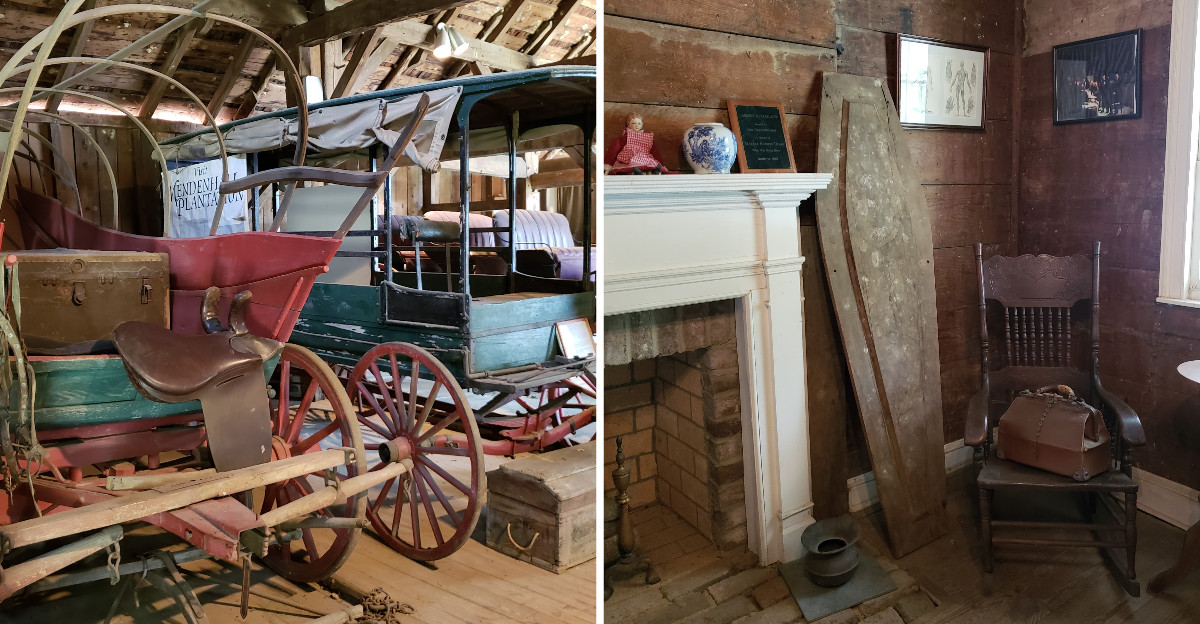
Plain floorboards on an old wooden wagon hide a space running nearly its entire length. Built to carry people toward freedom, this false-bottom wagon sits inside a red barn on a North Carolina Quaker homestead.
Walking into that barn, stopping to stare for a long, quiet minute felt inevitable. The wagon is a piece of the Underground Railroad, a quiet tool of escape disguised as ordinary farm equipment.
Around it, a brick house dating to the early 1800s and shaded grounds tell the story of a community that risked everything to help strangers. Leaning over the wagon, the past stops being a lesson and becomes something you can almost touch.
Wandering the grounds, from the barn to the house and beyond, the details add up slowly. This is history without velvet ropes, held in wood and brick and silence.
North Carolina keeps this kind of secret in plain sight.
Quaker Neighbors Who Chose Courage
Here is a fact that changed how I saw the whole property. Richard Mendenhall was a tanner, a store owner, and a teacher, and in 1816 he helped found the North Carolina Manumission Society.
Manumission means legally freeing enslaved people. Local Quakers believed in equality and peace, so many of them put real money and effort into helping people gain their freedom.
That took grit in a place where such views were not popular.
The Mendenhalls also supported their cousins Vestal and Levi Coffin. Those two helped free Black people reach safer states and are tied to the first Underground Railroad station in the county.
In 1819 they helped a free Black man named John Dimery escape to Indiana, one of the earliest recorded uses of the Underground Railroad.
Whether Richard himself guided people north is still local legend without firm proof. I actually appreciated that honesty from the site, since it keeps the real story clear.
Thinking about all this while looking across the quiet lawn made me realize how brave ordinary neighbors had to be. Their choices were made at kitchen tables and in shops, one decision at a time.
A Red Barn With Pennsylvania Roots
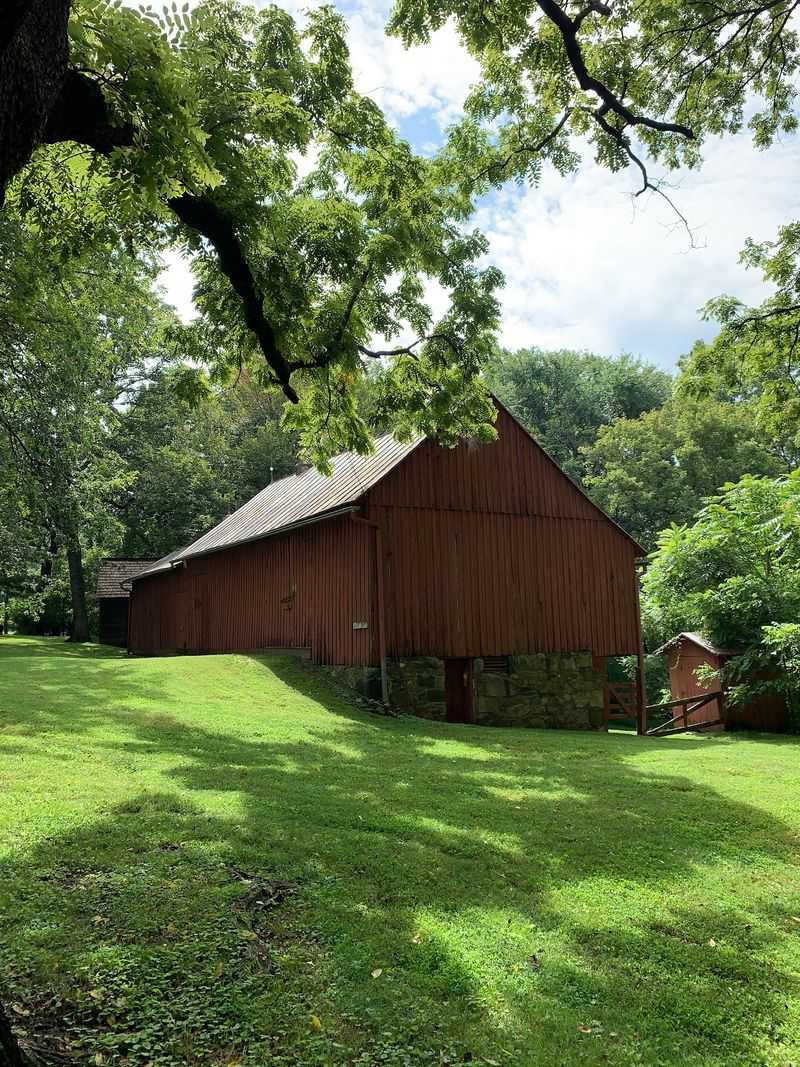
Barns usually do not get much love on history tours, but this one earned mine. The wagon rests inside an early red bank barn, a style the Mendenhall family brought with them from their Pennsylvania Quaker roots.
A bank barn is built into a slope, so you can enter on different levels. Farmers loved this design because animals could stay below while hay and tools stayed up top.
Smart and simple, which matches the whole Quaker way of doing things.
Inside, the wagon has company. I spotted other buggies and wagons from the era, plus farm tools and a set of cobbler’s tools for fixing shoes.
Each piece hints at how much work went into keeping a homestead running without a single store run.
The smell of old wood and dry earth hangs in the air, and the light slips through the gaps in long thin stripes. I liked how the barn felt lived in rather than staged.
A tip from me: look up at the beams and framing before you leave. Seeing how these big timbers fit together gives you real respect for builders who had no power tools, just patience, muscle, and a good plan.
Inside the 1811 Brick House
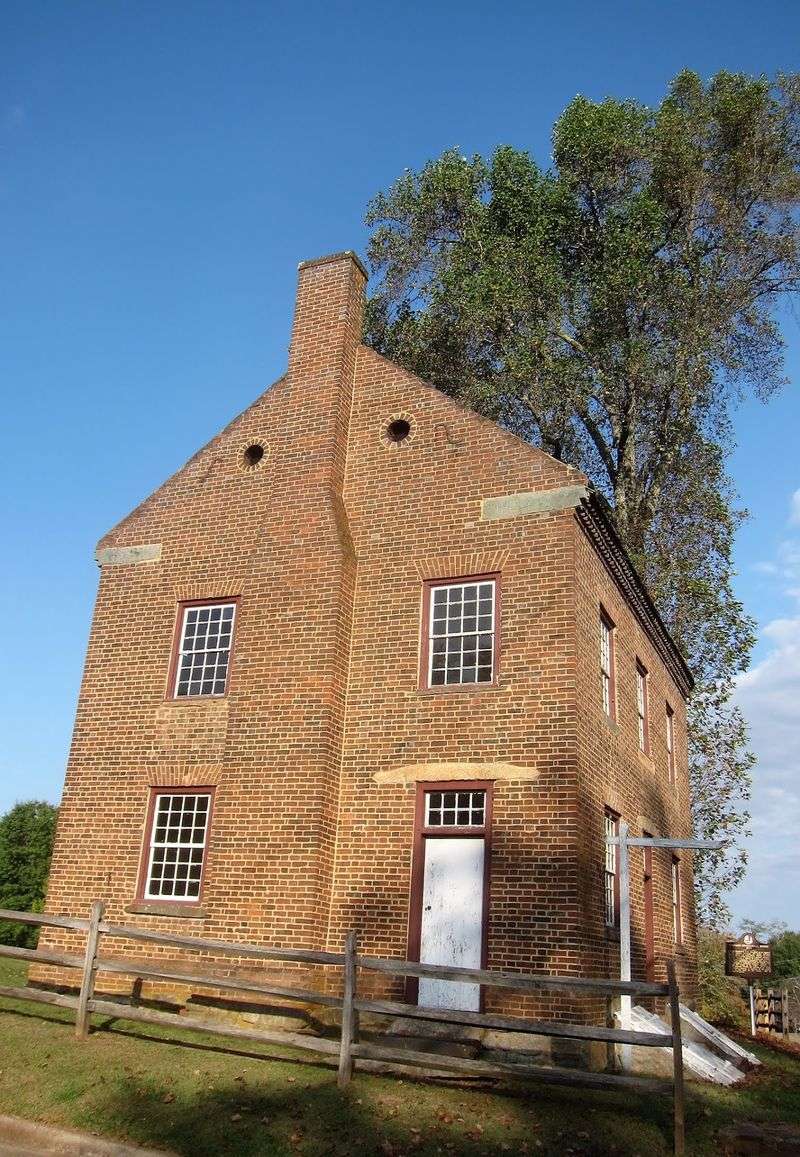
Richard Mendenhall built this two-story brick home around 1811, and it carries the calm, no-fuss look Quakers were known for. A porch wraps around three sides, which made me want to sit down with a glass of lemonade and watch the yard for a while.
Inside, little quirks kept catching my eye. Some rooms sit at different levels and are linked by small steps.
Upstairs there is even a door that opens onto nothing but air, which got a laugh out of me and plenty of guessing about what used to be there.
The stairs are narrow and steep, so take them slowly. I could only imagine climbing them in a long skirt while carrying a candle.
The furniture is simple and solid, and many pieces connect to the Mendenhall family itself. That makes the rooms feel personal instead of like a showroom.
What stuck with me was the idea of the Other South. This house belonged to people who did not hold enslaved workers and who openly pushed back against slavery.
Standing in their parlor, I found that side of Southern history far more real than any textbook paragraph had ever made it.
The Wagon With a Secret Floor
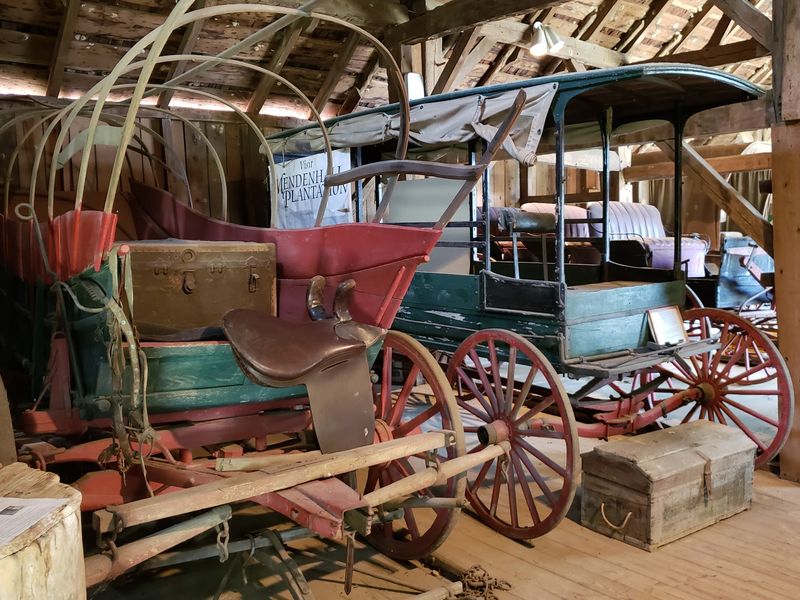
My first look at the wagon was honestly a little underwhelming, and that is exactly the point. It looks like any sturdy farm wagon from the 1800s, worn wood and simple wheels and nothing fancy.
Then you learn what is underneath. A false floor sits above a hidden compartment that runs almost the entire length of the wagon, a space where freedom seekers could lie flat and stay out of sight.
Known as the Stanley-Murrow False-Bottom Wagon, it is the only authenticated wagon of its kind in North Carolina.
I crouched down to look at the depth of that space and tried to picture lying there for hours on bumpy dirt roads. It felt tight just thinking about it.
The wagon is tied to Quaker teens Isaac Stanley and Andrew Murrow, who are said to have used it to carry people north.
What surprised me most was how ordinary the outside looks, because that plainness was its best disguise. A neighbor passing by would see a load of farm goods and nothing more.
Give yourself time here. Walk all the way around, look at the edges of the floor, and let the size of that hidden space sink in before moving on.
Spring House, Schoolhouse, and a Doctor’s Home
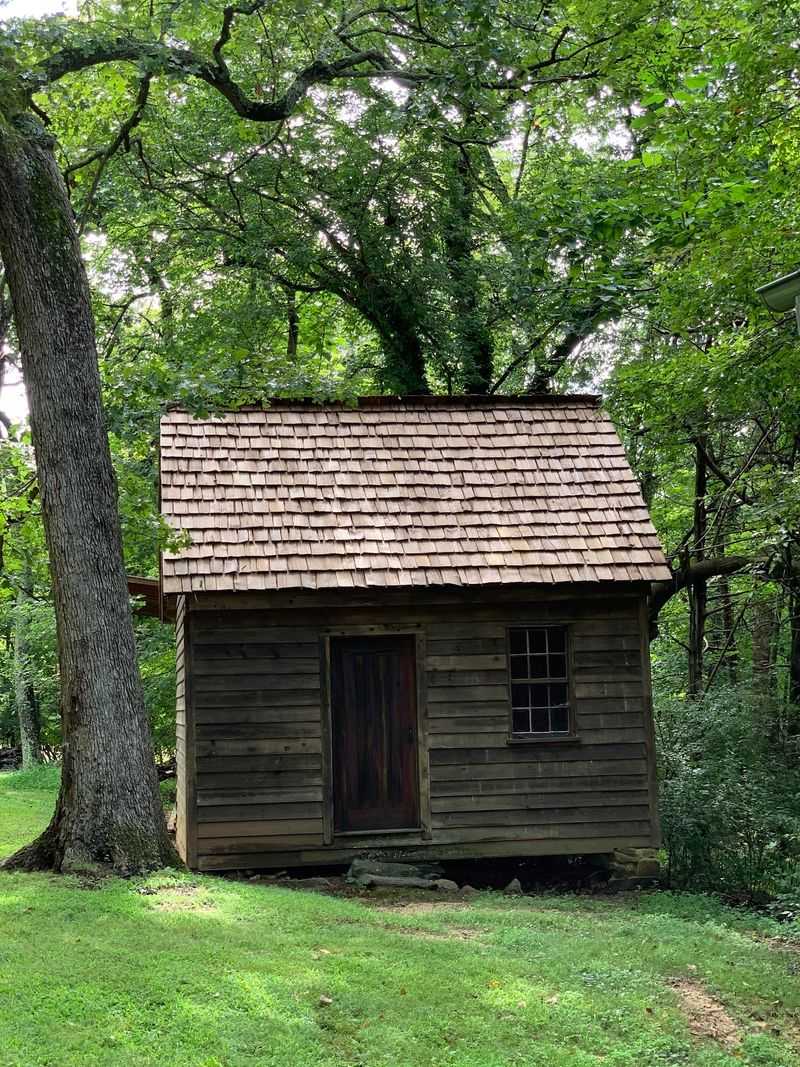
Old-time refrigerators were way cooler than I expected, literally. The spring house was built over a natural spring, and crocks of milk and other food stayed chilled in the cold water flowing through.
Just a short walk away sits a one-room schoolhouse. The Mendenhalls cared deeply about education for everyone, and this little building shows it.
I peeked inside and pictured kids squeezed onto benches, practicing letters on slates while the teacher kept watch.
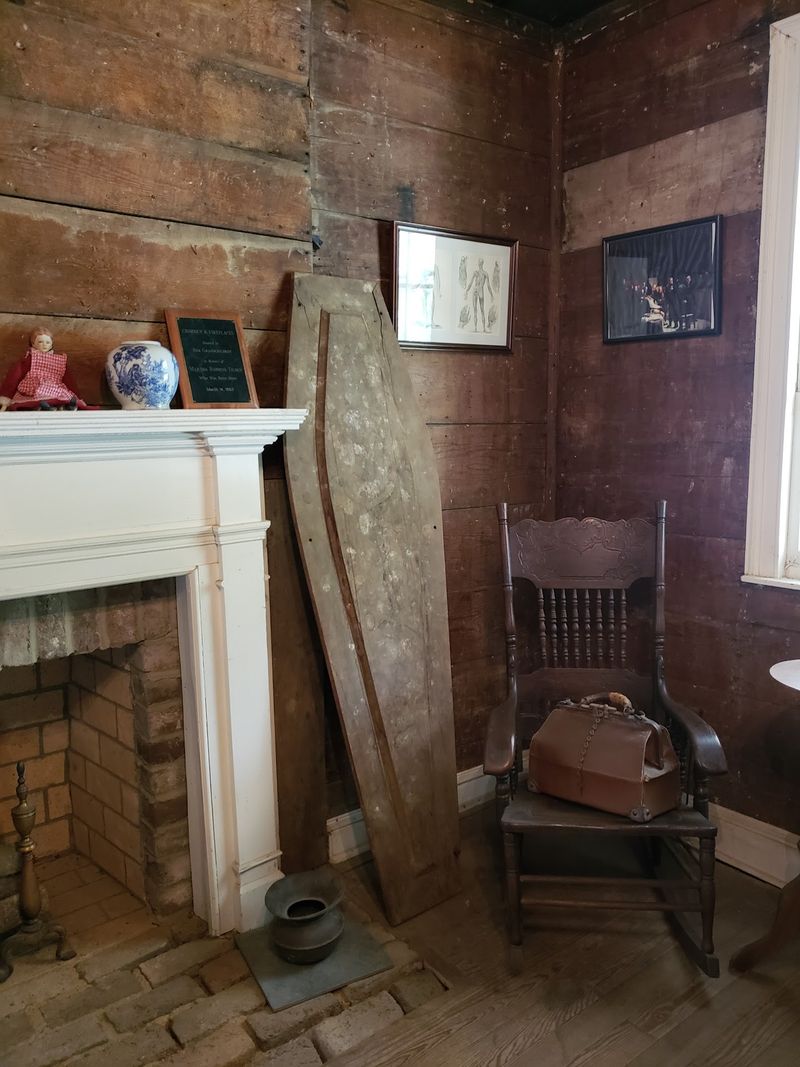
Then there is Dr. Madison Lindsay’s House, which served as one of the area’s earliest medical schools in the 1800s. Jamestown was surprisingly busy with places like this back then.
Some visitors find the medical history a bit spooky, and I admit I enjoyed that shiver too.
These buildings tell a different side of the story than the wagon does. They show daily life, the chores, the lessons, and the healing that kept a community going.
My advice is to wander them in no particular order. Each one is small enough to explore quickly, but the details reward a slower look, like worn doorframes and hand-cut boards that hint at decades of busy hands and footsteps.
Tours That Bring Every Corner to Life
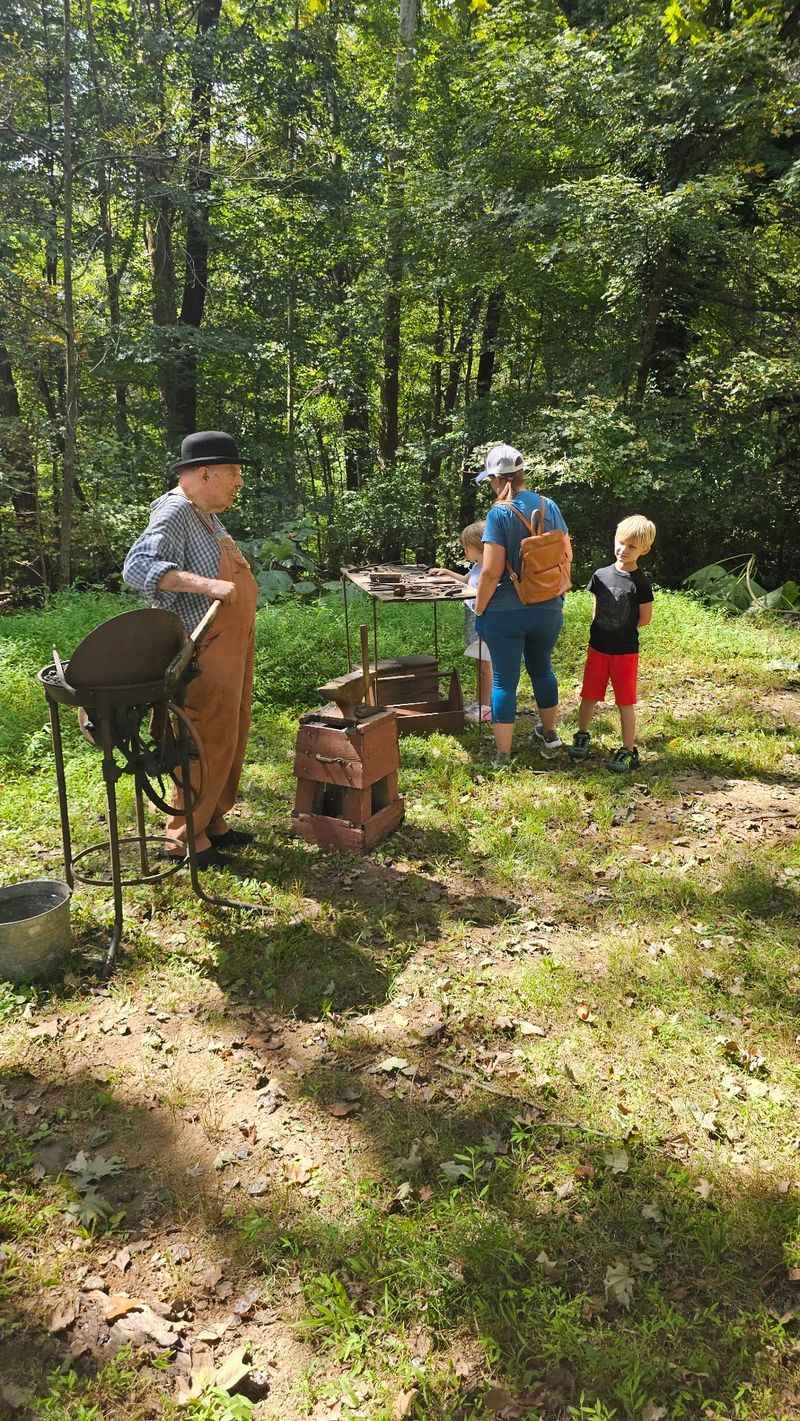
Guided tours are the heart of a visit, and I would not skip one. Visitors often mention how much they learn, and plenty suggest setting aside about two hours so nothing gets rushed.
Small questions make the history stick. Why plant so many walnut trees?
A tanner like Richard Mendenhall had good reasons, and hearing the answer felt like solving a tiny puzzle. Mary Pegg Mendenhall’s loom is another favorite stop, linked to weaving strong fabric and even raising silkworms.
Tour topics cover a lot of ground. You will hear about Quaker beliefs, early building methods, cooking, and clever ways folks stayed cool before air conditioning.
It never felt like a lecture to me.
Hours are limited, so plan ahead. The site is usually open Tuesday through Friday from 11 am to 3 pm and Saturday from 1 to 4 pm, closed Sunday and Monday.
Bring curious kids along too. The hands-on feel of the farm tools, the loom, and that hidden wagon space makes history click for younger visitors in a way a screen just cannot match.
Festivals, Candlelight, and a Lasting Feeling
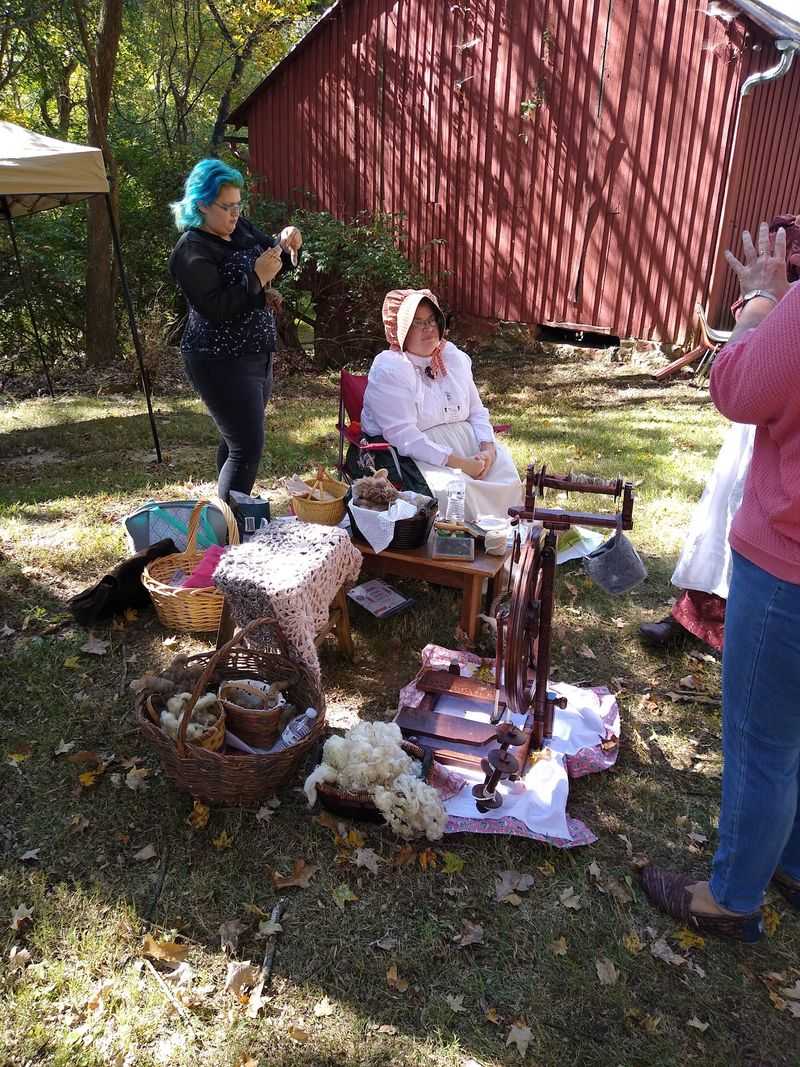
Some places stay quiet all year, but this homestead loves a good gathering. Events like Fiber Arts Day and the Village Fair fill the grounds with crafts, demonstrations, and plenty of chatter.
Many locals look forward to Mendenhall weekend, usually held in September, when craftspeople and vendors set up across the property. Around the holidays, a candlelight tour adds a soft glow to the old rooms.
There has even been a ghost tour featuring a hands-on false bottom wagon guests could explore.
Visiting during an event gives the place a lively buzz. Going on a regular weekday feels calmer and more reflective.
I think both are worth trying if you live nearby.
When I finally headed back to the parking area, my mind drifted to that long hidden space under the wagon floor. The courage of the people who rode inside, and the families who risked so much to help, felt very close in that moment.
Check the official website before you go for upcoming dates. Then slow down, ask questions, and let the stories settle in.
Address: 603 W Main St, Jamestown, NC 27282
