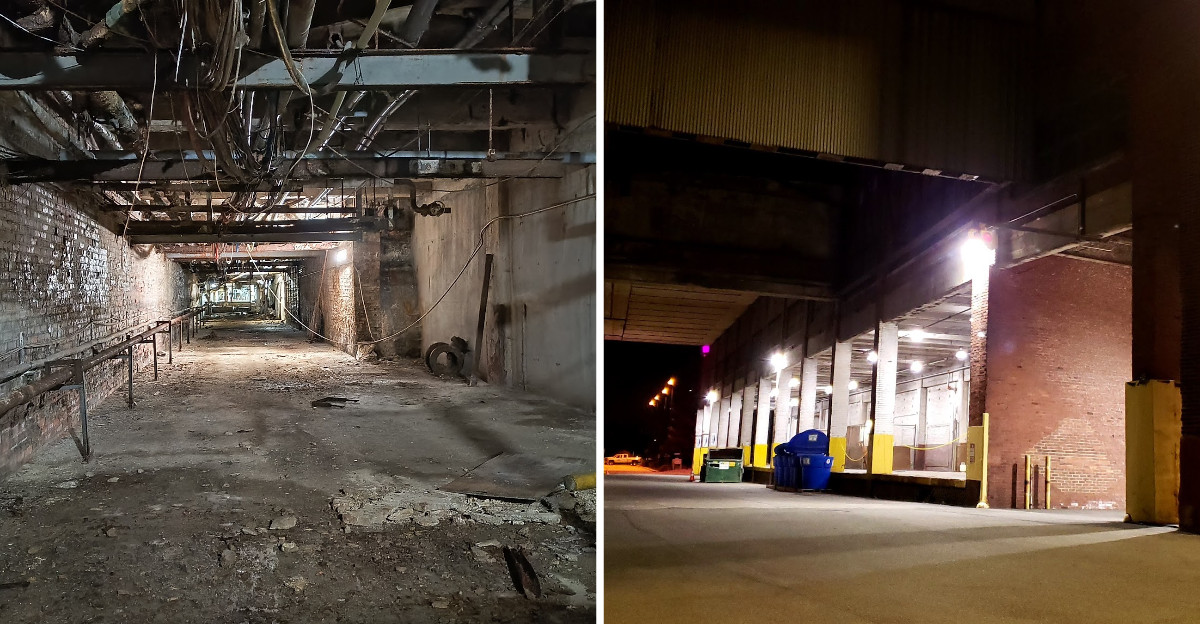
Brick towers on a main street in Ohio hold more than offices and apartments. Beneath them runs a honeycomb of tunnels that workers once used to move materials across a campus of nearly 40 acres, rain or shine.
The site was once the largest rubber plant in the world, and by the end of World War II it had grown into a sprawling industrial empire. Walking above those tunnels now, it is easy to forget what lies below.
The same walls that held machinery and the smell of hot rubber now hold restaurants, apartments, and the energy of a city that keeps reinventing itself. This Ohio landmark hides a secret right underfoot, and the story goes both up and down.
A comfortable pair of shoes is recommended, because the history here has layers.
A Factory That Acted Like Its Own Little City
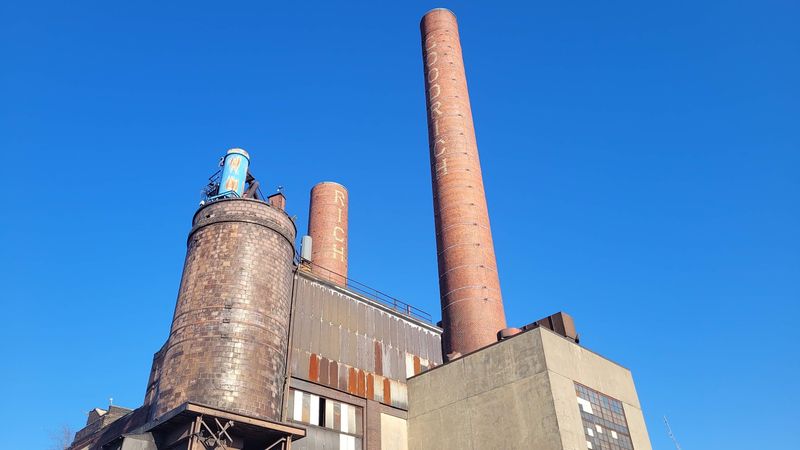
My first look at the complex made me stop and count windows, and I gave up fast. Back in its prime, the B.F.
Goodrich plant spread across more than 90 buildings and about three million square feet of space. That is a lot of brick for one company.
The size alone is impressive, but what really got me was how the place ran itself. Goodrich had its own fire department, its own police, and its own medical services right on site.
Workers did not have to leave for much of anything during a shift.
Here is a fun bit of trivia to share with friends. The factory even had Akron’s first telephone system, which tells you how important this company was to the city.
When most people still sent letters, folks here were already ringing each other across the campus.
As you wander the grounds now, try to picture thousands of people moving between buildings, carrying tools and materials. The scale feels less like a workplace and more like a small town with smokestacks.
Looking up at the old towers helped me understand why Akron earned its nickname as the Rubber Capital of the World. History here is not hidden in a museum case, because you can touch it.
How a Writer Rediscovered the Tunnels
Some of the best stories start with curiosity, and this one is a great example. After B.F.
Goodrich moved its operations, University of Akron professor and author David Giffels explored the empty buildings. During those explorations, he found what he described as a honeycomb of underground tunnels.
He did not stop at just looking around. Giffels dug into research and talked with former employees to learn how the tunnels were actually used.
Those conversations helped explain the everyday work of moving materials from one building to another.
I find that part really inspiring. It shows how much history lives in the memories of regular working people, not just in old documents.
Their stories turned dark passages into something that makes sense.
For travelers, this is a good reminder to slow down when visiting old industrial sites. Read a little before you go, and pay attention to small details like old doorways, worn steps, and filled-in openings.
Those clues can hint at a bigger story beneath the surface, literally in this case. If you enjoy reading, books by local authors can add so much depth to a visit and make every brick feel like it has something to say.
The Honeycomb Hidden Underground
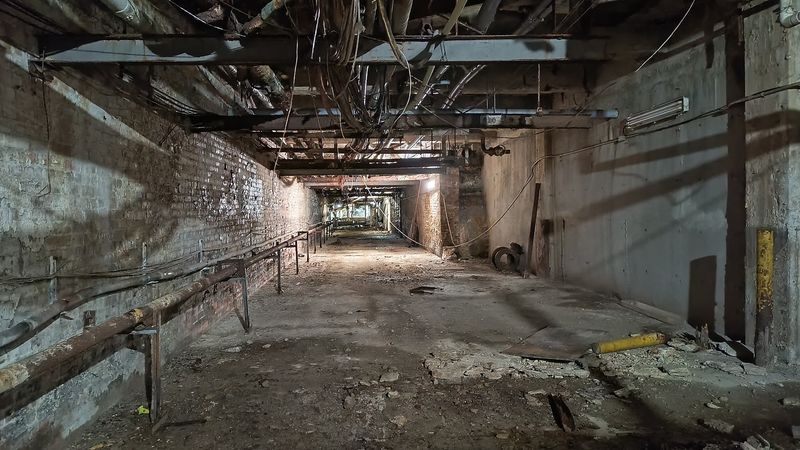
Underground passages always make my imagination run wild, and the ones at Canal Place are the real deal. A network of tunnels links the old Goodrich buildings, letting workers move between them without stepping into the Ohio weather.
Anyone who has lived through a Northeast Ohio winter will understand why that mattered.
The main job of the tunnels was practical. Workers used them to haul materials across the nearly 40-acre campus, keeping production moving no matter how much snow piled up outside.
It was clever planning that saved time and kept heavy loads off busy surface paths.
Other Akron tire companies had tunnels too. Still, the size of the Goodrich network stood out from the rest, and that is part of what makes this site so special.
The tunnels are no longer used for their original purpose, so you will not see carts rolling through them today. In the past, the Summit County Historical Society has offered tours of parts of the network.
If you are a history fan, I suggest checking with them before your trip to see if any tours are coming up, since a peek below ground is something you will be talking about for weeks.
Wartime Secrets Beneath South Main Street
World War II changed everything for Akron. The city played a huge role in making synthetic rubber, which the country badly needed for tires, equipment, and more.
That made Akron an important place, and also a possible target.
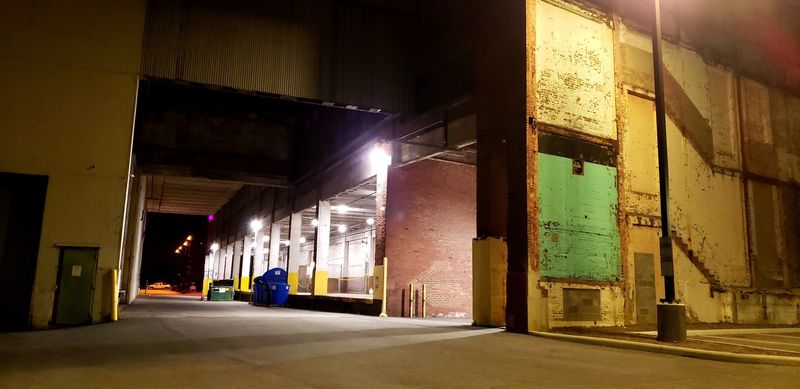
Because of that, the Goodrich tunnels may have had another use. Historians believe they could have served as designated hiding places during the war years.
Thinking about workers ready to head underground for safety gave me chills as I stood near the old buildings.
It is easy to forget how close wartime worries felt even in the middle of Ohio. The factory was busy around the clock, and people here knew their work mattered far beyond the city limits.
Every tire and rubber part helped support the war effort.
When you visit, take a quiet moment to think about those workers. Many were young, some were new to factory jobs, and all of them were part of a much larger story.
The tunnels connect more than buildings, since they also link today’s visitors with a generation that kept the country moving. History buffs can pair this stop with a visit to the Summit County Historical Society for more local context.
Saved From the Wrecking Ball
Picture this whole complex nearly gone. In the late 1980s, after Goodrich wrapped up operations, the massive site was slated for demolition.
It could have easily become an empty lot.
Luckily, developers saw something worth saving. They bought the property and turned it into Canal Place, a mixed-use space that gives the old factory a brand new purpose.
Instead of tearing down history, they found a way to keep living inside it.
Today, nearly 100 businesses call Canal Place home. You will find office suites, warehouse and flex spaces, and residential units all sharing the same historic footprint.
Amenities include two on-site restaurants, a daycare, a fitness center, conference rooms, fiber-optic networks, and 24-hour security.
I love this kind of comeback story. It proves that old buildings can stay useful and still keep their character, with tall windows and thick brick walls that newer buildings rarely match.
As you explore, notice how modern signs sit beside old industrial details, creating a mix of past and present that feels very Akron. It is a smart lesson in reuse, and a hopeful one too, especially for anyone who loves seeing a city honor where it came from.
Living Inside History at The Goodrich
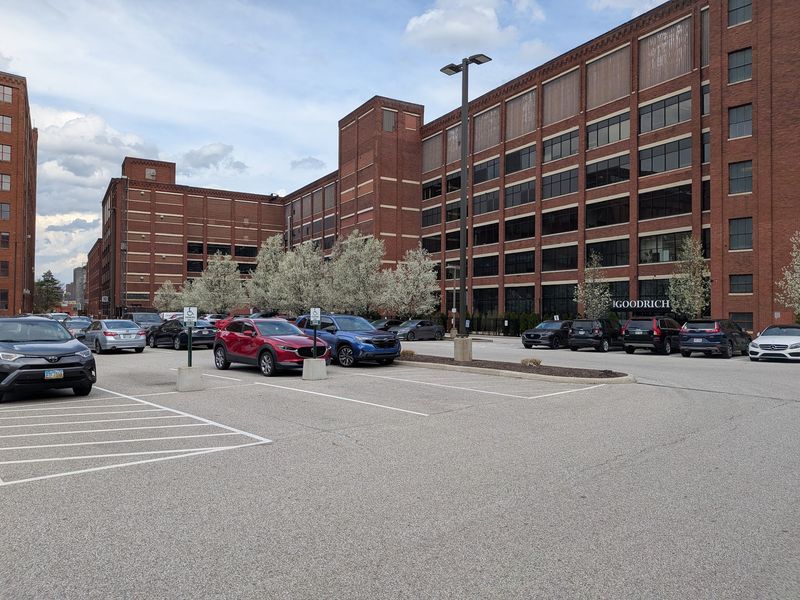
Imagine waking up in a building where tires were once made. That is everyday life for residents of The Goodrich, the apartment community created from former Buildings 10 and 17.
The luxury apartments opened in 2022, adding a fresh chapter to the complex.
Converted factory spaces have a charm that is hard to copy. High ceilings, big windows, and solid brick give rooms a roomy, airy feel.
Natural light pours in, and the industrial bones remind you that this place has a past.
Even if you are just visiting, it is fun to see how the neighborhood is changing. People living on site bring a steady buzz to the area, from morning walks to evening dinners.
The complex feels less like an office park and more like a lively community.
If you are thinking about moving to Akron, this spot is worth a look for its mix of history and convenience. Restaurants, a fitness center, and the Ohio and Erie Canal Towpath are close by.
For travelers, simply strolling past the buildings offers a great look at how old factories can turn into homes. Bring your camera, because the brick and glass make great photos.
Food, Fun, and a Towpath Stroll
Hunger hit me right after my history walk, and Canal Place had my back. The complex is known for its on-site restaurants, with spots like R.
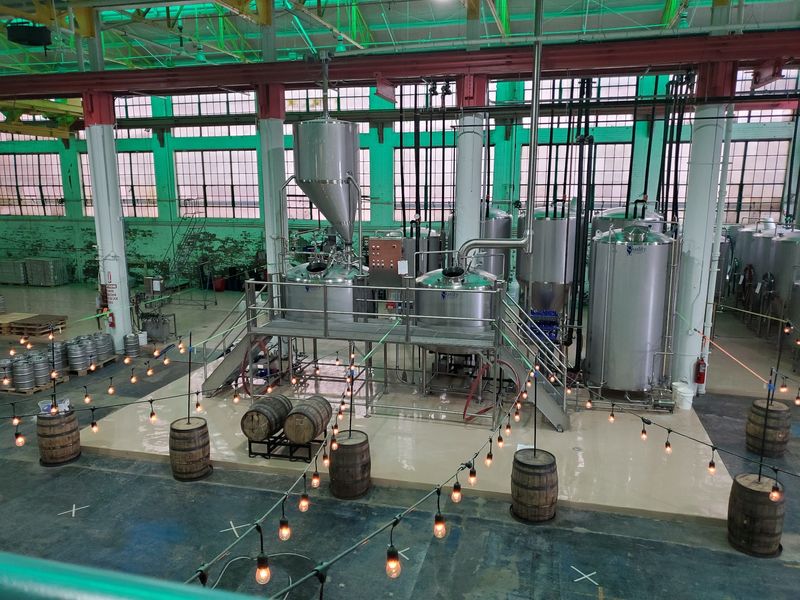
Shea Brewing and Spaghetti Warehouse drawing hungry crowds. Pizza, burgers, and hearty pasta plates make this a satisfying stop.
The spaces themselves are part of the fun. Since the buildings were once a rubber factory, sound bounces around a bit, so expect a lively, chatty atmosphere.
Some spots even have pinball machines, which is perfect for a little friendly competition after dinner.
A small tip from me: the complex is big, and finding your way around can take a minute on the first visit. Give yourself extra time and follow the signs.
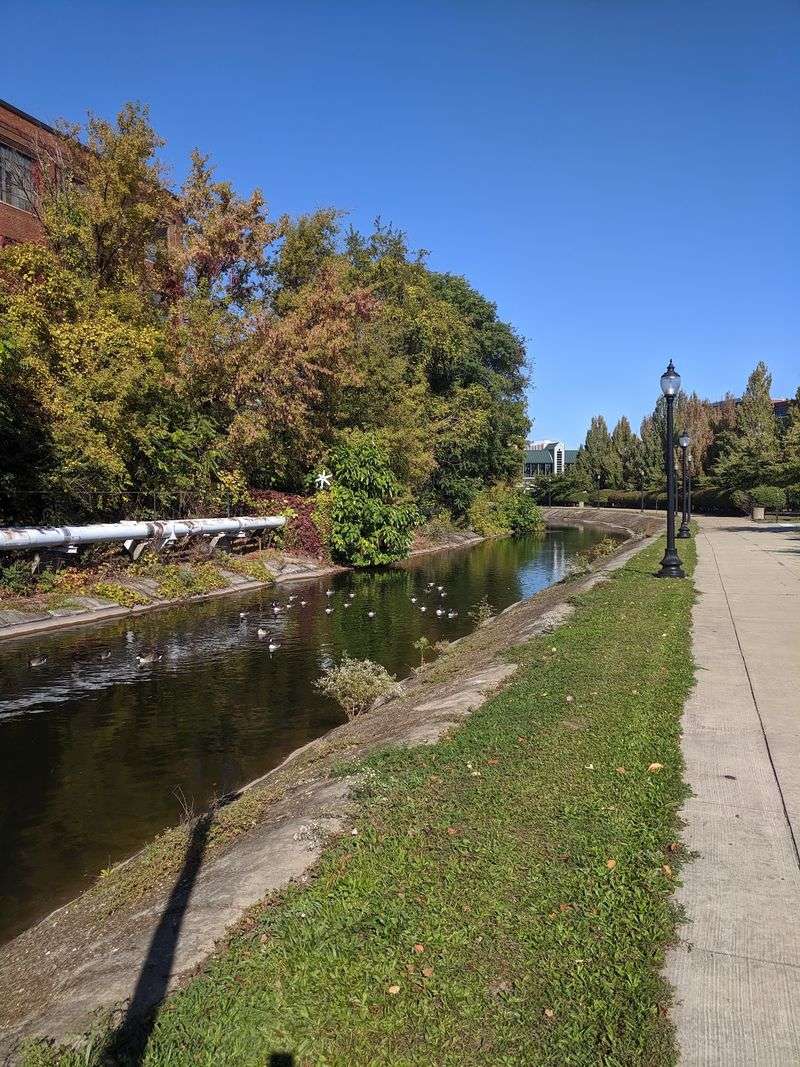
Afterward, stretch your legs on the nearby Ohio and Erie Canal Towpath Trail, which sits within walking distance. It is a lovely way to end the day, watching the old smokestacks fade in the evening light.
You will leave full, happy, and amazed that so much life now fills a place once powered by rubber and hard work.
Address: 530 S Main St, Akron, Ohio 44311
