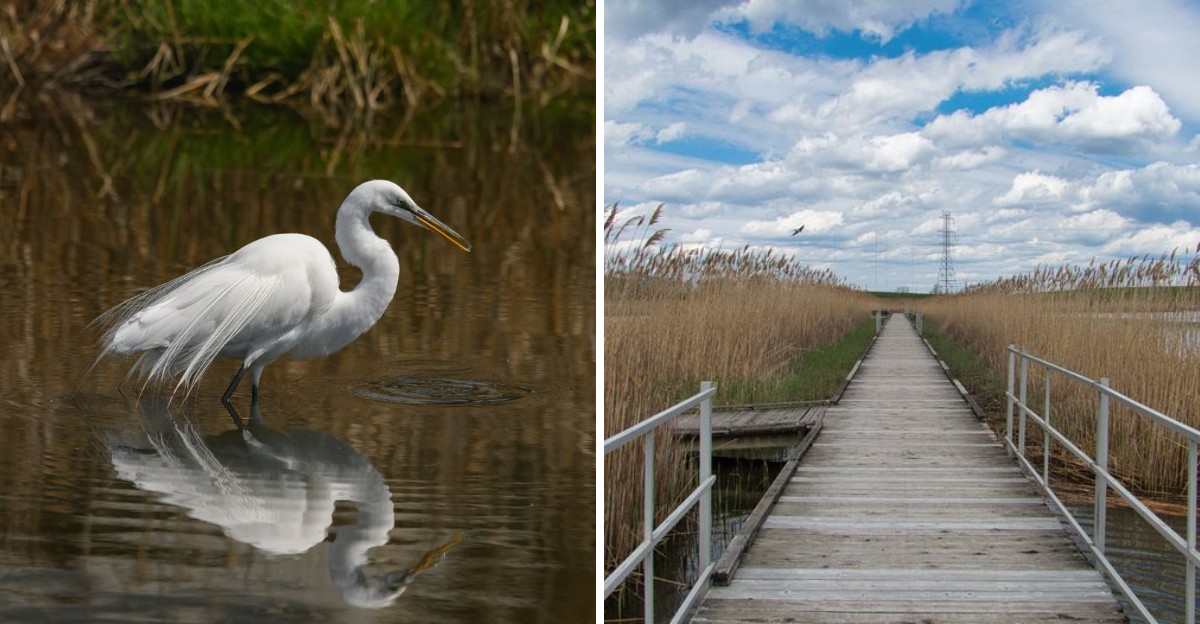
You would never guess this place used to be a dump. Seriously.
This remarkable New Jersey park transformed former landfill land into trails, wildlife habitat, boardwalks, and sweeping skyline overlooks.
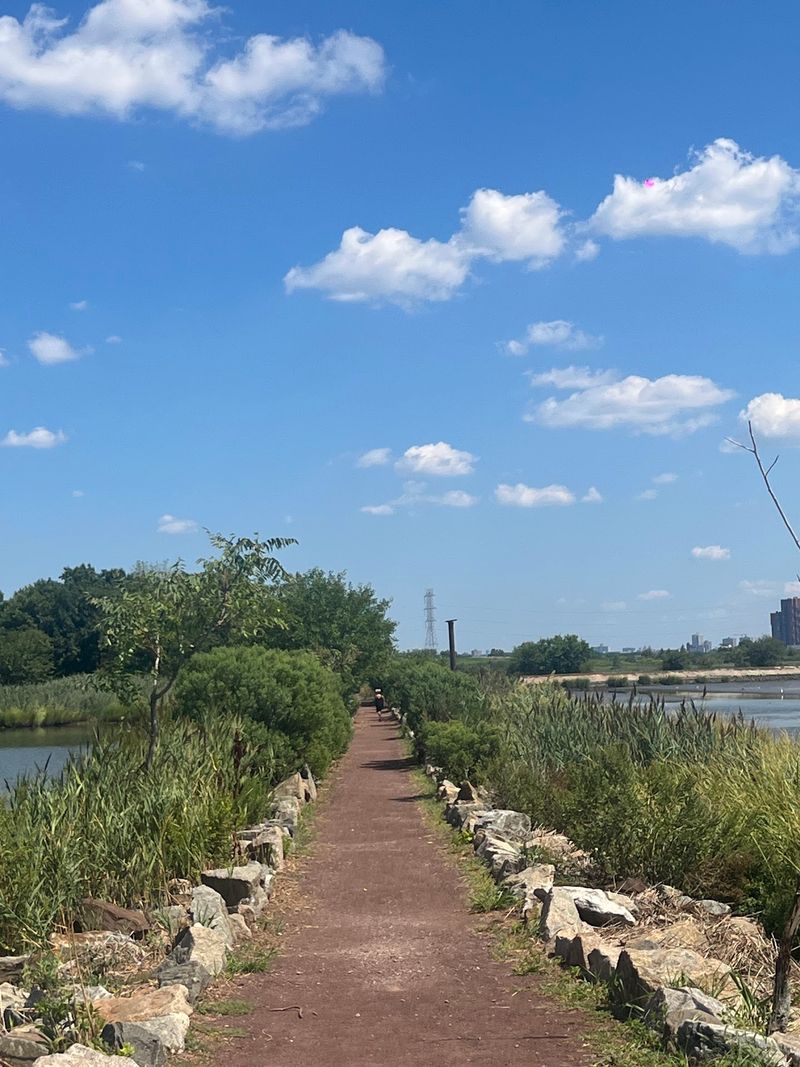
The trails are flat and easy, perfect for a stroll without breaking a sweat.
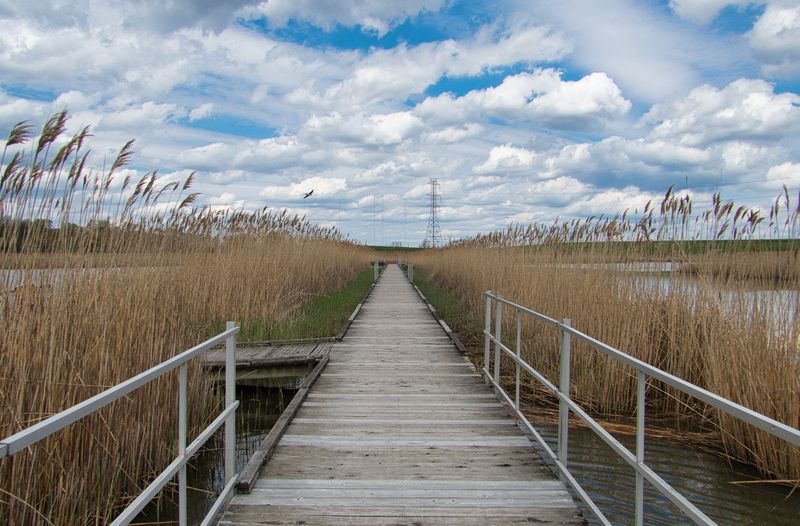
Wooden boardwalks wind through marshland where birds and turtles hang out like they own the place. Over 200 bird species have been spotted here, so bring binoculars if you have them.
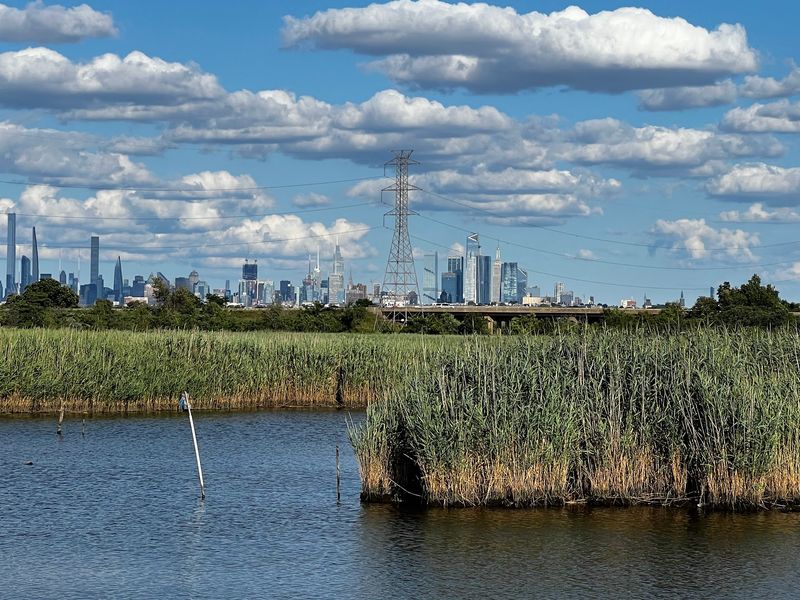
One trail climbs an artificial mound, and from the top you can see the Meadowlands and the Manhattan skyline stretching across the horizon.
It is quiet, peaceful, and completely free.
Hard to believe this used to be a place people avoided. Now it is a place people drive to.
New Jersey really knows how to turn trash into treasure.
From Trash Heap To Treasured Wetland
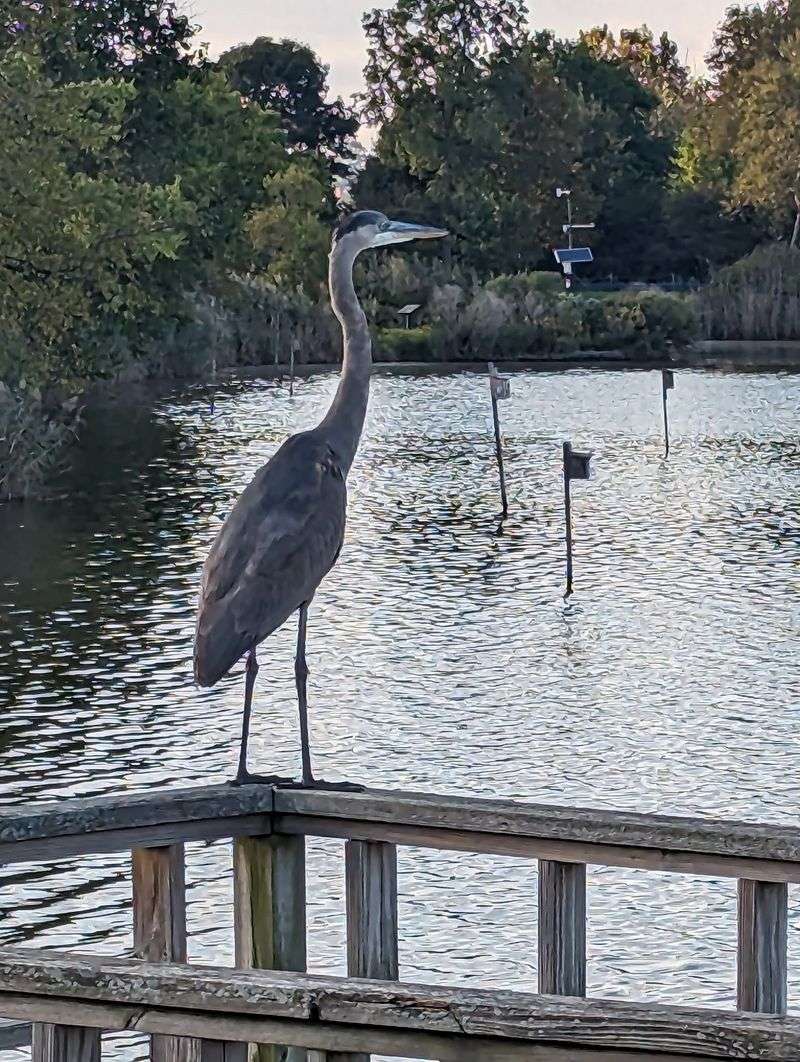
Hard to believe, but the ground under these grassy slopes was once a working landfill. Trash was dumped across the Meadowlands for decades, and the marshes nearby suffered for it.
What followed was an impressive environmental turnaround, with former landfill areas reclaimed while surrounding wetlands and wildlife habitat were protected and restored. Engineers capped the waste, shaped the land, and let the wetlands come back.
Richard W. DeKorte Park is the result, and it stands as proof that damaged land can get a second life.
Walking the trails now, you see cattails, open water, and dozens of birds working the shallows.
Signs around the park explain how the restoration happened, which makes the visit feel educational without being dull. Kids especially seem to get a kick out of the idea that they are standing on top of old garbage.
For anyone curious about how cities repair their mistakes, this place is a living, breathing example that is genuinely pleasant to spend an afternoon in.
The Marsh Discovery Trail Boardwalk
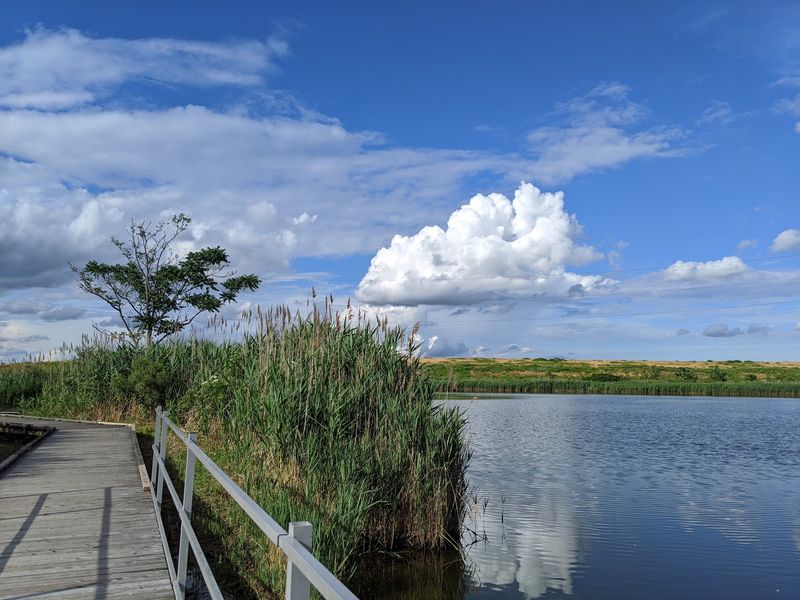
My favorite stretch of the whole park is the half-mile boardwalk that floats out over the tidal marsh. It sits so low that the water seems to lap right at your feet.
Officially called the Marsh Discovery Trail, it crosses a tidal impoundment and gives you a duck’s-eye view of the ecosystem. You can watch small fish dart through the shallows and see crabs moving in the mud.
Little observation blinds and benches along the way let you pause without blocking anyone. Bring binoculars if you have them, because the birds get remarkably close out here.
Sections of the boardwalk close from time to time for repairs, so it helps to have a backup route in mind. Even a partial walk is worth it.
On breezy days the reeds rustle constantly, and the whole structure feels wonderfully exposed to the elements. Wear a hat and hold onto it, because there is nothing out there to block the wind.
Skyline Views That Sneak Up On You
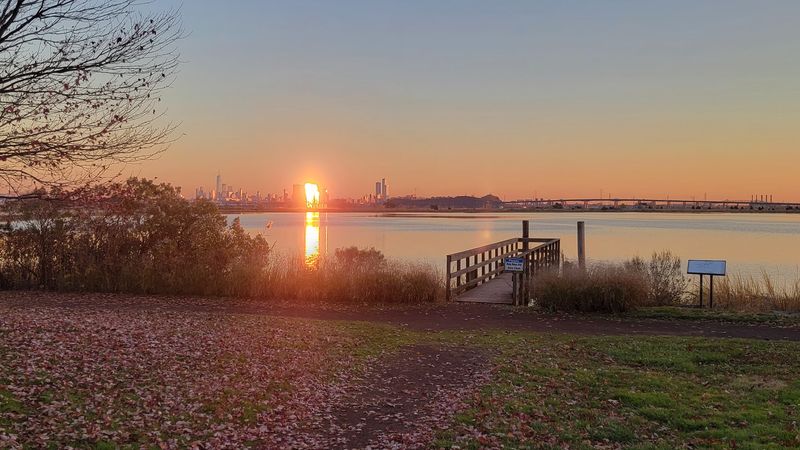
You round a bend, glance up, and there it is: the New York City skyline sitting on the horizon like a paper cutout. It catches people off guard every single time.
The contrast is what makes it special. In the foreground you have marsh grass and herons, and far behind that, a wall of towers.
Sunset is the moment to be here if you can manage it. Light spreads across the open water, the buildings turn gold, and photographers quietly claim their favorite spots along the trails.
Higher ground offers the widest views, so climbing one of the overlook paths pays off. From up there you can trace the whole layout of the wetlands.
Because the park closes around dusk, plan your timing carefully rather than assuming you can linger after dark. Arriving an hour or so before closing usually works nicely.
Even on hazy days the skyline shows up as a soft silhouette, which honestly has its own charm.
A Birding Hotspot On The Atlantic Flyway
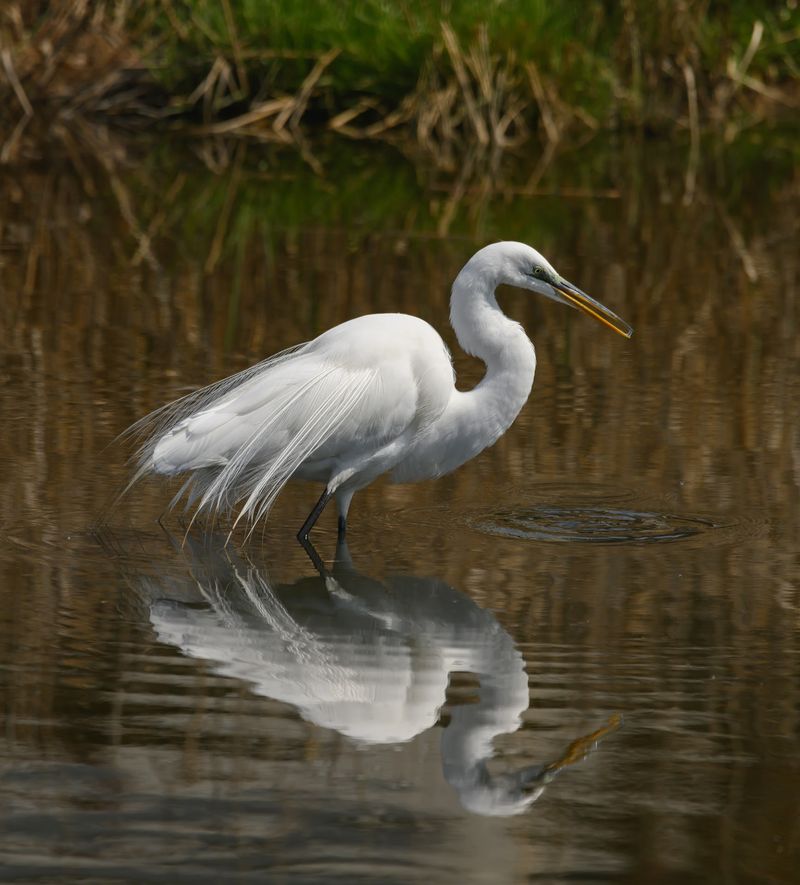
Nearly 300 bird species have been recorded here, which explains all the tripods you will spot along the paths. Sitting on the Atlantic Flyway, the park acts as a rest stop for migrating flocks.
Egrets are the crowd pleasers, wading through the shallows with that slow, deliberate step. Ducks and geese are everywhere, and raptors circle overhead more often than you would expect.
Spring and fall migration bring the biggest variety, but there is always something moving. Winter waterfowl gather on the open water, and summer brings nesting activity in the reeds.
You do not need fancy gear to enjoy it. A cheap pair of binoculars and a bit of patience go a long way.
Move slowly and keep your voice down near the water, and the birds will tolerate you far better. Sudden movements send whole groups scattering.
For beginners, this is one of the friendliest places to learn, since the sightlines are open and the birds are plentiful and close.
Meadowlands Environment Center And Flyway Gallery
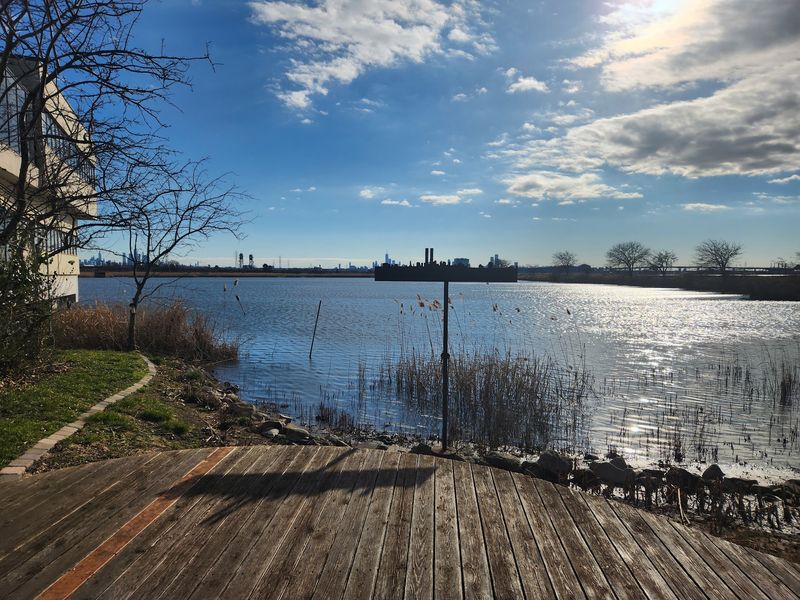
The Meadowlands Environment Center remains an important part of DeKorte Park’s environmental education program, but public building access can differ from general park access. Check NJSEA’s current schedule and building status before planning an indoor stop.
The Flyway Gallery often features artwork, which adds an unexpected creative layer to a nature building. It is a nice change of pace after an hour of walking.
Best of all is a hexagonal, glass-enclosed room offering close to a 360-degree view of the marshes and the distant skyline. Sitting in there feels like being inside a giant lookout.
Hours for the center differ from the park’s general dawn-to-dusk access, and it is not always open when the trails are. Checking ahead saves disappointment.
If you are visiting with school-age kids, budget extra time here. The combination of hands-on exhibits and huge windows tends to hold their attention longer than you would guess.
Stargazing At The William D. McDowell Observatory
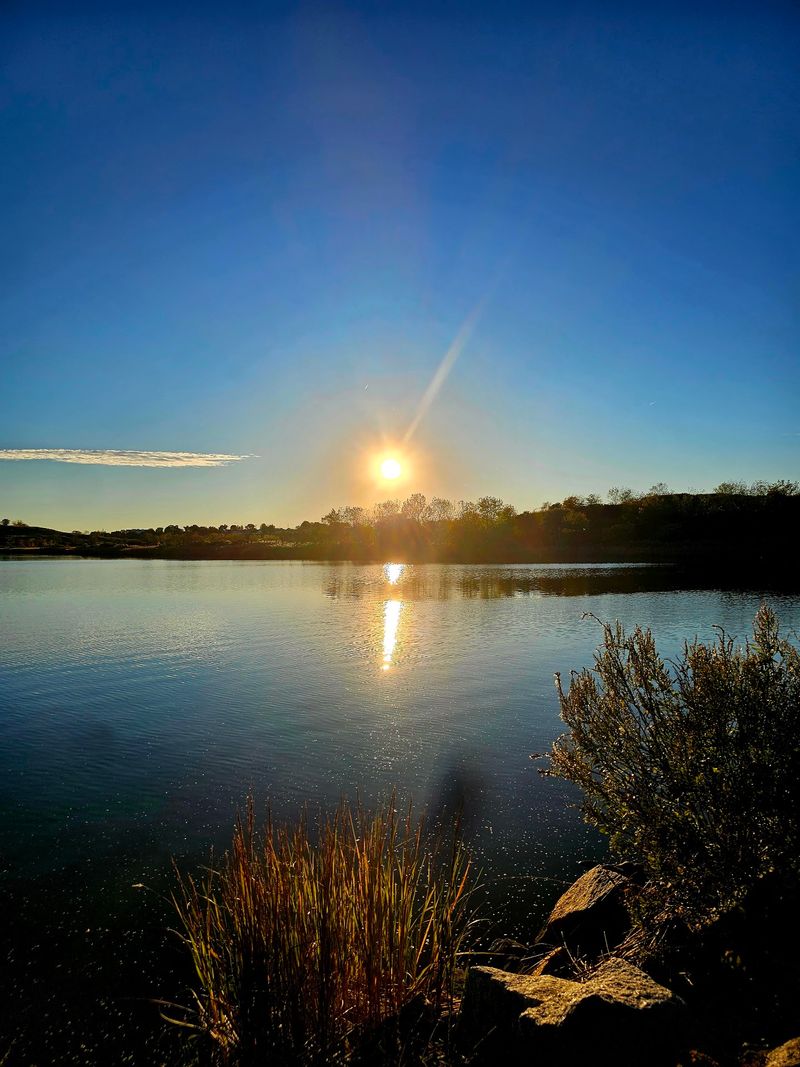
Not many parks come with a telescope, but this one does. The William D.
McDowell Observatory sits on the grounds and opens on Wednesday evenings, weather permitting.
Visitors need to be at least 10 years old to look through the equipment, so it suits older kids and adults. Clear skies matter enormously, and cloudy nights mean cancellations.
Given how close the park sits to major cities, the viewing conditions are better than you might imagine. Open marshland means fewer buildings blocking the horizon.
Planets, the moon, and brighter deep-sky objects are typical targets depending on the season. Staff-led sessions make it approachable for people who have never used a real telescope.
Dress warmer than you think you need to, because standing still outdoors gets chilly fast once the sun goes down. A thermos of something hot helps too.
It is one of those quiet local perks that turns a simple park visit into something genuinely memorable, and it costs you nothing but an evening.
Trails For Every Energy Level
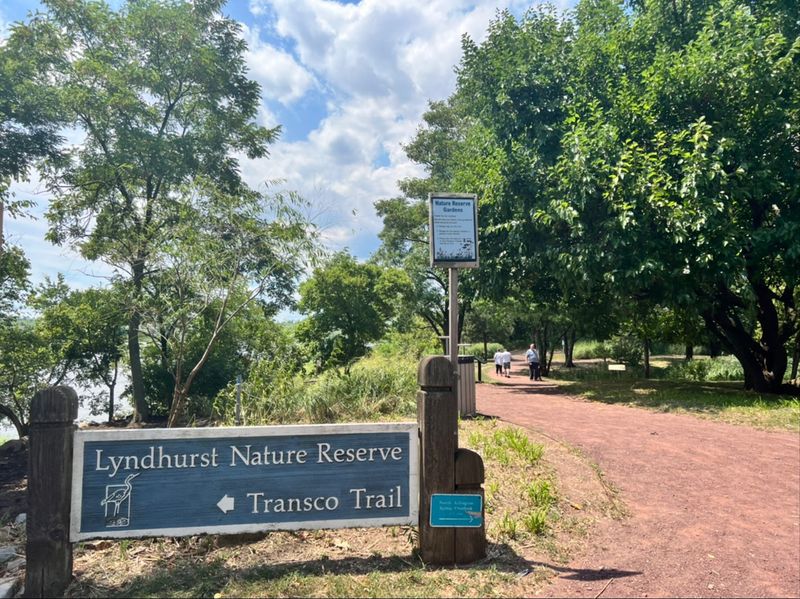
Roughly 3.5 miles of trails weave through the park, and none of them will wreck your legs. Most surfaces are crushed granite, flat and easy underfoot.
Options include the Kingsland Overlook, Lyndhurst Nature Reserve, Shorewalk, Saw Mill Creek Trail, and the Transco Trails. Lengths run from about a quarter mile up to roughly three miles.
Because they interconnect, you can build a short loop or link several together for a longer outing. Getting badly lost is nearly impossible given how open the terrain is.
The Anthony Scardino Jr. Overlook Trail climbs to one of the highest points around, rewarding the mild effort with sweeping vistas. It is the closest thing here to a hill workout.
Shade is scarce, so summer visits call for water, sunscreen, and an early start. There is very little to hide under when the sun is high.
Benches appear at reasonable intervals, which makes the whole network friendly for older walkers and small children alike.
The Butterfly Pollinator Garden
Set among the bigger attractions is a small pollinator garden that rewards anyone willing to slow down. Butterflies drift between blossoms while bees work the flower heads.
Late summer tends to be peak season, when the blooms are thickest and the insect traffic heaviest. Stand still for a minute and you will notice how much activity is packed into a small space.
Gardens like this exist for a practical reason. Pollinators need reliable food sources, and restored land benefits from having them around to keep native plants going.
For families, it is an easy win. Little kids who lose interest in distant birds usually light up when a butterfly lands nearby.
Photographers with macro lenses will find plenty to work with, and no long lens is required.
Take the hint from the plantings if you garden at home. Many of the species here grow well throughout the region and will bring the same visitors to your own yard.
World Trade Center Memorial Grove
Set apart from the busier paths, the World Trade Center Memorial Grove offers a place to stop and think. Trees and a marker anchor the space, and the mood shifts noticeably as you approach.
What makes it hit differently is the setting. From this side of the park, the skyline that the memorial honors is visible in the distance.
Visitors tend to lower their voices without being asked. It is not a large area, but it carries real weight.
Benches nearby let you sit for as long as you like, watching the marsh and the horizon at the same time.
If you are bringing children, it can be a gentle way to talk about history in a calm outdoor setting rather than inside a museum.
Give yourself a few unhurried minutes here before continuing on. The rest of the trails will still be waiting, and the contrast between quiet reflection and open marshland is part of what makes this park feel layered rather than simple.
Planning Your Visit The Smart Way
A little planning turns a good visit into a great one. Parking sits right at the entrance, and the trails branch off almost immediately.
Gates open around dawn and close at dusk, while the Environment Center keeps its own separate hours. Boardwalk sections occasionally shut for maintenance, so having a flexible route in mind is wise.
Restroom facilities are limited, which is worth knowing before a long walk. Portable options in the lot are typically what you will find.
Planes on approach to Newark pass overhead regularly, and the highway hums in the background. Somehow it does not ruin the peace.
You will find Richard W. DeKorte Park at 1 DeKorte Park, Lyndhurst, NJ 07071, an easy detour for anyone traveling through northern New Jersey with an hour or two to spare.
