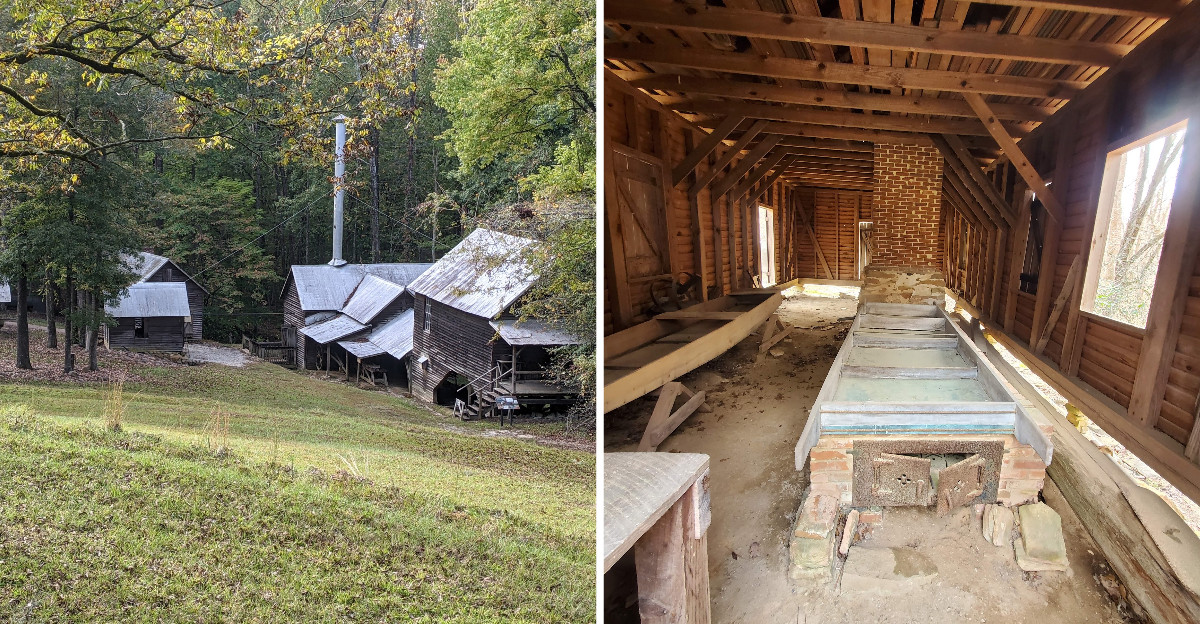
Red clay hills in Georgia hold a family story that spans more than 140 years. The same piece of land was worked through war, sickness, and the arrival of steam power.
What amazed me most was that the actual machines still sit right where they were left. Standing next to a cotton gin and a sawmill that once roared to life, it was easy to picture the sawdust flying.
Goats nibble grass nearby, and a proud rooster struts around like he owns the place. The buildings are weathered, the equipment is rusted, and the whole farm feels like a moment paused in time.
Walking the grounds, the weight of all those years settles in. Real history you can see up close makes this little farm a trip worth taking.
For anyone who loves the past without glass cases, this Georgia spot delivers.
A Farm That Stayed in One Family for Generations
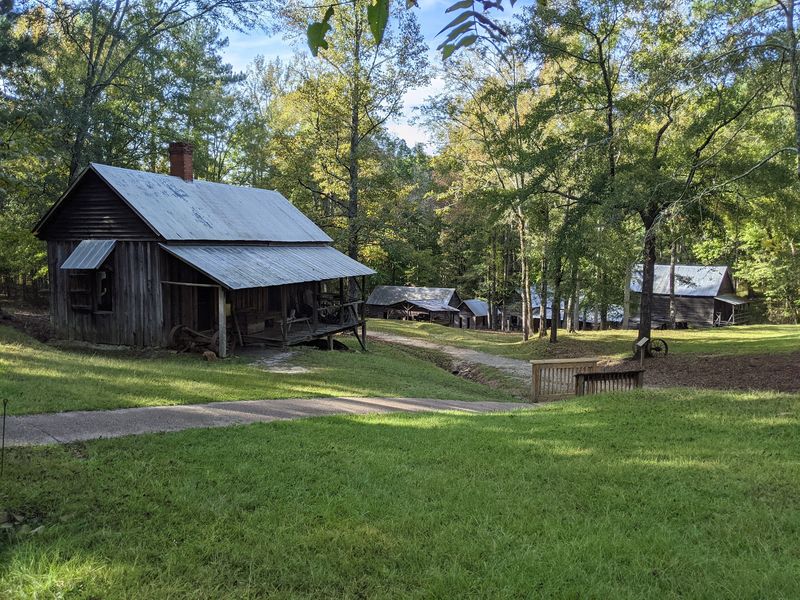
My first thought on arrival was how rare this kind of place is. Most farms change hands many times, but the Jarrell land stayed with one family for over 140 years.
That long stretch of ownership is what makes this site so special.
John Fitz Jarrell started the cotton farm in 1847. His children and grandchildren kept it going through the Civil War, the end of slavery, typhoid fever, and the boll weevil that wrecked cotton crops across the South.
Every building here tells a piece of how they adapted, and the family later donated the property so others could learn from it.
It helps to start in the visitor center, where a short film explains the family history. The video gave me names and faces to connect with the buildings I would see later.
Visitors also learn about the enslaved people whose forced labor worked these fields before 1865, a hard but necessary part of the story.
A printed trail map guides you around the grounds at your own pace. Signs at each stop share quick facts, so you never feel lost.
I recommend giving yourself at least two hours, because the details really add up.
John Jarrell’s Simple Heart Pine House
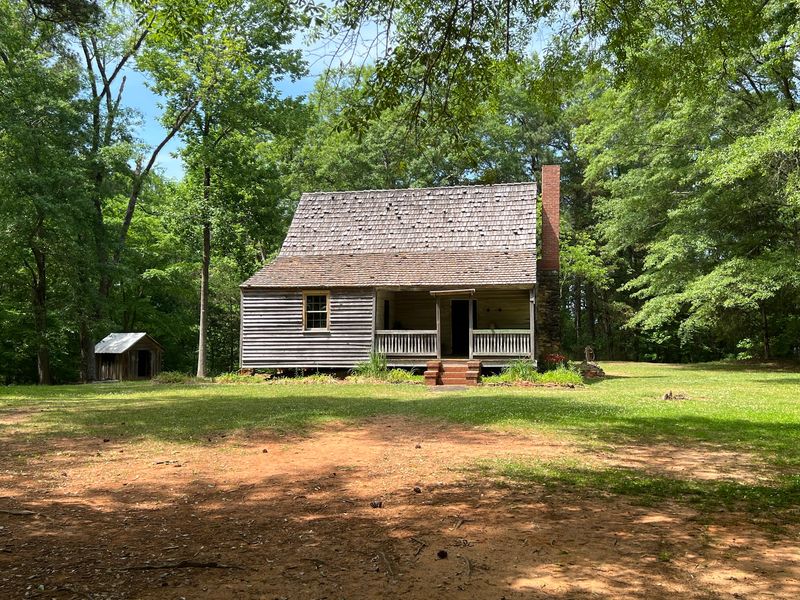
Forget the grand white columns you see in movies. John Jarrell’s farmhouse, built around 1847, is plain, sturdy, and honest.
I liked it right away for that reason.
The house is made of heart pine, a tough wood cut from the center of old longleaf pine trees. It resists rot and bugs, which explains why the boards still look solid today.
John also built much of the furniture himself, and some of those handmade pieces remain inside.
Peeking through the rooms, I noticed how small and practical everything was. There were no fancy decorations, just useful items for a busy farm family.
It made me think about how much work went into simply getting through a single day back then, from cooking to sewing to keeping warm in winter.
By 1860 this house sat at the center of a 600-acre cotton operation that relied on enslaved workers. Only a brick chimney remains from the housing where enslaved people and later tenant farmers lived.
Take a moment there, because it adds weight to everything else you see.
Fun fact: heart pine is so dense that old builders sometimes bent nails trying to hammer into it.
Jarrell and His Big Family Home
Twelve kids. That number stuck with me the whole afternoon.
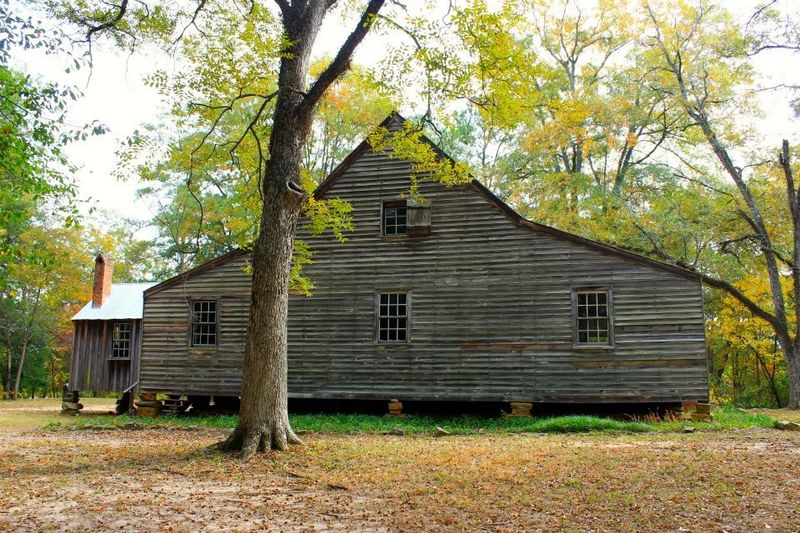
Benjamin Richard Jarrell, raised a dozen children on this farm, and his 1895 house still stands.
Jarrell was a teacher before he came home to help run the family land. His choice to return changed everything.
He brought fresh ideas at a time when cotton alone could no longer keep a farm alive, especially once the boll weevil began chewing through Southern fields.
His house is smaller than you might guess for such a crowd. Inside, I tried to imagine bedtime with that many siblings, and honestly it sounded both noisy and fun.
The rooms show how a family shared space and chores, with older kids helping younger ones and everyone pitching in.
One of Jarrell’s daughters, Mattie, lived on the property until the 1950s, and rangers sometimes share stories about her life. If a ranger is nearby, ask questions.
Several visitors have been invited inside buildings for a closer look, and those extra details really bring the walls to life.
Families with kids will enjoy comparing their own homes to this one. It sparks great conversations on the drive back.
Steam Engines and a Mill Complex Frozen in Time
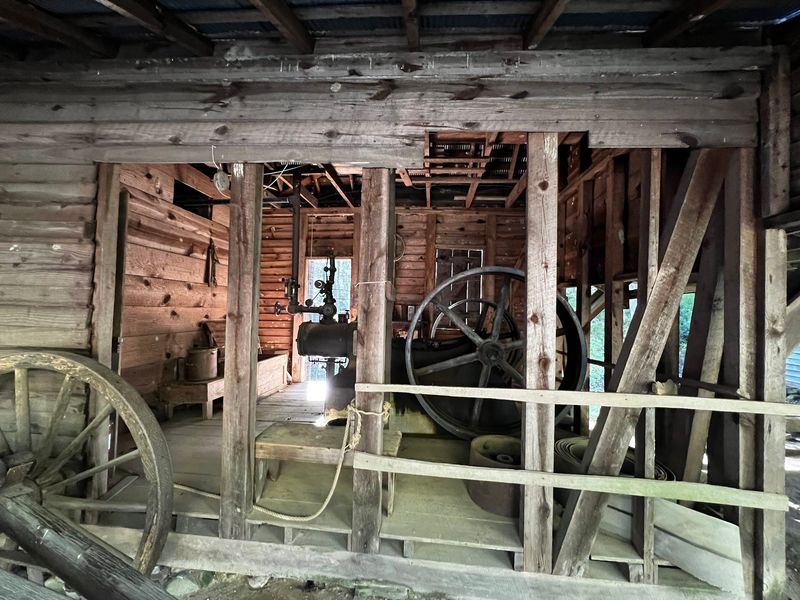
Honestly, the mill complex is the star of the show. I spent more time here than anywhere else, just staring at gears, belts, and iron wheels.
These are the original machines, and they look ready to start up any second.
Jarrell used steam engines to power a whole lineup of tools. There was a sawmill for cutting lumber, a cotton gin for cleaning cotton, and a gristmill for grinding corn into meal.
He added a shingle mill, a planer for smoothing boards, a sugar cane press, and a syrup evaporator too.
That mix of jobs helped the family earn money in many ways instead of depending only on cotton. It was a smart move.
Neighbors could bring their crops and logs here, which turned the farm into a small center of local industry.
Small diagrams near the machines show how the parts worked together. I found it easier to understand once I traced the belts from the engine to each mill.
Kids who like building things will be fascinated.
Try to visit on a special event day, like Farm Heritage Day. Demonstrations can make the old equipment feel even more alive.
Sweet Clues at the Cane Press and Syrup House
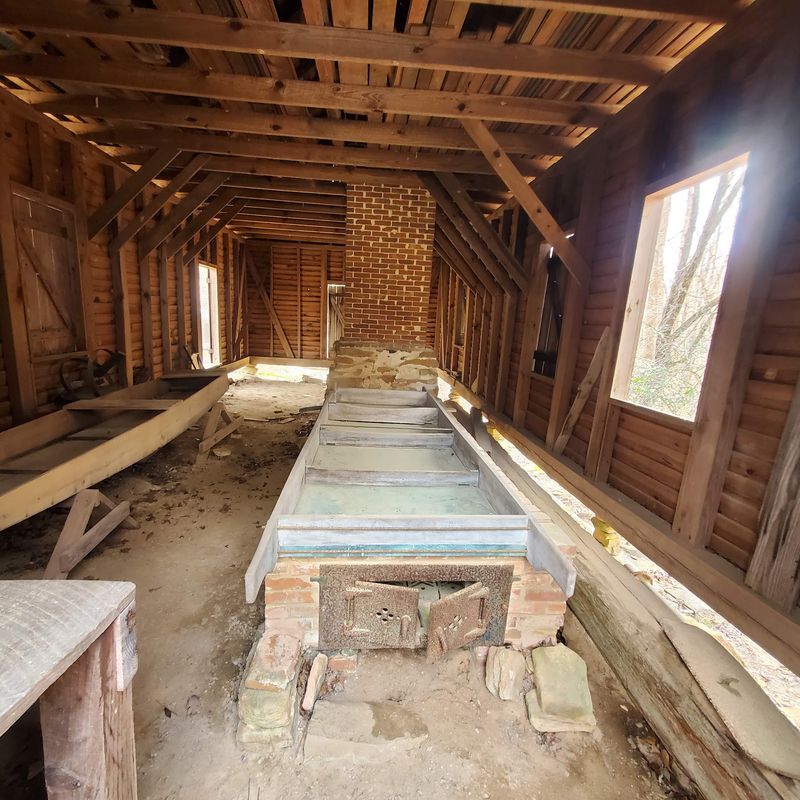
Something about syrup making made me hungry just reading the signs. Sugar cane was a big deal on Southern farms, and the Jarrells turned it into thick, sweet syrup.
You can still see the tools they used.
In the early days, cane juice was boiled down in large kettles over a fire. Workers stirred for hours and skimmed off foam as the juice slowly thickened.
Later, the family switched to a steam-powered press and an evaporator, which made the work faster and steadier.
The evaporator house holds a long, shallow pan where the juice moved along as it cooked. I liked picturing the steam rising on a chilly fall day, since cane was usually harvested late in the year.
The smell must have drifted across the whole farm.
Here is a fun bit of history. Cane syrup was a common sweetener for rural Georgia families who could not always buy sugar, so it showed up on biscuits, pancakes, and in baked goods.
If you visit with children, ask them to guess how long boiling might take. It is a simple game that keeps them curious as you walk along.
Hammers, Anvils, and a Blacksmith Shop Full of Grit
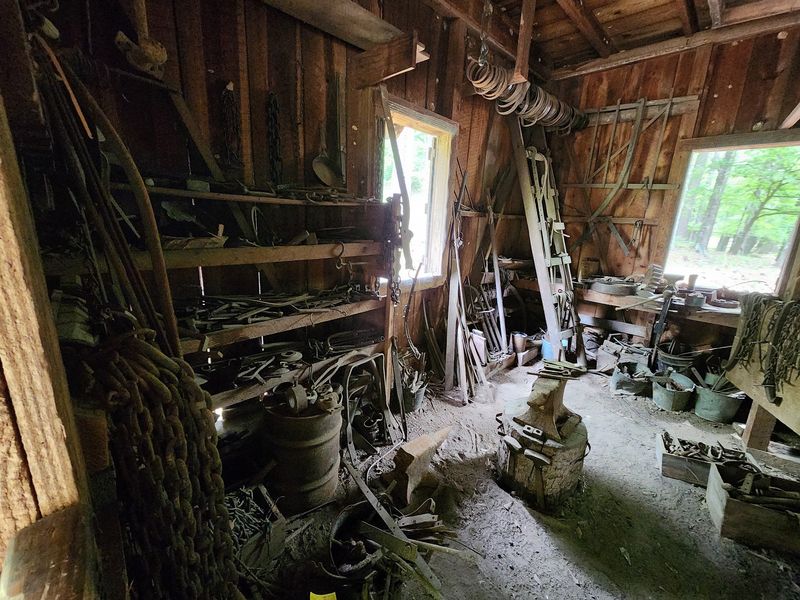
I have a soft spot for old tools, so the blacksmith shop was a happy surprise. Built between 1912 and 1913, it is packed with gear that once fixed nearly everything on the farm.
Nothing here feels staged.
Look for the forge, where metal was heated until it glowed. The big bellows pushed air into the fire to make it hotter.
Then came the anvil, the heavy iron block where hot metal got hammered into new shapes.
Hammers, chains, and other pieces hang around the room. B.R.
Jarrell’s own toolboxes sit here too, which felt surprisingly personal. It is like looking into someone’s garage a hundred years later.
On a working farm, broken plows and wagon parts could not wait for a trip to town. A home blacksmith shop saved time and money, and it kept the mills running smoothly too.
That kind of self-reliance shows up all over this property.
Nearby, you will find outbuildings like a smokehouse and a chicken house, plus a 1920s house and wheat houses from the 1930s. Each one shows how the farm kept changing with the years.
Take your time peeking into windows and doorways.
Goats, Trails, and Tips for a Smooth Visit
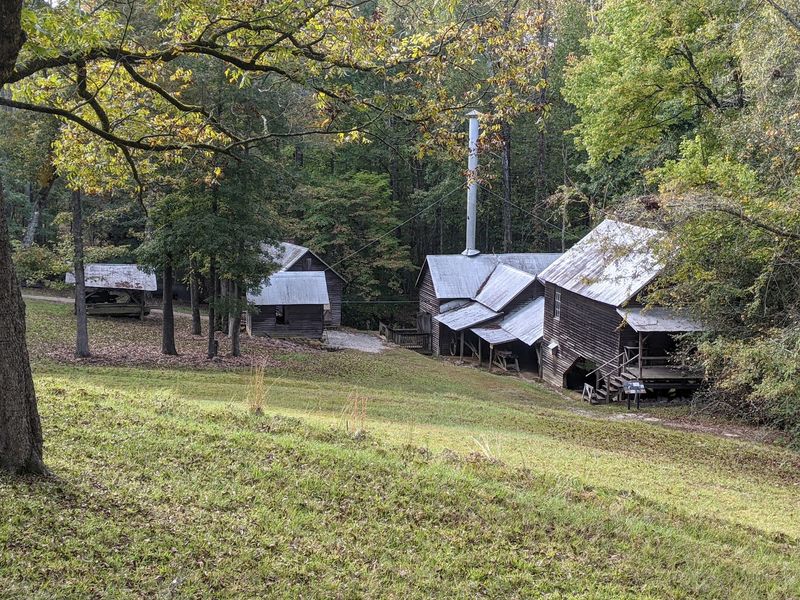
A rooster with glossy feathers had the run of the place during my visit, and he did not care one bit about me. The goats looked plump and content.
These animals add a cheerful, lived-in feel to the grounds.
The walking trail starts behind the visitor center and loops past houses, barns, and mills. Part of the path is paved, but the routes to the lower buildings are dirt and can be steep with loose rocks.
Wear sturdy shoes, and know that scooters and wheelchairs may struggle on some sections.
Bug spray is a smart idea, especially in warm months. Pack a lunch too.
Picnic tables sit under shady trees out front, and they make a relaxing spot to rest after exploring. The gift shop has a few drinks, but bring your own food.
The site is open Thursday through Sunday from 9 AM to 5 PM and closed Monday through Wednesday. It sits about 15 miles north of Macon.
Address: 711 Jarrell Plantation Road, Juliette, GA 31046
