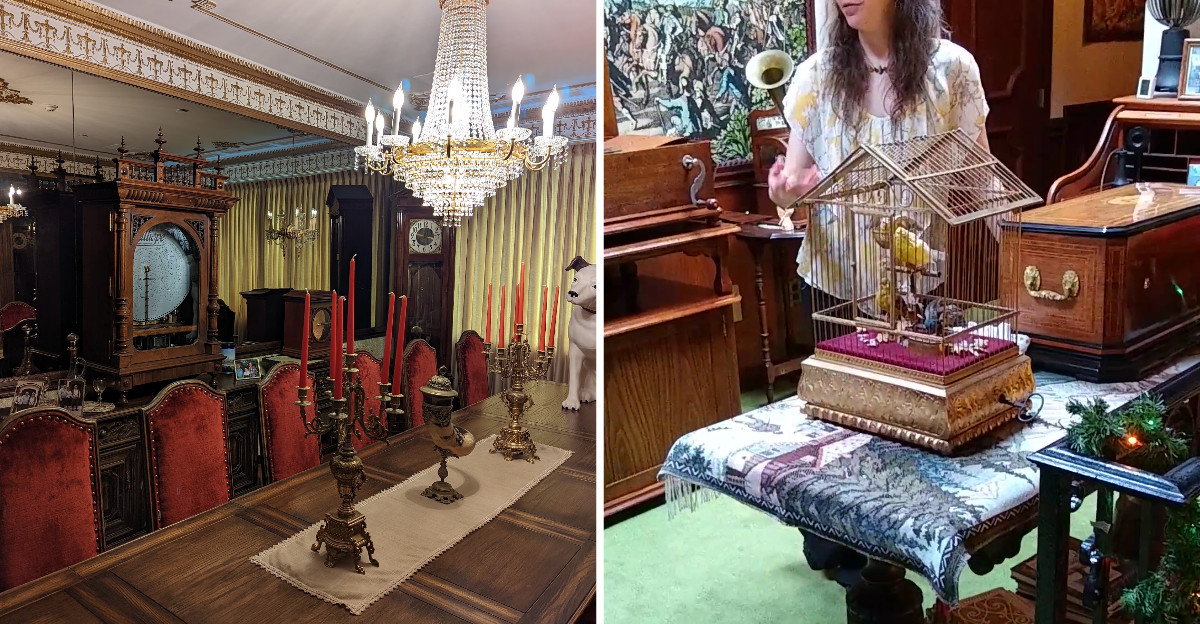
Bavarian castles belong in Germany, not on a hillside in Pennsylvania, yet one sits above a river like it wandered off a postcard and decided to stay. A shy millionaire built it as his private playground, filling the rooms with antique music machines, hidden doors, and a fake cave tucked behind a wall.
He loved good food, surprising his guests, and doing things his own way. Not a single blueprint was used during construction, which explains the oddly shaped rooms and passages that seem to lead nowhere.
After he passed away in the late 1990s, he left the whole estate to the public, and it opened as a museum a few years later. Walking through, every corner holds a joke, a secret, or a mechanical wonder.
A dog statue sits at the dining table like a patient guest. Music boxes and player pianos still fill the halls with sound.
This is the kind of place that stays with you long after the visit ends. It is a place you will want to revisit very soon.
The Castle Charlie Built Without a Blueprint
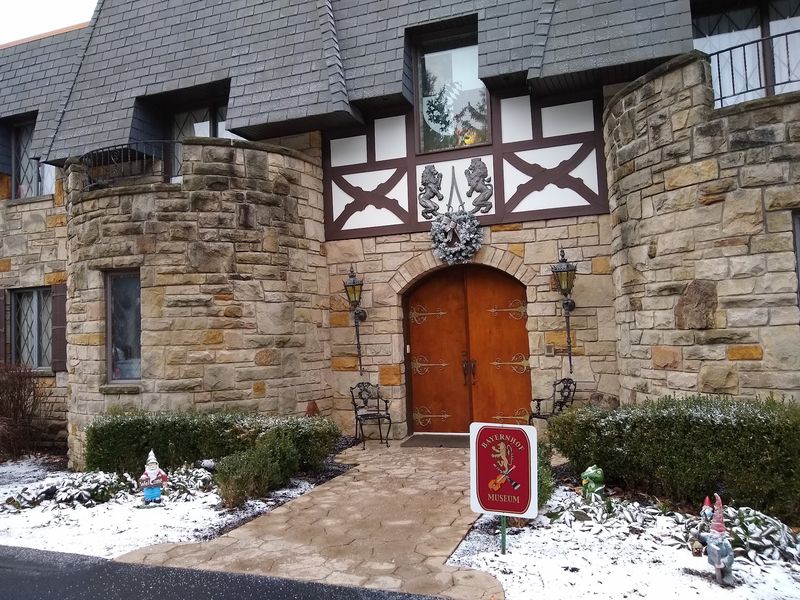
My first glimpse of the house made me laugh out loud, in a good way. A Bavarian castle in O’Hara Township just outside Pittsburgh is not something you expect to see on a quiet residential road.
Charles B. Brown III, the founder of Gas-Lite Manufacturing Company, built this 19,000-square-foot home between 1976 and 1982.
Here is the wild part. He never used a single blueprint, and he guided the whole project with the picture he carried around in his own head.
You can feel that freedom everywhere. Hallways bend in strange directions, staircases twist upward, and rooms seem to appear out of nowhere.
Nearly two dozen rooms fill the place, including three kitchens, eight bathrooms, and ten fireplaces.
The house sits on an 18-acre site, and the setting matters as much as the walls. Huge windows frame the river valley, so even the plainest room has a view worth pausing for.
A handy tip from my visit is to look up often. Custom woodwork, odd angles, and a skylight showing scenes from Germany are easy to miss if you only watch your feet.
Then again, watch your feet too, because the stairs keep you honest.
Music Boxes, Banjos, and a Violin That Plays Itself
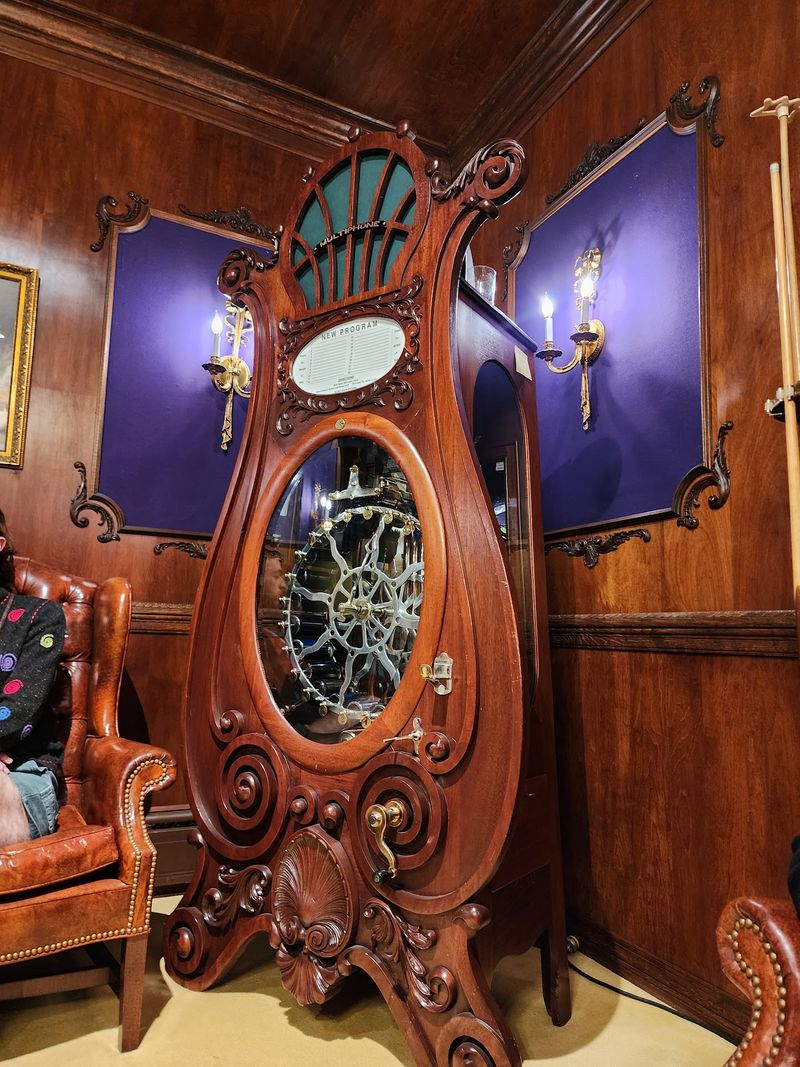
Nobody touched a key, yet the room filled with music. That moment, when the guide flipped on a century-old machine and it sprang to life, is the one that hooked me for good.
Brown gathered a world-class collection of rare automatic musical instruments, music boxes, early jukeboxes, and phonographs. Many of them are more than 100 years old.
Even better, the staff keeps them in such careful shape that you get to hear plenty of them play during the tour.
Among the stars is a Mills Deluxe Violano Virtuoso, a combination of a player violin and piano tucked into one cabinet. Watching a bow-like mechanism work the strings feels a little like magic and a little like science class.
Nearby, an Encore Automatic Banjo plucks away with surprising cheer.
There is also a Wurlitzer carousel organ, loud and bright enough to make you picture a summer fair. Reproducing pianos round things out by copying a performer’s original tempo and volume, almost like a recording made of paper and air.
My advice is simple. Stand close, watch the moving parts, and ask questions, since every machine comes with its own backstory worth hearing.
A Tiny Singing Bird From 1880
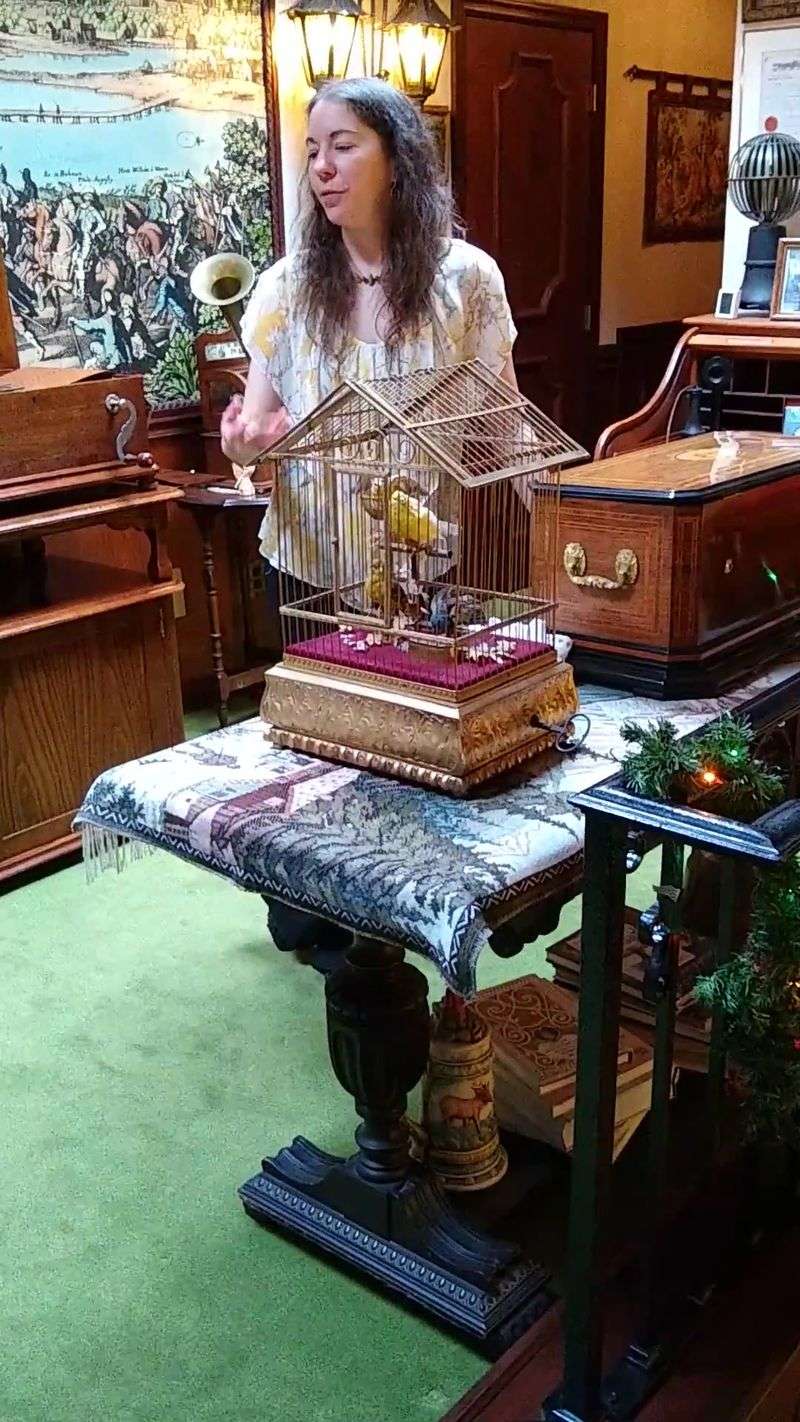
Some of the best things in this house are small enough to hold in two hands. My favorite turned out to be a little bird that has been singing since 1880.
Swiss craftsmen built this birdsong cylinder, and only three of its kind are known to exist anywhere. Inside, tiny metal pipes and a bellows work together to make the sound.
When the mechanism runs, the bird flaps and chirps as if it just woke up on a spring morning.
Hearing it in person is oddly touching. Think about how many people across nearly 150 years have leaned in to listen to that same small song, and suddenly you are part of the list.
Kids twelve and up, the minimum age for tours, usually love this piece because it feels like a toy and a puzzle at once. Adults tend to go quiet and smile, which is what happened to me.
If you enjoy figuring out how things work, ask the guide how air moves through the pipes. It is a neat lesson in old-school engineering, and it makes you appreciate the patience those makers must have had.
Hidden Doors Around Every Corner
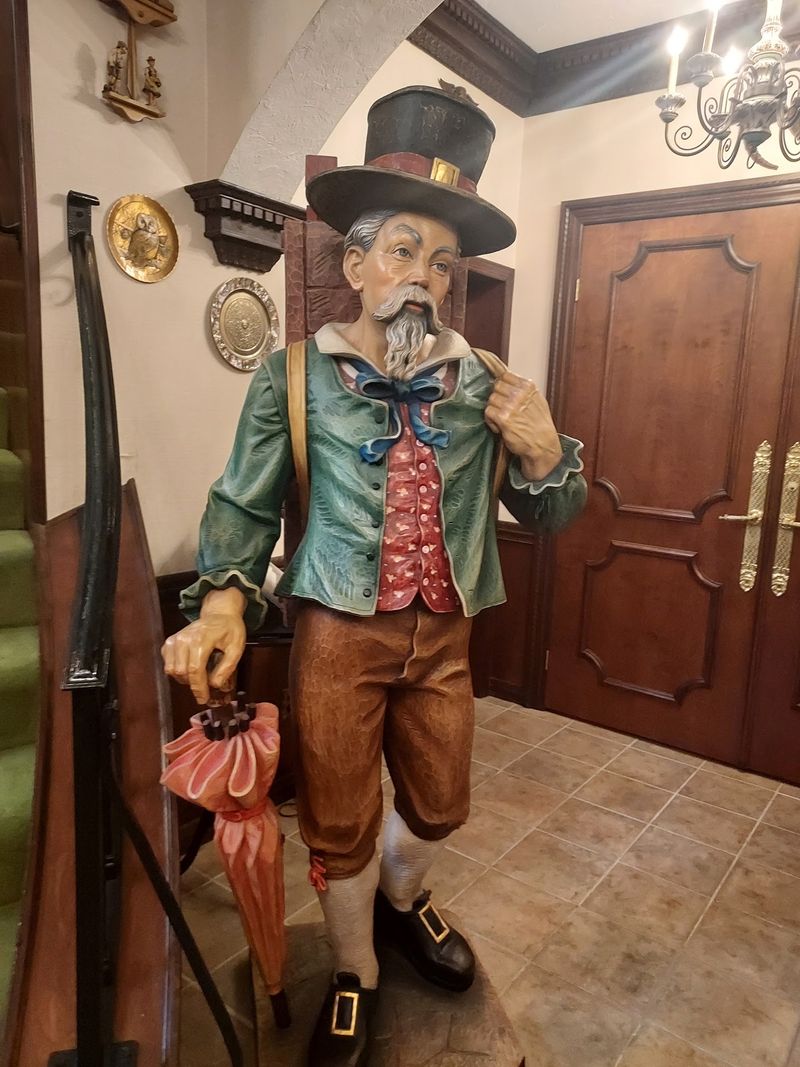
At one point I leaned against a wall, and the guide grinned in a way that told me the wall was not really a wall. A few seconds later it swung open.
Secret doors and passageways are a huge part of the fun at the Bayernhof Museum. Brown designed his home so that new spaces could pop into view without warning, and he clearly enjoyed the reactions of his friends.
You get to feel that same jolt of surprise today.
Some passages are narrow, and several lead to tight spiral staircases. Wear comfortable shoes with good grip, and take your time on the steps, especially where the lighting is soft.
The tour runs about two and a half hours, which sounds long until you are inside. Each hidden opening resets your curiosity, so the time slips by fast.
Here is a friendly suggestion. Try not to read too many spoilers before you go, because guessing which panel might move next is half the joy.
I promise the house will still outsmart you a few times, and you will laugh every time it does.
The Basement Cave and the Waterfall Pool
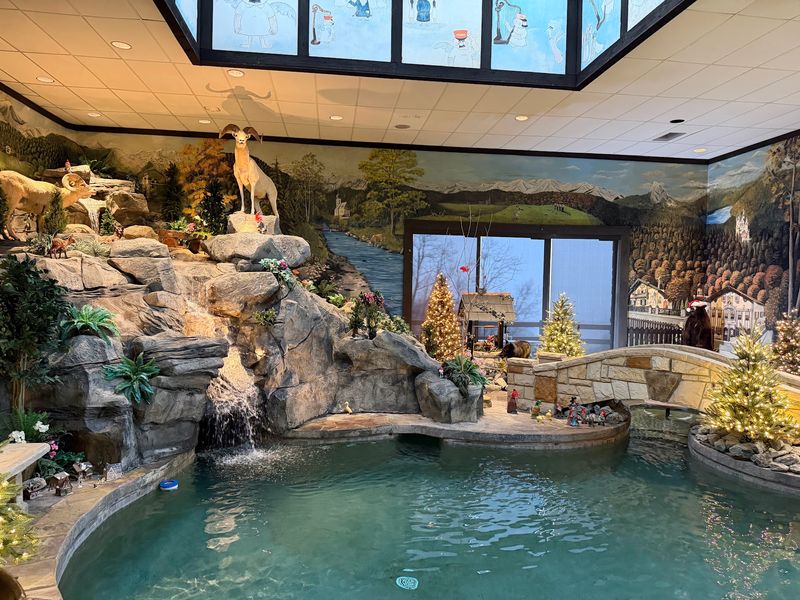
Caves are not usually on my list of things to find under a house. Brown apparently disagreed, and honestly, I am glad he did.
Down in the basement waits a secret cave built with artificial stalactites and stalagmites. Small waterfalls trickle into little pools, and the cool, rocky look makes you forget you are still inside a home near Pittsburgh, Pennsylvania.
It feels playful and dramatic all at once.
Then comes the pool room, which might be the grand finale of the whole visit. A 10-foot waterfall pours into the swimming pool, and indoor caves wrap around it.
Look closely and you will spot animatronic bats tucked into the rock, ready to give you a tiny startle.
The space shows how much Brown loved to entertain people. He did not just want a nice pool.
He wanted a place where guests would gasp, point, and talk about it for weeks.
Bring your camera here if photos are allowed on your tour, and give your eyes a moment to adjust to the lighting. The details in the rockwork are better than you would expect, and spotting every bat becomes a fun little game.
Nipper, Hummels, and a Check From Thomas Edison
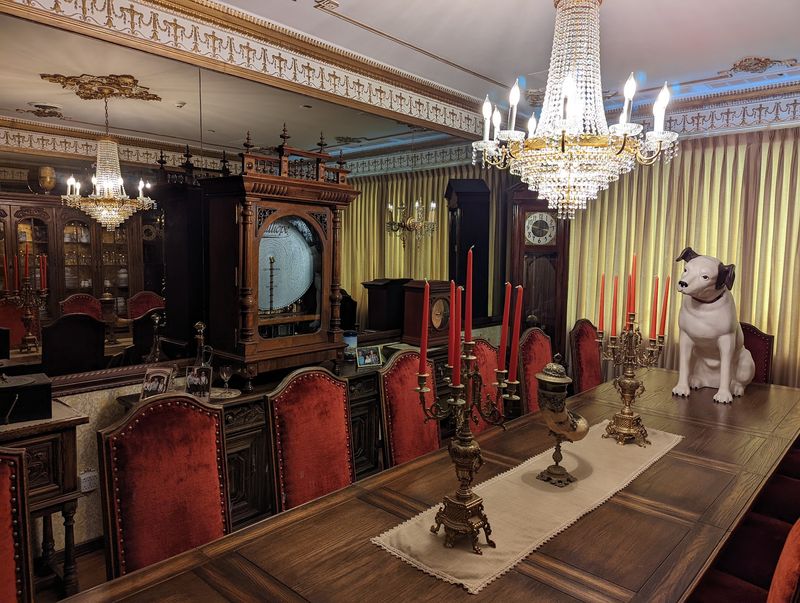
A white dog sits at the dining room table like he is waiting for dinner. He is Nipper, the famous RCA mascot, and he is only one of several Nipper statues placed around the house.
Brown’s taste in decor was gloriously all over the map. You will find a tapestry of dogs playing poker, shelves of decorative steins, and Hummel figurines that are nearly life-sized.
One frame even holds a check that once belonged to Thomas Edison, which fits nicely in a home full of music machines.
Other rooms add to the fun, including a billiards room, a game room, an office, and a boardroom. There is also a 70-pound block of silver, which made me wonder how anyone moved it in.
From what the museum shares, Brown was a quiet, shy bachelor with a great sense of humor. He was a fine cook, always wore a blue shirt, and liked serving asparagus to his dinner guests.
Knowing those small habits makes every object feel personal. Instead of a stuffy collection, it feels like you are poking around the home of a funny neighbor who never stopped collecting delightful oddities.
Rooftop Views and Planning Your Visit
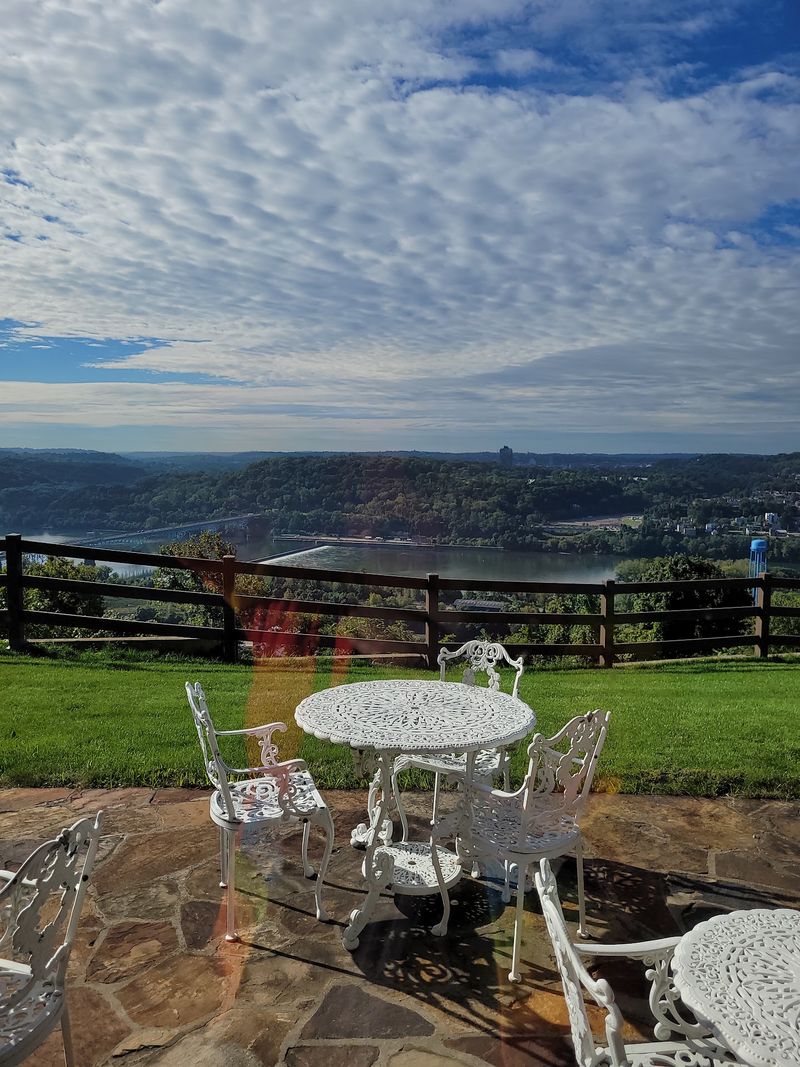
Climbing toward the top of the house, I could feel my legs working. The reward was a rooftop observatory and a sweeping look across the Allegheny River valley.
Brown chose this hilltop spot for a reason. From up high, the river curls below, trees roll out in every direction, and the city feels close yet calm.
It is a lovely place to catch your breath after all those surprises downstairs.
Visitors must be at least 12 years old. Expect stairs, narrow passages, and spiral steps, so plan accordingly if anyone in your group has trouble with climbing.
Give yourself the full two and a half hours without rushing off to another plan. Many people say they want to come back to catch what they missed, and I completely understand why.
Address: 225 St. Charles Place, Pittsburgh, Pennsylvania 15215
