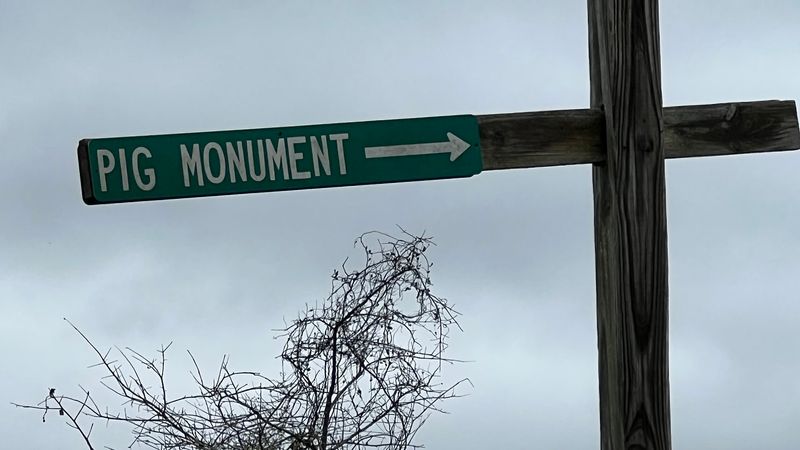
Pig monuments are not something you see every day, and one in Georgia honors a very lucky animal. Cruising down a quiet state route, a small sign reading Pig Monument made me slam on the brakes and grin like a kid.
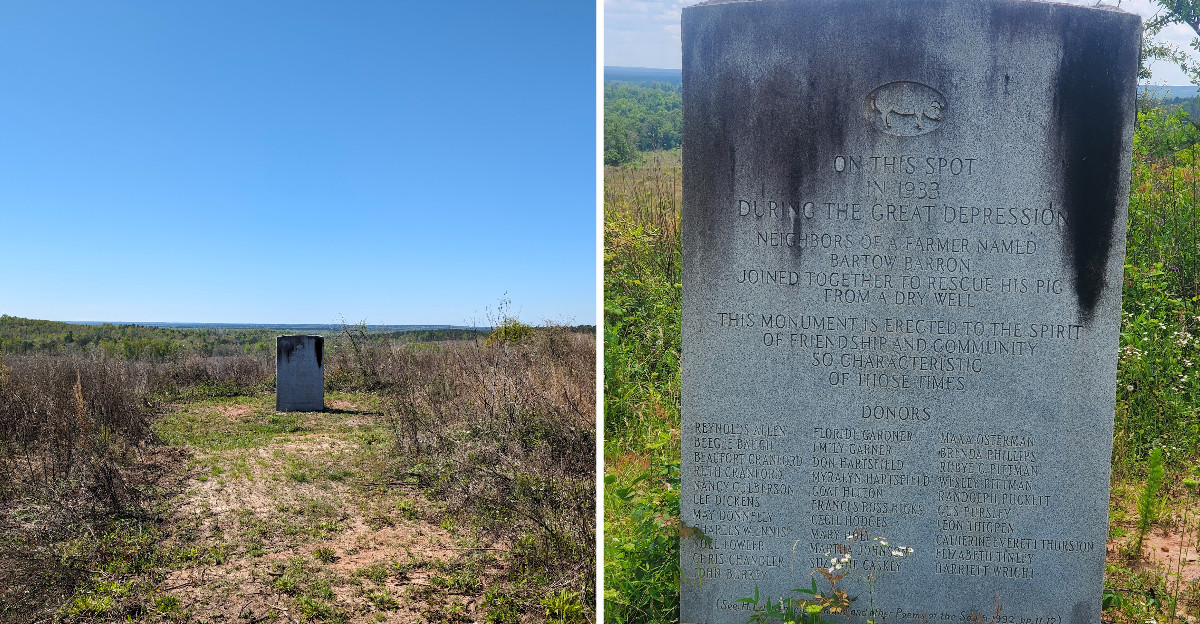
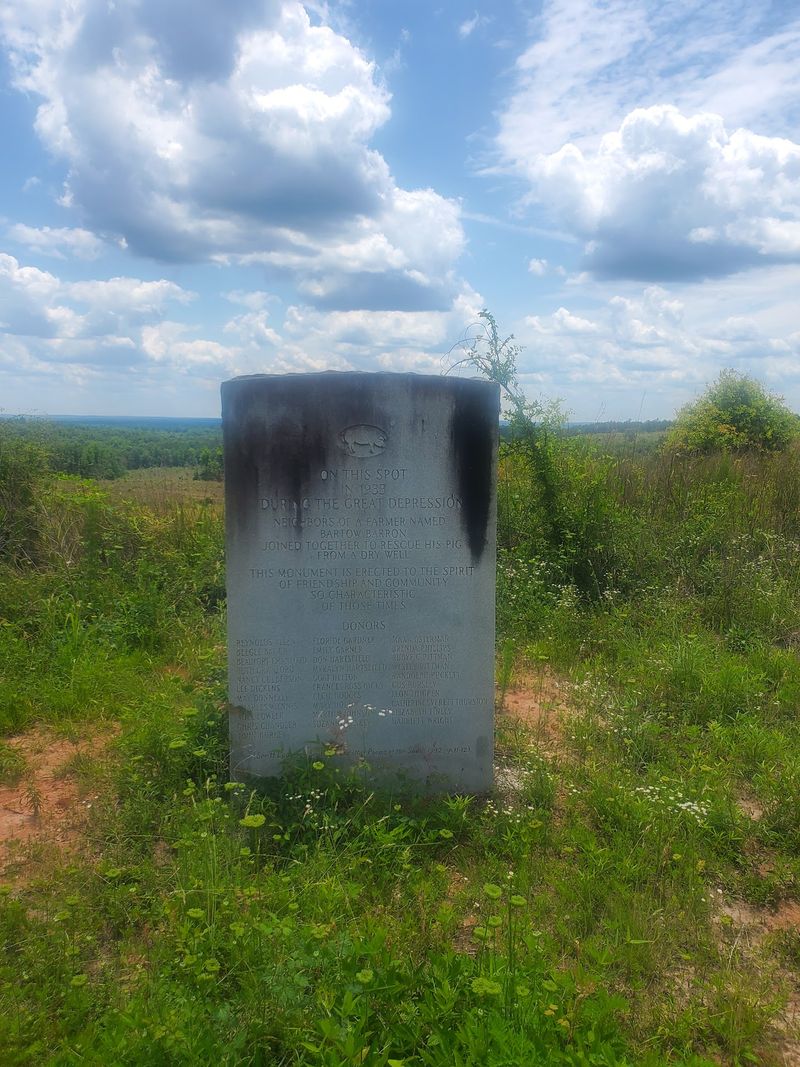
Pine trees crowd the road in this part of the state, and the air smells like warm red dirt. The short trail led through the brush to a tall granite slab standing in the weeds like a quiet secret.
Carved into that stone is a true story dating back to 1933, when a farmer’s pig fell into a dry well and the whole neighborhood grabbed shovels. Reading every word twice was necessary, because finding a monument built for kindness instead of battles is rare.
Walking back to the car, plans were already forming for telling friends about the town that honored one very lucky pig.
A Pig, a Dry Well, and a Hard Winter Ahead
Picture the year 1933, when money was scarce and every meal counted. A Washington County farmer named Bartow Barron was raising a Duroc pig, the reddish kind, to feed his family through the cold months.
Then one day the pig went missing. After some searching, it turned up at the bottom of a dry well about 40 feet deep.
I tried to imagine that moment, peering down into darkness and seeing your winter food supply staring back up at you.
For a family during the Great Depression, losing that pig would have been a serious blow. You could not just drive to a store and replace it.
Folks in rural Georgia leaned on their land, their animals, and each other to get by.
Knowing this background changed how I saw the whole site. At first, a pig monument sounds like a joke, and honestly, it does make you smile.
Once you understand the stakes, though, the story feels bigger and much more human.
If you plan to visit, read up on the Depression era a little beforehand. That small bit of homework makes the stone’s words land with real weight when you finally see them in person.
Shovel by Shovel, the Neighbors Showed Up
Farmer Barron had a clever plan, even if it sounded exhausting. Instead of climbing down, he started filling the well with dirt, one shovel at a time, so the pig could rise with the ground beneath its hooves.
Here is the part that gets me. His neighbors were struggling too, yet they came over to help anyway.
They took turns tossing in dirt, slowly and carefully, so the pig would not get buried.
Accounts differ on how long it took. Some sources say two days, while others mention as many as 12 days of shoveling.
Either way, that is a whole lot of sore shoulders for one animal.
I love this detail because it shows how practical kindness worked back then. Nobody needed fancy tools or a rescue team.
They simply brought what they had, which was time, muscle, and patience.
When you stand near the spot, think about how much dirt it takes to fill a 40 foot hole. It makes the effort feel real.
It also makes a great conversation starter with kids, who usually have a lot of questions about how the pig stayed calm through all that dirt falling around it.
Reading the Words Carved in Granite
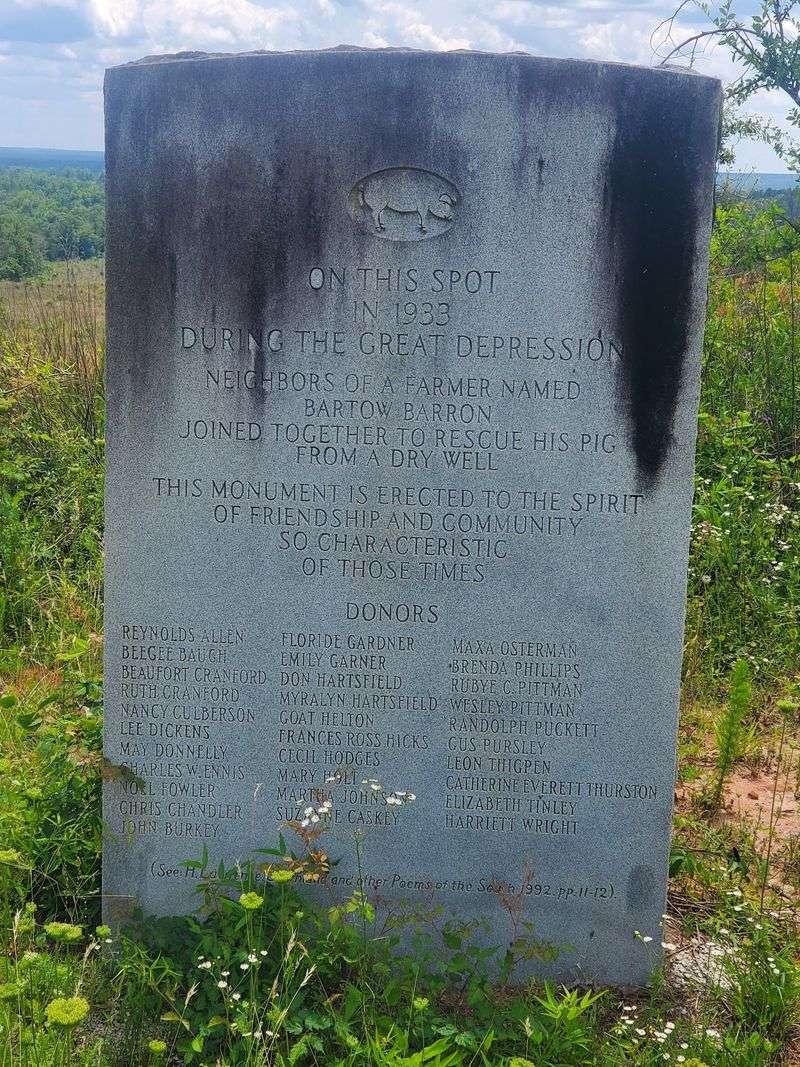
My favorite moment came when I finally got close enough to read the carving. The granite slab stands about 6 feet tall, and its message is short, clear, and surprisingly moving.
The inscription explains that on this spot in 1933, during the Great Depression, neighbors of a farmer named Bartow Barron joined together to rescue his pig from a dry well. It then says the monument is erected to the spirit of friendship and community so characteristic of those times.
That last line stuck with me all afternoon.
There is no heroic statue here. No bronze general on a horse either.
Just plain words honoring ordinary people who did something good.
Look closely and you will also spot the names of the donors who helped pay for the project. I found it sweet that the monument itself was a group effort, just like the rescue it celebrates.
Bring your phone or camera and snap a clear shot of the text. The lighting can be tricky under the trees, so try tilting your angle slightly to avoid glare on the polished stone.
Mornings tend to give softer light for photos.
How a Pastor’s Idea Became a 1992 Celebration
Decades after the pig climbed out of that well, a local pastor and author heard the story and could not let it go. He thought it deserved something lasting, so he designed a monument himself.
The stone was built by Galen Mills of Elberton, Georgia. Elberton is famous for granite, so the slab came from folks who really know their rock.
The property owners at the time donated the land, which added another layer of generosity to the whole tale.
On October 18, 1992, the Pig Monument was officially dedicated. Speakers included the pastor, a member of his congregation, a professor from Emory University, and the mayor of Oconee.
My favorite fact? Children handled the unveiling.
There is something fitting about kids pulling back the cover on a monument about neighbors helping neighbors, since they are the ones who carry these stories forward.
Knowing all this, I stopped seeing the slab as a quirky roadside oddity. It is really a small town’s thank you note, written in stone, sixty years after the fact.
That kind of patience and care is rare, and it made the short hike through the weeds feel completely worth it.
Finding the Trail Takes a Sharp Eye
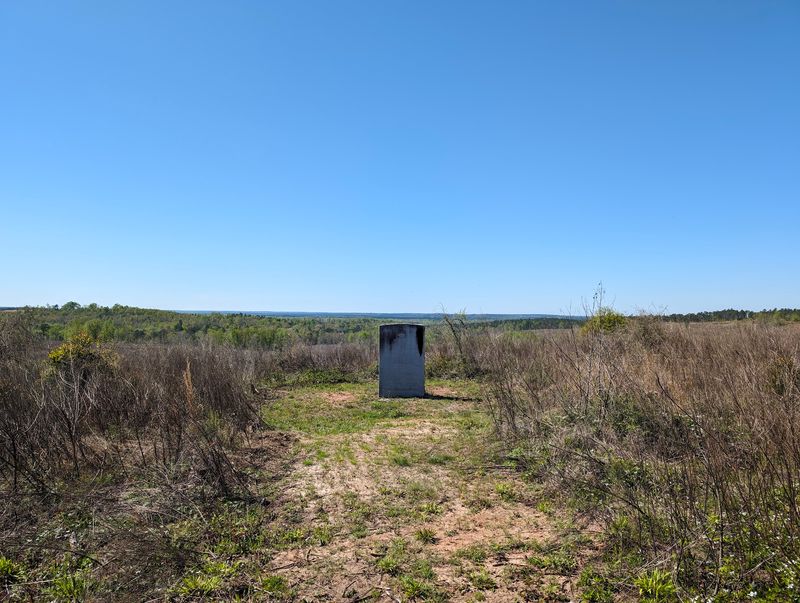
Fair warning: I almost drove right past it. The monument sits off Georgia State Route 272 in Washington County, somewhere between Oconee and Tennille, and the only clue is a modest sign that says Pig Monument.
Once you pull over, look for a beaten path heading into the overgrowth. The walk is only about 20 to 25 feet from the highway, but it climbs a little and the brush can get thick, especially in summer.
Here are a few tips that helped me. Wear closed shoes and long pants, since weeds and branches will brush against your legs.
Watch where you step, because this is rural Georgia and wildlife lives here too.
Park well off the road and keep an eye on traffic when you get out. Cars move fast on these country highways, and the shoulder is not very wide.
If your GPS gets fuzzy, the coordinates place it roughly near Tennille, GA 31089. Taking a screenshot of the map before you lose signal is a smart move.
Some visitors even come for geocaching, which adds a treasure hunt twist to the stop. Honestly, the little search is part of the charm.
A Quiet Hilltop With a Bonus View
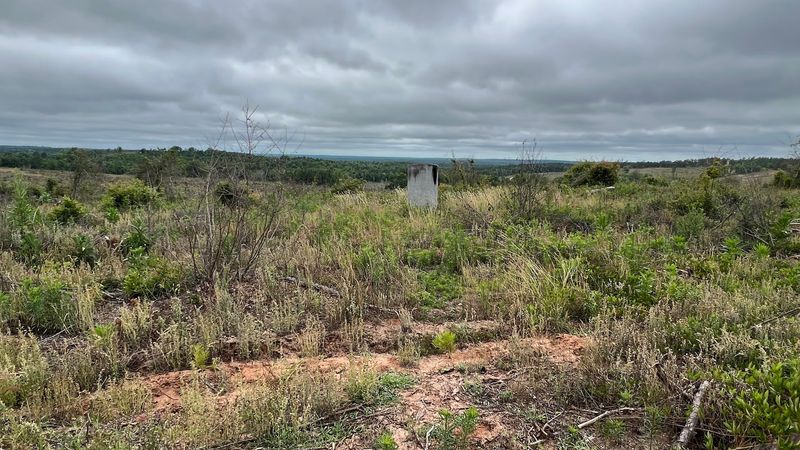
Nobody warned me about the view. After pushing through the brush and reaching the stone, I turned around and saw the land rolling out across a wide Georgia valley.
It is peaceful up there in a way that sneaks up on you. Birds chatter in the pines, insects buzz in the grass, and the occasional truck hums past on the highway below.
Everything else fades into a soft country hush.
I spent a few extra minutes just soaking it in. Picture this land in 1933, with farms scattered across the hills and families working hard to make it through tough years.
The same valley that watched the rescue is still out there, stretching green and calm.
This makes the stop a lovely place for a short break during a road trip. Stretch your legs, breathe some fresh air, and let the story settle in your head.
If you enjoy photography, the late afternoon light makes the fields glow a warm gold. Just be sure to head back to your car before dark, since the trail gets tricky to spot once the sun drops.
A small flashlight in your bag never hurts out here either.
Rail Town Charm Just Down the Road in Tennille
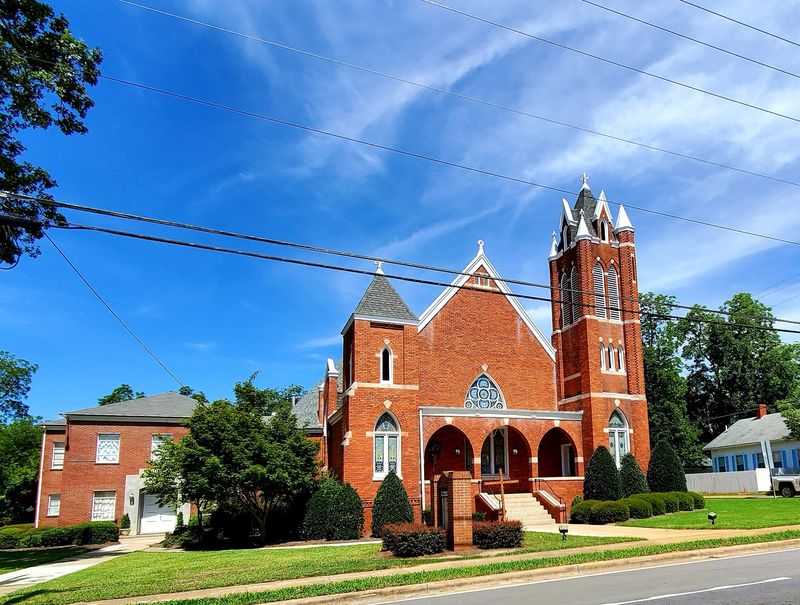
After saying goodbye to the pig, I rolled into Tennille, and the town gave the day a perfect ending. Originally called Station No. 13, it was later named after a local citizen, Mr. Francis Tennille.
Railroads shaped everything here. Tennille was once the highest point on the Central of Georgia line between Macon and Savannah, and Sherman’s troops damaged the tracks during the Civil War.
Today the two main streets run right alongside the rails.
You might get stuck waiting on a slow train from the busy Sandersville Railroad, nicknamed the Kaolin Road. Luckily, there is an underpass to help drivers get around.
I kind of enjoyed the rumble, to be honest.
North Central Avenue has old storefronts that likely date to around 1920. Stroll slowly and notice the brickwork and faded details.
The Tennille Baptist Church, finished in 1903, shows off gorgeous Gothic design, and you can also spot old filling stations with Mission Revival touches.
Sandersville, the county seat, sits only about 5 miles north if you want more exploring. Pairing the monument with this little rail town turns a quick stop into a satisfying half day.
Address: U.S. Highway 272, Tennille, Georgia
