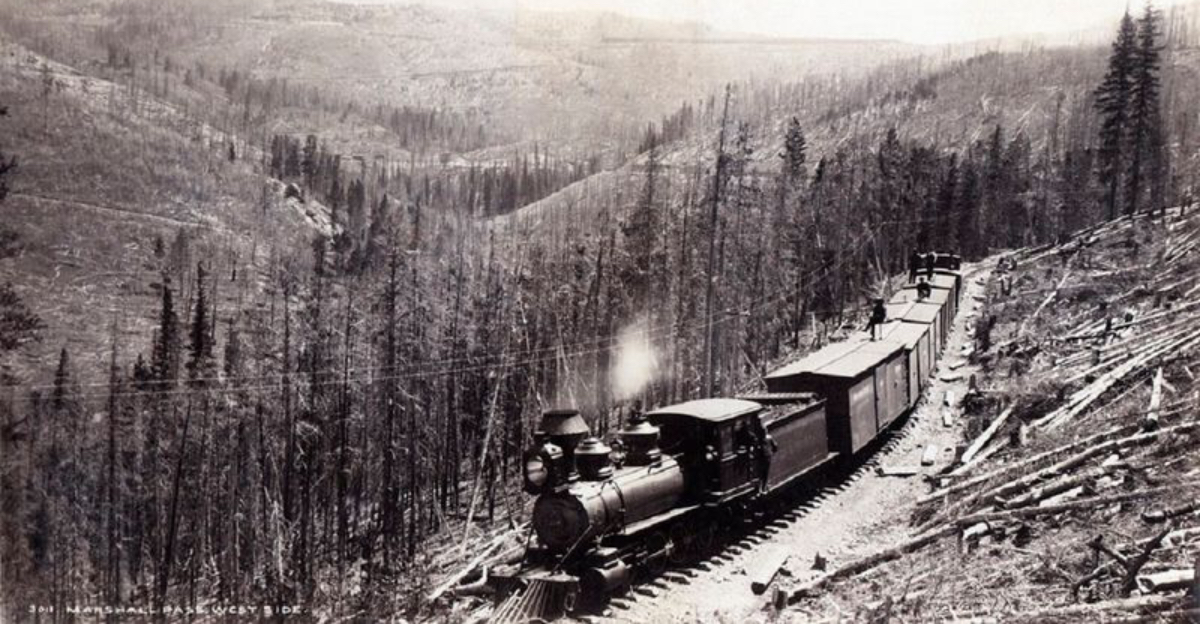
Chilled alpine air, a dirt road climbing toward the sky, and a legend that refuses to fade, Marshall Pass in Colorado is where history whispers through the pines.
Travelers come for scenery, then stay for the story of a spectral locomotive that once chased an engineer through the night.
I traced the ridgeline where rails once clung to cliffs, listening for echoes, and found modern clues that keep the myth alive.
If you crave mystery folded into mountain grandeur, this ghostly journey will pull you along every curve.
Frost Script on the Cab Window
The tale begins with a message etched in ice, a warning that sparked a lifetime of retellings. In Colorado’s crisp mornings, the story of engineer Nelson Edwards gains texture, because frost clings to glass and breath hangs like a veil. Standing at the pass, it is easy to imagine a trembling hand reading each letter, the timberline still and expectant.
Local lore says the ghost train vanished at dawn, leaving only that chilling script. Historians note the Denver and Rio Grande Western ran this corridor, and accidents did occur on mountain grades. The cautionary tone fits a time when brakes failed, weather turned quickly, and courage met consequence on narrow tracks.
Today there are no rails on Marshall Pass, just a rugged road and interpretive references scattered across Colorado’s rail museums and archives. The story survives in print, in stage talks, and in community memory. Visitors who pause at the summit often bring the legend with them, then carry it home again.
I read the earliest versions before arriving, then watched sunlight skim the ridge where the right of way once clung. The quiet felt like a held breath. If any place could preserve a sentence in frost, it would be this wind-brushed saddle in the Rockies.
Folklore thrives when landscape strengthens it, and this landscape is relentless. Sharp ridges, sudden shadows, and long stretches without distraction encourage imagination. Even skeptics admit the setting does half the storytelling.
Whether ghost or metaphor, the frost script is a reminder to respect mountain travel. Grades dictate speed, weather dictates plans, and patience keeps you safe. That message, at least, remains clear long after sunrise.
Where the Rails Once Clung to the Sky
The old right of way wraps the contours of Marshall Pass like a seam. Look closely and you will spot bench cuts through talus, timber cribbing remnants, and a few weathered ties kept by collectors in nearby towns. Colorado’s rail-building ambition is still readable in these scars, a map etched into rock and soil.
The pass reaches high country air and sweeping views of the Sawatch and Cochetopa hills. That elevation thrilled passengers, but it also tested locomotives and crews. Tight curves and variable grades demanded skill that modern visitors can appreciate as they drive the rough road.
You can approach from Poncha Springs or Sargents, watching the valley compress into switchbacks. Small pullouts reveal sightlines where trains would have appeared, then slipped behind ridges. The silence today makes those imagined sounds more vivid.
Nearby museums across Colorado preserve photographs showing snow-buried cuts and plows tossed with ice. Pair those images with the terrain and the engineering challenge becomes obvious. A path like this never surrendered easily to steel.
Hikers and cyclists follow sections of the old grade to sense the rhythm of the climb. The curve radius is gentle underfoot, the bed broad and steady compared with loose hillside. It creates a corridor through the forest that feels purposeful even without rails.
Standing at a high overlook, I pictured a caboose lantern bobbing through a star field. The grade falls away, the sky climbs, and the route reads like a thin sentence along a long page. The story of the phantom train fits neatly on that line.
Nightfall Soundtrack of Steel and Wind
After sunset the pass acquires a new voice. Wind threads through fir needles, stones tick as they cool, and an occasional vehicle hums like faraway rails. In such quiet, it is easy to mishear memory as movement.
The phantom train legend often mentions the sound first, a pursuit measured in clatter and breath. Even skeptics concede that mountain acoustics can bend noise into strange patterns. Valleys amplify, ridges reflect, and crests swallow echoes.
Colorado nights are bright with stars, which heightens awareness of what you cannot see. You stand at the edge of the sky, listening harder because the horizon is so open. That attention primes the imagination more than any stage trick ever could.
Railroading here once demanded night runs, snow clearances, and schedules that did not care about moonrise. Crews trusted signals, whistles, and the rail’s hum through the cab floor. A phantom story that centers on sound matches the texture of that work.
Visitors who camp legally at lower elevations report engines in the wind, though only coyotes and trucks roam now. They say the pitch climbs, then fades, like a train cresting and descending. The brain completes patterns with whatever history supplies.
For me, the soundtrack of Marshall Pass at night is a study in subtlety. Nothing shouts, everything suggests. In a place built on echoes, a ghost train is the most natural echo of all.
Lieutenant Marshall’s Discovery Trail
Long before the ghost story, the route earned its name from Lieutenant William L. Marshall. His survey work identified a crossing that could knit valleys together, a find that later invited the Denver and Rio Grande to lay track. Colorado’s map changed when this corridor opened.
Although the railroad is gone, travelers can drive the pass in dry seasons and trace the surveyor’s logic. The path respects ridgelines and uses natural benches to ease the climb. Each turn feels chosen, not improvised.
Interpretive materials in regional museums help place the discovery in context. They outline competing routes, discuss early mapping tools, and show how military surveys influenced civilian infrastructure. This backstory adds depth to every mile you travel.
On foot, you notice how the saddle sits between watersheds and how wind shifts with the terrain. The selection of this notch was not luck. It balanced grade, distance, and seasonal access.
I carried old route diagrams and matched them with the current road. The differences reveal where the railroad demanded its own geometry. Cuts and fills curved differently than a vehicle needs.
By the time you reach the crest, the name on the map feels earned. The pass is not simply a crossing, it is a decision. That decision still shapes movement through central Colorado.
Chasing Echoes to the Summit Sign
The wooden summit marker becomes a waypoint for anyone chasing the legend. It stands against the skyline like a bookmark in a long, high chapter. Reaching it by vehicle requires attention to road conditions and weather windows typical for Colorado backroads.
The sign frames photos with open sky and rolling timber, a visual pause after steady climbing. Take a moment to hear how the wind changes pitch at the top. Gusts break, then reform, like paragraphs in an unseen script.
Old photos show locomotives paused near this crest, steam drifting across the grade. That image fuels today’s ghost narrative, because thresholds invite stories. A summit promises arrival, yet hints at the descent ahead.
Check county road updates before you go, and respect closures during wet periods. The surface can ravel under tires, and storms move quickly. Carry layers, since temperatures swing even in late summer.
I stepped away from the sign to let the landscape do the talking. Patches of alpine grass shift color with clouds, and the ridges seem to breathe. The quiet can make even a skeptic listen harder.
When you leave the crest, look back once. The pass seems higher from a distance, as if the mountain raised it a little. Legends feel that way too, taller when retold.
Ghosts in the Archives, Not the Attic
The most convincing hauntings I met were filed in boxes and bound in brittle paper. Colorado’s libraries and historical societies keep clippings that trace the phantom tale from a brief report to a full narrative. You can watch the story acquire detail with each retelling.
Researchers connect the legend to rail incidents and the culture of risk management at the time. Warnings wrapped in folklore traveled faster than bulletins, especially among crews. A chilling anecdote could save a life by slowing a schedule.
I spent an afternoon reading dispatches and personal accounts. Dates, locations, and names weave a net that holds the core of the story steady. Embellishments float above, colorful but not essential.
Visiting archives turns a ghost hunt into a history walk. Photographs of the Marshall Pass line depict snow sheds, flangers, and crews layered in wool. The physical reality grounds the myth in iron and sweat.
Ask librarians for local rail collections and oral histories. Many institutions share digital exhibits that you can browse before driving into the hills. Preparation makes each curve feel familiar when you arrive.
By the end, I felt less like a ghost chaser and more like a translator. The documents speak quietly, yet with authority. In Colorado, the past is loud enough without rattling chains.
Cumbres & Toltec, A Living Reference
The original rails over Marshall Pass are gone, but the Cumbres and Toltec Scenic Railroad offers a living reference for the era. Its engines breathe, its coaches sway, and the high-country air tastes similar to the pass. Riding it teaches the body what old photographs cannot.
The line does not cross Marshall Pass, yet it preserves Denver and Rio Grande heritage on narrow gauge. The curves, trestles, and mountain vistas echo what crews handled farther north. You feel the pull on grades and the rhythm of jointed track.
I used the journey as a field class for the phantom legend. Each whistle ricocheted off slopes, explaining how sound might mislead a night crew. The physical feedback makes folklore plausible without needing the supernatural.
Stations and preserved depots provide interiors to admire. Benches, windows, and woodwork set a mood that modern terminals rarely match. You learn by sitting still, watching light shift across polished surfaces.
Pair the ride with a road trip to Marshall Pass and the narrative tightens. You experience motion on rails, then visit a corridor where rails once ruled. Together they sketch a fuller picture of Colorado rail culture.
As the train rolled into evening, the mountains grew quiet. The hiss of steam lingered like a memory. That aftersound is what the legend catches and keeps.
Reading the Grade Like a Conductor
Walk a short segment of the former grade and think like a crew member. Where would you sand the rails, where would you watch for drift snow, where would a brake test calm nerves. The answers sit in the landscape, waiting to be read.
Even without track, the bed speaks. Wider sections hint at sidings, gentle banks reveal careful earthwork, and shallow ditches show drainage strategies. In Colorado’s freeze and thaw, water management was everything.
I paused at a long, even curve that hugged a slope of broken rock. The tilt felt safe but stern, like a teacher with high standards. A misstep would be forgiven once, not twice.
Look for tool marks on stone where cuts narrowed the hillside. Timber fragments survive in shaded hollows, their grain silvered by years of snow. They tell of crews who shaped the mountain to meet a timetable.
Birdsong now replaces whistles, yet cadence remains. The grade moves at a human pace, not a highway rush. Following it slows thought and steadying breath.
By the time I returned to the vehicle, I carried a new respect for those who ran here. The legend adds color, but the craft adds weight. Together they make the pass unforgettable.
Phantom Canyon as a Side Story
Downstate, Phantom Canyon Road tells its own spectral tale along a former line. The gravel corridor threads tunnels and tight walls, a study in how railroads tamed canyons. It complements the Marshall Pass story without repeating it.
Legends here mention apparitions and odd footsteps, familiar themes that echo across Colorado rail lore. The setting amplifies them, because stone walls close the sky and sharpen every sound. You come away understanding why ghost stories hitch a ride with rail history.
Driving the canyon requires patience and attention to conditions. The route narrows at points, and pullouts reward unhurried travelers with overlooks and cool shade. Interiors of old structures along the corridor, where accessible, offer texture and context.
Pairing the canyon with a trip to Marshall Pass ties plains, foothills, and high country into a single arc. You follow the logic of rail expansion through varied terrain. Each segment teaches a different lesson about obstacles and solutions.
I stopped at a quiet turnout and listened to water sift over stone. The canyon returned my breath cooler than I gave it. It felt like a place built for echoes.
Consider this a companion chapter rather than a sequel. Different rocks, similar whispers. Together they round out a Colorado itinerary that honors myth and geology alike.
Safety, Respect, and the Slow Approach
Legends invite curiosity, but mountain travel asks for humility. Before visiting Marshall Pass, check weather, road advisories, and local guidance from land managers. Colorado conditions shift quickly, and preparation preserves the experience.
Vehicle clearance matters on rough stretches, and wet periods can turn smooth gravel into rutted tracks. Carry maps that function without signal. Let someone know your plan and turnaround times.
Respect private property near historic corridors and stay on signed routes. Old grades can cross boundaries that are not obvious on the ground. Good relations keep access open for everyone.
When you stop, leave the landscape as you found it. Pack out everything, including the small scraps that are easy to forget. The pass looks wild because travelers behave well.
I like to build time for slowness into the day. Moments of quiet invite the surroundings to reveal themselves. Patience is how you catch a legend out of the corner of your eye.
In the end, the ghost train story works because the setting is strong. Treat the place with care and the story will reward you. Colorado’s high country has a long memory, and it notices who listens.
Dear Reader: This page may contain affiliate links which may earn a commission if you click through and make a purchase. Our independent journalism is not influenced by any advertiser or commercial initiative unless it is clearly marked as sponsored content. As travel products change, please be sure to reconfirm all details and stay up to date with current events to ensure a safe and successful trip.
