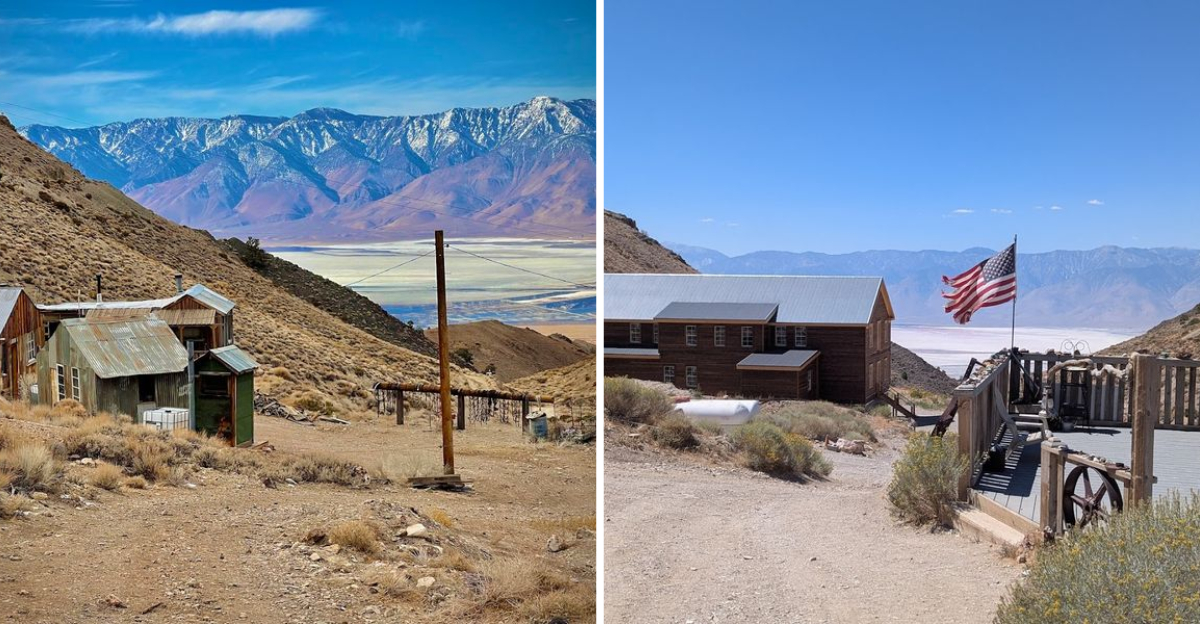
High in a remote mountain range above a vast desert valley, a forgotten mining town stops you cold the moment you arrive. Once roaring with thousands of miners, merchants, and dreamers chasing fortune, this place pumped so much silver into a growing coastal city that the city literally could not have expanded without it.
Now the wind does most of the talking. It moves through empty wooden buildings, kicking dust across roads that once carried mule teams loaded with precious ingots.
Saloons that poured whiskey for exhausted prospectors now stand silent. A hotel that once housed the wealthy and desperate alike creaks with every gust.
I remember the first time I saw photographs of this place. Something pulled hard, the kind of pull that makes you pack a bag and drive into the mountains without overthinking.
This is not just a ghost town. It is a story about ambition, boom, collapse, and the strange beauty left behind when everyone finally goes home.
Go before the wind erases another piece of it. You will feel the ghosts watching.
The Rise of Cerro Gordo: How a Mountain Became a Boomtown
Cerro Gordo did not ease into existence. It exploded.
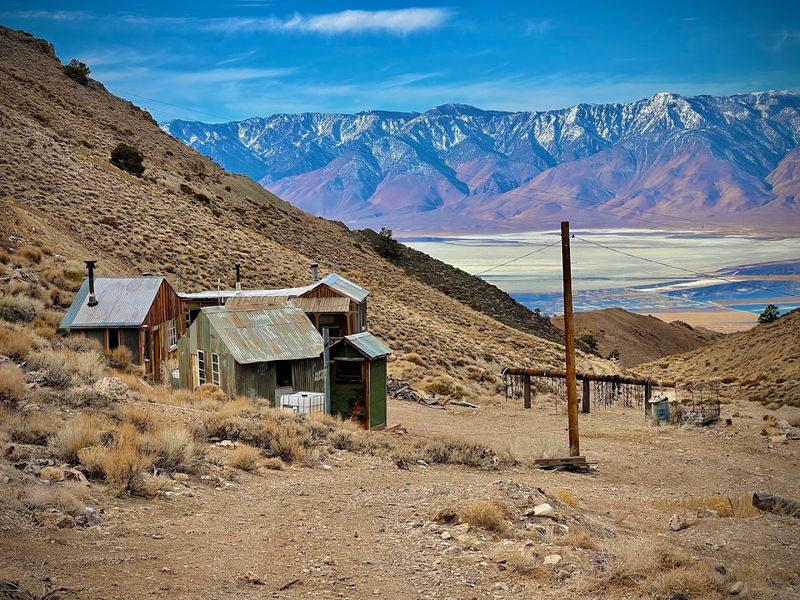
Silver and lead ore were discovered in the Inyo Mountains in 1865, and within just a few years the hillside was crawling with miners, speculators, and supply wagons hauling equipment up roads that barely deserved the name.
By the early 1870s, the town had a population pushing toward 4,000 people. That number is remarkable when you consider the elevation sits around 8,500 feet above sea level.
The air is thin, the winters are brutal, and the nearest real city was Los Angeles, which at the time was a sleepy little settlement barely worth the trip.
What made Cerro Gordo so magnetic was the sheer volume of ore coming out of the ground. The American Hotel, the hoisting works, the smelters, and the bunkhouses all sprang up fast because there was real money here.
Fortunes were being made on a mountainside that most people did not even know existed. The speed of it all is hard to imagine today when you stand in the silence and look out over the valley below.
The Silver Lifeline That Built Los Angeles
Most people think of Los Angeles as a city that grew on sunshine and film sets. The real story has a grittier origin.
Cerro Gordo’s output of silver and lead was so enormous that historians credit it with providing the financial foundation that allowed early Los Angeles to develop into something more than a dusty frontier outpost.
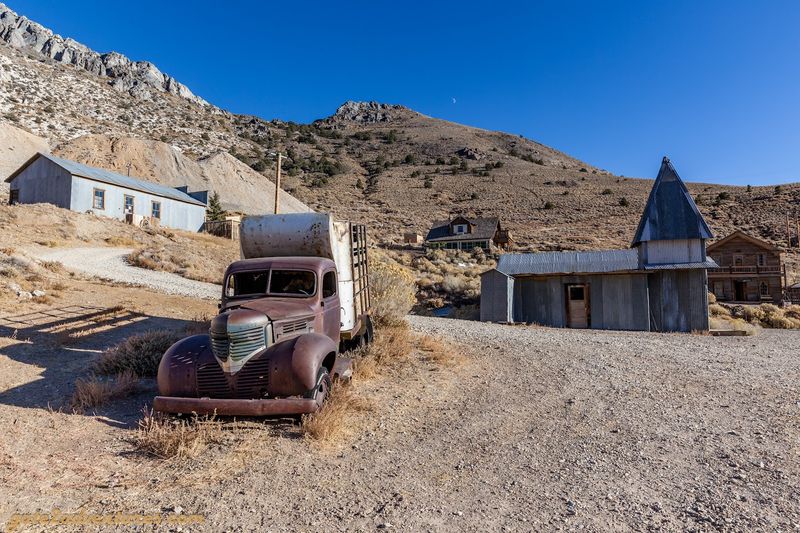
Steamships carried ore down Owens Lake to waiting wagon teams. Those wagons then made the long haul to Los Angeles, and the cycle repeated constantly for years.
The town of Cerro Gordo was essentially pumping money directly into the veins of a city 200 miles away that desperately needed it.
Businessman Mortimer Belshaw built a toll road up the mountain and controlled the flow of ore with impressive efficiency. The operation was almost industrial in scale for its era.
Millions of dollars worth of silver and lead moved through that system, and the economic ripple effects shaped Southern California in ways that most history books barely mention. It is one of those connections that feels almost too dramatic to be real, but the records are clear on this one.
Life at 8,500 Feet: What It Was Actually Like to Live There
Living in Cerro Gordo was not exactly comfortable, and the people who chose it knew that going in. The altitude alone was enough to knock newcomers sideways for the first few days.
Add in the isolation, the unpredictable mountain weather, and the physical demands of mining work, and you have a lifestyle that filtered out anyone who was not serious about staying.
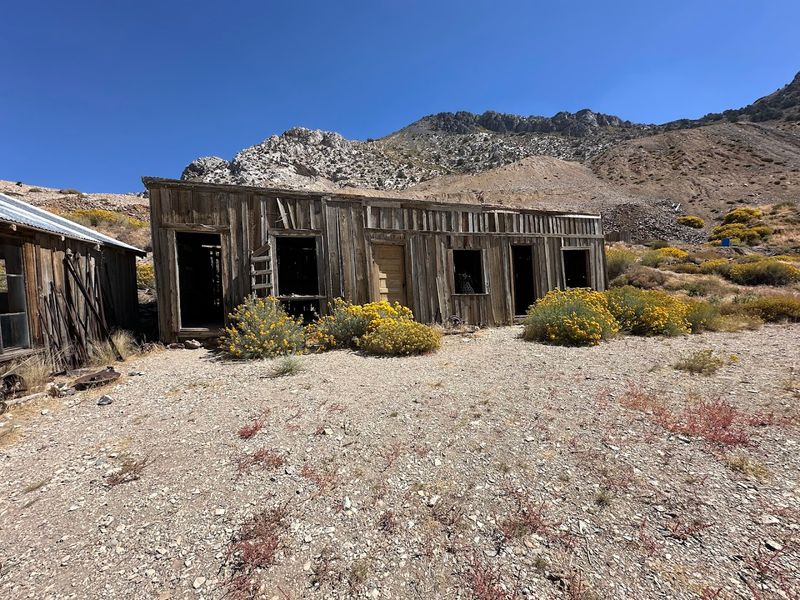
The town had everything a frontier community needed to function. There were hotels, a school, a post office, and enough commercial activity to keep daily life moving.
The American Hotel became the social center of the community, a place where miners and businessmen mixed and deals got made over meals rather than in formal offices.
Violence was not uncommon, and the historical record shows that law enforcement was thin on the ground for much of the town’s active years. People handled disputes in direct and sometimes permanent ways.
But there was also real community here, neighbors who looked out for each other through hard winters and cave-ins and the constant uncertainty of whether the ore would hold out. Life at Cerro Gordo was raw, but it was genuinely alive in a way that is hard to replicate.
The Decline: When the Ore Ran Out and the People Left
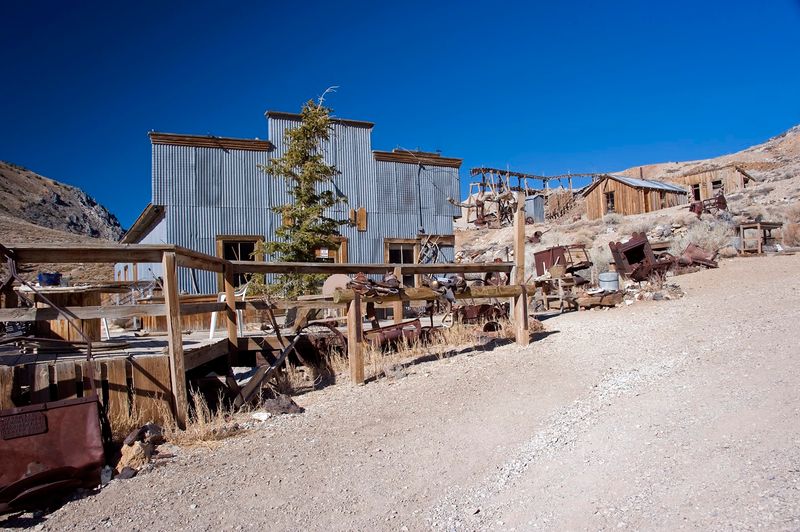
Every boom has a ceiling, and Cerro Gordo hit its hard in the 1880s. The richest ore deposits started running thin, and the cost of extracting what remained crept higher while the returns crept lower.
Mines that had once pulled out impressive quantities of silver began producing far less, and the math simply stopped working in the town’s favor.
People left the way they often do in mining towns, gradually at first, then all at once. Families packed what they could carry and headed back down the mountain.
Businesses closed. The population that had once numbered in the thousands shrank to a few hundred, then to a handful of stubborn holdouts who either had nowhere else to go or genuinely loved the isolation.
By the early twentieth century, Cerro Gordo was mostly quiet. There were sporadic attempts to revive mining operations over the following decades, each one generating a brief pulse of activity before fading again.
The mountain was not done giving up ore entirely, but it was done supporting a real town. What remained was a collection of aging structures slowly surrendering to wind, snow, and time in the most beautiful way possible.
What Survives Today: The Structures Still Standing on the Mountain
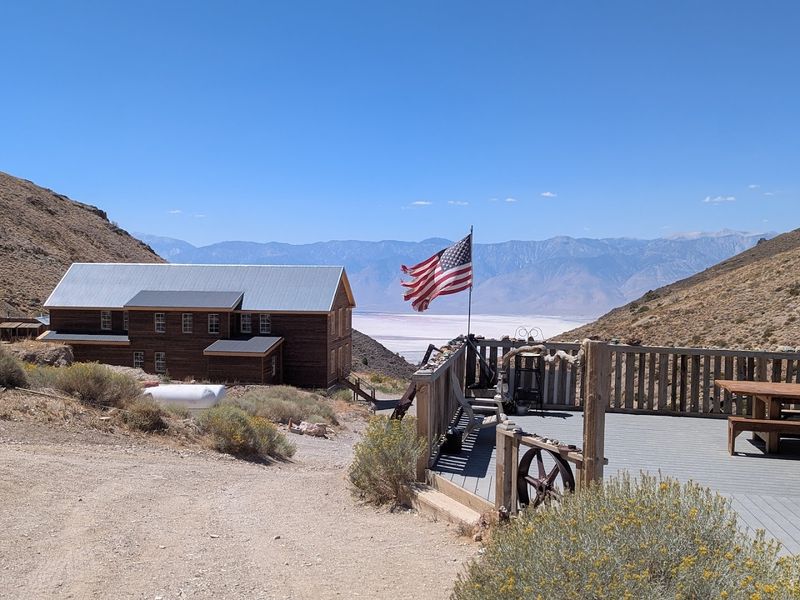
Remarkably, Cerro Gordo did not disappear entirely. Around 22 original structures still stand on the property, which is more than most ghost towns of its age can claim.
The American Hotel is probably the most striking of them, a two-story wooden building that has somehow held together through more than a century of mountain weather.
The bunkhouses, the assay office, the hoisting works, and several smaller outbuildings are all still there in various states of preservation. Some have been stabilized, others lean at angles that suggest they are negotiating with gravity on a day-to-day basis.
Each one tells a piece of the story without needing a single sign or plaque to explain itself.
Cerro Gordo is privately owned, which means the experience of visiting it is different from a state park. The owners have been working to restore and preserve the site, and they offer limited overnight stays that allow guests to sleep in the historic buildings.
That is not something you can do at most ghost towns. The combination of authentic structures, dramatic landscape, and genuine historical weight makes Cerro Gordo one of the most compelling historic sites in all of California.
The Road Up: Getting to Cerro Gordo Is Half the Adventure
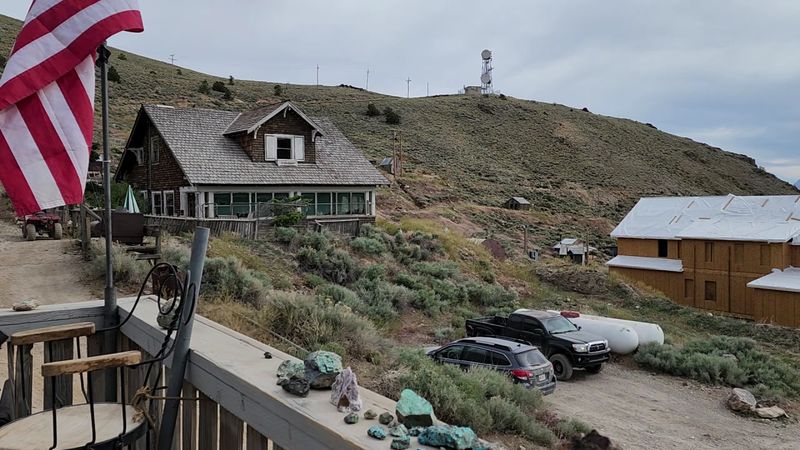
Getting to Cerro Gordo is not a casual Sunday drive. The road up from Keeler on the western side of Owens Valley is steep, unpaved, and not something you want to attempt in a low-clearance vehicle or after a rain.
The switchbacks are real, the drop-offs are real, and the sense of commitment grows with every mile you climb.
High-clearance vehicles with good tires are strongly recommended, and checking road conditions before heading up is genuinely important rather than just cautious advice. The drive takes about 45 minutes from the valley floor, but those 45 minutes feel longer because you are focused on the road and the growing view behind you.
Once you get up there, though, the effort pays off immediately. The panoramic view of Owens Valley from the town site is one of those sights that genuinely earns the word spectacular without any exaggeration.
You can see for miles in every direction, and the silence up there has a physical quality to it, the kind that makes you lower your voice without thinking about it. The journey up is not a barrier to the experience, it is part of the experience.
Why Cerro Gordo Matters and Why You Should Go
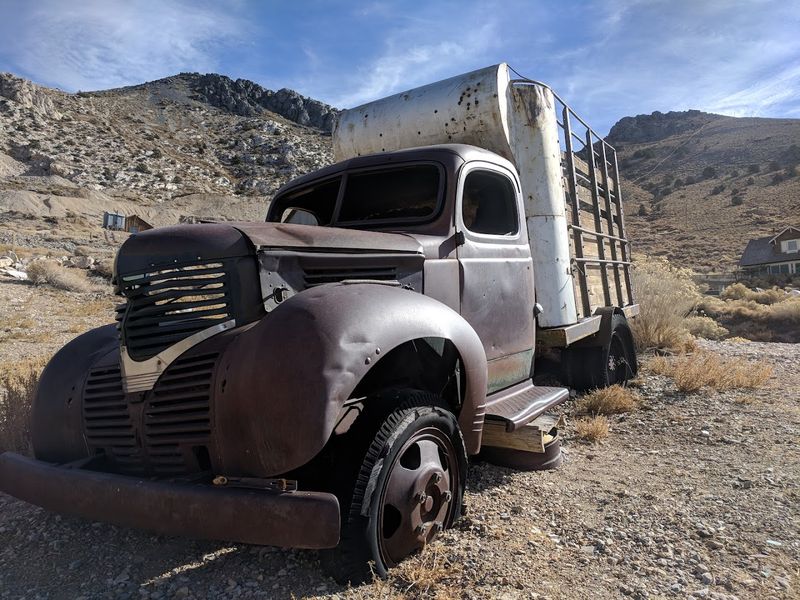
Ghost towns can feel like novelties, places you drive through, snap a few photos, and forget about by the next morning. Cerro Gordo is different in a way that is hard to explain until you have been there.
The scale of what once existed here, and the completeness of what remains, gives it a weight that most historic sites simply do not carry.
The story of Cerro Gordo is also a story about California itself, about how wealth moves, how cities get built on the labor of people who never get credit, and how quickly a place can go from essential to invisible. Those are not small themes.
They connect to conversations we are still having today about labor, resources, and who benefits from the land.
Visiting Cerro Gordo is not just tourism. It is an encounter with a specific, complicated chapter of American history that most people have never heard of.
Location: Cerro Gordo in the Inyo Mountains, Inyo County, near Lone Pine, California.
